💡 Quick Answer
The best peptide stacks combine compounds that target complementary mechanisms for amplified results. The gold standard GH stack is CJC-1295 + Ipamorelin. The best healing stack is BPC-157 + TB-500 (the Wolverine Stack). For fat loss with body recomp, the AOD + Tesamorelin + MOTS-c stack is gaining serious traction. Always master individual peptides before combining them.
Peptide stacking — combining two or more peptides for enhanced or complementary effects — has become a cornerstone strategy for anyone serious about optimizing their results. When done thoughtfully, stacking amplifies outcomes, targets multiple biological pathways simultaneously, and creates synergies that individual compounds simply can't achieve alone.
But stacking peptides isn't as simple as throwing random compounds together and hoping for the best. Understanding how different peptides work, which combinations genuinely complement each other, and which might actually interfere requires careful consideration of mechanisms, timing, and goals. Get it right, and you unlock results that feel almost unfairly good. Get it wrong, and you're wasting money — or worse, creating unwanted interactions.
This guide covers the most effective peptide stacks for every major goal: muscle growth, healing, fat loss, anti-aging, and cognitive enhancement. Each stack includes the science behind why it works, practical dosing protocols, and honest assessments of what to expect.
🔑 Key Takeaways
- True synergy means 1+1=3 — the right combinations produce effects greater than the sum of their parts
- CJC-1295 + Ipamorelin is the benchmark GH stack — safe, effective, and well-documented
- BPC-157 + TB-500 is the gold standard healing stack for injuries and recovery
- Fat loss stacks work best when combining GH stimulation with metabolic peptides
- Always introduce one peptide at a time before stacking — know how each affects you individually
- Timing and fasting status matter enormously for GH secretagogue stacks
What Is Peptide Stacking and Why Does It Work?
Peptide stacking refers to the simultaneous or sequential use of multiple peptide compounds for enhanced effects. The concept is straightforward: different peptides activate different receptors and pathways. By combining them strategically, you can hit multiple targets at once — something a single compound can't do.
The Science of Synergy
True synergy occurs when compounds activate complementary mechanisms and the combined effect exceeds what you'd expect from simply adding their individual effects together. The classic example: CJC-1295 is a GHRH analog that signals the pituitary to release growth hormone, while Ipamorelin is a ghrelin mimetic that amplifies this signal through a separate receptor. Together, they produce GH responses 2–3 times greater than additive effects would predict. This isn't "1+1=2" — it's closer to "1+1=3."
Three Types of Stacking Logic
Synergistic Enhancement
Peptides working through complementary pathways create effects greater than the sum of their parts — like GHRH + ghrelin mimetic combinations.
Multi-Pathway Targeting
Different peptides address multiple aspects of a goal simultaneously — like healing + anti-inflammatory + tissue remodeling.
Balancing Effects
One peptide offsets unwanted effects of another — like adding appetite-neutral Ipamorelin instead of hunger-boosting GHRP-6.
Best Peptide Stacks for Muscle Growth and GH Optimization
Growth hormone secretagogues represent the most established category for peptide stacking, with decades of published data supporting specific combinations.
Stack #1: CJC-1295 + Ipamorelin — The Gold Standard
This is the benchmark GH stack and the one most people should start with. For detailed protocols, see our CJC-1295 + Ipamorelin dosage guide.
Why it works: CJC-1295 tells the pituitary to release GH, while Ipamorelin amplifies this signal and helps maintain the natural GH pulse pattern. The combination produces greater peak GH levels, more sustained elevation (thanks to CJC-1295's extended half-life), and minimal cortisol or prolactin increase (thanks to Ipamorelin's selectivity). This is why it's considered ideal for beginners — the side effect profile is genuinely favorable.
Stack #2: GHRP-2 + Mod GRF 1-29 — More Aggressive GH
For those seeking stronger GH elevation than the Ipamorelin combo provides:
Trade-off: GHRP-2 produces stronger GH release than Ipamorelin but also raises cortisol and prolactin more. It's also famous for stimulating appetite — which may be beneficial if you're trying to gain muscle, or problematic if you're cutting.
Stack #3: Ipamorelin + Sermorelin — The Conservative Approach
Sermorelin is an FDA-approved GHRH analog with decades of clinical safety data. Combined with Ipamorelin, it offers a more conservative approach — lower peak GH elevation but excellent for those prioritizing safety and long-term use. Often available through legitimate medical channels, making it accessible for those working with peptide-knowledgeable physicians.
💡 Timing Tip
Time your GH secretagogue stacks for before bed (to amplify natural nocturnal GH release) or first thing in the morning on an empty stomach. Carbohydrates and fats blunt GH release, so avoid eating for 30–60 minutes after administration.
Best Peptide Stacks for Healing and Injury Recovery
Healing peptides operate through entirely different mechanisms than GH secretagogues, and the stacking opportunities here are genuinely powerful.
Stack #4: BPC-157 + TB-500 — The Wolverine Stack
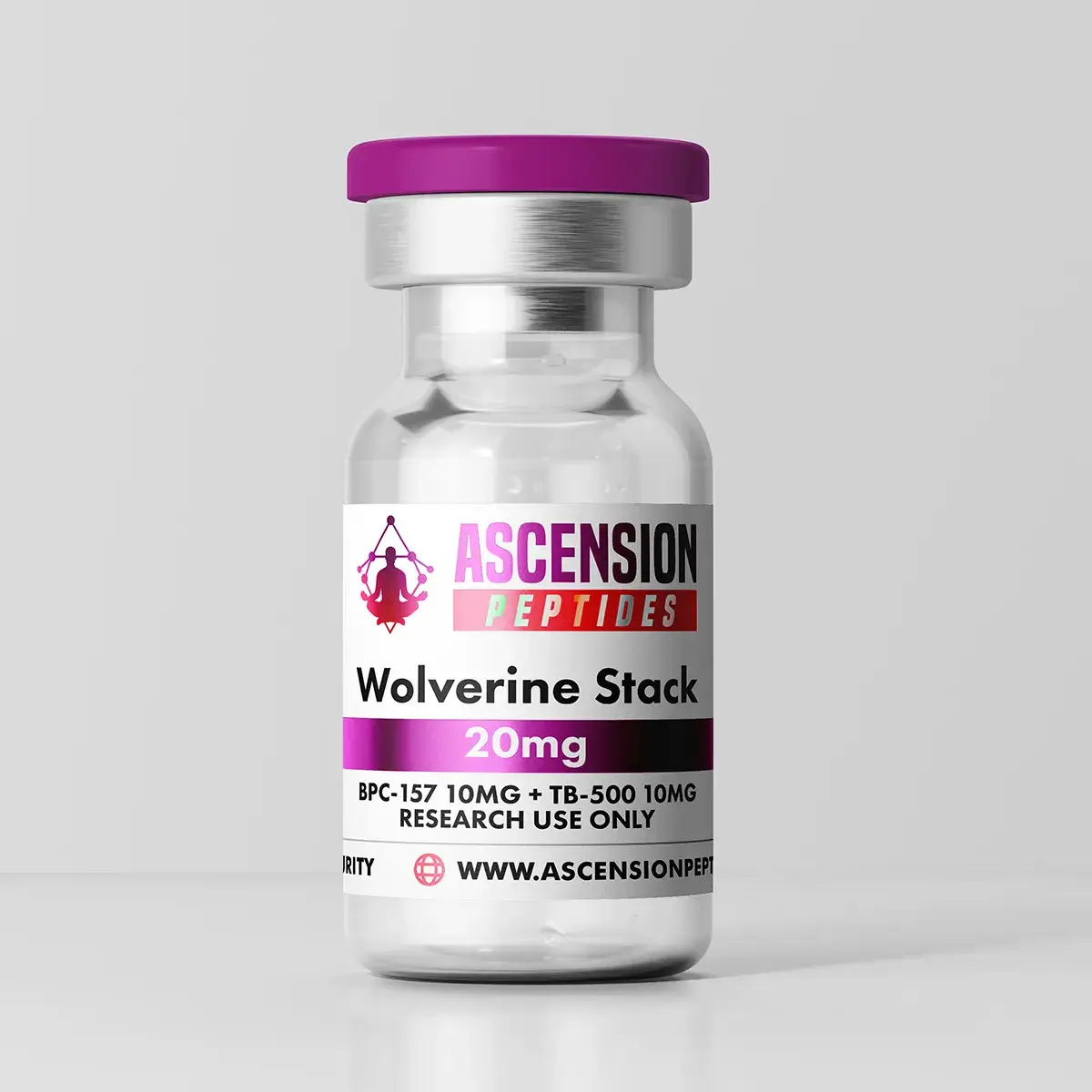
The most popular healing stack, period. BPC-157 and TB-500 combine complementary healing mechanisms that together address virtually every phase of tissue repair. See our Wolverine Stack dosage guide for the complete protocol.
Synergistic mechanisms: BPC-157 primarily upregulates growth factors (VEGF, FGF) and modulates the nitric oxide system — it's the "signal amplifier" that tells the body where to heal and drives blood vessel formation into the injured area. TB-500 promotes cell migration through actin regulation and has powerful anti-inflammatory effects — it's the "workforce enabler" that gets stem cells and fibroblasts to the injury site faster. Together, they address both the signals and the cellular machinery of healing.
Stack #5: BPC-157 + GHK-Cu — Tissue Regeneration and Collagen Quality
For injuries where tissue quality matters — scarring, skin damage, connective tissue repair — combining BPC-157 with GHK-Cu targets multiple regenerative pathways. BPC-157 handles the internal tissue repair and angiogenesis, while GHK-Cu drives collagen synthesis, activates antioxidant signaling, and improves wound remodeling. Particularly valuable for injuries that involve visible wounds or when you want to minimize scar formation.
Best Peptide Stacks for Fat Loss and Body Recomposition
Fat loss stacks combine metabolic peptides with GH optimization for multi-pathway targeting. The AOD + Tesamorelin + MOTS-c stack guide covers the leading fat loss combination in detail.
Stack #6: Tesamorelin + AOD-9604 — Targeted Fat Reduction
Why this works: Tesamorelin has FDA approval specifically for reducing visceral adipose tissue (the dangerous fat around organs). AOD-9604 is the fat-burning fragment of the growth hormone molecule without the growth-promoting effects. Together, they target fat from different angles without excessive GH elevation that could affect blood sugar or cause other unwanted effects.
Stack #7: CJC-1295 + Ipamorelin + MOTS-c — Metabolic Enhancement
For comprehensive metabolic support, adding MOTS-c to a GH stack addresses cellular energy metabolism directly. CJC-1295/Ipamorelin handles GH-mediated lipolysis and muscle preservation. MOTS-c activates AMPK (the metabolic master switch), improves insulin sensitivity, and enhances mitochondrial function. The combined effect: fat loss, better metabolic efficiency, and improved body composition. For the full protocol, see our Retatrutide + MOTS-c stack guide.
Best Peptide Stacks for Anti-Aging and Longevity
Anti-aging stacks target multiple hallmarks of aging simultaneously — it's one area where stacking genuinely makes the most theoretical sense, since aging is a multi-factorial process.
Stack #8: Epithalon + GHK-Cu + BPC-157 — The Longevity Stack
Epithalon
Telomerase activation, circadian rhythm support — addresses cellular aging at the chromosomal level.
GHK-Cu
Gene expression modulation (4,000+ genes), collagen synthesis, antioxidant defense — tissue-level rejuvenation.
BPC-157
Systemic tissue protection, gut health, multi-organ support — whole-body maintenance.
This stack targets aging at the cellular level (Epithalon), tissue level (GHK-Cu), and systemic level (BPC-157). It's a theoretically sound combination that addresses three distinct hallmarks of aging without mechanistic overlap. Epithalon is typically run in 10-day cycles 2–4 times per year, while GHK-Cu and BPC-157 can be run in 4–8 week courses.
Stack #9: CJC-1295 + Ipamorelin + Thymosin Alpha-1 — Immune + GH
For those prioritizing immune function alongside GH optimization — especially relevant after 40 when immune decline accelerates — adding Thymosin Alpha-1 to a standard GH stack maintains muscle mass and metabolic function while supporting immune surveillance. Thymosin Alpha-1 has extensive clinical use data, making it one of the safer additions to any stack.
Best Peptide Stacks for Cognitive Enhancement
Stack #10: Semax + Selank — The Nootropic Stack
Two well-studied neuropeptides with complementary mechanisms:
Semax enhances cognitive performance and drives brain-derived neurotrophic factor (BDNF) production. Selank reduces anxiety that might otherwise impair focus while also modulating immune function. Together, they provide "calm alertness" — sharp cognition without the jittery edge of stimulants like caffeine or modafinil. Both are administered intranasally for direct CNS access.
Peptide Stack Comparison: Quick Reference
Reconstitution and Storage for Stacked Peptides
When running multiple peptides simultaneously, keeping everything organized becomes important. Here's what you need to know about managing multiple vials.
Can You Mix Peptides in One Vial?
Some people mix compatible peptides into a single vial for convenience — particularly CJC-1295 + Ipamorelin, since they're commonly dosed together. This works if both peptides are reconstituted in bacteriostatic water and have compatible pH ranges. However, there are risks: if one peptide degrades, it can affect the other, and it makes dosing adjustments more complicated. For beginners, keeping peptides in separate vials is the safer approach.
Storage Considerations with Multiple Vials
- Label everything: Multiple vials of clear liquid look identical. Use tape or a marker to label each vial with the peptide name, concentration per unit, and reconstitution date
- Refrigerate after reconstitution: All reconstituted peptides should be stored at 2–8°C. Most remain stable for 4–6 weeks refrigerated
- Avoid freeze-thaw cycles: Don't freeze reconstituted peptides and then thaw them — this degrades the compound
- Track usage: With 2–3 peptides running, a simple spreadsheet or notes app tracking daily doses helps prevent errors
Cost Considerations for Peptide Stacks
Running multiple peptides adds up. Here's a realistic cost breakdown for common stacks over an 8-week course:
Budget constraints are real. If you can only afford one peptide at a time, start with the primary compound (CJC-1295 for GH goals, BPC-157 for healing) and add the complementary compound later. Running one peptide properly beats running two on insufficient budget with compromised quality.
Common Stacking Mistakes to Avoid
Mistake #1: Stacking Too Many Compounds at Once
More isn't always better. Running 4–5 peptides simultaneously makes it impossible to know what's working, what's causing side effects, and what's just expensive noise. Start with two, give it 6–8 weeks, assess, then consider adding a third if you have a specific reason.
Mistake #2: Ignoring Timing and Fasting Requirements
GH secretagogue stacks lose much of their effectiveness if you eat carbs or fats within 30–60 minutes of administration. Blood sugar and insulin blunt GH release significantly. Take these stacks fasted — either before bed (2+ hours after your last meal) or first thing in the morning. Healing peptides like BPC-157 and TB-500 don't have this timing restriction.
Mistake #3: Skipping Bloodwork
Running any GH-elevating stack without periodically checking IGF-1, fasting glucose, and insulin levels is flying blind. These are inexpensive tests ($30–60 through services like LabCorp or Quest with a direct-to-consumer order) and they tell you whether your stack is actually doing what you want — and whether it's causing unwanted metabolic effects.
Mistake #4: Poor Sourcing
A stack is only as good as its weakest component. Under-dosed or degraded peptides in a stack don't just fail — they give you the impression that the combination doesn't work, when the issue is product quality. Source from vendors with batch-specific COAs showing HPLC purity ≥98% and mass spectrometry identity confirmation.
Peptide Stacking Safety: What You Need to Know
General Safety Principles
Master Individual Peptides First
Before stacking, understand how each peptide affects you individually. Introduce one at a time, assess response for 2–4 weeks, then consider adding the second compound.
Start with Established Combinations
Begin with well-documented stacks (CJC-1295 + Ipamorelin, BPC-157 + TB-500) that have extensive community experience. Avoid experimental combinations until you're experienced.
Monitor and Document
Keep detailed logs of dosing, timing, and effects. Track biomarkers through regular bloodwork (IGF-1, fasting glucose, liver panel). This data helps optimize protocols and catch problems early.
Respect Rest Periods
Even beneficial stacks shouldn't run indefinitely. Build in rest periods to prevent receptor desensitization. Common approach: 5 days on / 2 off weekly, or 8–12 weeks on / 4–6 weeks off.
Potential Interactions to Watch
- Receptor competition: Multiple ghrelin mimetics (GHRP-2 + GHRP-6) compete for the same receptors — this creates redundancy, not synergy
- Hormonal amplification: Stacking multiple GH-releasing peptides can produce excessive GH elevation — monitor IGF-1 levels
- Blood pressure effects: BPC-157 and some GH peptides affect vasodilation — monitor blood pressure when combining
- Blood sugar: GH-elevating stacks can impair insulin sensitivity at high doses — watch fasting glucose
Goal-Specific Stack Selection Guide
Not sure which stack is right for you? Here's a decision framework based on your primary goal:
If Your Primary Goal Is Building Muscle
Start with CJC-1295 + Ipamorelin. This is the foundational GH stack that improves sleep quality, recovery speed, and lean body composition over 8–12 weeks. Add it to your existing training program — the peptides amplify your results from training, they don't replace the need for progressive overload. If you're already training hard and eating enough protein but progress has stalled, this stack can restart growth. Expect noticeable changes in recovery (within 1–2 weeks) and body composition (4–8 weeks).
If Your Primary Goal Is Recovering from an Injury
BPC-157 + TB-500 is the clear winner. Whether it's a torn tendon, persistent joint pain, muscle strain, or post-surgical recovery, this stack addresses the healing cascade from multiple angles. Run it for 6–8 weeks minimum. Don't stop physiotherapy or rehab while using peptides — the combination of biological acceleration plus mechanical loading is what produces the best outcomes. Many people report that injuries which had plateaued for months start improving within 2–3 weeks.
If Your Primary Goal Is Fat Loss
Tesamorelin + AOD-9604 for targeted fat reduction, or CJC-1295 + Ipamorelin + MOTS-c for metabolic optimization. The first stack is more aggressive and directly targets lipolysis. The second is broader, improving metabolic function while supporting lean mass preservation. Both work best alongside a modest caloric deficit and consistent exercise — peptides amplify your effort but don't replace it.
If Your Primary Goal Is Longevity
The Epithalon + GHK-Cu + BPC-157 combination addresses three distinct hallmarks of aging. This is a longer-term play — you're not going to feel dramatically different after one cycle. The value is cumulative, and the real benefits show up over years of periodic use. Think of it as maintenance for your cellular machinery. Some people add FOXO4-DRI courses quarterly for senescent cell clearance, creating a four-compound longevity rotation.
If Your Primary Goal Is Cognitive Performance
Semax + Selank is the most accessible and well-studied nootropic stack. It's also the easiest to use (intranasal spray, no injections) and the most affordable. Start here and assess for 4 weeks. If you want to add GH optimization on top, CJC-1295 + Ipamorelin's sleep quality improvements have secondary cognitive benefits through better rest and recovery.
How to Start Peptide Stacking: A Practical Progression
Phase 1: Single Peptide Mastery (4–8 weeks)
Choose one peptide aligned with your primary goal. Learn proper reconstitution, storage, and administration. Understand how it affects you individually — everyone responds slightly differently, and knowing your baseline response to each compound is essential before combining them.
Phase 2: Simple Two-Peptide Stack (8–12 weeks)
Add a complementary peptide with well-documented synergy. CJC-1295 + Ipamorelin or BPC-157 + TB-500 are the ideal starting stacks. Monitor for enhanced effects and any new side effects. Keep a log — even a simple notes app entry after each injection.
Phase 3: Optimized Protocols (Ongoing)
Based on experience, refine dosing, timing, and potentially add a third compound for specific goals. This is where personalization matters most — your optimal protocol will differ from someone else's based on your response, goals, and how you tolerate each compound. Always prioritize safety over aggressive stacking.
Frequently Asked Questions
References
- Bowers CY, et al. "On the actions of the growth hormone-releasing hexapeptide, GHRP." Endocrinology. 1984;114(5):1537-1545. PMID: 6423511
- Raun K, et al. "Ipamorelin, the first selective growth hormone secretagogue." Eur J Endocrinol. 1998;139(5):552-561. PMID: 9849822
- Sikiric P, et al. "Stable gastric pentadecapeptide BPC 157: novel therapy in gastrointestinal tract." Curr Pharm Des. 2011;17(16):1612-1632. PMID: 21548867
- Sosne G, et al. "Thymosin beta 4 promotes dermal healing." Vitam Horm. 2016;102:53-63. PMID: 27450731
- Lee C, et al. "The mitochondrial-derived peptide MOTS-c promotes metabolic homeostasis and reduces obesity." Cell Metab. 2015;21(3):443-454. PMID: 25738459
- Ashmarin IP, et al. "Semax, an analog of ACTH(4-10), is a nootropic and neuroprotective agent." Pharmacol Biochem Behav. 1995;51(2-3):521-527. PMID: 7667379