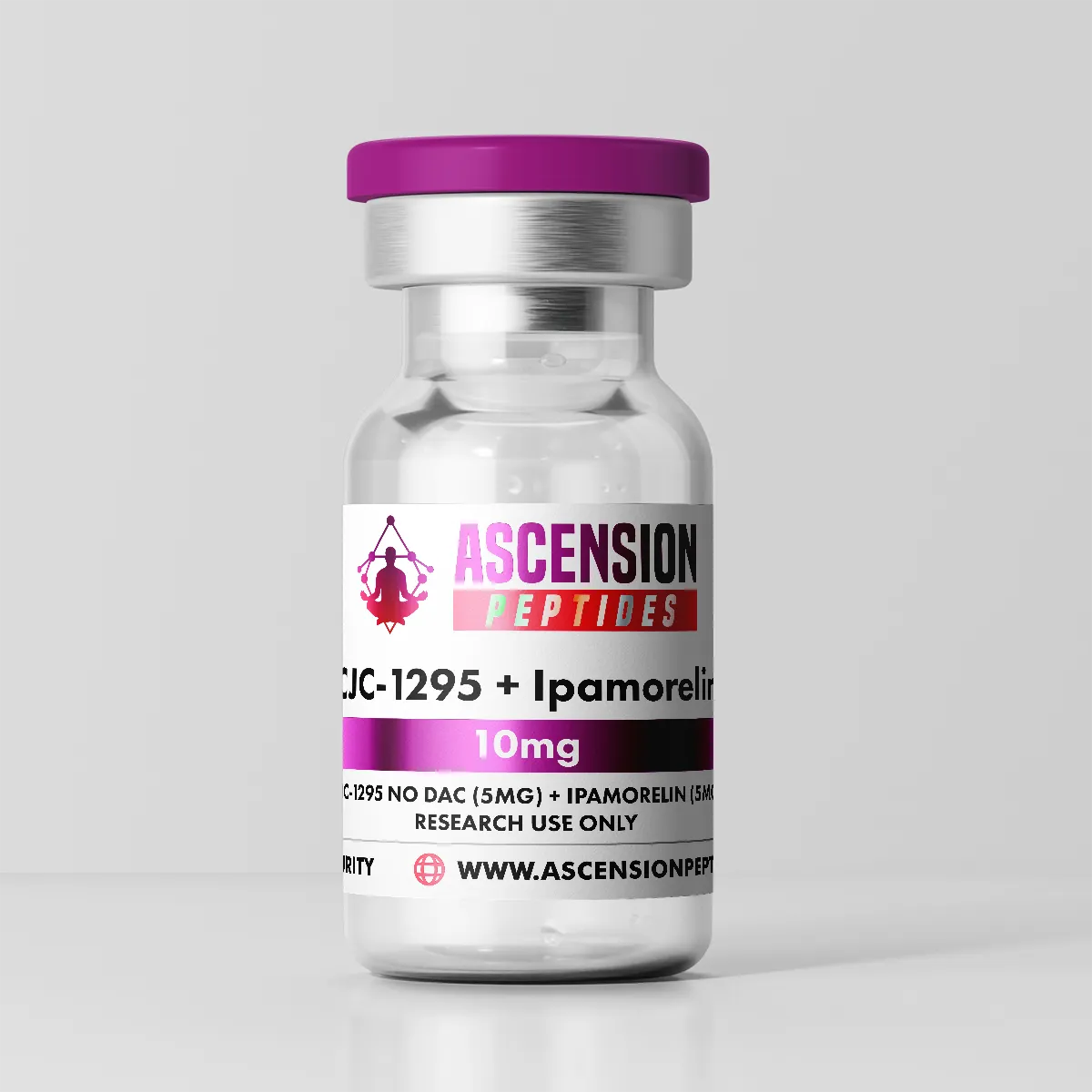
How CJC-1295 Works (and Why It Causes Side Effects)
CJC-1295 is a GHRH (Growth Hormone Releasing Hormone) analog — it tells your pituitary to release more growth hormone. Most side effects are downstream effects of elevated GH and IGF-1, not direct toxicity of the peptide itself. Understanding this helps you manage them.
Side Effects People Actually Report
1. Water Retention
How common: Common, especially in the first 2–4 weeks
How bad: Noticeable but not dangerous — puffy face, slight swelling in hands/feet
What to do: Reduce sodium intake. It typically subsides as the body adjusts. If it's severe or persistent, reduce the dose.
2. Facial Flushing
How common: Common within 30 minutes of injection
How bad: Mild, temporary — a warm, flushed feeling
What to do: This is a normal vasodilatory response. It passes within 30–60 minutes and decreases over time.
3. Injection Site Reactions
How common: Common
How bad: Mild soreness, redness, or minor swelling at injection site
What to do: Rotate sites. Inject slowly. Use a fresh needle each time.
4. Fatigue or Lethargy
How common: Uncommon, mostly in early weeks
How bad: Mild
What to do: Often resolves after 1–2 weeks. Try injecting at night before bed — the fatigue becomes a feature rather than a problem.
5. Headaches
How common: Uncommon
How bad: Usually mild
What to do: Ensure you're well-hydrated. Often dose-dependent — try reducing if persistent.
6. Tingling or Numbness (Carpal Tunnel-Like)
How common: Uncommon, more likely at higher doses
How bad: Mild to moderate
What to do: This is a known GH-related effect (fluid retention compressing the carpal tunnel). Usually resolves when dose is reduced or protocol ends.
7. Elevated Blood Sugar
How common: Rare at standard doses
How bad: Relevant for people with insulin sensitivity issues or diabetes
What to do: Monitor blood glucose if you have pre-existing metabolic concerns. GH elevates insulin resistance at higher doses.
Dosing to Minimize Side Effects
- Start dose: 100 mcg 2x/week — build up from here
- Standard dose: 1–2mg/week (split doses)
- Timing: Before bed or post-workout — takes advantage of natural GH pulses
- Stack note: CJC-1295 is almost always paired with Ipamorelin (a GHRP) for synergy and better pulse amplitude
CJC-1295 and Cardiovascular Risk: What the Research Actually Shows
"CJC-1295 heart attack" is a common search, so it is worth saying plainly: there is no published case report linking CJC-1295 to a heart attack, and no controlled trial has measured cardiovascular outcomes for this peptide. Almost every cardiac concern you will read about is extrapolated from the biology of growth hormone (GH) and IGF-1, the two hormones CJC-1295 raises, rather than from data on the peptide itself. That distinction matters, so this section separates the documented signals from the speculation.
What the direct CJC-1295 evidence shows
The only peer-reviewed human trial of CJC-1295, a phase 1 study in healthy adults, reported no serious adverse reactions and called the compound safe and relatively well tolerated at standard doses.[1] But that study was small, ran for weeks rather than years, and was never designed to detect heart-rhythm or blood-pressure changes. For context, tesamorelin (the only FDA-approved GHRH analog, and the closest regulated cousin to CJC-1295) carries a label stating that its long-term cardiovascular safety has not been established.[2] In other words, the honest answer is that the long-term cardiac picture for this drug class is unknown, not proven safe. Our broader guide to real peptide risks and the peptide side effects overview make the same point.
The theoretical cardiac and vascular concerns
The plausible mechanisms are mostly downstream of fluid balance and growth signaling, not the cosmetic puffiness covered earlier. Elevated GH and IGF-1 promote renal sodium retention and expand extracellular and plasma volume, which can in theory raise blood pressure and cardiac workload.[5] Reassuringly, short-term GH dosing increased body sodium and extracellular water but did not acutely raise blood pressure in one controlled study,[4] so the pressure effect appears modest at sensible doses. The stronger warning comes from acromegaly, the disease of lifelong GH and IGF-1 excess, where roughly a third of patients develop hypertension and many develop biventricular thickening of the heart, arrhythmias and valve changes.[3] That is a model of decades of uncontrolled hormone exposure, not short pulsatile peptide use, but it is why clinicians treat sustained GH elevation as a genuine cardiac stressor.
Who should be cautious or avoid it
Anyone with heart failure, uncontrolled high blood pressure, a known arrhythmia, a recent heart attack or established coronary disease should not use CJC-1295 outside medical supervision, because added plasma volume and GH-driven cardiac growth signaling are exactly the wrong stressors for those conditions.[2][3] The DAC version, which holds GH elevated continuously rather than in pulses, is the more concerning format here; the shorter-acting forms discussed in our main CJC-1295 guide mimic natural pulses more closely. If you stack it, remember the CJC-1295 plus Ipamorelin combination raises GH further, so review Ipamorelin side effects and whether Ipamorelin is FDA approved first. Those weighing gentler options can compare sermorelin versus tesamorelin, scan sermorelin side effects, read the tesamorelin profile, or see how each ranks in our best growth hormone peptides roundup.
When to stop and seek urgent care
Chest pain or pressure, a racing or irregular heartbeat that does not settle, severe shortness of breath, sudden swelling in the legs, or fainting are not normal CJC-1295 effects. Stop the peptide and get evaluated promptly, especially if you have any pre-existing heart condition or take blood-pressure medication.
References
- Teichman SL, Neale A, Lawrence B, Gagnon C, Castaigne JP, Frohman LA. Prolonged stimulation of growth hormone (GH) and insulin-like growth factor I secretion by CJC-1295, a long-acting analog of GH-releasing hormone, in healthy adults. J Clin Endocrinol Metab. 2006;91(3):799-805 (PMID 16352683).
- EGRIFTA WR (tesamorelin) Prescribing Information. FDA/DailyMed (Initial U.S. Approval 2010). Long-term cardiovascular safety not established; fluid retention related to induction of GH secretion.
- Mizera L, Elbaum M, Daroszewski J, Bolanowski M. Cardiovascular Complications of Acromegaly. Acta Endocrinol (Buchar). 2018;14(3):365-374 (PMID 31149285, PMC6525769).
- Hoffman DM, Crampton L, Sernia C, Nguyen TV, Ho KK. Short-term growth hormone (GH) treatment of GH-deficient adults increases body sodium and extracellular water, but not blood pressure. J Clin Endocrinol Metab. 1996;81(3):1123-1128 (PMID 8772586).
- Moller J, Jorgensen JO, Marqversen J, Frandsen E, Christiansen JS. Insulin-like growth factor I administration induces fluid and sodium retention in healthy adults: possible involvement of renin and atrial natriuretic factor. Clin Endocrinol (Oxf). 2000;52(2):181-186 (PMID 10671945).
Frequently Asked Questions
Medical Disclaimer: This article is for informational purposes only and does not constitute medical advice. All peptides mentioned are research compounds not approved by the FDA for human use. Always consult a qualified healthcare provider before starting any peptide protocol. PeptideDeck may earn a commission from affiliate links at no additional cost to you.