🔑 Key Takeaways
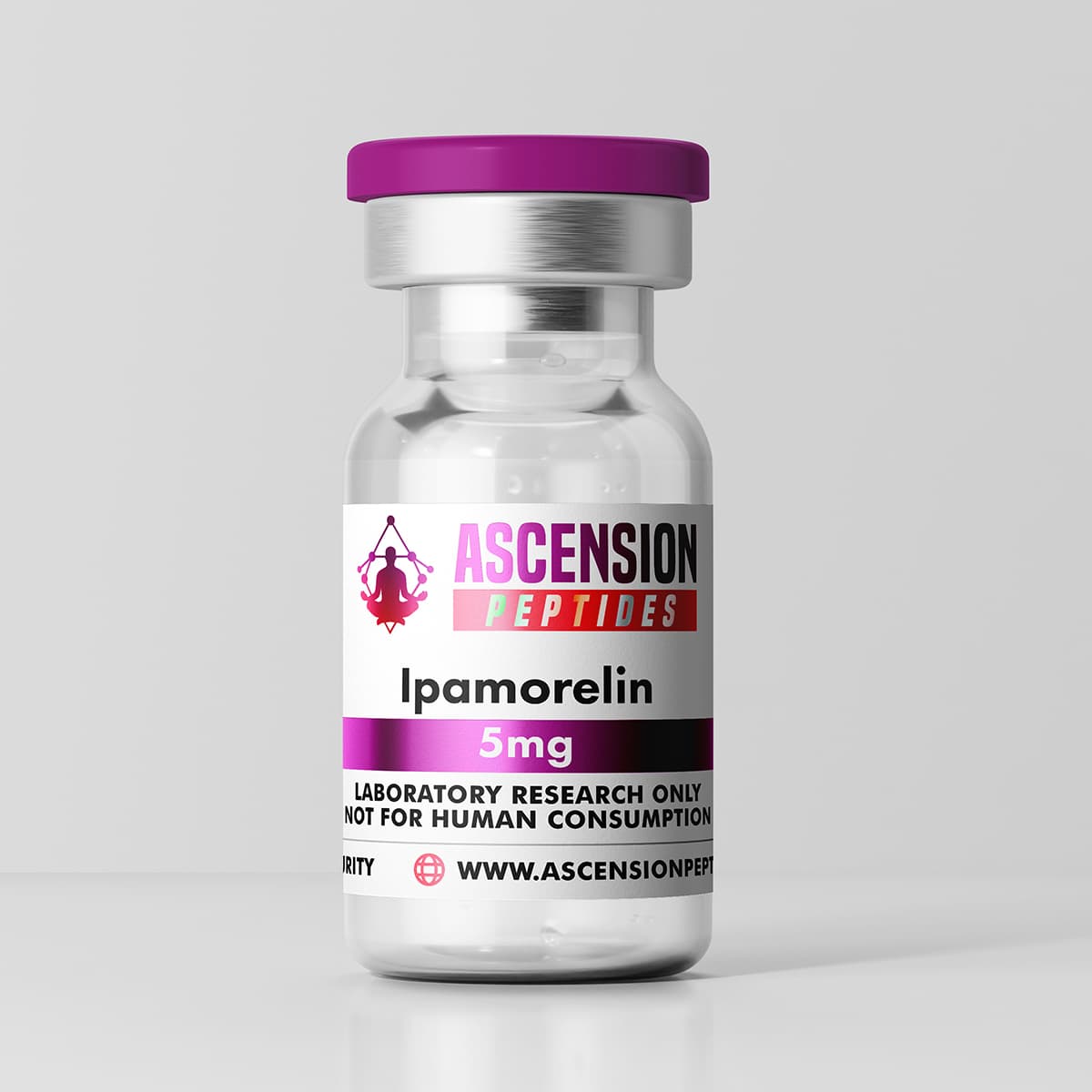
- Ipamorelin is considered the mildest GHRP available — chosen specifically for its clean side effect profile
- No significant cortisol or prolactin increase (unlike GHRP-2 or GHRP-6)
- Most common: brief flushing/warmth after injection, mild headache, water retention at higher doses
- Rare: nausea, lightheadedness (usually only if injected when blood sugar is low)
- Does NOT cause the hunger spike that GHRP-6 is known for
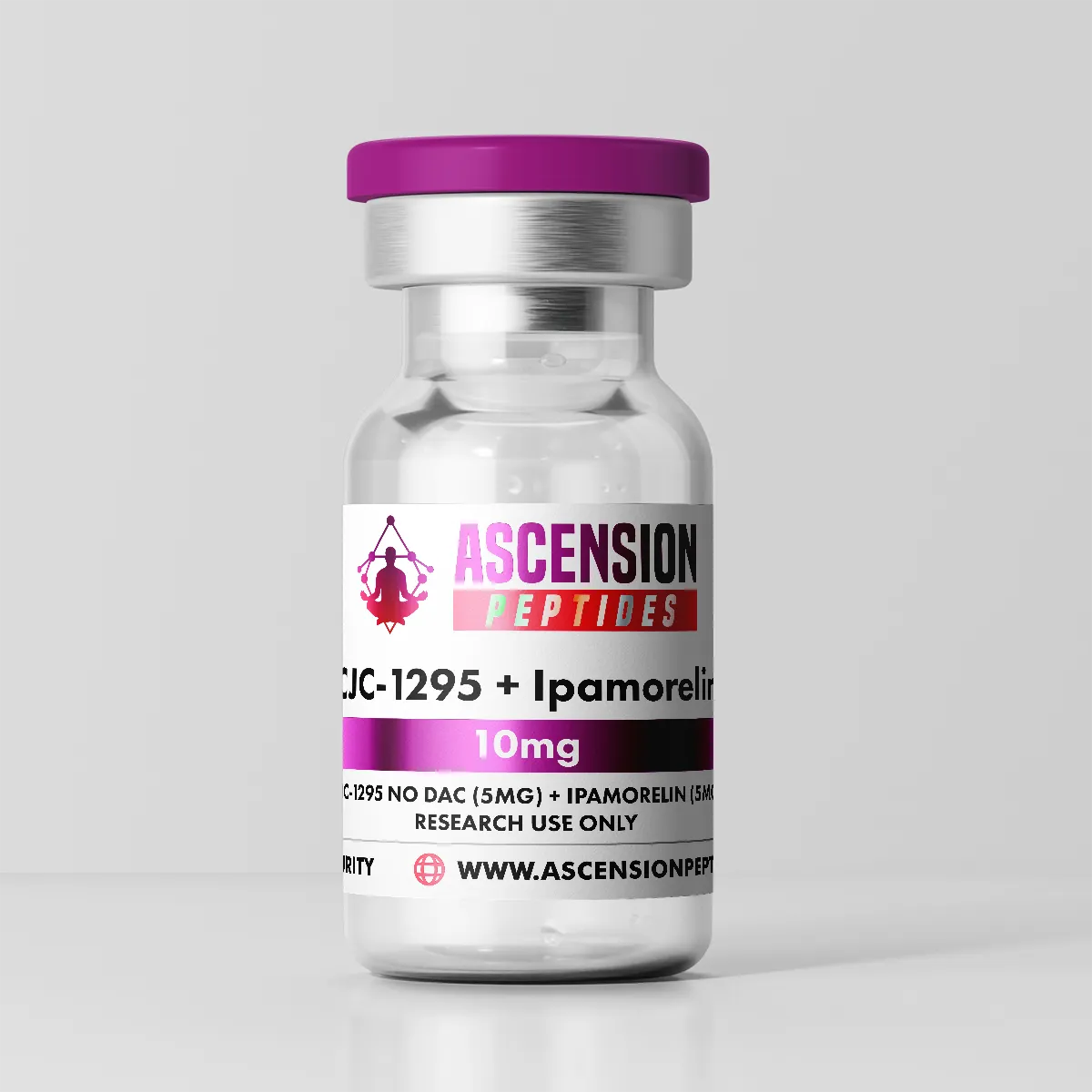
- Stacks well with CJC-1295 — FIT Stack combines both
Why Ipamorelin Is Considered the "Cleanest" GHRP
GHRPs (Growth Hormone Releasing Peptides) stimulate GH release via the ghrelin receptor. The problem with older GHRPs (GHRP-2, GHRP-6, hexarelin) is they also trigger cortisol and prolactin — unwanted effects. Ipamorelin was specifically engineered to stimulate GH release with minimal cortisol, prolactin, or appetite effects. This is why it became the go-to for people who want GH support without the baggage.
Common Side Effects
- Brief flushing or warmth after injection — face or skin feels warm for 15–30 min post-injection. Very common, completely harmless. Caused by the vasodilatory effect of ghrelin receptor activation.
- Mild headache — usually only in the first 1–2 weeks. Fades as the body adjusts.
- Mild water retention — particularly at higher doses (300mcg+). Usually presents as slightly puffy hands/face in the morning. Reduces if you lower the dose or cycle off.
- Injection site redness — standard subcutaneous injection reaction, fades in hours.
- Drowsiness — some people feel relaxed or slightly sleepy after injection, especially with evening/bedtime doses. This is often desirable — many stack ipamorelin with CJC-1295 at bedtime to amplify natural GH pulse during sleep.
Less Common Side Effects
- Nausea — rare at standard doses (100–300mcg). More likely if injecting on an empty stomach with low blood sugar. Eat a small snack 30 min after injection if this occurs.
- Lightheadedness or dizziness — occasionally reported, usually linked to low blood sugar at injection time. Avoid injecting if you haven't eaten for 5+ hours.
- Tingling sensation — brief pins-and-needles in hands or feet post-injection. Harmless, passes quickly.
- Mild anxiety or restlessness — rare. If persistent, reduce dose.
What Ipamorelin Doesn't Do (Unlike Other GHRPs)
This is why people choose ipamorelin over alternatives:
Side Effects When Stacked with CJC-1295
The most common ipamorelin stack is CJC-1295 + Ipamorelin (the FIT Stack). No new side effects emerge from this combination — CJC-1295 is a GHRH analog with its own clean profile. The only additive effect is slightly stronger water retention if running high doses of both.
Minimizing Side Effects

- Start at 100mcg per injection (work up to 200–300mcg over 2 weeks)
- Inject on an empty stomach (30–60 min before eating) for best GH response, but if nausea occurs eat a small snack after
- Evening/bedtime injection: excellent timing — GH naturally pulses during deep sleep, ipamorelin amplifies this. Drowsiness is a feature, not a bug.
- Rotate injection sites to avoid local reactions
- Stay hydrated — helps with headache and flushing
Long-Term Use Considerations
- Some GH peptides cause receptor desensitization with continuous use — cycle 8–12 weeks on, 4 weeks off
- Long-term GH elevation: ipamorelin produces physiological GH pulses, not supraphysiological spikes. This is generally considered safer than exogenous HGH.
- No documented long-term safety issues in clinical observation at standard doses
CJC-1295 + Ipamorelin Stack: Combined Side Effects & Safety
Hardly anyone runs ipamorelin solo. The standard approach pairs it with the GHRH analog CJC-1295, so the real question is how the combined CJC-1295 and ipamorelin stack behaves. Combining the two shifts the safety picture in predictable ways: it helps to know what is additive, what is spared, and what users report. For dosing, see the full CJC-1295 and ipamorelin dosage protocol.
🔑 Key Takeaways
- The stack does not create brand-new side effects, it amplifies growth-hormone-driven ones, because CJC-1295 and ipamorelin release GH synergistically through independent receptors.[1]
- Both compounds spare cortisol and prolactin, so the combo avoids the stress-hormone load seen with GHRP-6 or hexarelin pairings.[3]
- Water retention, mild joint aches, and carpal-tunnel-like tingling are the likeliest additive effects, all classic GH and IGF-1 fluid effects and all dose-related.[4]
- CJC-1295 keeps IGF-1 elevated for days, so the stack raises total GH exposure more than ipamorelin alone, especially the DAC version.[2]
- Most reactions resolve with a lower dose, and long-term GH data show only small fasting-glucose changes at physiologic exposure.[4][5]
Why the Stack's Side Effects Differ From Ipamorelin Alone
CJC-1295 is a long-acting GHRH analog and ipamorelin is a selective ghrelin-receptor (GHS) agonist. Because they act on the pituitary somatotroph through two independent pathways, giving them together releases GH synergistically, more than the sum of either peptide alone.[1] That is also why the side-effect profile changes: the stack does not add a new mechanism of harm, it simply produces a larger and longer total GH and IGF-1 signal. CJC-1295 by itself raises GH 2 to 10 fold and lifts IGF-1 for 9 to 11 days after a single dose, with IGF-1 staying above baseline for weeks on repeat dosing.[2] So any effect that scales with GH, chiefly fluid retention, becomes more likely than with low-dose solo ipamorelin. For the mechanism, see why the synergy works and the FIT Stack review.
Cortisol and Prolactin Sparing
The biggest safety advantage of this specific pairing is what it does not do. Ipamorelin was engineered to release GH without raising ACTH, cortisol, or prolactin, unlike the older GHRPs.[3] CJC-1295 is a GHRH analog that acts only on the GH axis. Stacking the two therefore does not add cortisol or prolactin burden the way a GHRP-6 plus GHRH combination would. You can compare the two peptides head to head when deciding how to weight them.
Additive Effects Users Report
In practice, the added complaints are predictable GH effects, not novel ones: more noticeable water retention and morning puffiness (often stronger on the DAC versus no-DAC modified-GRF version), mild joint stiffness, and pins-and-needles or carpal-tunnel-like numbness in the hands. In supervised GH replacement these fluid-related reactions (peripheral edema, arthralgia, paresthesia, carpal tunnel syndrome) show up in roughly 5 to 18 percent of users, are dose-related, and improve when the dose comes down.[4] Because GH is a counter-regulatory hormone, sustained elevation can nudge fasting glucose and insulin sensitivity, though large long-term GH cohorts show only a small fasting-glucose rise when exposure stays physiologic.[5] Sensible injection timing, correct injection sites, and conservative ipamorelin dosing keep most of this in check.
Keeping the stack on the clean end
Start low (a modest CJC-1295 dose with about 100 mcg ipamorelin), favor cycling over continuous use, and back the dose down at the first sign of puffiness, joint ache, or hand tingling. Athletes pushing higher should review realistic bodybuilding dose ranges and CJC-1295's own side-effect profile first. Long term, periodic IGF-1 and fasting-glucose checks keep exposure physiologic, which is where the safety data are reassuring. Always consult a clinician before combining peptides.
References
- Bowers CY, Reynolds GA, Durham D, Barrera CM, Pezzoli SS, Thorner MO. Growth hormone (GH)-releasing peptide stimulates GH release in normal men and acts synergistically with GH-releasing hormone. J Clin Endocrinol Metab. 1990 (PMID 2108187).
- Teichman SL, Neale A, Lawrence B, Gagnon C, Castaigne JP, Frohman LA. Prolonged stimulation of growth hormone (GH) and insulin-like growth factor I secretion by CJC-1295, a long-acting analog of GH-releasing hormone, in healthy adults. J Clin Endocrinol Metab. 2006 (PMID 16352683).
- Raun K, Hansen BS, Johansen NL, Thogersen H, Madsen K, Ankersen M, Andersen PH. Ipamorelin, the first selective growth hormone secretagogue. Eur J Endocrinol. 1998 (PMID 9849822).
- Reed ML, Merriam GR, Kargi AY. Adult Growth Hormone Deficiency - Benefits, Side Effects, and Risks of Growth Hormone Replacement. Front Endocrinol. 2013 (PMC3671347).
- Johannsson G, et al. Long-term Safety of Growth Hormone in Adults With Growth Hormone Deficiency: Overview of 15,809 GH-Treated Patients. J Clin Endocrinol Metab. 2022 (PMC9202689).
The information in this article is for educational purposes only and does not constitute medical advice. Always consult a healthcare professional before starting any new supplement or compound. Results vary by individual.