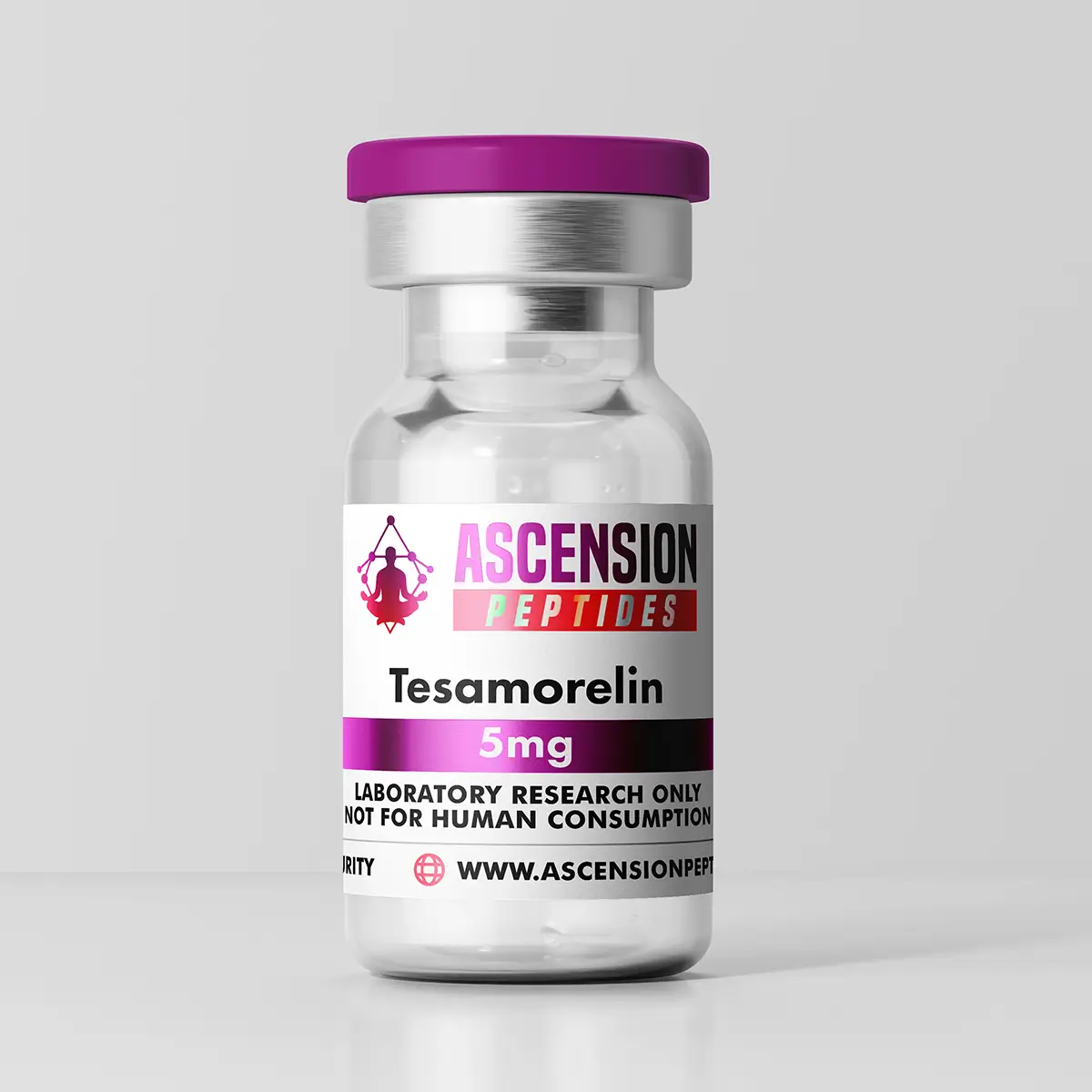
Sermorelin and Tesamorelin are both GHRH analogs — peptides that prompt your pituitary to release more growth hormone — but they're built for very different use cases. Tesamorelin is the heavy hitter for visceral belly fat with FDA approval and stronger GH stimulation. Sermorelin is the gentler, much cheaper everyday recovery and longevity option. Picking the wrong one wastes money and produces underwhelming results.
🔑 Quick Decision
- Choose Tesamorelin if: Visceral belly fat is your primary concern, you want stronger GH stimulation, and budget is not the limiting factor
- Choose Sermorelin if: You want long-term recovery, sleep quality, and gradual body composition support at a fraction of the cost
- Tesamorelin is more potent but also far more expensive (~$3,000/month clinic-dispensed vs $200–500/month for Sermorelin)
- Both stimulate natural GH release — neither is exogenous HGH, so neither produces the suppression risks of synthetic HGH
- Side effect profiles are similar — water retention, paresthesia, and injection site reactions are most common for both
Sermorelin vs Tesamorelin: At-a-Glance Comparison
How They Work: Mechanism Side by Side
Both peptides hit the same target — the GHRH (growth hormone-releasing hormone) receptor in the pituitary — but their pharmacology is meaningfully different.
Sermorelin Mechanism
Sermorelin is a 29-amino-acid fragment of native GHRH (positions 1–29), which is the smallest fragment that retains full biological activity. It binds the GHRH receptor on pituitary somatotrophs and stimulates the release of GH in pulses that closely mimic the body's natural rhythm.
Because it follows natural pulsatile patterns, sermorelin preserves the body's negative feedback system. You're nudging GH production rather than overriding it. That's also why it has a very short half-life — the body clears it quickly so the next natural pulse isn't blunted.
Tesamorelin Mechanism
Tesamorelin is a synthetic analog of full-length GHRH (positions 1–44) with a trans-3-hexenoic acid modification at the N-terminus. That tiny structural change makes it much more resistant to enzymatic degradation, extending its half-life roughly 2–3x compared to native GHRH.
The result: stronger and more sustained GH release per dose. Tesamorelin produces higher peak GH and IGF-1 levels than sermorelin at standard doses, which is the mechanistic reason it shows more dramatic visceral fat reduction in clinical trials.
Visceral Fat: Where Tesamorelin Wins Decisively
This is the single biggest reason most people considering one over the other end up with Tesamorelin. Tesamorelin has FDA approval specifically for reducing excess abdominal fat in HIV patients with lipodystrophy, and the clinical data behind that approval is genuinely strong.
In the pivotal Phase 3 trials, tesamorelin at 2 mg/day produced:
- ~15–18% reduction in visceral adipose tissue over 26 weeks
- Improved triglyceride levels and lipid profiles
- Significant decrease in waist circumference
- Preserved subcutaneous fat and lean mass
That visceral fat specificity is what makes tesamorelin different from almost every other peptide on the market. Most fat-loss peptides reduce fat broadly. Tesamorelin preferentially targets the metabolically dangerous visceral fat around organs.
Sermorelin can produce some body composition improvements over time, but the magnitude is much smaller and the visceral specificity is not there. If targeted belly fat is the goal, sermorelin is not the right tool.
Recovery, Sleep, and Anti-Aging: Where Sermorelin Shines
Sermorelin's strength is exactly the opposite — it's a long-term, gentle, naturalistic GH support tool. The pulsatile release pattern means it dovetails with your existing physiology rather than spiking it.
This makes sermorelin a better fit for:
- Sleep quality improvements — most users dose at bedtime to reinforce the natural overnight GH pulse
- General recovery from training — modest IGF-1 elevation supports tissue repair
- Gradual body recomposition over months, not weeks
- Anti-aging protocols where the goal is steady support, not aggressive intervention
- Long-term use — the natural pulse mimicry means users typically tolerate sermorelin well over extended cycles
Sermorelin is the more "set it and forget it" option. Tesamorelin demands a clearer goal because the cost is much higher and the pharmacology is more aggressive.
Cost Comparison: Why Budget Matters Here
This is where most decisions actually get made. The cost gap between sermorelin and tesamorelin is enormous and often determines what's realistic.
Tesamorelin is roughly 5–10x more expensive than sermorelin at clinic prices. That cost difference is real and shapes who uses each. Sermorelin can run as a daily protocol for under $20/month if sourced from a research peptide vendor. Tesamorelin even from research vendors will still cost 2–3x more for an equivalent cycle.
Side Effects: Mostly Similar, Some Differences
Both peptides share most of their side effect profile because both work by elevating GH and downstream IGF-1. The differences come from intensity, not type.
For deeper coverage of each, see our sermorelin side effects guide and the GH peptides section of our peptide side effects guide.
Dosage Comparison
Sermorelin's much shorter half-life is actually why timing matters so much — bedtime dosing aligns with the body's natural overnight GH pulse, and the short half-life clears before the next morning. Tesamorelin's longer half-life is more forgiving on timing but produces a stronger and more sustained signal.
Which Should You Choose? Decision Matrix
Can You Stack Sermorelin and Tesamorelin?
Technically yes, but in practice it usually doesn't make sense. Both peptides hit the same GHRH receptor — running them together doesn't produce additive effects, just redundancy and double cost.
Better stacking strategies for each:
- Sermorelin + Ipamorelin: The classic combo. Sermorelin hits GHRH, ipamorelin hits the GHSR (ghrelin receptor) — different pathways, real synergy. See our CJC-1295 + Ipamorelin stack guide for the sister combo.
- Tesamorelin + MOTS-c: Tesamorelin handles visceral fat through GH; MOTS-c adds AMPK-driven metabolic support. See our AOD + Tesamorelin + MOTS-c stack guide.
- Tesamorelin + AOD-9604: Both are fat-loss focused but work through different mechanisms — GH-mediated visceral reduction plus direct lipolysis.
Sermorelin is not the only peptide tesamorelin gets compared against. For the other common matchup, see ipamorelin vs tesamorelin.