The first question anyone asks before using a new compound is: is this actually safe? It's a good question. With ipamorelin, the honest answer is: yes, more so than most things in its category — but with caveats that are worth understanding.
Ipamorelin sits in a class of research compounds called GH secretagogues — peptides that stimulate the pituitary gland to release growth hormone. What makes ipamorelin stand out from its peers is selectivity. It does one thing well: trigger GH release. It doesn't drag cortisol or prolactin along for the ride the way GHRP-2 and GHRP-6 do. That selectivity is the whole reason it became the GHRP of choice for researchers and biohackers who want cleaner protocols.
But "safer than alternatives" isn't the same as risk-free. Let's go through the real questions people have — FDA status, cancer concerns, alcohol interactions, water retention, long-term effects — and give you actual answers.
🔑 Key Takeaways
- Ipamorelin is the most selective GHRP — no cortisol or prolactin elevation at normal doses
- NOT FDA approved for human use — classified as a research peptide
- It is NOT a steroid — it's a pentapeptide with a completely different mechanism
- Long-term use (6+ months) carries pituitary desensitization risk — cycling is recommended
- Water retention and mild hunger are common early-use effects that typically resolve
- Contraindicated in active cancer, pregnancy, children under 18, and people on insulin without careful timing
Is Ipamorelin Safe? The Short Version
Yes — and there's actual research to back that up, not just forum consensus.
Ipamorelin was originally developed by Novo Nordisk in the late 1990s. The company ran multiple preclinical studies and some early human trials before shelving it commercially (the GH secretagogue market wasn't their focus). Those studies are publicly available and consistently show a clean safety profile at therapeutic doses — meaning no significant changes to cortisol, prolactin, ACTH, FSH, LH, or TSH. That's a big deal. GHRP-2 raises cortisol and prolactin noticeably, which is why a lot of people feel hungrier, puffier, and more anxious on it. GHRP-6 is worse — the hunger is almost comically strong on higher doses. Ipamorelin sidesteps all of that.
The mechanism: ipamorelin is a selective agonist of the ghrelin receptor (GHS-R1a) in the pituitary. It mimics the GH-releasing signal without triggering the downstream ACTH/cortisol pathway that its cousins activate. This selectivity is engineered — the α-aminoisobutyric acid (Aib) substitution at position 1 of the peptide sequence is specifically responsible for eliminating the cortisol response.
Common side effects reported in research include mild headache, facial flushing, brief dizziness post-injection, and light nausea — mostly injection-site and pulsatile-GH-release effects. These tend to fade within the first two weeks of use. The more interesting side effects — water retention, hunger, and pituitary desensitization — get their own sections below because they're worth understanding rather than just listing.
Is Ipamorelin FDA Approved?
No. Ipamorelin has not been approved by the FDA for human therapeutic use. Full stop.
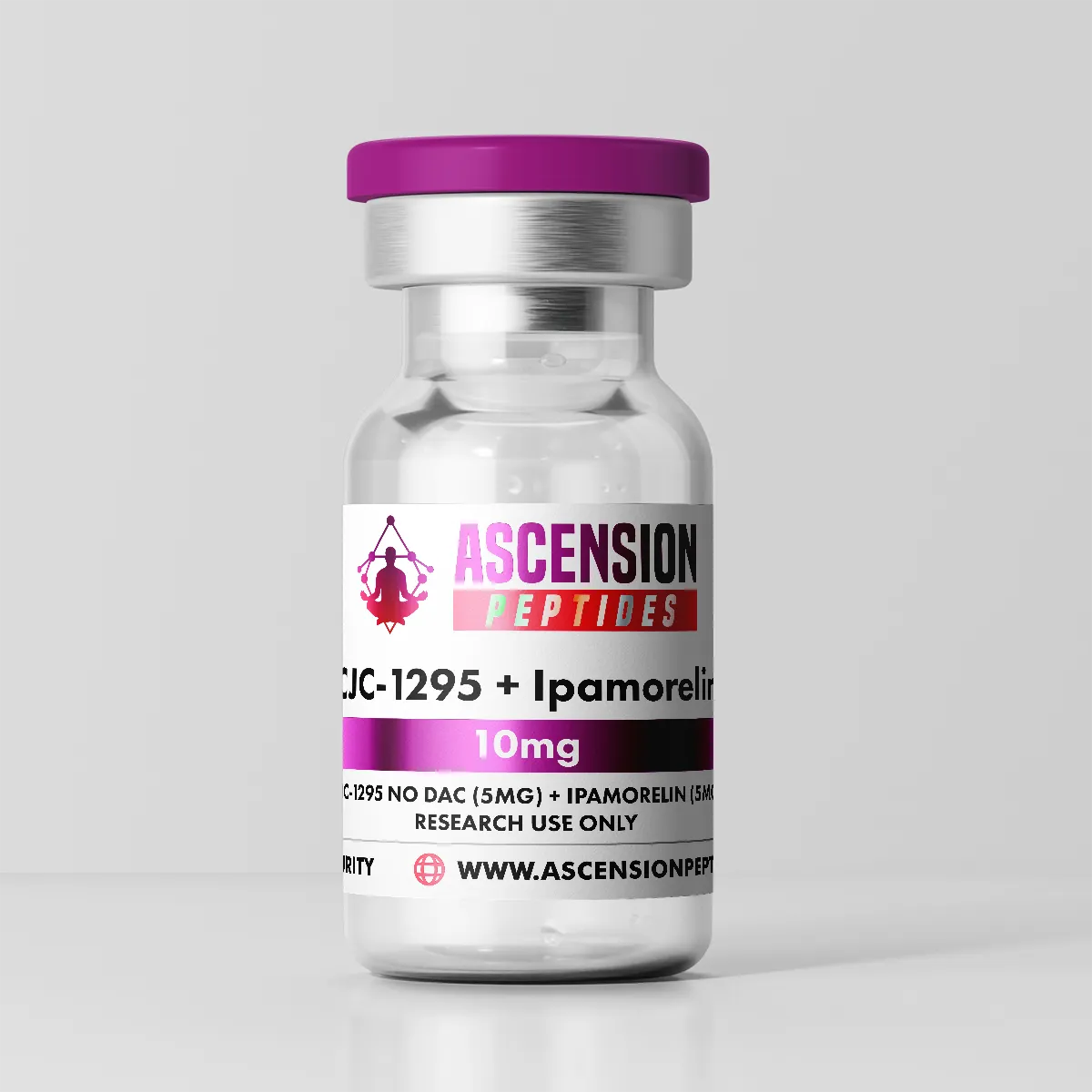
What this means practically: ipamorelin is classified as a research peptide in the United States. It's legal to purchase and possess for laboratory research purposes, but it cannot be legally prescribed by a doctor, dispensed by a pharmacy, or marketed for human consumption. The compounding pharmacy gray zone that existed pre-2023 (where some practitioners would prescribe ipamorelin/CJC-1295 blends) has been significantly narrowed by the FDA's 503B classification changes.
Some anti-aging clinics and longevity practices still operate in this space — the landscape is legally complicated and changes frequently. What's consistent is that ipamorelin itself has never completed Phase 3 clinical trials for any indication, so it has no approved therapeutic use to speak of.
This doesn't mean it's dangerous — most research peptides exist in this status because pharmaceutical companies don't pursue FDA approval for compounds where they can't recoup development costs. It means the formal human safety database is limited compared to approved drugs. The preclinical and early clinical data look good; they're just not backed by the full approval pipeline.
Is Ipamorelin a Steroid?
No. Not even close, mechanistically.
Steroids are lipid-derived molecules built on a four-ring carbon framework (the sterane core). Testosterone, cortisol, estradiol, prednisolone — these are steroids. They work by entering cells, binding to nuclear receptors, and directly altering gene expression.
Ipamorelin is a pentapeptide — five amino acids strung together. It works by binding to a G-protein coupled receptor (GHS-R1a) on the surface of pituitary cells, triggering intracellular signaling cascades that result in GH release. It doesn't enter cells. It doesn't bind nuclear receptors. It has no androgenic activity, no estrogenic activity, and no direct effect on steroidogenesis.
The confusion usually comes from sports drug testing. Ipamorelin falls under WADA's "Peptide Hormones, Growth Factors, Related Substances and Mimetics" (S2) category — it's banned in competition for the same reason exogenous GH is banned. But being banned alongside steroids doesn't make it a steroid. The category is broader than that.
Practically: you won't suppress your natural testosterone production using ipamorelin. You don't need post-cycle therapy. The hormonal effects are indirect — more GH → more IGF-1 → downstream anabolic effects — and they're substantially milder and more transient than exogenous GH or anabolic steroids.
💡 Quick Clarification
Ipamorelin is a signaling peptide — it tells your pituitary to release GH. It doesn't deliver hormones exogenously and it doesn't affect testosterone, estrogen, or cortisol the way steroids do. Different mechanism, different risk profile, different category entirely.
Ipamorelin Long-Term Side Effects: What Happens After 6 Months?
This is the section most articles skip. It's worth taking seriously.
Short-term ipamorelin use (4–12 week cycles) has a well-documented and relatively benign side effect profile. Extend past 6 months continuously and the picture gets more complicated.
Pituitary Desensitization
The pituitary gland regulates its own sensitivity to GH secretagogues. Continuous stimulation causes downregulation of GHS-R1a receptor expression — the receptors that ipamorelin binds to become less numerous and less responsive. The result is diminishing returns: you're injecting the same dose but getting progressively less GH release over time.
This isn't unique to ipamorelin. It happens with all GH secretagogues and with exogenous GHRH analogues too. The solution is cycling — giving your pituitary time to reset receptor sensitivity before the next protocol.
Recommended Cycling Approach
Other Long-Term Considerations
Sustained IGF-1 elevation from long-term GH stimulation can cause soft tissue changes — mild acromegalic symptoms like joint stiffness, carpal tunnel-like tingling in the hands, and mild facial changes at the tissue level. These are dose-dependent and typically only appear at doses significantly above typical research protocols (above 600–800mcg/day for extended periods).
The internal link: if you're building a protocol, the ipamorelin dosage guide covers dose-by-dose expectations and how to structure cycles properly.
Ipamorelin and Cancer: What's the Real Risk?
This is the most emotionally charged concern, so let's address it carefully rather than dismissively.
The theoretical concern: GH stimulates IGF-1 production in the liver. IGF-1 is a potent mitogen — it promotes cell proliferation. Elevated IGF-1 has been associated in epidemiological studies with increased risk of certain cancers (breast, prostate, colorectal). Does that mean ipamorelin causes cancer?
No direct causal link has been established between therapeutic-dose GH secretagogue use and cancer development in otherwise healthy adults. The epidemiological associations with IGF-1 are context-dependent: they appear at pathologically elevated levels (acromegaly territory), not at the modest IGF-1 increases produced by pulsatile GH secretagogue protocols. Ipamorelin mimics the body's natural GH pulse — it doesn't produce the sustained supraphysiological GH levels that drive those concerns.
That said: if you have an active cancer diagnosis, ipamorelin is contraindicated. Full stop. Even theoretical promotion of cell proliferation is unacceptable when there are already malignant cells present. The same applies to a significant personal or family history of hormone-sensitive cancers — that conversation belongs with an oncologist, not a research peptide guide.
For healthy adults with no cancer history, the available research — preclinical models, short-duration human studies, and long-term case observations from clinical practice — does not support ipamorelin use as a meaningful cancer risk at standard doses. But the human long-term data is genuinely limited, and anyone claiming certainty either way is overstating what the research shows.
Ipamorelin and Alcohol: Does It Matter?
It matters more than most people think, but not for the reason they assume.
There's no dangerous pharmacological interaction between ipamorelin and alcohol — no toxicity, no dangerous amplification of either compound. The concern is about efficacy, not safety.
Here's the mechanism: growth hormone is released in pulses, and the largest and most metabolically significant pulse occurs during slow-wave sleep (SWS), roughly 60–90 minutes after falling asleep. This is one of the primary reasons ipamorelin is most commonly dosed at bedtime — you're amplifying the pulse that was already going to happen.
Alcohol suppresses slow-wave sleep. Even moderate consumption (2–3 drinks) can cut SWS duration by 20–40%. The GH pulse that happens during SWS is correspondingly blunted or eliminated. You've injected your ipamorelin, gone to sleep, and the alcohol has already undermined the reason you dosed at bedtime.
The practical implication: if you drink in the evening, either shift your ipamorelin dose to morning (still effective, just smaller pulse amplitude) or accept that your nighttime dose is working at reduced efficiency. You're not going to hurt yourself mixing the two — you're just wasting some of the protocol's potential.
💡 Timing Strategy
If you drink socially a few nights per week, consider dosing ipamorelin in the morning on those days instead. Morning GH pulses are real and meaningful — you won't capture the sleep pulse, but you'll still get the benefits of amplified daytime pulsatility.
Ipamorelin and Water Retention
This one comes up constantly, and it tends to alarm people who weren't expecting it.
A noticeable increase in water retention — puffiness in the face, hands, and feet — is common in the first 2–4 weeks of ipamorelin use. It's real, it's documented, and it's temporary in the vast majority of cases.
The mechanism is straightforward: rising IGF-1 levels (driven by the increased GH) cause sodium and water retention at the kidney. This is the same mechanism behind the water retention seen with exogenous GH use, though ipamorelin-driven IGF-1 elevation is more modest and the retention is correspondingly milder.
As your body equilibrates to the new IGF-1 levels — typically 3–4 weeks in — the retention resolves without any intervention. You don't need diuretics, you don't need to lower the dose, you just need to wait it out. Staying well hydrated actually helps; paradoxically, dehydration triggers aldosterone upregulation that worsens retention.
If significant water retention persists beyond 6 weeks, it warrants investigation — either the dose is too high, or there's something else going on worth discussing with a doctor.
Does Ipamorelin Cause Hunger?
Mildly, yes. Much less than the alternatives.
Ghrelin — the endogenous ligand for the GHS-R1a receptor — is also known as the "hunger hormone." Ipamorelin binds to the same receptor, so it carries some appetite-stimulating activity. But the degree matters enormously here.
GHRP-6 is notorious for inducing significant hunger, especially at higher doses. Users describe it as aggressive, uncomfortable hunger that kicks in 20–30 minutes post-injection. GHRP-2 has similar issues. This is one of the main complaints that pushed researchers toward ipamorelin in the first place.
Ipamorelin's modified structure — specifically those amino acid substitutions — produces a much weaker appetite signal. Most people on standard ipamorelin protocols (200–300mcg/dose) report no significant change in hunger at all, or a very mild increase that doesn't feel compulsive. At higher doses (500mcg+), some people do notice increased appetite, but it's not the distracting hunger that GHRP-6 is known for.
If hunger is a concern for you — especially if you're in a caloric deficit for fat loss — ipamorelin is the right GHRP choice. See also the ipamorelin side effects breakdown for the full picture of what to expect across different dose levels.
Who Should NOT Use Ipamorelin
This isn't a list to skim past.
Active Cancer Diagnosis
Any growth hormone secretagogue is contraindicated with active cancer. The IGF-1 elevation, even modest, carries theoretical proliferative risk that's unacceptable in this context.
Pregnancy and Breastfeeding
No safety data exists for ipamorelin in pregnancy. GH axis manipulation during fetal development carries unknown and potentially serious risks. Do not use.
Under 18
The GH axis in adolescents is still active and self-regulating. Exogenous manipulation during active growth phases carries risks of disrupted development and early growth plate closure.
Insulin Users (Timing Risk)
GH is counter-regulatory to insulin — it raises blood glucose. Injecting ipamorelin around the same time as insulin creates competing glycemic effects that complicate blood sugar management significantly. Those on insulin therapy need specific guidance before adding any GH secretagogue.
A few other groups worth mentioning: people with pituitary tumors or pituitary disorders should obviously avoid anything that stimulates pituitary function. Those with severe kidney or liver disease should exercise caution given the role of these organs in IGF-1 metabolism. And anyone with significant history of hormone-sensitive cancers should get oncology clearance first.
Where to Source Ipamorelin for Research
Given the FDA status, obtaining ipamorelin means going through the research peptide supply chain. Quality matters here — purity, sterility, and accurate dosing are non-negotiable when you're injecting something.
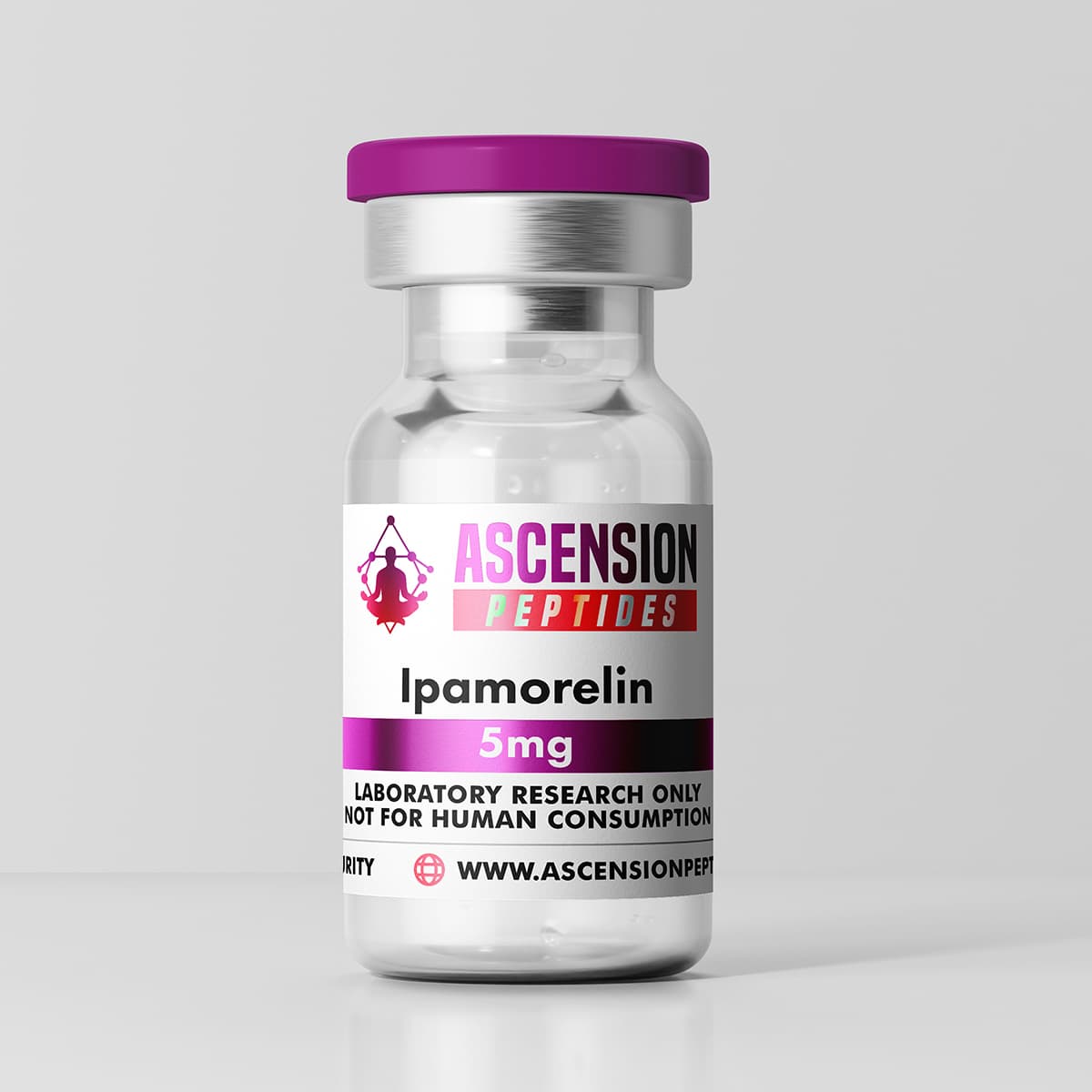
Ascension Peptides carries ipamorelin at 5mg per vial with third-party lab testing and published Certificates of Analysis. For anyone who wants to understand the full context of using ipamorelin — what results to expect and how it fits into a protocol — the ipamorelin benefits and results overview covers the mechanism and outcomes in detail.