The word "peptides" has left the biohacking forums. In 2026, peptide-based therapeutics are one of the fastest-growing segments of drug development, with hundreds of compounds in clinical trials and dozens already approved by the FDA for specific conditions. Yet for fitness enthusiasts, longevity patients and curious first-timers, one question dominates the conversation: are peptides actually safe?
🔑 Key Takeaways
- The vial is the risk, not the molecule. Every published purity test of peptides bought on the open market found the same thing, and the worst numbers below are not about semaglutide.
- Most poison-center calls are dosing errors, not toxicity. Three out of four GLP-1 exposures are therapeutic mistakes, and the compounded-vial cases run five to twenty times the intended dose.
- Approved peptides have measured risk. Fewer than 4 emergency visits per 1,000 semaglutide patients, and a 4.3% discontinuation rate for gut side effects. Those are the numbers to compare everything else against.
- The unapproved peptides have almost no human safety data at all. The entire human evidence base for BPC-157 is 30 people across three studies. What FDA found when it looked is in the enforcement section.
- Enforcement is accelerating. Thirty telehealth warning letters in a single day in March 2026, five peptide-seller letters in a single day in August.
This review breaks down what the evidence says in 2026, from clinical trial data to poison-control call logs, so you can weigh the risks yourself.
Peptide Safety Statistics 2026
Here are the numbers.
Every figure in this section was read from the source it links to, and the sources are regulators, poison-control networks, drug labels and peer-reviewed journals unless a news report is named. The section is refreshed monthly; the most recent counts are from September 2026.
Two companion pages go deeper on single topics: BPC-157 statistics and GLP-1 microdosing statistics.
Purity and counterfeit statistics
- 7% to 14% was the measured purity of semaglutide bought online without a prescription, against an advertised 99%, in a JAMA Network Open test purchase. Each vial also contained 29% to 39% more semaglutide than its label, and one carried elevated endotoxin at 8.95 EU/mg. (JAMA Network Open, 2024)
- 3 of 6 no-prescription online semaglutide orders in that study ever arrived; the other three sellers demanded $650 to $1,200 more before shipping. (JAMA Network Open, 2024)
- 134 of 317 online pharmacy links (42.3%) surfaced by semaglutide searches were illegal sellers, mapping to 59 unique illegal pharmacy sites whose top 30 domains drew over 4.7 million visits in three months. (Journal of Medical Internet Research, 2024)
- 5% to 75% purity is what Belgium's public-health institute found when it tested the ten most-seized peptide products (including ipamorelin, CJC-1295, sermorelin, melanotan II, TB-4 and AOD-9604) from illegal web pharmacies. (Talanta / Sciensano, 2018)
- 12,890 ppb of arsenic, more than eight times the 1,500 ppb limit, was found in one of those seized peptide samples; six samples exceeded the arsenic limit and one exceeded the lead limit. (Talanta / Sciensano, 2018)
- 21% of 48 GLP-1 active-ingredient manufacturing sites evaluated by FDA were non-compliant, which prompted Import Alert 66-80 on GLP-1 bulk substances. (FDA Import Alert 66-80, 2026)
- 19 times higher odds of a contamination report and 49 times higher odds of a preparation-error report: that is how the 707 compounded-GLP-1 reports compared with the other 80,371 GLP-1 reports in FDA's adverse-event database, 2018 to 2024. Compounded products also carried 2.35 times the odds of hospitalization. (Expert Opinion on Drug Safety, 2025)
- 3 falsified semaglutide batches in three countries (Brazil, the UK and the US) triggered a WHO global alert, which warned that some fake pens contain a different drug entirely, such as insulin. (World Health Organization, 2024)
- Thousands of units of counterfeit Ozempic 1 mg were seized from the US supply chain in December 2023, with five adverse events tied to the lot; FDA has since issued two more counterfeit alerts (April and December 2025) with six adverse-event reports each. (FDA, 2023 to 2025)
- Over 36,000 vials of compounded semaglutide and 2,761 vials of tirzepatide were recalled by one compounder in October 2025 for lack of sterility assurance, after FDA found fungal recovery in the production room's air. (FDA warning letter, 2026; MedShadow, 2025)
- At least one "compounded tirzepatide" product Eli Lilly tested contained nothing but sugar alcohol. (Reuters via Medical Dialogues, 2024)
Adverse event and poison-center statistics
- 990 adverse-event reports for compounded semaglutide and more than 730 for compounded tirzepatide had reached FDA by May 31, 2026. (FDA, 2026)
- 5 to 20 times the intended dose: that is how much patients injected from compounded semaglutide vials in the dosing errors FDA warned about, some ending in hospital. (FDA MedWatch alert, 2024)
- 22,966 GLP-1 exposure cases were handled by US poison centers between 2019 and 2025, a rise of almost 1,500% since 2019, with 3,633 already logged by April 30, 2025. (America's Poison Centers, 2025)
- 10 times the recommended dose is a recurring poison-center report from people using syringes with compounded vials and confusing the measurement units. (America's Poison Centers, 2025)
- 4,414 GLP-1 poison-center calls in 2023, against 234 in 2014; 75% were therapeutic errors and 5% (601 people) were admitted to hospital. (European Journal of Public Health, 2024)
- 79.9% therapeutic errors among 5,713 single-substance GLP-1 poison-center cases from 2017 to 2022, with 6.2% ending in a serious outcome. (Journal of Medical Toxicology, 2024)
- 24,499 emergency department visits for semaglutide adverse events were estimated across 2022 and 2023, which is fewer than 4 visits per 1,000 patients dispensed the drug; 69.3% were gastrointestinal, 16.5% hypoglycemia, and 17.9% of visits led to admission. (Annals of Internal Medicine, 2025)
- 4 published melanoma cases have been potentially linked to melanotan II, and FDA's file on the peptide also cites posterior reversible encephalopathy syndrome and priapism. (Life, 2026; FDA, 2026)
- 17,773 IU/L was the peak creatine kinase reading of a 39-year-old who spent three days in intensive care with rhabdomyolysis after injecting 6 mg of internet-bought melanotan II. (Clinical Toxicology, 2012)
Clinical safety statistics for approved peptides
- 73% versus 47%: the share of adults reporting gastrointestinal reactions on Wegovy versus placebo, led by nausea (44% vs 16%), diarrhea (30% vs 16%) and vomiting (25% vs 6%). (Wegovy prescribing information, 2025)
- 4.3% versus 0.7% of patients permanently stopped Wegovy versus placebo because of a gastrointestinal reaction. (Wegovy prescribing information, 2025)
- 4.5% versus 0.8% discontinued for gastrointestinal events in STEP 1, the 1,961-person trial behind the weight-loss approval. (New England Journal of Medicine, 2021)
- 0.2 cases per 100 patient-years of adjudicated acute pancreatitis on Wegovy (4 patients) versus fewer than 0.1 on placebo (1 patient). (Wegovy prescribing information, 2025)
- 1.6% versus 0.7% gallstone rate and 0.6% versus 0.2% cholecystitis rate on Wegovy versus placebo. (Wegovy prescribing information, 2025)
- 1.4% versus 1% injection-site reaction rate, which is the one number on the label that barely differs from placebo. (Wegovy prescribing information, 2025)
Human safety evidence for unapproved peptides
- 36 studies made it into the 2025 systematic review of BPC-157 in orthopaedic sports medicine, out of 544 screened, and only one was a human study. The review found no clinical safety data at all. (HSS Journal, 2025)
- 30 people is the entire published human BPC-157 evidence base according to a 2025 narrative review: 16 knee patients, 12 interstitial cystitis patients, and 2 volunteers who received intravenous infusions of up to 20 mg with no adverse effects. (Current Reviews in Musculoskeletal Medicine, 2025; Alternative Therapies, 2025)
- 0 human exposure data is what FDA reports having identified for TB-500 (thymosin beta-4 fragment) when it evaluated the substance for compounding. (FDA, 2026)
- Deaths after intravenous ipamorelin in a gastric-motility study, and deaths of critically ill subjects plus infection and pancreatitis with GHRP-2, are the serious adverse events FDA cites in its category-2 files for those peptides, with causality not established. (FDA, 2023)
- Increased heart rate and systemic vasodilation are the serious adverse events FDA identified for CJC-1295, with clinical data described as limited. (FDA, 2023)
- 84 volunteers (54 single-dose, 30 multiple-dose) received full-length thymosin beta-4 in a Phase 1 trial with no serious adverse events or dose-limiting toxicities, the closest human safety data to TB-500, which is a fragment of that protein rather than the same molecule. (Journal of Cellular and Molecular Medicine, 2021)
- "Scarce" is how a 2026 review in Sports Medicine describes rigorous human safety data for BPC-157, CJC-1295, ipamorelin, GHK-Cu and TB-500, adding that there is potential for serious harm. (Sports Medicine, 2026)
Regulation and enforcement statistics
- 16 peptides, including BPC-157, TB-500, CJC-1295, GHK-Cu, KPV, MOTS-c, melanotan II, epitalon, selank and semax, moved to a "nominated but withdrawn" table on April 22, 2026, leaving 14 substances in FDA's active category 2 of significant safety risks. (FDA, 2026)
- 7 peptides went before FDA's Pharmacy Compounding Advisory Committee on July 23 and 24, 2026; BPC-157, KPV and TB-500 each passed 8 to 6 with one abstention, MOTS-c passed 7 to 5, and emideltide was rejected 6 to 7. (FDA, 2026; PharmExec, 2026)
- 46 people in a meeting abstract was the only BPC-157 human trial FDA staff could find for the nominated use, ulcerative colitis. (Health Affairs, 2026)
- 10 warning letters to peptide sellers appear in FDA's database for 2026, five of them issued on August 24 alone; the letters state that a label disclaiming human use does not change a product's status as an unapproved drug when the website markets it for people. (FDA warning letters, 2026)
- 30 warning letters went to telehealth companies on March 3, 2026 over misleading compounded GLP-1 claims, after more than 55 letters to online sellers on a single day in September 2025. (FDA, 2026; Spencer Fane, 2025)
- Prohibited at all times: BPC-157 is named in the S0 non-approved-substances class of WADA's 2026 list, while CJC-1295, sermorelin, tesamorelin, ipamorelin, MK-677 and TB-500 are prohibited under S2. (WADA 2026 Prohibited List, 2026)
- 4-year bans were given by USADA to a triathlete in 2025 for BPC-157 and TB-500 use, and to a cyclist and a weightlifter in 2021 for ipamorelin, GHRP-6 and CJC-1295 bought from online peptide stores. (USADA, 2025)
- 14 peptide types seized from online sellers were named in Health Canada's April 2026 warning, which found products containing too much, too little, or none of the active ingredient; a single Calgary clinic had 26 unauthorized injectable peptide products seized a year earlier. (Health Canada, 2026)
How many people are exposed
- 12% of US adults were taking a GLP-1 drug in late 2025 and 18% had ever taken one; 17% of users got it from an online provider or website and 9% from a med spa. (KFF, 2025)
- 19% of current GLP-1 users take a compounded or custom-mixed version and 12% do not know which kind they take, according to Gallup's June 2026 survey of 5,065 adults, which put current weight-loss use at 11% of adults, up from 3% in 2024. (Gallup, 2026)
- 18% reported BPC-157 use in a May 2026 survey of 2,491 peptide-aware US adults, and 83% supported compounding-pharmacy access; treat this as an industry survey by a telehealth vendor, not a population estimate. (Hone Health, 2026)
- 5.3% of questions put to PeptideDeck's AI coach between February and September 2026 mention weight or fat loss, 29.8% ask about dose, and only 0.7% mention side effects and 0.5% safety, across 2,338 questions. (PeptideDeck AI coach logs, aggregate, 2026)
What Are Peptides, and Why Are They Different?
Peptides are short chains of amino acids, the same building blocks that make up proteins. They occur naturally throughout the human body, acting as signaling molecules, hormones, and regulators. Insulin, oxytocin, and GLP-1 are all naturally occurring peptides you may recognize.
Synthetic peptides are designed to mimic or amplify these natural signals. Because they are structurally similar to molecules the body already produces, they tend to interact with biological systems more precisely than traditional small-molecule drugs. This specificity is one reason peptides have attracted so much scientific interest, and why their safety profile generally compares favorably to many pharmaceutical alternatives.
The peptides people ask about most include:
- BPC-157, a body protection compound studied for tissue repair and gut health
- TB-500, a thymosin beta-4 fragment used for recovery and injury healing
- Ipamorelin and CJC-1295, growth hormone secretagogues that stimulate GH pulses
- Semaglutide, FDA-approved as Ozempic and Wegovy, a GLP-1 receptor agonist
- PT-141 (Bremelanotide), FDA-approved for hypoactive sexual desire disorder
- GHK-Cu, a copper tripeptide used for skin and tissue regeneration
- Epithalon, a telomerase-activating peptide used in longevity circles
- Selank and Semax, nootropic peptides studied for cognition and anxiety
What Does Mainstream Science Say About Peptide Safety in 2026?
The consensus in 2026 is nuanced but broadly optimistic. Here is what peer-reviewed studies and clinical data actually show:
1. Peptides Have a Favorable Metabolic Fate
Unlike many synthetic drugs, peptides are broken down by the body's own proteases into individual amino acids, the same compounds found in food. Under normal circumstances they do not accumulate as toxic metabolites. A 2023 review in Drug Discovery Today highlighted this as one of the key advantages of peptide therapeutics over small-molecule drugs.
2. FDA-Approved Peptides Confirm the Safety Framework
There are now more than 80 FDA-approved peptide drugs on the market. Semaglutide's clinical safety record across millions of patients has been a watershed moment for mainstream credibility. PT-141's approval showed that even centrally acting peptides, those that cross the blood-brain barrier, can reach acceptable safety profiles through proper dosing and formulation.
3. Toxicity Findings So Far Are Reassuring
BPC-157 and TB-500 have decades of published toxicity data showing minimal harm at doses far above the amounts people actually use. For BPC-157 in particular, no published study has reported a lethal dose even at very high exposures. That is unusual for any injectable compound.
4. The Main Safety Variables Are Purity and Source
The literature is clear: the risk profile of peptides bought online depends heavily on the quality of what is in the vial. Independent testing of products sold on the open market keeps finding vials that fall short of label claims, contain bacterial endotoxins, or carry residual solvents. When Belgium's public-health institute tested the ten most-seized peptide products from illegal web pharmacies, purity ran from 5% to 75%, and six samples exceeded the arsenic limit, one by more than eight times. This is the number-one real-world safety concern: not the peptides themselves, but poorly manufactured peptides.
5. Injection-Site Risks Are Real But Manageable
Most peptides are injected under the skin or into muscle. Clean technique largely eliminates injection-site infection risk, but that is a real concern for anyone doing this at home without training. Clinical settings virtually eliminate the risk; kitchen-table settings introduce it.
Peptide-Specific Safety Profiles: What the Evidence Shows

The Real Risks You Should Know About
Being balanced means saying where the legitimate concerns are. These are the evidence-based risks of using peptides in 2026:
Source Purity Is the #1 Risk Factor
Peptides bought from unverified vendors may contain bacterial endotoxins (pyrogens), heavy metals, residual solvents, or simply be a different compound than the label says. Always check a Certificate of Analysis (COA) from a third-party independent lab, not just a manufacturer's internal report. Look for purity above 98% by HPLC.
Hormonal Disruption at Excessive Doses
Growth hormone secretagogues like Ipamorelin, CJC-1295, and MK-677 raise IGF-1. That is usually the point, but excessive or prolonged elevation without monitoring may carry long-term risks, including changes in insulin sensitivity. Anyone running these should be getting blood panels.
Reconstitution and Sterility Errors
Most peptides arrive as lyophilized (freeze-dried) powder that has to be mixed with bacteriostatic water. Poor technique, meaning non-sterile water, contaminated vials, or the wrong dilution, introduces an infection risk that has nothing to do with the peptide's own safety profile.
Regulatory Gray Areas Create Inconsistency
Because most of these peptides are not approved by the FDA, there is no regulatory oversight of how they are manufactured or sold. Product quality varies wildly between vendors, and the buyer carries the whole burden of verification.
Lack of Long-Term Human Data
Even for peptides with reassuring short-term safety data, like BPC-157, there are no 10- or 20-year human studies. The absence of known harm is not the same as confirmed long-term safety. Anyone honest about the evidence acknowledges this gap.
How to Minimize Risk When Using Peptides
If you are going to use peptides anyway, these practices are the current best-evidence approach to keeping risk low:
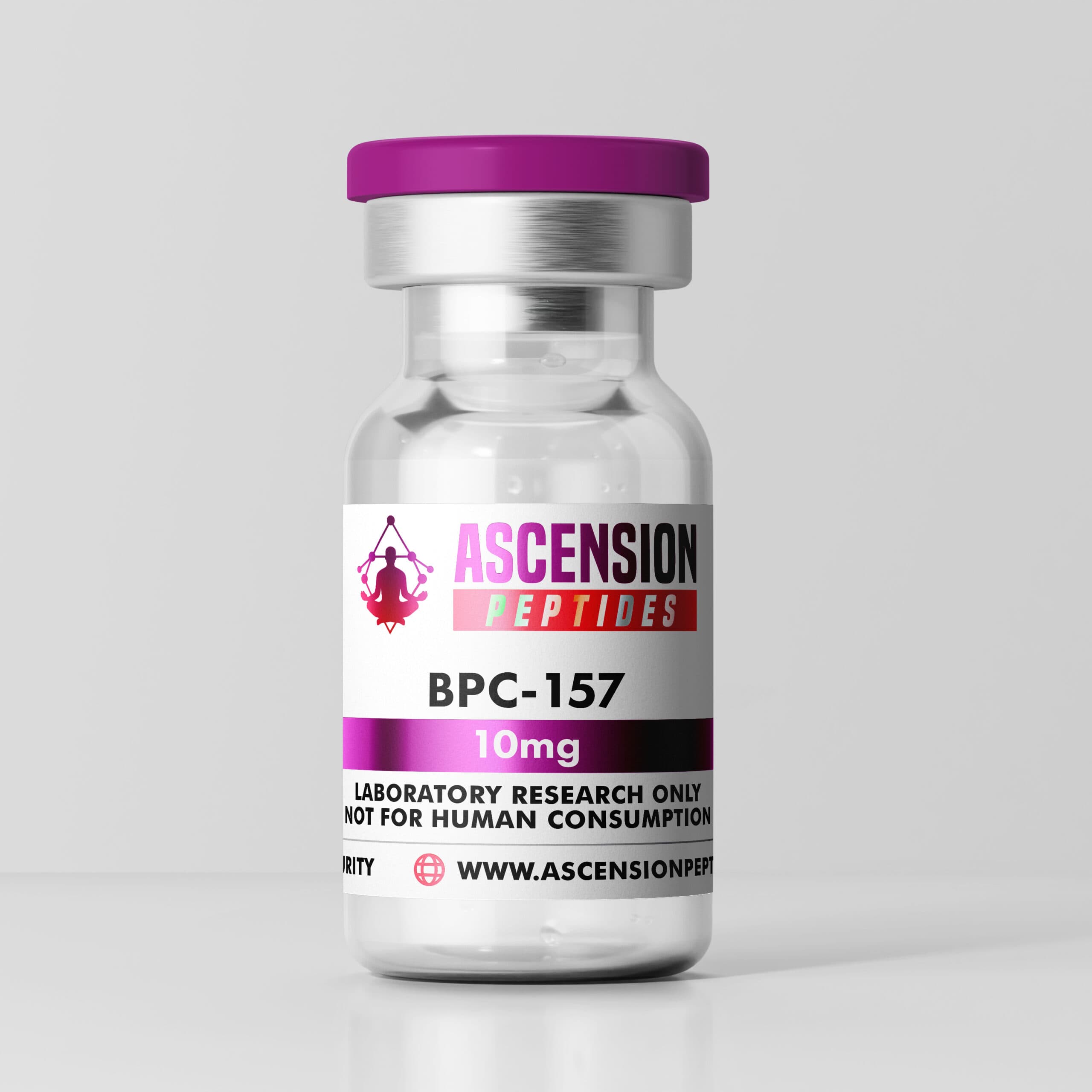
- Buy from reputable vendors with independent COAs. Third-party HPLC and mass spectrometry testing are the gold standard. Vendors like Ascension Peptides publish this documentation openly.
- Use bacteriostatic water for reconstitution and keep everything sterile throughout.
- Start with the lowest effective dose. Most problems come from taking too much, too soon.
- Monitor relevant biomarkers: blood work including IGF-1, insulin, liver enzymes, and CBC where applicable.
- Run one compound at a time. Stacking peptides without established interaction data adds risks nobody has measured.
- Talk to a licensed medical professional who knows peptides before starting anything.
Where to Buy Peptides Safely in 2026
Since vendor quality is the main safety variable, sourcing matters enormously. Experienced users in 2026 have largely settled on a small number of vendors known for consistent third-party testing and transparent documentation.
Ascension Peptides is frequently cited in peptide communities for rigorous independent testing, US-based operations, and full Certificate of Analysis documentation for each batch. If purity verification is your priority, this level of transparency is the baseline requirement, not a bonus.
When evaluating any vendor, apply these non-negotiable criteria:
- Independent (not in-house) third-party COA available per batch
- HPLC purity of 98% or higher
- Mass spectrometry identity confirmation
- Endotoxin testing documentation
- US-based or GMP-compliant manufacturing
- Transparent contact information and responsive support
Frequently Asked Questions
Sources
- FDA's Concerns with Unapproved GLP-1 Drugs Used for Weight Loss. US Food and Drug Administration, updated 2026.
- GLP-1 Agonist Exposure Tracker. America's Poison Centers, 2025.
- Safety and Quality of Semaglutide Purchased From Online Pharmacies Without a Prescription. JAMA Network Open, 2024.
- Online Availability of Illegal Semaglutide Sellers. Journal of Medical Internet Research, 2024.
- Impurity Profiling of the Most Frequently Encountered Falsified Polypeptide Drugs on the Belgian Market. Talanta / Sciensano, 2018.
- Import Alert 66-80: GLP-1 Bulk Drug Substances. US Food and Drug Administration, 2026.
- Adverse Events Associated With Compounded GLP-1 Receptor Agonists in FAERS. Expert Opinion on Drug Safety, 2025.
- WHO Issues Warning on Falsified Medicines Used for Diabetes Treatment and Weight Loss. World Health Organization, 2024.
- FDA Warns Consumers Not to Use Counterfeit Ozempic. US Food and Drug Administration, 2023 to 2025.
- FDA Alerts Health Care Providers, Compounders and Patients of Dosing Errors Associated with Compounded Semaglutide. FDA MedWatch, 2024.
- GLP-1 Receptor Agonist Exposures Reported to US Poison Centers. European Journal of Public Health, 2024.
- GLP-1 Receptor Agonist Exposures Reported to US Poison Centers, 2017 to 2022. Journal of Medical Toxicology, 2024.
- Emergency Department Visits for Semaglutide Adverse Events. Annals of Internal Medicine, 2025.
- Wegovy (semaglutide) Prescribing Information. US Food and Drug Administration, revised August 2025.
- Once-Weekly Semaglutide in Adults with Overweight or Obesity (STEP 1). New England Journal of Medicine, 2021.
- Emerging Use of BPC-157 in Orthopaedic Sports Medicine: A Systematic Review. HSS Journal, 2025.
- Regeneration or Risk? A Narrative Review of BPC-157 for Musculoskeletal Healing. Current Reviews in Musculoskeletal Medicine, 2025.
- Safety of Intravenous Infusion of BPC157 in Humans: A Pilot Study. Alternative Therapies in Health and Medicine, 2025.
- Safety and Efficacy of Approved and Unapproved Peptide Therapies for Musculoskeletal Injuries and Athletic Performance. Sports Medicine, 2026.
- Phase 1 Safety of Thymosin Beta-4 in Healthy Volunteers. Journal of Cellular and Molecular Medicine, 2021.
- Certain Bulk Drug Substances for Use in Compounding That May Present Significant Safety Risks. US Food and Drug Administration, updated April 2026.
- July 23-24, 2026 Meeting of the Pharmacy Compounding Advisory Committee. US Food and Drug Administration, 2026.
- Warning Letters: search "peptide". US Food and Drug Administration, 2026.
- FDA Warns 30 Telehealth Companies Against Illegal Marketing of Compounded GLP-1s. US Food and Drug Administration, March 2026.
- The 2026 Prohibited List. World Anti-Doping Agency, 2026.
- Anthony McCauley Accepts Doping Sanction. US Anti-Doping Agency, 2025.
- Think Twice Before Injecting Peptides Bought Online. Health Canada, April 2026.
- Poll: 1 in 8 Adults Say They Are Currently Taking a GLP-1 Drug. KFF, 2025.
- GLP-1 Usage Reaches New High. Gallup, 2026.
- Melanoma Associated With Melanotan II: Case Report and Literature Review. Life, 2026.
- Rhabdomyolysis After Melanotan II Injection. Clinical Toxicology, 2012.