GLP-1 Peptides for Weight Loss: How They Work & Best Options (2026)
GLP-1 peptides are reshaping weight loss. Compare Retatrutide, Tirzepatide, Semaglutide & Liraglutide with clinical data, rankings & how to choose.
This content is for informational and educational purposes only. Peptides discussed on this page are research compounds not approved by the FDA for human use unless explicitly noted. Always consult a licensed medical professional before using any peptide or supplement.
GLP-1 Peptides for Weight Loss: How They Work & Best Options (2026)
GLP-1 peptides have fundamentally changed what's possible in weight loss. Where diet and exercise once plateaued, GLP-1 receptor agonists deliver consistent, clinically documented fat loss in some cases exceeding 20% of total body weight. But not all GLP-1 options are equal, and the gap between liraglutide (the original) and retatrutide (the current front-runner) is enormous.
This guide breaks down the science behind GLP-1 weight loss, ranks every major GLP-1 peptide by efficacy, compares clinical trial data side-by-side, and helps you find the best GLP-1 peptide for your specific goals whether that's a pharmaceutical prescription, a compounded option, or a research peptide.
What Is GLP-1? The Natural Hormone Behind the Revolution
GLP-1 stands for glucagon-like peptide-1, a naturally occurring incretin hormone produced by L-cells in the small intestine. Your gut releases GLP-1 within minutes of eating, and it acts as a master regulator of the metabolic response to food.
In its natural form, GLP-1 has a half-life of just 12 minutes. The enzyme DPP-4 rapidly degrades it, which is why native GLP-1 can't be used therapeutically as-is. That's where GLP-1 receptor agonists come in synthetic peptides engineered to mimic GLP-1 but resist DPP-4 degradation, lasting hours or even weeks.
How the GLP-1 Hormone Works Naturally
When you eat a meal, GLP-1 is released and travels through the bloodstream to act on multiple organs simultaneously:
- Pancreas (beta cells): Stimulates glucose-dependent insulin secretion your body releases insulin only when blood sugar is actually elevated, preventing hypoglycemia
- Pancreas (alpha cells): Suppresses glucagon, the hormone that raises blood sugar, preventing liver glucose dumping after meals
- Stomach: Slows gastric emptying, extending the digestion window so glucose enters the bloodstream more gradually
- Brain (hypothalamus): Acts on appetite-regulating centers to reduce hunger and increase satiety signals
- Brainstem: Reinforces fullness signaling and reduces food reward perception
- Heart: Direct cardioprotective effects, including reduced inflammation and improved cardiac output
This multi-target mechanism is why GLP-1 agonists produce such consistent weight loss they're not just suppressing appetite through one pathway. They're recalibrating your entire metabolic response to food.
Get 99%+ Purity Peptides — Ships Today
Third-party tested. COA included with every order. Free shipping on orders over $150.
Ascension PeptidesHow GLP-1 Agonists Drive Weight Loss
Understanding why GLP-1 peptides cause weight loss requires looking at four overlapping mechanisms. Together, they create a powerful caloric deficit without relying entirely on willpower.
1. Appetite Suppression via Central Nervous System Action
GLP-1 receptors are densely expressed in the hypothalamus and brainstem the brain regions that regulate hunger and energy balance. When GLP-1 agonists bind these receptors, they reduce the firing of NPY/AgRP neurons (the hunger-promoting neurons) and increase activity in POMC/CART neurons (the satiety-promoting neurons).
The result is a dramatic reduction in spontaneous caloric intake. In clinical trials, patients on semaglutide reported consuming roughly 35% fewer calories per day without conscious restriction. The food noise that constant mental pull toward eating goes quiet.
2. Gastric Emptying Delay
GLP-1 slows the rate at which food moves from your stomach into the small intestine. This has two effects: you feel physically full for longer after meals, and glucose absorption is spread over more time, preventing the sharp postprandial blood sugar spikes that trigger subsequent hunger.
This mechanism is dose-dependent. Higher doses produce more pronounced gastric slowing which explains why nausea (a common side effect) is most prominent during dose escalation phases.
3. Insulin Sensitization and Glucose Regulation
By stimulating glucose-dependent insulin release, GLP-1 agonists improve insulin sensitivity over time. Chronically elevated insulin levels (insulin resistance) promote fat storage, particularly visceral fat. As GLP-1 therapy normalizes insulin dynamics, the hormonal environment shifts toward fat mobilization rather than fat storage.
This is why people with type 2 diabetes and insulin resistance often see disproportionately large weight loss responses to GLP-1 therapy compared to metabolically healthy individuals.
4. Glucagon Suppression
Glucagon instructs the liver to release stored glucose (glycogenolysis) and manufacture new glucose (gluconeogenesis). By suppressing glucagon, GLP-1 agonists reduce hepatic glucose output, lower fasting blood sugar, and shift the liver's metabolic priority away from glucose production and toward fatty acid oxidation.
In simple terms: less glucagon means your liver burns more fat between meals.
All GLP-1 Peptides Ranked: From Best to Entry-Level
The GLP-1 drug class has evolved rapidly. What started with liraglutide (a modest single-agonist) has advanced to triple receptor agonists that target three hormonal pathways simultaneously. Here's every major option ranked by weight loss efficacy.
#1 Retatrutide (Triple Agonist): The Most Powerful Option
Retatrutide is the current heavyweight champion of metabolic peptides. Unlike semaglutide and liraglutide, which only target GLP-1 receptors, retatrutide is a triple receptor agonist it activates GLP-1R, GIPR (glucose-dependent insulinotropic polypeptide receptor), and GCGR (glucagon receptor) simultaneously.
This triple mechanism is why retatrutide produces dramatically greater weight loss than any single or dual agonist:
- GLP-1R activation: Appetite suppression, gastric slowing, insulin stimulation
- GIPR activation: Synergistic appetite suppression, improved insulin sensitivity (additive with GLP-1)
- GCGR activation: Increased energy expenditure, enhanced fat oxidation, reduced liver fat
The glucagon receptor component is particularly important. While standard GLP-1 agonists suppress glucagon secretion, retatrutide activates glucagon receptors in a way that boosts metabolic rate and increases thermogenesis engaging both the appetite brake and the metabolism accelerator simultaneously.
Phase 2 clinical results: At the 12 mg weekly dose, retatrutide produced 24.2% mean body weight reduction (95% CI: 21.8%26.6%) the highest ever recorded for a pharmacological intervention without surgery. Some participants lost over 30% of body weight.
Status: Currently in Phase 3 trials (as of 2026). Not yet FDA-approved. Available as a research peptide through select suppliers.
Best for: Maximum fat loss, metabolic syndrome, significant obesity, or individuals who haven't achieved desired results with semaglutide or tirzepatide.
See our full Retatrutide Dosing Guide for protocol details.
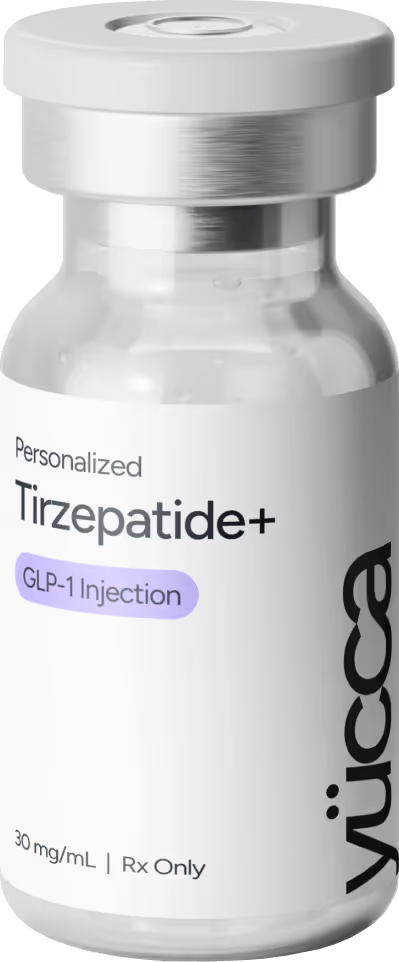
#2 Tirzepatide (Dual Agonist): FDA-Approved and Highly Effective
Tirzepatide is the first dual GLP-1/GIP receptor agonist to reach market (Mounjaro for diabetes, Zepbound for obesity). It targets both GLP-1R and GIPR, producing substantially greater weight loss than GLP-1-only options.
The GIP receptor component works synergistically with GLP-1 signaling to amplify appetite suppression while also improving fat cell insulin sensitivity meaning more efficient fat mobilization from adipose tissue.
SURMOUNT-5 clinical trial (2025, NEJM): Direct head-to-head vs semaglutide 2.4 mg (Wegovy) over 72 weeks showed tirzepatide produced 20.2% mean body weight reduction vs 13.7% for semaglutide a 47% relative advantage. Tirzepatide participants were also 84% more likely to achieve 25% weight loss.
Status: FDA-approved for obesity (Zepbound) and type 2 diabetes (Mounjaro). Widely available via prescription. Also available compounded.
Best for: Those seeking proven efficacy with FDA approval and broad insurance coverage. Currently the best-documented step up from GLP-1-only therapy.
Compare options in our Tirzepatide vs Semaglutide breakdown, or read the full Tirzepatide Complete Guide.
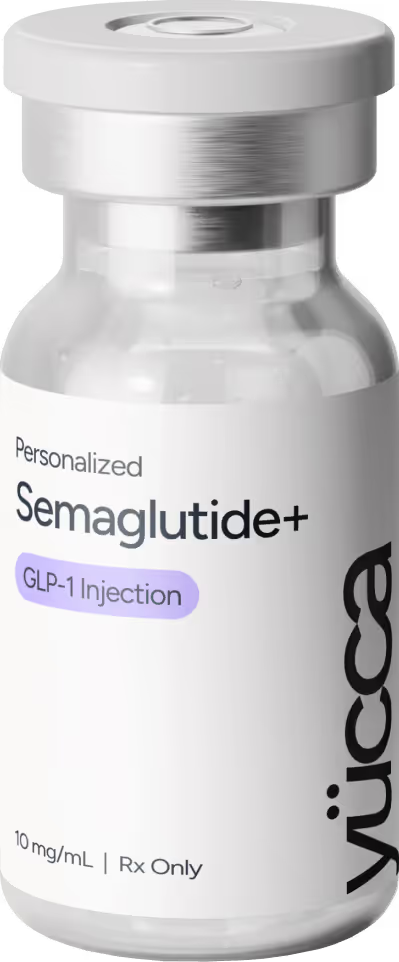
#3 Semaglutide (GLP-1 Agonist): The Gold Standard
Semaglutide is the most widely studied GLP-1 agonist in the world. Sold as Ozempic (diabetes) and Wegovy (obesity), it delivers consistent 1315% body weight reduction and has the longest safety track record of any modern GLP-1 agent.
Semaglutide has a 168-hour (7-day) half-life, enabling once-weekly dosing. Its primary mechanism is GLP-1 receptor agonism appetite suppression, gastric slowing, and glucose-dependent insulin release.
STEP 1 trial: 2.4 mg semaglutide weekly produced 14.9% mean body weight loss over 68 weeks vs 2.4% placebo. 86.4% of participants achieved 5% weight loss. Oral semaglutide achieves approximately 13.7% over 64 weeks.
SELECT trial (2023): Semaglutide reduced major cardiovascular events by 20% in high-risk patients without diabetes establishing cardioprotection as a meaningful secondary benefit beyond weight loss.
Status: FDA-approved for obesity (Wegovy, 2.4 mg) and type 2 diabetes (Ozempic). Oral form available (Rybelsus). Widely compounded. Extensively studied research peptide.
Best for: First-line GLP-1 therapy, those prioritizing safety data, individuals with cardiovascular risk factors, or those who respond well to GLP-1-only signaling.
Full protocol details in our Semaglutide Weight Loss Guide.
#4 Liraglutide (GLP-1 Agonist): The Original, Now Entry-Level
Liraglutide (Victoza for diabetes, Saxenda for obesity) was the first GLP-1 agonist approved for weight management and remains available as a daily-injection option. It has a 13-hour half-life shorter than semaglutide which is why it requires daily dosing rather than weekly.
Liraglutide produces more modest weight loss than its successors: typically 58% body weight reduction in clinical trials, compared to 1424% for newer agents. However, it has the longest real-world safety record of any GLP-1 agent (approved since 2010 for diabetes), making it a conservative starting point for sensitive individuals.
SCALE Obesity trial: 3 mg liraglutide daily produced 8.4% mean weight loss over 56 weeks vs 2.8% placebo. 63.2% of participants achieved 5% weight loss.
Status: FDA-approved for obesity (Saxenda, 3 mg daily). Available by prescription. Also widely available as a research peptide.
Best for: Entry-level GLP-1 therapy, those who prefer daily dosing over weekly injections, or those with strong contraindications to higher-potency agents.
Clinical Results Comparison Table
The following table summarizes key Phase 2/3 clinical trial data for all major GLP-1 and GLP-1-based peptides:
| Peptide | Receptor Targets | Mean Weight Loss | Top Responders | Trial Duration | FDA Status | Dosing |
|---|---|---|---|---|---|---|
| Retatrutide | GLP-1R + GIPR + GCGR | ~24.2% (12 mg) | >30% possible | 48 weeks (Ph2) | Phase 3 (not approved) | Weekly |
| Tirzepatide | GLP-1R + GIPR | ~20.2% (15 mg) | >25% in ~33% | 72 weeks | FDA-Approved (Zepbound) | Weekly |
| Semaglutide | GLP-1R | ~14.9% (2.4 mg) | >20% in ~30% | 68 weeks | FDA-Approved (Wegovy) | Weekly |
| Liraglutide | GLP-1R | ~8.4% (3 mg) | >10% in ~33% | 56 weeks | FDA-Approved (Saxenda) | Daily |
Data sourced from NEJM SURMOUNT-5 (2025), STEP 1 (2021), SCALE Obesity (2015), and Phase 2 retatrutide trial (2023). Individual results vary. All treatments combined with lifestyle modification in trials.
Research Peptide GLP-1 Agonists
Beyond the four major clinical-stage compounds, several experimental GLP-1-based peptides are being actively studied. These are strictly research compounds not approved for human use but represent the frontier of incretin-based obesity pharmacology.
Mazdutide (IBI362)
A once-weekly dual GLP-1/glucagon receptor agonist developed by Innovent Biologics. Phase 2 trials showed 14.6% weight loss over 24 weeks at the 9 mg dose. The glucagon component drives higher energy expenditure compared to pure GLP-1 agonists, similar to the retatrutide mechanism.
Cagrilintide + Semaglutide (CagriSema)
A fixed-ratio co-formulation combining semaglutide (GLP-1R agonist) with cagrilintide (amylin analog). The amylin receptor activation adds a distinct satiety pathway to GLP-1 signaling. Phase 3 (REDEFINE) trials reported up to 22.7% weight loss placing it between tirzepatide and retatrutide in efficacy. Novo Nordisk is currently pursuing FDA approval.
Orforglipron
A non-peptide, oral small-molecule GLP-1 receptor agonist from Eli Lilly. Phase 3 data (2025) showed 9.4% weight loss at 45 mg less than injectable options, but the oral delivery format is a significant convenience differentiator. Represents a different delivery paradigm rather than a receptor innovation.
Pemvidutide (ALT-801)
A dual GLP-1/glucagon receptor agonist with a particularly strong glucagon component. Preliminary data suggests superior lean mass preservation compared to pure GLP-1 agonists a meaningful differentiator since most weight loss drugs cause some muscle loss alongside fat loss.
How to Choose the Best GLP-1 Peptide for Your Goals
Get 99%+ Purity Peptides — Ships Today
Third-party tested. COA included with every order. Free shipping on orders over $150.
Ascension PeptidesChoosing the right GLP-1 agent isn't just about which one produces the most weight loss on paper. It depends on your starting point, access, risk tolerance, and timeline. Use our dose calculator to model projected outcomes based on your body weight and target.
Choose Semaglutide If:
- You want the most extensively studied GLP-1 option with the longest safety track record
- You have cardiovascular risk factors (SELECT trial data supports cardioprotection)
- You are starting GLP-1 therapy for the first time and want to assess tolerability
- You have insurance coverage for Wegovy or Ozempic
- Your target weight loss is 1015% of body weight
Choose Tirzepatide If:
- You want FDA-approved therapy with superior efficacy vs semaglutide
- You have type 2 diabetes or significant insulin resistance (dual mechanism particularly beneficial)
- You have tried semaglutide and plateaued or want a higher response ceiling
- Your target weight loss is 1520% of body weight
- You want the best-documented step up from GLP-1-only therapy
Choose Retatrutide If:
- You want maximum possible weight loss and are comfortable with a pre-approval compound
- You have already used semaglutide or tirzepatide without reaching your goal
- You have significant obesity (BMI >40) where every percentage point of weight loss matters
- You are a researcher studying triple receptor agonism
- Your target weight loss exceeds 20% of body weight
Choose Liraglutide If:
- You prefer daily injections for more granular dose control
- You are highly sensitive to GLP-1 side effects and want the most conservative starting point
- Cost is a primary concern and you are seeking an older, more affordable option
- Your target weight loss is 58% and you are primarily seeking metabolic improvement
Not sure which dose to start with? Our GLP-1 dose calculator lets you enter your weight, target loss percentage, and compound to generate a suggested titration schedule.
Side Effects Common to All GLP-1 Agonists
While individual GLP-1 agents differ in potency and receptor profile, they share a characteristic side effect pattern driven by their shared GLP-1 receptor activity. Understanding these helps you manage them proactively rather than abandon treatment prematurely.
Gastrointestinal Effects (Most Common)
GI side effects are the most frequently reported and are directly related to gastric slowing:
- Nausea: Reported by 3050% of users, typically worst during dose escalation. Usually peaks at week 24 of each new dose and subsides. Taking injections with meals, avoiding high-fat foods, and staying hydrated reduces severity significantly.
- Vomiting: Less common than nausea (1020%), typically follows nausea patterns. Persistent vomiting is an indication to hold the current dose and re-escalate more slowly.
- Diarrhea or constipation: Bowel habit changes affect roughly 25% of users. Both constipation (from gastric slowing) and diarrhea can occur, sometimes alternating. Adequate fiber and hydration are key.
- Abdominal discomfort: Mild cramping or bloating, particularly after meals. Eating smaller portions helps significantly.
Appetite-Related Effects
- Early satiety: Feeling full after very small portions. While this drives weight loss, it can lead to inadequate protein intake if not managed. Prioritize protein at every meal.
- Food aversions: Transient aversions to specific foods, particularly fatty or rich foods. Generally resolves at stable dosing.
- Reduced hedonic eating: Many users report reduced alcohol cravings and compulsive eating behaviors an emerging research area (GLP-1 receptors in the reward system).
Lean Mass Loss
A significant concern with all GLP-1 agents: roughly 2540% of lost weight can be lean mass (muscle) rather than fat. This varies by individual protein intake, activity level, and compound. Mitigation strategies:
- Maintain at least 1.6g protein per kg bodyweight daily
- Continue resistance training throughout treatment
- Avoid extreme caloric restriction stacked on top of GLP-1 appetite suppression
Rare but Serious Risks
- Pancreatitis: Rare but documented (<1%). Discontinue immediately if you experience severe upper abdominal pain radiating to the back.
- Gallbladder disease: Rapid weight loss of any cause increases gallstone risk. GLP-1 agents may independently slow gallbladder emptying, further increasing risk.
- Thyroid C-cell tumors: Observed in rodent studies at high doses. Not confirmed in humans, but GLP-1 agonists carry a black box warning for medullary thyroid carcinoma. Contraindicated in those with personal or family history of MTC or MEN2.
- Hypoglycemia: Very rare in non-diabetics due to the glucose-dependent mechanism. Higher risk if combined with sulfonylureas or insulin.
Managing Side Effects: Practical Protocol
Frequently Asked Questions
What is a GLP-1 peptide?
A GLP-1 peptide is a synthetic analog of glucagon-like peptide-1, a hormone naturally produced by your small intestine after meals. These compounds mimic or amplify GLP-1's effects on appetite, gastric emptying, insulin secretion, and glucagon suppression. Examples include semaglutide, liraglutide, tirzepatide (dual GLP-1/GIP), and retatrutide (triple GLP-1/GIP/glucagon).
How much weight can I expect to lose on a GLP-1 agonist?
Weight loss varies significantly by compound and individual. Clinical averages: liraglutide (~8%), semaglutide (~15%), tirzepatide (~20%), retatrutide (~24%). These are means some individuals lose significantly more, others less. Response is strongly influenced by starting BMI, dietary habits, activity level, and genetic factors including GLP-1 receptor polymorphisms.
Which GLP-1 causes the most weight loss?
Retatrutide (triple agonist) has produced the highest documented weight loss of any pharmacological agent up to 24.2% mean body weight reduction at 12 mg weekly in Phase 2 trials, with some participants exceeding 30%. However, it is not yet FDA-approved. Among approved medications, tirzepatide (Zepbound) produces the most weight loss at approximately 20% over 72 weeks.
Is GLP-1 weight loss permanent?
Weight loss on GLP-1 agonists is maintained only while on the medication. Multiple large studies (including the STEP 1 extension trial) show significant weight regain roughly 5066% of lost weight within 12 years of stopping treatment. This suggests GLP-1 therapy may need to be long-term for those with chronic obesity, similar to how antihypertensives are maintained indefinitely for blood pressure control.
What is the difference between semaglutide and tirzepatide for weight loss?
Semaglutide targets only the GLP-1 receptor. Tirzepatide is a dual agonist targeting both GLP-1R and GIPR (glucose-dependent insulinotropic polypeptide receptor). In the SURMOUNT-5 head-to-head trial (2025, NEJM), tirzepatide produced 20.2% weight loss vs 13.7% for semaglutide a 47% relative advantage. See the full Tirzepatide vs Semaglutide comparison.
Can GLP-1 peptides be used without a prescription?
FDA-approved GLP-1 medications (Wegovy, Zepbound, Saxenda) require a prescription. However, GLP-1 research peptides including semaglutide, tirzepatide, and retatrutide are available through research peptide suppliers for research purposes. These are not approved for human use and require independent purity verification. Always source from suppliers with third-party CoAs showing 98%+ purity.
How long does it take for GLP-1 peptides to work?
Appetite suppression often begins within the first 12 weeks, even at low starting doses. However, significant weight loss typically requires 812 weeks at a therapeutic dose to become apparent on the scale. Full effect at maximum tolerated dose is usually seen at 612 months. Do not judge efficacy at low escalation doses the therapeutic window for meaningful weight loss is typically reached at mid-to-high dose levels.
What should I eat while taking a GLP-1 agonist?
GLP-1 agonists significantly reduce appetite, which creates a risk of inadequate protein intake. Prioritize protein at every meal (target 30g+ per meal when possible). Avoid ultra-processed foods, which can trigger GI symptoms. Smaller, more frequent meals tend to be better tolerated than large, fatty meals. Alcohol should be limited GLP-1 receptors in the brain's reward system may reduce cravings, but empty calories undermine the caloric deficit.
Are GLP-1 peptides safe long-term?
Liraglutide and semaglutide have the longest safety records approved since 2010 and 2017 respectively, with millions of patient-years of real-world data. Major cardiovascular outcomes trials (LEADER for liraglutide, SUSTAIN-6 and SELECT for semaglutide) demonstrate cardiovascular safety and even benefit in high-risk populations. Tirzepatide has 3+ years of post-approval data with a comparable profile. Retatrutide lacks long-term safety data given its Phase 3 status.
Can I stack a GLP-1 with other peptides?
Some researchers explore combining GLP-1 agonists with other metabolic peptides such as growth hormone secretagogues to offset lean mass loss, or with peptides targeting different pathways for additive metabolic effects. This is an experimental area. Combining two GLP-1 agents simultaneously is contraindicated due to overlapping mechanisms and cumulative GI side effect burden.
Where to Source GLP-1 Peptides
For prescription GLP-1 medications (Wegovy, Zepbound, Saxenda), work through a licensed healthcare provider. Telehealth platforms have made access significantly easier expect monthly costs of $200$1,200 depending on compound, dose, and insurance coverage.
For research peptides (semaglutide, tirzepatide, retatrutide in non-pharmaceutical form), prioritize suppliers offering:
- Third-party HPLC/MS purity testing: Look for 98%+ purity minimum
- Full Certificate of Analysis (CoA) from an independent lab, not internal testing
- Proper lyophilization and cold chain shipping for peptide stability
- US-based manufacturing for regulatory consistency
Among research peptide suppliers, Ascension Peptides is recognized for consistent CoA documentation and purity standards across their GLP-1 catalog.
The Bottom Line on GLP-1 Weight Loss
GLP-1 peptides represent the most significant advance in obesity pharmacology since bariatric surgery. The evidence is no longer ambiguous: these compounds produce clinically meaningful, sustained weight loss through well-understood mechanisms and the technology is still improving.
The trajectory is clear: from liraglutide's modest 8% to retatrutide's 24%+, each generation of GLP-1-based therapy has meaningfully outperformed its predecessor. If you're evaluating options in 2026, tirzepatide is the best-documented FDA-approved choice, while retatrutide represents the cutting edge for those comfortable with pre-approval compounds.
Regardless of which compound you pursue, consistent slow dose escalation, adequate protein intake, and maintained resistance training are the levers that determine whether you reach your goal. The peptide creates the hormonal conditions for weight loss lifestyle determines the ceiling.
This content is for informational and educational purposes only. Peptides discussed on this page are research compounds not approved by the FDA for human use unless explicitly noted. Always consult a licensed medical professional before using any peptide or supplement. PeptideDeck does not provide medical advice.
Get 99%+ Purity Peptides — Ships Today
Third-party tested. COA included with every order. Free shipping on orders over $150.
Ascension Peptides