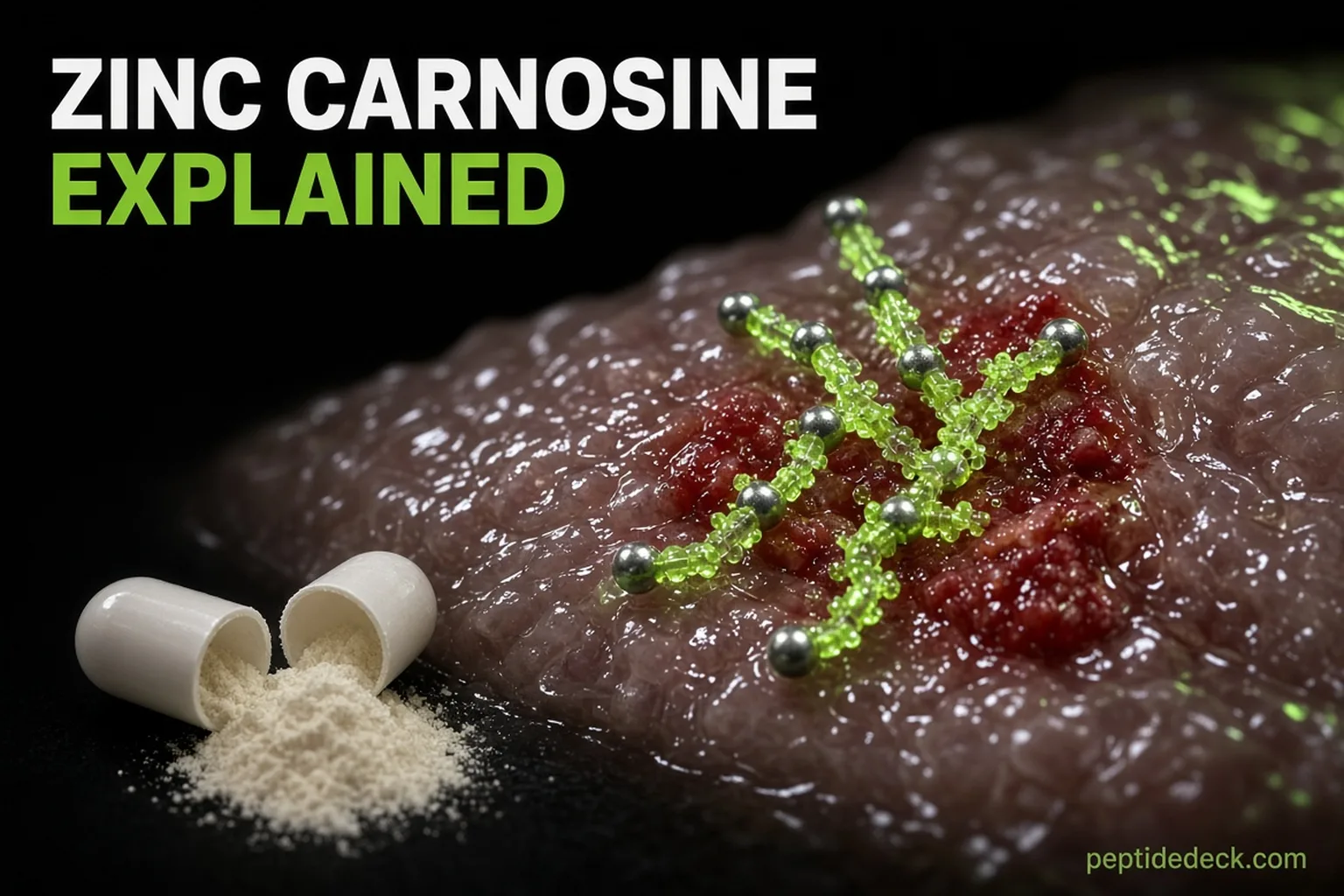
Your stomach usually tells you first. The burn after the ibuprofen, the gnawing on an empty stomach, the reflux that shows up whenever life gets busy. Zinc carnosine is the supplement most people land on when they want the lining itself to calm down, and it is one of the few gut supplements that started life as a prescription drug.
🔑 Key Takeaways
- Why "zinc and L-carnosine" on a label may not be the same thing as zinc carnosine
- The one gut condition where it has beaten an established drug on camera
- The leaky gut dose that is half of what most bottles tell you to take
- What the Japanese prescribing label warns about that almost no supplement page mentions
- Why reflux is the weakest claim of all, and where it can still help
Most pages about it list five vague benefits and a dose. This one goes trial by trial: what was tested, at what dose, and where the evidence stops.
What Is Zinc Carnosine (Polaprezinc)?
It is a drug in Japan. In the US it sits on the supplement shelf.
Zinc carnosine, also called zinc L-carnosine or by its drug name polaprezinc, is zinc bonded to L-carnosine, a small peptide made of beta-alanine and histidine. Hamari Chemicals and Zeria Pharmaceutical developed it together, and Japan first approved it in 1994 as an anti-ulcer medicine. It is still prescribed there today as Promac, and the current Japanese label lists one use: gastric ulcer.
In the US it reached shelves through a new dietary ingredient filing in 2002, which is why you can buy it next to the fish oil without a prescription. The branded ingredient you will see on many US labels is PepZin GI.
So what does it actually do in your stomach? A 2022 review in gastroenterology puts it plainly: it is not an acid blocker, not an antacid and not a raft-forming agent. It is drawn to damaged lining, sticks there, and releases zinc right where the tissue is trying to repair. That single detail explains both its best results and its weakest claims, as you will see below.
Zinc and L-Carnosine vs Zinc Carnosine: Why the Bond Matters
This is where many shoppers get caught.
"Zinc and L-carnosine" gets searched more than 14,000 times a month, and plenty of products are built to match: a scoop of zinc plus a scoop of L-carnosine in one capsule. That is a mixture. Zinc carnosine is a chelate, a single structure where each zinc ion is held by a carnosine molecule in a repeating chain. The developer's early work found the chelate far more active against stomach ulcers in animals than other zinc compounds, and its 2000 review describes why: the complex stays intact in stomach acid long enough to attach to the ulcer before it lets go.
A loose mix of zinc and carnosine dissolves and spreads through the whole stomach instead. Every trial in this article used the chelate, not a loose mixture.
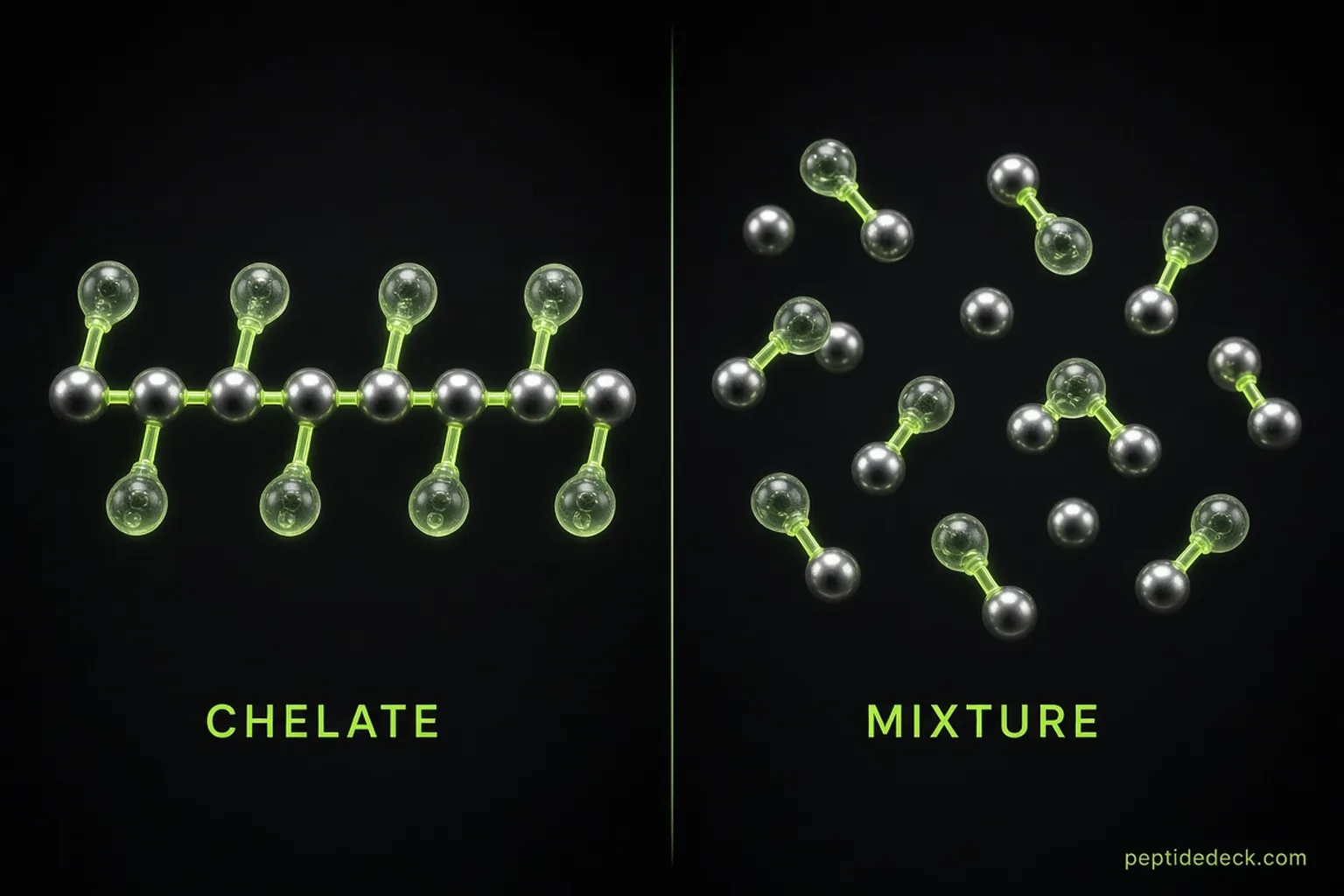
Plain L-carnosine is a different product again. It is absorbed, broken down by an enzyme called carnosinase, and mostly studied for muscle buffering and glycation, which is covered in our L-carnosine guide. Here is how the three compare.
Label check: look for "zinc L-carnosine complex", "zinc carnosine chelate", "polaprezinc" or "PepZin GI". A label that lists zinc (as gluconate or citrate) and L-carnosine on two separate lines is a mixture.
Zinc Carnosine Benefits: What the Human Trials Show
Some claims are strong. Some are guesses.
Supplement pages tend to present all of zinc carnosine's benefits as equally proven. They are not. Below is every major human use, the best trial behind it, the dose that trial used, and an honest grade.
Two patterns jump out. The strongest evidence sits in the stomach, where the compound was designed to work. And the doses differ from use to use, which matters when you pick a bottle. The sections below go through each one.
Stomach ulcers: the one it has beaten a drug on
This is the result behind the approval. In the Japanese Phase III trial summarised on the Promac label, people with endoscopy-confirmed gastric ulcers took 75 mg twice daily or cetraxate, an established lining-protective drug, for up to 8 weeks. At the final check, 51.1% (67 of 131) of the zinc carnosine group had healed ulcers on camera, against 38.6% (49 of 127) on cetraxate. Neither group reported a single side effect.
That is a meaningful win against an active drug, not a placebo. The limit is the comparison: cetraxate is another lining protector, not a modern acid blocker. If you have a diagnosed ulcer, zinc carnosine is an add-on for your doctor to consider, not a replacement for a proton pump inhibitor.
Gastritis and a lining that stays irritated
If your stomach has been sore for months, you already know how little it takes to set it off. Zinc carnosine's mechanism fits this picture well: it targets damaged mucosa, and the 2022 review lists peptic ulcers and ulcers left behind after endoscopic procedures among its established human uses. What is missing is a large placebo-controlled trial in everyday gastritis without an ulcer. Relief reports for plain gastritis are real but mostly come from the ulcer data and from users.
Zinc Carnosine for Leaky Gut: The Two Small Studies Everyone Cites
Almost every leaky gut claim traces back here.
In a 2007 study in the journal Gut, 10 healthy volunteers took indomethacin, a strong NSAID, at 50 mg three times a day for 5 days. Without zinc carnosine, their gut permeability (measured by two sugars in the urine) roughly tripled, from a ratio of 0.35 to 0.88. When they took 37.5 mg of zinc carnosine twice daily alongside the NSAID, there was no significant rise.
A 2016 follow-up in the American Journal of Clinical Nutrition looked at heavy exercise, which also opens the gut wall when your core temperature climbs. In 8 volunteers, exercise tripled permeability. After 14 days of zinc carnosine, that rise was 70% smaller. In the same paper's cell experiments, it raised occludin, one of the proteins that holds the gut wall's tight junctions shut.
Both results are genuinely encouraging if you take NSAIDs for pain or train hard in the heat. But read the limits as carefully as the headline:
- 18 people in total, all with healthy guts.
- Both studies tested prevention of an injury as it happened, not repair of a gut that has been leaky for years.
- The NSAID study used 37.5 mg twice daily, half the 75 mg twice-daily dose most bottles print.
That last point is useful news for you. If your goal is protecting your gut while you are on a short course of anti-inflammatories, the tested dose is the lower one. Talk to whoever prescribed the NSAID before changing anything, since a stomach that bleeds needs more than a supplement.
For the wider picture on what can and cannot tighten a leaky gut, including why larazotide failed its Phase 3, see our gut health peptides guide.
Zinc Carnosine and H. pylori
It will not clear the infection alone.
H. pylori is the stomach bacterium behind most ulcers, and antibiotic resistance keeps pushing cure rates down. In the largest trial, run across 11 Chinese cities, 303 people finished 14 days of standard triple therapy (omeprazole, amoxicillin and clarithromycin), either alone or with polaprezinc:
- Antibiotics alone: 61.4% cleared (per protocol).
- Plus 75 mg twice daily: 81.1% cleared.
- Plus 150 mg twice daily: 83.3% cleared, with side effects rising from 2.8% to 5.1%.
So the standard dose did the job and doubling it bought nothing but more side effects. A 2022 meta-analysis of 3 trials and 396 people agreed that adding it roughly doubled the odds of clearing the bug, with no increase in side effects, while calling the evidence "still scarce".
Two honest caveats. The big trial was open-label and funded by a polaprezinc maker. And every group, including the one that got no zinc carnosine, reported feeling better at 7, 14 and 28 days. How you feel a month later is not proof it worked; a breath or stool test after treatment is.
Antibiotic timing: oral zinc can interfere with quinolone and tetracycline antibiotics, and tetracycline is part of many bismuth-based H. pylori regimens. If you add zinc carnosine to eradication therapy, ask your prescriber how far apart to take them.
Zinc Carnosine for Acid Reflux and GERD
This is the weakest claim on the list.
If reflux is keeping you up at night, you want something that works this week, and it would be easy to promise that here. The evidence does not allow it. Zinc carnosine does not reduce acid, and reviewers are explicit that it is neither an antacid nor an acid blocker. There is no controlled trial of it for adult GERD.
What does exist is narrower. In people receiving chemoradiotherapy for lung cancer, adding it to an alginate mixture lowered moderate radiation esophagitis at the 40 Gy point from 63.2% to 26.3%. And a 2026 trial in 60 infants with persistent regurgitation found a zinc carnosine-based liquid about as good as thickened formula. Both suggest it can protect an irritated esophagus lining. Neither shows it stops acid coming up.
Where it may help you: if reflux has left your esophagus or stomach raw, a lining-focused add-on alongside proper reflux treatment is reasonable. If you have heartburn more than twice a week, trouble swallowing or unexplained weight loss, see a doctor first.
Other Uses: Mouth Sores, Taste Loss and Colitis
These uses come from cancer and ENT clinics.
Mouth sores during cancer treatment. In head and neck cancer, a polaprezinc rinse cut mouth sores, pain and painkiller use compared with a standard rinse in 31 people, without changing how well the tumour responded (88% vs 92%). In stem cell transplant patients, lozenges started before chemotherapy dropped moderate mouth sores from 44.7% to 22.0%. But an Australian trial of 108 people using a topical mouthwash found no difference at all (35% vs 36% severe sores). Results depend heavily on the form used.
Taste loss. Zinc is needed by taste bud cells, and in a 12-week double-blind trial of 109 people with taste disorders, only the group on 68 mg of zinc a day from polaprezinc beat placebo; 17 mg and 34 mg did not. That top dose is well above the US upper limit for zinc, which is why taste treatment belongs under a doctor's supervision. A later 219-person trial found improvement on taste testing but no significant difference in its main responder rate.
Ulcerative colitis. In a small Japanese trial of 28 people, a 150 mg polaprezinc enema added to usual treatment gave clinical response or remission in 71% after one week, against 10% without it. Promising, but it was an enema, not a capsule.
Zinc Carnosine Dosage: How Much and When
One dose has regulatory backing.
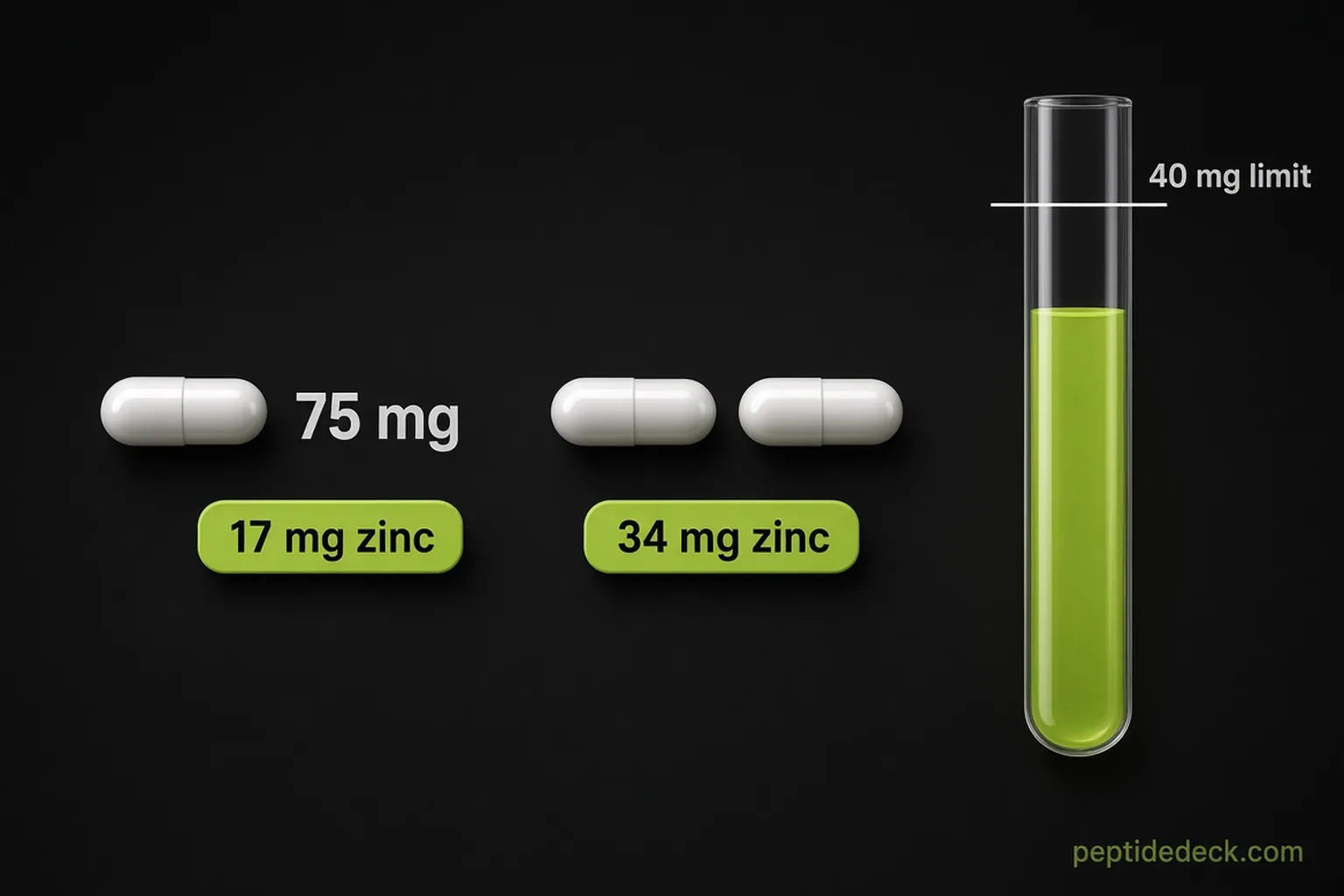
The Japanese prescribing label sets it at 75 mg twice a day, taken after breakfast and at bedtime, adjusted for age and symptoms. That is 150 mg a day, the dose used in the ulcer approval and the H. pylori trial. Most US products copy it: one 75 mg capsule, twice daily.
Here is what each goal was actually tested at:
Doses used in human trials
- Stomach ulcer: 75 mg twice daily for 8 weeks
- H. pylori add-on: 75 mg twice daily for the 14 days of antibiotics
- NSAID gut protection: 37.5 mg twice daily while taking the NSAID
- Taste loss: only worked at 68 mg zinc a day (about 300 mg polaprezinc), under medical supervision
Now the part most labels leave out. Zinc carnosine is about 23% zinc by weight. A 150 mg daily dose delivers 34 mg of elemental zinc and 116 mg of L-carnosine. The US tolerable upper limit for zinc from all sources is 40 mg a day for adults (Europe's is 25 mg). Add a multivitamin with 15 mg of zinc, a cold lozenge or a zinc-fortified cereal, and you are over the limit without noticing.
How long does zinc carnosine take to work?
It depends on what you are measuring. The NSAID study saw protection within 5 days. The exercise study needed 14 days for the full 70% effect. Ulcer healing was judged at 8 weeks, and taste at 12 weeks. If you are taking it for a sore stomach, a fair trial is 4 to 8 weeks at the standard dose, the window the ulcer study used. Longer than 8 weeks at 150 mg a day is exactly when copper becomes worth checking.
Zinc L-Carnosine Side Effects
Most people feel nothing.
In the ulcer Phase III trial, no side effects were reported at all, and the H. pylori trial saw 2.8% at the standard dose. But the Japanese label, based on years of prescription use, lists reactions that supplement pages skip:
Copper is the one to respect. Zinc blocks copper absorption in the gut. In an 8-week trial in 14 people taking 150 mg a day for pressure ulcers, serum copper fell significantly, and one patient's existing copper deficiency got worse. Long-term zinc above the upper limit can cause copper deficiency and anemia. The label says these cases were mainly reported in poorly nourished patients. If you plan to stay on it for months, a copper and zinc blood test is cheap insurance.
Who should skip it or check first
- Pregnant or breastfeeding: the label advises use only if the benefit outweighs the risk; there is little safety data.
- Children: no pediatric trials were done for the approved drug.
- Older adults: the label suggests starting lower.
- Levothyroxine or penicillamine users: zinc carnosine can bind these drugs; the label says not to take them at the same time.
- Liver disease or low copper: use only with medical supervision.
- Kidney disease: the label has no kidney-specific warning, but zinc and copper balance can already be off in chronic kidney disease, so ask your nephrologist.
Zinc Carnosine vs BPC-157 for Gut Repair
People often compare these two.
Both are pitched at the same problem: a gut lining that will not settle. They could not be more different on evidence. Zinc carnosine has an ulcer approval, randomised H. pylori trials and two human permeability studies. BPC-157, a 15-amino-acid fragment of a stomach protein, has a large body of work in animals on ulcers, colitis and NSAID damage, but its human gut data is two short reports in ulcerative colitis. If human evidence is your first filter, zinc carnosine wins, and it is legal on any supplement shelf.
Why do people still reach for BPC-157? Because its animal data covers deeper damage (fistulas, colitis, healing of surgical joins in the bowel) that zinc carnosine was never tested on, and because FDA's advisers voted 8–6–1 in July 2026 to support it for compounding. That vote is non-binding, and BPC-157 is not an approved drug anywhere in the US. If you have decided to try BPC-157 for gut repair anyway, our guide on where to buy BPC-157 compares the compounding-pharmacy route with online vendors, including what each costs and how to check a certificate of analysis.
For gut goals many people choose oral BPC-157, and our oral vs injection comparison covers the trade-offs. Some people stack the two, since they act differently: zinc carnosine coats and feeds the lining, BPC-157 is thought to work on blood supply and growth signals. The gastro inflammation formula is one example that combines them, with 100 mg of zinc L-carnosine alongside BPC-157 and KPV. No trial has tested any combination, so start one thing at a time and give it a few weeks before adding the next.
How to Choose a Zinc Carnosine Supplement
The label tells you almost everything.
- Chelate, not mixture. Look for zinc L-carnosine complex, polaprezinc or PepZin GI, not zinc and L-carnosine listed separately.
- 75 mg per capsule. This matches the approved and trial dose, and makes the 37.5 mg option easy by splitting or skipping a dose.
- Check the elemental zinc. Good labels show it (about 16 to 17 mg per 75 mg). Add up every other zinc source you take.
- Skip the megadoses. 150 mg capsules taken twice a day gave no extra H. pylori benefit and more side effects.
- Third-party testing. A USP, NSF or independent lab seal is the main outside check a US supplement gets.
If your gut problem runs deeper than an irritated stomach lining, our BPC-157 alternatives guide and the gut health peptides evidence tiers cover the options that have been tested lower down the gut.
Frequently Asked Questions
Medical Disclaimer: This article is for informational purposes only and does not constitute medical advice. Zinc carnosine is sold as a dietary supplement in the US and has not been evaluated by the FDA to treat any disease. Stomach pain, black stools, vomiting blood, trouble swallowing or unexplained weight loss need a medical assessment. Talk to your doctor before starting zinc carnosine, especially if you are pregnant, take levothyroxine, penicillamine or antibiotics, or have liver disease or low copper.