💡 Quick Answer
The best BPC-157 alternatives are TB-500 for tendon and large-muscle injuries, KPV for gut inflammation, GHK-Cu for skin and wound healing, and the KLOW blend when you want all four peptides in one product. BPC-157 itself is still the gold standard — this guide is for when it's inaccessible, not enough, or you need to target something more specific.
BPC-157 has a problem — not with what it does, but with availability. In the US, the FDA's 2023 crackdown on compounding pharmacies knocked BPC-157 off most shelves. If you were mid-cycle, or just starting to see results, that's a brutal interruption. And even when availability isn't the issue, some people run BPC-157 for a full 8-week cycle and realize: this isn't quite covering everything they need.
Maybe you tore your ACL and BPC-157 is helping the joint but your quad recovery is lagging behind. Maybe your gut is better but not all the way there. Maybe you're trying to address three things at once and one peptide isn't cutting it. All legitimate reasons to ask what else is out there.
This guide covers the six best alternatives — what they do, how they compare to BPC-157, what dose to use, and when to pick one over another. If you want to skip straight to the decision tree, jump to the How to Choose section. But if you're making a real decision about your protocol, the mechanism breakdowns are worth reading.
🔑 Key Takeaways
- BPC-157 remains the gold standard for localized tissue repair and gut healing — these alternatives shine when BPC isn't accessible or isn't enough
- TB-500 beats BPC-157 for systemic, large-area injuries — tendons, ligaments, large muscle groups
- KPV is the top oral substitute for gut inflammation when BPC-157 is unavailable
- GHK-Cu is actually better than BPC-157 for skin, wound repair, and hair — different target, better result
- The KLOW blend combines BPC-157 + TB-500 + GHK-Cu + KPV — most cost-effective if you need multiple things at once
- The Wolverine Stack (BPC-157 + TB-500) is the single most researched combo for serious athletic injuries
Why People Look for BPC-157 Alternatives
Let's be direct: this isn't a "BPC-157 is bad" article. It's a "BPC-157 isn't always accessible or sufficient" article. The compound has decades of preclinical research behind it and a massive community of users who swear by it for gut healing, tendon repair, and inflammation. But there are real situations where you'd want something else.
Availability and Legal Concerns
In the US, 503A compounding pharmacies were restricted from selling BPC-157 after the FDA added it to their Category 2 list — meaning it can't be compounded without demonstrated clinical need. Some research chemical suppliers still carry it, but quality varies enormously, and the regulatory environment creates legitimate sourcing friction. In other countries, the situation is different, but access issues are common everywhere.
Not Getting Enough from BPC-157 Alone
BPC-157 is a localized peptide. It works well at the injection site and in the gut when taken orally. But if you're dealing with a systemic injury — something spread across a large tissue area, or multiple sites at once — the localized mechanism is actually a limitation. TB-500 operates differently: it's systemic by nature, recruiting and migrating cells from wherever they're needed in the body.
Need a Combo Protocol
Some people aren't trying to replace BPC-157 — they're trying to layer on top of it. Especially for serious injuries (torn rotator cuff, ACL repair, major disc issues), a single peptide often addresses one phase of healing but not all of them. Stacking complementary peptides — each targeting a different mechanism — produces better outcomes than running one at high doses.
Cost
BPC-157 from legitimate research suppliers isn't cheap, especially at 250–500mcg daily doses. KPV in particular is significantly less expensive and, for gut-specific applications, may perform comparably. If budget is a real constraint, knowing the cheaper alternatives and where they apply is practical information.
Quick Comparison: All BPC-157 Alternatives at a Glance
Alternative 1: TB-500 (Thymosin Beta-4)
If there's one peptide that comes closest to being a true BPC-157 alternative — not just a complement — it's TB-500. It's the other half of the Wolverine Stack for a reason. Where BPC-157 is sharp and localized, TB-500 is broad and systemic. The two fill different niches, but TB-500 covers the territory where BPC-157 underperforms: large-area, distributed injuries.
What TB-500 Actually Does
Thymosin Beta-4 is a 43-amino acid peptide that's naturally produced in virtually every cell in the human body — higher concentrations appear in platelets and wound fluid specifically, which gives you a clue about its role. It functions primarily as an actin-sequestering protein, binding to G-actin monomers and regulating how cells build and break down their internal scaffolding.
Why does that matter for healing? Because cell migration — the process of cells moving to where they're needed to repair damaged tissue — is entirely dependent on controlled actin polymerization. TB-500 essentially unlocks cellular mobility, allowing the right cells to reach injury sites faster and more efficiently. In preclinical studies (Goldstein et al., multiple publications from the 1970s through 2000s), TB-4 demonstrated significant acceleration of wound healing, cardiac tissue repair, and corneal regeneration.
It also upregulates laminin-5, a protein that anchors epithelial cells and is critical for wound closure. And it promotes angiogenesis — new blood vessel formation into damaged tissue — which is one of the rate-limiting steps in tendon and ligament recovery.
TB-500 vs BPC-157: What's Different
BPC-157 is better for gut healing and localized, concentrated injuries. If you have a specific spot — an inflamed tendon insertion, a gut ulcer, a shoulder labrum — BPC works well injected near the site or taken orally for gut applications. TB-500 doesn't have that same site-specificity, but for systemic healing across a large area — a hamstring strain across multiple muscle groups, a back injury involving multiple structures — the systemic distribution is actually an advantage.
Think of it this way: BPC-157 is a sniper. TB-500 is a field medic working the whole zone.
Dosing Protocol
Most protocols start with a loading phase of 5–10mg twice weekly for 4 weeks, then drop to a maintenance dose of 5mg once per week. SubQ injection is standard — you don't need to inject near the injury site the way you might with BPC-157, because TB-500 works systemically regardless of injection location.
Alternative 2: KPV (Tripeptide)
KPV is a three-amino-acid peptide — Lys-Pro-Val — derived from the C-terminal region of alpha-melanocyte stimulating hormone (α-MSH). It's tiny compared to most peptides, which turns out to be a significant advantage: it's orally bioavailable without the instability issues that plague larger peptides.
If you're looking specifically for a BPC-157 substitute for gut issues — IBD, colitis, leaky gut, general intestinal inflammation — KPV is probably the most practical alternative. And given that BPC-157's compounding ban created the biggest access problem for people using it orally for gut health, this is the substitute a lot of people actually need.
How KPV Fights Gut Inflammation
KPV's anti-inflammatory mechanism centers on the NF-κB pathway. NF-κB is a transcription factor that essentially acts as a master switch for inflammation — when it's active, it drives the production of pro-inflammatory cytokines like TNF-α and IL-1β. KPV inhibits NF-κB activation and directly reduces the production of these inflammatory mediators.
What makes it particularly interesting for gut applications is the route of delivery. In animal studies of inflammatory bowel disease, oral KPV showed significant reductions in colon inflammation. Because the tripeptide is small and relatively stable, it survives transit through the stomach without significant degradation — unlike most injectable peptides that would break down before reaching the colon. Capsule formulations are the standard format for gut-targeted use.
KPV vs BPC-157 for Gut Health
BPC-157 has a stronger and broader evidence base for gut healing. It promotes regeneration of the mucosal lining, protects against NSAID-induced damage, and addresses multiple aspects of gut injury simultaneously. KPV is more narrowly targeted — it's primarily anti-inflammatory rather than regenerative.
But in practice, when BPC-157 isn't available, KPV covers a substantial portion of the same ground, particularly for inflammatory conditions like Crohn's and ulcerative colitis. It's also significantly cheaper, which makes it a realistic daily maintenance option even after a BPC-157 cycle has addressed the acute phase.
💡 Pro Tip
KPV works best for active gut inflammation. If you're past the acute phase and working on mucosal repair and resealing the gut barrier, consider running KPV alongside a collagen peptide or L-glutamine for the rebuilding phase.
Dosing
Oral capsules at 500mcg–1mg per day are the typical starting point. Some protocols go higher (2–4mg/day) for acute flares. Sublingual administration is also an option for faster absorption, though harder to source in that format.
Alternative 3: GHK-Cu (Copper Peptide)
GHK-Cu is one of those peptides that gets lumped in with "healing peptides" but genuinely has a different primary target than BPC-157 — and in its target area, it's arguably better. If skin healing, wound repair, or hair restoration is what you're after, GHK-Cu isn't a second-choice alternative. It's the first-choice peptide.
The Copper Peptide Mechanism
GHK-Cu is a copper chelate — the tripeptide glycyl-L-histidyl-L-lysine bound to a copper(II) ion. The copper isn't incidental to the structure; it's essential to the biological function. The complex stimulates collagen synthesis via TGF-β activation, promotes angiogenesis through VEGF upregulation, acts as an antioxidant by neutralizing reactive oxygen species, and modulates metalloproteinase activity to promote tissue remodeling.
In skin specifically, GHK-Cu has the deepest research base of any topical peptide — decades of work by Loren Pickart and subsequent researchers documented its effects on collagen production, wound contraction, and skin regeneration. It genuinely regenerates the dermal matrix rather than just superficially treating it.
Topical vs Injectable GHK-Cu
Here's where it gets practical. GHK-Cu can be used topically for skin applications — creams and serums at 1–5% concentration are the format for cosmetic use. But for wound healing, surgical scar prevention, or systemic skin health, subcutaneous injection of pharmaceutical-grade GHK-Cu (0.5–2mg per injection) is substantially more effective. The oral route is poorly absorbed and generally not considered useful.
For hair loss applications specifically, topical application to the scalp at 0.1–1% concentration has the strongest evidence base. Subcutaneous scalp injections (mesotherapy-style) are used more aggressively in some protocols.
GHK-Cu vs BPC-157 for Skin
BPC-157 does have wound-healing effects and some evidence of skin regeneration. But it's not optimized for skin the way GHK-Cu is. The copper complex's specific targeting of collagen synthesis machinery and dermal fibroblast activation makes it more effective for skin applications — not because BPC-157 can't help, but because GHK-Cu evolved (or was formulated) for exactly this tissue.
Run BPC-157 for a torn tendon. Run GHK-Cu for the surgical scar from the repair. That's roughly the division of labor.
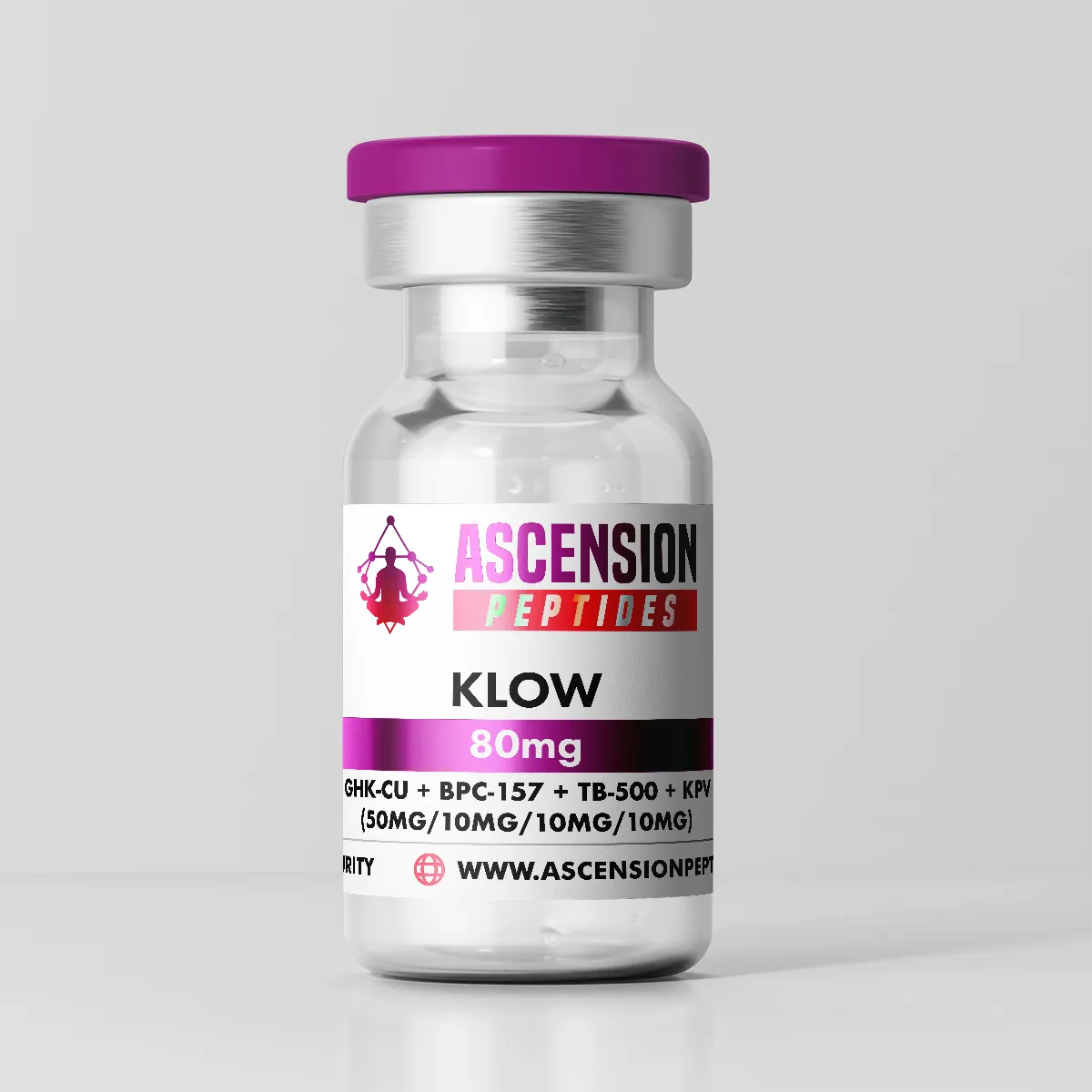
Alternative 4: KLOW Blend (BPC-157 + TB-500 + GHK-Cu + KPV)
If you're looking for the single most comprehensive healing peptide stack available — and you want it in one vial instead of four — KLOW is the answer. It combines BPC-157, TB-500 (Thymosin Beta-4), GHK-Cu, and KPV in a single formulation designed around the idea that tissue repair isn't one mechanism but four simultaneously operating systems.
💡 Why KLOW Works as a Stack
Each component addresses a different phase or mechanism of healing: BPC-157 handles localized tissue repair and gut protection; TB-500 drives systemic cell migration and actin dynamics; GHK-Cu stimulates collagen synthesis and angiogenesis; KPV suppresses the inflammatory environment that impedes all of the above. You're not doubling up — you're covering the whole map.
When to Choose KLOW Over Individual Peptides
If you have one specific issue — say, a quad tear and nothing else — TB-500 plus BPC-157 (Wolverine Stack) might be more targeted and cost-effective. But KLOW makes sense in a few situations:
- Multiple simultaneous issues — injury + gut inflammation + skin wounds at the same time
- Post-surgical recovery — surgery hits multiple tissue types and triggers systemic inflammation; KLOW addresses all of it
- Systemic healing protocol — using peptides not for one acute injury but for general tissue regeneration, anti-aging, or recovery optimization
- Cost optimization — buying four peptides separately costs significantly more than a pre-blended product
KLOW Dosing
Standard protocols use 1–2mg of KLOW blend per injection, once or twice daily, SubQ. Because it includes TB-500, a loading phase (daily or twice-daily injections for the first 2 weeks) followed by a maintenance phase (every other day or twice weekly) is the typical structure. Exact dosing depends on the vial concentration, so check the product specs before calculating your injection volume.
For the KLOW blend from Ascension Peptides, you're getting a single 80mg vial containing all four compounds. For anyone running multiple healing peptides simultaneously, the logistics of four separate vials versus one is a legitimate quality-of-life consideration.
→ Shop KLOW Blend on Ascension Peptides
For a full breakdown of this product, see our KLOW blend review.
Alternative 5: Ipamorelin + CJC-1295 Stack
This one operates through a completely different mechanism than the peptides above, and it's worth understanding why that matters. Ipamorelin + CJC-1295 doesn't directly repair tissue. Instead, it stimulates the pituitary to release growth hormone in natural pulses, which then triggers IGF-1 production in the liver and peripheral tissues — and IGF-1 is a major driver of protein synthesis, tissue repair, and regeneration.
This is not a BPC-157 replacement for acute injury. It's a layer on top of — or instead of — BPC-157 when the goal involves body recomposition alongside healing, or when healing is slow because underlying GH/IGF-1 levels are suboptimal.
Why GH Peptides Help Healing
Growth hormone directly stimulates collagen synthesis in connective tissue — one of the cleaner, more established mechanisms in sports medicine. IGF-1, the downstream signal, promotes satellite cell activation in muscle, increases protein synthesis, and accelerates cellular turnover in virtually every tissue type. The preclinical and clinical evidence for GH in wound healing and recovery goes back decades, separate from the broader fitness community's use of these compounds.
Ipamorelin is a selective GH secretagogue — it stimulates GH release without significantly affecting cortisol or prolactin, which is the issue with older GH secretagogues like GHRP-6. CJC-1295 extends the GH pulse duration by providing a GHRH analog that keeps the signal active longer. Together, they produce a more physiological and more sustained GH release than either does alone.
Who Should Consider This Instead of (or with) BPC-157
If your primary goal is athletic recovery and body recomposition — leaning out while healing, or gaining muscle while recovering from injury — the Ipamorelin + CJC stack is doing things BPC-157 doesn't. The two can absolutely be run together; they don't overlap mechanistically at all. But if you're choosing between them on a budget: acute soft tissue injury → BPC-157 first. Slow recovery + recomposition goals → Ipamorelin + CJC, with BPC added if tolerable.
Basic Protocol
One to two injections per day is standard. Pre-sleep is the most common timing since this amplifies the body's natural nocturnal GH release. 3-month cycles with 1-month off is a reasonable structure for ongoing use.
Alternative 6: Thymosin Alpha-1
Don't confuse this with Thymosin Beta-4 (TB-500). They're different peptides, with different structures and completely different mechanisms. The naming is misleading — "thymosin" covers a family of related peptides, but Alpha-1 and Beta-4 are about as different as two compounds in the same family can be.
Thymosin Alpha-1 (Tα1) is a 28-amino acid peptide originally isolated from thymic tissue. Its primary function is immunomodulatory — it activates T-cells, enhances NK cell activity, and upregulates the expression of MHC class I molecules on cells. In practical terms: it turns up the immune system's ability to respond to damage and infection, which has downstream effects on healing.
When Immune Function Is the Bottleneck
Most tissue repair peptides work on the structural side — rebuilding collagen, stimulating cell migration, reducing inflammation locally. But there's a category of healing failures where the structural processes are intact and the bottleneck is immune-mediated: chronic inflammation that won't resolve, post-surgical immune suppression, healing slowdowns in immunocompromised individuals, or recovery from illness that left the immune system dysregulated.
For those situations, Thymosin Alpha-1 addresses the actual rate-limiting step. Tα1 has been approved in some countries for use in hepatitis B and C, and has been used clinically in post-surgical immune restoration protocols. The research base is substantially larger than most peptides — it's been studied in humans across multiple conditions since the 1980s.
Thymosin Alpha-1 vs BPC-157
These don't really compete head-to-head. BPC-157 is primarily structural — it helps tissue rebuild. Thymosin Alpha-1 is primarily immunological — it helps the body's defense systems operate correctly during repair. If you have normal immune function and a structural injury, Tα1 probably doesn't add much. If your healing is stuck and inflammation keeps cycling without resolution, Tα1 might be targeting the actual problem.
Dosing
Standard clinical protocols use 1.6mg per injection, subcutaneous, two to three times per week. Cycle lengths of 4–8 weeks are typical, though clinical use for chronic conditions has extended much longer. It's one of the pricier peptides on this list — factor that into your decision if budget matters.
How to Choose: Decision Tree
Stop guessing and use this. Match your primary situation to the right peptide.
The Honest Bottom Line on Each One
TB-500: The most versatile BPC-157 alternative for musculoskeletal injuries. If you can only pick one, and your issue is structural (not gut), this is it.
KPV: The clearest gut-specific substitute for BPC-157. Oral, stable, cheaper. Doesn't cover everything BPC does for gut healing, but covers enough.
GHK-Cu: Not a substitute for BPC-157 in general — it's a better option specifically for skin. If your issue is dermal, GHK-Cu should be your first call, not an alternative.
KLOW: The practical choice when you need more than one of these simultaneously. Pre-blended, lower overhead, good coverage. Read the full KLOW review here.
Ipamorelin + CJC-1295: Different mechanism entirely — this is about recovery rate and recomposition, not direct tissue repair. Additive to the above, not a replacement.
Thymosin Alpha-1: Most useful when immune dysfunction is driving healing failure. Not a first choice for uncomplicated injuries.
For a detailed comparison of the top two options, read our full BPC-157 vs TB-500 breakdown, or see our complete BPC-157 guide if you want to understand the baseline before evaluating alternatives.
Stacking Strategies: When to Combine Multiple Alternatives
Most people doing serious injury recovery aren't running one peptide — they're running two or three in sequence or simultaneously. A few practical stacking patterns that show up frequently:
The Wolverine Stack (BPC-157 + TB-500)
This is the most researched, most commonly referenced combination in the peptide community. BPC-157 handles the localized repair (joint capsule, tendon insertion, ligament attachment points), while TB-500 promotes systemic cell migration and large-muscle recovery. They genuinely complement each other without overlapping mechanisms. Running both together for 8 weeks is the standard approach for torn tendons, ACL injury recovery, or major muscle tears.
The Gut Healing Stack (KPV + BPC-157)
When BPC-157 is available, running it alongside KPV oral provides both the anti-inflammatory benefit of KPV and the regenerative mucosal repair of BPC-157. KPV suppresses the inflammatory environment; BPC-157 rebuilds the structural integrity of the gut wall. This is the combination for IBD, leaky gut, or post-antibiotic gut dysregulation.
The Complete Recovery Stack (KLOW + Ipamorelin/CJC)
For post-surgical recovery or serious athletes trying to come back from a major injury while maintaining body composition, layering KLOW (structural + anti-inflammatory coverage) with Ipamorelin + CJC (GH stimulation, IGF-1, anabolic environment) creates a genuinely comprehensive recovery environment. This isn't cheap. But it's also not redundant — each layer is doing something the other can't.