Semaglutide & Tirzepatide from Yucca · US-licensed Rx · From $146 · Buy now, pay later

Start your 1-min quiz
PDPeptideDeck
01· StoreShop Peptides↗02GLP-1 Suppliers03Calculator04Free TrialAI Coach
Shop
Start HerePeptide Vendors →
Home/Peptides/Peptide guidesPeptides for Cats: BPC-157, IBD, Kidney Disease & Safe Dosing (2026)
Peptide guides10

Peptides for Cats: BPC-157, IBD, Kidney Disease & Safe Dosing (2026)

Published July 29, 2026Updated July 29, 2026
Quick Brief

How peptide protocols differ in cats: IBD and gut-first use cases, dosing a 4 kg animal accurately, the chronic kidney disease question, and where copper peptides need care.

Peptides for Cats: BPC-157, IBD, Kidney Disease & Safe Dosing (2026)

Procurement

BPC-157 (10mg)
In StockShips from USA

BPC-157 (10mg)

BPC-157 (10mg) from Ascension Peptides, third-party tested and shipped from the US. Use code PEPTIDEDECK for 50% off.

$24.50$49.00
Get BPC-157 (10mg) - 50% Off with PEPTIDEDECK
Contents0%
Why Cats Are DifferentBPC-157 for CatsKPV for CatsThymosin Alpha-1 for CatsDosing by Cat WeightThe Chronic Kidney Disease QuestionGiving Peptides to a CatStomatitis: The Hardest CaseHow to Tell Whether It Is WorkingSafety, Cost and SourcingFrequently Asked Questions
BPC-157 (10mg)

Procurement

BPC-157 (10mg)

In StockShips from USA
$24.50$49.00
Get BPC-157 (10mg) - 50% Off with PEPTIDEDECK

Last updated: July 29, 2026

Peptides for cats follow a different pattern than in dogs. Where dog owners almost always arrive with a mobility problem, cat owners overwhelmingly arrive with a gut problem — inflammatory bowel disease, chronic diarrhoea, vomiting that no diet trial has fixed. BPC-157 is the peptide they end up reading about, because gut mucosa is the tissue it was originally characterised on.

Cats are not small dogs, and the differences matter more than the dose arithmetic suggests. This guide covers what is used, how to dose an animal that weighs four kilos, the chronic kidney disease question, and where copper-based peptides need extra thought.

Quick Answer: Peptides in Cats

  • IBD is the number one use. BPC-157 at 5–7 mcg/kg daily for 6–8 weeks is the most commonly reported protocol, with many cats improving inside 2–3 weeks.
  • Dosing precision is the real constraint, not the dose itself. A 4 kg cat needs roughly 20–28 mcg — dilute heavily so that is a measurable volume.
  • Cats are more sensitive to medication than dogs. Start at the low end and adjust upward, never the reverse.
  • Chronic kidney disease is common in older cats and BPC-157 has not been studied in compromised kidneys. This is a genuine unknown, not a theoretical one.
  • GHK-Cu needs more caution in cats than in dogs because copper clearance depends on liver function.
  • Oral dosing is often the right call for gut conditions — and it sidesteps the problem of injecting a cat daily for eight weeks.

Why Cats Are Different

Three things separate feline peptide use from canine.

Size. A typical cat weighs 3–6 kg. At 5 mcg/kg that is a 15–30 mcg dose. Reconstitute a 10 mg vial with 2 ml of bacteriostatic water and you are trying to draw 0.004 ml — not measurable on any syringe an owner has. The fix is dilution, not a smaller syringe, and it is the single most common practical error.

Metabolic sensitivity. Cats have well-known limitations in glucuronidation and are more sensitive to a range of drugs than dogs are. There is no specific evidence that this applies to peptides, which are cleared by peptidases rather than hepatic conjugation, but it is the reason feline protocols conventionally start low.

Comorbidity profile. Chronic kidney disease is very common in older cats. Since the population most likely to be offered peptides is exactly the older, chronically unwell population, the overlap is not incidental.
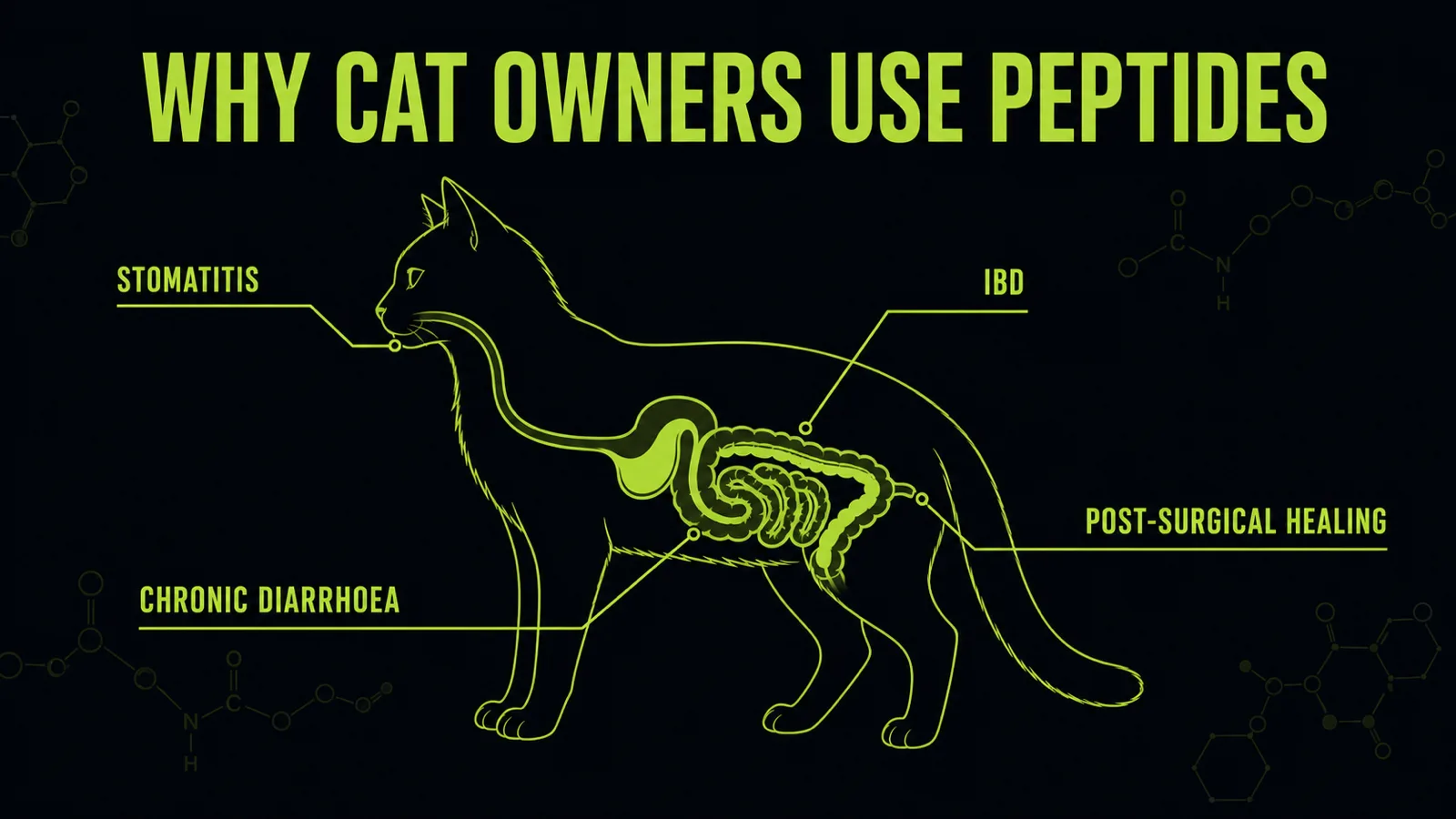
Chart of feline conditions treated with peptides including IBD, chronic diarrhoea, stomatitis and post-surgical healing
Feline peptide use is dominated by gastrointestinal conditions rather than musculoskeletal ones.

BPC-157 for Cats

BPC-157 is a 15-amino-acid peptide derived from a protein in gastric juice. It protects and rebuilds gut mucosa, drives angiogenesis and reduces inflammation — a combination that maps closely onto what a cat with IBD needs.

Reported uses in cats, roughly in order of frequency:

  • Inflammatory bowel disease — the dominant use. Commonly reported at 5–7 mcg/kg daily for six to eight weeks, with improvement often visible within two to three weeks.
  • Chronic diarrhoea — typically 5 mcg/kg daily for four to six weeks.
  • Gastric ulceration and reflux — the indication closest to the peptide's original characterisation.
  • Stomatitis — feline chronic gingivostomatitis is painful, difficult to treat and often ends in full-mouth extraction. Peptide use here is anecdotal but the mucosal-healing rationale is the same.
  • Post-surgical and wound healing — same rationale as in dogs.
The dilution fixReconstitute a 5 mg vial with 5 ml of bacteriostatic water and you get 1,000 mcg/ml. A 25 mcg dose for a 5 kg cat is then 0.025 ml — still small. Dilute to 500 mcg/ml and the same dose becomes 0.05 ml, which is 5 units on a U-100 insulin syringe and reliably measurable. Sacrificing concentration for measurability is the right trade in cats.

KPV for Cats

KPV — the lysine-proline-valine fragment of alpha-MSH — deserves more attention in cats than it currently gets. It inhibits NF-kB directly, it is stable in the gastrointestinal environment, and it is absorbed via PepT1 transporters that upregulate in inflamed intestinal tissue.

For a cat with IBD that means two useful properties: it survives oral administration, which avoids injecting a difficult patient every day for two months, and its uptake increases at precisely the inflamed sites you are targeting. Evidence comes from mouse colitis models; no feline trials have been published.

Thymosin Alpha-1 for Cats

Thymosin Alpha-1 is a thymic peptide that modulates T-lymphocyte function, stimulates interferon-gamma production and supports NK cell activity. It is sold in more than 30 countries as a human medicine under the brand name Zadaxin, and in veterinary contexts it has been used to improve immune response to viral disease.

In cats it comes up around chronic viral and immune-mediated conditions and in convalescence. It is worth being clear about what it is not: it is not a treatment for feline infectious peritonitis. FIP is treated with antivirals — GS-441524 being the well-known one, on which the FDA has published a formal position regarding compounded use. Thymosin Alpha-1 is sometimes discussed as supportive care alongside that, not as a substitute for it.

Peptide
Feline use
Typical dose
Route
BPC-157
IBD, chronic diarrhoea, gastric ulceration, wound healing
5–7 mcg/kg daily
Oral for gut, SC otherwise
KPV
IBD, colitis, inflammatory skin disease
2–5 mcg/kg daily
Oral preferred
Thymosin Alpha-1
Immune support, chronic viral illness, convalescence
Vet-directed; no established feline dose
SC injection
GHK-Cu
Wounds, surgical incisions, coat quality
Low end only; vet input advised
Topical or SC
BPC-157
Feline use
IBD, chronic diarrhoea, gastric ulceration, wound healing
Typical dose
5–7 mcg/kg daily
Route
Oral for gut, SC otherwise
KPV
Feline use
IBD, colitis, inflammatory skin disease
Typical dose
2–5 mcg/kg daily
Route
Oral preferred
Thymosin Alpha-1
Feline use
Immune support, chronic viral illness, convalescence
Typical dose
Vet-directed; no established feline dose
Route
SC injection
GHK-Cu
Feline use
Wounds, surgical incisions, coat quality
Typical dose
Low end only; vet input advised
Route
Topical or SC

Dosing by Cat Weight

Feline dosing sits at 2–7 mcg/kg/day in reported use, lower than the ceiling used in dogs. Start at the bottom.

Cat weight
Low (2 mcg/kg)
Standard (5 mcg/kg)
IBD range (7 mcg/kg)
3 kg (6.6 lb)
6 mcg
15 mcg
21 mcg
4 kg (8.8 lb)
8 mcg
20 mcg
28 mcg
5 kg (11 lb)
10 mcg
25 mcg
35 mcg
6 kg (13 lb)
12 mcg
30 mcg
42 mcg
8 kg (17.6 lb)
16 mcg
40 mcg
56 mcg
3 kg (6.6 lb)
Low (2 mcg/kg)
6 mcg
Standard (5 mcg/kg)
15 mcg
IBD range (7 mcg/kg)
21 mcg
4 kg (8.8 lb)
Low (2 mcg/kg)
8 mcg
Standard (5 mcg/kg)
20 mcg
IBD range (7 mcg/kg)
28 mcg
5 kg (11 lb)
Low (2 mcg/kg)
10 mcg
Standard (5 mcg/kg)
25 mcg
IBD range (7 mcg/kg)
35 mcg
6 kg (13 lb)
Low (2 mcg/kg)
12 mcg
Standard (5 mcg/kg)
30 mcg
IBD range (7 mcg/kg)
42 mcg
8 kg (17.6 lb)
Low (2 mcg/kg)
16 mcg
Standard (5 mcg/kg)
40 mcg
IBD range (7 mcg/kg)
56 mcg

Course length in reported feline protocols is six to eight weeks for IBD and four to six for chronic diarrhoea, then stop and reassess. Many cats that respond do so inside the first three weeks.

BPC-157 (10mg)
Top Pick BPC-157 (10mg) BPC-157 (10mg) from Ascension Peptides, third-party tested and shipped from the US. Use code PEPTIDEDECK for 50% off. Exclusive 50% off — use code PEPTIDEDECK
Get BPC-157 (10mg) - 50% Off with PEPTIDEDECK

The Chronic Kidney Disease Question

This deserves its own section because it comes up constantly and is usually answered too confidently in both directions.

BPC-157 shows protective effects on kidney tissue in rodent models, particularly against medication-induced damage. That research was conducted on healthy kidneys. How the peptide behaves in an animal whose renal function is already compromised has not been studied, and extrapolating a protective effect in healthy tissue to a therapeutic effect in diseased tissue is not sound reasoning.

The practical position: CKD is not an established contraindication, but it is not established as safe either. In a cat with diagnosed kidney disease this is a conversation to have with your vet, ideally one who will monitor renal values through the course rather than assume.

Copper and catsGHK-Cu delivers copper, and copper excretion is liver-dependent. In animals with hepatic compromise this is a real consideration, and chronic elevated copper can antagonise zinc over time. Given that cats are small, that hepatic disease is not rare in older cats, and that the wound-healing benefit can often be achieved topically, systemic GHK-Cu is the peptide on this list that most deserves veterinary sign-off in a cat.

Giving Peptides to a Cat

The practical obstacle in cats is not pharmacology, it is compliance. An eight-week daily injection course is a lot to ask of a cat and its owner.

Oral is therefore the preferred route wherever the target is the gut, which covers most feline use. It can be given in food, though palatability varies and some cats detect it.

Subcutaneous injection uses the scruff, the same site owners of CKD cats already use for fluids. Volumes are tiny — well under 0.1 ml — so a U-100 insulin syringe is essential. Rotate sites and keep the reconstituted vial refrigerated.
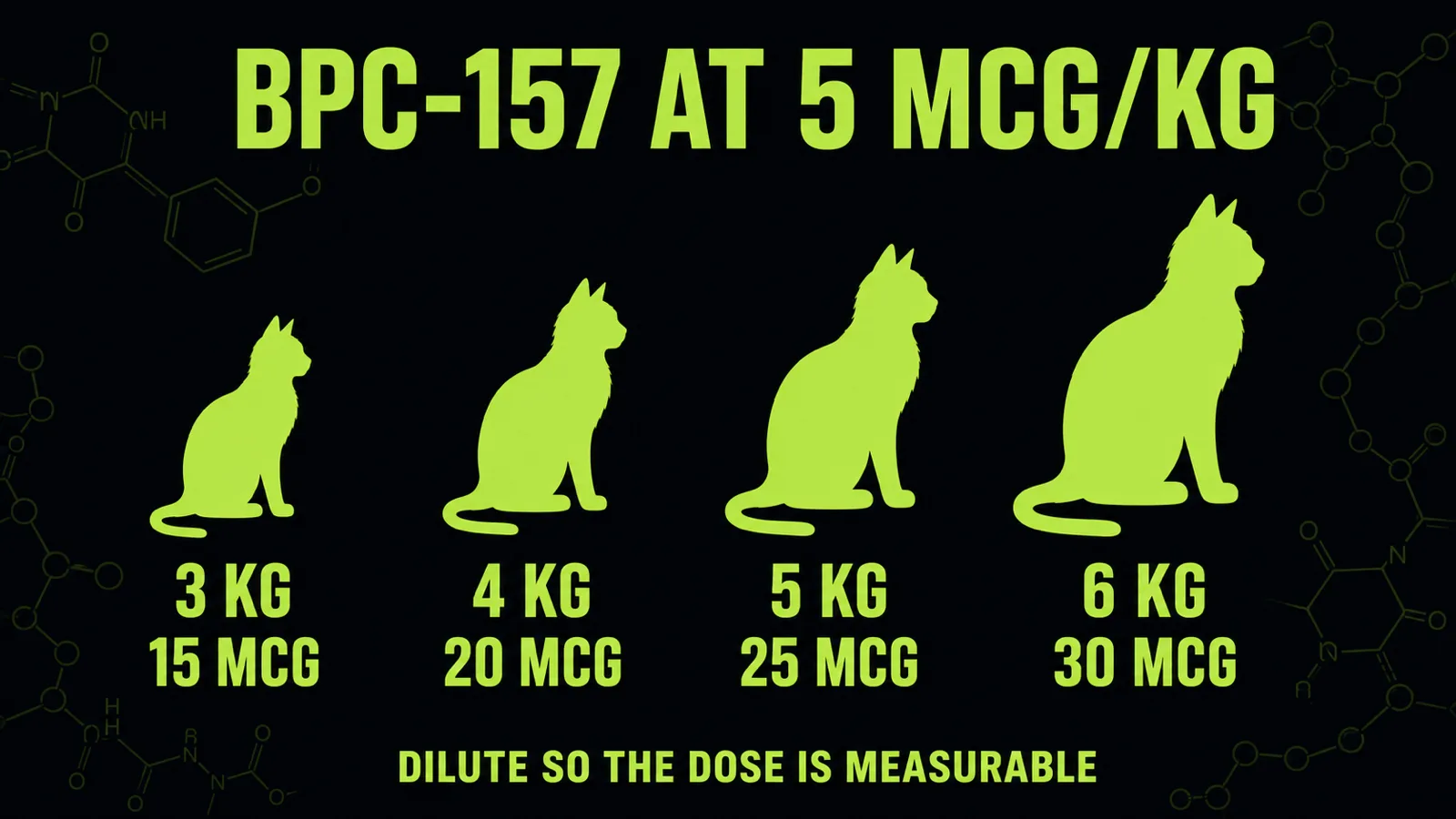
Feline peptide dosing chart showing microgram doses by cat bodyweight from 3kg to 8kg with dilution guidance
At feline bodyweights, dilution is what makes the dose measurable.

Stomatitis: The Hardest Case

PureBac 7x tested bacteriostatic water 10mL vial
7x Quality Tested Bac Water

Don't ruin a $300 peptide on generic bac water.

Sterile, non-pyrogenic, exactly 0.9% benzyl alcohol, with a COA on every batch. Made for peptide reconstitution, not repackaged from generic stock.

0.9% benzyl alcohol 7x tested in USA COA every batch
Get PureBac bac water From $7.99 · Free shipping over $150

Feline chronic gingivostomatitis deserves separate mention because it is the condition where owners are most desperate and the conventional options are least appealing. It is intensely painful, poorly understood, and the treatment that works most reliably is full-mouth extraction. Many cats do well after that surgery, but it is an irreversible decision that owners understandably want to avoid.

The rationale for peptides here is mucosal: BPC-157's best-characterised action is protection and repair of mucosal tissue, and oral mucosa is mucosa. KPV's direct NF-kB inhibition addresses the inflammatory component. Both arguments are mechanistic rather than evidential — there are no published feline stomatitis trials for either compound, and reports are anecdotal.

What is worth saying plainly is that a cat in stomatitis pain should not have definitive treatment delayed while a six-week peptide course is attempted. If extraction is indicated, the peptide question is one of adjunct and post-operative healing, not alternative.
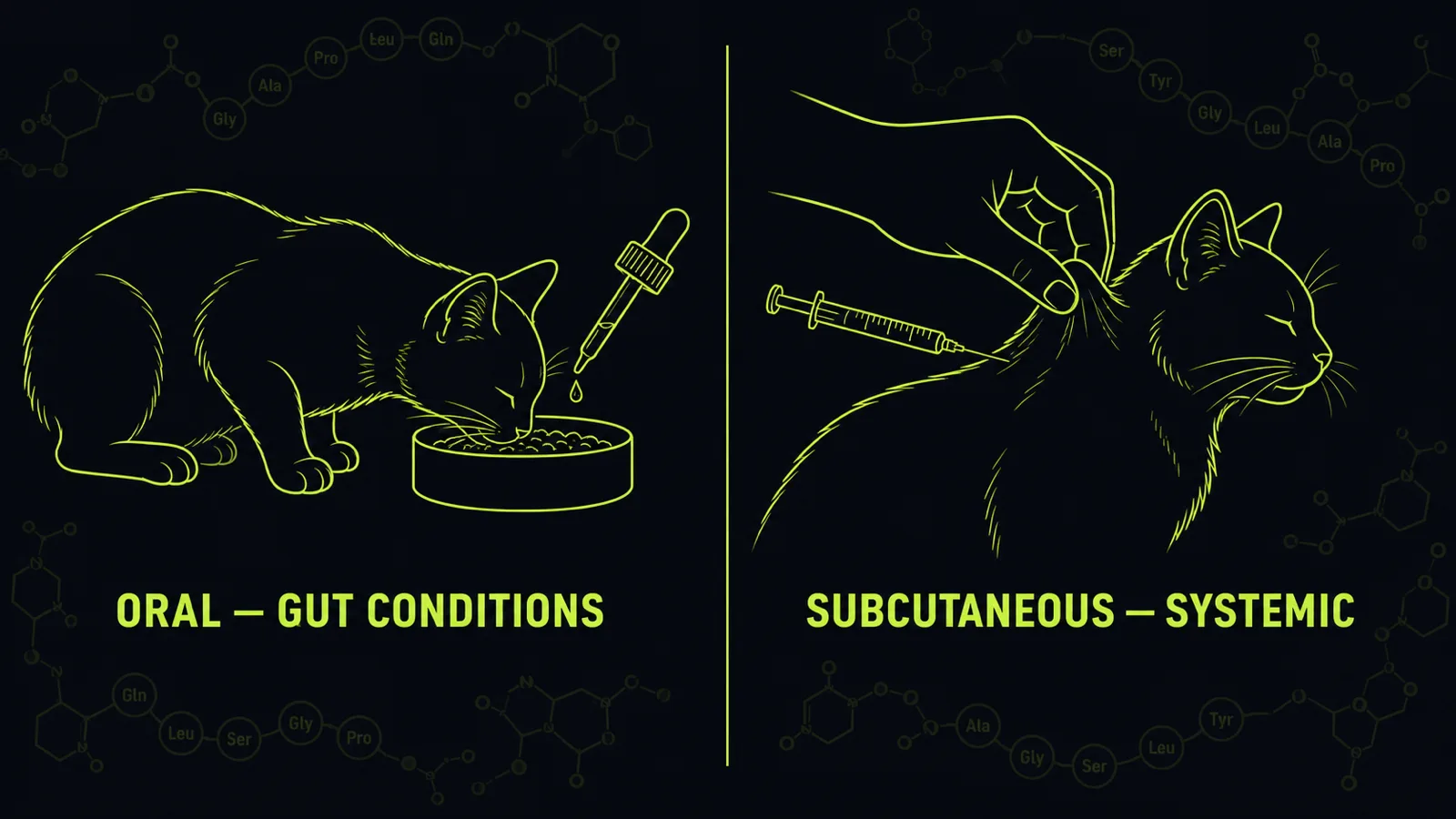
Illustration of oral and subcutaneous peptide administration routes for cats showing scruff injection site and oral dosing
For gut conditions, oral dosing avoids asking a cat to accept eight weeks of daily injections.

How to Tell Whether It Is Working

Cats hide illness well, and the improvements peptide protocols target are gradual. Track something concrete from before you start.

  • Weight, weekly, on the same scale. In a cat with IBD this is the single most informative number. Kitchen scales work; consistency matters more than precision.
  • Faecal score using a standard chart rather than description, recorded daily. This is what responds first in most gut protocols.
  • Vomiting frequency as a simple tally per week.
  • Appetite and food volume actually consumed, not offered.
  • Grooming and coat condition. A cat that resumes grooming is usually a cat that feels better; a matted coat is often the first sign that it does not.

If nothing has shifted by week six, continuing is unlikely to change the outcome, and the possibility that the underlying diagnosis is wrong deserves revisiting — particularly in an older cat, where intestinal lymphoma presents very much like IBD.

Safety, Cost and Sourcing

No peptide discussed here is approved for use in cats, and the evidence base is thinner than for dogs simply because fewer owners try it. The angiogenesis caution applies as it does in every species: BPC-157 promotes blood vessel formation, so an animal with a known or suspected tumour is not a good candidate. Older cats presenting with weight loss and GI signs should have those signs worked up before being treated, since intestinal lymphoma can look a great deal like IBD.

Cost is the one area where cats are easier. Because dosing is weight-based, a 4 kg cat consumes a fraction of what a large dog does — a single 5 mg vial can cover a full eight-week course with room to spare, putting a typical course well under $50 in peptide cost.

Sourcing follows the same rules as everywhere else: a compounding pharmacy via your veterinarian is the better route where available, and research-grade vendors that publish third-party certificates of analysis are the realistic alternative. See the peptides for animals overview for the 2026 regulatory picture, including the FDA advisory committee's July 2026 vote on compounded BPC-157 and KPV.

Dog owners should read peptides for dogs, where the use case is mobility rather than gut. Horse owners should start with peptides for horses.
Frequently Asked Questions

Is BPC-157 safe for cats?
There are no controlled feline studies, so safety rests on veterinary case experience, which has not produced reports of serious adverse events. Cats are generally more sensitive to medications than dogs, so protocols start at the low end of the range. The clearest situations to avoid are a cat with a known or suspected tumour, since BPC-157 promotes blood vessel growth, and an older cat with GI signs that have not been worked up, because intestinal lymphoma can mimic IBD.
How much BPC-157 does a cat need?
Reported feline dosing is 2–7 mcg per kilogram daily, lower than the range used in dogs. A 4 kg cat at the standard 5 mcg/kg dose gets about 20 mcg per day, and the IBD protocols most often cited use 5–7 mcg/kg for six to eight weeks. The practical difficulty is measuring a dose that small, which is solved by reconstituting with more bacteriostatic water rather than trying to draw a smaller volume.
Can peptides help a cat with IBD?
IBD is the most common reason cat owners try peptides. BPC-157 acts directly on gut mucosa, and KPV is absorbed through intestinal transporters that upregulate in inflamed tissue. Reported protocols run 5–7 mcg/kg daily for six to eight weeks, with many cats showing improvement in the first two to three weeks. Evidence is veterinary case experience and rodent colitis models, not feline trials, and IBD should be properly diagnosed first.
Can I give peptides to a cat with kidney disease?
This is genuinely unresolved. BPC-157 shows kidney-protective effects in rodents, but that work used healthy kidneys and does not transfer automatically to an animal with established CKD. It is neither an established contraindication nor established as safe. Given how common CKD is in older cats, this warrants a vet who will monitor renal values through the course rather than a decision made on a forum post.
Do I have to inject my cat?
Often not. For gut conditions — which covers most feline use — oral dosing is a reasonable route because the intestinal lining is the target tissue rather than something the peptide has to reach through the bloodstream. KPV in particular is stable in the gut and absorbed via PepT1 transporters. Subcutaneous injection into the scruff remains the more reliable route for anything systemic.
Is GHK-Cu safe for cats?
It is the peptide on this list that most warrants caution in cats. GHK-Cu delivers copper, copper excretion depends on liver function, and chronic elevated copper can antagonise zinc. In a small animal with any degree of hepatic compromise that is a real consideration rather than a theoretical one. Where the goal is wound or incision healing, topical application achieves much of the benefit without the systemic copper load.
Will peptides treat FIP?
No. Feline infectious peritonitis is treated with antivirals, GS-441524 being the well-established one, and the FDA has published a formal position on its compounded use. Thymosin Alpha-1 is sometimes discussed as immune support alongside antiviral treatment, but it is not a treatment for FIP and should never be used in place of one.
BPC-157 (10mg)

Recommended Supplier

In StockShips from USA

BPC-157 (10mg)

BPC-157 (10mg) from Ascension Peptides, third-party tested and shipped from the US. Use code PEPTIDEDECK for 50% off.

$24.50$49.00

Exclusive 50% off — use code PEPTIDEDECK

Get BPC-157 (10mg) - 50% Off with PEPTIDEDECK

Buy Related Peptides — 99%+ Purity

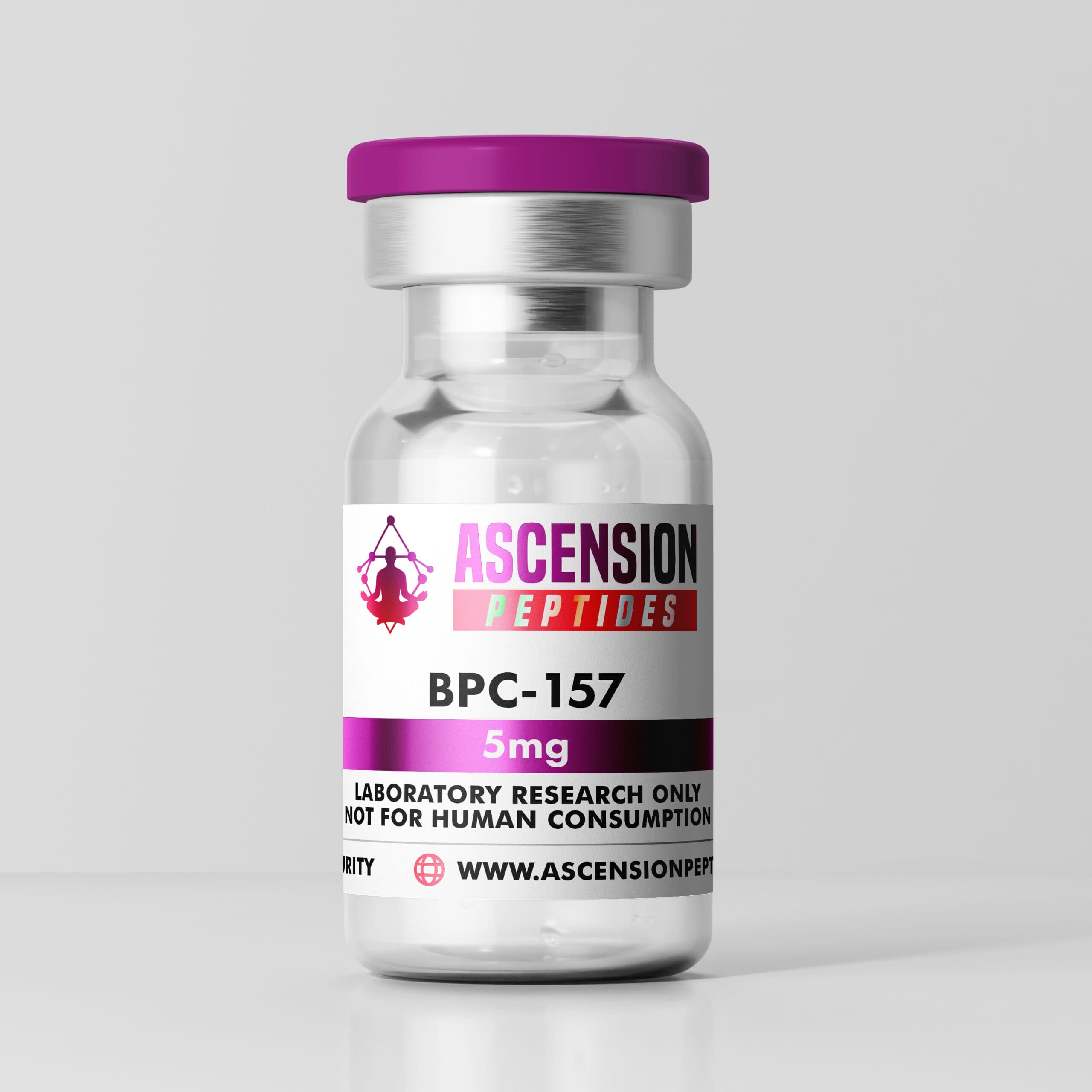
BPC-157

BPC-157

5mg Single Vial · 99%+ Purity

$55.00$59.99
From $55.00
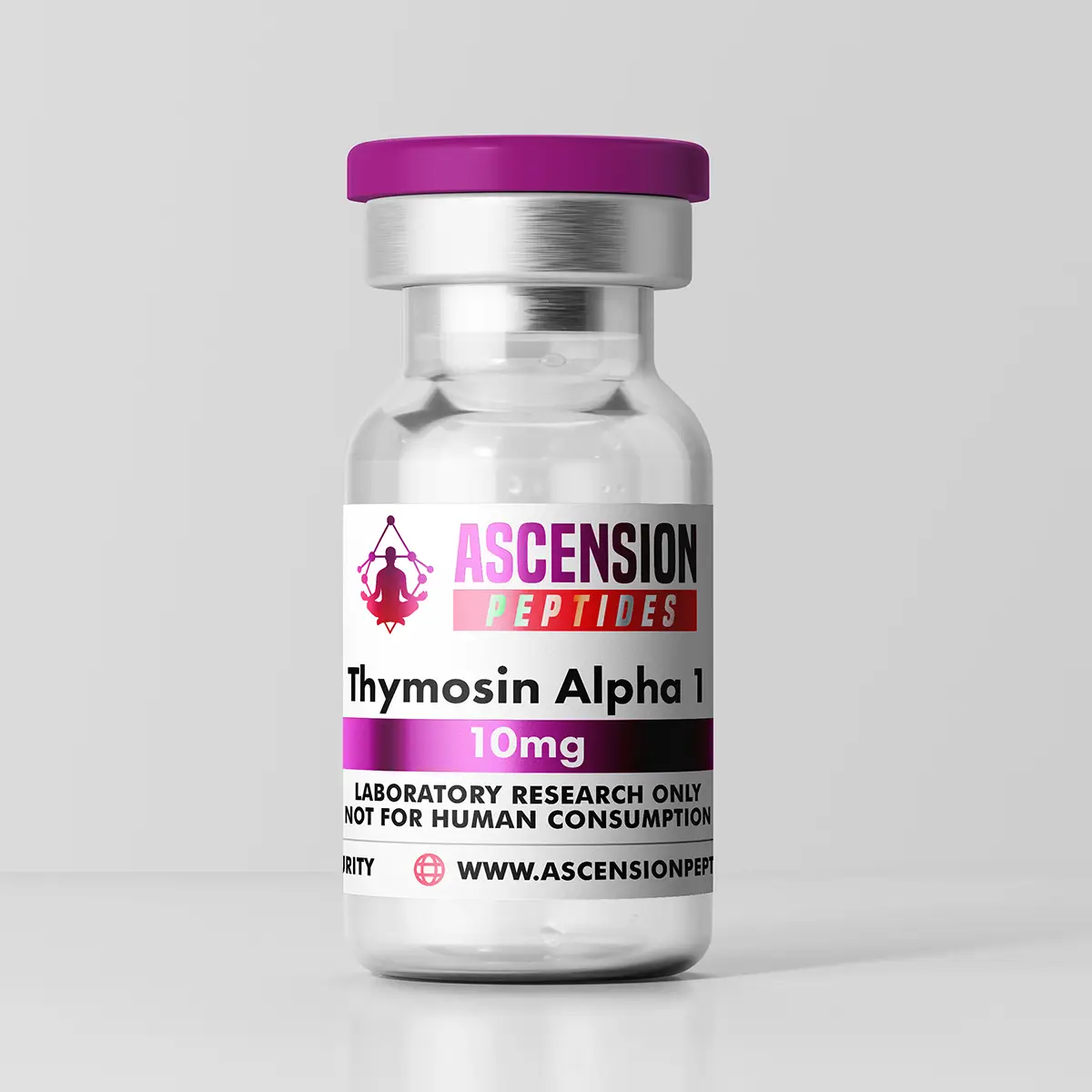
Thymosin Alpha-1

Thymosin Alpha-1

10mg Single Vial · 99%+ Purity

$75.00$99.99
From $75.00

Related Topics

peptides for catsBPC-157 for catscat IBD peptideBPC-157 dosage for catsKPV for catsfeline peptide therapythymosin alpha-1 cats
Back to Peptides
Contents0%
Why Cats Are DifferentBPC-157 for CatsKPV for CatsThymosin Alpha-1 for CatsDosing by Cat WeightThe Chronic Kidney Disease QuestionGiving Peptides to a CatStomatitis: The Hardest CaseHow to Tell Whether It Is WorkingSafety, Cost and SourcingFrequently Asked Questions
BPC-157 (10mg)

save 50% with code

Get 50% Off
PDPeptideDeck

Research-backed guides, dosing tools and reviews for peptides and GLP-1 medications.

01 · Explore

  • Peptide Guides
  • Oral Peptides
  • HRT Guide
  • TRT Guide
  • Blog
  • Calculators
  • AI Coach
  • Shop

02 · GLP-1

  • GLP-1 Guide
  • GLP-1 Programs
  • GLP-1 Reviews

03 · Company

  • About
  • Contact

04 · Dosing Charts

MOTS-cSermorelinSelankGHK-CuSemaglutideGLOWTesamorelin5-Amino-1MQCagrilintideMK-677FOXO4-DRIZepboundMounjaroWegovyKisspeptinSS-31Thymosin Alpha-1KPVEnclomipheneGlutathione
© 2026 PeptideDeck