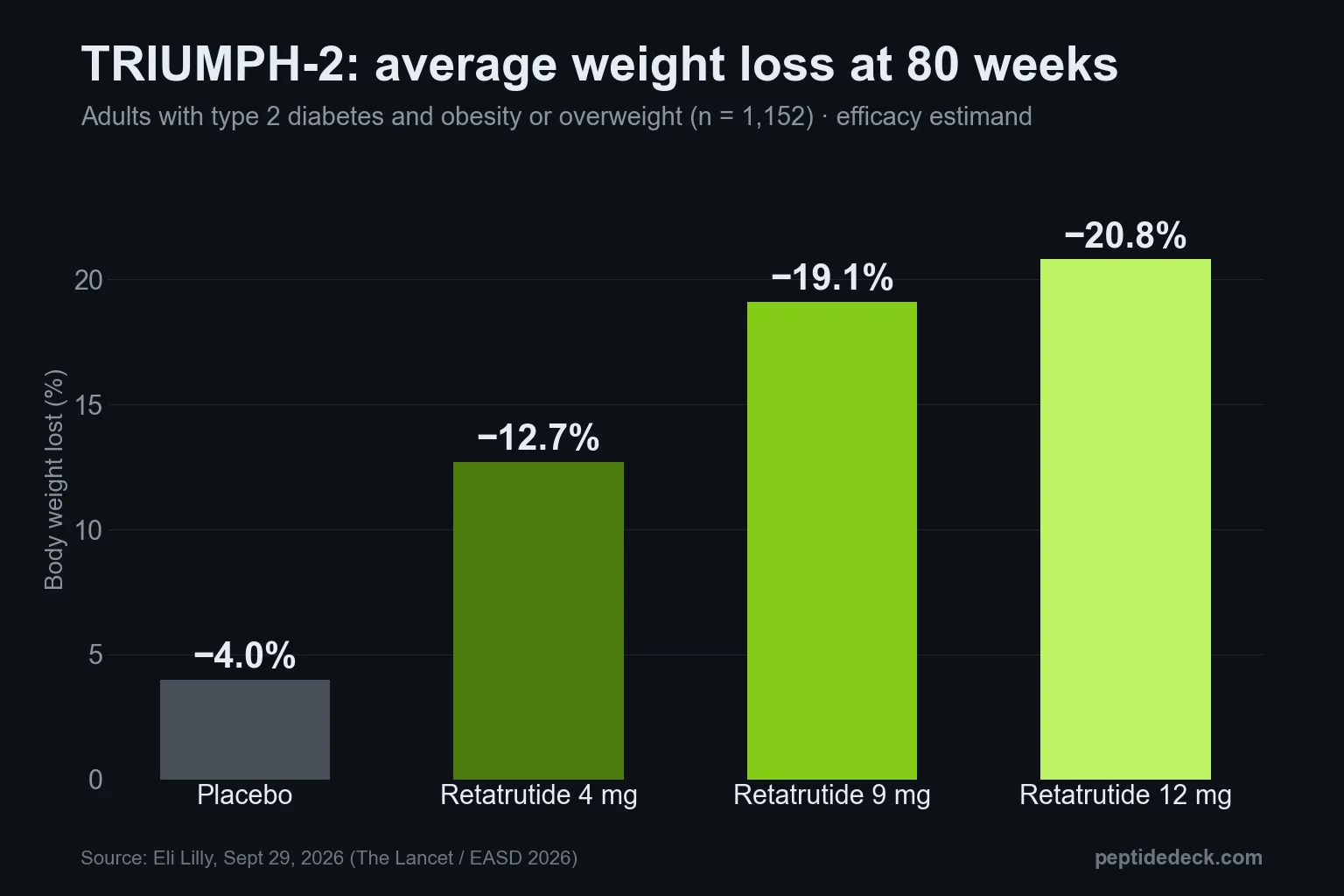
Retatrutide just got its biggest diabetes result yet. On September 29, 2026, Eli Lilly released the full retatrutide TRIUMPH-2 results at the EASD meeting in Milan, published the same day in The Lancet. In 1,152 adults with type 2 diabetes and excess weight, the top dose took off an average of 20.8% of body weight over 80 weeks, and 59.5% of people on it no longer met the BMI cut-off for obesity.
🔑 Key Takeaways
- The weight loss is the largest yet seen in a type 2 diabetes trial, and the gap to older drugs is wide
- The middle dose, not the top one, did best on blood sugar
- One side effect shows up here that you won't see on semaglutide or tirzepatide
- More people quit the 9 mg dose than the 12 mg dose, and the reason matters
- Two different sets of numbers are circulating, and only one is the headline
If you live with type 2 diabetes, you already know weight is the hardest part to move. Most diabetes drugs that lower A1C also make weight loss harder, not easier. TRIUMPH-2 was built to test whether one weekly shot could do both at once. Here's what the full data show, where the catches are, and what happens next.
This page covers the September full results. For the July topline and the TRIUMPH-3 heart-disease trial, see our retatrutide Phase 3 results overview.
What's New in the Retatrutide TRIUMPH-2 Results
July gave us the headline numbers. September added the detail. Lilly's first TRIUMPH-2 announcement in July 2026 listed weight loss and A1C by dose and little else. The full release and the Lancet paper add four things readers were waiting for:
- How many people hit big milestones. Over half of the 12 mg group lost at least 20% of their weight.
- How many reached normal blood sugar. Up to 40% got their A1C below 5.7%.
- Heart and metabolic markers. Triglycerides, cholesterol, blood pressure and inflammation all dropped.
- Side effects by dose. Including a full breakdown of dysesthesia, the skin-sensation effect linked to retatrutide.
TRIUMPH-2 (NCT05929079) ran at 92 sites in eight countries. People started on 2 mg a week and stepped up every four weeks to a target of 4 mg, 9 mg or 12 mg. They started at an average of 234.6 lb, a BMI of 38.2 and an A1C of 7.7%.
Weight Loss by Dose
The dose made a big difference. Moving from 4 mg to 9 mg added more than six percentage points of weight loss. Moving from 9 mg to 12 mg added less than two.
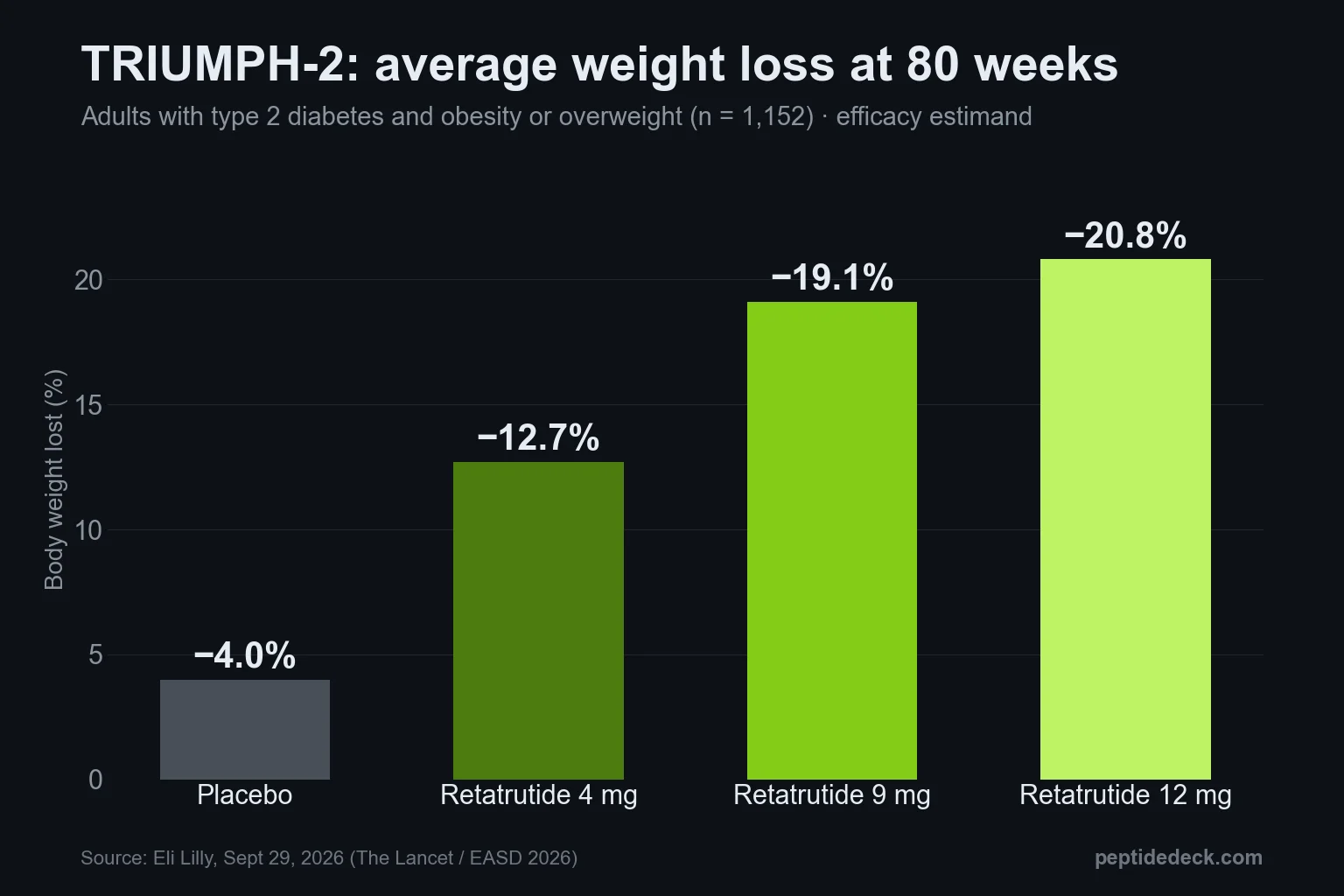
The 12 mg figure translates to an average of 49.6 lb. People who started with a BMI of 35 or higher did even better on 12 mg, losing 23.4% on average, or 60.8 lb.
Those milestone columns tell the real story. On 12 mg, about one person in three lost a quarter of their body weight. For someone starting at 234 lb, that's roughly 58 lb gone. That is the range people used to associate only with bariatric surgery, and Duke endocrinologist Susan Spratt told NBC News the result "rivals gastric bypass surgery without the surgery".
Why does the jump flatten after 9 mg? The trial doesn't answer that directly. But the pattern matters if you're wondering whether the highest dose is always the right one, and it shows up again in the blood sugar results below. Our retatrutide dosing schedule guide walks through how the trial doses step up.
Blood Sugar: What Happened to A1C
A1C fell hard in every group. The average drop was 1.4 to 1.6 points, against 0.2 on placebo. For someone starting at 7.7%, a 1.6-point drop lands at about 6.1%.
The 9 mg dose edged out 12 mg on every blood sugar measure. The differences are small (40.0% versus 39.3% below 5.7%), so this is closer to a tie than a win. Still, it means the top dose bought extra weight loss, not extra glucose control.
An A1C below 5.7% is the range doctors use for people without diabetes. Reaching it doesn't mean diabetes is cured: stop the drug, and weight and blood sugar would likely drift back. But for people who've spent years adding medicines, four in ten reaching a normal range is a striking number.
Heart and Metabolic Markers
The benefits went beyond the scale. At 12 mg, Lilly reported these average changes:
- Triglycerides: down 39.5%
- Non-HDL cholesterol: down 19.6%
- Systolic blood pressure: down 10.8 mmHg
- Waist: down 6.7 inches (16.9 cm)
- hsCRP, a marker of inflammation: down 58.3%
A 10.8 mmHg fall in systolic pressure is in the range a single blood pressure pill typically delivers. That's good news for most people with diabetes, and a reason to watch for dizziness if you already take blood pressure medicine. Coverage of the Lancet paper noted that low blood pressure was more common on retatrutide.
These are risk markers, not heart attacks prevented. TRIUMPH-2 wasn't designed to measure heart outcomes, and the heart-focused TRIUMPH-3 trial was inconclusive on that question.
Side Effects in TRIUMPH-2
Most side effects hit the gut. Diarrhea, nausea and constipation led the list at every dose, and they rose as the dose went up.
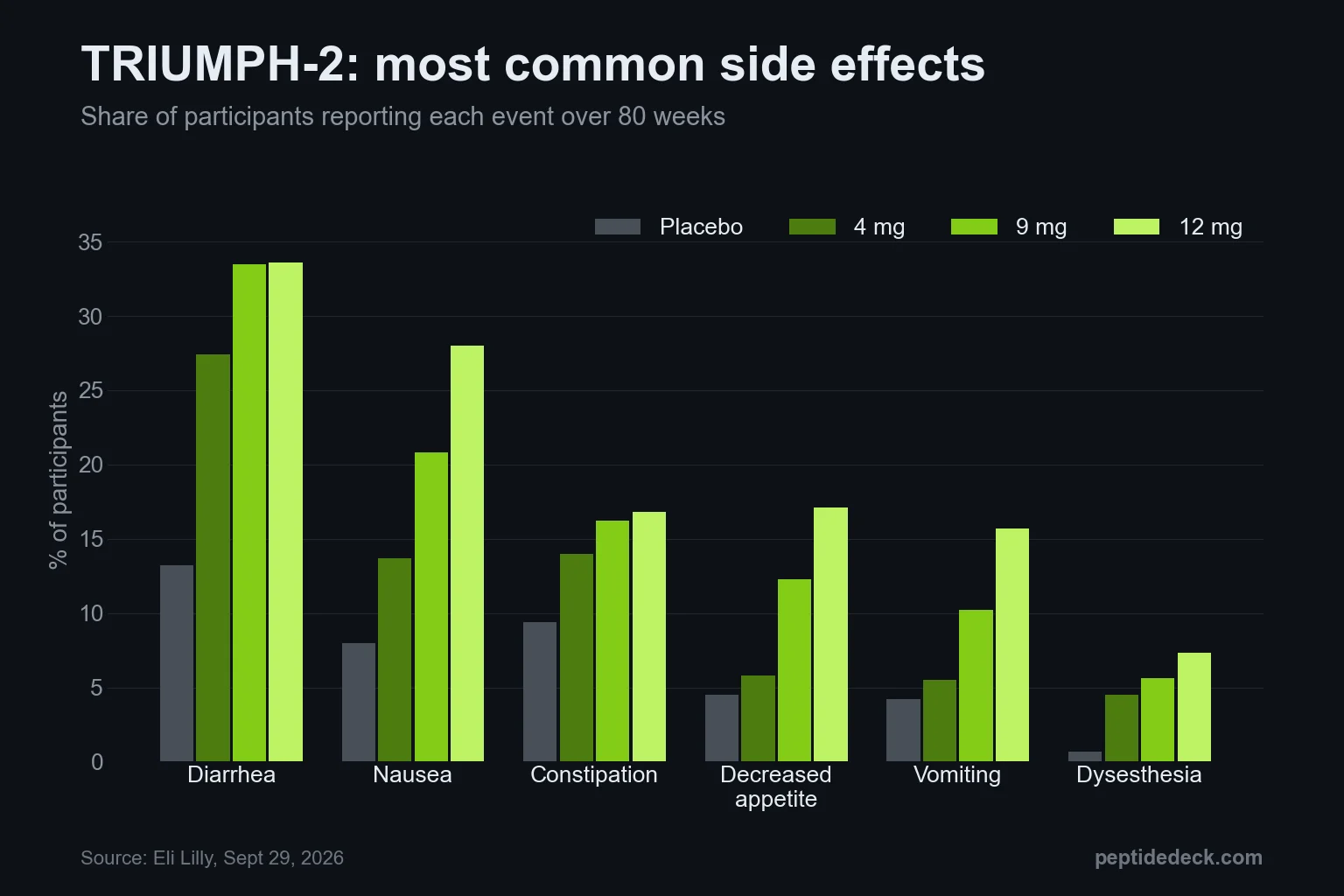
Two numbers stand out. Nausea on 12 mg affected 28.0%, which means most people on the top dose never reported it. And 11.6% quit the 9 mg dose because of side effects, more than the 7.7% who quit 12 mg.
That second finding looks backwards, and the release doesn't explain it. A random spread across groups of about 290 people each is one likely reason. Either way, it's a reminder that a lower dose isn't automatically easier to live with. For how these effects compare across all the trials, and what helps, see our retatrutide side effects guide.
Dysesthesia: The Side Effect to Know About

This side effect is unusual for the drug class. Dysesthesia means odd skin sensations: tingling, burning, or skin that feels sore to the touch. It's rare with semaglutide and tirzepatide, but it keeps appearing in retatrutide trials.
In TRIUMPH-2 it affected 4.5% on 4 mg, 5.6% on 9 mg and 7.3% on 12 mg, against 0.7% on placebo. So roughly one person in 14 on the top dose noticed it. Lilly describes the cases as mostly mild to moderate, and most cleared up while people stayed on treatment.
Why it matters here: people with type 2 diabetes can already have nerve damage in their feet and hands. A new tingling sensation could be mistaken for, or hide, worsening neuropathy. Anyone in that position should report new skin sensations to their doctor rather than assume it's the drug.
How TRIUMPH-2 Compares With Semaglutide and Tirzepatide
People with diabetes lose less weight. That's true on every GLP-1 drug, so the fair comparison is with the diabetes trials, not the headline obesity ones.
On those numbers, retatrutide's top dose roughly doubles semaglutide's result and beats tirzepatide's by about six points. The caveat is a big one: these are separate trials of different lengths, run years apart, and some report different statistical estimates. No trial has put retatrutide head to head against either drug in people with diabetes. Our retatrutide vs tirzepatide comparison covers what the obesity data show.
Why Two Sets of Numbers Are Circulating
Some articles say 20.8% and others say 18.8%. Both can be right.
Lilly's headline uses the "efficacy estimand". It estimates what happens if everyone stays on the drug for the full 80 weeks. Coverage of the Lancet paper also reports 11.9%, 16.8% and 18.8% on the three doses, against 5.1% on placebo, which appears to be the more conservative analysis that counts people who stopped treatment or started other weight-loss treatment.
Neither figure is misleading. The first tells you what the drug does if you take it. The second is closer to what a whole group of real patients might see, drop-outs included. When you compare trials, compare like with like.
When Could Retatrutide Be Approved?
Approval won't come before 2027 at the earliest. Lilly says it plans to submit its Biologics License Application to the FDA in the first quarter of 2027. On the FDA's usual timelines a decision comes about a year after filing, sooner if Lilly uses a priority review voucher, so late 2027 is the earliest realistic date.
Until then, retatrutide has no FDA approval and no pharmacy can fill a prescription for it. Any retatrutide for sale online today comes from peptide vendors, not from Lilly. If you're comparing retatrutide for sale across vendors, the one check worth insisting on is a recent third-party certificate of analysis for the exact batch you'd receive.
TRIUMPH-2 is one of several Phase 3 trials in the package. The obesity-only TRIUMPH-1 results reported the largest average loss so far, and the TRIUMPH-4 knee osteoarthritis trial tested it on joint pain.
What This Means If You Have Type 2 Diabetes
It's a promising result, not a prescription option yet. For now, the approved choices with the strongest diabetes-plus-weight data remain tirzepatide (Mounjaro, Zepbound) and semaglutide (Ozempic, Wegovy).
Three questions are worth taking to your doctor now:
- Am I on the best current option? If you're on an older diabetes drug and still carrying weight, tirzepatide or semaglutide may already help.
- Do I have any nerve symptoms? Knowing your baseline makes a future dysesthesia question easier to answer.
- What about my other medicines? Big weight loss can lower blood sugar and blood pressure fast, so insulin, sulfonylureas and blood pressure pills may need adjusting.
The full Lancet paper will keep being picked over in the coming weeks. Watch for the hypoglycemia rates by background medicine and the subgroup results, which the press release left out.
Frequently Asked Questions
Sources
- Eli Lilly and Company. Lilly's triple agonist, retatrutide, delivered substantial weight loss and A1C reduction. PR Newswire, September 29, 2026.
- TRIUMPH-2 full results. The Lancet, September 29, 2026.
- ClinicalTrials.gov. NCT05929079: retatrutide in participants with type 2 diabetes who have obesity or overweight.
- McCarthy A. Triple agonist retatrutide pushes weight loss to new levels in type 2 diabetes. Inside Precision Medicine, September 29, 2026.
- NBC News. People with type 2 diabetes lost up to 60 pounds on Lilly's latest weight loss drug. September 29, 2026.
Medical Disclaimer: This article is for informational purposes only and does not constitute medical advice. Retatrutide is an investigational medicine without FDA approval, and the results above come from a clinical trial under medical supervision. If you have type 2 diabetes, talk to your doctor before changing any treatment, especially insulin or other medicines that lower blood sugar.