What Is Retatrutide and Why Does TRIUMPH-4 Matter?
Retatrutide (LY3437943) is a triple-agonist peptide developed by Eli Lilly that simultaneously targets three key metabolic receptors: GLP-1 (glucagon-like peptide-1), GIP (glucose-dependent insulinotropic polypeptide), and glucagon receptors. This tri-agonist mechanism sets it apart from dual-agonists like tirzepatide and single-agonists like semaglutide.
The glucagon receptor engagement is the key differentiator. While GLP-1 and GIP agonism suppress appetite and improve insulin sensitivity, glucagon receptor activation directly increases energy expenditure and enhances hepatic fat oxidation — a mechanism not present in either semaglutide or tirzepatide. This additional energy expenditure component is the pharmacological driver behind retatrutide's superior weight loss numbers in every trial that has compared it to its predecessors.
TRIUMPH-4 is Eli Lilly's Phase 3 trial in adults with obesity or overweight and knee osteoarthritis, and it was the first retatrutide Phase 3 trial to report (December 2025). It confirmed the Phase 2 signals were not flukes — and the Phase 2 data, published in the New England Journal of Medicine in June 2023, is what made retatrutide the compound everyone in metabolic medicine and research is watching in 2025–2026.
TRIUMPH-4 Key Statistics: The Numbers That Matter
Here's what those numbers mean in practical terms: a 250-pound person on the 12mg dose in the Phase 2 trial would expect to lose approximately 60 pounds over 48 weeks (closer to 72 pounds at TRIUMPH-4's 28.7% over 68 weeks). A 200-pound person: approximately 48 pounds. These aren't exceptional responders — these are mean reductions across the trial population.
TRIUMPH-4 Study Design: How the Trial Was Conducted
The gradual dose escalation is worth emphasizing — participants didn't start at 12mg. The dose started at 2mg and was raised in 4-week steps, which substantially improved tolerability compared to starting at the maximum dose. This mirrors the structured titration seen in the tirzepatide SURMOUNT trials and is the clinical approach that would be standard if the drug reaches commercial approval.
Phase 2 Weight Loss Results by Dose Group (48 Weeks)
TRIUMPH-4 itself tested only 9mg and 12mg: 26.4% and 28.7% average weight loss at 68 weeks vs 2.1% on placebo (efficacy estimand). The dose-by-dose responder data below comes from the 48-week Phase 2 trial (NEJM 2023).
The dose-response curve is notably steep and consistent. Going from 4mg to 12mg adds approximately 7 percentage points of additional weight loss — suggesting the glucagon receptor engagement becomes more pronounced at higher doses and has not plateaued at the maximum tested dose. This is different from semaglutide, where the dose-response curve flattens significantly above 1.7mg.
The Plateau Question: Did Weight Loss Continue at 48 Weeks?
One of the most clinically significant findings in the retatrutide trial results is the apparent absence of a weight loss plateau at week 48 of the Phase 2 trial. In the STEP and SURMOUNT trials for semaglutide and tirzepatide, weight loss curves typically flatten out in the final months of the 68–72-week trials. In the retatrutide Phase 2 trial, the weight loss trajectory at 12mg was still declining at week 48, suggesting the full potential weight loss had not been achieved within the trial window.
This is an important distinction for researchers: if the curve continues beyond 48 weeks, the 24.2% figure may understate what's achievable with longer treatment duration. The longer Phase 3 trials bore this out: 28.7% at 68 weeks in TRIUMPH-4 and 28.3% at 80 weeks in TRIUMPH-1 (both 12mg, efficacy estimand).
Retatrutide Weight Loss Results: Week-by-Week Trajectory
The Phase 2 trial measured weight loss at multiple timepoints throughout the 48-week period (weeks 24 and 48 below are the published figures; the other timepoints are approximate readings). The trajectory follows the expected pattern for GLP-1-class compounds with escalation protocols — slower initial loss during the escalation phase, then steeper reductions as doses reach target levels.
What the trajectory shows: the gap between dose groups widens substantially in the second half of the trial (weeks 24–48), after all groups have reached their target doses. This implies the 12mg advantage compounds over time — it's not just a starting-point difference but a sustained divergence. For researchers modeling longer-duration effects, the divergence pattern suggests 12mg continues pulling ahead of lower doses throughout the treatment period.
TRIUMPH-4 vs the Phase 2 Trial: Phase 3 vs Phase 2 Comparison
The Phase 2 retatrutide trial was published in the New England Journal of Medicine in June 2023 (Jastreboff et al.). It was not part of the TRIUMPH program: TRIUMPH-3 is a separate Phase 3 trial in people with severe obesity and established heart disease (reported July 2026). TRIUMPH-4 represents a larger Phase 3 study. Understanding the comparison helps contextualize the reliability of the data.
The consistency between the Phase 2 trial and TRIUMPH-4 is actually the most important data point here. Phase 2 showed 17.5% loss at 12mg at 24 weeks and 24.2% at 48 weeks; TRIUMPH-4 showed 28.7% at 12mg at 68 weeks. That's not just more time — it confirms that weight loss kept going well past week 24. The Phase 2 signal wasn't noise; it held and amplified across a longer timeline and a more rigorous study design.
Body Composition Results: What Changed Beyond Just Weight
Retatrutide weight loss results look even more impressive when you break down what was actually lost. Total body weight reduction is the headline number, but body composition — the ratio of fat mass lost to lean mass retained — is where the real clinical significance lives.
Fat Mass vs Lean Mass: What the Data Shows
What to expect on body composition (based on the drug class and earlier retatrutide studies, not TRIUMPH-4 data):
- Visceral adipose tissue (VAT): Disproportionate reductions in visceral fat compared to subcutaneous fat — VAT is the metabolically dangerous fat surrounding organs, and its preferential reduction has significant cardiovascular and metabolic health implications beyond the weight number itself
- Waist circumference: Reductions of 14–20 cm at the highest doses, significantly exceeding what total weight loss alone would predict — consistent with the preferential visceral fat loss pattern
- Liver fat: Substantial hepatic fat reduction observed, consistent with the glucagon receptor's role in promoting hepatic fatty acid oxidation — this is one of the mechanisms that may give retatrutide an edge over GLP-1-only compounds for MASLD (metabolic-associated steatotic liver disease)
- Lean mass: Preserved well relative to total weight lost, though the absolute lean mass numbers are modest — this is an ongoing concern with all GLP-1-class compounds and the rationale for potential combination approaches with resistance training or muscle-preserving compounds
The visceral fat story is arguably the most clinically meaningful part of the body composition results. Visceral adiposity is the strongest metabolic risk predictor — more so than total body weight — and the preferential VAT reduction observed in retatrutide trial results suggests benefits that extend substantially beyond the number on a scale.
Cardiovascular Outcomes in TRIUMPH-4
While TRIUMPH-4 was primarily designed as a weight loss efficacy trial rather than a dedicated cardiovascular outcomes study, cardiometabolic markers were tracked as secondary endpoints and the findings are clinically relevant. Lilly's TRIUMPH-4 topline did not list these markers, so the ranges below are approximate figures from retatrutide trials generally, not TRIUMPH-4-specific results.
Cardiometabolic Markers Improved Across Dose Groups
The heart rate increase is the one cardiovascular signal worth watching. Glucagon receptor agonism raises heart rate — this was anticipated from the mechanism and was observed consistently across dose groups. In Phase 2 it rose with dose, peaked around week 24 and then eased; it was not clinically alarming in the trial population, but is an ongoing monitoring focus. TRIUMPH-3, in people with severe obesity and established heart disease, reported in July 2026 that its heart-event analysis was inconclusive (too few events).
It's also worth noting that Eli Lilly has a separate TRIUMPH trial arm specifically for cardiovascular outcomes. Semaglutide's CVOT (SELECT trial) was a critical driver of its commercial success and prescribing patterns. Retatrutide CVOT data, when published, will be a major determinant of how physicians position it relative to semaglutide for patients with established cardiovascular disease.
TRIUMPH-4 Knee Osteoarthritis Data: An Underreported Finding
One of the most underreported findings from the retatrutide trial results is the knee osteoarthritis outcome data. Every TRIUMPH-4 participant had knee osteoarthritis — knee pain was a co-primary endpoint alongside weight — and the knee pain reduction findings deserve attention beyond the weight loss headline.
Knee pain on the WOMAC (Western Ontario and McMaster Universities Osteoarthritis Index) pain scale fell by up to 4.5 points on 9mg and 4.4 points on 12mg — up to a 75.8% reduction — and Lilly said more than 1 in 8 people on retatrutide were free of knee pain at the end of the trial. At 26–29% body weight reduction, you'd expect mechanical unloading to improve knee pain. But the magnitude of improvement observed in TRIUMPH-4 was consistent with both the weight reduction effect and potentially a direct anti-inflammatory component.
Why This Matters Beyond the Weight Story
GLP-1 receptor agonism has emerging evidence for direct anti-inflammatory effects — independent of weight loss — in joint tissue. GLP-1 receptors have been identified in chondrocytes and synovial tissue. If retatrutide's GLP-1 component has direct anti-inflammatory effects on joint tissue, that's an additional therapeutic mechanism beyond simply reducing the mechanical load on joints.
The knee osteoarthritis finding is a good example of why the retatrutide trial results contain substantially more clinically relevant information than the weight loss headline number suggests. The compound is being studied across multiple disease states simultaneously, and each new positive finding strengthens the overall regulatory and commercial case.
Retatrutide vs Tirzepatide vs Semaglutide: Trial Context Comparison
There has been no direct head-to-head randomized controlled trial comparing retatrutide to tirzepatide or semaglutide. The retatrutide weight loss results from TRIUMPH-4 exist in a separate trial with a separate population and a separate protocol — and cross-trial comparisons always carry caveats about population differences, dose selection, and protocol variations.
That said, the context comparison is straightforward and the numbers are clear:
The caveats on cross-trial comparison: STEP-1 ran 68 weeks and SURMOUNT-1 ran 72 weeks — similar to TRIUMPH-4's 68 weeks. The estimands differ, though: the 14.9% and 20.9% figures count everyone randomized, while 28.7% is Lilly's efficacy estimand (people who stayed on treatment). The 80-week TRIUMPH-1 trial (25.0% at 12mg counting everyone randomized, 28.3% efficacy estimand) points the same way.
Population differences also matter: SURMOUNT-1 had a slightly higher baseline BMI population than TRIUMPH-4, which could theoretically inflate the absolute weight loss numbers. These are legitimate methodological caveats for interpreting the cross-trial comparison. What's not in serious dispute: in its Phase 3 trial, retatrutide outperformed both approved alternatives at comparable doses over comparable (or shorter) timeframes.
What TRIUMPH-4 Means for Retatrutide FDA Approval Timeline
The TRIUMPH-4 efficacy data is strong enough that it's not a regulatory bottleneck — the question is whether Eli Lilly can complete the full TRIUMPH program data package for its planned Q1 2027 Biologics License Application and whether any safety signals require additional follow-up studies.
TRIUMPH Program Status (as of October 2026)
- TRIUMPH-4 (obesity + knee osteoarthritis): Topline reported December 11, 2025 — 28.7% weight loss at 12mg over 68 weeks (efficacy estimand) plus large knee-pain reductions.
- TRIUMPH-1 (obesity without diabetes): Topline May 2026; full paper in NEJM on September 29, 2026 — 28.3% at 12mg (efficacy estimand; 25.0% counting everyone randomized).
- TRIUMPH-2 (obesity + type 2 diabetes): Full results in The Lancet on September 29, 2026 — 20.8% at 12mg over 80 weeks (efficacy estimand).
- TRIUMPH-3 (severe obesity + established cardiovascular disease): Topline July 23, 2026 — 22.6% at 12mg over 80 weeks; the heart-event analysis was inconclusive (too few events).
- TRIUMPH-5 (retatrutide vs tirzepatide, head-to-head): Ongoing; main data collection expected around November 2026.
On July 23, 2026, Eli Lilly said it plans to submit a Biologics License Application in Q1 2027 — later than previously indicated, because the manufacturing (CMC) package needed more time. Lilly says the Phase 3 package supports submissions for obesity, knee osteoarthritis pain and obstructive sleep apnea, with long-term cardiovascular data likely to keep coming after any approval.
Realistic FDA approval timeline: if Eli Lilly submits in Q1 2027 as planned, a standard ~12-month review would put a decision in early 2028. Priority review (possible given the magnitude of the retatrutide weight loss results and the clinical need for more effective obesity treatments) could bring that forward to late 2027 at the earliest.
The commercial timeline matters for buyers too: until approval, retatrutide is sold only by peptide vendors, so it pays to compare retatrutide vendors before ordering. Know the legal picture: the FDA says retatrutide cannot be used in compounding and advises consumers not to buy unapproved retatrutide products, and Lilly has sued sellers. Once approved, physician-prescribed access will become the standard route. The current access window is finite.
How to Access Retatrutide Now: The Research Peptide Route
Retatrutide is not FDA-approved for human use as of October 2026. Outside clinical trials, the only sanctioned route is Lilly's free, physician-led early access program for a narrow group of patients. Research peptide suppliers sell the compound for legitimate research purposes, but the FDA advises consumers not to buy unapproved retatrutide products.
Not all suppliers are equal on something this technically demanding. Retatrutide is a 39-amino-acid acylated peptide — the C-terminal fatty acid modification that enables its extended half-life and receptor binding profile is complex to synthesize correctly and easy to get wrong. Impurities, incorrect acylation, or truncated sequences won't reproduce the pharmacokinetics observed in the TRIUMPH trials.
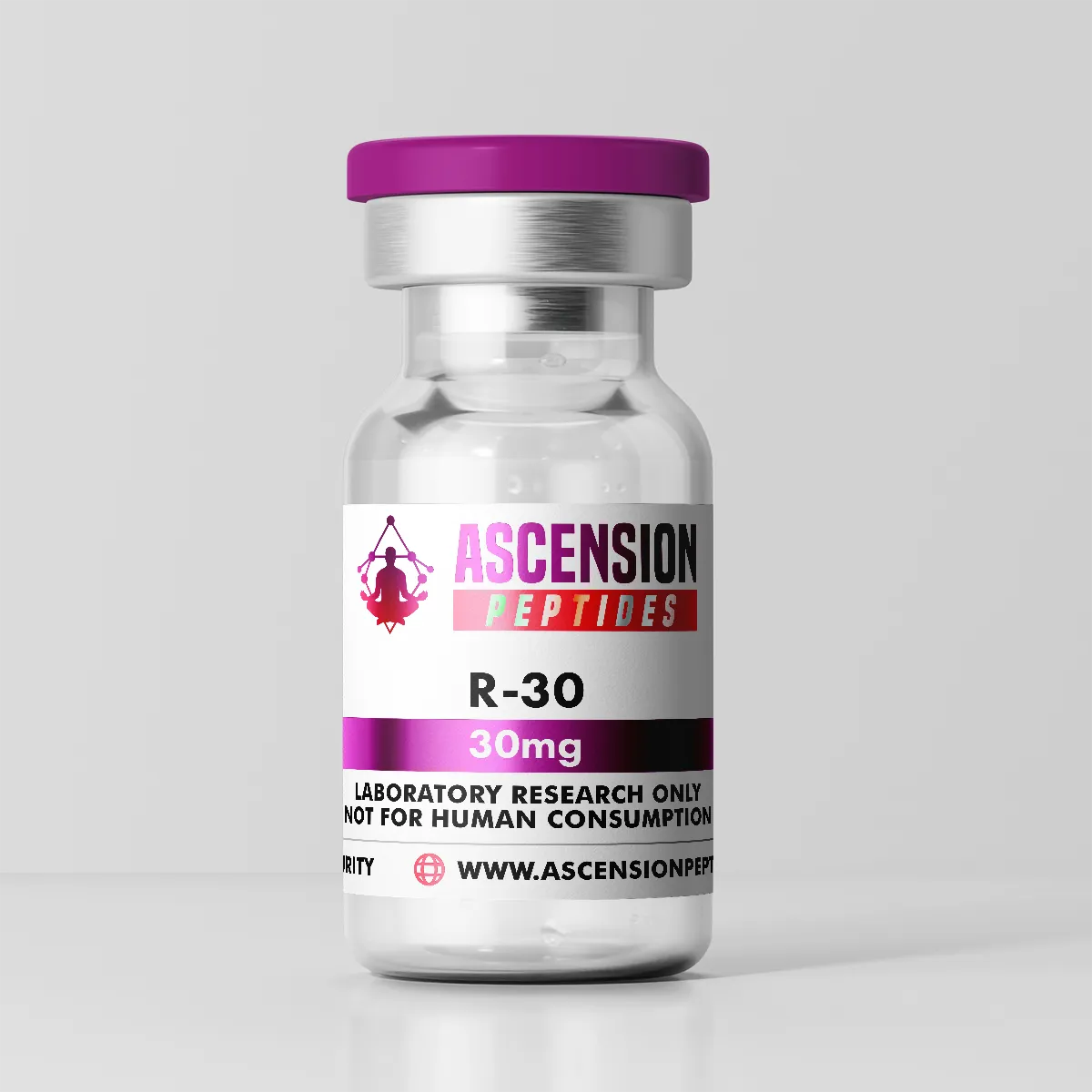
Ascension Peptides carries retatrutide under the catalog designations R-10 (10mg) and R-30 (30mg), with third-party CoA documentation confirming purity and sequence accuracy. Their testing methodology for complex acylated peptides is among the more transparent in the peptide market — they publish batch-specific results rather than generic supplier certificates. You can buy retatrutide in either size and check the current batch COA before you order.
Verify Third-Party CoA Documentation
Request a Certificate of Analysis confirming peptide identity via mass spectrometry, HPLC purity (≥98% minimum), and endotoxin testing results. For retatrutide specifically, the CoA should confirm the correct molecular weight of the acylated form — not just the bare peptide sequence. Unacylated retatrutide will not reproduce the half-life and receptor pharmacology seen in the TRIUMPH trials.
Confirm Cold-Chain Shipping and Storage
Acylated peptides are sensitive to temperature and moisture. Retatrutide should arrive lyophilized (freeze-dried powder) with appropriate desiccation packaging and cold-chain shipping conditions. Degraded peptide produces unreliable research data and is a wasted investment regardless of the price.
Confirm Legal Status in Your Jurisdiction
Retatrutide is not an approved drug in the US: the FDA says it cannot be compounded and advises consumers not to buy unapproved retatrutide products, and Lilly has sued sellers that market it for research purposes. Regulations differ internationally — confirm applicable rules for your location and institution before ordering. Research peptide status does not translate uniformly across jurisdictions.
Review Reconstitution Requirements
Lyophilized peptide requires reconstitution with bacteriostatic water before use. Bacteriostatic water (not sterile water) is standard for extending the usable life of reconstituted peptides. Follow reconstitution protocols carefully — improper reconstitution can degrade the compound.
Frequently Asked Questions: Retatrutide TRIUMPH-4 Trial
Bottom Line: What the TRIUMPH-4 Trial Results Mean for Metabolic Research in 2026
The retatrutide TRIUMPH-4 trial results represent a genuine step change in what's pharmacologically achievable for obesity treatment, not an incremental improvement. The combination of 28.7% mean body weight reduction at 68 weeks (efficacy estimand), knee pain cut by up to 75.8%, the Phase 2 finding of continued weight loss through 48 weeks without a plateau, and meaningful secondary metabolic improvements builds a case that is hard to argue with.
The glucagon receptor agonism — the differentiating mechanism between retatrutide and its approved predecessors — appears to be genuinely additive in the clinical context. This wasn't obvious before the TRIUMPH data; the theoretical framework existed, but Phase 2 and Phase 3 confirmation is what transforms theory into actionable pharmacology.
For researchers evaluating the GLP-1 compound class in 2026, the retatrutide weight loss results from TRIUMPH-4 define the current ceiling of what's achievable through receptor pharmacology in obesity treatment. Until another mechanism shows comparative efficacy in Phase 3, TRIUMPH-4 is the benchmark.
For researchers looking to source retatrutide before commercial approval, the research peptide route through suppliers like Ascension Peptides remains the accessible option — with the caveat that quality verification and proper research protocols are non-negotiable for any meaningful scientific application.