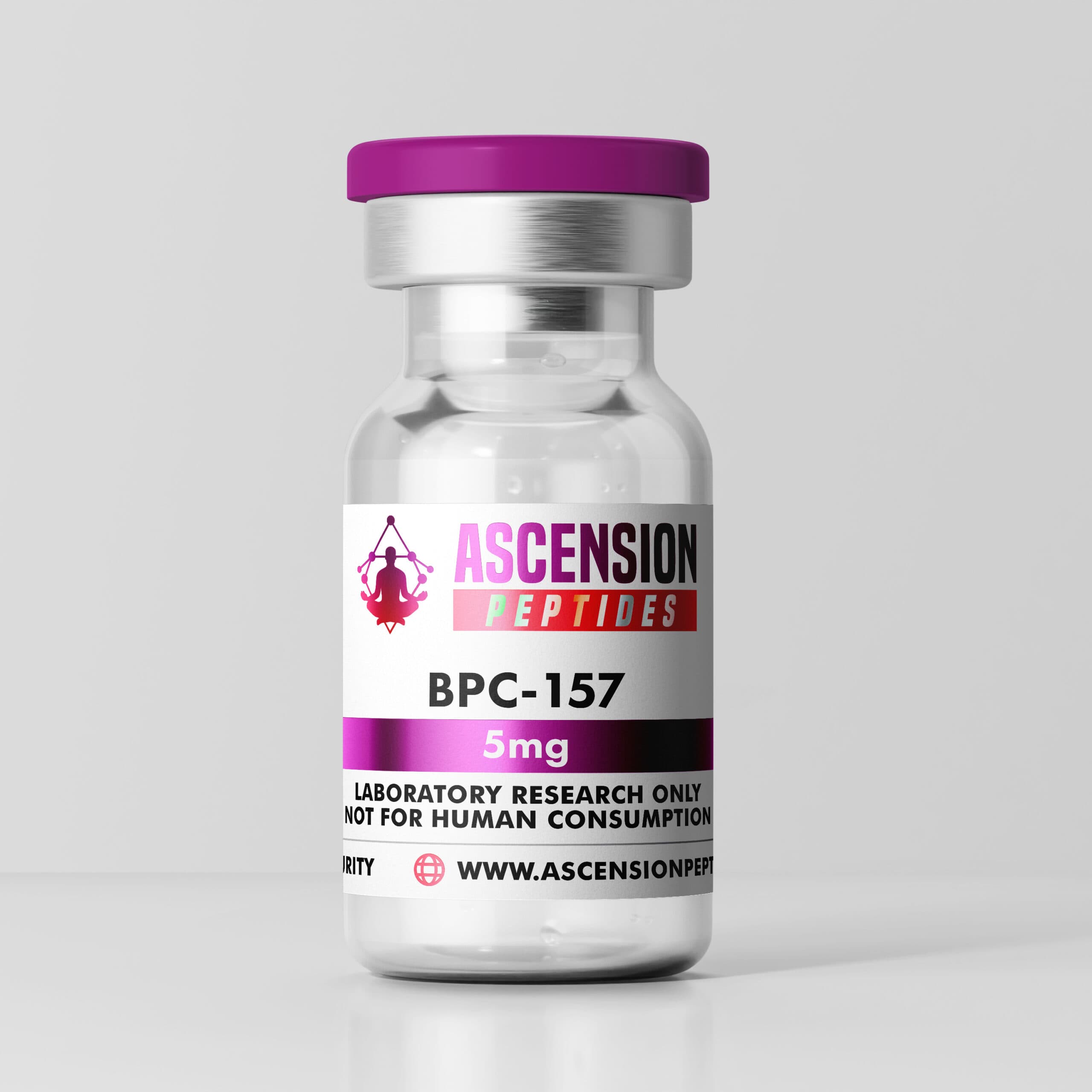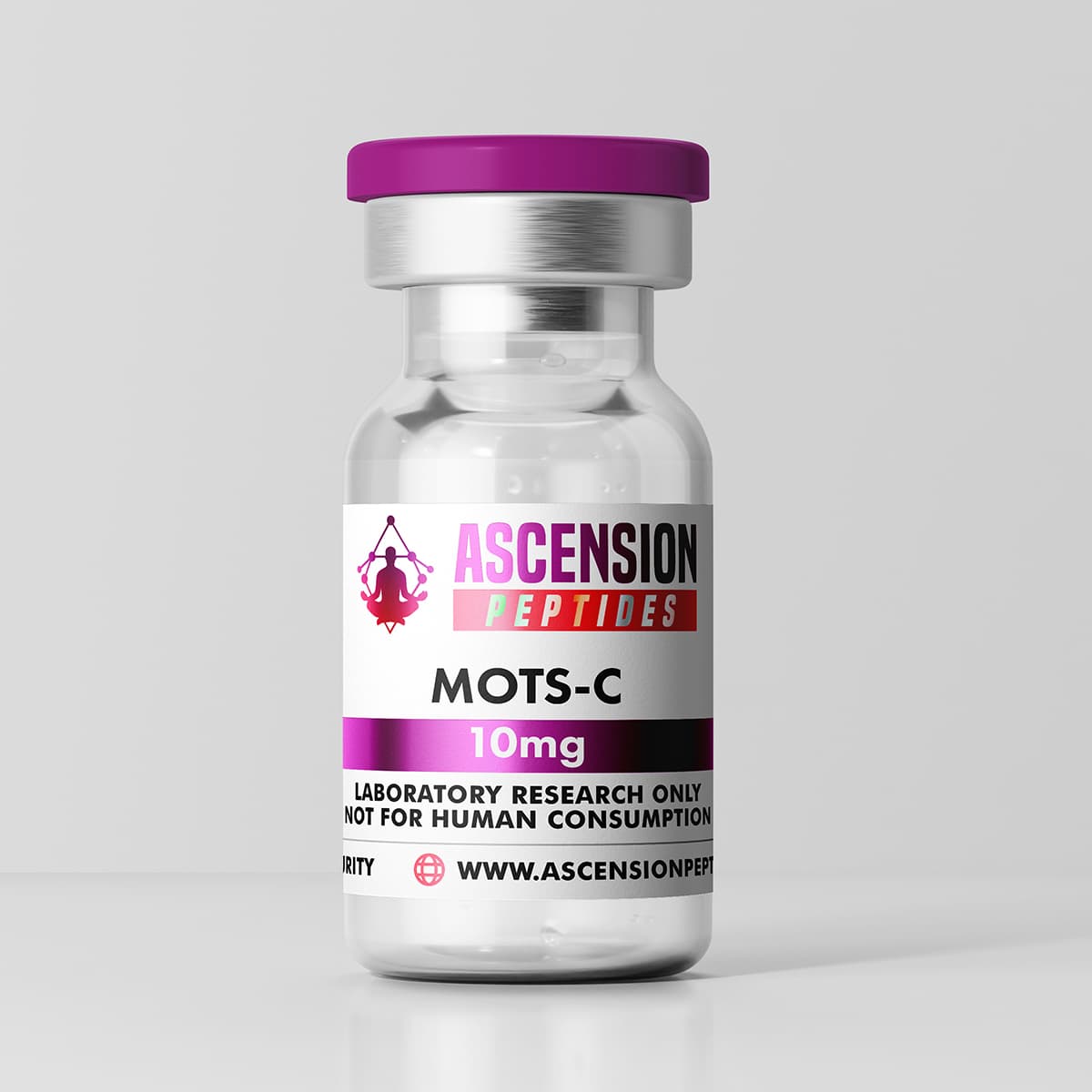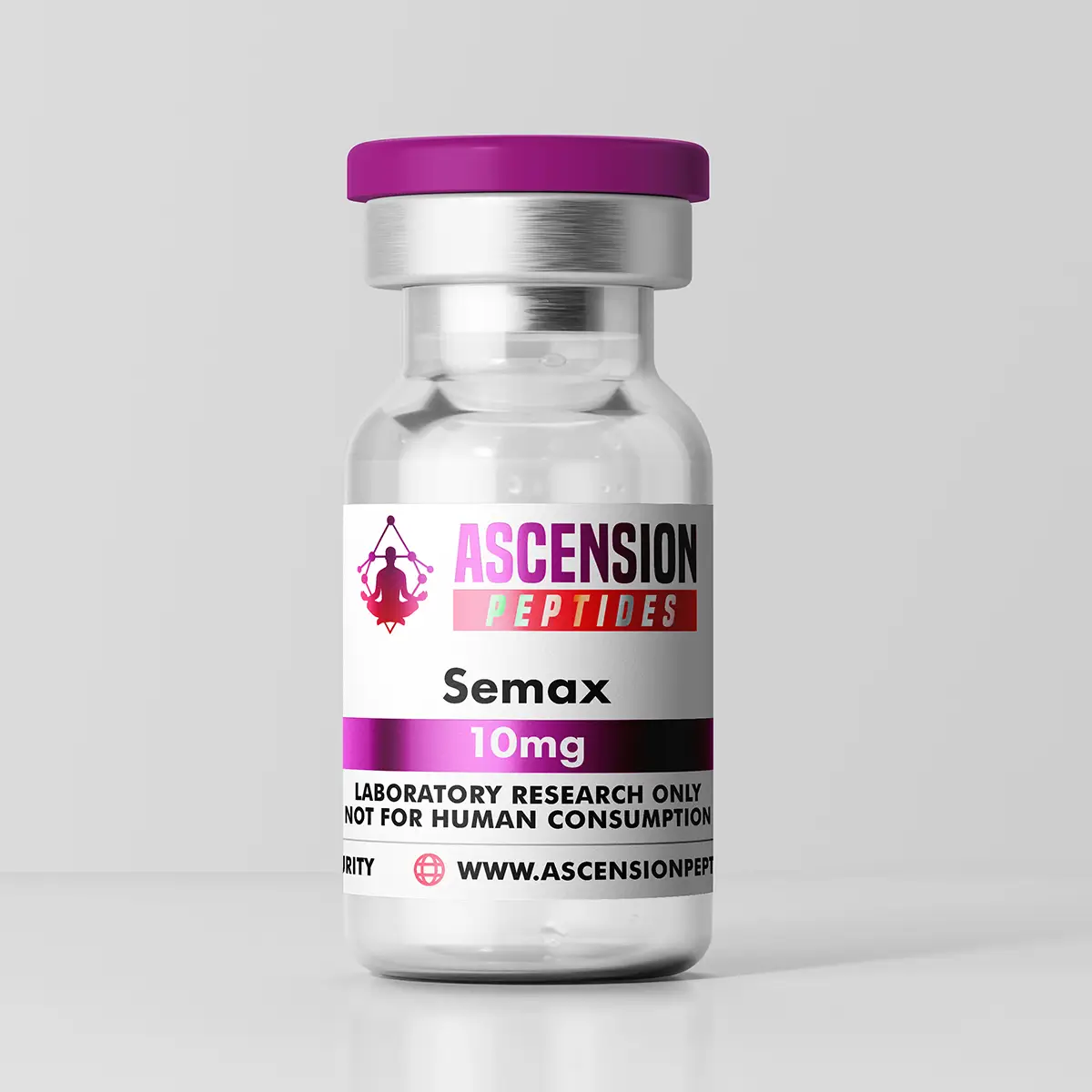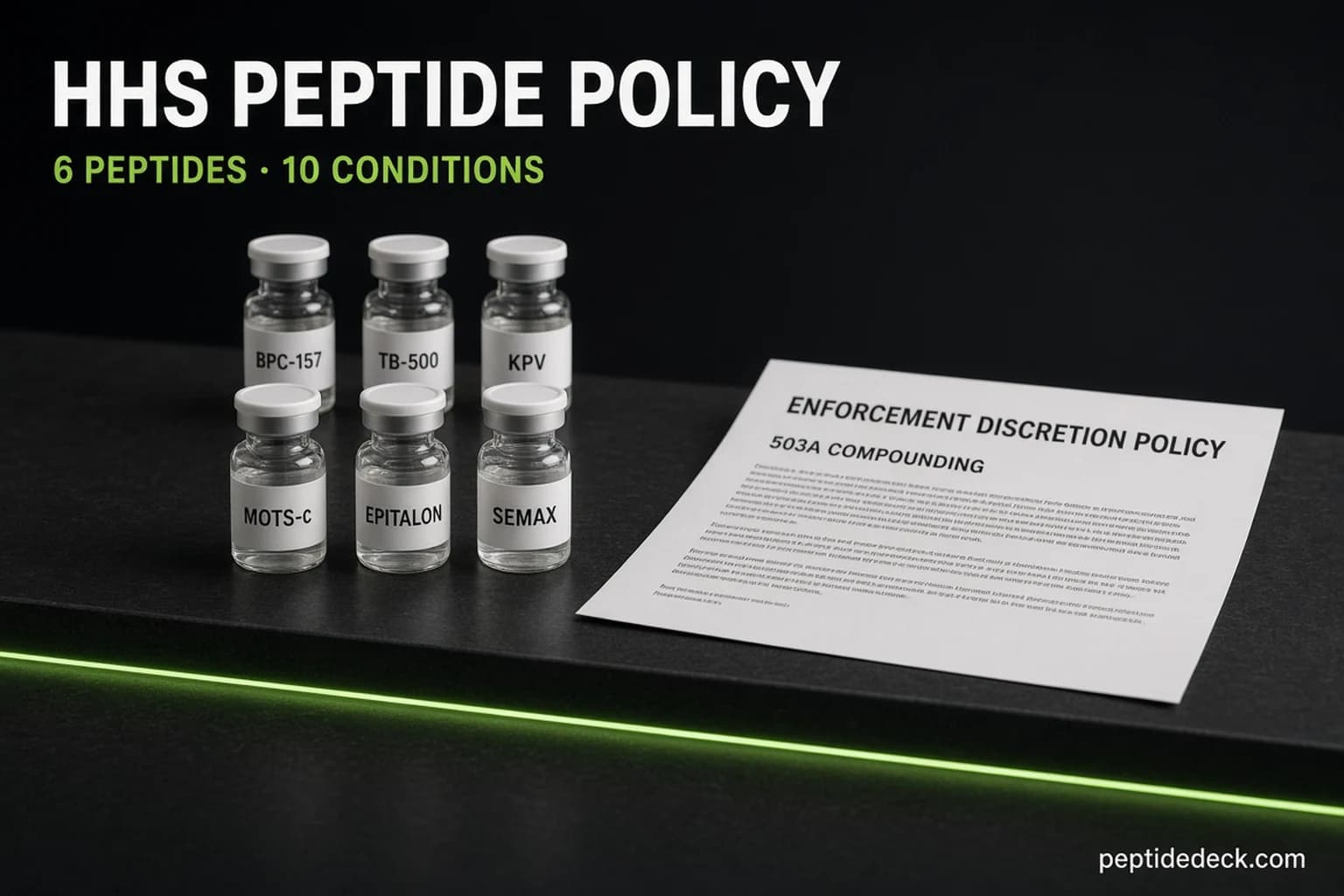
The HHS peptide policy is finally public. On October 28, 2026, the Department of Health and Human Services posted the full text of its "Enforcement Discretion Policy Regarding 503A Compounding Using Certain Peptide Bulk Drug Substances." In it, HHS says it won't take action against licensed pharmacies and doctors that compound six peptides: BPC-157, TB-500, KPV, MOTS-c, Epitalon and Semax. There's a catch: they have to follow ten conditions, and each peptide is limited to certain ways of taking it.
🔑 Key Takeaways
- Your favourite blend isn't covered, and the reason is written into the policy
- BPC-157 got the widest access of the six; one peptide is nasal only
- One peptide from the July vote is missing
- HHS signed this, not the FDA, and FDA scientists mostly opposed it
- Four groups met the White House about it in the past week, and one wants it stopped
📰 What happened (October 28, 2026)
HHS posted its peptide enforcement discretion policy on hhs.gov. The Federal Register notice (FR Doc. 2026-22192, RIN 0910-ZD94) is scheduled to publish on October 30, 2026 and opens a two-week comment period on regulations.gov under docket HHS-OASH-2026-0496. The policy went to the White House for review on October 14. The ten conditions are below.
If you use peptides, you've lived with the gray zone for three years. Vials sold online with lab labels. No pharmacy to fill a prescription. No easy way to know what's actually in the vial.
This policy is HHS's answer to that. It doesn't make anything legal overnight, and it doesn't approve anything. But it opens a door that's been shut since 2023, and the details decide who actually gets through it.
What the HHS Peptide Policy Says
It's a promise not to enforce. Under federal law, a pharmacy can only compound from a raw ingredient if it's part of an approved drug, has an official USP monograph, or sits on FDA's 503A "bulks list." None of the six peptides meets any of those tests.
So HHS isn't changing the law. It's saying that, until FDA finishes rulemaking on each peptide, it "does not intend to take action" against a state-licensed pharmacy, a federal facility, or a licensed physician who compounds one of the six under the policy's conditions.
HHS gives one main reason. It says the policy will discourage the "continued, widespread use" of peptides sold online by foreign manufacturers that pose a safety risk, by giving patients a more controlled alternative. It also cites the July advisory committee vote and data on how widely these peptides are already used.
The policy is not binding on HHS or the public, and HHS can pull it back, in whole or in part, if a safety signal or product quality problem shows up.
The 6 Peptides and the Routes HHS Allows
Each peptide comes with limits. Appendix B of the policy names the exact chemical form of each peptide and the ways it can be given. Anything outside those routes isn't covered.
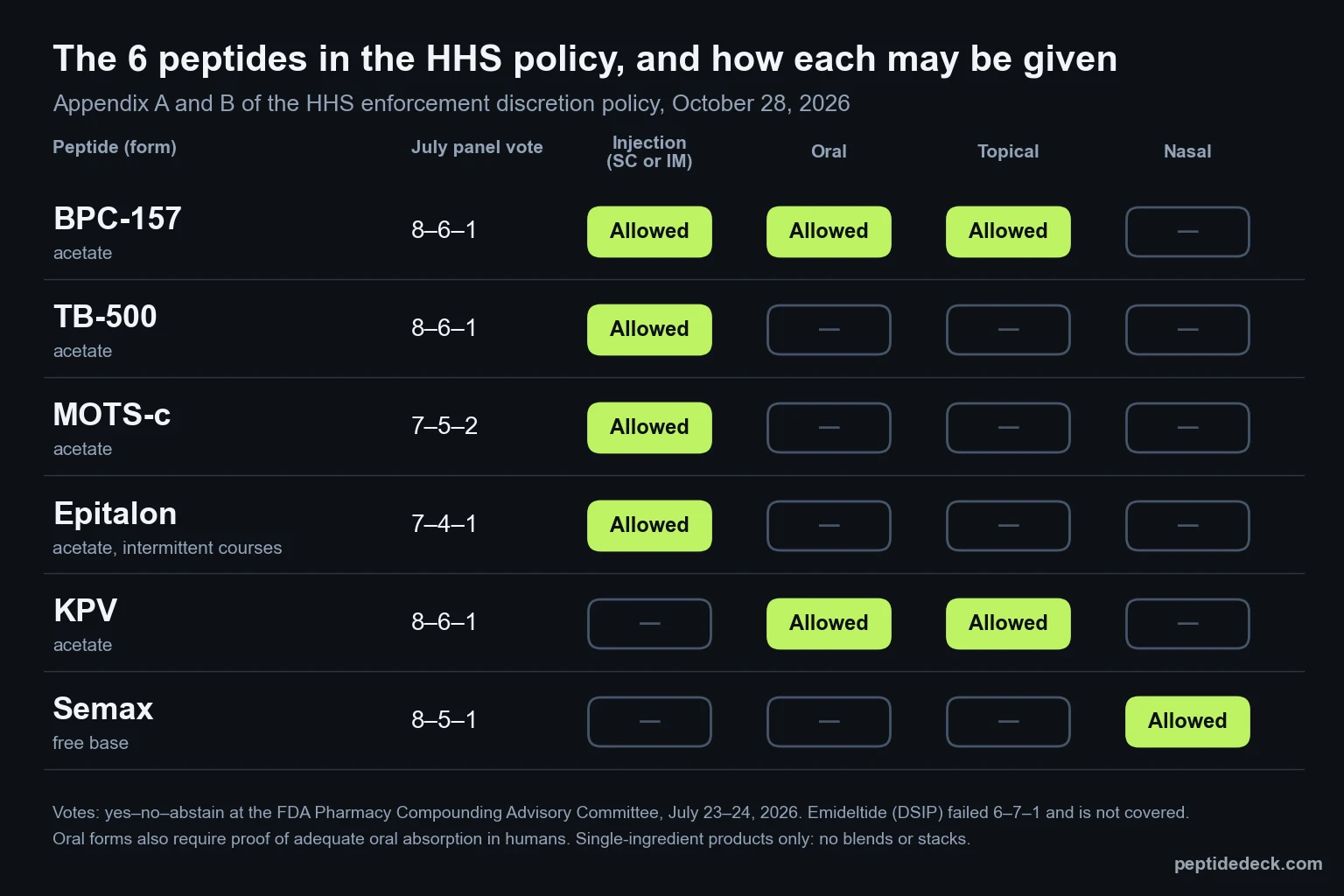
A few things stand out. BPC-157 is the only peptide allowed by injection, by mouth and on the skin. KPV can't be injected at all. Semax is nasal only. Epitalon is limited to "intermittent courses," not continuous use.
Emideltide (DSIP) is missing. It was the seventh peptide at the July meeting and the only one the committee voted down, 6–7 with one abstention. For the full vote-by-vote record, see our FDA peptide vote 2026 breakdown.
All six were in FDA's "Category 2" of substances with significant safety risks from September 2023 until April 22, 2026. The policy itself points out that neither going onto that list nor coming off it changed their legal status for compounding. That's why this policy matters more than the April change did.
The 10 Conditions Pharmacies Have to Meet
This is where the policy gets strict. HHS's promise only holds when all ten of these are true:
- On the list. The peptide is one of the six in Appendix A.
- Exact identity and route. It matches the amino acid sequence, structure, molecular weight and formula in Appendix B, and is given only by the routes listed there.
- Tested ingredient. The raw powder comes from an FDA-registered facility with a valid certificate of analysis (COA) covering identity, purity, potency and contaminants such as endotoxins, heavy metals, microbes and impurities.
- Registered original maker. The original manufacturer, not just a reseller, is FDA-registered, follows good manufacturing practice, and its facility address is on the COA. A repacker or reseller has to validate the manufacturer and its COA itself.
- Reporting. Pharmacies report what they compound, plus every serious adverse event and quality problem, to FDA's MedWatch program and to the states involved. How to report goes on the patient's label.
- Label. The product says: "This is a compounded drug product. Not for resale."
- One active ingredient. Each product contains a single peptide from the list.
- Proof for pills. Oral products need documentation that the specific formula is actually absorbed well enough in humans.
- Syringe only. The only device that can come with or hold the drug is an FDA 510(k)-cleared syringe.
- Everything else still applies. Sanitary conditions and a valid, patient-specific prescription are still required.
The policy also sets a testing standard for the raw peptide, built on USP and ICH methods: identity by orthogonal methods, HPLC assay, endotoxin testing to USP <85>, residual solvents, elemental impurities, water content and acetate content.
What the Policy Doesn't Cover
Here's what most people will miss. The rules above quietly rule out a lot of what's sold today.
- Blends and stacks. The single-ingredient rule means no BPC-157 + TB-500 "Wolverine" stack, no KLOW, no GLOW. HHS says single-peptide products make it easier to tie side effects to the right substance.
- Peptides bought online without a pharmacy. The policy covers state-licensed pharmacies, federal facilities and licensed physicians filling a patient-specific prescription. It doesn't cover online sellers shipping vials with lab labels.
- Pens and auto-injectors. Only a 510(k)-cleared syringe is allowed as the device.
- Unlisted routes. Injectable KPV, oral TB-500 or nasal BPC-157 fall outside the policy.
- Other popular peptides. GHK-Cu, LL-37, Melanotan II, Dihexa and PEG-MGF aren't included. Law firm Holland & Knight reports a second advisory committee meeting on those five is expected before the end of February 2027, with no date set.
- FDA approval. None of the six is approved. HHS's own notice repeats that compounded drugs aren't reviewed by FDA for safety, effectiveness or quality.
If you're trying to work out where to buy BPC-157 through a compounding pharmacy rather than an online seller, our guide covers how that route works and what to check on a pharmacy's COA. Expect prescription and pharmacy costs on top of the peptide itself.
Is It in Effect Yet?
Not formally, and not for long. HHS posted the document on October 28. The Federal Register notice is set to publish on October 30, and it gives the public two weeks after publication to comment on regulations.gov, docket HHS-OASH-2026-0496.
There's a wrinkle in the wording. The Federal Register notice calls it a "draft" policy, while the version on hhs.gov reads like a final statement. HHS hasn't said whether it applies right away or after the comment period. Until it does, pharmacies are likely to wait.
Even once it applies, state boards of pharmacy and medicine aren't bound by it. A state can still refuse to let its pharmacies compound these peptides.
Who Pushed for It and Who's Against It
This one came from the top. The policy is signed by HHS Secretary Robert F. Kennedy Jr. and issued through the Office of the Secretary, not by FDA. The Associated Press reported that HHS taking the lead on compounding policy is extremely rare.
The AP also reported, citing six people familiar with it, that most FDA scientific staff opposed the plan and had limited input. FDA staff had recommended against all seven peptides before the July meeting. According to the AP, HHS first wanted to add the peptides to the bulks list through a formal rule, and switched to this approach after FDA officials said agency scientists wouldn't support it. FDA staff did help draft the safety conditions, including registered sourcing, side-effect reporting and identity testing.
While the policy sat at the White House, the government's own meeting log shows who asked to be heard. These are the four requested meetings on the policy listed on reginfo.gov:
Three of the four would benefit from wider access. CSPI is the one pushing back. On October 26, three of its authors published a Viewpoint in JAMA arguing that the July committee was stacked: they note that every favourable vote came from newly appointed permanent members, most of them tied to peptide businesses or clinics. CSPI warns that allowing compounding based on market demand could open the door to other unapproved products and weaken the incentive for companies to run real trials.
Industry and legal analysts expect a fight. Holland & Knight notes that drug-industry groups already argued to the advisory committee that FDA can't lawfully allow compounding through an interim policy while rulemaking is pending.
What This Means If You Use Peptides
The practical change is a legitimate route. If the policy takes effect and your state allows it, you'll be able to get one of the six from a licensed pharmacy with a prescription, made from a tested, registered-source powder, with a label that tells you how to report problems.
That's a real upgrade over guessing what's in an online vial. It also comes with friction: a prescriber visit, a pharmacy that chooses to take part, single-peptide products only, and the route limits above. Our guide to getting BPC-157 walks through each route as it stands now.
Three things to watch next:
- Whether HHS says it's in effect after the two-week comment window.
- Which pharmacies sign on. Sourcing COA-backed powder from an FDA-registered original manufacturer is the hard part.
- Lawsuits and safety reports. HHS can narrow or withdraw the policy if MedWatch reports turn up a problem.
The permanent decision is still FDA rulemaking on the bulks list. Holland & Knight puts a final rule in late 2027 or 2028 at the earliest, citing the last time FDA added bulk substances: proposed in 2016, finalized in 2019.
Timeline: How We Got Here
For the earlier chapters, see RFK Jr. and the peptide rollback and our broader guide to whether peptides are legal.
Frequently Asked Questions
Sources
- U.S. Department of Health and Human Services. HHS Enforcement Discretion Policy Regarding 503A Compounding Using Certain Peptide Bulk Drug Substances, with Appendices A and B. October 28, 2026.
- Federal Register. Enforcement Discretion Policy Regarding 503A Compounding Using Certain Peptide Bulk Drug Substances, notice of availability. FR Doc. 2026-22192, RIN 0910-ZD94, docket HHS-OASH-2026-0496. Filed October 28, 2026; publication October 30, 2026.
- Office of Information and Regulatory Affairs. EO 12866 meetings for RIN 0910-ZD94. Accessed October 28, 2026.
- Associated Press. FDA scientists opposed the Trump administration's effort to ease peptides access. October 28, 2026.
- Reuters, via WSAU. US FDA takes step to change peptide compounding policy. October 15, 2026.
- Holland & Knight. Peptides at a Crossroads: What Wellness Providers Need to Know. October 16, 2026.
- Center for Science in the Public Interest. FDA moves on peptides put consumers in harm's way. October 26, 2026.
Medical Disclaimer: This article is for informational purposes only and does not constitute medical or legal advice. The six peptides covered by the HHS policy have not been approved by the FDA, compounded drugs are not reviewed by FDA for safety, effectiveness or quality, and state rules may differ. Talk to a licensed clinician before using any peptide, and check your state's rules before relying on this policy.