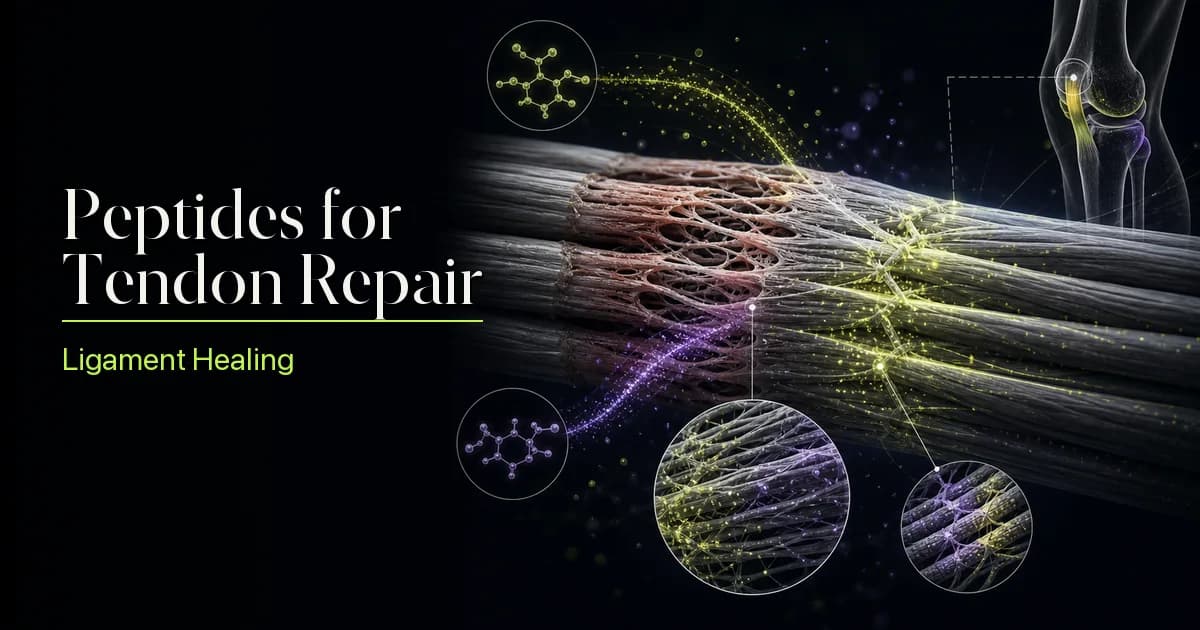
Tendon and ligament injuries are notoriously stubborn healers. A sprained ankle, torn rotator cuff, or chronic Achilles tendinopathy can sideline you for 6–18 months — and even then, the repaired tissue is rarely as strong or flexible as before. Peptide therapy is changing that equation. Research and real-world use consistently show that the best peptides for tendon repair can dramatically accelerate healing, reduce scar tissue, and restore tissue quality in ways conventional treatment cannot.
This guide covers every evidence-backed peptide for tendon and ligament healing — how they work, how to use them, how to stack them, and what realistic results look like.
Why Tendons and Ligaments Are So Hard to Heal
Before diving into peptides, it's worth understanding exactly what makes these injuries so resistant to normal recovery. Three biological factors are primarily responsible:
1. Poor Blood Supply (Hypovascularity)
Tendons and ligaments receive dramatically less blood flow than muscle tissue. Without adequate vascular supply, oxygen, nutrients, and signaling molecules — including the growth factors that trigger repair — struggle to reach the injury site. This is the single biggest bottleneck in tendon healing.
2. Low Cellular Density
These tissues contain relatively few cells (primarily fibroblasts called tenocytes) compared to highly regenerative tissues like skin or muscle. Fewer cells means slower collagen production and slower structural rebuilding.
3. Inferior Scar Tissue Formation
When tendons do heal, they typically do so with disorganized type III collagen (scar tissue) rather than the aligned, resilient type I collagen of healthy tendon. This scar tissue is weaker, less elastic, and prone to re-injury.
Peptides address all three of these problems simultaneously — which is why they outperform conventional treatments like rest, NSAIDs, and even PRP in many scenarios.
The 5 Best Peptides for Tendon Repair — Ranked by Evidence
🥇 1. BPC-157 — Best Overall for Soft Tissue Healing
BPC-157 (Body Protection Compound-157) is a 15-amino-acid peptide derived from a naturally occurring protein in gastric juice. It has more published research behind it for tendon and ligament repair than any other peptide on this list.
How it works: BPC-157 promotes angiogenesis — the formation of new blood vessels — directly at the injury site. By upregulating VEGF (Vascular Endothelial Growth Factor), it solves the fundamental blood supply problem that makes tendon healing so slow. It also enhances fibroblast proliferation (increasing collagen-producing cells), reduces inflammatory signaling, and stabilizes nitric oxide pathways that govern local tissue oxygenation.
Key research findings: A 2018 systematic review published in Current Pharmaceutical Design found BPC-157 consistently accelerated tendon-to-bone healing in animal models, with repaired tendons showing significantly better collagen organization and tensile strength. A ScienceDirect narrative review of peptide therapy for tendons and ligaments confirmed BPC-157 as one of the most-studied and most-effective compounds in this category.
• Injection (subcutaneous or IM near injury): 200–350mcg once or twice daily
• Oral/capsule (systemic/gut healing): 500mcg twice daily
• Cycle length: 8–12 weeks
• Best for: Achilles tendon, patellar tendon, rotator cuff tears, tennis elbow, plantar fasciitis, ligament sprains
Local vs. systemic dosing: One of BPC-157's unique advantages is that it can be injected locally near an injury site for targeted angiogenic activity, or used systemically for whole-body effects. For isolated injuries, local subcutaneous injection closest to the tendon is preferred by most practitioners.
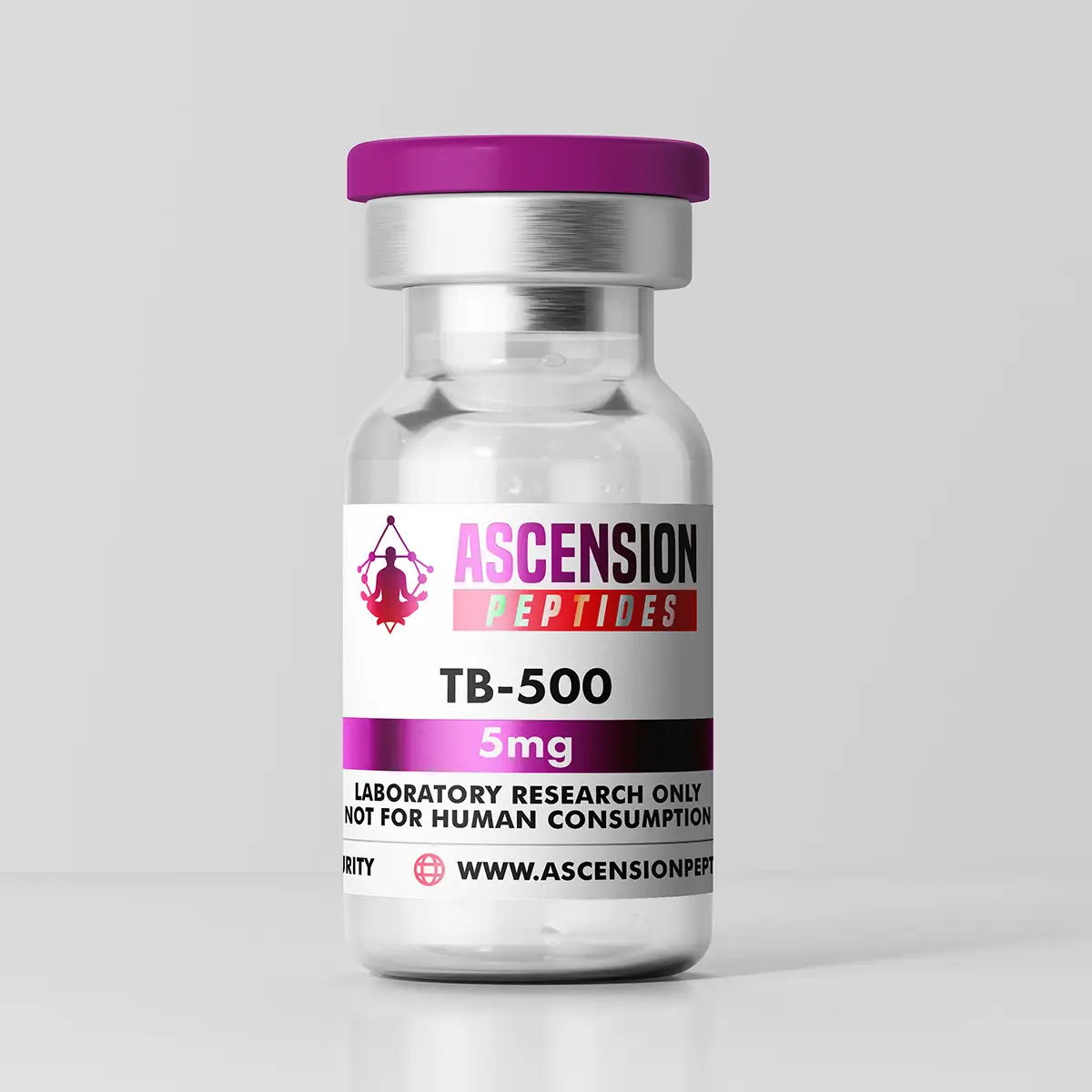
🥈 2. TB-500 — Best for Systemic and Severe Tendon Injuries
TB-500 (Thymosin Beta-4) is a synthetic version of a naturally occurring peptide found in virtually all human and animal cells. Where BPC-157 excels at local vascular repair, TB-500 works primarily by promoting cell migration — mobilizing repair cells to travel to the injury site faster.
How it works: TB-500 binds to actin, a key structural protein in cells, promoting cytoskeletal reorganization that facilitates cell movement. When a tendon is injured, the tissue releases distress signals. TB-500 dramatically amplifies the speed and efficiency with which tenocytes, satellite cells, and progenitor cells respond to those signals. It also reduces acute inflammation and promotes organized collagen deposition rather than disorganized scar tissue.
Key advantage over BPC-157: TB-500 works systemically throughout the body from a single injection site. If you have multiple injuries — or an injury in a hard-to-reach location like a deep hip flexor or rotator cuff — TB-500's systemic reach is invaluable.
• Loading phase: 5mg twice weekly for 4–6 weeks
• Maintenance phase: 2–2.5mg twice weekly for 4–8 additional weeks
• Injection route: Subcutaneous (any site — systemic action)
• Total cycle: 8–12 weeks
• Best for: Multiple simultaneous injuries, severe tears, systemic connective tissue support
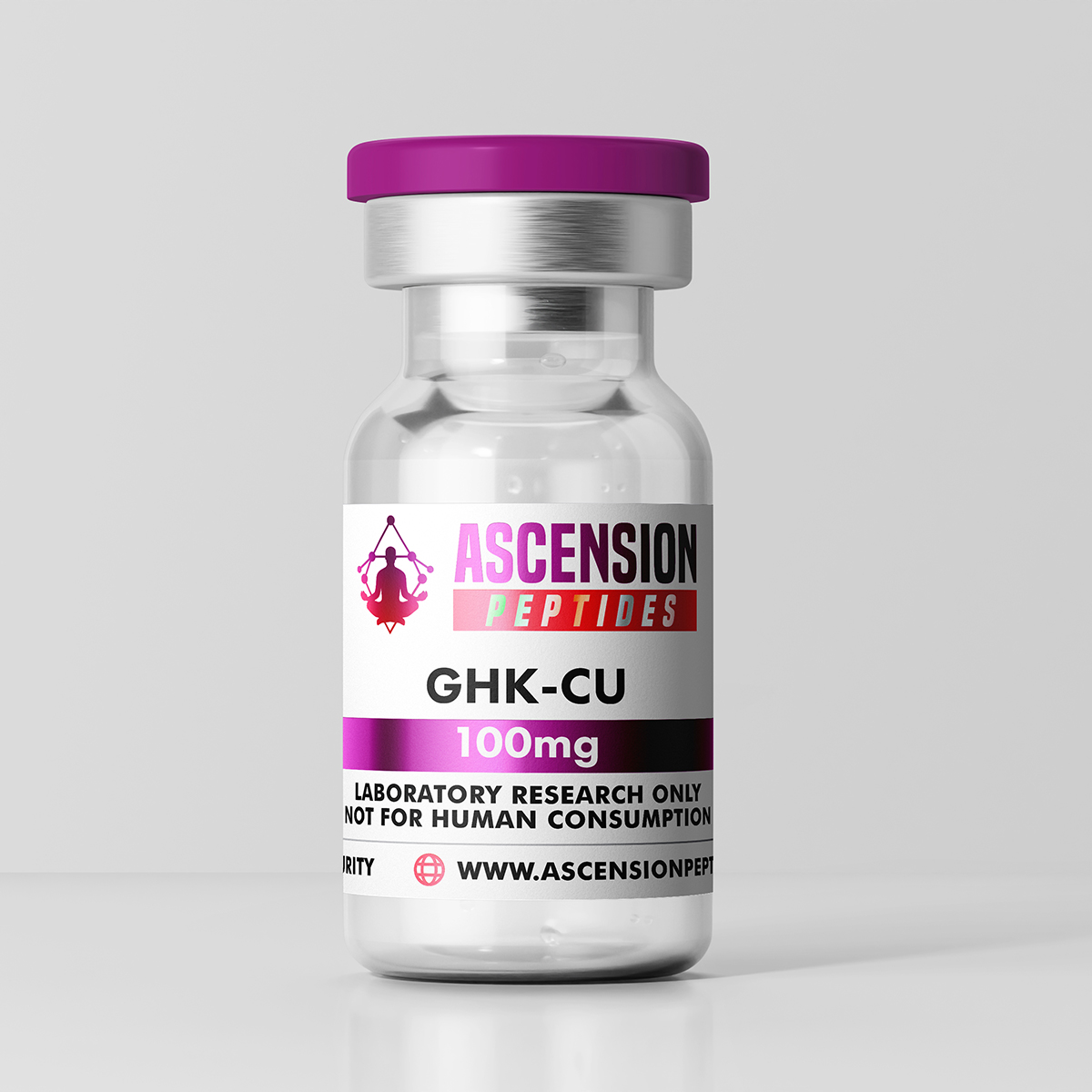
🥉 3. GHK-Cu — Best for Collagen Remodeling and Chronic Injuries
GHK-Cu (Glycine-Histidine-Lysine Copper) is a naturally occurring copper peptide with powerful tissue remodeling properties. While it's most famous in skincare and anti-aging contexts, its effects on connective tissue make it highly relevant for tendon and ligament repair.
How it works: GHK-Cu upregulates collagen synthesis (both type I and type III), activates metalloproteinases that break down damaged scar tissue, and stimulates the production of decorin — a proteoglycan critical for proper collagen fiber alignment. This combination makes it uniquely effective at converting poorly organized scar tissue into functional, aligned collagen — something neither BPC-157 nor TB-500 does as directly.
Best use case: GHK-Cu shines in chronic injuries where scar tissue has already formed and the goal is remodeling rather than acute repair. It's also excellent as a maintenance compound after completing a BPC-157/TB-500 cycle.
• Dose: 1–3mg daily via subcutaneous injection
• Cycle length: 8–16 weeks
• Best for: Chronic tendinopathy, post-surgical remodeling, scar tissue reduction
4. Ipamorelin + CJC-1295 — Best for Supporting Systemic Recovery
Growth hormone secretagogues like Ipamorelin and CJC-1295 don't act directly on tendons, but they accelerate the systemic environment needed for tissue repair. By increasing endogenous growth hormone and IGF-1 levels, they enhance protein synthesis, reduce inflammation, improve sleep quality (when the majority of tissue repair occurs), and support overall anabolic conditions.
Best use case: Stack with BPC-157 or TB-500 when overall recovery speed matters — post-surgery, multiple injuries, or when an athlete needs to return to competition as quickly as possible.
• Dose: 100–300mcg Ipamorelin + 100–300mcg CJC-1295 (no DAC), 2–3x daily
• Timing: Before sleep and upon waking for maximum GH pulse amplification
• Cycle: 12–16 weeks
5. Sermorelin — Budget-Friendly Systemic Support
Sermorelin is a GHRH analog that stimulates natural GH release. Like the Ipamorelin/CJC combo above, it supports the systemic anabolic environment for tendon repair. It's a cost-effective option for users who want systemic GH support without the added expense of a two-peptide protocol.
Peptide Stacking Strategies for Tendon Repair
Individual peptides are effective — but strategic combinations produce superior outcomes by targeting multiple healing mechanisms simultaneously.
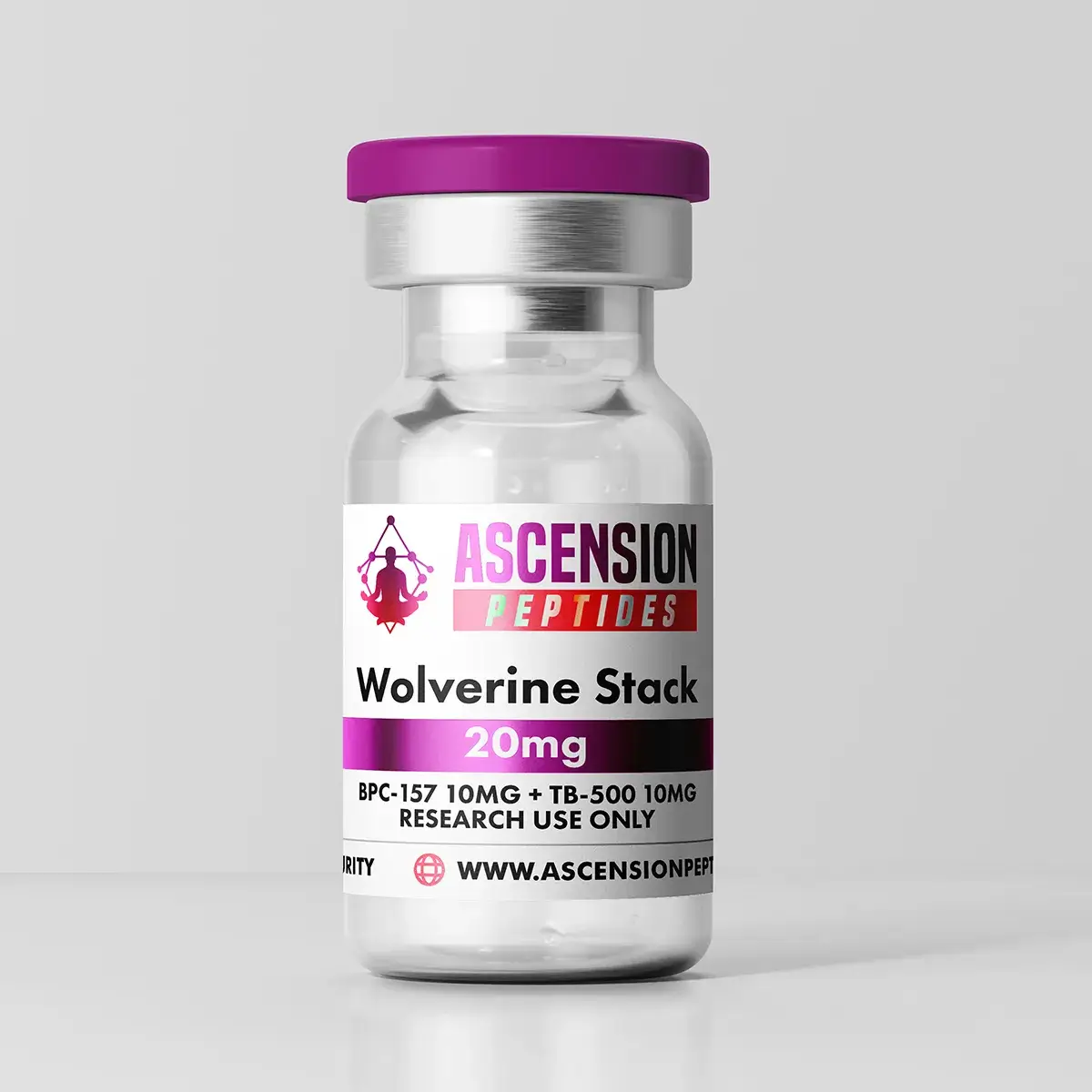
Stack 1: The Standard Repair Stack (Most Popular)
BPC-157 — 250mcg, twice daily (subcutaneous near injury)
Drives angiogenesis and local fibroblast activity at the injury site. The foundation of the stack.
TB-500 — 5mg twice weekly (subcutaneous, any site)
Promotes systemic cell migration and reduces excessive inflammation. Works synergistically with BPC-157's local effects.
Cycle Length: 8–12 weeks
Most users report significant pain reduction by week 3–4 and measurable functional improvement by week 6–8.
Stack 2: The Advanced Recovery Stack (Post-Surgical or Severe Tears)
BPC-157 — 300–350mcg, twice daily
Maximum angiogenic and fibroblast support for severe injury scenarios.
TB-500 — 5mg twice weekly (loading), then 2.5mg twice weekly
Full loading protocol for aggressive systemic repair support.
Ipamorelin/CJC-1295 — 200mcg each, twice daily
Amplifies GH/IGF-1 to accelerate the systemic anabolic environment for repair.
GHK-Cu — 1mg daily (after week 6, for remodeling phase)
Introduced in the second half of the cycle when initial repair has occurred and collagen remodeling becomes the priority.
Stack 3: The Chronic Tendinopathy Stack
BPC-157 — 250mcg daily, locally injected
Ongoing angiogenic support for chronically under-vascularized tissue.
GHK-Cu — 2–3mg daily
Primary collagen remodeling agent for breaking down and replacing fibrotic scar tissue.
Cycle: 12–16 weeks with 4-week break
Longer cycles are warranted for chronic conditions. Monitor progress and reassess at 8 weeks.
Realistic Results and Timeline
One of the most common questions is: how fast will this work? Here's an honest, evidence-based timeline for the BPC-157 + TB-500 stack:
- Week 1–2: Noticeable reduction in acute pain and swelling. Improved range of motion in many users. Sleep quality often improves as systemic inflammation decreases.
- Week 3–4: Significant functional improvement. Most users can resume low-intensity training or physical therapy that was previously too painful. Palpable reduction in tenderness at injury site.
- Week 6–8: Measurable structural improvement. Imaging (ultrasound or MRI) at this point often shows improved tendon echogenicity and reduced defect size. Return to sport activity becomes feasible for many injuries.
- Week 10–12: Near-complete symptomatic resolution for mild-to-moderate injuries. Severe or complete tears require longer protocols and may need additional cycles after a rest period.
Where to Buy Peptides for Tendon Repair
The effectiveness of any peptide protocol depends entirely on the quality of the compound you're using. Underdosed, contaminated, or incorrectly synthesized peptides won't produce results — and can be actively harmful. When sourcing peptides for tendon repair, look for:
Third-Party Certificate of Analysis (COA)
Every batch should have an independently verified COA from a recognized lab (e.g., Janssen, Intertek, or equivalent). Don't accept vendor-generated COAs without independent verification.
Purity ≥98%
High-quality research peptides should test at 98% purity or above. Anything lower increases the risk of impurities that trigger side effects or reduce efficacy.
US-Based Manufacturing
Domestic manufacturers are subject to stricter quality controls and faster shipping. Verify the vendor ships from within the US for both safety and delivery time reasons.
Transparent Labeling and Batch Testing
Look for vendors who publish batch numbers and make COAs searchable or downloadable by lot number — not just generic certificates on a static page.
A reputable vendor like Ascension Peptides meets all of these criteria — third-party tested, >99% purity, US-based, with publicly accessible COAs. This is what you should expect as a baseline from any vendor you consider.
Frequently Asked Questions
Final Verdict: Best Peptides for Tendon Repair
If you're dealing with a tendon or ligament injury and standard treatment isn't cutting it, peptide therapy represents the most evidence-supported option outside of surgery. Here's the condensed takeaway:
- Best overall: BPC-157 — local angiogenesis, fibroblast stimulation, extensive research
- Best for systemic/multiple injuries: TB-500 — cell migration, inflammation control, body-wide reach
- Best for chronic tendinopathy and scar remodeling: GHK-Cu — collagen reorganization, matrix remodeling
- Best supporting stack: Ipamorelin + CJC-1295 — systemic anabolic support, improved recovery environment
- Optimal combination: BPC-157 + TB-500 for 8–12 weeks, with GHK-Cu added in the second half for remodeling
The key is sourcing from a vendor with independently verified purity (≥98%) and batch-specific COAs. Quality compounds used consistently within a structured rehabilitation program can cut tendon healing time by 40–60% compared to standard care alone.