Only one peptide is approved for chronic pain. It is ziconotide (Prialt), a copy of a cone-snail toxin that has to be pumped into the fluid around the spinal cord, and its label carries a boxed warning for hallucinations and confusion. Most of what gets sold as peptides for pain, from BPC-157 to TB-500, rests on far thinner evidence than the clinics selling it suggest. This page grades the peptides for chronic pain people actually search for, one study at a time.
🔑 Key Takeaways
- Why the one approved pain peptide will never come in a vial
- The bone hormone that beat placebo for fracture pain within a week
- What happened to pain in the placebo group of the ARA-290 trial
- The detail in the BPC-157 knee report that clinics leave out
- Which pain signs mean a scan, not a peptide
If you have lived with pain for more than three months, you already know the cycle. The first prescriptions help a little. The side effects stack up. Then someone mentions peptides.
That is a fair question. The catch is that one word covers an approved spinal drug, a weight-loss injection and an unregulated vial, and they sit at very different points on the evidence ladder.
What Peptides for Chronic Pain Actually Means
Three very different groups share one label.
- Approved peptide drugs used for pain. Ziconotide for severe chronic pain, and salmon calcitonin, which is approved for bone disease and has trial data for fracture pain.
- Prescription peptides where pain fell as a knock-on effect. Semaglutide is the clear example: knee pain dropped in a large trial because weight dropped.
- Peptides sold online. ARA-290, BPC-157 and TB-500. None is approved for pain anywhere, and their human data range from three small trials to none at all.
Ziconotide: The Approved Pain Peptide
The FDA approved ziconotide in 2004. A synthetic cone-snail toxin, it blocks N-type calcium channels that relay pain signals in the spinal cord, without touching opioid receptors.
Three placebo-controlled trials sit behind the approval. In 111 people with cancer or AIDS pain, pain scores fell 53.1% on ziconotide against 18.1% on placebo, and 98.5% of the ziconotide group were already taking opioids (PMID 14709577). In 255 people with severe non-cancer pain, the drop was 31.2% against 6.0% (PMID 22151630). A third trial in 220 people titrated the dose slowly over three weeks: side effects were easier, but the pain gain shrank to 14.7% against 7.2% (PMID 16716870).
The trade-off is real. It is only given through an implanted spinal pump, the trials logged dizziness, confusion, unsteady walking and memory problems, and the label carries a boxed warning for psychiatric symptoms and cognitive impairment. It is a pain-clinic option, not something anyone can buy.
Calcitonin: A Hormone Peptide for Fracture Pain
Calcitonin is the second approved peptide with pain data. The salmon version is licensed for osteoporosis, Paget disease and high blood calcium.
A 2020 review pooled 9 trials in adults over 60 with a fresh spinal compression fracture. Salmon calcitonin at 100 to 200 IU a day, injected or by nasal spray, lowered week-1 pain by a standardised mean difference of -1.54, a number needed to treat of 2 (PMID 32188529). By week 4 the benefit was unclear.
Two limits matter. Using it for pain is off-label, and European regulators restricted long-term calcitonin use in 2012 over a small cancer signal. It also does not help every back problem: a meta-analysis of 9 trials and 496 people with lumbar spinal stenosis found no benefit on pain, walking distance or disability (PMID 38436716).
The Evidence Table: Every Pain Peptide Graded
Here is the whole ladder in one place. Each row is the best human pain study we could find for that peptide.
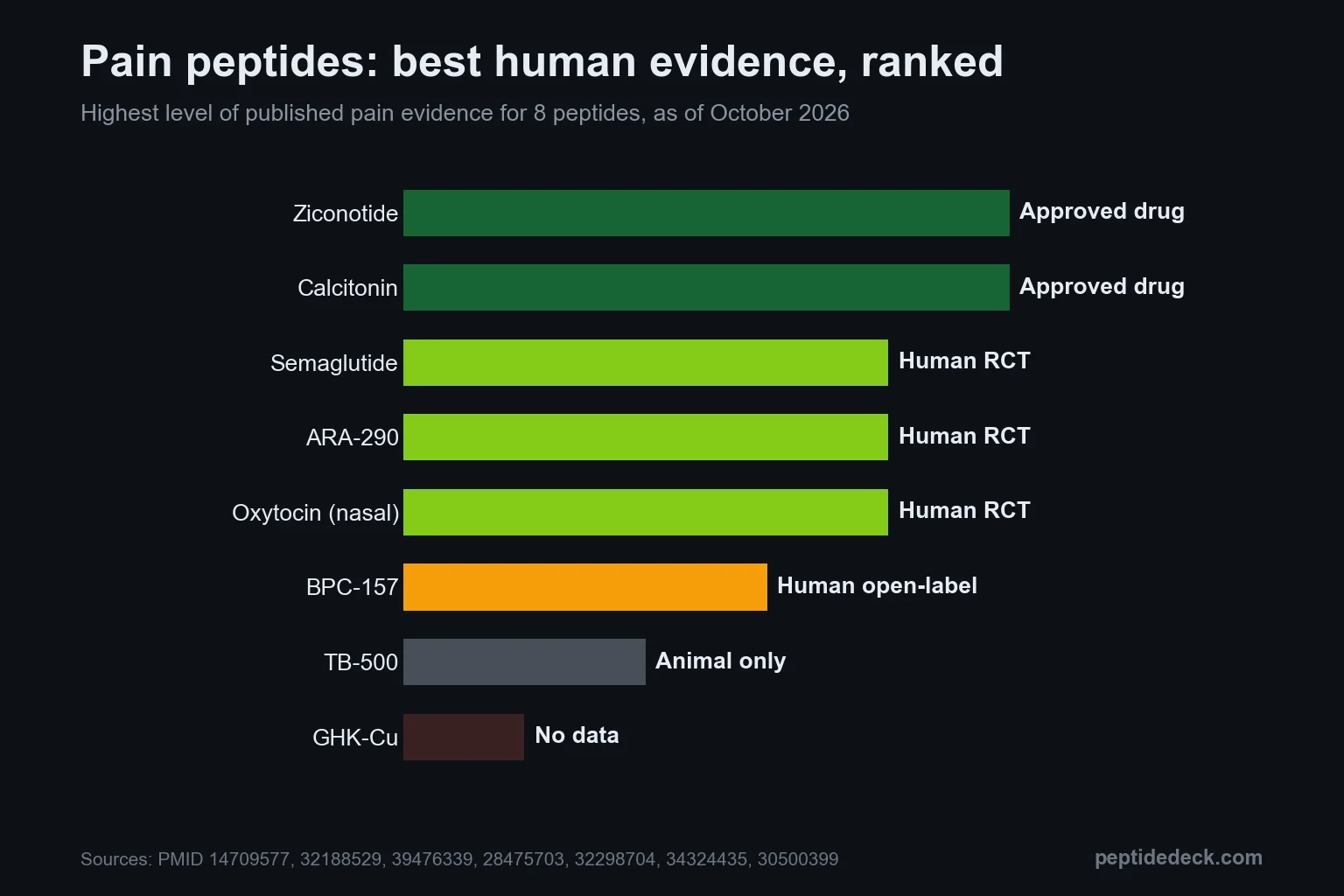
Semaglutide and Knee Pain: What STEP 9 Found
This is the biggest single trial on the list. STEP 9 enrolled 407 adults with obesity (average BMI 40.3) and moderate knee osteoarthritis with at least moderate pain; 81.6% were women and the average age was 56 (PMID 39476339).
Everyone got diet and activity advice, plus weekly semaglutide 2.4 mg or placebo (2:1). After 68 weeks:
- Body weight fell 13.7% on semaglutide against 3.2% on placebo.
- WOMAC knee pain (0 to 100 scale, starting near 71) fell 41.7 points against 27.5.
- Physical function improved 12.0 points against 6.5.
- 6.7% stopped semaglutide for side effects, mostly stomach problems, against 3.0% on placebo.
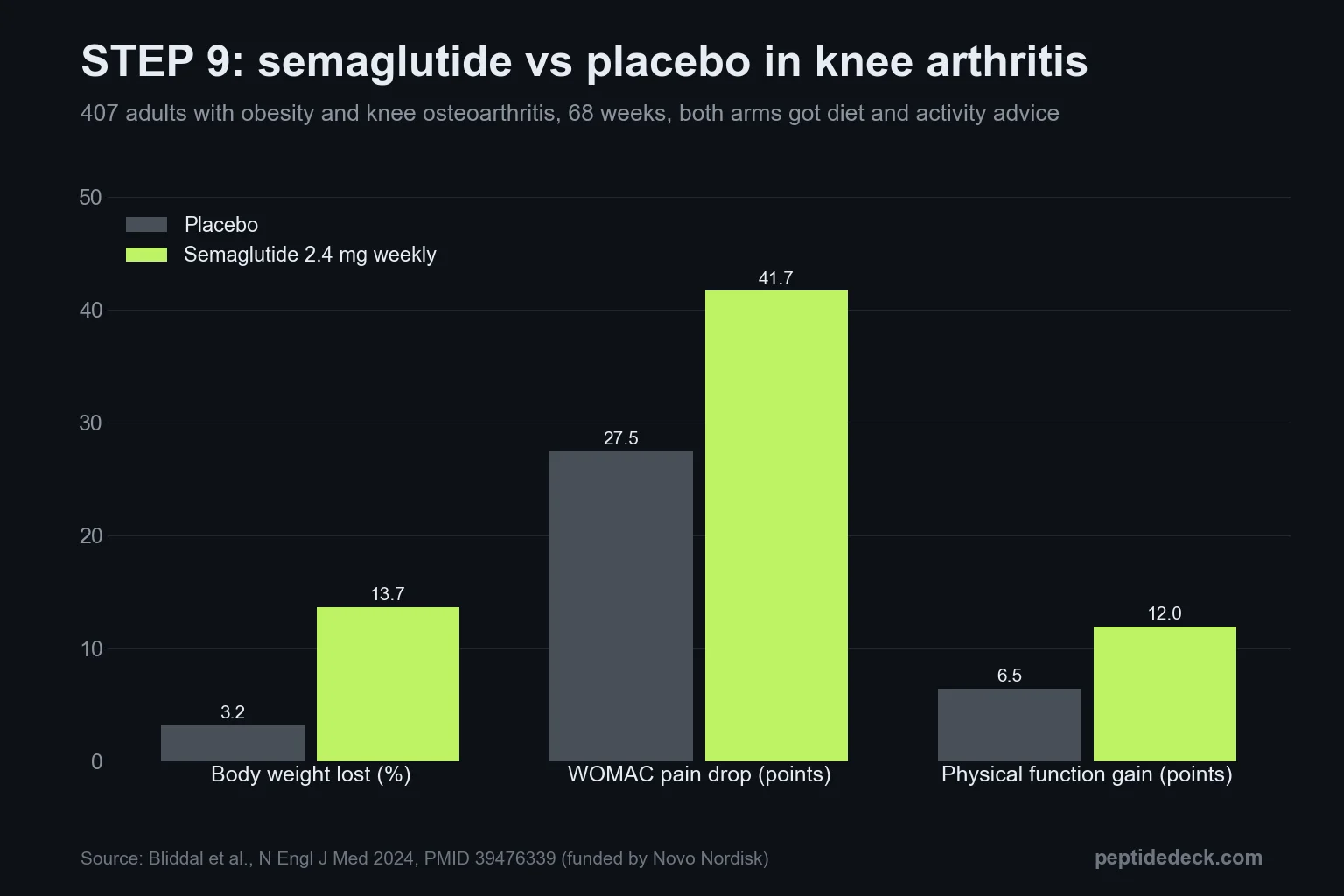
Look at the placebo bar. Advice alone cut pain by 27.5 points, so only the 14-point gap belongs to the drug, and that relief tracks weight loss in a weight-bearing joint. The Novo Nordisk-funded trial says nothing about nerve pain, fibromyalgia or people without obesity. Knee and joint pain get their own page in our peptides for arthritis guide.
ARA-290: Nerve Fibres Grew, Pain Did Not Separate
ARA-290 is the sold peptide with real trials. Also called cibinetide, it is an 11-amino-acid fragment of erythropoietin that does not raise red blood cells. In nerve-injured animals it eased pain hypersensitivity for up to 20 weeks (PMID 24529189), which is why it reached human trials.
Three small placebo-controlled trials followed, all run with its developer, Araim Pharmaceuticals:
- Sarcoidosis nerve damage, 2013. 28 days of injections improved neuropathic symptoms against placebo and raised corneal nerve density and walking distance (PMID 24136731).
- Type 2 diabetes with painful neuropathy, 2015. 4 mg daily for 28 days improved PainDetect scores and HbA1c; nerve density rose only in people starting with low counts (PMID 25387363).
- Sarcoidosis, phase 2b, 2017. 64 people got 1, 4 or 8 mg a day or placebo for 28 days. Corneal nerve fibre area rose 697 square micrometres more than placebo at 4 mg (P = 0.012), but not at 1 or 8 mg. Pain improved in every group, placebo included, and the 4 mg pain gain was not significant (P = 0.157) (PMID 28475703).
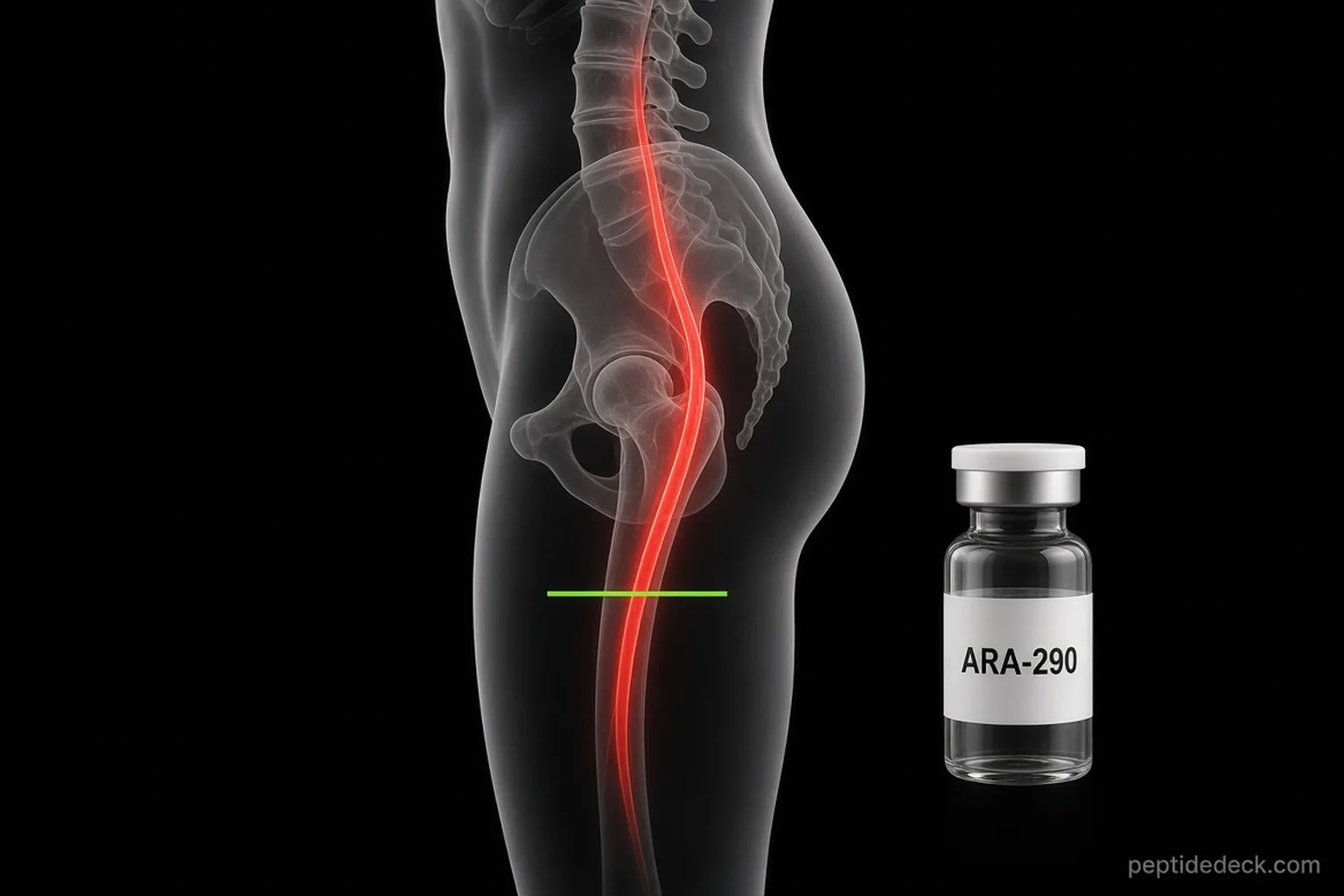
So the best-designed trial hit its nerve-fibre target at one dose and missed on pain. No trial dosed beyond 28 days, and none tested back pain, arthritis or fibromyalgia. Our ARA-290 dossier covers dosing and what the trials used.
BPC-157 for Pain: One Survey of 16 People
BPC-157 is the peptide most clinics recommend. Its human pain evidence is a single 2021 report from a hormone clinic in Orlando, Florida (PMID 34324435).
The clinic found 17 people who had BPC-157 injected into a painful knee and reached 16 by phone six months to a year later. Of 12 who got BPC-157 alone, 11 said their pain improved; 3 of 4 who also got thymosin beta-4 said the same. That is 14 of 16, or 87.5%.
Here is the detail that rarely gets quoted. There was no placebo group, no pain scale, no imaging and no stated dose, the knees had different problems (arthritis, meniscus and ligament tears), and people had to recall pain from a year earlier. Every published human BPC-157 report, including a 12-woman bladder pain study and a 2-person IV safety study, comes from the same clinic-run author group in Alternative Therapies in Health and Medicine, and none has a control arm.
There is also a twist for anyone on pain medication. In mice, BPC-157 blunted the pain relief from morphine (PMID 20388962). Nobody has tested whether that happens in people. If you still plan to try it, sourcing decides most of the risk, and our guide on where to buy BPC-157 covers the compounding-pharmacy route and the testing paperwork to ask for (Ascension pays us a commission at no extra cost to you). The full profile is in our BPC-157 dossier.
TB-500 and Pain: Animal Data Only
TB-500 has no human pain trial at all. It is a synthetic fragment of thymosin beta-4, and the only people given it in the pain literature are the 4 in the knee survey above, alongside BPC-157.
The rest is animal work. In diabetic mice, 8 weeks of thymosin beta-4 improved nerve conduction and skin nerve density (PMID 30500399), and a follow-up linked the effect to new blood vessel growth around the nerve (PMID 30326249). That is a nerve-repair signal in mice, not pain relief in people. See our TB-500 dossier for the full picture.
Sciatica and Back Pain: Nothing Tested Yet
No peptide has been tested in sciatica. The BPC-157 nerve claims come from one Zagreb group's animal work, such as spinal cord compression injuries where a single injection improved recovery (PMID 31266512). There are no human disc or radiculopathy studies.
Two incretin-drug trials may change that. Lilly's phase 3 retatrutide trial in 586 people with obesity and chronic low back pain is running but has no results (NCT07035093), and a 250-person semaglutide back pain trial has not started recruiting (NCT07731256). Calcitonin, as noted above, failed in spinal stenosis. The wider picture is in our peptides for back pain guide.
Nerve Pain and Neuropathy: A Separate Question

Nerve pain has its own evidence trail. Beyond ARA-290, glutathione was tested for chemotherapy nerve damage, with conflicting results: a 52-person oxaliplatin trial was positive (PMID 12177109), while a 185-person phase 3 in paclitaxel and carboplatin found no benefit (PMID 24619793). We cover diabetic, chemotherapy and injury-related nerve damage in detail in our peptides for nerve damage and neuropathy guide rather than repeat it here.
Other Peptides People Ask About
A few more names come up often. Nasal oxytocin is the most studied of them. In 22 men with chronic low back pain, it lowered ratings of a lab heat stimulus but not their everyday back pain (PMID 32298704). In women with chronic pelvic pain, 21 were randomised but only 12 gave usable data, and 4 of them had a meaningful improvement (PMID 33112417). A 336-person trial is still running (NCT04903002).
GHK-Cu, KPV, Selank, epitalon, MOTS-c and the growth hormone secretagogues have no human pain trial we could find.
Safety: What Can Go Wrong With Pain Peptides
Pain is a signal, not just a symptom. Some pain needs a scan or a surgeon the same day, and a peptide can quietly mask it.
- Red-flag pain comes first. Numbness in the groin or inner thighs, new bladder or bowel trouble, worsening leg weakness, back pain with fever, or pain with unexplained weight loss can mean nerve compression, infection, fracture or cancer. Get seen urgently.
- Opioid combinations are untested. No human study has paired BPC-157, TB-500 or ARA-290 with opioids or gabapentin; only ziconotide has opioid co-use data, under specialist monitoring.
- Injections near a joint or the spine carry the most risk. Unregulated vials are not checked for sterility. A contaminated knee injection can cause septic arthritis, and one near the spine can cause an epidural abscess.
- Injectable peptides can trigger mast cells. Some activate mast cells directly through the MRGPRX2 receptor (PMID 25517090), causing flushing or hives, which matters most if you have MCAS, EDS or an immune or skin condition.
- BPC-157 has legal and sport flags. WADA lists it under S0 (non-approved substances), and the FDA placed it in compounding Category 2 over safety concerns.
- The approved options have costs too. In STEP 9, 6.7% stopped semaglutide for side effects, and ziconotide carries a boxed warning for psychiatric and cognitive effects.
Do not stop prescribed pain medication to try a peptide. Stopping opioids, gabapentin or some antidepressants suddenly can cause withdrawal and rebound pain.
What to ask your doctor
1. Is my pain mostly from tissue, nerves or a sensitised nervous system?
2. Would losing weight change my knee or back pain, and am I a candidate for a GLP-1 medication?
3. If my pain has beaten other treatments, has a pain clinic considered an intrathecal pump?
4. If I want to try a peptide, how will we measure whether it works, and does it clash with anything I take?
5. Which symptoms should send me straight to urgent care?
Frequently Asked Questions
Sources
- Staats PS, et al. Intrathecal ziconotide in the treatment of refractory pain in patients with cancer or AIDS: a randomized controlled trial. JAMA. 2004;291(1):63-70. PMID 14709577
- Rauck RL, et al. A randomized, double-blind, placebo-controlled study of intrathecal ziconotide in adults with severe chronic pain. J Pain Symptom Manage. 2006;31(5):393-406. PMID 16716870
- Wallace MS, et al. Intrathecal ziconotide in the treatment of chronic nonmalignant pain: a randomized, double-blind, placebo-controlled clinical trial. Neuromodulation. 2006;9(2):75-86. PMID 22151630
- Boucher E, Rosgen B, Lang E. Efficacy of calcitonin for treating acute pain associated with osteoporotic vertebral compression fracture: an updated systematic review. CJEM. 2020;22(3):359-367. PMID 32188529
- Lu GQ, et al. Effects of calcitonin on lumbar spinal stenosis. Arch Orthop Trauma Surg. 2024;144(5):1889-1900. PMID 38436716
- Bliddal H, et al. Once-weekly semaglutide in persons with obesity and knee osteoarthritis (STEP 9). N Engl J Med. 2024;391(17):1573-1583. PMID 39476339
- Culver DA, et al. Cibinetide improves corneal nerve fiber abundance in patients with sarcoidosis-associated small nerve fiber loss and neuropathic pain. Invest Ophthalmol Vis Sci. 2017;58(6):BIO52-BIO60. PMID 28475703
- Dahan A, et al. ARA 290 improves symptoms in patients with sarcoidosis-associated small nerve fiber loss and increases corneal nerve fiber density. Mol Med. 2013;19(1):334-45. PMID 24136731
- Brines M, et al. ARA 290, a nonerythropoietic peptide engineered from erythropoietin, improves metabolic control and neuropathic symptoms in patients with type 2 diabetes. Mol Med. 2015;20(1):658-66. PMID 25387363
- Swartjes M, et al. ARA 290 produces long-term relief of neuropathic pain coupled with suppression of the spinal microglia response. Mol Pain. 2014;10:13. PMID 24529189
- Lee E, Padgett B. Intra-articular injection of BPC 157 for multiple types of knee pain. Altern Ther Health Med. 2021;27(4):8-13. PMID 34324435
- Boban Blagaic A, et al. Gastric pentadecapeptide BPC 157 counteracts morphine-induced analgesia in mice. J Physiol Pharmacol. 2009;60 Suppl 7:177-81. PMID 20388962
- Perovic D, et al. Stable gastric pentadecapeptide BPC 157 can improve the healing course of spinal cord injury and lead to functional recovery. J Orthop Surg Res. 2019;14(1):199. PMID 31266512
- Wang L, et al. miR-146a mediates thymosin beta-4 induced neurovascular remodeling of diabetic peripheral neuropathy in type-II diabetic mice. Brain Res. 2019;1707:198-207. PMID 30500399
- Wang L, et al. Angiopoietin-1/Tie2 signaling pathway contributes to the therapeutic effect of thymosin beta-4 on diabetic peripheral neuropathy. Neurosci Res. 2019;147:1-8. PMID 30326249
- Cascinu S, et al. Neuroprotective effect of reduced glutathione on oxaliplatin-based chemotherapy in advanced colorectal cancer: a randomized, double-blind, placebo-controlled trial. J Clin Oncol. 2002;20(16):3478-83. PMID 12177109
- Leal AD, et al. North Central Cancer Treatment Group/Alliance trial N08CA: the use of glutathione for prevention of paclitaxel/carboplatin-induced peripheral neuropathy. Cancer. 2014;120(12):1890-7. PMID 24619793
- Boll S, et al. Pain-modulating effects of oxytocin in patients with chronic low back pain. Neuropharmacology. 2020;171:108105. PMID 32298704
- Flynn MJ, et al. Intranasal oxytocin as a treatment for chronic pelvic pain: a randomized controlled feasibility study. Int J Gynaecol Obstet. 2021;152(3):425-432. PMID 33112417
- Eli Lilly. Retatrutide in participants with obesity or overweight and chronic low back pain (phase 3, 586 planned). ClinicalTrials.gov NCT07035093
- Washington University School of Medicine. Semaglutide for low back pain (phase 2, 250 planned). ClinicalTrials.gov NCT07731256
- Memorial University of Newfoundland. Intranasal oxytocin for chronic pain (phase 2/3, 336 planned). ClinicalTrials.gov NCT04903002
Medical Disclaimer: This article is for educational purposes only and is not medical advice. BPC-157, TB-500 and ARA-290 are not approved for pain by any regulator. Chronic pain has serious causes, so speak with a qualified clinician before starting, stopping or combining any treatment.