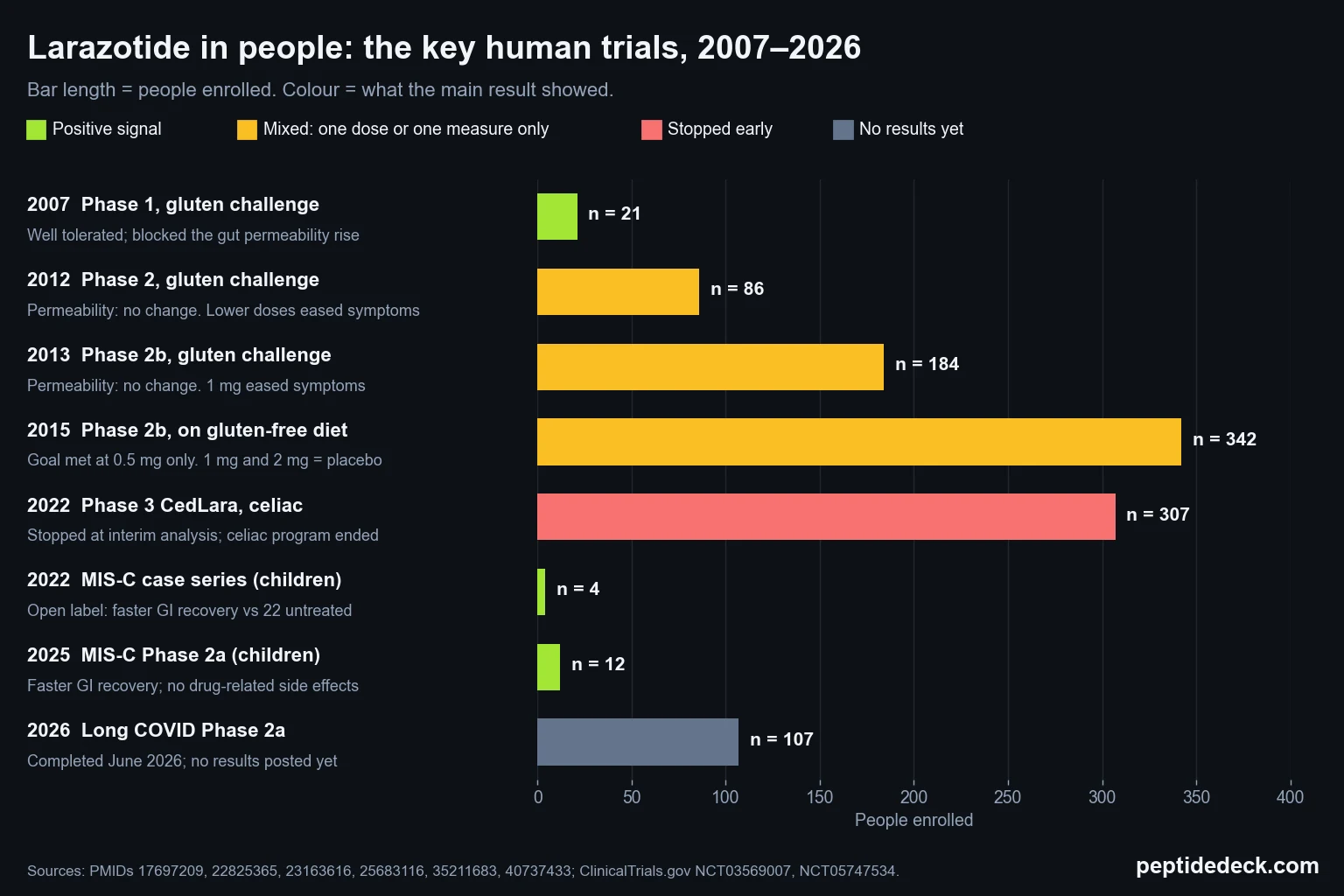
Larazotide was the leaky gut drug that almost happened. It is an eight-amino-acid oral peptide, sold in trials as larazotide acetate, built to close the gaps between the cells that line your small intestine. It went through five placebo-controlled trials in more than 900 people with celiac disease, reached Phase 3, and was stopped in June 2022 when an interim look showed the effect was too small to prove (9 Meters press release, 21 June 2022). It has never been approved anywhere.
🔑 Key Takeaways
- The one dose that worked was the lowest one tested. Why that matters before you pick a capsule.
- What happened to gut permeability in every trial that measured it.
- Why the drug's code name, AT-1001, also belongs to two unrelated molecules.
- What the capsules on sale actually contain, and how their daily amount compares with the trial dose.
- The new trials in children and long COVID that keep the peptide alive.
If you have celiac disease, you already know the gluten-free diet is not the finish line. Cross-contact happens in restaurants, in shared toasters, in sauces that never list wheat. Many people do everything right and still get the cramps, the bloating and the tired days. Larazotide was built for exactly that gap, and its story explains both why people still search for it and why you cannot get the drug that was tested.
What is larazotide?
It is a small peptide with a big idea. Larazotide (code name AT-1001, also called larazotide acetate because the drug was made as an acetate salt) is a synthetic chain of eight amino acids: glycine, glycine, valine, leucine, valine, glutamine, proline, glycine. Its formula is C32H55N9O10 and it weighs 725.8 g/mol (PubChem CID 9810532). If peptides are new to you, our what are peptides explainer covers the basics.
Its sequence was taken from a protein made by Vibrio cholerae, the cholera bacterium. That protein, zonula occludens toxin, loosens the seals between gut cells. The idea behind larazotide was to borrow a piece of it that does the opposite (Paterson et al. 2007).
- Route: swallowed as a capsule. It was designed to act on the inside surface of the small intestine, not to enter the blood.
- Developer: Alba Therapeutics in Baltimore, co-founded by celiac researcher Alessio Fasano. Alba licensed it in 2016 to Innovate Biopharmaceuticals, which merged with RDD Pharma in April 2020 and became 9 Meters Biopharma (9 Meters 10-Q, Q2 2022).
- Main target: celiac disease symptoms that continue on a gluten-free diet.
- Status in 2026: never approved. The celiac program ended in 2022 and 9 Meters filed for Chapter 7 liquidation on 17 July 2023 (9 Meters 8-K). Academic groups at Massachusetts General Hospital have kept testing it in children and in long COVID.
Searching "AT-1001" and finding something else? The code name is shared. Amicus Therapeutics used AT1001 for migalastat, the Fabry disease drug sold as Galafold, and dozens of its trials still carry that label. SRI International used AT-1001 for a nicotine receptor blocker tested for smoking cessation (Toll et al. 2012). Neither has anything to do with the gut. If a paper or trial says AT1001 and talks about Fabry disease or nicotine, it is not larazotide.
How larazotide works on tight junctions
Think of your gut lining as a wall of bricks. The cells are the bricks. The mortar between them is a set of proteins called tight junctions, and they decide what slips between cells instead of through them.
In celiac disease, gluten fragments cross that wall and set off an immune attack on the lining. One proposed route is a protein called zonulin, which loosens tight junctions when it is released. Larazotide was designed to block that signal and keep the mortar in place. In cell work it stopped tight junctions from opening and helped them reassemble (Gopalakrishnan et al. 2012; Gopalakrishnan et al. 2012).
Not everyone accepts the zonulin part of that story. In 2021 two leading European celiac immunologists, Ludvig Sollid and Frits Koning, published a letter in Gut titled "Lack of relationship of AT1001 to zonulin and prehaptoglobin-2: clinical implications" (Sollid & Koning 2021). The tight-junction effect in the lab is not in dispute. Whether it works through zonulin, and whether it changes anything that matters in a person, is.
The human data answer the second question better than any diagram can.
What the larazotide trials showed
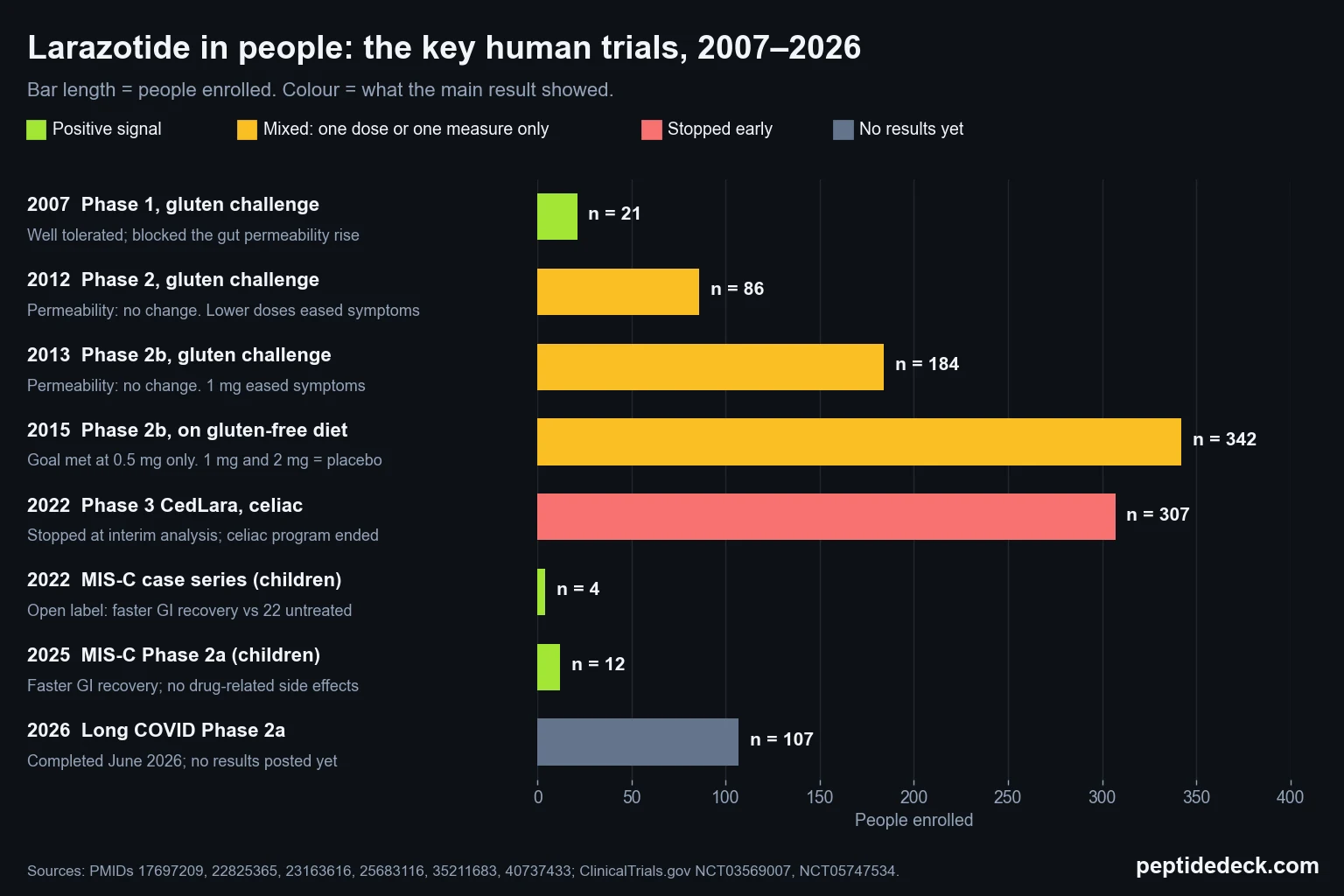
The pattern is consistent, and not in the way the marketing suggests.
2007: the first test in people
Twenty-one people with celiac disease stayed in a clinic, took a single 12 mg dose or placebo, and then ate gluten. Gut permeability, measured with a sugar-absorption test, rose 70% in the placebo group and did not rise in the larazotide group. Gut symptoms were also less common on the drug (P = 0.018). It was a small, single-dose safety study, and permeability was only an exploratory measure (Paterson et al. 2007).
2012 and 2013: gluten challenge trials
Two larger trials gave people gluten on purpose for two to six weeks. In the first, 86 patients took 0.25 to 8 mg three times a day for 14 days. The permeability test was too variable to show anything, but some lower doses limited the rise in symptoms (Leffler et al. 2012).
In the second, 184 patients ate 2.7 g of gluten a day for six weeks. Again no difference in permeability. The 1 mg dose limited gluten symptoms (P = 0.002), and the rise in tissue transglutaminase antibodies, the blood marker of celiac immune activity, was smaller in all three larazotide groups (Kelly et al. 2013).
2015: the trial that justified Phase 3
This is the result people quote. 342 adults who had been gluten-free for at least a year and still had symptoms took 0.5, 1 or 2 mg three times a day, or placebo, for 12 weeks (Leffler et al. 2015, NCT01396213).
- The 0.5 mg dose met the main goal: lower celiac symptom scores than placebo (P = 0.022).
- On 0.5 mg, symptomatic days fell 26% and improved-symptom days rose 31%. Headache and tiredness also improved.
- The 1 mg and 2 mg doses were no different from placebo on any measure.
- Side effects were similar to placebo.
The trial was designed with and paid for by Alba Therapeutics and Cephalon/Teva, and the authors themselves called the results "mixed".
2022: Phase 3 CedLara is stopped
The pivotal trial tested 0.25 mg and 0.5 mg three times a day against placebo, with a reduction in abdominal symptom scores as the goal (NCT03569007). The plan was about 525 patients. After roughly half had finished 12 weeks, an independent statistician recalculated how many more people would be needed to show a difference. The answer was too many. 9 Meters stopped the trial in June 2022 with 307 people enrolled, and in August said it was ending larazotide development in celiac disease (9 Meters Q2 2022 release). Full results were never published.
2022 to 2026: children and long COVID
Fasano's group at Massachusetts General Hospital took the peptide in a new direction. Their theory: after COVID, virus fragments leak from the gut into the blood through loosened junctions and drive a severe inflammatory illness in children called MIS-C. Four children given larazotide alongside standard care cleared spike protein from the blood and recovered from gut symptoms faster than 22 children on standard care alone (Yonker et al. 2022). A placebo-controlled trial in 12 children then found faster recovery of gut symptoms and no drug-related side effects (Yonker et al. 2025). It stopped at 12 because MIS-C cases dried up (NCT05022303).
A Phase 2a trial of larazotide in 107 children and adults with long COVID finished in June 2026. No results had been posted when we checked on 27 October 2026 (NCT05747534).
Why the Phase 3 failed
Three things in the data point the same way.
- The permeability effect never showed up in people. The drug's whole rationale was tighter junctions. In every outpatient trial that measured permeability, there was no difference from placebo. A 2022 meta-analysis of four trials and 626 patients found the same: no change in the permeability test, a symptom benefit only during gluten challenge, and none in people already on a gluten-free diet (Hoilat et al. 2022).
- The dose response ran backwards. In 2015 only the lowest dose worked. Higher doses did nothing. Drugs that truly work usually do not lose their effect as you give more, so a lone low-dose win often means chance.
- Celiac symptoms are hard to measure. They come and go with accidental gluten, stress and food, and placebo groups in gut trials improve a lot on their own. 9 Meters' own chief medical officer pointed to "the ability to effectively measure outcomes" when the trial stopped.
None of this proves larazotide does nothing. It means that when it was tested properly, at scale, the effect was too small to separate from placebo. For a celiac drug, that is the verdict that counts. Our gut health peptides guide places it next to the two gut peptides that did pass, teduglutide and linaclotide.
Larazotide evidence by use
Here is where the evidence stands for each claim you will see online.
The middle column is the one to read. The phrase "leaky gut" is how larazotide is sold online, and it is the one thing trials could not show in people.
Larazotide acetate dosage: what was studied
There is no approved dose. These are the doses trials used.
Two practical points come out of this table.
- It was always oral, and timed before food. The capsule was meant to sit in the small intestine when gluten arrived. A delayed-release version was even designed to release it in the right part of the gut (Enomoto et al. 2021). Injection protocols you may find online have no human data at all, and they make little sense for a drug that works on the inside surface of the gut.
- More was not better. The best-performing celiac dose was 0.5 mg three times a day, 1,500 mcg in total. The 2015 trial's higher doses failed.
Can you buy larazotide?
Not the drug that was tested. No company makes pharmaceutical larazotide acetate for sale, and the developer's assets went into liquidation in 2023.
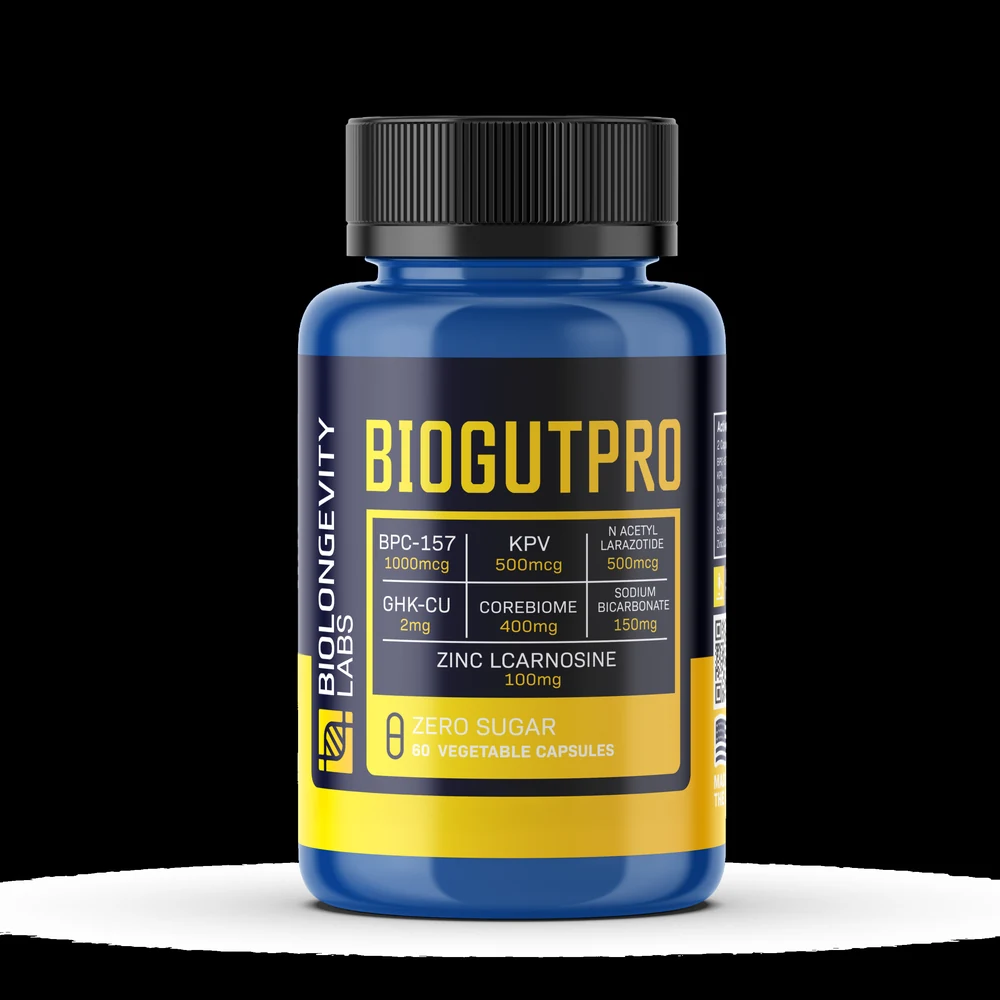
What you can buy is a capsule ingredient sold as "N-acetyl larazotide". The name points to a modified version of the peptide, and larazotide acetate (the trial drug) is the plain peptide as an acetate salt. We searched PubMed on 27 October 2026 and found no study in people of anything called N-acetyl larazotide. Treat it as related to, not the same as, the trial drug.
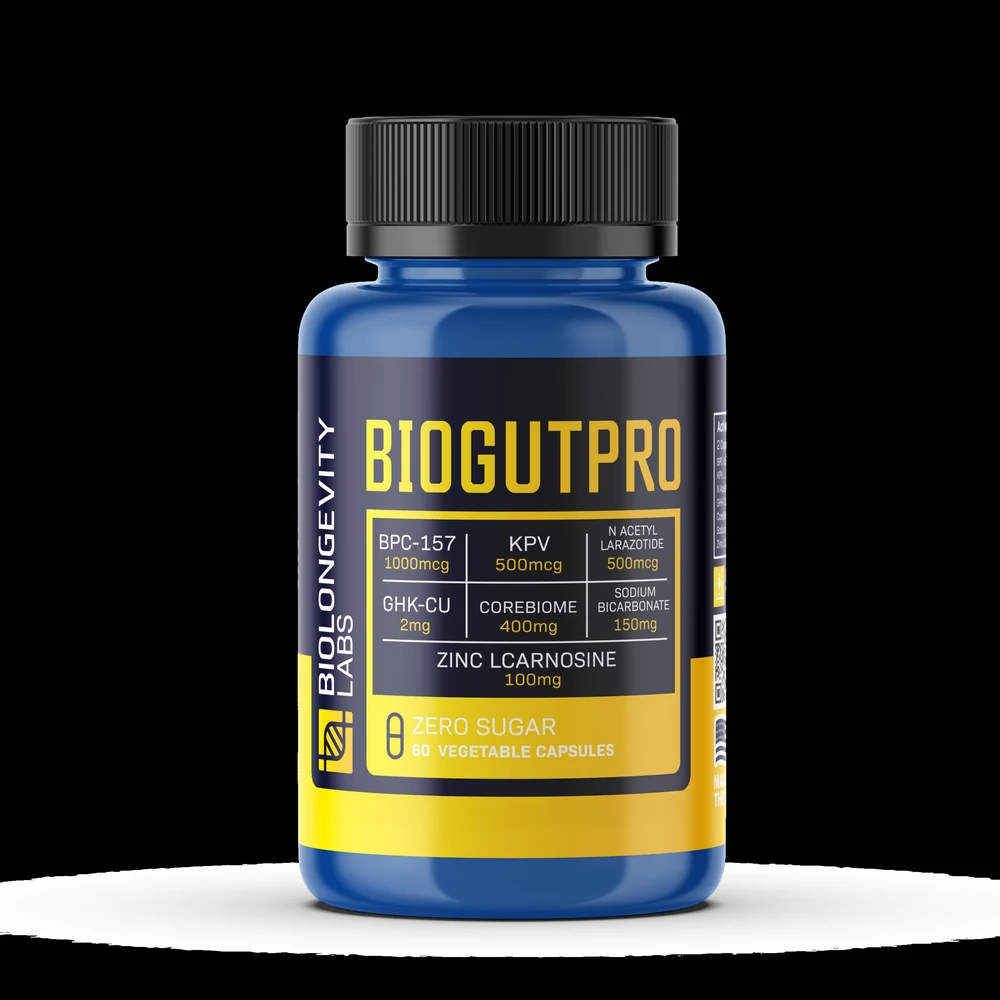
The source we track for larazotide capsules is BioLongevity's BioGutPro. It does not sell larazotide on its own. It is a seven-ingredient gut formula. Per two-capsule serving it lists BPC-157 1,000 mcg, KPV 500 mcg, N-acetyl larazotide 500 mcg, GHK-Cu 2 mg, tributyrin 400 mg, sodium bicarbonate 150 mg and zinc L-carnosine 100 mg, at $299.97 for 60 capsules (label read 27 October 2026). PeptideDeck earns a commission if you buy through our links. It does not change what we report here.
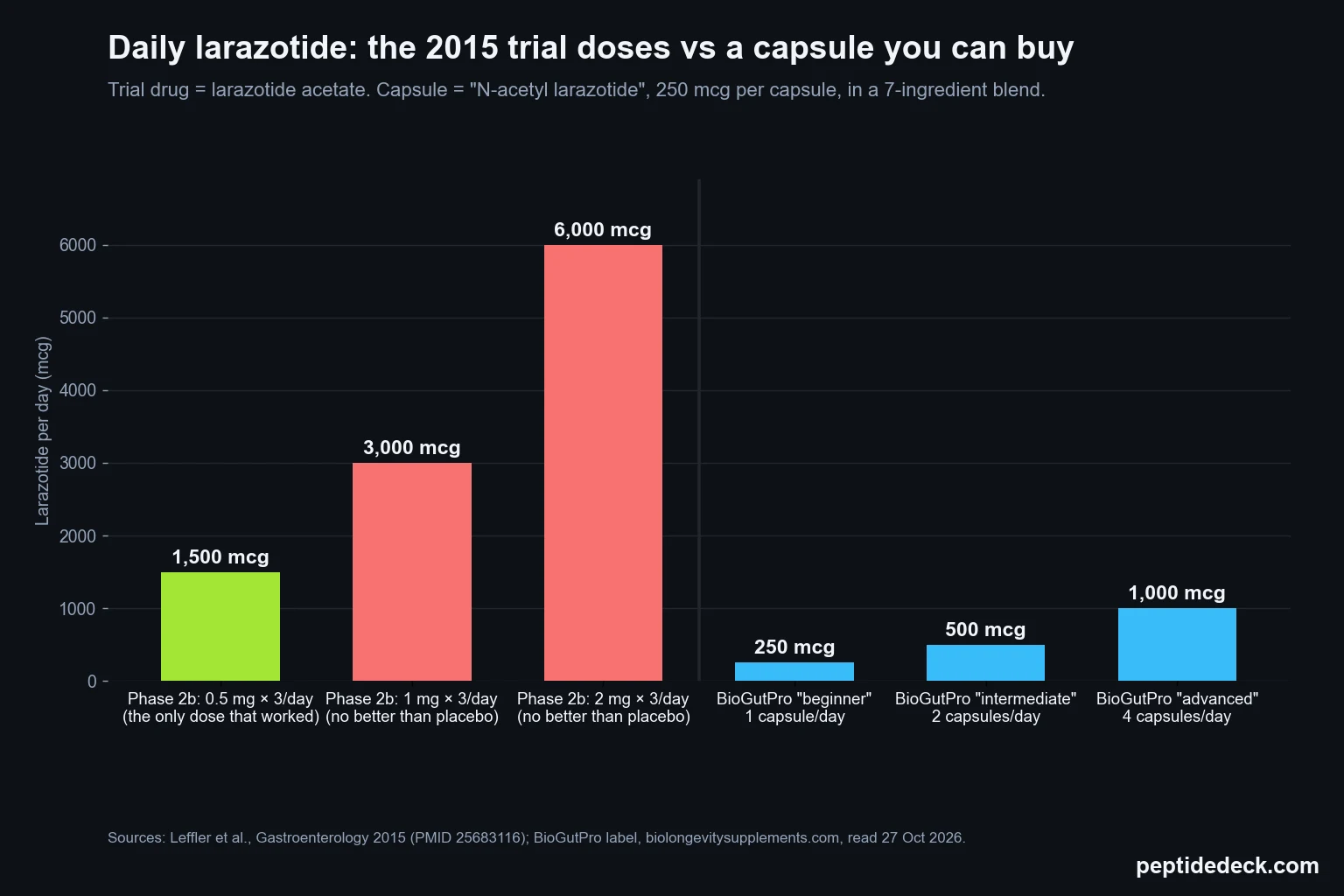
So even the "advanced" routine gives two-thirds of the daily amount from the only trial dose that worked, and of a related molecule rather than the trial drug. The honest case for the product is the blend, not the larazotide. If your interest is the BPC-157 inside it, our BPC-157 for gut health guide covers what that peptide has and has not shown, and BPC-157 capsules sells it on its own.
One real limitation of a blend: if your gut feels better, or worse, you cannot tell which of seven ingredients did it. That does not make the product useless. It does make it a poor way to find out whether larazotide helps you.
Larazotide side effects and safety
In trials, it was a quiet drug.
- Across four controlled celiac trials, side effects on larazotide were similar to placebo (Hoilat et al. 2022).
- The most common events in the 2012 trial were headache and urinary tract infection, with no serious events (Leffler et al. 2012).
- In the 12-child MIS-C trial, no side effects were linked to the drug over 24 weeks of follow-up.
- Larazotide was designed to stay in the gut, which helps explain the clean profile.
The limits matter just as much. The longest trial treatment was 12 weeks, so long-term safety is unknown. Those results cover pharmaceutical-grade larazotide acetate, not a modified version made by a supplement supplier. And a seven-ingredient formula carries the unknowns of every ingredient in it.
What to ask your doctor
- Have my celiac antibodies been rechecked, and could my ongoing symptoms be hidden gluten, another condition like microscopic colitis or SIBO, or refractory celiac disease?
- Would a dietitian review of my gluten-free diet help before I add anything?
- Is there a clinical trial I could join? (Search ClinicalTrials.gov for "celiac".)
- Could any capsule I am considering interact with my current medicines?
Do not stop your gluten-free diet or any prescribed medication because of a supplement. Larazotide was only ever tested as an add-on to a gluten-free diet, never as a replacement.
Where larazotide fits among gut peptides
It is the best-tested failure in the category.
Larazotide got further than any other "leaky gut" peptide, which is exactly why its result is useful. Peptides that are sold for gut health today, like BPC-157 and KPV, have far less human data than larazotide did when it failed. The two gut peptides that are approved medicines, teduglutide for short bowel syndrome and linaclotide for IBS with constipation, earned approval with large positive trials. If you want to understand oral peptides more broadly, including why most do not survive digestion, see our oral peptides guide.
Frequently Asked Questions
Sources
- Paterson BM, Lammers KM, Arrieta MC, Fasano A, Meddings JB. The safety, tolerance, pharmacokinetic and pharmacodynamic effects of single doses of AT-1001 in coeliac disease subjects: a proof of concept study. Aliment Pharmacol Ther. 2007;26(5):757-66. PMID 17697209
- Leffler DA, et al. A randomized, double-blind study of larazotide acetate to prevent the activation of celiac disease during gluten challenge. Am J Gastroenterol. 2012;107(10):1554-62. PMID 22825365
- Kelly CP, et al. Larazotide acetate in patients with coeliac disease undergoing a gluten challenge: a randomised placebo-controlled study. Aliment Pharmacol Ther. 2013;37(2):252-62. PMID 23163616
- Leffler DA, et al. Larazotide acetate for persistent symptoms of celiac disease despite a gluten-free diet: a randomized controlled trial. Gastroenterology. 2015;148(7):1311-9. PMID 25683116; NCT01396213
- Hoilat GJ, et al. Larazotide acetate for treatment of celiac disease: a systematic review and meta-analysis of randomized controlled trials. Clin Res Hepatol Gastroenterol. 2022;46(1):101782. PMID 34339872
- Gopalakrishnan S, et al. Larazotide acetate regulates epithelial tight junctions in vitro and in vivo. Peptides. 2012;35(1):86-94. PMID 22401908
- Gopalakrishnan S, et al. Larazotide acetate promotes tight junction assembly in epithelial cells. Peptides. 2012;35(1):95-101. PMID 22401910
- Sollid LM, Koning F. Lack of relationship of AT1001 to zonulin and prehaptoglobin-2: clinical implications. Gut. 2021;70(11):2211-2212. PMID 33443022
- Enomoto H, et al. In vivo assessment of a delayed release formulation of larazotide acetate indicated for celiac disease using a porcine model. PLoS One. 2021;16(4):e0249179. PMID 33844694
- Yonker LM, et al. Zonulin antagonist, larazotide (AT1001), as an adjuvant treatment for multisystem inflammatory syndrome in children: a case series. Crit Care Explor. 2022;10(2):e0641. PMID 35211683
- Yonker LM, et al. Viral spike antigen clearance and augmented recovery in children with post-COVID multisystem inflammatory syndrome treated with larazotide. Sci Transl Med. 2025;17(809):eadu4284. PMID 40737433
- Toll L, et al. AT-1001: a high affinity and selective α3β4 nicotinic acetylcholine receptor antagonist (title shortened). Neuropsychopharmacology. 2012;37(6):1367-76. PMID 22278092
- ClinicalTrials.gov: Phase 3 CedLara NCT03569007 (terminated, 307 enrolled); MIS-C Phase 2a NCT05022303 (terminated, 12 enrolled); long COVID Phase 2a NCT05747534 (completed June 2026, no results posted). Checked 27 October 2026.
- 9 Meters Biopharma. Press release, 21 June 2022: interim analysis of Phase 3 study of larazotide does not support trial continuation. SEC 8-K exhibit 99.1
- 9 Meters Biopharma. Second-quarter 2022 results release, 15 August 2022 (larazotide celiac development discontinued). SEC 8-K exhibit 99.1
- 9 Meters Biopharma. Form 10-Q for the quarter ended 30 June 2022 (Alba license, RDD merger). SEC filing
- 9 Meters Biopharma. Form 8-K, Item 1.03, filed 18 July 2023 (Chapter 7 petition, Case No. 23-01992-5-PWM). SEC filing
- PubChem. Larazotide, CID 9810532. pubchem.ncbi.nlm.nih.gov
- BioLongevity. BioGutPro product label and suggested use. biolongevitysupplements.com (read 27 October 2026).
Medical Disclaimer: This article is for educational purposes only and is not medical advice. Larazotide has not been approved by any regulator for any condition, and supplement products sold as "N-acetyl larazotide" have not been tested in people. Celiac disease needs medical care and a gluten-free diet. Do not stop or change a prescribed treatment or your diet because of information on this page.