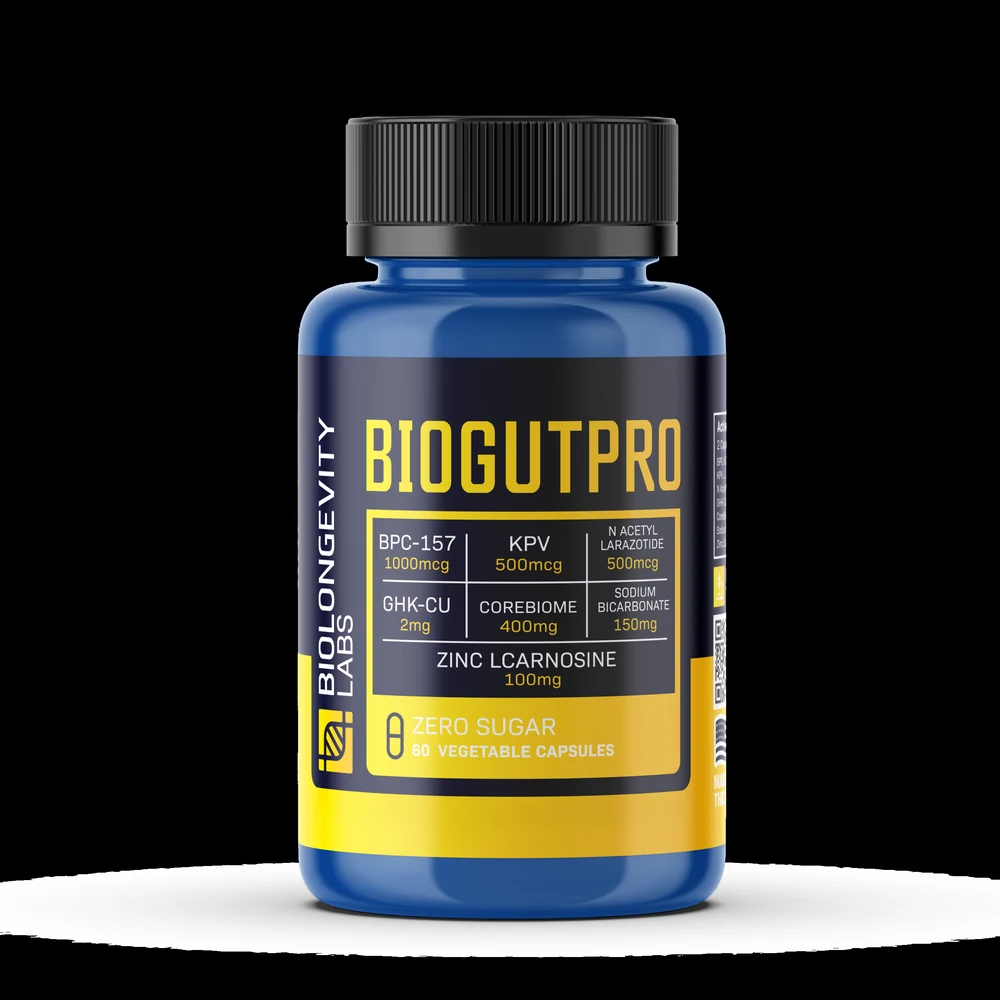
N-Acetyl Larazotide Capsules
500mcg larazotide per serving · 60 capsules · Tight Junction Regulator · BioLongevity
What you are buying: no vendor we trust sells N-Acetyl Larazotide on its own any more, so this page links to BioGutPro, a seven-compound gut formula delivering 500mcg of N-Acetyl Larazotide per serving alongside BPC-157, KPV and GHK-Cu.
≥98% Purity
Third-party verified
60 Capsules
250mcg each
GMP Compliant
USA manufactured
Tight Junction Regulator
Zonulin pathway modulator
About N-Acetyl Larazotide
N-Acetyl Larazotide is a synthetic peptide that regulates tight junctions in the intestinal lining. Derived from the Zonula Occludens Toxin (ZOT) receptor binding domain, it blocks zonulin-mediated tight junction opening to prevent increased paracellular permeability. Larazotide has advanced through Phase 3 clinical trials for celiac disease, making it one of the most clinically studied peptides targeting gut barrier function and intestinal permeability.
Product Specifications
Recommended Dosage
Key Benefits
Intestinal Permeability & Leaky Gut
N-Acetyl Larazotide blocks zonulin-mediated tight junction opening, preventing increased paracellular permeability. It restores gut barrier integrity by reinforcing tight junction protein complexes between intestinal epithelial cells.
Celiac Disease Support
Larazotide reduces gluten-triggered intestinal permeability and significantly decreases GI symptoms. It prevents immune-mediated mucosal damage from gluten exposure, making it ideal for those managing celiac disease.
Autoimmune Support
By restoring gut barrier function, larazotide reduces the translocation of antigens and toxins that trigger systemic immune responses. It plays a key role in addressing autoimmune conditions linked to intestinal hyperpermeability.
Gut Barrier Restoration
Larazotide acts directly on the zonulin pathway to prevent tight junction disassembly. It promotes the proper localization of tight junction proteins including occludin, claudins, and ZO-1, maintaining epithelial barrier function.
Inflammatory Bowel Support
Larazotide reduces intestinal inflammation by preventing barrier breakdown. By maintaining tight junction integrity, it reduces the inflammatory cascade triggered by luminal antigen exposure.
How N-Acetyl Larazotide Works
N-Acetyl Larazotide works by targeting the zonulin signaling pathway, which is the primary physiological mechanism regulating intestinal tight junction permeability. Zonulin, when released in response to stimuli such as gluten or bacterial exposure, binds to receptors on intestinal epithelial cells and triggers a cascade that disassembles tight junction protein complexes.
Larazotide competes with zonulin for receptor binding, effectively blocking the signal that would otherwise cause tight junctions to open. This prevents the displacement of key tight junction proteins — including occludin, claudins, and zonula occludens-1 (ZO-1) — from their proper positions at cell-cell junctions, maintaining the integrity of the paracellular barrier.
By preserving tight junction integrity, larazotide reduces the passage of large molecules, antigens, and toxins through the intestinal wall into the bloodstream. This mechanism is particularly relevant in celiac disease, where gluten-triggered zonulin release leads to increased intestinal permeability and subsequent immune-mediated tissue damage.
Frequently Asked Questions
What is N-Acetyl Larazotide?
N-Acetyl Larazotide is a synthetic peptide derived from the Zonula Occludens Toxin (ZOT) receptor binding domain. It functions as a tight junction regulator, blocking zonulin-mediated opening of intestinal tight junctions to maintain gut barrier integrity and reduce paracellular permeability.
How does Larazotide differ from BPC-157?
While both peptides support gut health, they work through different mechanisms. BPC-157 promotes tissue healing and angiogenesis throughout the GI tract. Larazotide specifically targets tight junction regulation by blocking the zonulin pathway. They address different aspects of gut dysfunction and are sometimes used together.
What is the status of celiac disease clinical trials?
Larazotide has progressed through Phase 3 clinical trials for celiac disease, making it one of the most clinically validated peptides for gut barrier function. Trial results showed significant reduction in GI symptoms and improved intestinal permeability markers in celiac patients exposed to gluten.
Can Larazotide be combined with other gut peptides?
Yes, Larazotide is commonly combined with BPC-157 for comprehensive gut support — Larazotide addressing barrier function while BPC-157 promotes tissue repair. It can also be paired with KPV or other anti-inflammatory peptides targeting different aspects of intestinal health.
How should N-Acetyl Larazotide capsules be stored?
Store at room temperature in a cool, dry place away from direct sunlight and moisture. Refrigeration is not required but can extend shelf life. Keep the container tightly sealed to protect from humidity.