Last updated: July 26, 2026
Oral peptides are peptides taken by mouth or across the tissues of the mouth instead of by injection. They are the headline example of needle-free peptides — a fast-growing category that also includes sublingual tablets, buccal films, nasal sprays, capsules, and liquid peptides dosed as drops. The appeal is obvious: no needles, no reconstitution, no sharps disposal. The catch is that most peptides are fragile molecules, and only a minority survive the trip through the stomach and gut intact. This guide explains which peptides actually work without a needle, why the rest do not, and how to read a label before you buy any oral peptide supplements or peptide drops.
Quick Answer: Do Oral Peptides Work?
- Some do, most do not. Roughly 4% of peptide medicines are taken orally. The rest are injected because stomach acid and gut enzymes destroy them before they reach the bloodstream.
- The proven oral performers rely on special absorption technology — oral semaglutide (Rybelsus) is the clearest example, paired with the SNAC permeation enhancer.
- Needle-free does not always mean oral. Sublingual, buccal, and nasal routes bypass the gut and are how several research peptides are actually used without injections.
- Format matters more than marketing. A "drinkable" or ready-to-use peptide only works if the molecule is stable and absorbable by that route — a claim on a bottle is not evidence.
- Buy on documentation. For any oral research peptides or liquid peptide supplements, insist on a batch-specific COA, identity and purity testing, and clear storage guidance.
What Are Oral Peptides?
Peptides are short chains of amino acids — typically 5 to 50 residues, with a molecular weight at or below about 5,000 daltons — that act as signaling molecules for processes like tissue repair, metabolism, inflammation, and hormone release. "Oral" simply describes the route of administration: swallowing a capsule, tablet, or liquid peptide formula rather than injecting it subcutaneously.
The furthest-along oral peptide tablet for a chronic disease is EB613, an oral teriparatide for osteoporosis that has cleared its Phase 3 design with the FDA.
In practice, the phrase oral peptides gets stretched to cover a whole family of non-injectable peptides:
- Swallowed formats — capsules, tablets, and drinkable peptide drops that go through the digestive tract.
- Sublingual peptides — drops or tablets held under the tongue so the molecule absorbs through the mucous membrane and skips the stomach.
- Buccal peptides — films or lozenges absorbed through the inner cheek.
- Nasal and other mucosal routes — technically not oral, but grouped with needle-free delivery because they avoid injections.
The distinction matters because "oral" and "needle-free" are not the same promise. A product can be genuinely needle-free (a nasal spray, say) while being a poor candidate for actually being swallowed. When you see liquid peptides marketed as an injectable alternative, the real question is always the same: can this specific molecule survive and absorb by this specific route?
Why Most Peptides Fail Orally: The Bioavailability Problem
Bioavailability is the share of a dose that reaches the bloodstream in active form. For injected peptides it is high. For most swallowed peptides it is close to zero, and three barriers explain why:
- Stomach acid. The low pH of the stomach chemically degrades many peptide bonds before absorption can begin.
- Digestive enzymes. Proteases such as pepsin and trypsin exist specifically to break proteins and peptides into fragments — they do not distinguish a therapeutic peptide from dinner.
- Low gut permeability. Even a surviving peptide is usually too large and too water-loving to cross the intestinal wall efficiently.
This is why injection has been the default for decades, and why orally delivered peptides make up only about 4% of total peptide use. The peptides that have cracked the oral route generally did it with engineering, not luck. Oral semaglutide is co-formulated with SNAC, an absorption enhancer that locally raises pH and helps the molecule cross the stomach lining. Oral octreotide (Mycapssa), approved in 2020, uses its own transient permeation enhancer technology. The lesson for anyone evaluating oral peptide supplements: delivery technology is the whole game, and most raw research liquid peptides have none of it.
Needle-Free Delivery Formats Explained
If you want to avoid injections, it helps to know what each needle-free format actually does. These are the routes you will see behind labels like oral peptide drops, liquid peptide blend, or nasal spray.
- Oral capsules and tablets. Convenient and familiar, but subject to every gut barrier above unless the peptide is inherently stable or paired with an absorption enhancer. This is the format of most peptide capsules.
- Liquid peptide drops (swallowed). A liquid peptide formula is easy to dose and adjust, and "ready to use" appeals to people who dislike reconstitution — but a drop that is swallowed faces the same degradation as a capsule.
- Sublingual drops and tablets. Held under the tongue, sublingual peptides can absorb through mucosal tissue and bypass the stomach. Absorption is real for some small molecules but varies widely by peptide and formulation.
- Buccal films and lozenges. Similar logic to sublingual, absorbing through the cheek lining.
- Nasal sprays. A well-established needle-free route for certain peptides. On this site, several are covered under peptide nasal sprays.
The takeaway: a bottle of research peptide drops is not automatically better absorbed than a vial just because there is no needle. Route and molecule have to match.
Which Peptides Can You Take Orally? A Comparison
The table below groups commonly discussed compounds by their realistic needle-free options. "Oral bioavailability" here is a general research characterization, not a medical claim — swipe or scroll on mobile to see every column.
Best Needle-Free Peptides by Research Goal
Instead of asking "what is the best oral peptide," it is more useful to ask "what is the most workable needle-free option for this goal." Here is how the popular categories break down.
Gut and tissue repair
BPC-157 is the compound most associated with oral peptide use for the digestive tract, on the logic that gut-local exposure may be useful even where whole-body absorption is uncertain. Human data remain limited, so treat oral BPC-157 as a research question, not a settled one. For the format tradeoffs, see BPC-157 oral vs injection and the BPC-157 capsule overview.
Skin, collagen, and matrix remodeling
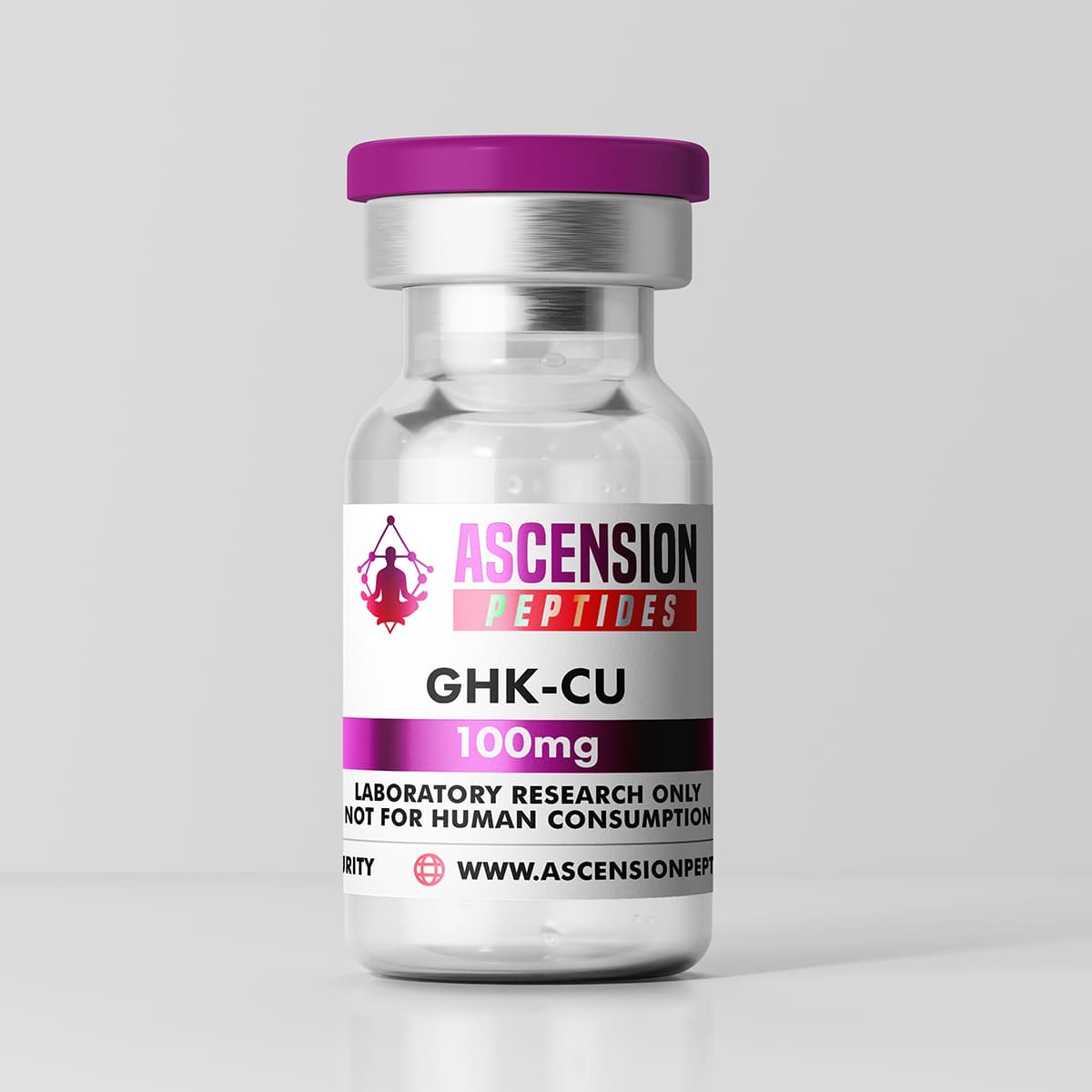
GHK-Cu is a copper-binding tripeptide studied for collagen synthesis, epithelial modeling, and cytokine signaling. It is most established topically and by injection; the intact tripeptide is poorly absorbed if simply swallowed, though capsule forms exist. If you are sourcing GHK-Cu for skin-focused research, the priority is a verified, third-party-tested vial with a batch COA.
Growth hormone support
MK-677 (ibutamoren) is the go-to needle-free option in this category because it is orally active by design. Strictly speaking it is a non-peptide secretagogue rather than a peptide, but it is almost always grouped with oral peptides because it delivers a peptide-adjacent effect in a swallowed capsule.
Focus, mood, and cognition
Selank and Semax are the classic examples where needle-free does not mean oral. Both are used mainly as nasal sprays or sublingual drops, because swallowing them wastes most of the dose to digestion. If your goal is a non-injectable nootropic peptide, look to mucosal delivery rather than a swallowed liquid peptide.
Metabolic and weight research
This is where the oral story is strongest and also most misunderstood. Oral semaglutide (Rybelsus) proves a peptide can be engineered to work as a pill. Newer needle-free metabolic options like orforglipron (Foundayo) are actually small molecules, not peptides, which is exactly why they tolerate the oral route so well. Injectable GLP-1 research blends still tend to deliver the most potent signaling per dose, which is why many researchers compare an oral option against an injectable benchmark. For that comparison, see tirzepatide pills.
How to Choose Oral and Liquid Research Peptides
Whether you are evaluating capsules, oral peptide drops, or an injectable benchmark, the sourcing checklist is the same. This is where most buyers of oral research peptides go wrong — they compare price and format instead of documentation.
- Batch-specific COA. A certificate of analysis tied to the exact lot, not a generic PDF. It should show identity, purity (ideally 99%+), and endotoxin/sterility results.
- Third-party testing. Independent labs, not just the vendor's own word.
- Honest route claims. Be skeptical of any liquid peptide supplements promising injection-level results from a swallowed dose without absorption technology.
- Storage and stability. Many peptides need cold storage; a ready-to-use liquid that ships warm with no guidance is a red flag.
- Clear research-use framing. Reputable vendors label products for laboratory research only and do not make treatment claims.
If you do work with lyophilized vials rather than a pre-mixed liquid peptide blend, our peptide calculator handles the reconstitution and dosing math.
Oral vs Injectable: Do Needle-Free Peptides Actually Work?
Honestly, it depends entirely on the molecule. For a purpose-built oral like Rybelsus, the answer is yes — that is what the absorption technology is for. For a raw research peptide with no delivery engineering, a swallowed dose will usually underperform an injection by a wide margin, and a mucosal route (sublingual, buccal, or nasal) is the more credible injectable alternative. The worst approach is assuming that "no needle" implies "same result." It is better to match each compound to the route it actually absorbs by, and to keep expectations proportional to the evidence — which for many non injectable peptide products is still thin.
Research-use disclaimer: This article is for informational and research purposes only and is not medical advice. The compounds discussed are intended for laboratory research and are not for human or animal consumption. PeptideDeck may earn a commission from vendor links, which never changes the sourcing standards described above.