Tirzepatide tablets do exist, but no tirzepatide pill is FDA approved. The tablets you can actually buy are compounded oral tirzepatide, prescribed through licensed US telehealth and dispensed by a US pharmacy, while the brand drug stays injection-only as Mounjaro and Zepbound. Below: which provider to use if you want the tablet form, what compounded tirzepatide tablets, ODTs and sublingual drops really deliver, how oral tirzepatide compares with the shot, and the oral GLP-1 pills that carry full approval.
Quick Answer
Tirzepatide tablets are real, buyable products: compounded oral tirzepatide, prescribed after a telehealth consultation and dispensed by a US pharmacy. SkinnyRx is the provider we point readers to, at $299 to $399 a month depending on plan length. Two things to know before you order. No oral tirzepatide is FDA approved, because that approval covers the injection only, and compounded tablets do not have published human absorption data behind them. Anything sold without a prescription or a medical visit is a different matter again, and the red-flag checklist further down covers those. If you want a pill that carries full approval, that means a different molecule: orforglipron (Foundayo) or oral semaglutide (Rybelsus and oral Wegovy).
🔑 Key Takeaways
- Tirzepatide tablets are available now. Compounded oral tirzepatide is prescribed through licensed US telehealth and shipped from a US pharmacy, taken once daily.
- SkinnyRx is where we send readers. Online medical visit, US clinicians, from $299 a month on the 12-month plan, FSA and HSA eligible.
- Buy it through a prescriber, not a marketplace. A licensed provider and a named US pharmacy are what separate a real compounded tablet from anonymous drops sold with no prescription.
- Real oral GLP-1 pills are different molecules. Orforglipron (Foundayo), Rybelsus, and oral Wegovy are oral options, but none of them is tirzepatide.
- The closest legitimate match is the injection. Doctor-supervised compounded injectable tirzepatide is the same molecule as the brand, prescribed through licensed telehealth.
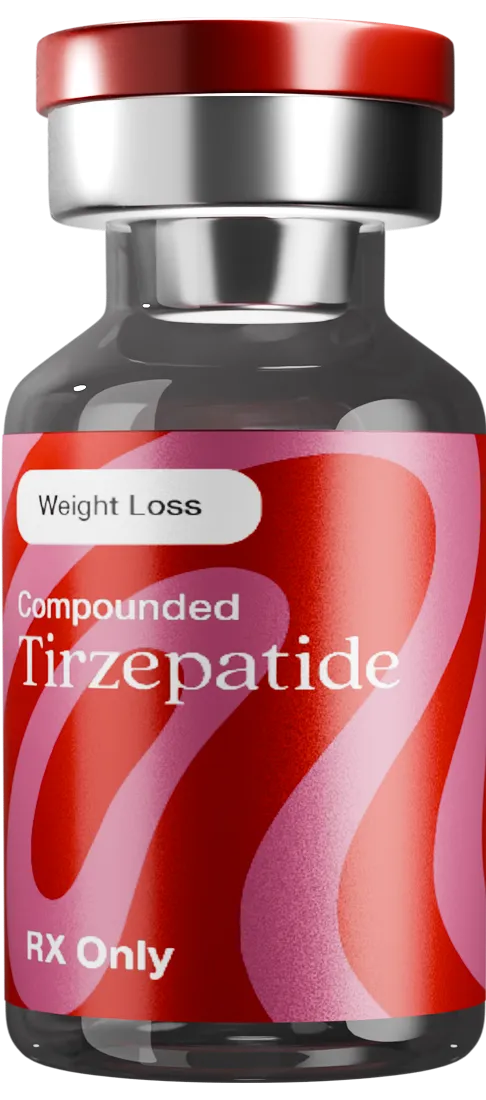
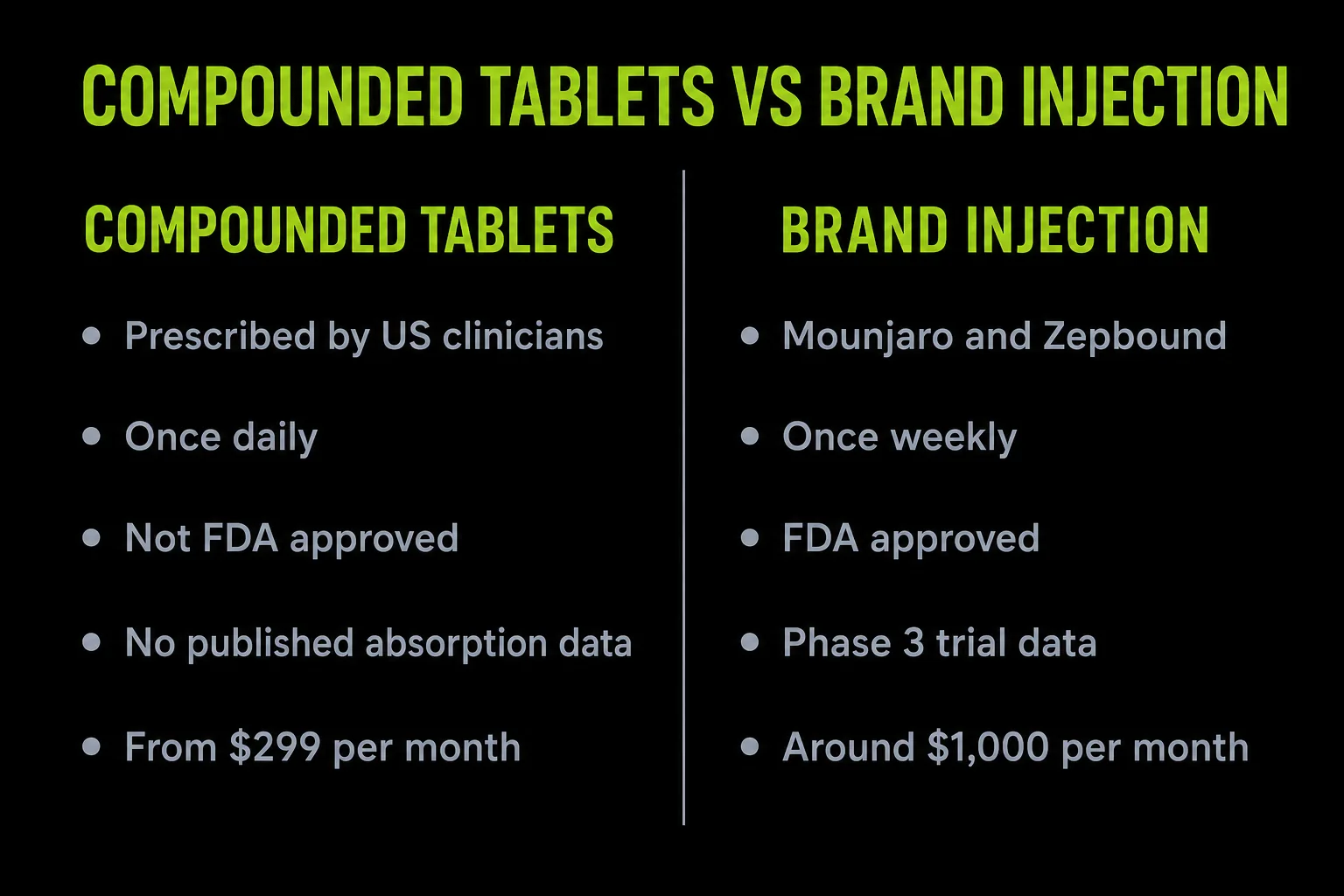
If the tablet form is what you actually want, there is one route that runs through a licensed US prescriber instead of a grey-market seller. SkinnyRx sells compounded tirzepatide tablets taken once daily, prescribed after an online medical visit and dispensed by a US pharmacy. Pricing runs from $399 a month on a rolling plan down to $299 a month on the 12-month plan, and it is FSA and HSA eligible.
Be clear about what that is, though. Compounded tablets are not FDA approved, and as the sections below explain, no oral tirzepatide has published human absorption data behind it. What a licensed prescriber buys you is medical oversight, a real pharmacy and a known dose. It is not evidence that a tablet performs like the weekly injection.
Is there a tirzepatide pill or tirzepatide tablet? The short answer
Yes, though not an FDA-approved one.
You can buy compounded tirzepatide tablets today through a licensed telehealth provider. SkinnyRx prescribes them after an online medical visit and ships from a US pharmacy, once daily, from $299 a month on its 12-month plan. What does not exist is a tirzepatide pill that has been through FDA review.
The brand drug reaches the market in exactly one form: a once-weekly injection under a doctor's prescription. Eli Lilly makes it, sells it as Mounjaro for type 2 diabetes and Zepbound for weight loss and sleep apnea, and both are pre-filled pens or single-dose vials you inject under the skin. The FDA approved Zepbound in late 2023, and the approval covers an injection only.
So when you see "tirzepatide pills," "tirzepatide oral tablets," "tirzepatide ODT," or "tirzepatide drops" for sale, none of them is an approved version of the drug. They range from pharmacy-compounded tablets prescribed by a licensed provider to anonymous grey-market drops, and the section below breaks down what each of those formats actually is.
How tirzepatide works: dual GLP-1 and GIP
One molecule, two receptors.
Tirzepatide is a dual agonist. It activates both the GLP-1 receptor and the GIP receptor, two gut hormones that control blood sugar and appetite. GLP-1 slows stomach emptying and curbs hunger, while adding GIP appears to improve how the body handles fat and insulin. That double action is why tirzepatide tends to outperform GLP-1-only drugs on weight, which you can see in our tirzepatide vs semaglutide breakdown.
The catch: this benefit only shows up if the intact peptide reaches your receptors. Degrade it in the stomach and you get neither the GLP-1 nor the GIP effect, which is the core problem with every "oral tirzepatide" product.
Tirzepatide pills vs injection: effectiveness compared
Here is the honest comparison.
The table below lines up the tirzepatide-pill myth against the real, FDA-approved oral GLP-1 pills (which are different molecules), compounded forms, and the brand injection. Note the bioavailability column, because that is what separates a working drug from an expensive placebo.
Injectable tirzepatide set the benchmark in the SURMOUNT-1 phase 3 obesity trial: adults lost an average of about 15% to 21% of body weight over 72 weeks, depending on dose. In type 2 diabetes it lowered A1C by roughly 2.3 to 2.4 percentage points. No oral tirzepatide product has produced data like this. The compounded tablets on the market have not been put through trials of that size.
Tirzepatide tablets, ODTs, sublingual drops, and "oral Mounjaro" sold online
You have probably seen the ads.
Online sellers list "tirzepatide tablets," "tirzepatide ODT" (orally disintegrating tablets), "tirzepatide troches," "sublingual tirzepatide drops," and even "oral Mounjaro." These are compounded or grey-market products, and they share one problem: the FDA has not evaluated any of them for dose accuracy, sterility, purity, or whether the drug survives long enough to work.
The sublingual and ODT pitch usually claims the drug absorbs through the lining of your mouth and skips digestion. In theory that bypasses stomach enzymes. In practice, the area under your tongue is small, tirzepatide is a large molecule, and there is no published human data showing a sublingual or dissolving tirzepatide tablet delivers a reliable, therapeutic dose. You are paying for a formulation that may put little or no active drug into your blood, with no way to know which.
One more trap to avoid: an "oral tirzepatide" drop is not the same thing as the legitimate FDA-approved oral GLP-1 pill. Orforglipron (Foundayo) is a completely different small molecule, not tirzepatide. Marketers sometimes blur that line on purpose.
Do compounded oral or sublingual tirzepatide forms work?
Honest answer: nobody has published the data either way.
Compounding pharmacies can legally prepare customized medications, and compounded injectable tirzepatide is a real, doctor-prescribed option that uses the same molecule as the brand. The trouble starts when that same peptide is put into a pill or a drop. There is no compounded oral tirzepatide with human bioavailability data behind it, and the FDA does not review compounded products for safety, effectiveness, or quality the way it reviews brand drugs. The agency has repeatedly warned about compounded GLP-1 products, including dosing errors and unverified ingredients.
If you go the compounded route, the only version with a sound scientific basis is the injection. For how that works and the current rules, see our tirzepatide compounding pharmacy guide.
Legitimate oral GLP-1 alternatives that actually work
Want a pill that has real data? These exist.
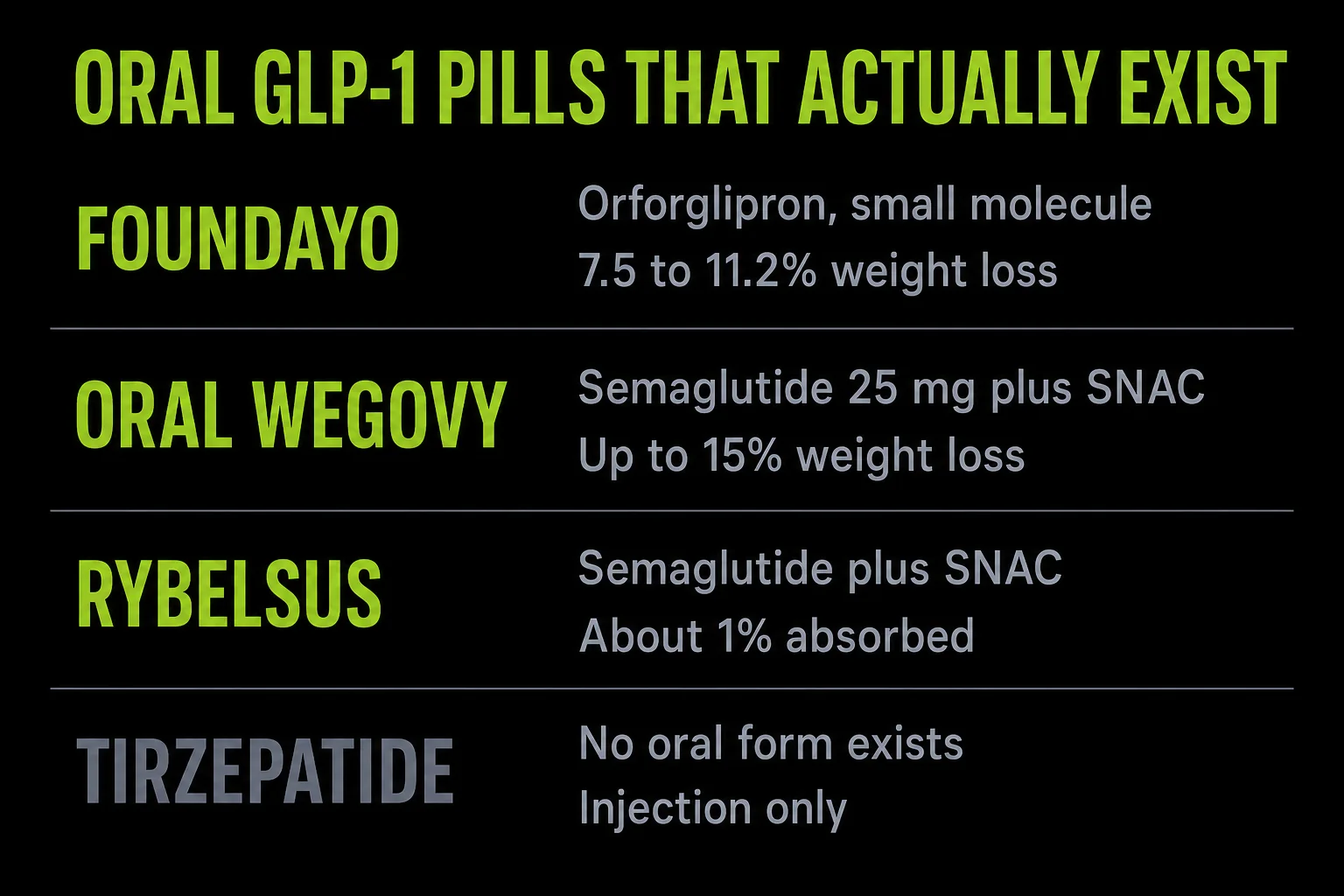
None of them is tirzepatide, but several oral options are FDA-approved and clinically proven. If a daily tablet matters more to you than the specific drug, start here, and compare the full lineup in our GLP-1 pills and oral options overview.
Orforglipron (Foundayo). This is Eli Lilly's oral, once-daily small-molecule GLP-1, FDA-approved as Foundayo. Because it is a small molecule rather than a peptide, it survives digestion and can be taken any time of day without food or water restrictions. In trials it cut A1C by about 1.3 to 1.6 points over 40 weeks and produced roughly 7.5% to 11.2% weight loss over 72 weeks in obesity. It is an oral GLP-1, but it is a different molecule from tirzepatide, with no GIP action.
Rybelsus (oral semaglutide). The first oral GLP-1, on the market for diabetes since 2019. Semaglutide is a peptide too, so to make it survive the gut, Lilly's rival Novo Nordisk pairs it with SNAC (sodium N-[8-(2-hydroxybenzoyl)amino]caprylate), an absorption enhancer that protects the drug and helps it cross the stomach lining. Even with SNAC, bioavailability is only about 1%, which is why Rybelsus must be taken on an empty stomach with a tiny sip of water. Its FDA label spells out those exact instructions.
Oral Wegovy (oral semaglutide 25 mg). A higher-dose oral semaglutide approved for weight loss, delivering up to roughly 15% body-weight reduction in trials, again using the SNAC system.
Metformin. The old standby. It is a cheap oral diabetes pill that produces modest weight loss (a few pounds for most people), nowhere near GLP-1 territory, but it is a true tablet with decades of safety data.
The takeaway: real oral GLP-1 medicine is possible, but only with small molecules (orforglipron) or with a peptide protected by SNAC (Rybelsus). Tirzepatide has neither yet. For how it stacks against these and other agonists, see tirzepatide vs every GLP-1 drug.
Tirzepatide pills cost: oral alternatives vs the injection
Price varies wildly by route.
- Brand injectable tirzepatide (Mounjaro, Zepbound): roughly $900 to $1,300 per month without insurance.
- Compounded injectable tirzepatide: commonly $146 to $600 per month through telehealth, the lowest-cost way to get the actual molecule.
- Oral semaglutide (Rybelsus, oral Wegovy): around $149 per month without insurance, as low as $25 with coverage, and Medicare caps many enrollees at no more than $50 per month.
- "Oral tirzepatide" drops or tablets online: variable, often cheap, and you may be paying for a product that delivers little active drug.
If price is the reason you are hunting for a pill, the better move is usually a lower-cost injection rather than an unproven oral. Our cheapest tirzepatide roundup and GLP-1 cost without insurance guide break down the math.
Tirzepatide pills and drops reviews: what users report
Reviews split into two very different camps.
People using injectable tirzepatide (brand or compounded) consistently report strong appetite suppression and steady weight loss, the experience our tirzepatide reviews page documents. People who try "oral tirzepatide" tablets or sublingual drops report a much messier picture: little to no appetite change, no measurable weight loss for many, and confusion about whether the product contains a real dose. A common thread on forums is users switching from drops to an injection and only then seeing results, which lines up with the bioavailability problem rather than being a coincidence.
Treat any glowing "oral tirzepatide" testimonial with skepticism, especially on a seller's own site, because there is no clinical evidence the format works and strong pharmacology suggesting it should not.
Where to buy and red flags to avoid
Buy the molecule, not the marketing.
The safe path is a licensed prescriber. A telehealth provider or in-person clinic evaluates you, prescribes tirzepatide, and routes it through a pharmacy, the route detailed in how to get tirzepatide. If a product is sold without any prescription or medical visit, that is your first warning sign.
Run any "oral tirzepatide" seller through this checklist before you spend a dollar:
- Requires a real prescription and a licensed provider. No questionnaire-only checkout for a controlled prescription drug.
- Names a US-licensed pharmacy. You can verify the pharmacy's license; anonymous "labs" cannot.
- Does not promise an oral or sublingual tirzepatide that "works like the shot." That claim has no clinical support.
- Provides ingredient and dosing transparency, ideally a certificate of analysis for compounded products.
- Avoid: "no prescription needed," prices that seem impossibly low, drops or tablets marketed as identical to Mounjaro, and sellers shipping from overseas with no pharmacy named.
Side effects and safety: pills vs shots
Same drug class, similar side effects.
Oral and injectable GLP-1 medications share the same common side effects, because they act on the same receptors: nausea, diarrhea, constipation, and reduced appetite, usually worst during dose increases. Both carry a boxed warning about thyroid C-cell tumors seen in laboratory testing, and both can raise the risk of pancreatitis and gallbladder problems.
The extra risk with unapproved "oral tirzepatide" is not the drug class, it is the unknowns: you do not know the real dose, the purity, or whether the active ingredient is even present. That uncertainty is the safety problem, on top of the standard GLP-1 cautions.
When will a real oral tirzepatide be available?
Not anytime soon, honestly.
There is no true oral tirzepatide in late-stage human trials. The reason the industry pivoted to small molecules like orforglipron is precisely that turning a peptide such as tirzepatide into a reliable pill is extremely hard. The realistic near-term future for "oral GLP-1" is small-molecule pills (orforglipron, plus others in development) and SNAC-protected oral semaglutide, not a swallowable version of tirzepatide itself.
If and when an oral dual GIP/GLP-1 small molecule reaches approval, it would likely be a new molecule with its own brand name, not tirzepatide in a capsule. Until then, tirzepatide means an injection.
Frequently Asked Questions
References
- Jastreboff AM, et al. Tirzepatide Once Weekly for the Treatment of Obesity (SURMOUNT-1). New England Journal of Medicine, 2022. pubmed.ncbi.nlm.nih.gov.
- U.S. Food and Drug Administration. FDA Approves New Medication for Chronic Weight Management (Zepbound). fda.gov.
- U.S. Food and Drug Administration. Zepbound (tirzepatide) injection approval history, Drugs@FDA. accessdata.fda.gov.
- U.S. Food and Drug Administration. Medications Containing Semaglutide Marketed for Type 2 Diabetes or Weight Loss (compounding safety). fda.gov.
- U.S. Food and Drug Administration. Compounding and the FDA: Questions and Answers. fda.gov.
- U.S. Food and Drug Administration. Rybelsus (oral semaglutide) approval history, Drugs@FDA. accessdata.fda.gov.
- Eli Lilly and Company. FDA Approves Lilly's Foundayo (orforglipron), the Only GLP-1 Pill for Weight Loss Taken Any Time of Day. prnewswire.com.
- MedlinePlus, U.S. National Library of Medicine. Tirzepatide Injection. medlineplus.gov.