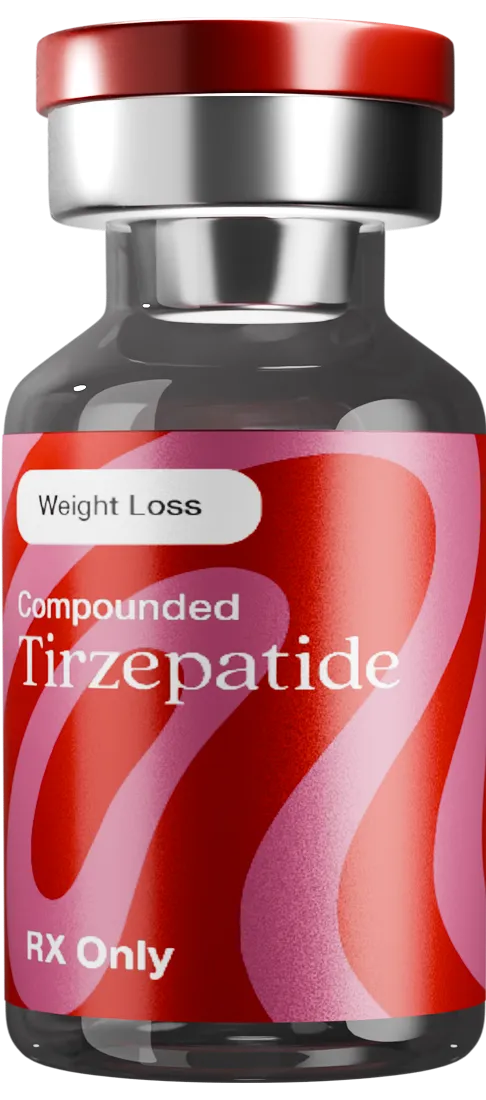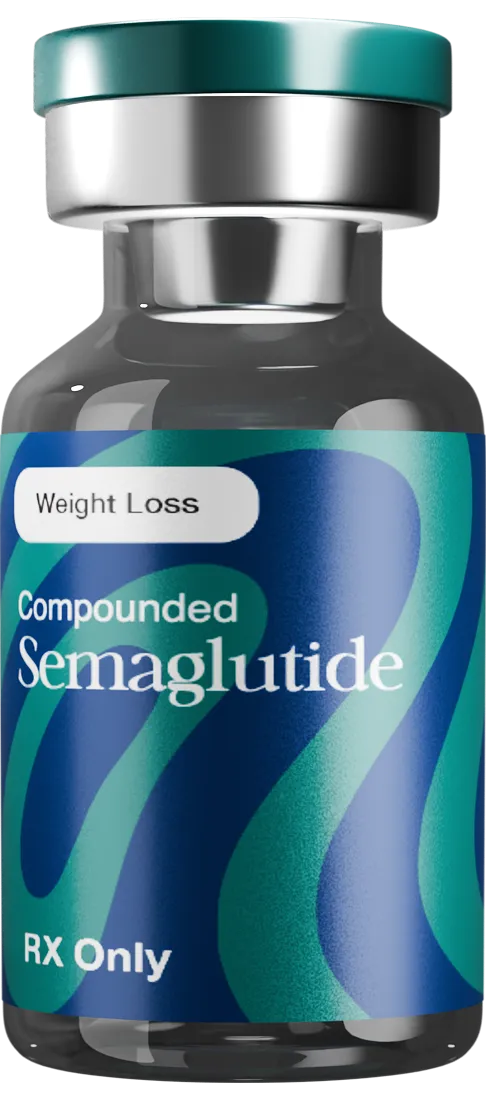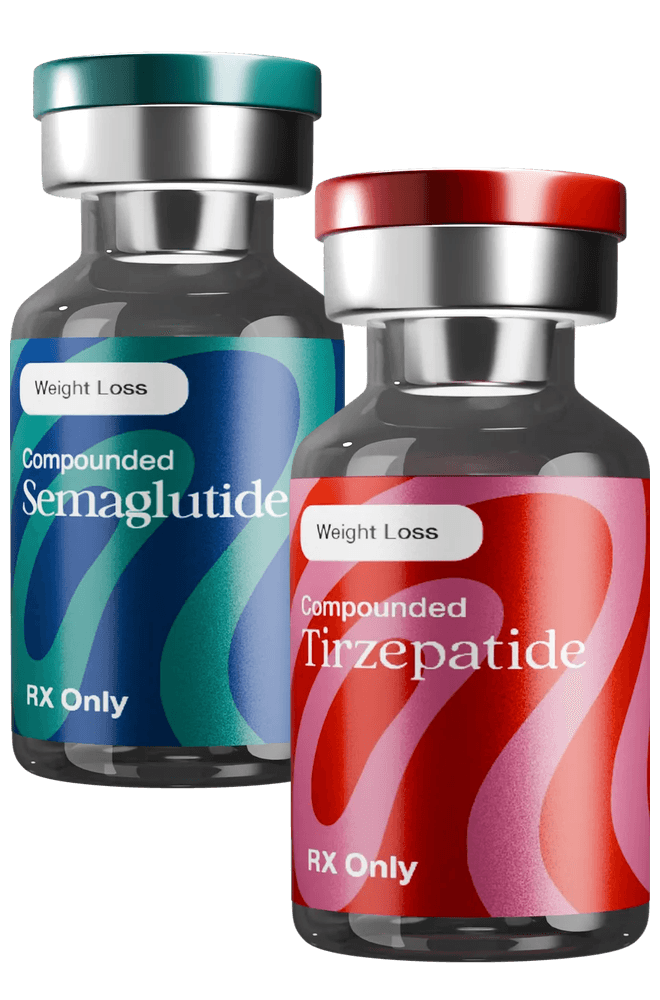
Tirzepatide vs semaglutide, head-to-head data ends the debate.
In the SURMOUNT-5 trial (NEJM, 2025), adults with obesity but without type 2 diabetes lost 20.2% of their body weight on tirzepatide vs 13.7% on semaglutide over 72 weeks, a 47% larger weight reduction for tirzepatide. That's the cleanest direct comparison ever run between these two drugs. Below is the full breakdown of tirzepatide vs semaglutide: mechanism difference, dosing schedules, side effects, brand names (Mounjaro, Zepbound, Ozempic, Wegovy), cost, insurance coverage, dose-conversion chart for switching between them, and the honest answer on which one fits which patient.
Tirzepatide vs Semaglutide: Comparison Table
🔑 Key Takeaways
- Tirzepatide wins on weight loss. SURMOUNT-5 showed 20.2% vs 13.7%, a 47% relative advantage at 72 weeks.
- Semaglutide wins on cardiovascular evidence. The SELECT trial (2023) showed 20% reduction in major adverse cardiovascular events. Tirzepatide's SURPASS-CVOT trial hasn't read out yet.
- Different mechanisms, different brands. Tirzepatide = GLP-1 + GIP (Mounjaro/Zepbound). Semaglutide = GLP-1 only (Ozempic/Wegovy/Rybelsus).
- Side effect profiles are similar, intensity differs. GI events (nausea, constipation, diarrhea) dominate both at ~45-50% of users. Tirzepatide slightly more at 15 mg dose; semaglutide nausea profile slightly worse early.
- Cost is comparable at brand level; compounded options shift the math. Brand cash $1,000-1,300/month for either. Embody compounded tirzepatide at $119/month and semaglutide at $69/month with telehealth.
SURMOUNT-5: The Head-to-Head Tirzepatide vs Semaglutide Trial
The single most important piece of evidence in the tirzepatide vs semaglutide debate is the SURMOUNT-5 trial, published in the New England Journal of Medicine in 2025 (Aronne et al., NEJM 2025; PMID 40353578). It's the first large-scale randomized trial directly comparing tirzepatide vs semaglutide in adults with obesity but without diabetes.
SURMOUNT-5 results at 72 weeks:
- Tirzepatide: 20.2% mean body-weight reduction (~50.3 lbs)
- Semaglutide: 13.7% mean body-weight reduction (~33 lbs)
- Absolute difference: 6.5 percentage points in favor of tirzepatide
- Relative difference: Tirzepatide produced 47% more weight loss
- Cardiovascular post-hoc: A 2025 post-hoc analysis (Mamas et al., Eur Heart J Open 2025) showed tirzepatide produced larger 10-year cardiovascular disease risk reduction than semaglutide.
Critical caveat: SURMOUNT-5 was an open-label trial sponsored by Eli Lilly (the maker of tirzepatide). That funding is the first thing skeptics point to, and it is a fair concern. So the real test is whether the gap survives outside a company trial.
Real-World Data: Does Tirzepatide Still Win Outside the Trial?
One sponsored trial rarely settles a drug debate. The honest way to check SURMOUNT-5 is to see whether the same gap shows up in ordinary practice, where nobody is being paid and nobody is monitored. Two large independent analyses looked, and both point the same way.
The biggest used de-identified US medical records from 18,386 patients, matched one-to-one on tirzepatide or semaglutide, with no drug-maker funding (Rodriguez et al., JAMA Internal Medicine 2024). Tirzepatide patients were far more likely to reach every weight-loss milestone:
- 5% of body weight lost: tirzepatide patients were 1.76 times as likely to get there
- 10% lost: 2.54 times as likely
- 15% lost: 3.24 times as likely
- At 12 months on treatment: 15.3% average weight loss on tirzepatide vs 8.3% on semaglutide
Here is the part most summaries skip: gastrointestinal side effects were statistically similar between the two groups in that dataset. The bigger result did not come from a rougher ride. It came from the drug doing more per week at the same tolerability.
A second cohort backs this up. An ambulatory-care study of 945 patients, run by authors who declared no industry conflicts, found tirzepatide averaged 6.6 kg lost vs 3.1 kg for semaglutide over six months, widening to 7.0% vs 3.4% in the patients without diabetes (Diabetes, Obesity and Metabolism 2025).
The numbers shrink as you move from trial to real life, because people miss doses, stop early, and rarely climb to the full 15 mg. But notice what never happens across a randomized trial and two independent record reviews: the direction never flips. Tirzepatide leads in every dataset. That consistency, not any single trial, is the strongest answer in the whole tirzepatide vs semaglutide question.
How Tirzepatide and Semaglutide Work (Mechanism Difference)
Both drugs are once-weekly subcutaneous injections that act on the same broad pathway, the body's incretin hormone system. The difference is which receptors they hit.
GLP-1 (glucagon-like peptide-1) activation suppresses appetite, slows gastric emptying, and improves insulin secretion. GIP (glucose-dependent insulinotropic polypeptide) activation adds nutrient-stimulated insulin release plus an apparent benefit for glucose handling and weight loss that GLP-1 alone doesn't deliver. The dual GLP-1 + GIP mechanism is why tirzepatide outperforms semaglutide head-to-head on both A1C reduction and weight loss.
Tirzepatide vs Semaglutide: Brand Names and Indications
Practical implication: prescribers usually pick by indication, not chemistry. Type 2 diabetes patients get Mounjaro or Ozempic. Obesity patients get Zepbound or Wegovy. Off-label use crosses these lines often. See our Mounjaro vs Ozempic comparison and Zepbound vs Wegovy comparison for brand-specific breakdowns.
Tirzepatide vs Semaglutide: Side Effects Compared
The side effect profiles are similar in pattern, slightly different in intensity. Most events are gastrointestinal and concentrated in the first 2-4 weeks of each new dose level.
Detailed comparisons in our tirzepatide side effects guide and semaglutide side effects guide. Both drugs carry the same black box warning for thyroid C-cell tumors and the same recent NAION (sudden vision loss) label addition from 2025.
Tirzepatide vs Semaglutide: Dosing Schedule
Both drugs follow a slow titration schedule to minimize GI side effects. The starting doses are small and you escalate every 4 weeks.
Tirzepatide vs Semaglutide: Dose Conversion Chart
For people switching from semaglutide to tirzepatide or vice versa, there's no official 1:1 conversion. Doses target similar potency endpoints but on completely different mg scales. Most clinicians use this approximate equivalence based on weight-loss response in SURMOUNT-5 and SURPASS-2:
These are approximations only, not pharmacologic equivalence. Always switch with prescriber supervision; see our switching from semaglutide to tirzepatide guide for the full protocol including wash-out periods and GI side-effect-management.
Tirzepatide vs Semaglutide: Cost Comparison
The most cost-effective path for most uninsured or underinsured patients in 2026: telehealth-based compounded tirzepatide or compounded semaglutide. Same molecule as brand, doctor-supervised prescription, third-party tested. The trade-off vs brand is the gray regulatory zone around compounding restrictions; see our compounded tirzepatide and compounded semaglutide guides.
Tirzepatide vs Semaglutide: Cardiovascular and Off-Label Benefits
Plain English: semaglutide has more established cardiovascular outcomes data (SELECT was the landmark trial), while tirzepatide is rapidly catching up and has the only FDA-approved obstructive sleep apnea indication in this drug class. For broader off-label benefits including brain effects and addiction-adjacent uses, see our tirzepatide off-label uses guide.
Switching Between Tirzepatide and Semaglutide
Switching is common and generally well-tolerated when done correctly. Common scenarios:
- Semaglutide → tirzepatide: Most common direction (patients seeking more weight loss). Stop semaglutide, wait 1 full week, start tirzepatide at the equivalent dose level using the conversion chart above. Most patients tolerate the switch without re-titrating from 2.5 mg.
- Tirzepatide → semaglutide: Less common, usually for cost, supply, or cardiovascular-outcome reasons. Stop tirzepatide, wait 1 full week, start semaglutide at the equivalent dose level. Some patients see GI side effects re-emerge because semaglutide's nausea profile is slightly stronger.
- Switching for fertility planning: Both drugs are contraindicated in pregnancy. Discontinue at least 2 months before attempting conception (both half-lives ~5-7 days, full clearance takes 4-5 weeks).
What Real Users Report (Reddit, Patient Forums)
The Reddit consensus on r/Mounjaro, r/Zepbound, r/Ozempic, and r/Wegovy in 2026 aligns closely with the SURMOUNT-5 data: tirzepatide users report more dramatic weight loss and less hunger; semaglutide users report similar appetite suppression at lower mg doses but with sometimes harsher nausea. Other consistent patterns:
- Sleep changes: Both drugs frequently improve sleep quality, especially for users with sleep apnea or weight-related sleep disruption.
- Food noise: Universally reported reduction within the first 1-3 days for both drugs.
- Alcohol tolerance drop: Reported widely on both. Many users naturally reduce alcohol intake.
- Tirzepatide is harder to find: Compounded restrictions tightened in late 2024 affecting both, but tirzepatide's brand price stayed higher longer.
- Switching satisfaction: Most switchers from semaglutide to tirzepatide report no regret. Switchers from tirzepatide to semaglutide (usually cost-driven) report some loss of effect.
Drug Interactions: Tirzepatide vs Semaglutide
Both drugs share the same primary interaction concern: delayed gastric emptying that can affect absorption of other oral medications.
- Oral contraceptives: Reduced absorption is theoretical with both drugs. Use a non-oral contraceptive method or backup method for 4 weeks after starting and 4 weeks after each dose increase.
- Insulin and sulfonylureas: Increased hypoglycemia risk. Dose adjustment required.
- Levothyroxine (Synthroid): Delayed absorption. Take 60 minutes before any food or injection.
- Warfarin: Monitor INR more closely; absorption can shift.
- Other GLP-1 drugs: Do NOT combine tirzepatide and semaglutide. Same receptor pathway means stacking adds side effects without adding benefits.
Which One Should You Actually Choose?

The data names a winner. Your situation names the right drug for you. Here is how the choice usually breaks down in practice.
If you've stalled on semaglutide
This is the single most common reason people switch. You titrated to Wegovy 2.4 mg, gave it three to six months, and the scale stopped moving before you hit your goal. Tirzepatide's extra GIP action is the logical next step, and most people move across at the equivalent dose rather than restarting at 2.5 mg. The semaglutide to tirzepatide switch guide has the exact protocol and wash-out timing.
If you have heart disease or a prior stroke
Here semaglutide has the edge that matters most. The SELECT trial showed it cuts major cardiovascular events by 20% in people with established heart disease and obesity, and Wegovy carries that on its label. Tirzepatide very likely helps too, but its cardiovascular outcomes trial has not reported yet. When a documented heart event is already on your chart, pick the drug with the finished evidence.
If you're paying cash
Brand pricing is close enough that it rarely decides anything, roughly $1,000 to $1,300 a month either way. The real fork is brand vs compounded. Compounded tirzepatide and compounded semaglutide through a telehealth clinic run $146 to $258 a month for the same molecule with a supervising prescriber. For most uninsured readers, that route, not the choice of drug, is what actually changes the monthly bill.
If side effects worry you most
Counterintuitively, the drug is not the main lever here. The titration speed is. Both cause the same nausea, constipation, and diarrhea, concentrated in the first two to four weeks of each dose step, and the 18,386-patient real-world dataset found similar GI rates between them. If your stomach is sensitive, holding each dose an extra couple of weeks does more than switching brands ever will.
If you might want something stronger later
Tirzepatide is no longer the ceiling. The triple agonist retatrutide has posted even larger weight loss in trials and is where a lot of people look after maxing out tirzepatide. If that is on your radar, read our retatrutide vs tirzepatide comparison before you lock into a long-term plan.
The quick version:
Pick tirzepatide if you:
- Want the largest possible weight loss (SURMOUNT-5 confirmed)
- Have type 2 diabetes needing aggressive A1C reduction
- Have moderate-to-severe obstructive sleep apnea in obesity (Zepbound is FDA-approved here)
- Failed semaglutide due to insufficient weight loss
- Are willing to escalate to 12.5-15 mg over 4-5 months
Pick semaglutide if you:
- Have established cardiovascular disease and want the SELECT-trial CV benefit
- Need an oral option (Rybelsus tablet for type 2 diabetes)
- Have insurance that covers Ozempic or Wegovy but not Mounjaro or Zepbound
- Prefer the longer pharmacology safety track record (semaglutide approved 2017 vs tirzepatide 2022)
- Want the lower NovoCare cash-pay option for Wegovy ($499/month)
How to Get Tirzepatide or Semaglutide
- Brand prescription via doctor or telehealth: Standard path. Insurance may cover with prior authorization for qualifying diagnosis. Lilly Direct ($349-549 Zepbound vials) and Novo NovoCare ($499 Wegovy) offer manufacturer cash options.
- Compounded via reputable telehealth clinic: Embody and similar providers offer doctor-supervised compounded tirzepatide at $119/month and compounded semaglutide at $69/month. Doctor consultation included.
- 503A compounding pharmacy with your own Rx: Bring a prescription from any prescriber. Pricing varies by pharmacy.
How tirzepatide compares to the other GLP-1 drugs
Semaglutide is the comparison most people search for, but it is not the only one that matters. The sections below cover the questions that usually come next.
Food Noise: What Changes When Either Drug Is Working
The clinical outcomes matter — but so does what it actually feels like from the inside.
"Food noise" is the term patients use to describe the constant mental chatter about food — what you're going to eat next, whether you're hungry, whether you deserve that snack, the automatic reach for the fridge. For people who have struggled with their weight for years, food noise is background static they've learned to live with. It feels like personality, not physiology.
Both tirzepatide and semaglutide dramatically reduce food noise for most users. The hunger signals that drive that chatter — GLP-1 and GIP receptor activity in the hypothalamus — are suppressed. People describe the shift as: food becoming neutral. Not disgusting, not craved. Just... there. A meal is something you finish because you eat it, not something you think about for hours beforehand.
This is where the "it gets easier" reports come from. The reduction in food noise happens quickly — often within the first 1–2 weeks at even the starting dose. The weight loss follows later, as weeks of lower intake accumulate. The mental shift tends to arrive before the scale shifts.
Is Food Noise Reduction Stronger With Tirzepatide?
Anecdotally, users who have tried both drugs more often report stronger appetite suppression and quieter food noise on tirzepatide — particularly at doses of 10mg+. This is consistent with the dual-mechanism hypothesis: GIP activation in the hypothalamus adds a second hunger-suppressing signal on top of GLP-1. No randomized controlled trial has directly measured food noise or appetite cue reactivity as a primary endpoint, but patient-reported outcomes in the SURMOUNT trials showed higher rates of "very much reduced appetite" compared to STEP trial data for semaglutide.
Tirzepatide vs Mazdutide
Mazdutide is the closest active pipeline rival, a dual GLP-1 / glucagon receptor agonist developed by Innovent Biologics in China. Approved in China in 2025; not yet FDA-approved in the US as of 2026.
Is mazdutide better than tirzepatide? Not for weight loss, tirzepatide still produces larger reductions at currently studied doses. For fatty liver and metabolic dysfunction phenotypes, mazdutide may eventually win because of its dual GLP-1 / glucagon mechanism. Final verdict depends on US FDA approval timeline.
Tirzepatide vs Orforglipron
Orforglipron is Eli Lilly's oral, non-peptide small-molecule GLP-1 agonist, the first orally bioavailable GLP-1 that produces injectable-level weight loss. FDA-approved as Foundayo in 2026 with no food restriction.
For people who don't want needles, orforglipron is the breakthrough. For maximum weight loss, tirzepatide still leads, though Lilly's pipeline includes oral tirzepatide-equivalent dual agonists that may close the gap in 2027-2028.
Tirzepatide vs Liraglutide
Liraglutide (Saxenda for obesity, Victoza for diabetes) was the first widely-used GLP-1 monoagonist. It requires daily injection instead of weekly, and weight loss is substantially smaller.
Liraglutide is essentially obsolete for new patients now that semaglutide and tirzepatide exist. The only remaining use cases are: patients already stable on liraglutide who tolerate it well, or insurance coverage that favors it over newer drugs.
Frequently Asked Questions
The Bottom Line: Tirzepatide vs Semaglutide
If your primary goal is weight loss, tirzepatide is the better choice, and it is not a close call. One randomized head-to-head (SURMOUNT-5) and two independent real-world datasets all put it ahead, with side-effect profiles that land in the same range. If you have established cardiovascular disease and want the most evidence-backed heart protection, semaglutide keeps the edge on the strength of the SELECT trial. For most people without a strong cardiovascular reason, tirzepatide is the modern default, and the price gap has narrowed enough that cost rarely decides it. If you are still mapping the whole field, our peptides for weight loss guide ranks every current option.
References
- Aronne LJ, Horn DB, le Roux CW, et al. Tirzepatide as Compared with Semaglutide for the Treatment of Obesity. N Engl J Med. 2025;393(1):26-36. DOI: 10.1056/NEJMoa2416394 (PMID: 40353578)
- Rodriguez PJ, Goodwin Cartwright BM, Gratzl S, et al. Semaglutide vs Tirzepatide for Weight Loss in Adults With Overweight or Obesity (real-world cohort, 18,386 patients). JAMA Intern Med. 2024;184(9):1056-1064. PMID: 38976257
- Real-world effectiveness of tirzepatide versus semaglutide for weight loss in overweight or obese patients in an ambulatory care setting. Diabetes Obes Metab. 2025. PMC12046463 (PMID: 40116184)
- Mamas MA, Bays H, Li R, et al. Tirzepatide compared with semaglutide and 10-year cardiovascular disease risk reduction in obesity: post-hoc analysis of the SURMOUNT-5 trial. Eur Heart J Open. 2025;5(5):oeaf117. PMID: 40980721
- Lincoff AM, et al. Semaglutide and Cardiovascular Outcomes in Obesity without Diabetes (SELECT). N Engl J Med. 2023;389(24):2221-2232. PMID: 37952131
- Jastreboff AM, et al. Tirzepatide Once Weekly for the Treatment of Obesity (SURMOUNT-1). N Engl J Med. 2022;387(3):205-216. PMID: 35658024
- FDA-approved prescribing information for Mounjaro, Zepbound, Ozempic, Wegovy, and Rybelsus.
Meal planning: Both semaglutide and tirzepatide users follow similar dietary patterns. See our Ozempic meal plan for the 7-day menu, protein targets, and foods to avoid on either drug.
Medical disclaimer: This article is for educational and informational purposes only and is not medical advice. Tirzepatide and semaglutide are both prescription medications. The comparisons in this article are based on published clinical trial data and US regulatory status as of May 2026. Talk to a qualified prescriber about which option fits your specific medical history, comorbidities, and goals before starting, switching, or stopping either medication.