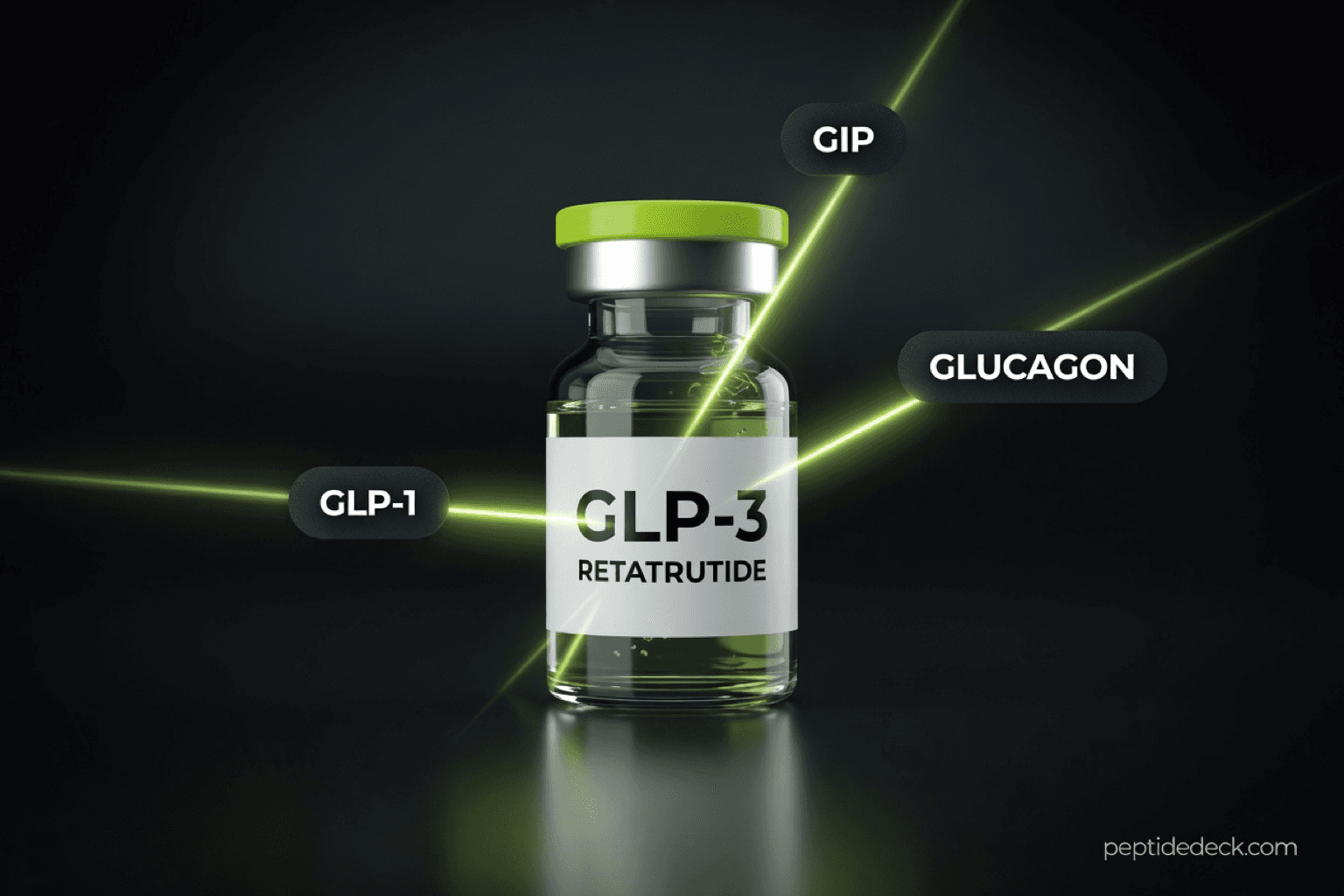
GLP-3 is not a hormone. That surprises most people.
If you've seen "GLP-3" on a vial label, in a headline, or in a forum thread about the next Ozempic, you've probably assumed it's a third gut hormone that works like GLP-1, only stronger. The name invites that. But your body doesn't make anything called GLP-3. The label is a nickname for one drug, retatrutide, and the story behind the nickname tells you exactly what the drug does and why people are paying attention.
🔑 Key Takeaways
- "GLP-3" is shorthand for retatrutide, a single peptide that acts on three hormone receptors at once. There is no natural GLP-3.
- Its phase 2 weight loss is the largest any drug in this class has posted so far, and the phase 3 data now arriving points the same way.
- The third receptor, glucagon, is the part that makes it different. It is also the reason for the one side effect doctors watch most closely.
- It has no FDA approval yet, which changes how people get it, what they pay, and what they need to check before they order.
- A vial labelled "GLP-3 RETA" can be excellent or worthless. One document tells you which.
Below, we'll decode the name, walk through what the trials actually found, compare GLP-3 with semaglutide and tirzepatide, and cover the practical side: dosing, cost, legality and how to spot a vial worth buying.
What Is GLP-3? (And Why the Name Is Misleading)
Start with the hormones that do exist.
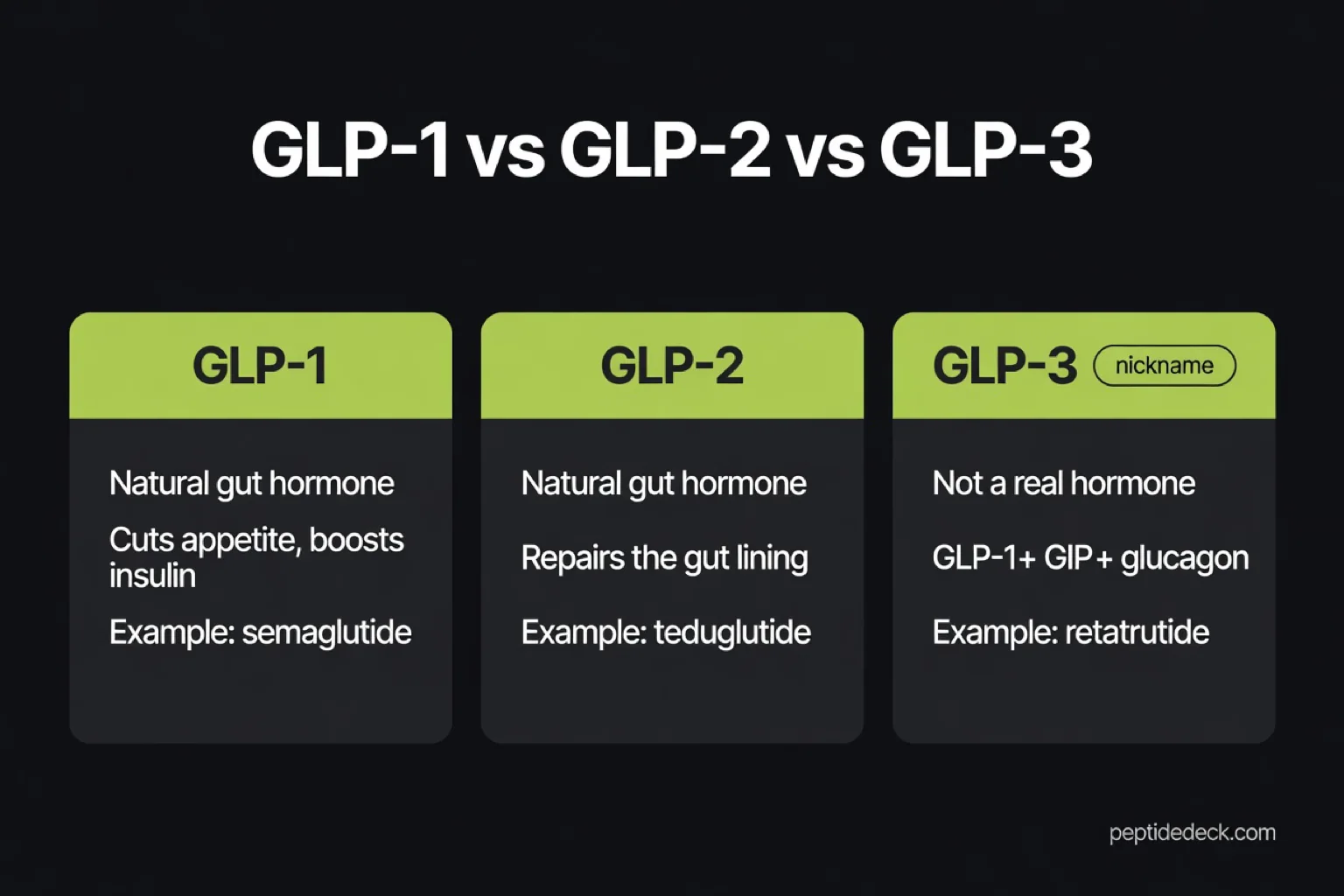
When you eat, cells in your gut cut a single precursor protein, proglucagon, into several smaller hormones. Two of them are GLP-1 and GLP-2, short for glucagon-like peptide 1 and 2. GLP-1 tells your pancreas to release insulin, slows your stomach, and quiets hunger. GLP-2 helps the gut lining grow and absorb nutrients. There is no third glucagon-like peptide in that family.
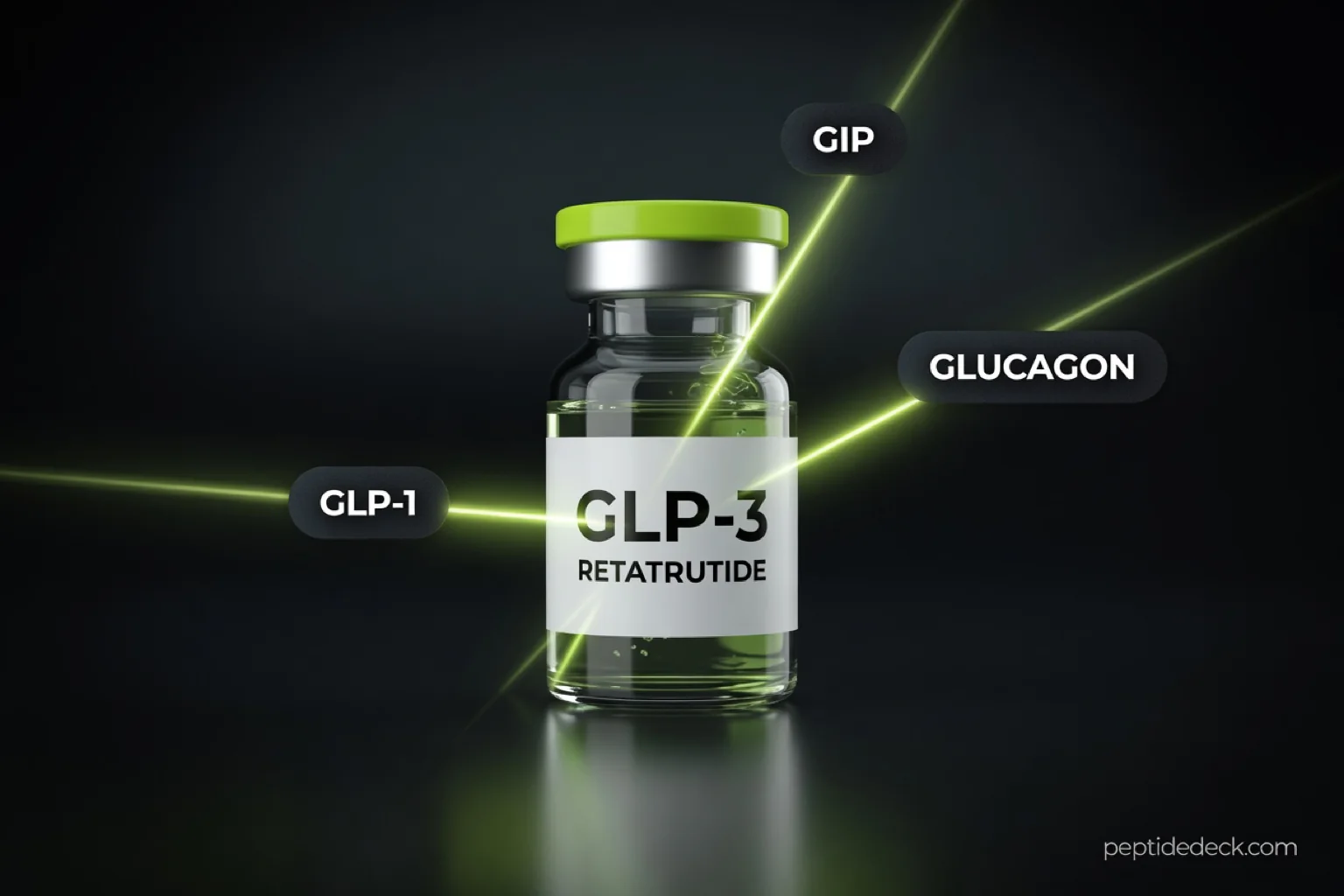
So where did "GLP-3" come from? It grew out of how people talk about the newer weight loss drugs. Semaglutide (Ozempic, Wegovy) acts on one receptor, GLP-1. Tirzepatide (Mounjaro, Zepbound) acts on two, GLP-1 and GIP, and got nicknamed a "dual agonist". Retatrutide adds a third, the glucagon receptor, so writers and sellers started calling it "GLP-3", as in the third generation, or three receptors in one.
The nickname stuck because it's catchy. It is also why you'll see vials sold as "GLP-3 RETA" or "GLP-3 (RT)". Those are retatrutide under a marketing name, and the only things that matter on them are the milligrams in the vial and the lab report behind them.
GLP-1 vs GLP-2 vs GLP-3: The Difference in One Table
Here is the whole family side by side.
If you want the fuller story on the first two, our guide to GLP-1 vs GLP-2 covers what each one does and why only GLP-1 became a weight loss drug.
How GLP-3 (Retatrutide) Works: Three Receptors, One Molecule
Each receptor pulls a different lever.
GLP-1 is the familiar one. It is the lever behind semaglutide: food stays in your stomach longer, your brain gets a stronger "full" signal, and your pancreas releases insulin when blood sugar rises. Most of the appetite drop people describe comes from here.
GIP is the lever tirzepatide added. It works alongside GLP-1 on insulin release and fat tissue, and in practice the GLP-1 and GIP combination produced more weight loss than GLP-1 alone.
Glucagon is the new one, and the interesting one. On its own, glucagon raises blood sugar, which sounds like the opposite of what you want. Paired with GLP-1 and GIP, which keep blood sugar in check, the glucagon signal mainly pushes the body to burn more energy and clear fat from the liver. That is the working theory for why retatrutide's numbers run ahead of the other two drugs.
All three levers live in one peptide chain with a fatty acid attached. That fatty acid is what stretches the half-life to about six days, measured in the first human studies, so a single injection covers a week.
GLP-3 Results: What the Trials Actually Showed
The numbers are why this drug has a nickname at all.
In the phase 2 obesity trial published in the New England Journal of Medicine in 2023, 338 adults took retatrutide or placebo once a week for 48 weeks. On the top 12 mg dose, average body weight fell 24.2%, against 2.1% on placebo. Even the 4 mg dose averaged 17.1%. By week 48, 83% of people on 12 mg had lost at least 15% of their body weight, a threshold only 2% of the placebo group reached.
The type 2 diabetes data tells a similar story. In a phase 2 trial published in The Lancet the same year, the 12 mg dose lowered HbA1c by 2.02 points at 24 weeks, more than dulaglutide, an established GLP-1 drug, managed. Body weight fell 16.94% by week 36.
Then came phase 3. The TRANSCEND-T2D-1 trial, published in The Lancet in June 2026, followed 537 adults with type 2 diabetes for 40 weeks. On 12 mg, HbA1c dropped 1.94 points and body weight dropped 15.3%, against 0.81 points and 2.6% on placebo. Only 2% to 5% of people stopped because of side effects. Lilly has also announced topline results from its TRIUMPH obesity trials. Those figures are company-reported and not yet peer-reviewed, so treat them as a preview; our retatrutide phase 3 results roundup and TRIUMPH-4 breakdown cover what has been reported so far.
GLP-3 vs Semaglutide vs Tirzepatide
Each generation added a receptor, and the numbers climbed.
Two cautions before you read too much into that last column. These were different trials, with different people and different lengths, so the percentages aren't a head-to-head race. And retatrutide got its number in less time: 48 weeks against 68 and 72. If you want the fuller matchup, our retatrutide vs tirzepatide comparison goes through side effects, dosing and price as well as the headline results.
GLP-3 Side Effects: What to Expect
The side effects will sound familiar.
As with every drug in this class, the most common problems are in the gut: nausea, diarrhea, vomiting and constipation. In the phase 2 obesity trial they rose with the dose, were mostly mild to moderate, and were partly avoided by starting at 2 mg rather than 4 mg. In the phase 3 diabetes trial they eased over time, and between 2% and 5% of people stopped the drug because of them. No one in that trial had severe low blood sugar.
One effect deserves more attention. Heart rate went up with the dose in the phase 2 trial, peaked around week 24, and then drifted back down. That's the effect doctors will watch most closely as the phase 3 data comes in, and it is a good reason to talk to one first if you have a heart rhythm problem.
The cautions that apply to GLP-1 drugs apply here too: pregnancy or trying to conceive, a history of pancreatitis, and a personal or family history of medullary thyroid cancer or MEN2. For the full list with frequencies, see our guide to retatrutide side effects.
GLP-3 Dosing: What the Trials Used
Every trial used one injection a week.
In the phase 2 obesity trial, people started at 2 mg or 4 mg and moved up to maintenance doses of 4, 8 or 12 mg. The phase 3 diabetes trial used maintenance doses of 4, 9 and 12 mg. The slow start matters: it's the main tool for keeping the stomach side effects manageable.
A typical escalation moves up every four weeks, 2 mg, then 4 mg, then 8 mg, with 12 mg as the top dose. Our retatrutide dosing schedule lays out each week, and the reconstitution guide shows how to mix a vial. A 30 mg vial mixed with 3 mL of bacteriostatic water gives 10 mg per mL, so 20 units on a U-100 insulin syringe is 2 mg.
Is GLP-3 FDA Approved? Legal Status in 2026
Not yet.
Retatrutide has no FDA approval for any use. Eli Lilly is running a large phase 3 program, and results like TRANSCEND-T2D-1 are the evidence it will take to regulators. Until approval, no doctor can write a normal prescription for it, and compounding pharmacies can't make it, because it isn't an approved drug.
That leaves two ways people get it today: enrolling in a clinical trial, or buying a freeze-dried vial from an online peptide vendor. Trials are free but hard to get into. Vendors are easy to reach, but quality is on you, and the rules on buying and holding an unapproved drug for personal use vary by country. Our guide on how to get retatrutide walks through both routes.
Where to Buy GLP-3 (Retatrutide) and What It Costs
This is where most buyers get it wrong.
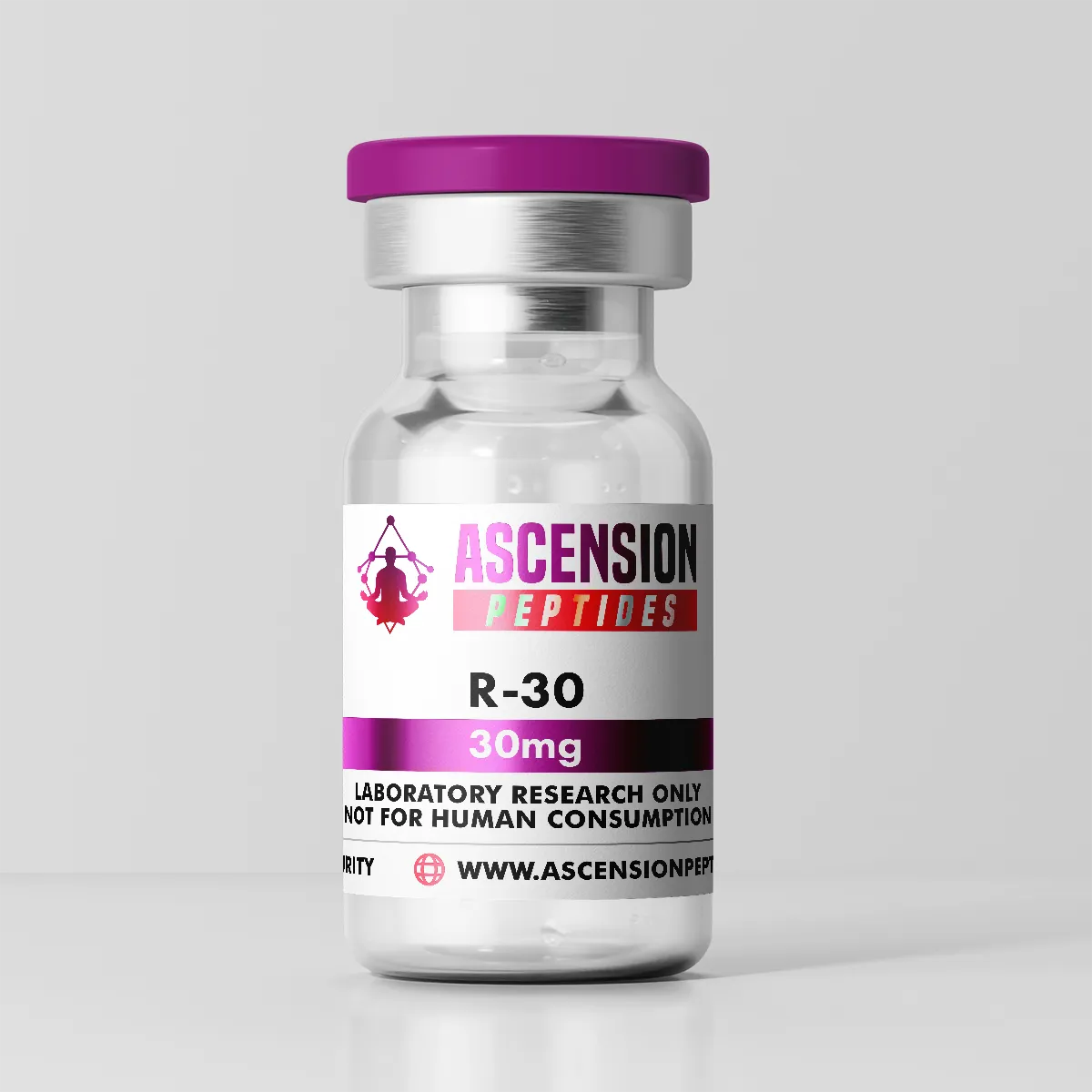
Vials sold as "GLP-3", "GLP-3 RETA", "Reta" or retatrutide are all the same compound. The name on the label tells you nothing about what's inside. Two things do: the number of milligrams in the vial, and a lab report for the exact batch you're buying.
Here's what a good report looks like. The current R-30 batch from Ascension Peptides was tested by Kovera Labs at 99.832% purity by HPLC, held 32.43 mg in a 30 mg vial, and had its identity confirmed by mass spectrometry, with endotoxin, sterility and heavy metal screens all passed. Every one of those checks can be verified with the lab. A vial without that paperwork is a guess.
On price, the R-30 lists at $200, or $100 with code PEPTIDEDECK, which is $3.33 per milligram. The smaller R-10 is $80, or $40 with the code. For honesty's sake: one seller we checked lists a 30 mg vial at $95, slightly cheaper, but without a report for the specific batch on its listing. You can see current prices on our retatrutide for sale page, compare sellers in our guide on where to buy retatrutide, and work out your weekly spend with our retatrutide cost breakdown.
Quick math: at 4 mg a week, one 30 mg vial lasts about 7.5 weeks, which works out to roughly $13 a week with the code. At 8 mg a week it lasts about 3.75 weeks. A first 12-week escalation from 2 mg to 8 mg uses about 56 mg, so plan on two vials.
Is GLP-3 Worth It?
It depends on what you're comparing it with.
If you already have access to tirzepatide or semaglutide through a doctor, with insurance or a program you trust, the case for switching to an unapproved drug is thin. You'd trade supervision and a known safety record for extra weight loss whose big obesity trials haven't been published yet.
If you've plateaued on those drugs, or can't get them, GLP-3 is the most promising option on the horizon. The data so far is strong and consistent across four trials. The honest downsides are real too: no approval, a heart rate signal still being studied, and a market full of vials nobody has tested. If you go ahead, do it with a clinician, a verified vial and a slow dose schedule.
Frequently Asked Questions
Medical Disclaimer: This content is for informational purposes only and does not constitute medical advice. Retatrutide has no FDA approval. Always consult a qualified healthcare provider before starting any new medication or treatment. PeptideDeck may earn a commission from affiliate links at no additional cost to you.