⚡ Quick Answer
The fastest way to get retatrutide right now is through Ascension Peptides — R-10 ($120) or R-30 ($200), in stock, no prescription needed, ships in 2–5 days. While Eli Lilly's FDA approval is still pending and clinical trials have strict eligibility, Ascension has retatrutide available for purchase today.
Real community results from retatrutide users — see our full before and after gallery.
🔑 Key Takeaways
- 4 routes exist to get retatrutide in 2026: research peptide vendors, clinical trials, telehealth clinics, and compounding pharmacies
- Ascension Peptides is the fastest option — R-10 (10mg, $120) and R-30 (30mg, $200), ships in 2–5 days with third-party COA
- Clinical trials (TRIUMPH program) are free but nearly impossible to get into at this stage
- FDA approval isn't expected until late 2026 or 2027 at the earliest
- Retatrutide produced 24.2% average weight loss in Phase 2 trials — more than semaglutide or tirzepatide
- It's a triple agonist (GLP-1/GIP/glucagon) — the only one of its kind in development
You've probably heard the hype by now. Retatrutide — sometimes called "the triple G" — hit the weight loss world like a freight train when Phase 2 data dropped showing 24.2% body weight reduction in 48 weeks (Jastreboff et al., NEJM 2023). That's not a typo. Nearly a quarter of total body weight, gone.
But here's the problem everyone runs into: you can't walk into a pharmacy and buy it. Eli Lilly owns the molecule, FDA approval is still in the pipeline, and your doctor probably hasn't even heard of it yet. So what do you actually do if you want to try retatrutide in 2026?
That's exactly what this guide covers. Every route — from the fastest (Ascension Peptides, shipping now) to the slowest (waiting for FDA approval). No fluff, no "coming soon" promises. Just the real options, what they cost, and how to actually get started.
What Is Retatrutide?
Retatrutide (LY3437943) is Eli Lilly's triple hormone receptor agonist — it activates GLP-1, GIP, and glucagon receptors simultaneously. That's what makes it different from everything else on the market right now.
Semaglutide (Ozempic/Wegovy) only hits GLP-1. Tirzepatide (Mounjaro/Zepbound) hits GLP-1 and GIP. Retatrutide adds the third receptor — glucagon — and that glucagon component is what researchers believe drives the extra fat loss. Glucagon increases energy expenditure and promotes fat oxidation directly, which is why retatrutide's weight loss numbers blow past everything else in the class (Rosenstock et al., NEJM 2023).
In Phase 2 trials, participants on the highest dose (12mg) lost an average of 24.2% of their body weight over 48 weeks. Some lost significantly more. And the weight loss curve hadn't plateaued — it was still trending downward when the study ended. That detail matters. It suggests the ceiling might be even higher with longer treatment (Jastreboff et al., 2023).
Beyond weight, retatrutide showed improvements in metabolic markers — HbA1c, triglycerides, liver fat. The TRIUMPH-2 trial specifically looked at type 2 diabetes and found HbA1c reductions of up to 2.02% (Pratley et al., Lancet 2024). There's also a dedicated MASH/NASH trial (fatty liver disease) running.
The bottom line: retatrutide is the most potent weight loss compound in clinical development right now. Period. But it's not FDA-approved yet, which brings us to the real question — how do you actually get it?
Route 1: Ascension Peptides — Fastest, No Prescription Needed
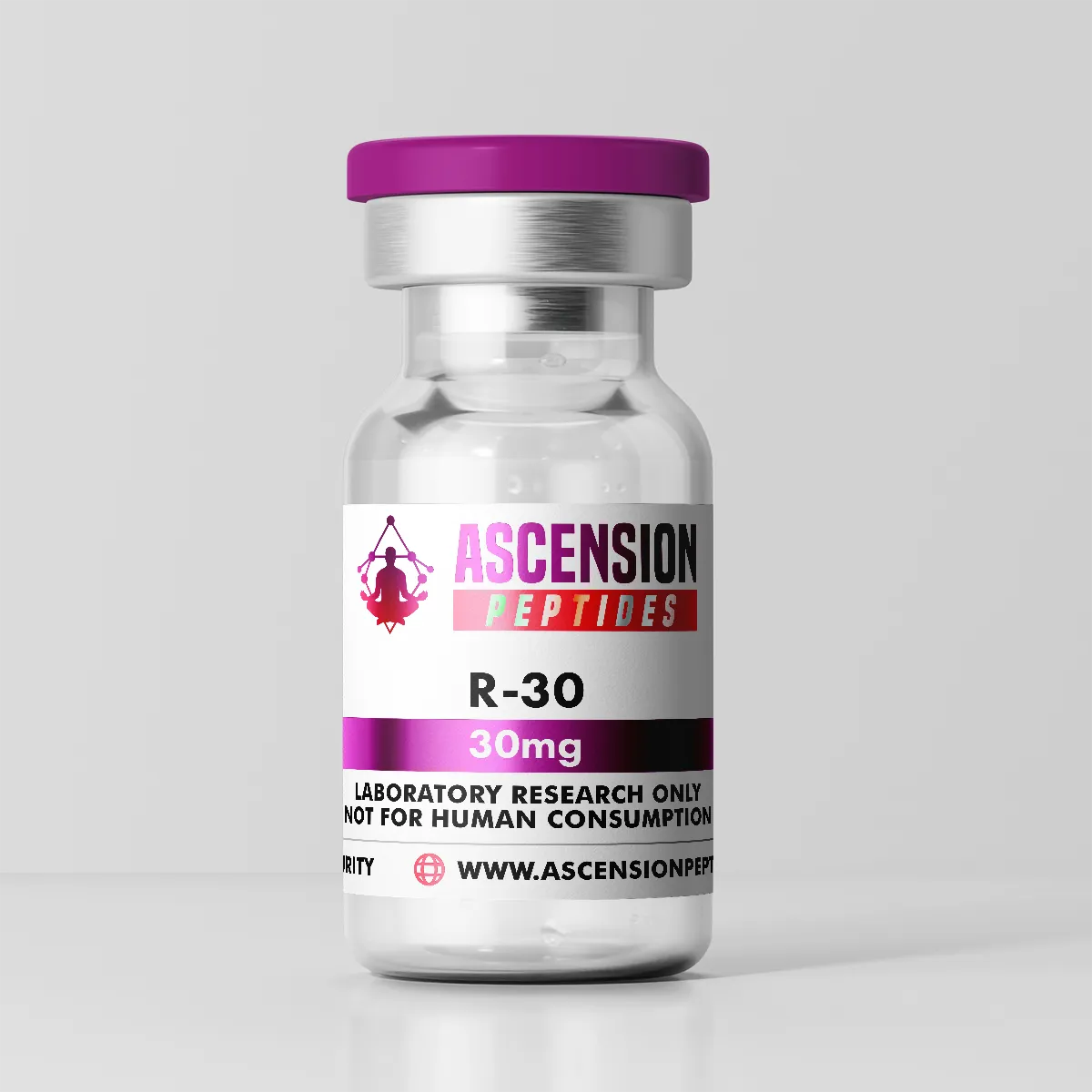
If you want retatrutide in your hands this week, this is the route. Ascension Peptides carries retatrutide under two product codes: R-10 (10mg vial) and R-30 (30mg vial). Both are in stock right now.
R-10 vs R-30: What's the Difference?
| Product | Amount | Price | Cost per mg | Best For |
|---|---|---|---|---|
| R-10 | 10mg | $120 | $12.00/mg | First-timers, testing tolerance |
| R-30 | 30mg | $200 | $6.67/mg | Best value, full protocol |
The math is pretty straightforward. R-30 gives you triple the product for less than double the price — $6.67 per mg vs $12 per mg with R-10. If you're planning to run a full dose escalation protocol (which you should — more on that below), the R-30 is significantly better value.
That said, if you've never used retatrutide before and just want to see how your body handles it, grabbing an R-10 first isn't a bad move. Ten milligrams gives you enough for several weeks at starting doses. You can always grab an R-30 once you know you tolerate it well.
What About Quality?
Ascension publishes third-party Certificates of Analysis for their products. This is non-negotiable when buying research peptides — if a vendor doesn't provide COA testing, walk away. Ascension's COAs verify purity and identity through HPLC and mass spectrometry analysis. You can request these directly on their site.
They're also a US-based company with domestic shipping, which means you're not waiting 3 weeks for something to clear customs from overseas. Orders typically arrive in 2–5 business days.
Pricing in Context
At $200 for 30mg, the R-30 works out to roughly $50–70 per month depending on your dose. Compare that to telehealth clinics charging $300–600/month for compounded versions (when they can even get them), and the value becomes obvious. More on the full cost comparison below.
Route 2: Clinical Trials — Free, But Hard to Get In
Eli Lilly's TRIUMPH clinical trial program is the largest retatrutide study system in the world. These are Phase 3 trials — the final stage before FDA approval — and they're running across multiple sites in the US and internationally.
Current TRIUMPH Trials
| Trial | Focus | Status (2026) | Estimated Completion |
|---|---|---|---|
| TRIUMPH-1 | Obesity (BMI ≥30) | Recruiting closed | Mid-2026 |
| TRIUMPH-2 | Type 2 Diabetes | Recruiting closed | 2026 |
| TRIUMPH-3 | Obesity + cardiovascular | Active | 2027 |
| TRIUMPH-4 | Obesity (Japan) | Active | 2026 |
| TRIUMPH-5 | MASH (liver disease) | Active | 2027 |
Here's the reality check: most of these trials have closed enrollment or are extremely selective. TRIUMPH-1 and TRIUMPH-2 — the two most relevant for general weight loss — stopped accepting new participants in 2025. TRIUMPH-3 is still going but requires documented cardiovascular risk factors on top of obesity (ClinicalTrials.gov, NCT06014958).
How to Check Eligibility
Search ClinicalTrials.gov
Go to clinicaltrials.gov and search "retatrutide" or "LY3437943". Filter by "Recruiting" status and your location.
Review Eligibility Criteria
Each trial lists exact requirements — BMI range, age, comorbidities, prior medication use. Read carefully. Most require BMI ≥30 (or ≥27 with comorbidity) and exclude people who've used GLP-1 drugs in the last 3 months.
Contact the Site
Each listing shows contact information for participating research sites. Call directly — don't just fill out a web form. Phone calls get processed faster.
Screening Visit
If you pass the initial phone screen, you'll be invited for blood work, physical exam, and detailed history review. This can take 2–4 weeks.
The Downsides of Clinical Trials
Even if you qualify and get in, there are real drawbacks:
- Placebo risk: You might get the placebo arm and not receive retatrutide at all. Most Phase 3 trials are randomized and double-blind.
- Fixed dosing: You can't choose your dose or adjust based on how you feel. The protocol dictates everything.
- Frequent visits: Monthly (sometimes biweekly) clinic visits, blood draws, body composition scans. Some trials require 20+ visits over a year.
- Location constraints: Trial sites are usually in major cities. If you don't live near one, this isn't practical.
- No guarantee of continued access: When the trial ends, so does your supply — unless Lilly offers an extension study.
Clinical trials are the right choice for people who want free access and don't mind the structure and uncertainty. For everyone else, it's not a realistic path in 2026.
Route 3: Telehealth and Online Clinics
A handful of telehealth platforms and anti-aging clinics have started offering retatrutide prescriptions in 2026. This is a newer development — and it comes with some caveats.
How It Works
You schedule a virtual consultation with a prescribing physician, typically through a platform that specializes in peptide therapy or weight management. If the doctor determines you're a candidate, they write a prescription that gets filled through a compounding pharmacy.
What to Expect
- Cost: $300–600 per month, depending on the clinic and dosage. This includes the consultation fee, the compound itself, and sometimes follow-up labs.
- Prescription required: Yes. A licensed physician must evaluate you and write the script.
- Supply consistency: Hit or miss. Compounding pharmacies face regulatory pressure (more on that in the next section), and some clinics have had supply interruptions.
- Quality: Varies widely. Some clinics work with high-quality 503B compounding facilities. Others... don't. Ask which pharmacy they use and whether they can provide testing documentation.
Is This Route Worth It?
Honestly? It depends on your priorities. If having a doctor's oversight is important to you — and it legitimately is for some people, especially those with existing health conditions — then telehealth is a reasonable option. But you're paying 3–6x what you'd spend through a research peptide vendor like Ascension for what may be the same compound from a less transparent supply chain.
The telehealth route makes the most sense for people who want medical supervision, have insurance that might cover part of the cost, or aren't comfortable self-administering research peptides.
Route 4: Compounding Pharmacies
This used to be one of the more popular routes for getting GLP-1 agonists — compounding pharmacies could make their own versions of tirzepatide and semaglutide when the branded versions faced shortages. But 2025 changed everything.
The FDA Crackdown
In late 2024 and throughout 2025, the FDA took aggressive action against compounding pharmacies producing GLP-1 receptor agonists. Several high-profile enforcement actions targeted pharmacies compounding tirzepatide after the FDA declared the shortage resolved. The agency's position is clear: once a branded drug is available in sufficient supply, compounding pharmacies lose their legal basis to produce copies.
Retatrutide sits in a weird gray area because it doesn't have FDA approval yet — so technically there's no "branded version" to protect. But the FDA has signaled it's watching the space closely, and most legitimate 503B compounding pharmacies are being cautious about producing unapproved compounds.
Current Availability
Some compounding pharmacies still offer retatrutide, but supply is inconsistent and getting harder to find. If you go this route:
- Expect to need a prescription from a licensed provider
- Prices range from $250–500 per month depending on dose and pharmacy
- Ask for third-party testing results — not all compounders test their finished products
- Be prepared for supply interruptions with little notice
The compounding pharmacy route is shrinking, not growing. I wouldn't build a long-term retatrutide protocol around it in 2026 given the regulatory trajectory.
Cost Comparison: All 4 Routes Side by Side
This is what it actually comes down to for most people. Here's every route compared on the metrics that matter:
| Route | Monthly Cost | Prescription? | Availability | Wait Time | Quality Assurance |
|---|---|---|---|---|---|
| Ascension Peptides | $50–70 | No | ✅ In stock now | 2–5 days | Third-party COA |
| Clinical Trials | Free | N/A | ⚠️ Most closed | 2–6 months | Pharmaceutical grade |
| Telehealth Clinics | $300–600 | Yes | ⚠️ Limited | 1–3 weeks | Varies by pharmacy |
| Compounding Pharmacy | $250–500 | Yes | ❌ Shrinking | 1–4 weeks | Varies widely |
The numbers tell the story. Ascension is the cheapest non-free option by a factor of 4–8x, with the shortest wait time and the most transparent quality testing. Clinical trials are free but practically inaccessible in 2026. Telehealth and compounding pharmacies work but at a significant premium.
How to Order from Ascension Peptides — Step by Step
If you've decided to go the Ascension route (and based on the comparison above, most people do), here's exactly how the ordering process works:
Choose Your Product
Go to Ascension Peptides — R-30 (30mg, $200) or R-10 (10mg, $120). For most people running a full protocol, R-30 is the better value.
Add to Cart and Check Out
Standard e-commerce checkout. You'll need bacteriostatic water for reconstitution if you don't already have it — Ascension sells that too.
Receive Your Order
US domestic shipping, typically 2–5 business days. Arrives in discreet packaging. Product ships lyophilized (freeze-dried powder) and needs to be reconstituted before use.
Reconstitute
Add bacteriostatic water to the vial using a syringe. We have a complete retatrutide reconstitution guide that walks through the exact steps with photos and dosing math.
Store Properly
Once reconstituted, store in the refrigerator (2–8°C). Unreconstituted vials can be stored at room temperature but refrigeration extends shelf life. Use reconstituted solution within 4–6 weeks.
R-10 vs R-30: Which Should You Buy?
This comes down to where you are in your retatrutide journey and simple math.
R-10 (10mg) — $120
Ten milligrams at a starting dose of 2mg/week gives you 5 weeks of supply. If you're titrating up slowly (2mg for 4 weeks, then 4mg), you'll get about 3–4 weeks total. This is enough to assess tolerance and see initial effects.
Best for: First-time users who want to test the waters before committing to a larger purchase.
R-30 (30mg) — $200
Thirty milligrams at maintenance doses of 8–12mg/week lasts roughly 3–4 weeks. At starting doses (2–4mg), it stretches to 8–15 weeks. And at $6.67 per mg (vs $12 per mg for R-10), the cost savings are massive over time.
Best for: Anyone planning to run a full dose escalation protocol. The R-30 is objectively better value and saves you from reordering every few weeks.
The Math
| Scenario | R-10 Cost | R-30 Cost | Savings with R-30 |
|---|---|---|---|
| 30mg total needed (full escalation) | $360 (3 × R-10) | $200 (1 × R-30) | $160 saved (44%) |
| 60mg total needed (extended protocol) | $720 (6 × R-10) | $400 (2 × R-30) | $320 saved (44%) |
If you're going to use more than 10mg total — and you almost certainly will if the initial response is good — start with the R-30.
How to Reconstitute Retatrutide
Retatrutide ships as a lyophilized (freeze-dried) powder that needs to be mixed with bacteriostatic water before injection. The process is simple but you need to get the math right.
Quick Reconstitution Overview
For detailed step-by-step instructions with photos and a dosing calculator, check our full retatrutide reconstitution guide. Here's the short version:
Clean Everything
Wipe the vial top and BAC water vial with alcohol swabs.
Add Bacteriostatic Water
For a 30mg vial: add 3mL of BAC water = 10mg/mL concentration. For a 10mg vial: add 1mL = 10mg/mL, or 2mL = 5mg/mL. Inject the water slowly down the side of the vial — never blast it directly onto the powder.
Swirl Gently
Roll the vial between your palms. Don't shake it — peptides are fragile and shaking can damage the molecular structure. The powder should dissolve within 1–2 minutes into a clear solution.
Store and Use
Refrigerate immediately. Draw your dose with an insulin syringe when ready.
Retatrutide Dosage: Quick Reference
Dose escalation is critical with retatrutide. Starting too high is the number one cause of unnecessary side effects — nausea, appetite suppression so extreme you can't eat, GI distress. Start low, go slow. For a complete protocol breakdown, see our retatrutide dosing guide and dosage chart.
| Phase | Weekly Dose | Duration | Purpose | Using R-30 (30mg vial) |
|---|---|---|---|---|
| Initiation | 2mg | Weeks 1–4 | Assess tolerance, minimize GI sides | 0.2mL per injection |
| Escalation 1 | 4mg | Weeks 5–8 | Increasing effect, appetite suppression kicks in | 0.4mL per injection |
| Escalation 2 | 8mg | Weeks 9–12 | Strong fat loss, noticeable body changes | 0.8mL per injection |
| Maintenance | 12mg | Week 13+ | Maximum dose from Phase 2 trials | 1.2mL per injection |
What Results to Expect — Month by Month
Based on clinical trial data and community reports, here's a realistic timeline of what happens on retatrutide. For visual examples, check our retatrutide before and after gallery.
Month 1 (2mg dose)
Appetite suppression starts around week 2–3 for most people. It's subtle at first — you just realize you forgot to eat lunch, or you push your plate away with food still on it. Weight loss is typically 2–4 lbs this month, mostly from reduced caloric intake. Some people notice nothing at 2mg and wonder if the product is real. It is. This dose is about tolerance building, not dramatic results.
Month 2 (4mg dose)
This is when things get noticeable. Appetite suppression becomes more pronounced. Food noise — that constant background hum of thinking about food — drops dramatically. Weight loss accelerates to 4–8 lbs this month. You might notice your face looking thinner, pants fitting looser. Energy often improves as you're carrying less weight and your metabolic markers start shifting.
Month 3 (8mg dose)
The body recomposition phase. At 8mg, the glucagon receptor activation is in full swing — this is where retatrutide's triple mechanism really differentiates from semaglutide and tirzepatide. Fat loss becomes more targeted. Many users report losing visceral fat (belly fat) preferentially at this dose. Weight loss: 6–12 lbs this month. Side effects may include mild nausea and reduced appetite to the point where you need to remind yourself to eat.
Months 4–6 (8–12mg maintenance)
Steady-state fat loss. By now, most people have lost 15–25% of their starting body weight if they've been consistent. The Phase 2 trial showed 24.2% average at 48 weeks on the 12mg dose — and the curve was still declining (Jastreboff et al., 2023). Metabolic bloodwork typically shows significant improvements in triglycerides, fasting glucose, and liver enzymes.
💡 Pro Tip
Track more than the scale. Take progress photos, measure waist circumference, and get bloodwork done at baseline and every 8–12 weeks. Retatrutide drives body recomposition — you might be losing fat while the scale barely moves if you're also adding or preserving lean mass.
Retatrutide vs Semaglutide vs Tirzepatide — Why People Switch
If you've been on Ozempic, Wegovy, Mounjaro, or Zepbound and hit a plateau — or you're choosing between them for the first time — here's how retatrutide stacks up.
| Compound | Receptors | Avg Weight Loss (trials) | Frequency | FDA Status | Access |
|---|---|---|---|---|---|
| Retatrutide | GLP-1 + GIP + Glucagon | 24.2% (48 wks) | Weekly | Phase 3 trials | Ascension R-30 |
| Semaglutide (Wegovy) | GLP-1 only | 15–17% (68 wks) | Weekly | FDA approved | Prescription |
| Tirzepatide (Zepbound) | GLP-1 + GIP | 20–22% (72 wks) | Weekly | FDA approved | Prescription |
The differences matter. Semaglutide works, but 15–17% weight loss over 68 weeks is roughly half of what retatrutide achieved in less time. Tirzepatide is closer — 20–22% is impressive — but retatrutide's glucagon component adds a dimension that neither of the others has.
That glucagon piece is important. Glucagon directly increases energy expenditure and promotes hepatic fat oxidation. In plain English: your body burns more calories at rest and preferentially targets liver and visceral fat. This is why the TRIUMPH-5 trial is specifically testing retatrutide for MASH (fatty liver disease) — the compound seems uniquely suited for metabolic syndrome (Harrison et al., 2024).
Why People Switch to Retatrutide
The most common reasons people move from semaglutide or tirzepatide to retatrutide:
Plateau Breaking
Weight loss stalled on semaglutide or tirzepatide? Retatrutide's third receptor (glucagon) can restart progress through a different metabolic pathway.
Greater Efficacy
24.2% vs 15–17% weight loss. For people with more weight to lose, retatrutide gets you to goal faster.
Metabolic Benefits
Stronger improvements in liver fat, triglycerides, and insulin sensitivity compared to single or dual agonists.
Cost
Branded Wegovy/Zepbound runs $1,000+/month without insurance. Retatrutide through Ascension is $50–70/month.
For a broader comparison of alternatives, see our Ozempic alternatives guide.
Is Retatrutide Legal?
Short answer: yes, you can legally purchase retatrutide in the United States.
Retatrutide is not a controlled substance. It's not a scheduled drug. It's not on any list of banned compounds for general sale. What it is: an investigational peptide that hasn't received FDA approval as a pharmaceutical drug.
Research peptide vendors like Ascension Peptides sell retatrutide labeled for "research use" — this is a standard designation for compounds that are available for purchase but not FDA-approved for human therapeutic use. It's the same framework that's existed for years across hundreds of research compounds.
Is it in a regulatory gray area? Somewhat. The compound is legal to purchase, possess, and sell. The gray area is specifically around the implied use — everyone knows why people buy it, but the legal framework operates on what's written, not what's implied. This has been the status quo for research peptides for over a decade and there's no indication of imminent changes for buyers.
Red Flags: Vendors to Avoid
Not every vendor selling "retatrutide" is actually selling retatrutide. The peptide market has quality issues, and knowing what to look for (and what to run from) can save you money and protect your health.
Walk Away If You See:
- No third-party COA: If a vendor can't or won't provide a Certificate of Analysis from an independent lab, don't buy. Period. In-house testing is meaningless — any vendor can make a PDF that says "99% purity."
- Prices that are too good: Retatrutide isn't cheap to synthesize. If someone's selling 30mg for $50, they're selling you something else — degraded peptide, a different compound entirely, or a severely underdosed vial.
- Overseas-only shipping: While there are legitimate international manufacturers, overseas shipping adds weeks, customs risk, and temperature exposure during transit that can degrade the peptide.
- No contact information: Legitimate vendors have customer service, a physical mailing address (or at least a verifiable business registration), and actually respond to inquiries.
- Crypto-only payment: Some legitimate vendors accept crypto, but if it's the ONLY payment method, that's a red flag. It typically means they can't get a merchant account — and there's usually a reason for that.
- Outrageous health claims: Any vendor claiming retatrutide "cures" anything or making guaranteed weight loss promises is operating unethically. Run.
- Pre-mixed/pre-loaded syringes: This introduces contamination risk and makes it impossible to verify what you're actually getting. Always buy lyophilized (powder) form.
What Good Vendors Look Like
For reference, here's what to expect from a reputable source. Using Ascension Peptides as an example:
- Third-party HPLC and mass spec testing with publicly available COAs
- US-based with domestic shipping
- Standard payment processing (credit card accepted)
- Responsive customer support
- Clearly labeled products with batch numbers
- No wild health claims — they sell research compounds, full stop
For more on vetting vendors, see our best peptide source guide for 2026.
When Will Retatrutide Be FDA-Approved?
This is the question everyone asks. And honestly, no one knows for certain — including Eli Lilly.
Here's what we do know: Phase 3 TRIUMPH trials are underway, with primary completion dates ranging from mid-2026 to 2027. After trials complete, Lilly needs to compile the data, submit a New Drug Application (NDA), and then the FDA takes 10–12 months to review.
Best case scenario: if trials wrap up on schedule and Lilly submits quickly, we might see approval in late 2027 or 2028. But pharmaceutical timelines slip constantly — unexpected safety signals, manufacturing delays, FDA requests for additional data.
And even after approval, actually getting it will be another challenge. Remember the semaglutide and tirzepatide shortages? Demand will massively outstrip supply for the first 6–12 months minimum. Insurance coverage will be patchy. Cash prices will likely be $800–1,500/month, in line with current GLP-1 drug pricing.
That's why the research peptide route exists. People who want retatrutide now — not in 2028, not when their insurance decides to cover it — can get it today through vendors like Ascension while the pharmaceutical machine slowly turns.
Retatrutide Cost Breakdown: What You'll Actually Spend
Let's get specific about what a full retatrutide protocol costs through each route, including all the hidden costs people forget about. For a deeper analysis, see our retatrutide cost and price guide.
Through Ascension Peptides (12-week protocol)
| Item | Cost | Notes |
|---|---|---|
| R-30 (30mg) | $200 | Covers weeks 1–8 at escalating doses |
| R-30 (second vial for weeks 9–12) | $200 | Needed for 8–12mg/week doses |
| Bacteriostatic water (2x) | ~$20 | $10 each, one per vial |
| Insulin syringes (box of 100) | ~$15 | Available at any pharmacy, no Rx needed |
| Alcohol swabs | ~$5 | Box of 100 |
| Total: 12 weeks | ~$440 | ~$37/week or ~$147/month |
Compare that to $300–600/month through telehealth or $1,000+/month for branded pharmaceuticals (once available). The Ascension route is roughly 75–85% cheaper than any alternative that actually exists right now.
Through Telehealth (12-week estimate)
$900–1,800 total. Initial consultation ($150–300) plus monthly compound costs ($250–500). Labs may be additional ($100–200 for baseline panels).
Future FDA-Approved (estimated)
Based on Wegovy/Zepbound pricing: $800–1,500/month without insurance. With insurance: $25–75 copay IF your plan covers it and IF you meet clinical criteria (usually BMI ≥30 or ≥27 with comorbidity).
Frequently Asked Questions
Getting retatrutide in 2026 isn't as complicated as it might seem — it's just not the traditional pharmacy route most people expect. The FDA pipeline moves slowly, clinical trials are mostly closed, and compounding pharmacies are under pressure. But the research peptide market has filled the gap.
Ascension Peptides has both the R-10 ($120) and R-30 ($200) in stock right now, with third-party testing and domestic shipping. For most people looking to start retatrutide today, it's the most practical, affordable, and transparent option available.
Whatever route you choose — do your homework, start with a low dose, track your progress with bloodwork and measurements, and be patient. Retatrutide's results speak for themselves, but they take time to fully develop. The Phase 2 data showed continuous improvement through 48 weeks. This isn't a sprint. It's a process.
More reading to help you get started:
- Retatrutide Dosing Guide — complete dose escalation protocols
- Retatrutide Dosage Chart — visual reference for all dose levels
- How to Reconstitute Retatrutide — step-by-step with photos
- Retatrutide Side Effects — what to expect and how to manage
- Retatrutide Before and After — real community transformations
- Where to Buy Retatrutide — vendor comparison and reviews
- TRIUMPH Trial Results — the clinical data explained