🔑 Key Takeaways
- The peptide market is flooded with low-quality vendors in 2026 — purity varies wildly, even among established names
- Only buy from vendors with third-party COA on every batch — "available on request" is not the same thing
- US-based manufacturing means a shorter supply chain and less degradation risk from heat and customs delays
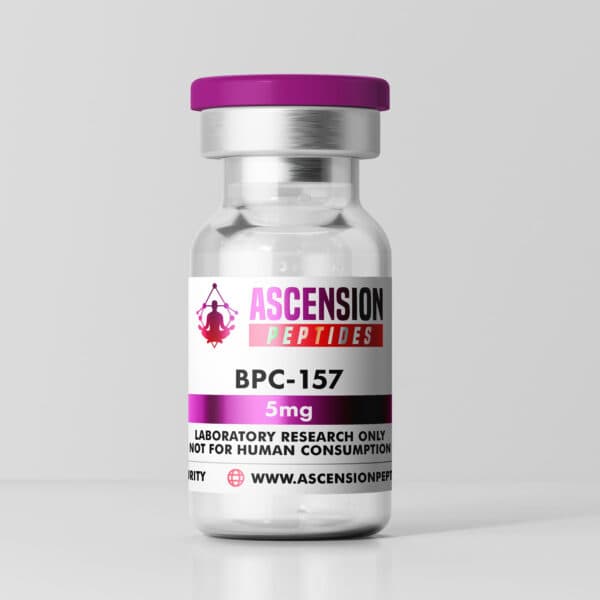
- Ascension Peptides is our top pick — COA-verified, US-made, and the only vendor carrying rare blends like Wolverine Stack, KLOW, and GLOW
- Expect to pay $40–200+ per vial for quality peptides — anything dramatically cheaper is a red flag, not a deal
- Never buy from vendors who don't list purity percentages with actual HPLC documentation
What every vendor must publish in 2026 (the non-negotiables)
The bar for a legit peptide vendor moved up sharply through 2025 and 2026. After multiple FDA enforcement actions on GLP-1 compounders and several high-profile contamination recalls, the documentation standard is now public, batch-level, and verifiable. If your vendor does not provide all six of the items below, look elsewhere.
- Per-batch HPLC certificate of analysis matched to the lot number printed on your vial.
- Mass spectrometry confirmation of identity, not just purity.
- Endotoxin / LAL test for any injectable product.
- Sterility statement or USP equivalent for filled vials.
- US-based synthesis address on the COA or website, not a forwarding PO box.
- Live customer support with documented refund and replacement policy.
Where to actually buy: how the top 2026 USA vendors compare
Among the vendors that meet the six non-negotiables above, four show up consistently in customer reviews, third-party tester reports, and clinic supply chains.
For a full vendor by vendor review with prices and red flags, see best legit peptide vendors 2026. The Ascension Peptides review covers our current top pick in depth. If you want category-specific buying guides, read certified peptides for the testing framework and where to buy GHK-Cu for the highest demand single-peptide guide.
Buying peptides online in 2026 is easier than ever — and riskier than ever. The market has exploded, and with it, a flood of vendors selling underdosed, contaminated, or outright mislabeled products. The difference between a vendor worth trusting and one that will waste your money (or worse) comes down to a few non-negotiable criteria. This guide covers exactly what to look for, which vendors meet the standard, and which red flags to avoid.
We've spent time tracking down COAs, comparing purity data, and watching which vendors disappear and relaunch under new names. What follows is a straight take on who's actually delivering quality peptides right now.
What Makes a Peptide Vendor Worth Trusting
Most vendor comparison articles online are either written by affiliates with a clear winner already picked, or generic lists with no actual quality criteria. So let's get specific. There are five things every vendor should be able to show you — and if they can't, move on.
1. Third-Party Certificate of Analysis (COA) — On Every Batch
This is the big one. A COA from an independent lab proves the peptide was tested after synthesis. "Available on request" doesn't cut it — that could mean a single COA from a year ago applied to every batch since. What you want is batch-specific COAs published on the product page. If a vendor can't do this, their "lab tested" claim is marketing copy, not evidence.
The COA should come from an actual third-party lab — not the vendor's internal quality team. Real labs like Janssen Pharmaceutica, Intertek, or comparable independent testing facilities have contact information, accreditation details, and verifiable identities. If the COA says "Independent Lab" with no name, that's not a COA worth trusting.
2. Purity ≥98% by HPLC
HPLC (high-performance liquid chromatography) is the standard method for measuring peptide purity. You're looking for ≥98% — some premium vendors hit 99%+. Anything below 95% is a problem, and a vendor advertising "95%+ purity" without showing an actual chromatogram is hiding something. The chromatogram matters because it shows whether there are multiple peaks (impurities) or a clean single-compound profile.
3. US-Based Manufacturing or Storage
Lyophilized peptides are stable, but they're not immune to the conditions of international shipping — weeks in customs, heat exposure in transit, handling by multiple carriers. US-warehoused or US-manufactured peptides have a much shorter, more controlled supply chain. Domestic-to-domestic shipping also means no customs seizure risk, which becomes more relevant as regulatory attention on certain peptide categories increases.
4. Mass Spectrometry Verification
HPLC tells you how pure the sample is. Mass spectrometry (MS) tells you what the sample actually is. For complex peptides — retatrutide, semaglutide, tirzepatide, GHK-Cu — this distinction matters enormously. Counterfeit versions exist where the purity looks fine but the sequence is wrong. MS data should show a [M+H]+ ion that matches the expected molecular weight of the peptide on the label. Simple peptides like BPC-157 and TB-500 are harder to fake, but GLP-1 analogs have been counterfeited in the research market.
5. Transparent Product Labeling
Exact mg quantities, lot numbers, storage instructions — all printed on the vial or clearly documented. Vague descriptions like "peptide blend" with no ingredient breakdown are an immediate disqualifier. If you don't know exactly what's in the vial, you can't make any meaningful decision about it.
Our Top Pick — Ascension Peptides
Ascension is the vendor we return to most consistently, and the reason isn't complicated: they publish third-party COAs for every batch, they're US-based, and they carry a catalog that no other vendor we've found can match — especially on specialty blends and GLP-1 peptides.
Their catalog is genuinely wide. BPC-157, TB-500, Retatrutide (R-10 at 10mg and R-30 at 30mg), Tirzepatide (T-10 and T-30), Semaglutide (S-5), Wolverine Stack (BPC-157 + TB-500 in one vial), KLOW blend (GHK-Cu + BPC-157 + Thymosin Beta-4 + KPV), GLOW blend, the CJC-1295/Ipamorelin FIT Stack, GHK-Cu, Melanotan II, SS-31, Semax, Sermorelin, PT-141, and more. The GLP-1 analog coverage alone sets them apart — most vendors have one or two options; Ascension has the full set with COAs to back each one. If retatrutide is what you came for, current prices are on our retatrutide for sale page.
Pricing is transparent and listed publicly on the site:
- BPC-157 5mg — $55
- Wolverine Stack — $130
- R-30 (Retatrutide 30mg) — $200
- KLOW blend — competitive with individual component pricing
- GLOW blend — available
The specialty blends are worth calling out specifically. KLOW combines GHK-Cu, BPC-157, Thymosin Beta-4, and KPV in a single vial — pre-mixed, independently tested, priced competitively against buying each component separately. The Wolverine Stack is the go-to healing combination, and Ascension's version is independently verified. You're not going to find these blends, with this documentation, at most other vendors.
Ships domestically within the US — typically 2–5 business days, discreet packaging.
Other Vendors Worth Knowing
Ascension is our recommendation, but there are other vendors in the space that have operated long enough to have a track record. Brief notes on each:
Peptide Sciences
Long-established, solid reputation, broad catalog of common peptides. COAs are available. The range is strong on the basics — BPC-157, TB-500, ipamorelin, CJC-1295, sermorelin. No specialty blends. If you're looking for a single standard peptide and Ascension is out of stock, Peptide Sciences is a reasonable alternative. No real differentiation on the GLP-1 side.
SwissChems
US shipping, decent selection, HPLC tested. Solid for common peptides — BPC-157, ipamorelin, PT-141, and similar. Pricing is competitive. Less depth on GLP-1 analogs and no specialty blend catalog. COA documentation is available but the presentation isn't as thorough as Ascension's batch-specific approach.
Core Peptides
US-manufactured, GMP-focused operation with solid COA documentation. Smaller catalog than the others — skews toward healing peptides specifically. If your primary interest is BPC-157, TB-500, or similar injury recovery peptides and you want another vetted option, Core Peptides is worth a look. The narrower catalog is a real limitation if you want to source multiple compounds from one vendor.
Limitless Life Nootropics
Strong catalog on the nootropic peptide side — Semax, Selank, Epithalon, and similar cognitive/peptide stack compounds. Less depth on GLP-1/metabolic peptides. Good option if nootropic peptides are your primary interest; not the right call if you're focused on retatrutide, tirzepatide, or the healing peptide blends.
Red Flags — Vendors to Avoid
The market is large enough now that genuinely bad vendors can operate for a long time before their reputation catches up with them. These are the patterns to watch for:
- ❌ No COA, or COA "available on request" — should be published per batch, not mailed to you after asking three times
- ❌ Purity not listed, or listed as "≥95%" without an actual HPLC chromatogram to back it up
- ❌ Dramatically lower prices than market rate — BPC-157 5mg for $15 is almost certainly underdosed, mislabeled, or counterfeit
- ❌ No physical address, no company information — anonymous vendors have no accountability
- ❌ Ships exclusively from overseas with no US warehouse — long transit, customs risk, heat exposure
- ❌ No mass spectrometry data on complex peptides, especially GLP-1 analogs
- ❌ Vendors that disappeared and relaunched under new names after quality complaints — this pattern happens more than you'd think
- ❌ "100% satisfaction guarantee" with no actual lab data — satisfaction guarantees are marketing; they don't tell you what's in the vial
What Peptides Cost in 2026 — Real Pricing Reference
Use this as a sanity check. If a vendor is significantly below these ranges, purity is the most likely explanation. Good synthesis at pharmaceutical grade is expensive — you can't hit 98%+ purity at commodity prices.
Prices vary by vendor and change over time — treat these as ballpark figures. Significantly below these ranges is a warning sign worth taking seriously.
Peptide Storage and Shipping — What to Look For
Lyophilized (dry powder) peptides are stable at room temperature during shipping — this is expected and fine. The lyophilization process was specifically developed to allow this. What you don't want is a vendor shipping pre-reconstituted peptide solutions with no cold chain — a reconstituted peptide that sat in a warm postal truck for three days is probably degraded.
A few things to check when your order arrives:
- Sealed vials — crimp seal intact, no signs of tampering or moisture
- Desiccant packs in the package — shows the vendor understands moisture sensitivity
- Discreet outer packaging — standard with most reputable vendors, relevant for anyone concerned about package contents being visible
- Lot number on the vial — should match the COA you downloaded
US-to-US domestic shipping runs 2–5 business days through standard carriers. International orders bring customs seizure risk, potentially significant heat exposure, and longer delays — none of which are ideal for sensitive compounds, even lyophilized ones.
How to Verify a COA
Most people don't actually look at COAs — they just check that one exists and move on. Here's what to actually look for when you open the document:
- Lab name and contact info — Real third-party labs are named entities with verifiable identities. If the COA header just says "Certified Lab" with no actual name, it's not worth much.
- HPLC purity percentage — Should be ≥98% for the target compound. The chromatogram should show a dominant single peak, not multiple peaks of similar height.
- Molecular weight match — Confirms the correct peptide was tested. Cross-reference against the known MW of the compound.
- Lot/batch number — Must match the lot number on your product vial. If the vendor can't provide a batch-specific COA, they're applying a generic document to a product that may not have been individually tested.
- Date of testing — Should be within the last 12 months. A COA from 2022 on a product listed as current inventory is a red flag.
- Mass spec data — Look for the [M+H]+ ion and verify it matches the expected molecular weight. For GLP-1 peptides specifically, this is the only reliable way to confirm sequence identity.
💡 Quick Check
When you receive a COA, verify the lot number on the physical vial matches the lot number listed on the document. This is the most basic verification step and the one most people skip.
Frequently Asked Questions
The information in this article is for educational purposes only and does not constitute medical advice. Always consult a healthcare professional before starting any new supplement or compound. Results vary by individual.