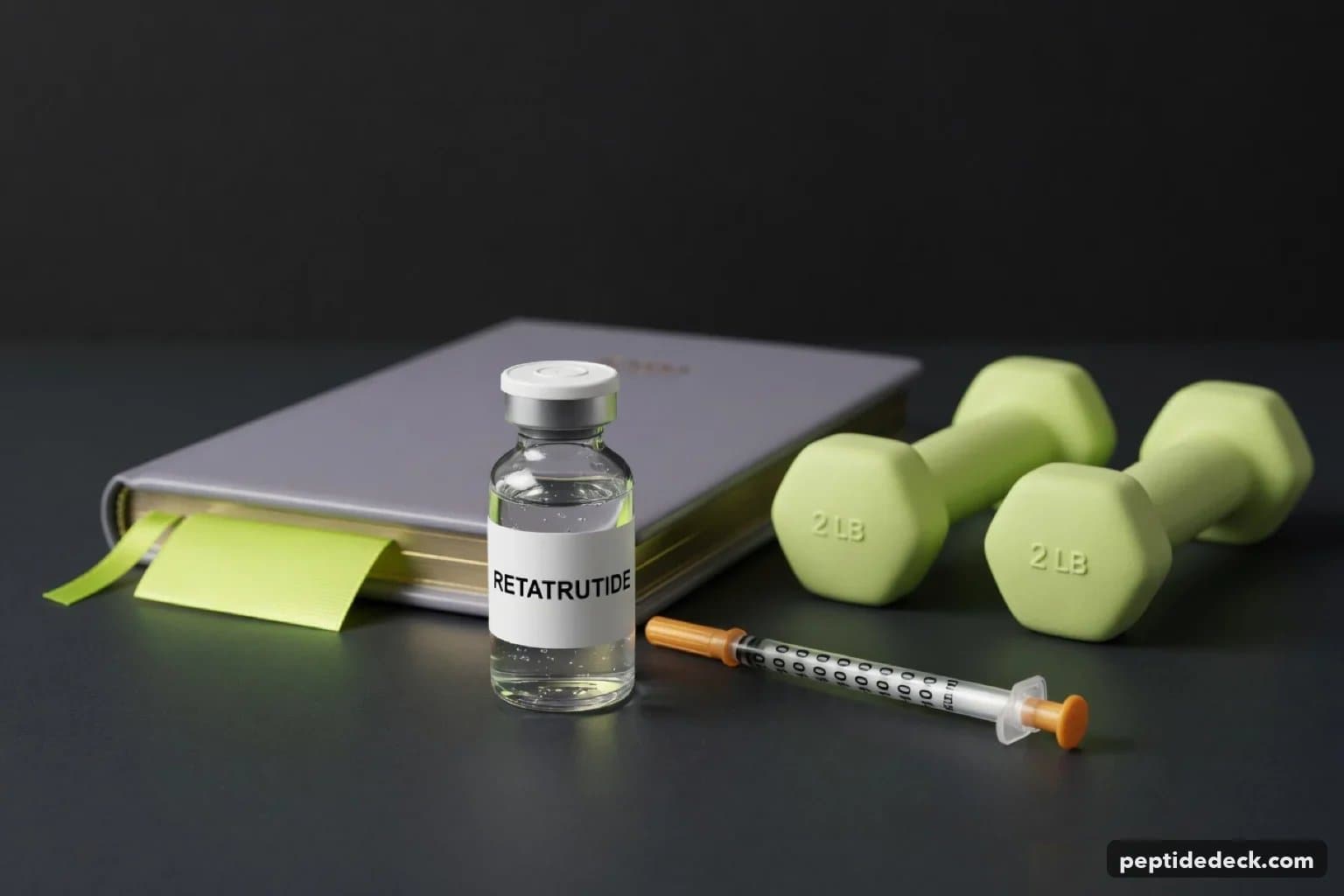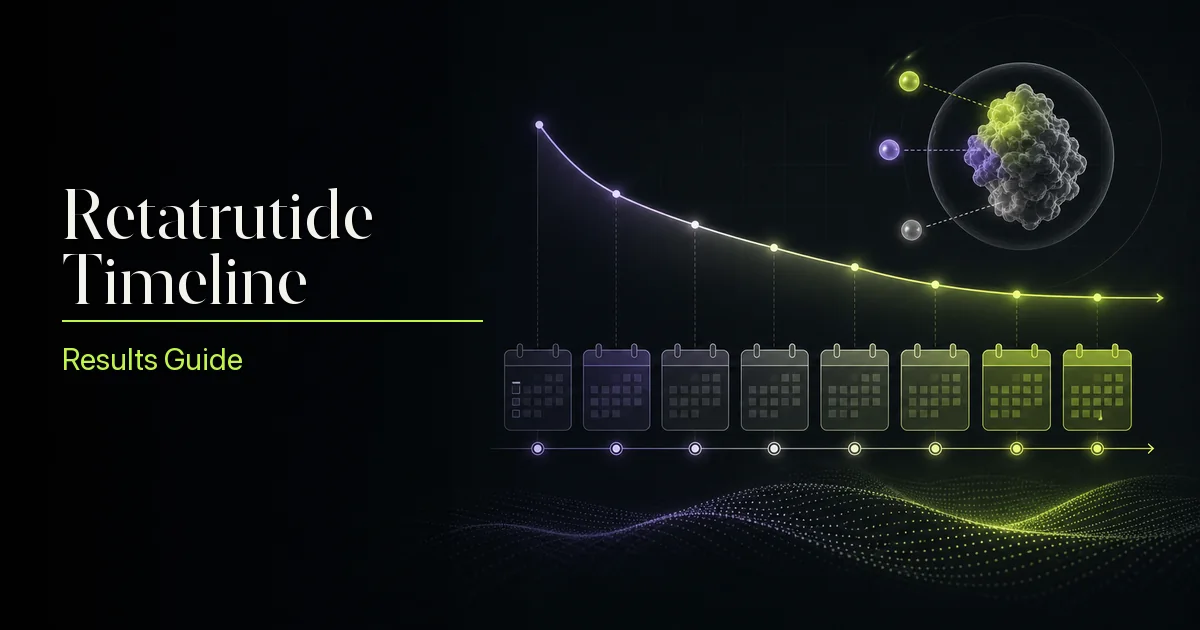
Most people notice their appetite changing within the first 1–2 weeks on retatrutide. Visible weight loss typically kicks in around weeks 4–8. By weeks 12–16, you're likely looking at 10%+ total body weight loss — and results keep building all the way to week 48. Here's the full breakdown of what to expect, and when.
Key Takeaways
- First noticeable effect: Appetite drops within days 3–7
- Visible weight loss: Weeks 4–8
- Significant results (10%+): Weeks 12–16
- Peak results: Weeks 24–48
- Most common early side effect: Nausea in weeks 1–3, usually fades
- Dosing schedule: Once weekly injection (not daily)

The Short Answer: When Does Retatrutide Start Working?
Retatrutide works faster than most GLP-1 drugs because it hits three receptors at once — GLP-1, GIP, and glucagon. That triple-agonist mechanism means appetite suppression, insulin improvement, and fat burning are all happening simultaneously from week one. The timeline below tells you exactly what that looks like in your body.
Week-by-Week Retatrutide Timeline
Days 1–7: The First Week
Week one is where the mechanism starts working, usually before the scale moves — some people notice food losing its appeal as early as day three. That said, some people notice subtle shifts as early as day 3–5:
- Food may feel less appealing, or you may feel full faster than usual
- Some people experience mild nausea — especially if starting above 2mg
- The scale won't move much yet — your body is adapting, not transforming
- The GLP-1 receptor is beginning to slow gastric emptying, which is why that early fullness feeling kicks in
If you feel nothing in week one, that's completely normal. Receptor activation takes time to build up meaningful plasma concentrations.
Weeks 2–4: Appetite Suppression Gets Real
This is when most people have their first "wait, I'm just not that hungry" moment. Around week 2, appetite suppression becomes consistent rather than occasional:
- You start eating less without consciously trying to
- Cravings for high-calorie foods begin to fade
- Some people drop 1–3 lbs in this window — early losses are often partly water weight
- If you're on a dose escalation protocol, you're probably still at your starting dose (e.g., 2mg)
- GI side effects like nausea and bloating typically peak in weeks 2–3, then start easing off as your body adjusts
Weeks 4–8: First Visible Results
Weeks 4–8 are when things get real. This is when most people start seeing physical changes — and when the people around them start noticing too.
- Phase 2 trial data: the 4mg group had lost ~7% body weight by week 8. The 12mg group was at ~10%.
- Clothes start fitting differently — looser around the waist first
- Energy levels may improve as glucagon receptor activity starts boosting fat oxidation
- Your body is now burning stored fat more efficiently, not just eating less
If you started at 2mg and have been escalating, you're likely hitting 4–6mg around this point — which is where most people feel the medication working clearly.
Weeks 8–16: The Peak Rate of Change
This is typically the fastest stretch of fat loss. Your dose is higher, your body is fully adapted to the medication, and all three receptor pathways are firing together:
- The 12mg group in Phase 2 trials was at ~17.5% total body weight loss by week 24
- Fat mass drops faster than lean mass — this is one of retatrutide's advantages over single-agonist options
- Fasting blood sugar and insulin markers typically improve noticeably in this window
- Many people report this as the phase where their results feel "dramatic" week to week
Weeks 16–48: Sustained Loss and Approaching Your New Set Point
After week 16, the rate of loss slows — but don't mistake slower for stopped. This is normal biology. Your body is adjusting to a new metabolic set point, not giving up.
- By week 24: the 12mg group averaged ~17–18% total loss, the 8mg group ~17%
- By week 48: the 12mg group averaged ~24% total body weight loss in Phase 2 data
- Some people in the highest dose group exceeded 30% by week 48
- Importantly: no plateau was hit during the 48-week trial — weight loss continued all the way to the end
Why Retatrutide Works Faster Than Ozempic or Mounjaro
The answer is in the mechanism. Most GLP-1 drugs work on one or two receptors. Retatrutide hits three — and that third one (glucagon) is what makes the difference in speed and depth of results.
- Ozempic (semaglutide) = GLP-1 only → mainly cuts appetite by slowing gastric emptying
- Mounjaro/Zepbound (tirzepatide) = GLP-1 + GIP → cuts appetite and improves insulin sensitivity
- Retatrutide = GLP-1 + GIP + Glucagon → cuts appetite, improves insulin, AND increases thermogenesis and fat oxidation
That glucagon component is the secret weapon. It tells your body to burn more energy even at rest — which is why retatrutide produces faster early results and greater long-term losses than either of the others.
What Affects How Fast Retatrutide Works For You
Everyone's timeline is slightly different. These are the main variables that determine whether you're seeing results at week 4 or week 8:
- Your starting dose: Lower starting doses (1–2mg) mean slower early results, but fewer side effects. Most people escalate to 4–8mg over 4–8 weeks — that's when results really accelerate.
- How consistent you are: Retatrutide is once weekly. Miss a dose or inject late and you break the steady-state plasma concentration that drives results. Consistency matters more than most people realize.
- What you eat: The appetite suppression is powerful, but eating 3,000 calories of processed food will slow things. The drug works with you — not for you. You don't need to be perfect, but you do need to cooperate.
- Your baseline metabolism: People with higher insulin resistance or higher starting body weight often see faster early results in absolute terms. Your body has more to respond to.
- Sleep and stress: Poor sleep and chronic stress raise cortisol, which actively counteracts fat loss. This isn't unique to retatrutide — it's true of any metabolic approach. Fix your sleep if you want to maximize results.
What to Do If You're Not Feeling Anything Yet
Not everyone feels strong effects in the first few weeks — and that's okay. Here's how to troubleshoot:
- Weeks 1–2: Completely normal to feel nothing. Give it time. The receptor activation builds gradually.
- At week 4 with zero appetite change: You likely need a dose increase. Most people need 4–6mg to feel clear appetite suppression. If you're still at 2mg, talk to your provider about escalating.
- Check your reconstitution: A miscalculated concentration means you may be significantly underdosing without realizing it. See the retatrutide reconstitution guide to double-check your math.
- Check your injection technique: Subcutaneous only — pinch the skin and inject at 45°. Rotate sites each week (abdomen, thigh, upper arm). Intramuscular injection changes absorption significantly.
- At week 8 with no results at 4mg+: Talk to your provider about escalating to 8mg. Some people are slower responders and need a higher dose to hit meaningful receptor activation.
Tracking Your Progress: What to Measure and When
The scale alone will lie to you — especially in the first month. Here's how to actually track what retatrutide is doing to your body:
- Weekly weight: Same time, same conditions — morning, after the bathroom, before eating. Weigh once per week, not daily. Retatrutide causes water weight fluctuations in the first 4 weeks that will mess with your head if you weigh every day.
- Monthly measurements: Waist, hips, chest. The tape measure often shows changes before the scale does — especially if you're building any muscle alongside the fat loss.
- Monthly photos: Front and side, same clothes, same lighting. Photos are the most honest record you have. Take them even when you don't want to.
- Energy and hunger levels: Subjective, but important early signals. If your hunger has dropped and your energy has improved, the medication is working — even if the scale hasn't moved much yet.
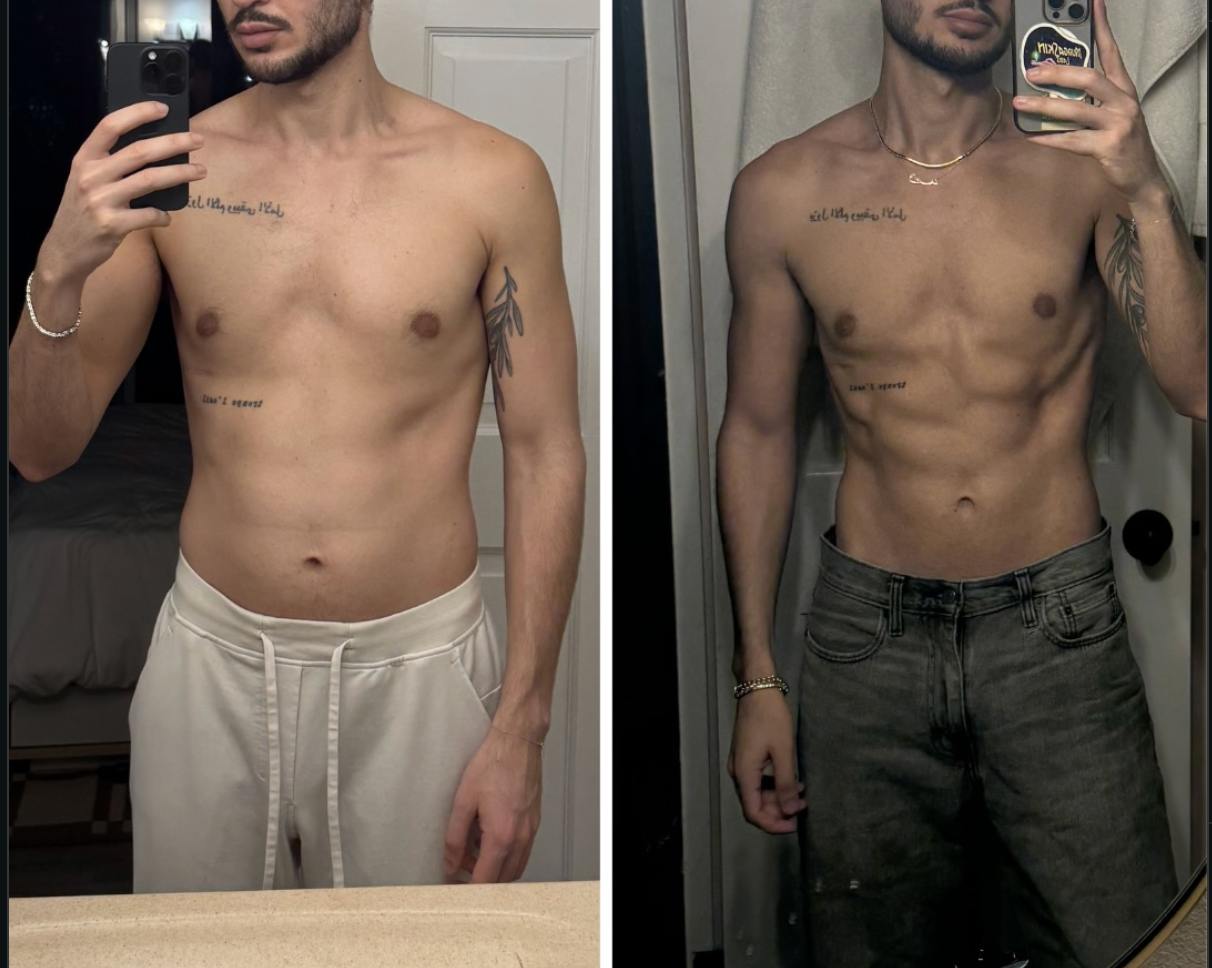
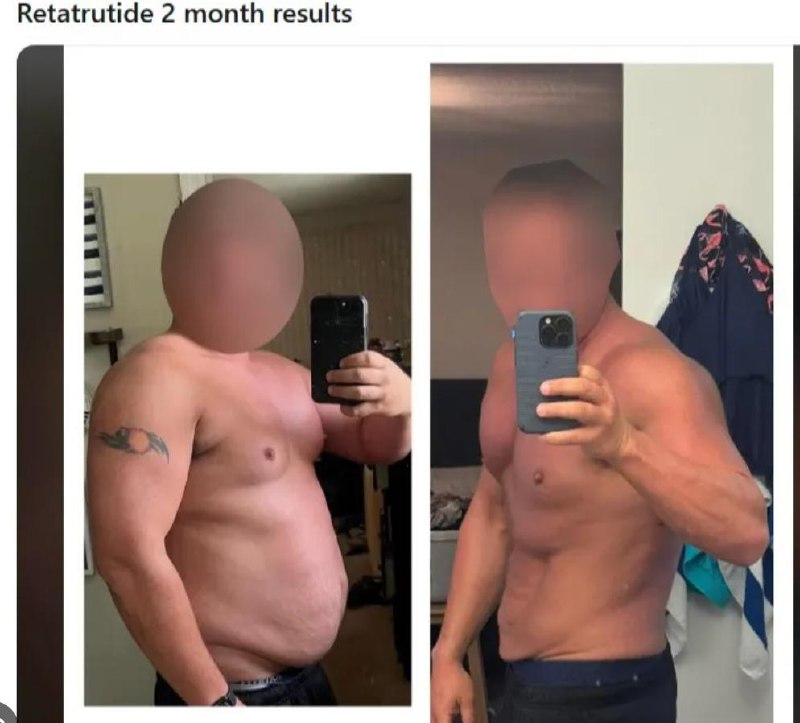
Want to see what real results look like at each stage? Check the retatrutide before and after gallery for community photos organized by week.
The Retatrutide Dosing Timeline That Gets Results
Your dose directly determines how fast and how far your results go. Most protocols work like this:
- Start at 1–2mg weekly for the first 4 weeks
- Escalate by 1–2mg every 4 weeks as tolerated
- Most people land at 4–8mg for their maintenance dose
- 12mg is the highest dose studied in Phase 2 — strongest results, but more GI side effects
Higher doses equal faster and greater results, but GI tolerance is the limiting factor. Going too fast causes nausea that makes people quit — so slow and steady escalation is the right play.
For the full titration schedule: retatrutide dosing guide | dosage chart
Ascension Peptides carries retatrutide as R-10 (10mg · $100) and R-30 (30mg · $250) — use code PEPTIDEDECK for 50% off ($50 / $125).
Frequently Asked Questions
The information in this article is for educational purposes only and does not constitute medical advice. Always consult a healthcare professional before starting any new supplement or compound. Results vary by individual.