
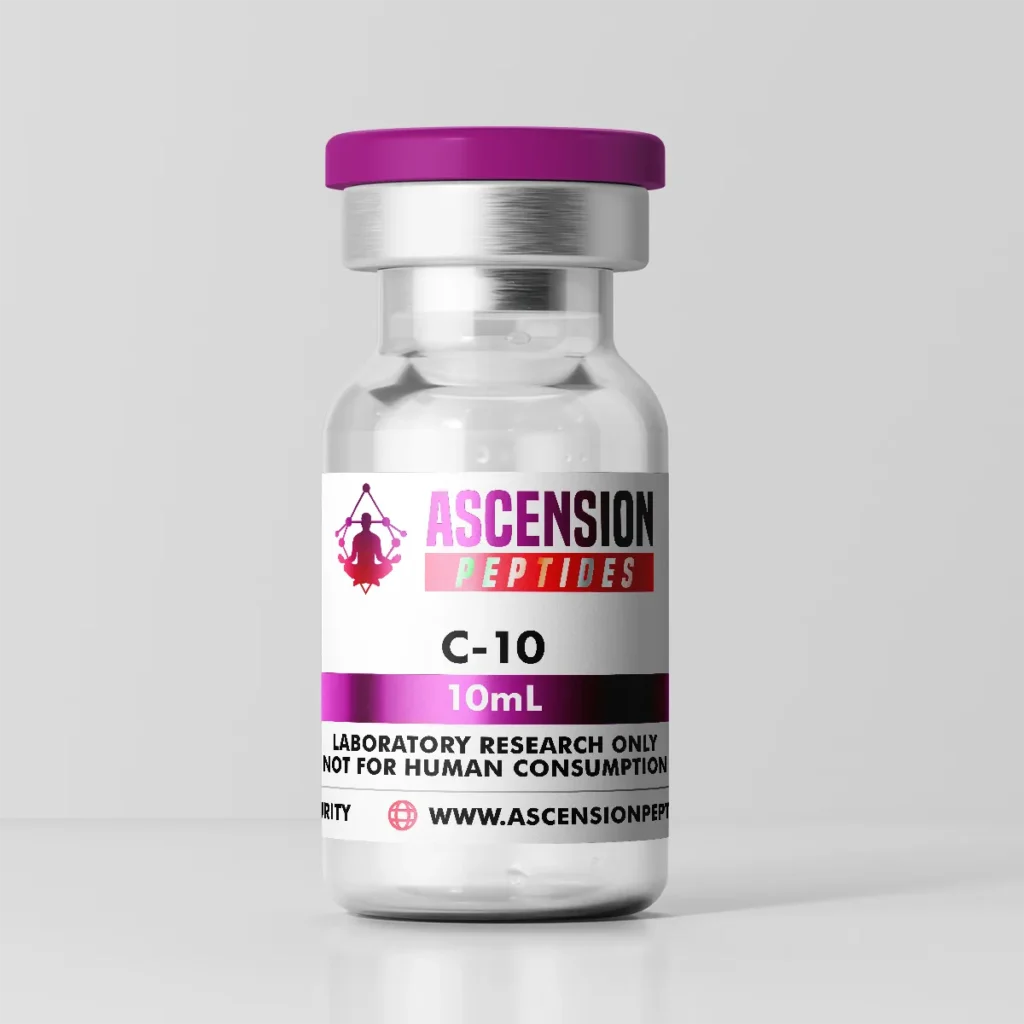
Tirzepatide plus cagrilintide is the popular GLP-1 stack with no human trial behind it. Tirzepatide, the dual GIP and GLP-1 agonist approved as Zepbound, has a full FDA label and a 20.9 percent phase 3 result. Cagrilintide, a once-weekly amylin analog, has phase 2 data of its own and a phase 3 record as half of CagriSema. The two together have been tested in one place: a 12-day rat study presented as a conference abstract. Every dose and projected result circulating for the human version is convention invented by protocol writers, not a finding.
🔑 Key Takeaways
- No trial has administered tirzepatide with cagrilintide. A ClinicalTrials.gov search returns 42 cagrilintide studies; the only three naming tirzepatide use it as a comparator against CagriSema.[6]
- The sole direct evidence is a 12-day rat abstract: at 3 nmol/kg each, the combination gave roughly 11 percent weight loss versus 7.22 percent for cagrilintide and 2.53 percent for tirzepatide.[10]
- Amylin plus incretin is additive but strongly sub-additive. In REDEFINE 1, semaglutide alone gave 14.9 percent and cagrilintide alone 11.5 percent, yet the combination gave 20.4 percent.[3]
- In REDEFINE 4, CagriSema produced 23.0 percent against 25.5 percent for tirzepatide 15 mg and missed non-inferiority.[4]
- Nausea, vomiting, and diarrhoea peak during dose escalation and fall afterward, so raising two appetite compounds in the same weeks stacks two peaks together.[3][5]
What the Tirzepatide and Cagrilintide Stack Actually Is
The stack means two separate once-weekly compounds run side by side, never co-formulated. The first is tirzepatide, a dual GIP and GLP-1 receptor agonist approved for chronic weight management with a defined titration schedule and a 15 mg ceiling.[5] The second is cagrilintide, a long-acting analog of amylin, the hormone co-secreted with insulin that slows gastric emptying and signals fullness through hindbrain circuits largely separate from incretin signalling.[2]
Cagrilintide is not selective: it carries meaningful calcitonin receptor activity alongside amylin activity, unlike Lilly's eloralintide, which is selective for AMY1R by roughly 12-fold over the calcitonin receptor and induced significantly less conditioned taste avoidance in lean rats.[9] That promiscuity is a reason not to assume its tolerability transfers between incretin backbones.
The Honest Answer First: Zero Trials Have Tested This Pairing
Querying ClinicalTrials.gov for cagrilintide as an intervention returns 42 studies, and none administers it together with tirzepatide. The three records containing both molecule names (NCT06131437, NCT06221969, NCT06534411) are REDEFINE trials in which CagriSema is tested against tirzepatide.[6] One widely circulated dosing page claims a large-scale cagrilintide-plus-tirzepatide phase 3 trial is ongoing. No such trial exists.
Why Anyone Pairs a Dual Agonist With an Amylin Analog
The rationale is mechanistic layering, not dose escalation: incretin agonists act through GLP-1 and GIP receptors, amylin analogs through amylin receptors in the area postrema and surrounding hindbrain. CagriSema showed in phase 3 that driving both beats maxing out one. What is unknown is the size of that gain with tirzepatide as the incretin half, and whether the gut tolerates it.
What Each Compound Did in Its Own Trials
Tirzepatide alone
SURMOUNT-1 randomised 2,539 adults for 72 weeks. Mean weight change was 15.0 percent at 5 mg, 19.5 at 10 mg, and 20.9 at 15 mg, against 3.1 percent for placebo. Discontinuation for adverse events ran 4.3, 7.1, and 6.2 percent versus 2.6 on placebo, and the dominant adverse events were gastrointestinal, mild to moderate, and concentrated during escalation.[1] In SURMOUNT-5, tirzepatide gave 20.2 percent versus 13.7 for semaglutide, with GI events causing discontinuation in 2.7 versus 5.6 percent.[11] It is the stronger backbone and the better tolerated one, which is why the extrapolation is tempting.
Cagrilintide alone
Lau and colleagues ran the dose-finding trial in 706 participants over 26 weeks, testing 0.3, 0.6, 1.2, 2.4, and 4.5 mg weekly against placebo and liraglutide 3.0 mg. Weight reductions spanned 6.0 to 10.8 percent versus 3.0 percent on placebo, with gastrointestinal disorders and administration-site reactions most frequent.[2] That is the entire body of standalone human efficacy evidence for cagrilintide, and it is phase 2.
The Closest Real Evidence: CagriSema, REDEFINE 4, and One Rat Study
REDEFINE 1 enrolled 3,417 adults for 68 weeks in a 21:3:3:7 randomisation, and cagrilintide 2.4 mg plus semaglutide 2.4 mg produced 20.4 percent weight loss on the treatment-policy estimand.[3] Our CagriSema guide covers that approved-track product, its FDA filing, and pricing.
REDEFINE 4 bears most directly on a tirzepatide backbone. In an open-label phase 3 of 809 participants over 84 weeks, CagriSema gave 23.0 percent against 25.5 percent for tirzepatide 15 mg on the efficacy estimand (20.2 versus 23.6 percent on the treatment-regimen estimand) and failed non-inferiority.[4] That does not prove a tirzepatide stack would disappoint, but it removes the assumption that adding cagrilintide automatically produces a bigger number.
The only study of this exact pairing is Valdecantos and colleagues, ADA 2024 abstract 300-OR. Diet-induced obese male Sprague Dawley rats received once-daily subcutaneous dosing for 12 days; at 3 nmol/kg each, the combination produced roughly 11 percent weight loss versus 7.22 percent for cagrilintide alone and 2.53 percent for tirzepatide alone.[10] One species, 12 days, an unpublished abstract, and daily rather than weekly dosing.
Why the Two Numbers Do Not Add Up
The common projection runs: tirzepatide gives about 21 percent, cagrilintide about 11 percent, so the stack should approach 30. REDEFINE 1 shows why that fails. Inside one trial, with every arm measured against the same placebo, the components did not sum.
Adding cagrilintide moved semaglutide from 14.9 to 20.4 percent, a difference of 5.5 percentage points (95% CI -6.7 to -4.3), even though cagrilintide by itself delivered 11.5 percent in the same trial. The trial-product estimand has the same shape: 16.1 becomes 22.7 percent, a difference of 6.6 points (95% CI -7.7 to -5.4).[3] An agent worth 11.5 percent alone contributed about 5.5 once layered on an incretin. Applying that observed ratio rather than naive addition lands nowhere near 30 percent, and the same holds for the retatrutide and cagrilintide stack.
How People Run the Stack, and Why Every Number Is Convention
Tirzepatide's label is the only schedule here with regulatory standing: 2.5 mg once weekly for four weeks, then 2.5 mg increments after at least four weeks at the current dose, with maintenance at 5, 10, or 15 mg.[5] Our tirzepatide dosage chart lays that ladder out week by week.
The cagrilintide half of a human stack is convention throughout. The most detailed circulating protocol runs tirzepatide alone for eight weeks, then adds cagrilintide at week 9 starting at 0.25 mg and stepping through 0.5, 1.0, 1.7, and 2.4 mg every four weeks, both once weekly, injected the same day at separate sites and never mixed, with full titration spanning about 24 weeks. That page states plainly that no trial has tested the pair in humans and that its figures come from each compound's separate trials plus the rat abstract.[7] A second page starts cagrilintide at 0.3 mg alongside tirzepatide 2.5 mg with a 4.5 mg ceiling borrowed from the Lau phase 2 range.
The bottom row is the point: it looks like the others, uses the same units, and has no data behind it. Anyone reconstituting lyophilised material for laboratory work should read our reconstitution guide first.
The Overlapping GI Problem: Titration Is the Real Risk
REDEFINE 1 states explicitly that nausea, diarrhoea, and vomiting peaked during dose escalation and decreased thereafter, while constipation stayed relatively constant once escalation ended.[3] Tirzepatide's label says the same, with labelled rates at 5, 10, and 15 mg of 25/29/28 percent for nausea, 19/21/23 percent for diarrhoea, 8/11/13 percent for vomiting, and 17/14/11 percent for constipation, against placebo rates of 8, 8, 2, and 5 percent.[5]
That is the entire titration argument. Escalation, not maintenance, is when the gut is worst, so raising two appetite compounds in the same weeks puts two peaks on top of each other. It is why every circulating protocol staggers them, and why the staggering is the least arbitrary part of an otherwise invented schedule.
The measured cost of adding amylin sits in the table above: GI adverse events rose from 73.8 percent on semaglutide alone to 79.6 percent on the combination, and discontinuation for adverse events from 3.6 to 5.9 percent. Even in a trial that let investigators delay escalation or reduce dose, only 57.4 percent of the CagriSema group were still on the maximum dose at week 68.[3] See our page on cagrilintide side effects for the standalone profile.
The GIP Wildcard: Could Tirzepatide's Second Receptor Help?
There is a real mechanistic reason the tirzepatide version might behave differently from CagriSema, and it is unresolved. Borner, De Jonghe, and Hayes reviewed preclinical work in rats, musk shrews, and ferrets showing GIP receptor agonism has antiemetic actions via GABAergic GIPR-expressing neurons in the area postrema and nucleus tractus solitarius, with GIP-085 cotreatment completely preventing GLP-1R-induced emesis in shrews. The same review notes that human tirzepatide trials still report nausea as common, so the preclinical effect has not translated cleanly.[8]
Novo Nordisk is testing this directly. NCT07411560 is a phase 1 trial, an estimated 100 participants, started 9 February 2026 and recruiting, examining whether adding a long-acting GIP receptor agonist (NNC0480-0389) to cagrilintide improves gastrointestinal tolerability, with treatment-emergent nausea, vomiting, and diarrhoea events as the primary outcome.[12] The question is genuinely open, in phase 1, with no results.
What Is Genuinely Being Tested Right Now

A registered trial does pair an amylin analog with tirzepatide, just not cagrilintide. NCT06603571 is a Lilly phase 2, double-blind, placebo-controlled study of LY3841136 (eloralintide) and tirzepatide alone or in combination in adults with obesity or overweight with type 2 diabetes: 367 participants, ten arms, primary completion 1 July 2026, primary endpoint percent change in body weight at week 48, active but not recruiting.[13]
Eloralintide monotherapy gave 48-week weight loss of 9.5, 12.4, 17.6, 20.1, and 19.9 percent at 1, 3, 6, 9, and 6/9 mg against 0.4 percent for placebo, from a mean baseline of 109.1 kg, with mild-to-moderate GI symptoms and fatigue most common and lower incidence on slower escalation. Lilly plans phase 3 evaluation of it as a complementary treatment to incretin therapy.[14] Our overview of next-generation amylin analogs covers how the class is diverging.
Who should be most cautious
- Anyone pregnant, trying to conceive, or breastfeeding. Incretin therapies are not used in pregnancy and there are no combination safety data of any kind.
- Anyone with a personal or family history of medullary thyroid carcinoma or MEN2, or of pancreatitis or gallbladder disease, per tirzepatide's labelled warnings.[5]
- Anyone already struggling with nausea or dehydration on an incretin alone, since adding amylin raised GI incidence by roughly 6 points in the only controlled test of that manoeuvre.[3]
- Anyone treating a circulating dose ladder as a validated schedule.[6]
Regulatory Status and Sourcing Reality in 2026
Tirzepatide is FDA approved as Zepbound with a full label.[5] Cagrilintide is approved nowhere as a standalone and has never been submitted for approval on its own. Novo Nordisk filed the NDA for CagriSema on 18 December 2025 based on REDEFINE 1 (3,417 participants) and REDEFINE 2 (1,206 participants), with FDA review expected during 2026.[15] The combination has no regulatory status of any kind, so cagrilintide circulates only as research material labelled for laboratory use. Our cagrilintide buying guide sets out the certificate-of-analysis and lot-tracking standards worth applying before any purchase.
Related comparison: cagrilintide plus tirzepatide vs CagriSema.
Frequently Asked Questions
Bottom Line
Tirzepatide plus cagrilintide is a reasonable hypothesis with a strong backbone, a plausible second mechanism, and no human data. The single controlled test of layering cagrilintide onto an incretin bought 5.5 percentage points at a cost of roughly 6 points of GI incidence and a 2.3-point rise in dropouts, and the one head-to-head involving tirzepatide went against the cagrilintide combination.[3][4] The nearest real trial of the concept uses a different amylin analog and reads out in 2026.[13] Until it does, every dose, lead-in, and projected result for this pairing is convention rather than evidence.
References
- Jastreboff AM, et al. SURMOUNT-1. N Engl J Med. 2022 (PMID 35658024).
- Lau DCW, et al. Once-weekly cagrilintide, phase 2. Lancet. 2021;398:2160-2172 (PMID 34798060).
- Garvey WT, et al. Coadministered Cagrilintide and Semaglutide (REDEFINE 1). N Engl J Med. 2025 (PMID 40544433).
- Novo Nordisk, 23 February 2026: REDEFINE 4 results.
- ZEPBOUND (tirzepatide) US prescribing information, DailyMed.
- ClinicalTrials.gov: all registered cagrilintide studies (intervention query, 42 records).
- Circulating community protocol for the stack (cited as convention only).
- Borner T, et al. Antiemetic actions of GIP receptor agonism. Am J Physiol Endocrinol Metab. 2024;326(4):E528-E536.
- Briere DA, et al. Eloralintide (LY3841136), a novel amylin receptor agonist. Mol Metab. 2025.
- Valdecantos P, et al. 300-OR: Cagrilintide and Tirzepatide in Obese Rats. Diabetes. 2024;73(Suppl 1).
- Aronne LJ, et al. SURMOUNT-5. N Engl J Med. 2025;393(1):26-36.
- ClinicalTrials.gov NCT07411560: GIP agonist plus cagrilintide, phase 1.
- ClinicalTrials.gov NCT06603571: eloralintide and tirzepatide, phase 2.
- Eli Lilly, 6 November 2025: eloralintide phase 2 results.
- Novo Nordisk, 18 December 2025: FDA filing for CagriSema.