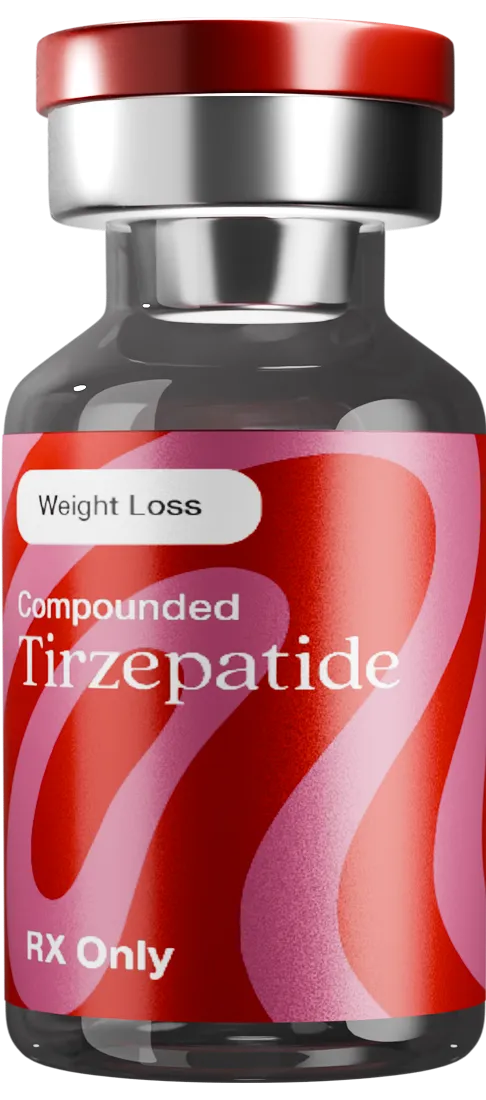

Tirzepatide is the most effective weight loss drug ever approved. Head-to-head data in our weight loss injections comparison. That's not opinion. The SURMOUNT-5 head-to-head trial showed it produces 47% more weight loss than semaglutide (Ozempic/Wegovy), and nothing else on the market has matched it.
🔑 Key Takeaways
- Tirzepatide is a dual GLP-1/GIP receptor agonist peptide developed by Eli Lilly. It activates two hormone receptors instead of one, which is why it outperforms every single-receptor GLP-1 drug for both weight loss and blood sugar control
- FDA-approved as Mounjaro (type 2 diabetes) and Zepbound (weight loss + obstructive sleep apnea). Same molecule, different brand names and approved indications
- In the SURMOUNT-5 head-to-head trial, tirzepatide produced 20.2% average weight loss vs 13.7% for semaglutide over 72 weeks. Over half of users lost 20%+ of their body weight
- The GIP receptor is what separates tirzepatide from semaglutide. GIP activation directly enhances fat metabolism, improves insulin sensitivity through pathways GLP-1 alone doesn't reach, and may preserve more muscle during weight loss
- Side effects are primarily gastrointestinal (nausea, diarrhea, constipation) and actually slightly less severe than semaglutide despite stronger results
- Available as branded Mounjaro/Zepbound ($1,000+/month) or as compounded tirzepatide ($150-$350/month)
This page covers everything about the tirzepatide peptide: what it is, how the dual mechanism works, all trial data, dosing, side effects, cost, and how it compares to every other option in the class.
What Is Tirzepatide?
A peptide that mimics two gut hormones at once.
Tirzepatide (development code LY3298176) is a 39-amino acid synthetic peptide that activates both the GLP-1 (glucagon-like peptide-1) and GIP (glucose-dependent insulinotropic polypeptide) receptors. Both are incretin hormones your gut naturally releases after eating. By activating both simultaneously, tirzepatide produces stronger appetite suppression, better blood sugar control, and more weight loss than drugs that target GLP-1 alone.
Eli Lilly developed tirzepatide and holds the patents. It's sold under two brand names:
- Mounjaro: Approved for type 2 diabetes in adults and children 10+
- Zepbound: Approved for weight management in adults with BMI 30+ or BMI 27+ with at least one weight-related condition. Also approved for obstructive sleep apnea.
The tirzepatide peptide is identical in both products. The difference is the approved indication, the dosing schedule, and insurance coverage eligibility.
Tirzepatide FDA Approval Timeline
A first-in-class medication, which the FDA specifically designated upon approval.
The December 2024 OSA approval is the latest major indication expansion. Tirzepatide became the first drug ever approved to treat moderate-to-severe obstructive sleep apnea in adults with obesity, based on the SURMOUNT-OSA trial, which showed up to 63% reduction in apnea-hypopnea index severity.
Tirzepatide Chemistry and Pharmacokinetics
The technical specs matter when comparing products or sourcing research-grade material.
- Molecular type: 39-amino acid synthetic peptide
- Development code: LY3298176
- CAS number: 2023788-19-2
- Chemistry: Modified with a C20 fatty diacid chain attached to a lysine residue, enabling reversible albumin binding for extended half-life
- Route: Subcutaneous injection (abdomen, thigh, or upper arm), once weekly
- Bioavailability: ~80% after subcutaneous injection
- Half-life: Approximately 5 days, supporting weekly dosing
- Time to peak plasma concentration: 8-72 hours after injection
- Metabolism: Proteolytic cleavage (no hepatic CYP involvement, which limits most drug-drug interactions)
- Elimination: Primarily excreted as metabolites in urine and feces
- Storage: Refrigerate at 2-8°C (36-46°F); pen can be kept at room temperature up to 30°C (86°F) for up to 21 days before first use
How Tirzepatide Works: The Dual Mechanism
Two receptors produce effects that one receptor can't.
GLP-1 Receptor (what semaglutide also targets)
GLP-1 activation suppresses appetite by acting on the hypothalamus and brainstem, slows gastric emptying to extend post-meal fullness, stimulates insulin release, and suppresses glucagon. This is the mechanism behind every GLP-1 weight loss drug. Tirzepatide does all of this.
GIP Receptor (what tirzepatide adds)
GIP activation adds mechanisms that GLP-1 alone doesn't cover:
- Direct fat tissue metabolism: GIP receptors are expressed in adipose tissue. Activation changes how fat cells process and release stored energy, contributing to fat loss beyond what appetite suppression alone produces.
- Enhanced insulin sensitivity: GIP improves insulin sensitivity through pathways distinct from GLP-1, producing the largest A1c reductions of any injectable diabetes medication (up to 2.5 percentage points).
- Muscle preservation: GIP receptors are expressed in muscle tissue. Emerging data suggests GIP signaling may reduce muscle protein breakdown during caloric restriction, which means tirzepatide users may retain more muscle during weight loss than semaglutide users.
- GI tolerability: The GIP component appears to buffer the GI side effects caused by GLP-1 activation. This likely explains why tirzepatide shows lower nausea and vomiting rates than semaglutide despite producing more weight loss.
The simple version
Semaglutide primarily makes you eat less. Tirzepatide makes you eat less AND changes how your body handles the fat you already have. Two levers instead of one. That's why the weight loss gap is 47%, not 5%.
Tirzepatide Weight Loss Data
Every major trial result.
For a detailed breakdown of tirzepatide vs semaglutide including side effects, cost, and when each makes more sense, see the tirzepatide vs semaglutide comparison. For current pricing and the lowest verified sources, see our cheapest tirzepatide guide.
Tirzepatide for Type 2 Diabetes
The best A1c reduction of any injectable.
In the SURPASS trial program, tirzepatide at 15mg reduced A1c by up to 2.5 percentage points, the largest reduction ever achieved by an injectable diabetes medication. In SURPASS-2 (head-to-head against semaglutide 1mg), tirzepatide produced significantly better A1c control at every dose level.
For people with type 2 diabetes who need both blood sugar control and weight loss, tirzepatide addresses both more effectively than any single agent. The dual GLP-1/GIP mechanism provides insulin secretion through two pathways plus insulin sensitization that GLP-1 alone doesn't achieve.
Tirzepatide Dosage
Slow titration is mandatory.
You don't have to reach 15mg. Many people find their optimal balance between results and tolerability at 10mg or 12.5mg. Rushing the escalation increases GI side effects without producing faster long-term results. If you're struggling with nausea at any step, hold the dose for an extra 4 weeks before increasing.
For reconstitution and injection math with compounded tirzepatide, the peptide calculator handles the conversion. Full protocols on the tirzepatide dosing page.
Tirzepatide FDA Boxed Warning
The most serious warning class the FDA issues.
Tirzepatide carries a boxed warning for thyroid C-cell tumor risk, including medullary thyroid carcinoma (MTC). In rodent studies, tirzepatide caused thyroid C-cell tumors at clinically relevant exposures. Human causation is unproven. The drug is contraindicated in people with:
- Personal or family history of medullary thyroid carcinoma (MTC)
- Multiple Endocrine Neoplasia syndrome type 2 (MEN 2)
- Known serious hypersensitivity to tirzepatide or any formulation component
Symptoms that warrant immediate evaluation: lump or swelling in the neck, hoarseness that does not resolve, persistent trouble swallowing, or shortness of breath.
Tirzepatide Side Effects
Milder than semaglutide, despite stronger results.
Tirzepatide has lower rates across every GI category. The GIP component likely buffers the GI impact of GLP-1 activation. If you tolerated semaglutide, you'll almost certainly tolerate tirzepatide. If semaglutide nausea was borderline, tirzepatide may actually be easier.
Serious side effects carry the same FDA warnings as all GLP-1 drugs: pancreatitis (rare, ~0.1-0.3%), gallbladder disease (1-3%), thyroid C-cell tumors (black box warning, no confirmed human signal), and contraindication during pregnancy. Full breakdown on the tirzepatide side effects page.
Beyond Weight Loss: Other Approved Uses
Tirzepatide's reach extends beyond body weight.
- Type 2 diabetes: FDA-approved as Mounjaro. Best A1c reduction of any injectable.
- Obstructive sleep apnea: FDA-approved as Zepbound. SURMOUNT-OSA showed up to 63% reduction in sleep apnea severity.
- MACE risk reduction: Currently under FDA review. The SURPASS-CVOT trial showed cardiovascular safety non-inferiority to semaglutide.
- MASH (liver disease): Under investigation. The metabolic effects of tirzepatide are expected to benefit liver fat and fibrosis.
[Image #1]
Tirzepatide Cost and How to Get It
Multiple routes with very different price points.
For the full cost landscape including insurance navigation and savings programs, see the tirzepatide cost without insurance page. The GLP-1 without insurance page covers all access routes.
What to Expect Week by Week
Tirzepatide vs the Competition
Tirzepatide is the strongest approved option. Retatrutide may surpass it when it completes Phase 3 by adding the glucagon receptor (which directly increases metabolic rate). But that's at least 2027-2028 away.
What Class of Drug Is Tirzepatide?
Tirzepatide is a GLP-1 / GIP dual receptor agonist. It's the first FDA-approved drug in this class. Specifically:
- GLP-1 (Glucagon-Like Peptide-1) receptor agonist: Same receptor as semaglutide (Ozempic, Wegovy), liraglutide, and dulaglutide. Drives appetite suppression, slows gastric emptying, improves insulin release.
- GIP (Glucose-dependent Insulinotropic Polypeptide) receptor agonist: The additional receptor that distinguishes tirzepatide from semaglutide. Drives nutrient-dependent insulin secretion and may contribute to better metabolic flexibility.
It's a 39-amino-acid synthetic peptide (a modified GIP backbone with GLP-1 receptor activity engineered in). Half-life: about 5 days, which is why it's dosed weekly.
What Are the Ingredients in Tirzepatide?
Tirzepatide itself is the active pharmaceutical ingredient. The complete formulation in brand-name Mounjaro and Zepbound pens or vials contains:
- Tirzepatide (active, dose-specific: 2.5mg, 5mg, 7.5mg, 10mg, 12.5mg, or 15mg per injection)
- Sodium phosphate dibasic heptahydrate (pH buffer)
- Sodium chloride (osmolality regulator)
- Hydrochloric acid and/or sodium hydroxide (pH adjustment to ~7.0)
- Water for injection (carrier)
Compounded tirzepatide formulations typically include the same active plus bacteriostatic water (containing benzyl alcohol as a preservative). Some compounded vials add additional excipients like glycine or sodium acetate buffers depending on the pharmacy.
Frequently Asked Questions
Medical Disclaimer: This article is for informational purposes only and does not constitute medical advice. Tirzepatide is a prescription medication. Consult a licensed healthcare provider to determine if it's appropriate for your individual health profile and treatment goals.