Epithalon vs Thymalin isn't really a rivalry. They come from the same lab, were tested in the same long-term trial, and were designed for different organs. This guide explains what each one does, what the human data shows side by side, and how to decide between them, or whether to use both.
🔑 Key Takeaways
- One is a single synthetic peptide, the other is an extract, and that changes how you buy it
- They work on different systems, so "which is better" depends on what's bothering you
- In the one trial that tested both, one of them came out ahead on its own
- The strongest result came from combining them
- One of the two is much harder to get hold of in the US
If you've been reading about bioregulator peptides, you've seen these two names together. That's not a coincidence. Both come from Vladimir Khavinson's institute in St. Petersburg, and they're often run as a pair. The question is which one fits your situation.
Epithalon vs Thymalin at a Glance
Start with what each one is. Epithalon is a synthetic peptide made of four amino acids. It was designed to copy the active part of Epithalamin, an extract of the pineal gland, the small gland that controls your night-time melatonin.
Thymalin is an extract of calf thymus, the gland where immune T cells mature. It isn't one peptide but a mix of small ones, and its two main active pieces are short dipeptides called KE and EW. It has been used as a prescription immune drug in Russia since the 1980s.
What Epithalon Does
Epithalon works on your daily rhythm. As the pineal gland ages, it makes less melatonin at night, and sleep gets lighter and more broken.
In older adults whose night-time melatonin had dropped, pineal peptides (both the Epithalamin extract and synthetic Epitalon) raised it back toward a normal daily rhythm. That's why better sleep is the first thing most people notice. In cell cultures, Epithalon also switched on telomerase and lengthened telomeres, though that hasn't been measured in a human trial. Our guide to epitalon benefits covers the full list, and Epithalon results walks through what changes week by week.
What Thymalin Does
Thymalin works on your immune system. Your thymus shrinks from early adulthood onward, and by later life it produces far fewer new T cells, which is part of why infections hit older people harder.
Thymalin was built to support that system. In human blood cells, Thymalin and its two dipeptides cut the release of the inflammatory messengers IL-1β, IL-6 and TNF-α by 1.4 to 6 times. In a hospital study of people with COVID-19, adding Thymalin to standard treatment brought down IL-6, C-reactive protein and D-dimer faster than standard treatment alone. For more on the extract itself, see our Thymalin guide.
The Trial That Tested Both
This is the study behind most of the claims. Doctors in St. Petersburg and Kyiv followed 266 adults over 60 for six to eight years. Groups were given courses of Epithalamin, Thymalin or both during the first two to three years, and a separate group got both every year for six years.
Both extracts also cut acute respiratory infections by 2.0-2.4 times and reduced signs of heart disease, high blood pressure and osteoporosis compared with the control group. On its own, Thymalin came out slightly ahead of the pineal extract on mortality.
Read these numbers with care. The trial used Epithalamin, the natural pineal extract, not the synthetic Epithalon sold today. It was run by the scientists who developed both drugs, and it hasn't been independently repeated. Treat it as a strong signal worth taking seriously, not as proof that either one adds years to your life.
Which Should You Use: Epithalon or Thymalin?
Match it to your problem. They don't compete, because they don't do the same job.
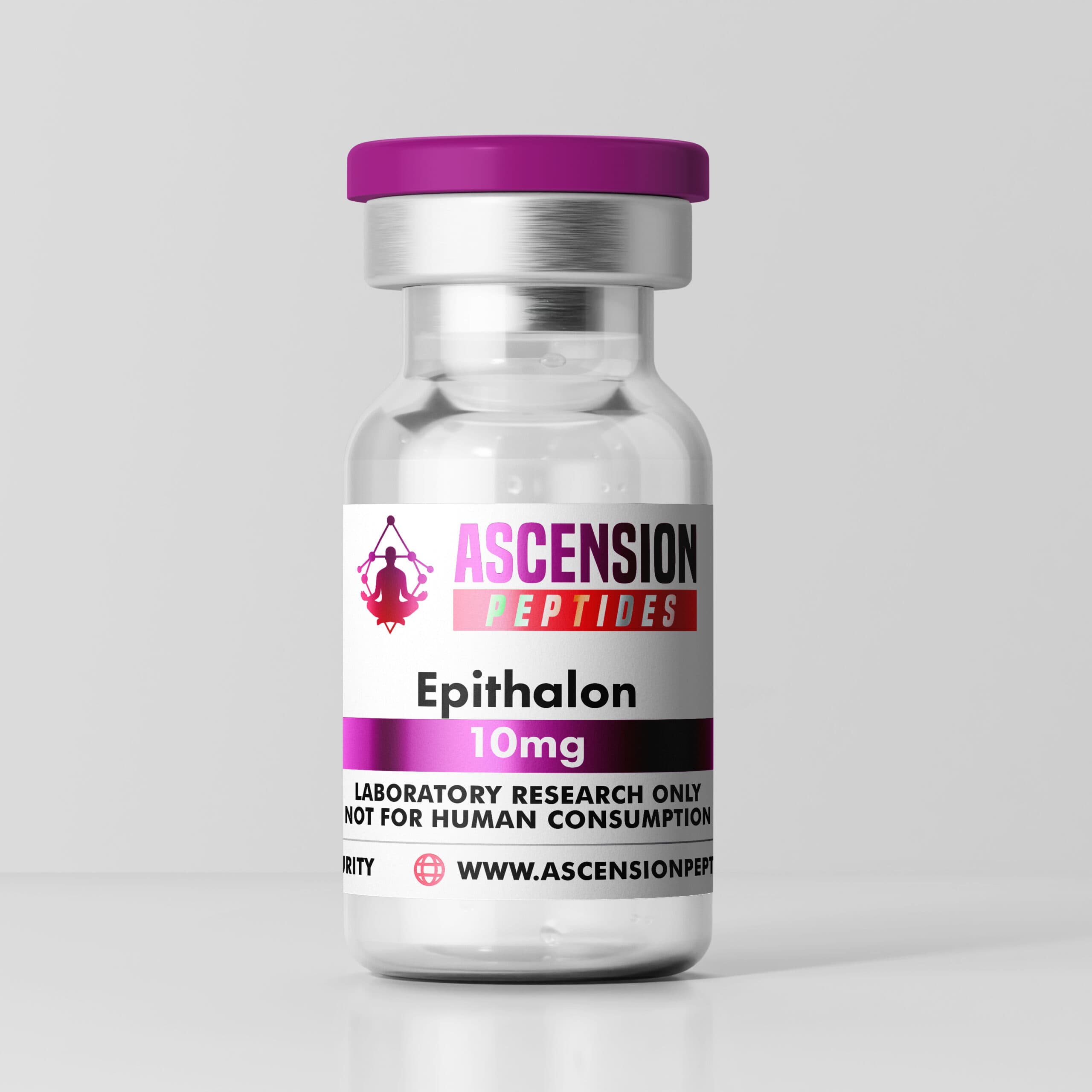
One real limitation weighs on Thymalin: supply. It's a Russian pharmaceutical extract, few US vendors carry it, and because it's made from animal tissue you're relying on the maker for consistency between batches. Epithalon is synthetic and easy to verify. If you're comparing Epithalon for sale, Ascension sells a 10mg vial with a batch COA for $50, or $25 with code PEPTIDEDECK. That practical gap is why many people start with Epithalon even when Thymalin fits their goal better.
Can You Take Epithalon and Thymalin Together?

Yes, and the trial suggests it's the stronger option. The group that received both every year for six years had the largest drop in deaths in the study.
In practice, people run them as separate short courses rather than mixing them in one syringe: a 10-20 day Epithalon course and a 5-10 day Thymalin course, often in the same season, repeated yearly as they were in the trial. Our Epithalon dosage guide covers the schedule, and the bioregulator peptides guide puts both next to Pinealon and Vilon.
Two cautions. Neither has safety data for pregnancy, and Thymalin's immune effects make it a conversation to have with your doctor first if you have an autoimmune condition or take immune-suppressing medicine.
Frequently Asked Questions
Sources
- Khavinson VKh, Morozov VG. Peptides of pineal gland and thymus prolong human life. Neuro Endocrinol Lett. 2003;24(3-4):233-40. PubMed
- Korkushko OV, et al. Normalizing effect of the pineal gland peptides on the daily melatonin rhythm in old monkeys and elderly people. Adv Gerontol. 2007;20(1):74-85. PubMed
- Khavinson VKh, et al. Epithalon peptide induces telomerase activity and telomere elongation in human somatic cells. Bull Exp Biol Med. 2003;135(6):590-2. PubMed
- Linkova N, et al. The influence of KE and EW dipeptides in the composition of the Thymalin drug on gene expression and protein synthesis involved in the pathogenesis of COVID-19. Int J Mol Sci. 2023;24(17):13377. PubMed
- Khavinson VK, et al. Results and prospects of using activator of hematopoietic stem cell differentiation in complex therapy for patients with COVID-19. Stem Cell Rev Rep. 2021;17(1):285-290. PubMed
- Araj SK, et al. Overview of Epitalon, a highly bioactive pineal tetrapeptide with promising properties. Int J Mol Sci. 2025;26(6):2691. PubMed
Medical Disclaimer: This article is for informational purposes only and does not constitute medical advice. Neither Epithalon nor Thymalin is an approved medicine in the US, and most of the evidence comes from studies by the group that developed them. Talk to your doctor before starting either, especially if you have an autoimmune condition, a history of cancer, or take immune-suppressing medicine.