
Longevity Peptides
Epithalon
with codePEPTIDEDECKat checkout· list $69.99
- Purity
- 99%+
- Vial
- 10mg
- Form
- Lyophilized powder in vial
- Half-life
- Not published
Buy Epithalon (Epitalon) 10mg at PeptideDeck -- a synthetic tetrapeptide (Ala-Glu-Asp-Gly) derived from the pineal gland peptide Epithalamin, studied for telomerase activation, telomere biology, and longevity-related cellular pathways. Research-grade, 99%+ HPLC-verified lyophilized powder. Ships same-day from a US warehouse with Certificate of Analysis on request.
About Epithalon
Looking to buy Epithalon for a telomerase activation or cellular aging study? PeptideDeck lists Epithalon 10mg vials for sale from a vetted US research supplier at 99%+ HPLC-verified purity, with same-day US shipping and a Certificate of Analysis available on request. The Epithalon price on this listing -- $69.99 per 10mg vial -- reflects current stock availability through our partner supplier. Epithalon for sale in 10mg format is the standard working quantity for in-vitro telomerase assays, cellular senescence models, and longevity pathway research where investigators need to purchase Epithalon at a concentration sufficient for multi-condition protocols. Researchers who search for Epithalon for sale online should note that this peptide is also spelled Epitalon; both names refer to the identical synthetic tetrapeptide Ala-Glu-Asp-Gly (AEDG).
Epithalon (also commonly written as Epitalon) is a synthetic tetrapeptide corresponding to the amino acid sequence Ala-Glu-Asp-Gly (AEDG), originally isolated from the bovine pineal gland extract Epithalamin by Vladimir Khavinson and colleagues at the Institute of Bioregulation and Gerontology in St. Petersburg. The Khavinson group identified the AEDG tetrapeptide as the bioactive fraction responsible for many of the physiological effects attributed to pineal gland extracts in Soviet-era gerontology research, and subsequently characterized its capacity to activate telomerase -- the reverse-transcriptase enzyme that extends telomeric repeats on chromosomal ends -- in cultured human fetal fibroblast cells. This telomerase activation finding, published in 2003, established Epithalon as a research tool in cellular aging biology and prompted a series of longer-term animal studies investigating lifespan, melatonin regulation, and cancer incidence in aged rodent cohorts.
Where to Buy Epithalon
PeptideDeck lists Epithalon for sale from a vetted US research supplier that publishes batch-level analytical quality data. When research teams ask us where to buy Epithalon or Epitalon with confidence in peptide identity, purity, and fast US delivery, this is the listing we point them to. The Epithalon price at $69.99 per 10mg vial positions this listing competitively among US research peptide vendors. Shipping is same-day from a US warehouse with tracked delivery and discreet packaging that does not identify peptide contents externally. Checkout resolves directly through the partner vendor's live inventory; the cart will confirm in-stock status at the time of purchase.
When comparing Epithalon price and quality across vendors, evaluate whether the COA reports gross or net peptide purity, whether mass spectrometry identity confirmation is included in the lot-level data, and whether the synthetic route is disclosed. The 99%+ purity reported at this listing is HPLC-determined and reflects the analytical standard applied to all vials from this supplier. For laboratory teams standardizing on Epithalon as a long-term research reagent, contact the supplier directly for multi-vial pricing on bulk procurement orders. Buy Epithalon for research use only.
Quality Assurance and COA
Every Epithalon vial at this listing is manufactured under cGMP-aligned conditions using solid-phase peptide synthesis (SPPS) with Fmoc chemistry. Batch-level analytical testing is performed before release and includes identity confirmation by electrospray ionization mass spectrometry (ESI-MS) against the expected molecular weight of Epithalon (390.34 g/mol), and purity quantification by reverse-phase HPLC with UV detection at 214 nm. The resulting Certificate of Analysis documents lot number, synthesis date, analytical method, purity result, and MS confirmation. COA documents are available on request -- contact the supplier with your order number after purchase. Vials are sealed under inert gas in borosilicate glass with a butyl rubber stopper and an aluminum crimp seal to prevent moisture ingress during storage and transit. The combination of HPLC purity verification, mass-spec identity confirmation, and sterile-sealed glass vials is the analytical and packaging standard that characterizes this supplier's approach and is why research teams that purchase Epithalon for longevity and telomere biology studies return to this listing.
Mechanism of Action
The molecular mechanism through which Epithalon activates telomerase has been characterized in human cell culture models. Khavinson et al. 2003 (Bulletin of Experimental Biology and Medicine) demonstrated that AEDG tetrapeptide treatment of human fetal fibroblasts increased telomerase activity approximately 2.4-fold compared to untreated controls, as measured by the Telomeric Repeat Amplification Protocol (TRAP) assay. Epithalon-treated cells also showed elongation of mean telomere length by Southern blot analysis, consistent with telomerase-dependent addition of TTAGGG repeats rather than an artifact of altered cell cycle kinetics.
The mechanism proposed by the Khavinson group involves Epithalon interacting with histones H1 and H3, partially unwinding heterochromatin in the promoter region of the TERT (telomerase reverse transcriptase) gene, and thereby restoring access for transcription factors that become progressively silenced during cellular aging. This epigenetic remodeling model -- a tetrapeptide acting as a chromatin-regulatory agent to de-repress TERT expression -- remains the leading mechanistic hypothesis for Epithalon's telomerase effects, though independent structural confirmation of the AEDG-histone interaction has not yet been published.
Separately from telomerase, Epithalon has been shown in rodent studies to restore circadian melatonin release in aged animals. Korkushko et al. 2006 (Bulletin of Experimental Biology and Medicine) reported that Epithalon administration to elderly patients in a controlled clinical pilot study partially restored the nocturnal melatonin surge that characteristically declines with age. Because melatonin rhythm disruption is mechanistically linked to accelerated cellular aging through multiple pathways -- oxidative stress, circadian clock gene dysregulation, immune senescence -- the melatonin-normalization finding positions Epithalon as potentially acting on aging biology through a pineal-melatonin axis independent of its direct telomerase effect. Research into Epithalon's dual potential mechanism (telomerase activation plus melatonin rhythm restoration) makes it one of the more mechanistically complex peptide tools in the longevity research space.
Additional reported preclinical activities include modulation of p53 and Bcl-2 expression in oncology-adjacent cell line models, effects on superoxide dismutase activity in aged tissues, and normalization of hypothalamic neuroendocrine regulatory peptide secretion in senescent rodents. These secondary mechanistic areas remain less well characterized than the telomerase and melatonin findings but contribute to Epithalon's broad use as a longevity research probe.
Chemical Profile
Epithalon is a synthetic tetrapeptide with the single-letter sequence AEDG, corresponding to the full name Alanyl-Glutamyl-Aspartyl-Glycine. The molecular formula is C₁₄H₂₂N₄O₉ and the molecular weight is 390.34 g/mol. The CAS registry number for the free-acid form is 307297-39-8. The sequence contains no cysteines or disulfide-forming residues, no post-translational modifications, and no protecting groups in the final research-grade material; this minimal structure simplifies solid-phase peptide synthesis and contributes to the high batch-to-batch consistency achievable for this tetrapeptide.
This research-grade Epithalon is supplied as a lyophilized white to off-white amorphous powder in a sealed borosilicate glass vial under sterile manufacturing conditions. The 10mg vial corresponds to approximately 25.6 micromoles of peptide at 100% net peptide content. The lyophilized form is stable during standard 2-to-4-business-day US transit at ambient temperature; transfer the vial to minus 20 degrees Celsius upon receipt for long-term storage. Purity is 99%+ by HPLC, identity confirmed by mass spectrometry. Lot-level COA data is available on request.
Research Applications
Epithalon (Epitalon) has been characterized across several preclinical and translational research domains since the initial Khavinson publications. The documented research applications include:
Telomerase activation and telomere biology: The foundational research application. Epithalon treatment in human fetal fibroblasts was shown by Khavinson et al. 2003 to increase TERT expression, elevate telomerase enzymatic activity (TRAP assay), and extend mean telomere length. Researchers studying replicative senescence, Hayflick limit biology, telomere dynamics, or telomerase-based rejuvenation hypotheses purchase Epithalon as a pharmacological telomerase activator for in-vitro studies.
Lifespan and cancer incidence studies in rodents: Anisimov et al. 2003 (Biogerontology) reported that long-term Epithalon administration to female rats reduced the incidence of spontaneous tumors and extended median lifespan compared to controls. This rodent lifespan data is one of the most cited findings in the Epithalon literature and is the basis for its widespread use in longevity research model design.
Melatonin and circadian biology: Korkushko et al. 2006 reported partial restoration of nocturnal melatonin release in elderly individuals following Epithalon administration. Research teams studying pineal-neuroendocrine aging, circadian disruption, or melatonin-longevity connections use Epithalon as a pineal gland-modulating reference peptide.
Oncology-adjacent cell biology: Multiple publications from the Khavinson group and affiliated researchers have examined Epithalon effects on p53 expression, apoptosis regulation, and oxidative stress markers in cancer-adjacent cell models. These secondary application areas are less well replicated by independent groups but appear regularly in the Epithalon literature.
All applications summarized here are documented in preclinical literature or in-vitro systems only. PeptideDeck supplies Epithalon strictly for laboratory research.
Reconstitution and Dosing Reference
For a 10mg Epithalon vial, a common research reconstitution is 2mL of bacteriostatic water, yielding a concentration of 5mg/mL (5000 mcg/mL). Alternate dilutions: 1mL yields 10mg/mL, 4mL yields 2.5mg/mL, and 5mL yields 2mg/mL. Add bacteriostatic water slowly down the inside wall of the vial and allow passive dissolution; gently swirl, do not shake. For in-vitro cell culture work, Epithalon is typically dissolved in phosphate-buffered saline or sterile water, then diluted into culture media. Published cell culture studies have used Epithalon at concentrations ranging from 0.1 microgram/mL to 100 microgram/mL depending on the assay endpoint and cell type.
For rodent in-vivo studies, the Khavinson and Anisimov groups used subcutaneous or intraperitoneal routes; consult the primary literature (Anisimov 2003, Khavinson 2003) for species-appropriate dose levels and schedules. These reconstitution and dosing figures are provided as research reference only. PeptideDeck does not publish human dosing guidance. The 10mg Epithalon vial supports between 10 and 100 in-vitro research preparations depending on the working concentration and assay volume, making the 10mg quantity efficient for multi-condition experiments.
Storage and Handling
Store unopened Epithalon vials at minus 20 degrees Celsius for long-term stability. Short-term storage at refrigerator temperature (2 to 8 degrees Celsius) for up to two weeks is acceptable provided the vial is sealed and protected from light and moisture. Once reconstituted with bacteriostatic water, refrigerate the solution at 2 to 8 degrees Celsius and use within 30 days. The AEDG tetrapeptide is relatively chemically robust at neutral pH, but prolonged exposure to elevated temperatures or pH extremes may promote hydrolysis of the Asp and Glu side-chain peptide bonds; keep reconstituted solutions at refrigerator temperature and avoid leaving vials at room temperature between draws. Avoid freeze-thaw cycling of the reconstituted solution; prepare single-use aliquots at reconstitution if multi-session use is anticipated. Wipe the stopper with 70% isopropyl alcohol before each draw and use a new sterile syringe. Document the lot number and receipt date in a laboratory logbook for traceability against the COA.
Research Benefits
Synthetic tetrapeptide Ala-Glu-Asp-Gly derived from pineal gland Epithalamin
99%+ HPLC-verified purity, 10mg lyophilized vial
Studied for telomerase (TERT) activation in fibroblast cell models
Used in telomere length and replicative senescence research
Investigated in rodent lifespan and spontaneous tumor incidence studies
Researched in pineal-melatonin circadian restoration models
Used in p53, Bcl-2, and antioxidant pathway studies in aging models
Research tool in longevity biology and cellular aging studies
Product Specifications
| Molecular Weight | 390.34 g/mol (C₁₄H₂₂N₄O₉) |
| Sequence | Ala-Glu-Asp-Gly (AEDG, 4 aa) |
| Half-Life | Not published |
| Purity | 99%+ |
| Form | Lyophilized powder in vial |
| Storage | Store lyophilized at -20°C. Once reconstituted, refrigerate and use within 30 days. |
Frequently Asked Questions
Scientific References
Khavinson VKh, Bondarev IE, Butyugov AA. · Bulletin of Experimental Biology and Medicine · 2003
Anisimov VN, Khavinson VKh, Popovich IG, et al. · Biogerontology · 2003
Korkushko OV, Khavinson VKh, Shatilo VB, Antonyk-Sheglova IA. · Bulletin of Experimental Biology and Medicine · 2006
References provided for informational research context only. PeptideDeck does not imply clinical application or endorse any human use.
You May Also Like
View all →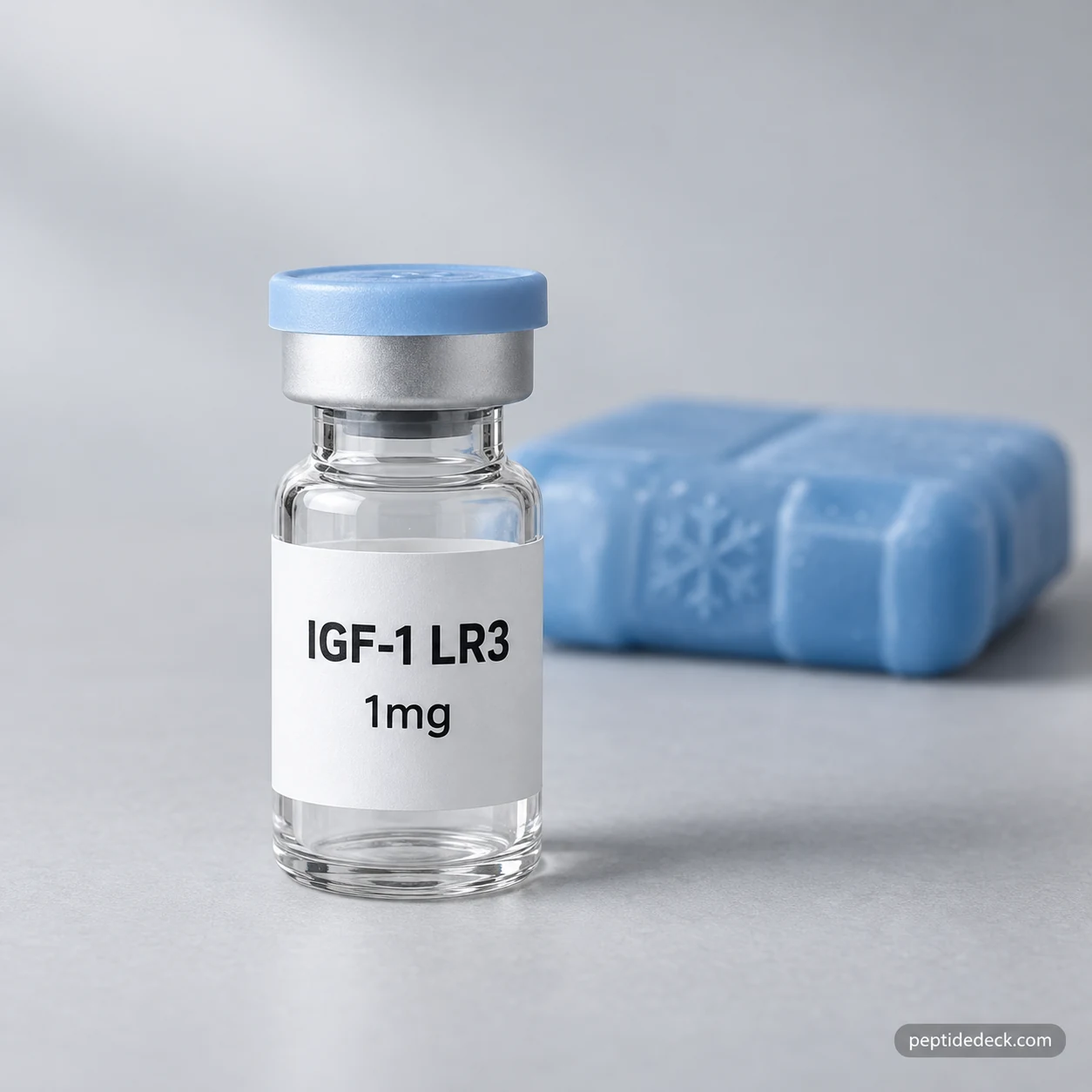
Growth Factor Peptides
IGF-1 LR3
Long R3 Insulin-like Growth Factor-1, 1mg vial
Growth Hormone Releasing Hormone (GHRH) Analogues
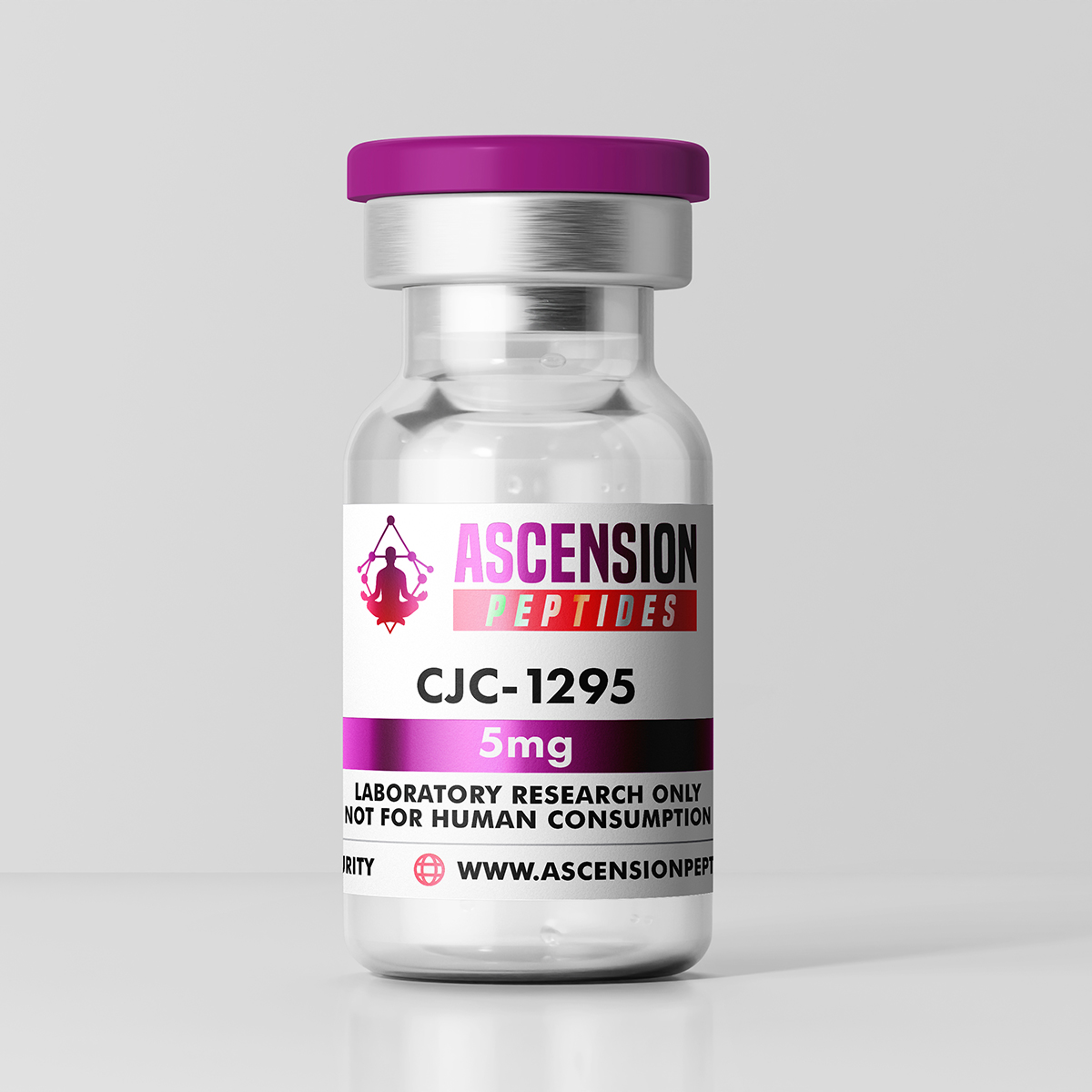
CJC-1295 (No DAC)
Modified GRF (1-29) GHRH Analogue, 5mg Lyophilized Vial
Copper Peptides
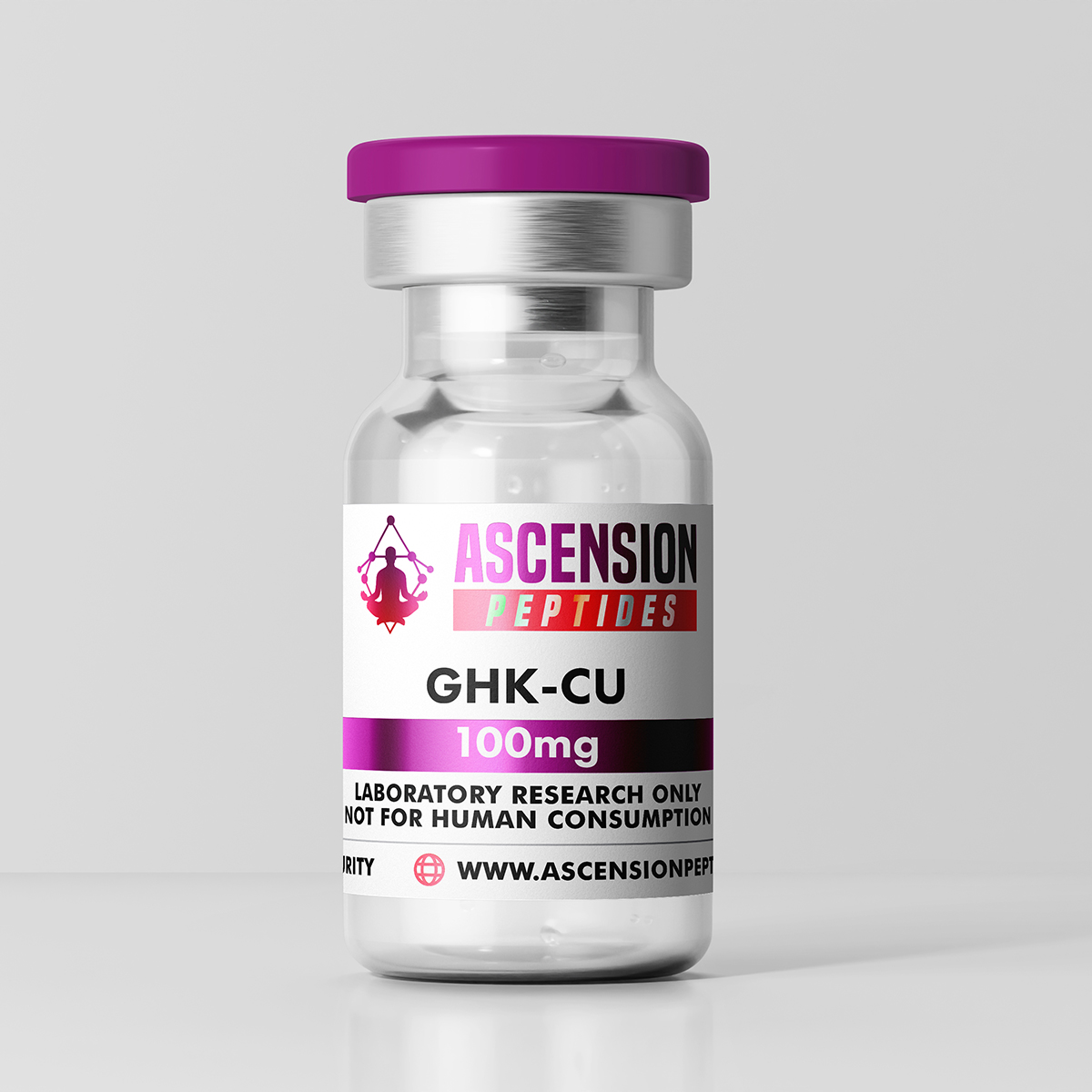
GHK-Cu
GHK-Cu For Sale: 50mg 99%+ Purity Copper Tripeptide

Healing & Recovery Peptides
BPC-157
Body Protection Compound 5mg: 99%+ Purity Research Vial
Research Use Only. All products sold by PeptideDeck are strictly for in-vitro laboratory research and are not intended for human or veterinary use, diagnosis, or treatment. Not for resale.