Bioregulator peptides represent one of the most intriguing — and least discussed in the West — branches of anti-aging peptide research. Developed over four decades by Professor Vladimir Khavinson and colleagues at the Saint Petersburg Institute of Bioregulation and Gerontology, these ultra-short peptides (just 2–4 amino acids) are proposed to regulate gene expression in specific target tissues, potentially reversing age-related functional decline at the cellular level.
This guide covers the four most researched bioregulators in aging science: Epitalon (pineal gland), Thymalin (thymus/immune system), Pinealon (brain), and Vilon (thymic dipeptide). If you're researching longevity peptides broadly, see our overview of Best Anti-Aging Peptides in 2026.
- Epitalon — Pineal gland peptide; telomere support, circadian regulation, antioxidant activity
- Thymalin — Thymic extract peptide; immune restoration, T-cell regulation
- Pinealon — Brain-targeted tripeptide; neuroprotection, cognitive function
- Vilon — Thymic dipeptide; immune modulation, anti-inflammatory signaling
All four are unscheduled research compounds. None are FDA-approved for human therapeutic use.
What Are Bioregulator Peptides?
Professor Vladimir Khavinson began his research in the 1970s at the Military Medical Academy in Leningrad. His foundational hypothesis was straightforward but profound: peptide extracts from specific organs — pineal gland, thymus, brain, retina, prostate — could restore age-related functional decline in the corresponding tissue when administered exogenously.
The earliest work used crude organ extracts called cytomedins: epithalamin from pineal gland, thymalin from thymus, cortexin from brain cortex. When these extracts demonstrated measurable biological activity in aged animals and human trials, Khavinson's group systematically isolated the shortest active peptide sequences responsible — creating the cleaner, more reproducible synthetic analogs we know today: Epitalon, Vilon, Pinealon.
The core mechanistic theory holds that these short peptides act as gene expression modulators, binding to chromatin and influencing transcription factor activity in a tissue-specific manner. Khavinson's group published evidence suggesting bioregulators can demethylate gene promoter regions in aged cells — essentially nudging silenced longevity-associated genes back toward a younger expression pattern.
Published research from Khavinson's group has reported mean lifespan extensions of 20–40% in rodent models with select peptide preparations. Independent Western replication remains limited, which is a critical caveat for any researcher evaluating this class.
Epitalon: The Telomere Peptide
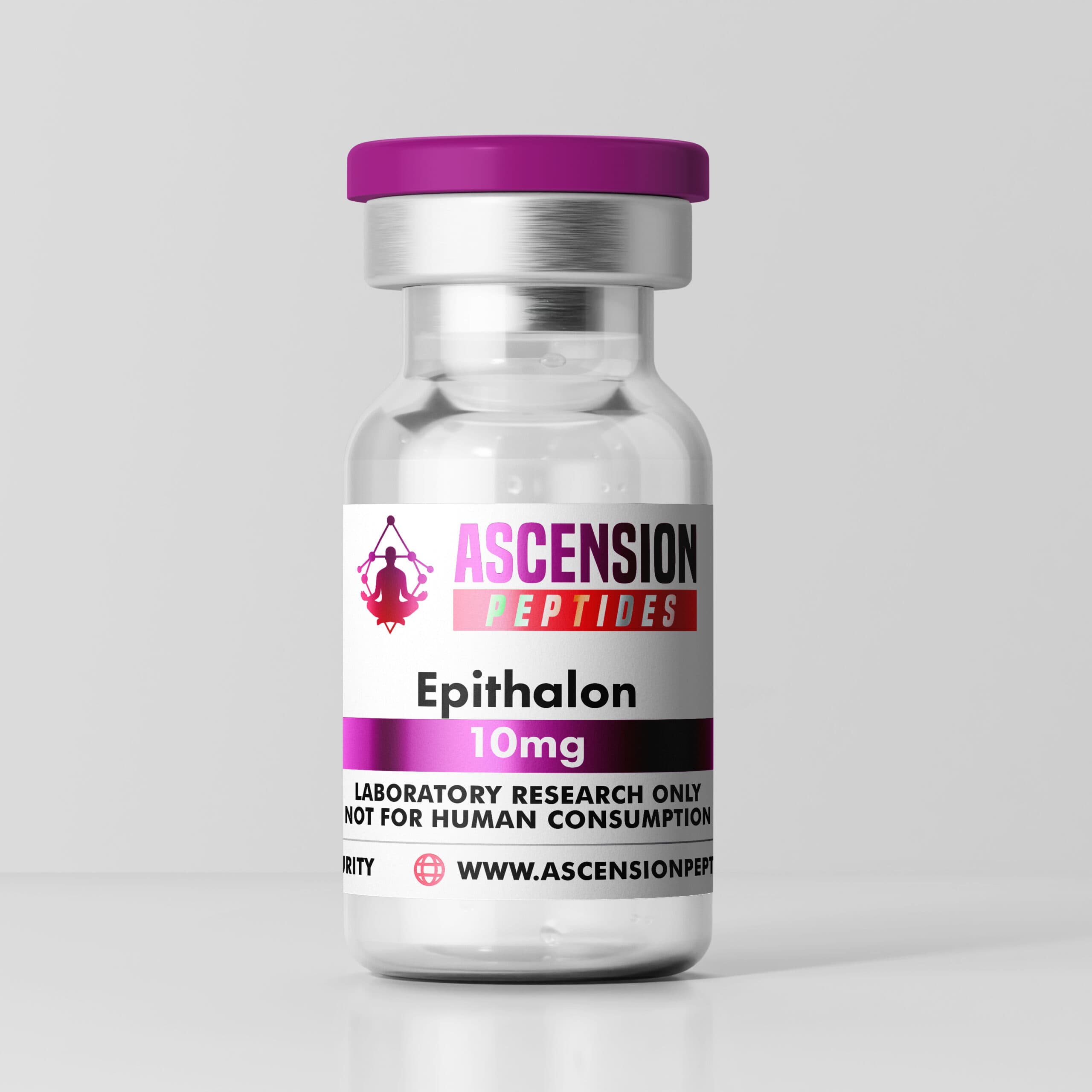
Epitalon (also spelled Epithalon; tetrapeptide Ala-Glu-Asp-Gly) is the most widely researched bioregulator in the Western research community. It is the synthetic analog of epithalamin, extracted from bovine pineal gland tissue.
Proposed Mechanisms
- Telomerase activation: Epitalon has been shown in cell culture models to stimulate telomerase activity, the enzyme that maintains telomere length. Shortened telomeres are a hallmark of cellular aging and replicative senescence.
- Pineal regulation: The pineal gland governs melatonin secretion, which declines with age. Epitalon appears to support pineal function and improve circadian rhythmicity in aged subjects.
- Antioxidant activity: Animal studies have reported reductions in lipid peroxidation markers and improvements in antioxidant enzyme activity.
- Oncostatic effects: Several Russian studies report reduced tumor incidence in aged rodents treated with Epitalon, potentially linked to improved immune surveillance and telomere stability.
Research Context
Khavinson's group published multiple studies across the 1990s–2010s in journals including Bulletin of Experimental Biology and Medicine and Neuroendocrinology Letters. A notable 2003 study (Khavinson et al.) reported that Epitalon extended the lifespan of Drosophila melanogaster by approximately 16%. Human pilot studies from the same group reported improved melatonin secretion and antioxidant markers in elderly patients, though sample sizes were small and controls variable by Western RCT standards.
- Sequence: Ala-Glu-Asp-Gly (4 amino acids)
- Target tissue: Pineal gland
- Typical research dose: 5–10 mg/day, 10–20 day cycles
- Administration: Subcutaneous injection or intranasal
- Key reported effects: Telomere support, melatonin normalization, antioxidant activity
Thymalin and Vilon: Immune System Bioregulators
The thymus gland undergoes progressive involution with age — by age 50, most adults retain only 15% of peak thymic tissue. This shrinkage correlates directly with declining T-cell production and reduced immune competence, contributing to increased susceptibility to infection, cancer, and autoimmune dysregulation. Both Thymalin and Vilon target this critical vulnerability in the aging immune system.
Thymalin
Thymalin is a polypeptide complex derived from bovine thymus tissue. Unlike the synthetic tetrapeptides, it is a multi-component extract that stimulates thymic function broadly, promoting T-cell maturation and differentiation. Russian clinical trials — including a notable 6-year longitudinal study in elderly patients — reported significantly reduced mortality rates and improved immune markers in Thymalin-treated groups compared to controls. The 2003 St. Petersburg study (Morozov & Khavinson) remains frequently cited, though the methodology does not fully conform to modern RCT standards.
Vilon
Vilon is a synthetic dipeptide (Lys-Glu) representing the minimal active sequence isolated from thymic extracts. Being just two amino acids, it is highly bioavailable and easier to characterize than crude Thymalin. Research suggests Vilon modulates T-cell differentiation, reduces pro-inflammatory cytokine production (particularly IL-1β and TNF-α in aged models), and may support natural killer (NK) cell activity. Its small size also enables potential intranasal delivery.
- Thymalin: Multi-peptide complex, broader thymic stimulation, more clinical data volume
- Vilon: Synthetic dipeptide (Lys-Glu), easier standardization, anti-inflammatory bias
- Both: Target immune senescence, require cold-chain storage, researched in aged populations
Pinealon: Neuroprotection and Cognitive Aging
Pinealon is a synthetic tripeptide (Glu-Asp-Arg) developed by Khavinson's group as a brain-targeted bioregulator. Despite sharing a name derivation with the pineal gland, Pinealon's primary research focus is broader neuroprotection — particularly relevant to age-related cognitive decline, neurodegenerative risk, and neuronal survival under oxidative stress.
Proposed Mechanisms
- Neuroprotection: Cell culture studies suggest Pinealon reduces neuronal apoptosis under hypoxic and oxidative conditions — relevant to stroke recovery and neurodegeneration research.
- Antioxidant activity: Pinealon has demonstrated free radical scavenging properties in vitro, with some animal data showing reduced markers of oxidative damage in brain tissue.
- Gene expression modulation: Consistent with the Khavinson bioregulator theory, Pinealon is proposed to upregulate neuroprotective gene expression in aged neural cells.
- Circadian support: Some research suggests Pinealon supports melatonin pathway function, complementing Epitalon's pineal effects.
Pinealon is often discussed alongside Semax and Selank in nootropic peptide research contexts, though its mechanism and origin are distinct from those ACTH-derived compounds.
Bioregulator Peptide Protocols and Sourcing Considerations
General Research Protocol Frameworks
Based on the published Khavinson literature, bioregulator protocols typically follow a cyclic model rather than continuous daily use. Common frameworks used in the source research include:
- Epitalon: 5–10 mg per day for 10–20 consecutive days, repeated 1–2 times per year. Subcutaneous injection is the most common route; intranasal formulations have been studied.
- Thymalin: 10–20 mg per day by intramuscular injection for 5–10 days; protocol cycles used in the major St. Petersburg trials.
- Vilon: 1 mg per day subcutaneously for 5–10 days; less established than Thymalin due to fewer large-scale trials.
- Pinealon: 5–10 mg per day, 10-day cycles; intranasal formulation studied in some Eastern European research.
What to Look for in a Bioregulator Source
Bioregulator peptides present sourcing challenges beyond standard research peptides. Thymalin in particular — being a complex extract rather than a single synthetic sequence — requires manufacturing rigor to ensure batch consistency. Researchers sourcing any of these compounds should prioritize:
- Third-party testing: Independent HPLC and mass spectrometry certificates of analysis (COAs) confirming sequence identity and purity ≥98%
- Lyophilized powder format: Ensures stability for short peptides that degrade rapidly in solution
- Batch-specific COAs: Not generic — the COA should reference the specific vial lot number
- US-based vendors: Shorter shipping times reduce temperature excursion risk
- Transparent sourcing: Vendor should disclose synthesis method and testing laboratory
For researchers evaluating vendors, Ascension Peptides is one vendor that has established a reputation for rigorous third-party testing across bioregulator and other peptide classes.
Evaluating the Evidence: Strengths and Limitations
Intellectual honesty requires acknowledging both the volume and the limitations of bioregulator research. On the positive side: Khavinson's group has produced over 700 published papers across four decades, including human studies and longitudinal observational data that are genuinely striking in their reported outcomes. The 6-year longevity study reporting significantly reduced mortality in elderly patients receiving Thymalin and Epithalamin remains one of the more ambitious anti-aging intervention studies ever conducted.
The limitations, however, are significant. Most studies originate from a single research group in St. Petersburg with limited independent replication. Western-standard randomized controlled trials with preregistered protocols, placebo-controlled double-blinding, and independent statistical analysis are largely absent. Publication bias from a single institutional group is a real concern. Animal-to-human translation for lifespan studies is notoriously imperfect.
For researchers and biohackers evaluating this space: bioregulators occupy a fascinating middle ground — more human data than most research peptides, but lower-quality data by modern evidence standards. They warrant serious attention without uncritical acceptance.