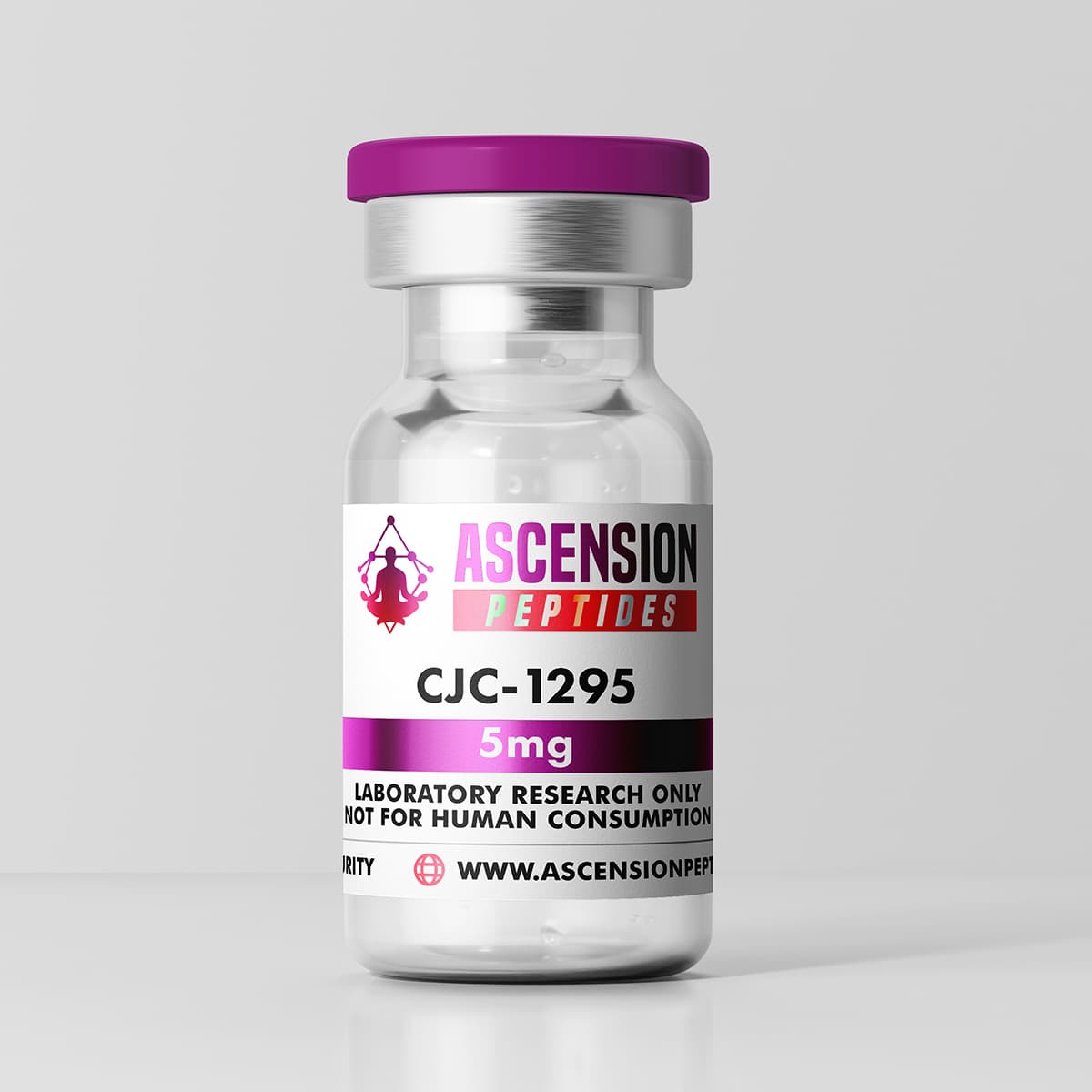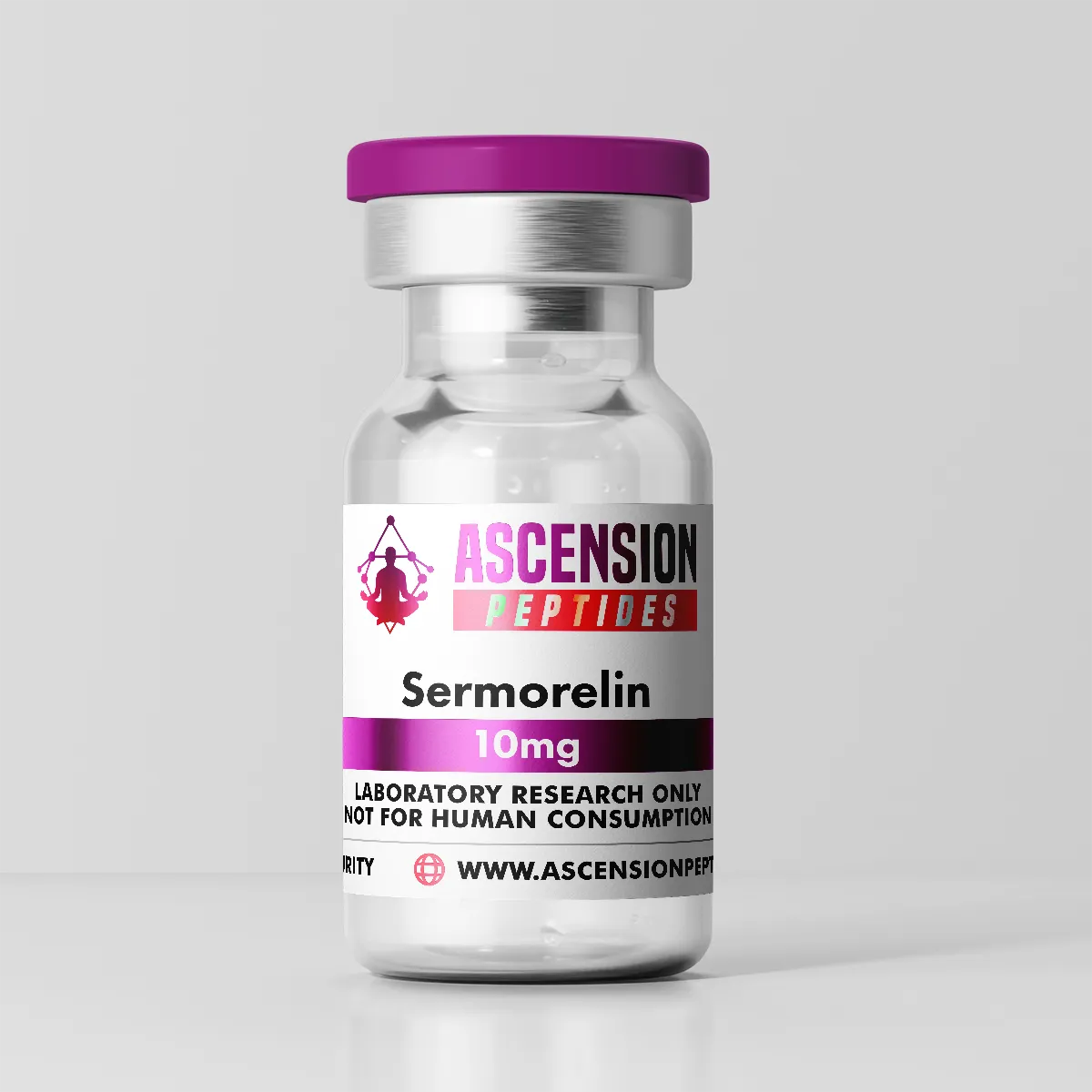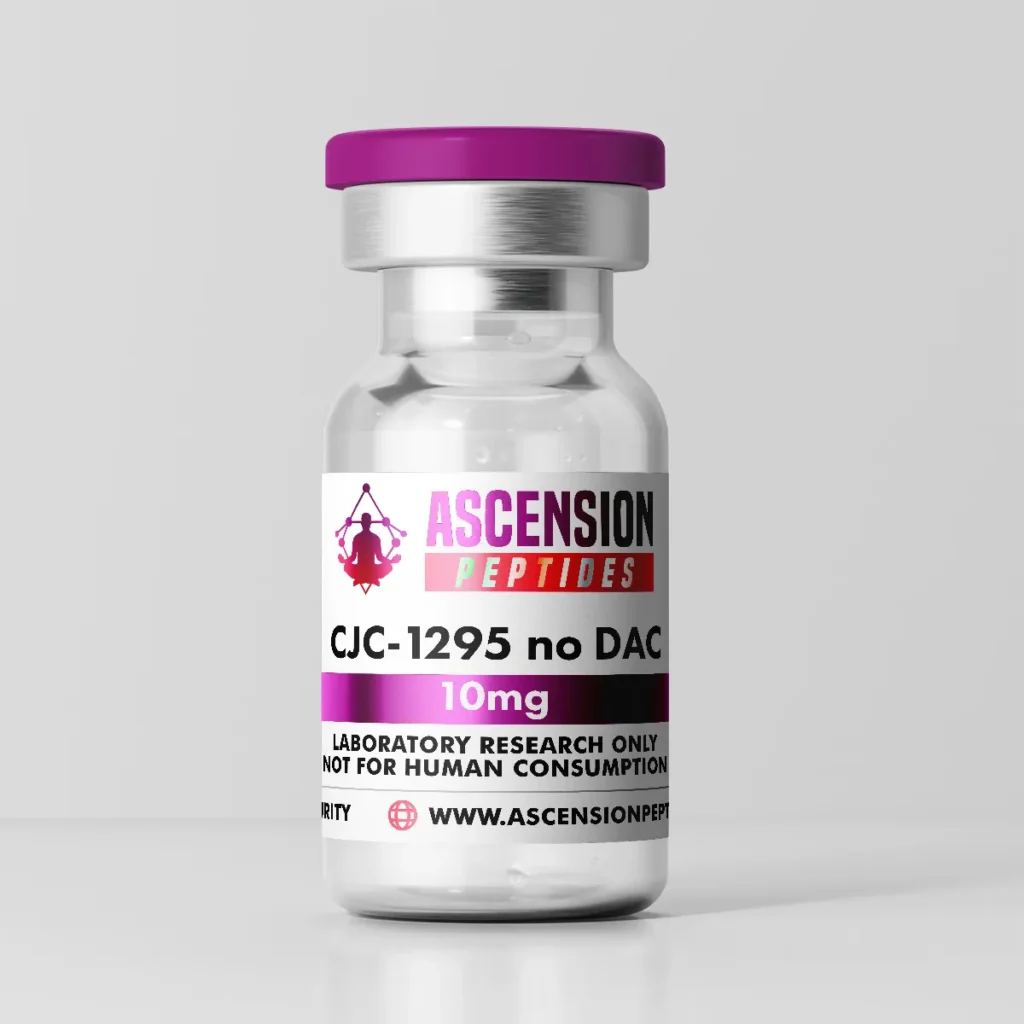
CJC-1295 and sermorelin are often pitched as rivals, but they are actually close cousins. Both are analogs of growth hormone-releasing hormone (GHRH), both push your own pituitary to release more growth hormone, and both are built on the same 29-amino-acid backbone. The real difference is not mechanism, it is time: sermorelin lasts minutes, CJC-1295 without DAC lasts roughly half an hour, and CJC-1295 with DAC lasts days. That single difference in half-life drives almost everything else, how often you inject, how steady your growth hormone and IGF-1 levels run, the side effect profile, and who each one suits. This guide compares the two head to head, with a side-by-side table and primary research.
🔑 Key Takeaways
- Both are GHRH analogs built on the same fragment. Sermorelin is the synthetic 1-29 sequence of natural growth hormone-releasing factor, and CJC-1295 is a modified version of that same hGRF(1-29) peptide.[2][3]
- The defining difference is half-life. Sermorelin has a plasma half-life of about 6 to 7 minutes after intravenous dosing, while CJC-1295 with DAC was measured at roughly 5.8 to 8.1 days in healthy adults.[1][3]
- CJC-1295 with DAC owes its long life to albumin binding: a maleimide group lets it attach to cysteine-34 on serum albumin, turning the bloodstream into a slow-release reservoir.[2]
- In a controlled human trial, CJC-1295 raised mean growth hormone 2- to 10-fold for 6 days or more and IGF-1 by 1.5- to 3-fold for 9 to 11 days, with IGF-1 staying above baseline up to 28 days after repeat dosing.[1]
- Sermorelin was once FDA-approved as Geref but was discontinued for commercial, not safety, reasons and is now compounded by prescription; CJC-1295 has never been FDA-approved and is sold as a research chemical.[4][5]
What CJC-1295 and Sermorelin Have in Common
Growth hormone-releasing hormone is the brain signal that tells the anterior pituitary to release growth hormone (GH), which in turn drives the liver to make insulin-like growth factor 1 (IGF-1). The active core of natural GHRH lives in its first 29 amino acids, so developers copied that fragment. Sermorelin is exactly that copy, a synthetic peptide consisting of the 1-29 amino acid sequence of natural growth hormone-releasing factor, and CJC-1295 starts from the same hGRF(1-29) peptide and then modifies it.[2][3]
Because they share a backbone, both bind the same target, the GHRH receptor on pituitary somatotrophs, and both amplify your body's own pulsatile GH release rather than injecting GH directly. That is why neither floods you with GH the way recombinant HGH does. Our roundup of the best growth hormone secretagogues places both peptides alongside GHRPs like ipamorelin.
The Core Difference: Half-Life
If you remember only one thing from this comparison, make it this. The three options you will actually be choosing between are sermorelin, CJC-1295 without DAC, and CJC-1295 with DAC, and they sit at three very different points on the half-life spectrum.
Sermorelin: Minutes
Sermorelin is the shortest acting. The official Geref product information lists a plasma half-life of about 6 to 7 minutes after intravenous dosing, with the peak GH response around 30 minutes (range 15 to 60) and the effect lasting roughly 2 to 3 hours.[3] That ultra-short life is by design: it produces a single clean pulse of GH that mimics the body's natural rhythm, then clears, which is why it is dosed nightly. For more, see our guide to whether sermorelin actually works.
CJC-1295 Without DAC (Modified GRF 1-29): About Half an Hour
CJC-1295 without DAC, often labeled Modified GRF (1-29), takes the sermorelin sequence and adds amino acid substitutions that resist enzymatic breakdown, pushing its working half-life to roughly 30 minutes, longer than sermorelin but still short. It does not carry the albumin-binding component, so it behaves like a sturdier sermorelin and is usually stacked with a GHRP and dosed several times a day. Our CJC-1295 with DAC versus without DAC breakdown explains why the no-DAC form is often preferred to preserve a natural pulse.
CJC-1295 With DAC: Days
The version that made CJC-1295 famous is the one with DAC, short for Drug Affinity Complex. Chemically, CJC-1295 is a tetrasubstituted form of hGRF(1-29) with an added maleimidopropionamide group on a C-terminal lysine. That maleimide reacts with the free thiol on cysteine-34 of circulating serum albumin, bonding the peptide to a long-lived carrier protein.[2] In rats, the bioconjugate appeared on the albumin band within 15 minutes and was still circulating beyond 72 hours,[2] and in healthy human adults the resulting half-life measured 5.8 to 8.1 days.[1] Instead of a quick pulse, you get a sustained elevation in GH and IGF-1, the so-called GH bleed. Our CJC-1295 peptide guide and CJC-1295 dosage guide go deeper.
Sermorelin vs CJC-1295: Side-by-Side Comparison
Here is the head-to-head at a glance, with CJC-1295 split into its two forms depending on whether the DAC component is present.
GH and IGF-1 Effect: Pulse vs Plateau
This is where the half-life difference becomes a real biological choice. Sermorelin delivers a sharp, transient GH pulse and lets levels fall, preserving the natural feedback loop. CJC-1295 with DAC instead holds GH and IGF-1 high for days: a single dose produced dose-dependent rises in mean GH of 2- to 10-fold lasting 6 days or more and in mean IGF-1 of 1.5- to 3-fold lasting 9 to 11 days, and after multiple doses IGF-1 stayed above baseline up to 28 days, with no serious adverse reactions reported.[1]
The trade-off is physiologic: a sustained plateau is convenient and drives larger total IGF-1 exposure, but it departs from the body's natural pulsatile pattern, which is why some clinicians favor shorter-acting options or the no-DAC form. If your interest is muscle and recovery via IGF-1, our growth hormone peptides ranked guide compares both against ipamorelin, tesamorelin, and hexarelin.
Why CJC-1295 is almost always stacked with a GHRP
A GHRH analog opens only one of the two GH levers; the second is the ghrelin or GHRP pathway, which is why CJC-1295 is usually paired with ipamorelin, acting on different receptors. Our ipamorelin plus CJC-1295 dosage guide explains the pairing.
Dosing and Frequency
There is no FDA-approved dose of either peptide for anti-aging or body composition, so the figures below summarize the diagnostic label and ranges commonly reported in compounded and research practice. They are context, not a protocol.
The practical headline is convenience versus control. Sermorelin and no-DAC CJC-1295 mean daily injections but tighter control and faster washout if you stop; CJC-1295 with DAC means as few as one or two injections a week but a long tail you cannot quickly reverse. For step-by-step protocols, see our sermorelin dosage guide.
Side Effects and Safety
Because both peptides act through the same GHRH receptor, their side effect profiles overlap heavily. The Geref label notes that facial heat, facial flushing, and injection-site pain occasionally occur and usually fade within minutes.[3] Across the growth hormone secretagogue class, commonly reported issues include injection-site reactions, transient water retention, tingling or numbness, head-rush sensations, and changes in insulin sensitivity, since elevated GH can nudge blood glucose upward.[5]
Where the two diverge is exposure. Sermorelin's minutes-long action means any effect is brief and self-limiting. CJC-1295 with DAC keeps GH and IGF-1 elevated for days, so effects like water retention, joint discomfort, or numbness can be more persistent and cannot be dialed back quickly once injected.[1] That is the main safety argument for choosing a shorter-acting GHRH if you are sensitive or new to these compounds. For specifics, compare our sermorelin side effects guide with our CJC-1295 side effects breakdown.
Who should be cautious with either peptide
- Anyone with active or prior cancer, since raising IGF-1 is theoretically undesirable.
- People with diabetes or impaired glucose control, because GH can reduce insulin sensitivity.[3]
- Anyone pregnant or breastfeeding; the Geref label advises against use.[3]
Regulatory Status and Cost
This is one of the cleaner distinctions. Sermorelin has an FDA history: it was marketed as Geref, and although later withdrawn from sale, the FDA formally determined that Geref was not withdrawn for reasons of safety or effectiveness.[4] That is why sermorelin can be legally prescribed today as a compounded medication through licensed pharmacies and telehealth clinics. CJC-1295, by contrast, has never been an approved drug and is sold strictly as a research chemical.[5]
On cost, sermorelin is generally the cheaper, more accessible monthly option thanks to the compounding pathway, while CJC-1295 with DAC can work out lower per injection because you dose it once or twice a week. For pricing and sourcing, see our breakdowns of sermorelin cost and prescription options and where to buy CJC-1295. Worth noting: the only GHRH analog with current FDA approval is tesamorelin (Egrifta), cleared in 2010 for excess abdominal fat in HIV-associated lipodystrophy, which our sermorelin versus tesamorelin guide covers separately.[6]
Which GHRH Comes Out Ahead?

There is no universal winner, only the right fit for a goal. Sermorelin suits people who want the most physiologic, lowest-commitment option: a nightly pulse that mirrors natural GH release, a real prescription pathway, and easy reversibility. CJC-1295 without DAC suits those wanting a slightly stronger, still-pulsatile signal who do not mind dosing a few times a day, usually with ipamorelin. CJC-1295 with DAC suits people who prioritize convenience and a sustained IGF-1 lift and accept trading the natural pulse and quick reversibility for one or two weekly injections.
If you are weighing these against other approaches, our best growth hormone peptides of 2026 ranks the whole field. Whichever you choose, half-life is the lever that defines the experience, so pick the duration that matches the control, convenience, and reversibility you want.
Frequently Asked Questions
Bottom Line
CJC-1295 and sermorelin are not opposites, they are the same GHRH idea engineered for different timeframes. Sermorelin is the unmodified GRF(1-29) peptide with a 6 to 7 minute half-life that produces a clean, natural GH pulse and has a legitimate compounded prescription pathway.[3][4] CJC-1295 stretches that backbone, dramatically so in the DAC version, which binds albumin to last days and holds GH and IGF-1 elevated for over a week per dose.[1][2] Choose sermorelin or no-DAC CJC-1295 for physiologic pulses, control, and fast reversibility; choose CJC-1295 with DAC when convenience and a sustained IGF-1 lift matter more. Neither is FDA-approved for these uses and the human data are limited, so involve a qualified clinician before starting either.
References
- Teichman SL, Neale A, Lawrence B, Gagnon C, Castaigne JP, Frohman LA. Prolonged stimulation of growth hormone (GH) and insulin-like growth factor I secretion by CJC-1295, a long-acting analog of GH-releasing hormone, in healthy adults. J Clin Endocrinol Metab. 2006;91(3):799-805 (PMID 16352683).
- Jette L, Leger R, Thibaudeau K, et al. Human growth hormone-releasing factor (hGRF)1-29-albumin bioconjugates activate the GRF receptor on the anterior pituitary in rats: identification of CJC-1295 as a long-lasting GRF analog. Endocrinology. 2005;146(7):3052-3058 (PMID 15817669).
- Serono Ltd. Geref 50 (sermorelin acetate) Summary of Product Characteristics. Irish Medicines Board (HPRA), revised May 2004.
- US FDA. Determination That GEREF (Sermorelin Acetate) Injection Was Not Withdrawn From Sale for Reasons of Safety or Effectiveness. Federal Register. 2013;78(42):14122.
- Sigalos JT, Pastuszak AW. The Safety and Efficacy of Growth Hormone Secretagogues. Sex Med Rev. 2018;6(1):45-53 (PMC5632578).
- Tesamorelin. LiverTox: Clinical and Research Information on Drug-Induced Liver Injury. Bethesda (MD): National Institute of Diabetes and Digestive and Kidney Diseases; updated 2018.