Key Takeaways
- Sermorelin price ranges from $50–$120/month (research vendor) to $150–$400/month (clinic), depending on your access route.
- Sermorelin cost is 5–10x lower than synthetic HGH, making it the most cost-effective path to GH optimization.
- How much does sermorelin cost through a compounding pharmacy? Typically $80–$200/month with a valid prescription.
- Most insurance plans do NOT cover sermorelin — budget as an out-of-pocket expense unless you have a documented GH deficiency diagnosis.
- Research vendors sell sermorelin legally for research purposes — no prescription required, but CoA verification is non-negotiable.
- Sermorelin was FDA approved (brand name Geref) but voluntarily discontinued in 2008 — it can still be legally compounded by licensed pharmacies.
If you've been looking into sermorelin, you've probably already hit the wall of confusing information. Is it expensive? Do you need a doctor? Will your insurance pay for any of it? Can you just buy it online?
The answers are: it depends, sometimes, almost certainly not, and yes — if you know where to look.
This guide breaks down every angle of sermorelin cost and access in 2026. No hype, no sugarcoating. Just a straight breakdown of what the sermorelin price actually looks like across different sources, how it compares to other growth hormone options, and how to make an informed decision about how to get it.
What Is Sermorelin, Really?
Sermorelin is a synthetic peptide — 29 amino acids — that mimics the first part of growth hormone-releasing hormone (GHRH). If you're wondering whether sermorelin actually works, the clinical evidence is compelling. When you administer it, your pituitary gland responds by releasing more of your own growth hormone. It doesn't replace GH; it stimulates your body to make more of it naturally.
That distinction matters. Sermorelin — a key part of modern peptide therapy — tends to produce a more natural, pulse-based release of growth hormone rather than the sustained spike you'd get from synthetic HGH injections. Many researchers and clinicians prefer this profile, especially for longer-term use. The lower sermorelin price relative to HGH is almost a bonus on top of the physiological advantages.
It's most commonly used in research and clinical settings related to growth hormone deficiency, age-related GH decline, recovery, and body composition — with distinct considerations for men vs women. Check out the complete sermorelin guide if you want the full picture before worrying about price.
Is Sermorelin FDA Approved?
This is probably the most misunderstood part of the sermorelin story. Yes — sermorelin was FDA approved. It was sold under the brand name Geref (sermorelin acetate for injection), approved in 1997 for diagnosing growth hormone deficiency in children.
But Geref was voluntarily discontinued by the manufacturer in 2008. The drug wasn't pulled for safety reasons — there were no scandals, no black box warnings, no FDA enforcement action. The manufacturer simply stopped selling it, likely due to market factors.
The practical takeaway: sermorelin's discontinuation as Geref doesn't mean it's banned or off-limits. It means you won't find it as a commercially available branded product. Your access points are compounding pharmacies (with a prescription) or research peptide vendors (without a prescription, for research use).
Is Sermorelin Legal?
Short answer: yes, through both pathways.
Via prescription + compounding pharmacy: Completely legal. A licensed physician writes you a prescription, a licensed compounding pharmacy fills it, and you use it under medical supervision.
As a research peptide: Also legal. Research peptide vendors sell sermorelin for in vitro research and non-clinical laboratory use. It's not sold for human consumption in this context — which is why no prescription is required. This exists in a well-established category of research chemicals that are legal to buy and possess.
For a deeper look at sourcing and legality, see our guide on the best place to buy sermorelin online.
The 3 Ways to Get Sermorelin — And What Each Costs
1. Prescription Through a Doctor or Anti-Aging Clinic
This is the gold standard route. You see a doctor — typically an endocrinologist, a functional medicine physician, or a men's/women's health clinic — they assess whether sermorelin is appropriate for you, and if so, they write a prescription. This is the highest sermorelin cost pathway, but it comes with the most oversight.
Typical sermorelin price: $150 to $400 per month
That range is wide because it includes the clinic's markup on the compounded medication, the consultation fees, and any monitoring costs (labs, follow-ups). Some clinics bundle everything into a monthly program fee. Others charge separately for each component.
Telehealth platforms have pushed costs down in recent years. You can now get a sermorelin prescription online through platforms like Defy Medical, Gameday Men's Health, or similar, often without ever setting foot in an office. Monthly programs through these providers often run $150–$250 including the medication — making telehealth one of the best ways to lower sermorelin cost while keeping medical oversight.
Pros of this route:
- Medical oversight — a doctor monitors your labs and adjusts dosing
- Pharmacy-grade compounded product with known concentration
- Small chance of partial insurance reimbursement (see below)
- You're not operating in any gray area
Cons:
- Most expensive sermorelin cost option by a significant margin
- Requires ongoing clinic relationship and lab costs
- Some clinics are profit-driven and push upsells aggressively
2. Compounding Pharmacy (With a Prescription)
Some people get a prescription from their doctor and then fill it directly at a compounding pharmacy rather than through the clinic's in-house pharmacy. This can cut the sermorelin cost substantially.
Typical sermorelin price: $80 to $200 per month
Compounding pharmacies that specialize in peptides — like Empower Pharmacy, Tailor Made Compounding, or Olympia Pharmacy — prepare sermorelin in-house. They're regulated by state pharmacy boards and, in some cases, the FDA (for 503B outsourcing facilities).
The catch: your doctor has to be willing to write a prescription that you can fill elsewhere. Not all clinics cooperate with this. Some require you to use their preferred pharmacy as part of their program.
Pros:
- Lower sermorelin cost than going through a clinic pharmacy
- Regulated, pharmaceutical-grade product
- Good quality control from reputable compounders
Cons:
- Still requires a prescription
- Requires a doctor willing to work with outside pharmacies
- Not all compounding pharmacies are equal — quality varies
3. Research Peptide Vendors (No Prescription)
This is where the majority of independent buyers end up. Research peptide vendors sell sermorelin without requiring a prescription, typically at significantly lower sermorelin prices than the clinical route.
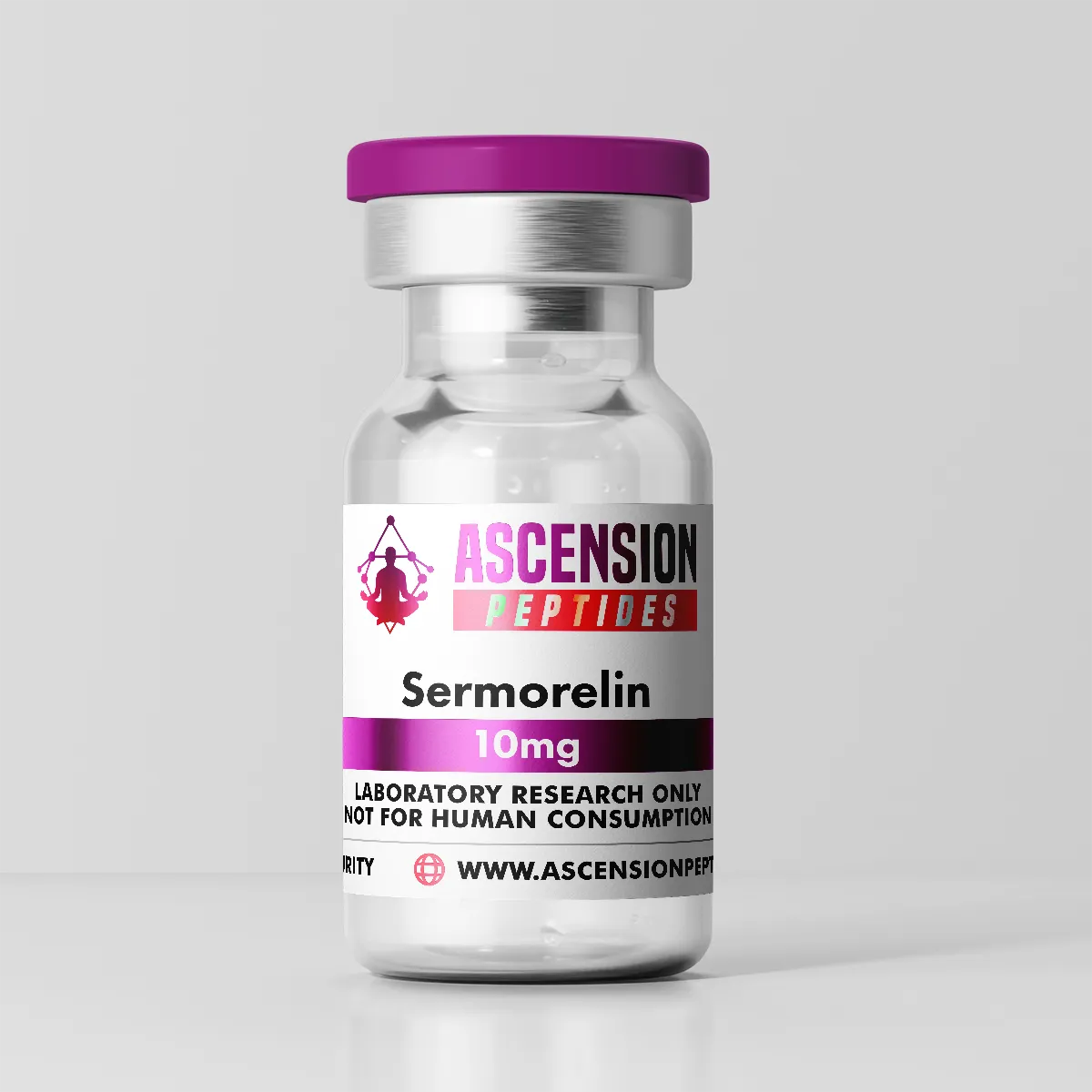
Typical sermorelin cost: $40 to $80 per vial (10mg)
A 10mg vial of sermorelin from a reputable research vendor will cost $40–$80 depending on the vendor and any promotions. At common dosing protocols, a single vial can last 2–4 weeks. So monthly costs in the $50–$120 range are realistic for many users — making the research vendor route the lowest sermorelin price by far.
Quality varies enormously in this space. That's the honest truth. The best vendors invest in third-party testing and post Certificates of Analysis (CoAs) for every batch. The worst ones sell underdosed or mislabeled products with no accountability.
More on how to evaluate vendors below.
Sermorelin Cost Comparison Table
Sermorelin Price vs HGH Price: Why Sermorelin Wins on Cost
If you've been researching growth hormone optimization, you've probably come across both sermorelin and synthetic HGH (somatropin). The sermorelin price advantage over HGH is one of the most compelling reasons people choose it — and the difference is substantial. Understanding how much does sermorelin cost relative to HGH is one of the first comparisons worth making.
Synthetic HGH — which we compare in depth in our peptides vs HGH analysis — prescribed through a licensed clinic typically runs $1,000–$3,000 per month for pharmaceutical-grade somatropin. Even through compounding pharmacies, synthetic HGH costs substantially more than sermorelin — commonly 5 to 10 times the sermorelin cost. Research-grade HGH from peptide vendors is also pricier per unit of effect than sermorelin.
Beyond the lower sermorelin price, there are physiological reasons many researchers and clinicians prefer sermorelin over direct HGH administration:
- Pulsatile, natural release: Sermorelin stimulates your pituitary to release GH in natural pulses rather than producing sustained hormone spikes that bypass the body's feedback mechanisms
- Preserves pituitary function: Continuous HGH administration can suppress the body's own production; the sermorelin mechanism actively supports pituitary function
- Lower risk profile at lower sermorelin cost: The sermorelin cost savings come with a comparatively milder side-effect profile versus supraphysiological HGH levels
For most people evaluating how much does sermorelin cost and weighing it against HGH, sermorelin is the clear winner on both cost efficiency and risk-to-benefit ratio — which is why it's become the preferred starting point for GH optimization in clinical and independent research settings alike.
Sermorelin Price vs Other GH Peptides
Sermorelin isn't the only growth hormone secretagogue on the market. Understanding where the sermorelin price sits relative to other GH peptides helps you make smarter protocol decisions. Here's how sermorelin cost compares across the most common alternatives:
The sermorelin cost sits in the middle of the GH peptide spectrum — cheaper than tesamorelin (which carries a premium due to its FDA approval history and more complex manufacturing), and broadly comparable to ipamorelin. Many protocols stack sermorelin with ipamorelin because the two compounds work via different receptor pathways (GHRH vs. ghrelin), producing synergistic GH release that's greater than either alone.
A combined sermorelin + ipamorelin stack typically costs $80–$150/month from a research vendor — still dramatically lower than synthetic HGH, and with a mechanistic rationale that single-compound protocols don't offer.
Does Insurance Cover Sermorelin?
This is the question everyone wants a yes to. The honest answer: almost never, but there are narrow exceptions.
Here's why coverage is so difficult to get:
Geref is discontinued. Insurance plans reference an approved drug's NDC (National Drug Code) for coverage decisions. Since the branded version no longer exists, there's no clear coverage pathway for most insurers.
Compounded drugs are a gray zone. Even when a compound is based on an FDA-approved drug, many insurance plans exclude compounded medications from coverage by default. Some plans cover compounded drugs only if the commercial equivalent is unavailable — but even that isn't consistent.
The diagnosis matters. If you have a legitimate, documented growth hormone deficiency, some insurers will consider coverage for sermorelin as a compounded GH secretagogue. Coverage for anti-aging or performance-related use? Essentially zero.
• IGF-1 levels (low baseline supports the diagnosis)
• Symptoms consistent with GH deficiency (fatigue, body composition changes, reduced quality of life)
• A diagnosis code (ICD-10: E23.0 for hypopituitarism, or E34.4 for constitutional short stature if applicable)
Even with all of this, most plans will still reject the claim. But a proper diagnosis gives you the only realistic shot at reimbursement or at least an HSA/FSA spend.
Most people pursuing sermorelin for wellness, anti-aging, or body composition purposes should simply plan to pay out of pocket. Budget the sermorelin cost accordingly.
One silver lining: if you have an HSA or FSA, sermorelin obtained via prescription from a compounding pharmacy likely qualifies as a medical expense. Check with your plan administrator — this can effectively reduce your after-tax sermorelin cost by 20–35% depending on your tax bracket.
Hidden Sermorelin Costs: What People Forget to Budget
When evaluating how much does sermorelin cost, most people focus only on the vial price. But the complete picture includes several ancillary expenses that add up, especially in the first month when you're buying supplies for the first time.
Research Vendor Route — Full Monthly Sermorelin Cost Breakdown
Clinical Route — Full Monthly Sermorelin Cost Breakdown
Is Sermorelin Worth the Cost? An ROI Framework
How much does sermorelin cost in terms of real value — not just dollars? Once you've decided the sermorelin price is within your budget, the right question is: what are you actually getting for that money?
The potential benefits that drive people to sermorelin — improved sleep quality, body composition changes, recovery, sustained energy, and general wellbeing associated with optimized GH levels — aren't cheap to pursue through other means. Consider what you'd spend on alternatives that partially overlap with sermorelin's effects:
- Personal trainer (2–3x/week): $300–$600/month
- High-end supplement stack (creatine, protein, adaptogens, sleep support): $150–$250/month
- Sleep coaching or advanced tracking tech: $50–$150/month
- Synthetic HGH equivalent: $1,000–$3,000/month
At $50–$150/month from a research vendor, the sermorelin price is lower than most multi-supplement stacks — and the mechanism of action is specific and well-documented compared to most general wellness supplements.
For people with low IGF-1 levels, age-related GH decline, or recovery-intensive goals, most researchers report the sermorelin cost is well justified by quality-of-life improvements — particularly around sleep depth and morning energy within the first 4–8 weeks. For people with normal GH function chasing marginal gains, the ROI is harder to quantify and the sermorelin price should be weighed more carefully against realistic expectations.
How to Reduce Your Sermorelin Cost
Whether you're on the clinical or research vendor path, there are legitimate strategies to keep the sermorelin price manageable without sacrificing quality or safety.
Six Strategies to Lower Your Sermorelin Price
1. Buy in larger quantities. Research vendors almost universally offer bulk discounts. Purchasing 3–5 vials at once versus single-vial orders can reduce the sermorelin price by 10–25%. If you're planning a 90-day protocol, buying in bulk upfront locks in a lower per-vial sermorelin cost.
2. Dose at the minimum effective level. More sermorelin isn't necessarily better. Many researchers find that 200–300 mcg/day produces results comparable to 500 mcg+ with fewer side effects. Lower doses mean slower vial consumption — directly reducing the monthly sermorelin cost without sacrificing efficacy.
3. Use telehealth if going clinical. Telehealth peptide clinics have dramatically lower overhead than brick-and-mortar anti-aging centers. Telehealth programs often cut the sermorelin price by 30–50% compared to in-person clinics while offering the same medical oversight and pharmacy-grade product.
4. Order labs independently. If you're on the clinical route, some clinics significantly mark up baseline and follow-up lab work. Services like Marek Health or direct-to-consumer lab ordering (LabCorp, Quest) can reduce what you spend on IGF-1 and GH panel testing — a meaningful savings when labs are required every 60–90 days.
5. Verify quality before prioritizing price. The cheapest sermorelin isn't always the best sermorelin cost value. Underdosed or mislabeled peptides mean you're using more vials to achieve the same effect. A $40 vial at 70% purity is worse value than a $65 vial with verified 99%+ purity. Always check CoAs before making cost the deciding factor when evaluating sermorelin price.
6. Stack strategically with ipamorelin. Combining modest doses of sermorelin (200 mcg) with ipamorelin (200 mcg) produces synergistic GH release that's typically stronger than either alone at higher individual doses — often at the same or lower total monthly sermorelin cost. It's the most efficient way to maximize GH output per dollar spent.
What to Look for in a Research Peptide Vendor
The research vendor space has matured a lot over the past five years, but it still has bad actors. Here's what separates the trustworthy from the sketchy when you're evaluating where to get the best sermorelin price without compromising quality.
Non-Negotiables
Third-party Certificates of Analysis (CoAs). Any legitimate vendor will have their products tested by an independent lab — typically HPLC (high-performance liquid chromatography) for purity and mass spectrometry for identity confirmation. CoAs should be batch-specific, not generic. If a vendor can't show you a recent CoA, walk away regardless of their sermorelin price.
Transparent company information. You should know who you're buying from. US-based operations with clear contact information, a real address, and responsive customer service are the baseline.
Reasonable pricing. If sermorelin is priced at $15 a vial, the economics don't work for a legitimate operation running proper QC. Too cheap is a red flag just like too expensive is suspicious when evaluating sermorelin cost.
No outrageous claims. Research vendors are legally prohibited from making medical claims about their products. If a vendor is explicitly marketing sermorelin for "HGH boosting in humans" or making specific therapeutic claims, they're either uninformed or operating recklessly.
Red Flags
- No CoAs, or CoAs that are obviously generic/template documents
- Sermorelin prices that seem impossibly low (below $30/vial)
- New website with no history or community mentions
- Payment methods that are sketchy or have no buyer protection
- Aggressive health claims on product pages
Why Ascension Peptides Stands Out
In the current research vendor space, Ascension Peptides has built a strong reputation for exactly the things that matter. Their sermorelin is third-party tested, they publish CoAs, and they've been consistent in the community for years. US-based, ships domestically, and their sermorelin price is competitive without being suspiciously cheap.
Their Sermorelin 10mg comes in at a sermorelin cost that makes monthly protocols genuinely accessible without cutting corners on quality. If you're comparing vendors, they're a logical starting point for anyone asking how much does sermorelin cost from a trustworthy source.
Third-party tested • CoA available • US-based • No prescription required
→ Shop Sermorelin on Ascension Peptides
Sermorelin Dosing — A Quick Overview
Sermorelin cost also depends on how much you're using. Dosing protocols vary based on goals, body weight, and individual response. The most common research protocols run sermorelin at 200–500 mcg per injection, once daily (typically before bed to align with the body's natural GH pulse).
At 200–300 mcg per day, a 10mg vial lasts roughly 30–50 days depending on preparation and reconstitution volume. At higher doses, the vial doesn't last as long — directly impacting monthly sermorelin cost.
For a detailed breakdown of dosing protocols, see our sermorelin dosage guide.
Frequently Asked Questions About Sermorelin Price
📚 References
- Walker RF. "Sermorelin: a better approach to management of adult-onset growth hormone insufficiency?" Clin Interv Aging. 2006;1(4):307-308. PubMed
- Prakash A & Goa KL. "Sermorelin: a review of its use in the diagnosis and treatment of children with idiopathic growth hormone deficiency." BioDrugs. 1999;12(2):139-157. PubMed
- Merriam GR et al. "Pharmacokinetics of growth hormone-releasing hormone in healthy subjects." J Clin Pharmacol. 2001;41(5):528-535. PubMed
- Frohman LA & Jansson JO. "Growth hormone-releasing hormone." Endocr Rev. 1986;7(3):223-253. PubMed
- Vittone J et al. "Effects of single nightly injections of growth hormone-releasing hormone (GHRH 1-29) in healthy elderly men." Metabolism. 1997;46(1):89-96. PubMed
- US FDA. "Drugs@FDA: Geref (sermorelin acetate for injection)." FDA Orange Book. Approval 1997, discontinued 2008. FDA