Most sermorelin side effects are mild and dose-dependent — but a few catch people off guard. Here's the full picture.
🔑 At a Glance
- Most common: Injection site redness/swelling (~25–35% of users)
- Systemic effects: Headache, flushing, water retention — usually early and mild
- Serious but rare: Allergic reaction, IGF-1 elevation, insulin resistance
- Dose-dependent: Lower doses (100–200mcg) dramatically reduce side effect risk
- Timeline: Most side effects resolve within 1–2 weeks as body adjusts
- Safer than: Synthetic HGH — no receptor desensitization, natural pulsatile release
Sermorelin works by stimulating your pituitary to release its own GH — not by flooding your system with exogenous hormone. That biological feedback loop is why its side effect ceiling sits well below synthetic HGH. But side effects still happen, and knowing which ones are common, which are rare, and how to manage each one makes a real difference in protocol outcomes. This guide covers all of it, based on clinical data and practitioner-reported patterns.
Common Side Effects: What to Expect
The majority of people using sermorelin experience at most one or two mild effects, usually in the first 1–2 weeks. Here's the full frequency breakdown:
If you want to understand whether sermorelin is actually working alongside managing side effects, see our guide on whether sermorelin works and what results to expect.
Injection Site Reactions: The #1 Issue
Injection site reactions are by far the most common sermorelin side effect, affecting roughly 1 in 4 to 1 in 3 users at some point during their protocol. This is a normal subcutaneous injection response — not a signal that something is wrong with the peptide itself.
What you'll typically see:
- Redness or warmth at the injection site — usually fades within 30–60 minutes
- Mild swelling or a small raised area at the needle entry point
- Itching that resolves on its own within an hour
- Occasional bruising if a small capillary is nicked
How to minimize injection site reactions:
- Rotate sites every injection — abdomen, outer thigh, upper arm
- Let the vial reach room temperature before injecting (cold peptide = more local irritation)
- Use a fine-gauge needle (27–29G) and inject slowly
- Don't inject into the same spot twice in a row
- Pinch the skin slightly to keep the needle subcutaneous, not intramuscular
Systemic Side Effects: Headache, Flushing, Water Retention, and More
Beyond the injection site, several systemic effects can occur — most tied to GH's vasodilatory and fluid-regulatory properties.
Facial Flushing
Brief warmth or redness in the face, appearing within 20–30 minutes of injection. It's a vasodilatory response triggered by the GH pulse. Usually lasts less than 30 minutes. More pronounced at higher doses and in the first few weeks. The simplest fix: inject before bed and you'll sleep through it entirely.
Headache
Mild headaches in roughly 12% of users, typically in the first two weeks. Caused by mild fluid shifts as GH influences sodium/water balance, or by direct vasodilatory effects. Staying well hydrated (1–2 extra glasses of water daily) significantly reduces occurrence. If headaches persist beyond week 2 or become severe, reduce dose by 25% and titrate back up more gradually.
Water Retention / Edema
GH stimulates IGF-1, which promotes sodium and water retention in the kidneys. This shows up as puffiness — most noticeably in hands, face, or ankles. At 100–200mcg/day, it's uncommon. At 300mcg+ it becomes a more consistent feature for some users. Moderating sodium intake and ensuring adequate hydration (counterintuitively) helps the body regulate fluid balance. If persistent, reduce dose and check IGF-1 levels.
Nausea
Typically first-week only, affecting ~8% of users. Injecting on an empty stomach at bedtime — rather than after meals — usually prevents it. If it persists beyond 2 weeks, dropping the starting dose by 25% and titrating up more slowly resolves it in most cases.
Sleepiness and Fatigue
GH peaks during slow-wave sleep, and sermorelin amplifies this. Some users feel unusually drowsy 1–2 hours after a bedtime injection. This is generally a sign the protocol is working — the GH pulse is pronounced enough to induce deeper sleep onset. It's an effect, not a problem. If it persists into the next day, try injecting slightly earlier in the evening.
Sleep Disturbances (Less Common)
A smaller subset of users experience the opposite — initial insomnia or vivid/unusual dreams in the first week. This is a transient adjustment effect as GH patterns shift. It almost always resolves within 7–10 days. If it doesn't, moving the injection timing to 30–45 minutes before intended sleep (rather than right at bedtime) often helps.
Dizziness and Taste Changes
Dizziness — likely from mild blood pressure fluctuations — affects ~6% of users. Injecting lying down and staying horizontal for a few minutes afterward prevents most cases. Taste changes (metallic or altered taste sensation) are reported by ~4% of users early in a protocol and typically resolve within 2 weeks without intervention.
Joint Pain / Stiffness
At higher doses or with prolonged use, elevated IGF-1 can cause joint stiffness — most commonly in wrists, knees, and hands. This is the same mechanism responsible for joint pain in exogenous HGH users, though typically less pronounced with sermorelin due to the pituitary feedback ceiling. Dose reduction usually resolves it within 2–3 weeks. If it persists, pull an IGF-1 panel.
Serious Side Effects and Contraindications
Allergic Reactions (Rare but Serious)
Hypersensitivity reactions are uncommon (<1%) but can be serious. Warning signs: hives, facial swelling, throat tightness, difficulty breathing, rapid heartbeat. If any of these occur after injection, seek emergency care immediately. Patients with known hypersensitivity to sermorelin or GHRH analogs should not use it.
IGF-1 Elevation Risk
With prolonged use — especially at higher doses — IGF-1 can accumulate above the normal range. Chronically supraphysiological IGF-1 has been associated (in epidemiological data) with increased risk for certain cancers, though causality is debated and primarily relevant at levels well above normal. The practical precaution: baseline IGF-1 blood test before starting, recheck at 3 months, keep it in the upper-normal range — not above it.
Insulin Resistance
GH is counter-regulatory to insulin. At therapeutic doses in healthy individuals, the effect is modest. But in people with pre-diabetes, metabolic syndrome, or type 2 diabetes, sermorelin can worsen blood sugar control. Monitor fasting glucose and HbA1c if you have any blood sugar concerns.
Increased Intracranial Pressure (Rare)
Rarely documented with GH-axis stimulation — symptoms include severe headache with visual changes, confusion, or neurological symptoms. Requires immediate discontinuation and medical evaluation.
Carpal Tunnel Syndrome
The fluid retention associated with elevated IGF-1 can compress the median nerve in the carpal tunnel. Occurs in <2% of users, typically only at sustained high doses over months. Key: act on early symptoms (tingling, numbness in fingers) before they progress. Caught early, it fully resolves after dose reduction or stopping. Ignored for months, some nerve damage may not fully reverse.
Absolute contraindications — do NOT use sermorelin if you have:
- Active cancer — GH and IGF-1 are mitogenic; contraindicated without exception
- Pituitary tumor or active pituitary disease — stimulating a compromised pituitary is unpredictable
- Untreated hypothyroidism — blunts response significantly; fix TSH first
- Pregnancy or breastfeeding — no safety data; avoid entirely
- Under 18 years old — GH axis still developing; self-administered protocols are not appropriate
- History of hormone-sensitive cancer — relative contraindication; discuss with oncologist
Sermorelin vs Ipamorelin vs CJC-1295: Side Effect Comparison
If you're choosing between GHRH peptides, the side effect profiles differ in meaningful ways. See our detailed ipamorelin vs sermorelin comparison for the full breakdown — but here's the quick summary:
The summary: Ipamorelin has the cleanest side effect profile of the three — it selectively stimulates GH without elevating cortisol or prolactin, and produces less water retention. Sermorelin's advantage is its natural GHRH mechanism and long safety track record. CJC-1295 is convenient (fewer injections) but the sustained IGF-1 elevation makes water retention and joint effects more likely. For dosing protocols, see our CJC-1295 dosage guide.
Many users combine ipamorelin + CJC-1295 specifically to get sustained GH release with a cleaner side effect profile than sermorelin at equivalent doses. Worth knowing before you choose.
How to Minimize Side Effects
1. Start at 100mcg/day and titrate up
The most common mistake is jumping to 200–300mcg immediately. Starting at 100mcg for 2–3 weeks lets you assess individual sensitivity before stepping up. Many people find 100–200mcg delivers most of the benefit with far fewer side effects.
2. Inject before bed, fasted
Nighttime injections time the peptide's GH pulse to coincide with slow-wave sleep — where the largest natural GH release occurs anyway. Fasted state maximizes the pulse size and minimizes nausea. This single protocol change eliminates flushing as a practical concern for most users.
3. Rotate injection sites every dose
Abdomen, outer thigh, upper arm — rotate systematically. Never inject the same spot two times in a row. This alone dramatically reduces injection site reactions.
4. Stay hydrated
GH stimulates fluid shifts. Drinking adequate water (and not restricting sodium excessively) reduces headache frequency and softens the water retention effect. Aim for 2.5–3L/day on protocol.
5. Use fine-gauge needles, room-temperature vial
A cold peptide solution causes more local irritation. 27–29G needles minimize tissue trauma. Both reduce injection site reaction frequency significantly.
6. Monitor IGF-1 at 3 months
At standard therapeutic doses, most users won't push IGF-1 above normal. But monitoring confirms it — and gives you the data to make dose adjustments before side effects develop. See our complete sermorelin guide for the full monitoring protocol.
7. Cycle — don't run continuously beyond 6 months
Typical protocol: 3–6 months on, 4–8 weeks off. The break allows pituitary receptor sensitivity to recover and prevents IGF-1 from accumulating over time. This is the single biggest factor in long-term side effect management.
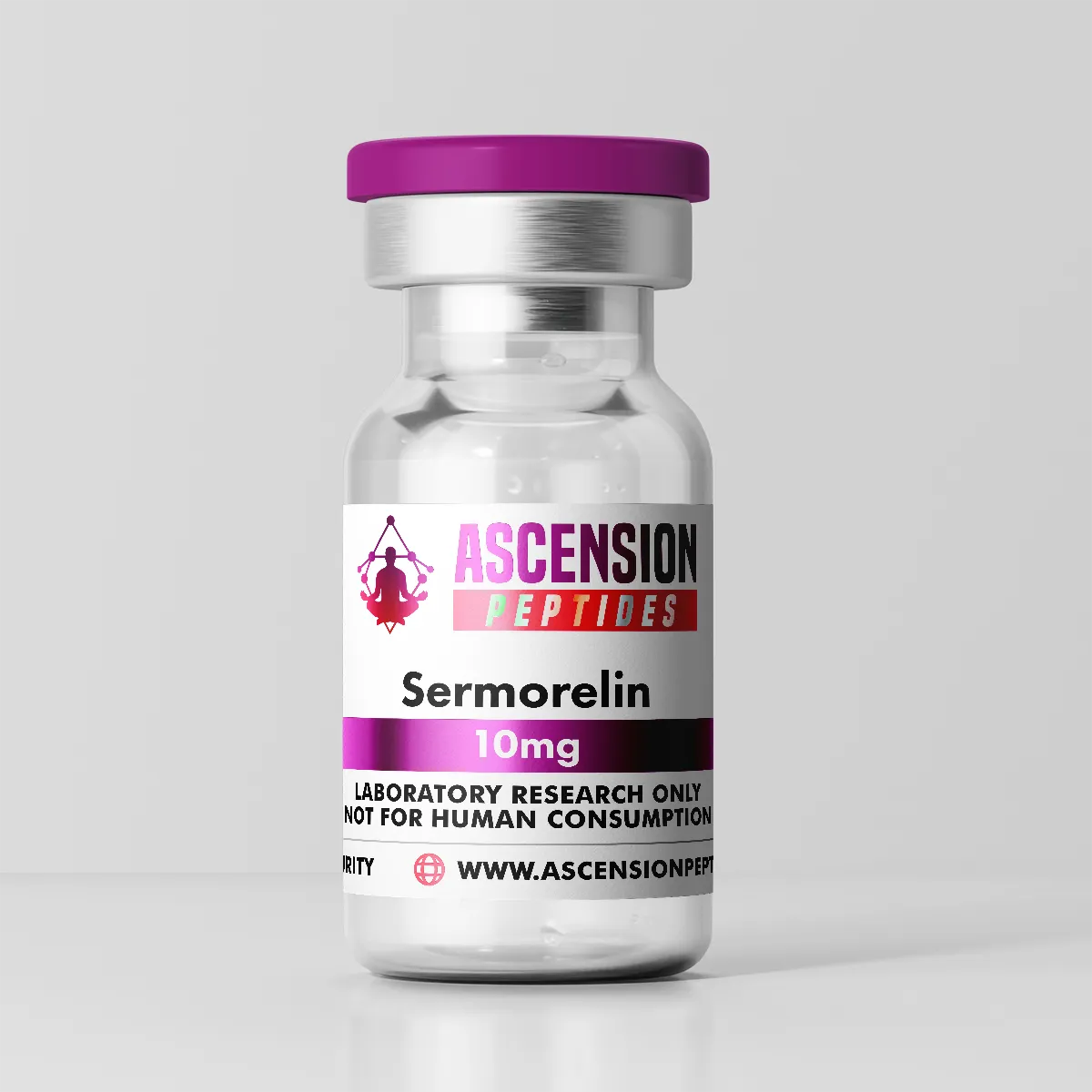
Ready to start a proper sermorelin protocol? Ascension Peptides carries pharmaceutical-grade Sermorelin 10mg — third-party tested, consistently dosed.
When Side Effects Warrant Stopping
Most sermorelin side effects don't require stopping — they require a dose adjustment or protocol tweak. But some warrant immediate discontinuation:
- Signs of allergic reaction — hives, facial swelling, breathing difficulty. Stop and seek emergency care.
- Progressive carpal tunnel symptoms — don't wait. Tingling/numbness that's worsening week-over-week needs dose reduction or stopping, not monitoring.
- Severe or worsening headaches with visual changes — potential increased intracranial pressure. Discontinue and see a physician.
- Significant joint pain that doesn't resolve with dose reduction — pull IGF-1 levels. If above range, stop until normalized.
- Blood sugar control worsening (if diabetic or pre-diabetic) — consult your physician about whether to continue.
- New or unexplained lumps, swellings, or abnormal tissue changes — discontinue and seek medical evaluation.