
Does HRT cause weight gain? The short answer, backed by a Cochrane systematic review of hormone therapy trials, is no: there is no good evidence that HRT itself causes meaningful weight gain [1]. The pounds many women notice in their 40s and 50s are driven by menopause and aging, not by the estrogen or progestogen in a patch or pill. Hormone therapy can cause temporary bloating and fluid retention that feels like weight gain, and in some cases it may actually help shift fat away from your midsection. Here is what the evidence, and the research on HRT and weight loss, really shows.
| Quick fact | What it means |
|---|---|
| A Cochrane review of HRT trials found no significant effect on body weight or body fat | HRT is not a cause of weight gain in the research [1] |
| Women gain roughly 0.5 kg (about 1 lb) per year in midlife | This happens with or without HRT [4] |
| In the 3-year PEPI trial, women on hormone therapy gained slightly less than those on placebo | If anything, hormones nudged the scale the other way [6] |
| Across the menopause transition, fat shifts toward the belly and muscle declines | The change in body shape is menopause and aging, not the medication [4][8] |
🔑 Key Takeaways
- HRT is not the cause. Controlled trials and a Cochrane review find no meaningful weight gain from hormone therapy itself [1][6].
- Menopause redistributes fat to your belly. Falling estrogen shifts fat storage to the midsection and lean muscle declines with age, which slows metabolism [4][8].
- Progestogen bloating is not fat. Fluid retention can feel like weight gain but is usually temporary and often improves with a change in dose or type [2].
- HRT is not a weight-loss drug, but by easing sleep, mood, and hot flushes it can make weight management easier and may limit central fat gain [1][3].
- Strength training plus protein is the highest-leverage fix, because protecting muscle is what protects your metabolism [5].
Does HRT Cause Weight Gain? The Short Answer
No. Across the best available research, HRT and weight gain are not causally linked. The Cochrane review of randomized trials concluded there is no evidence that hormone therapy causes weight gain or increases body fat compared with placebo [1]. The NHS puts it plainly: there is little evidence that most types of HRT make you put on weight, and any weight gained during this stage of life usually happens whether you take HRT or not [2].
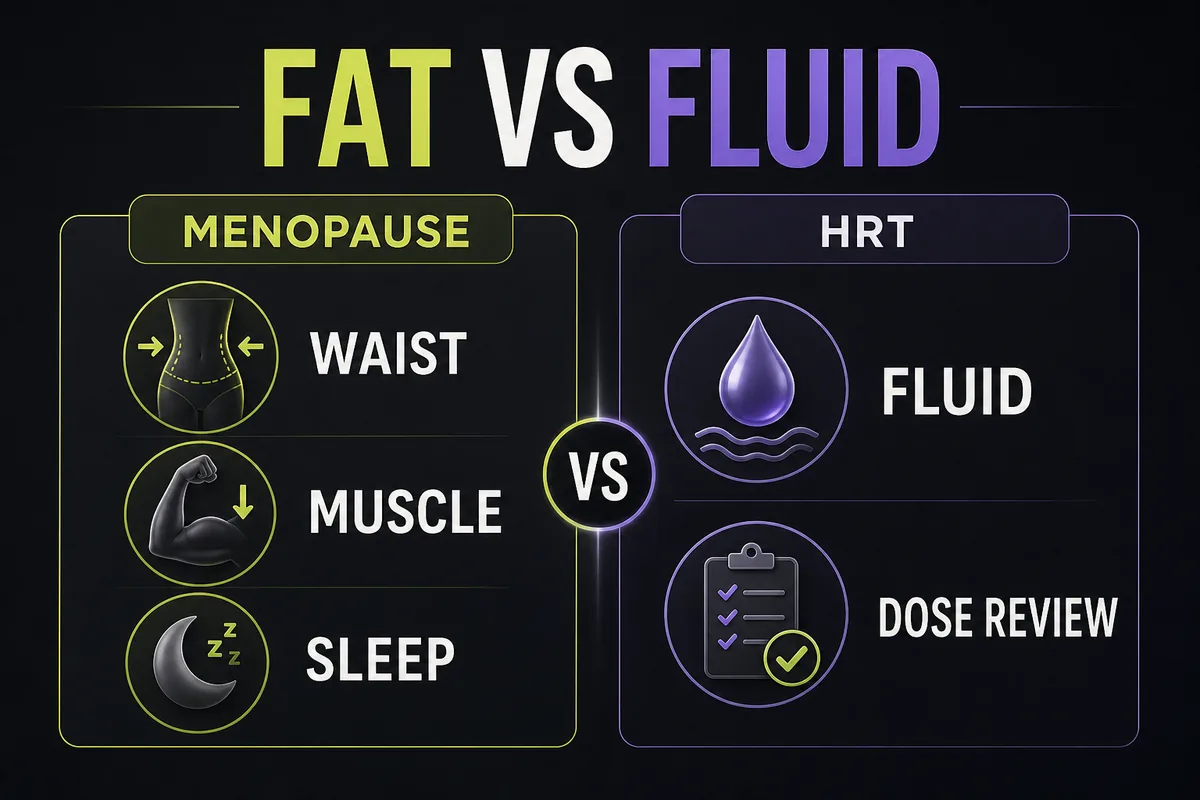
If anything, the trial data lean the other way. In the 3-year PEPI trial, women taking hormone therapy gained slightly less weight and kept a smaller waist measurement than women on placebo [6]. So the common worry that "HRT weight gain" is inevitable does not hold up. Can HRT cause weight gain in an individual sense? It can cause short-term fluid shifts, and every body responds differently, but as a group HRT does not make you gain fat.
Menopause weight gain vs HRT side effect: how to tell the difference
The most useful thing you can do is separate menopause weight gain from a genuine HRT side effect. They look different, arrive on different timelines, and respond to different fixes.
| Sign | More likely menopause or aging | More likely HRT-related (usually temporary) |
|---|---|---|
| Timing of onset | Gradual, building over months and years | Starts in the first weeks of a new regimen |
| Where it shows | Belly fat, thicker waistline | All-over puffiness, breast tenderness, bloating |
| Scale pattern | Slow, steady rise | A quick 1 to 3 lb that fluctuates day to day |
| What it responds to | Strength training, diet, and time | A dose or type adjustment |
| What to do | Focus on muscle and protein | Review with your prescriber after about 3 months |
Sources: NHS [2], Cochrane review [1], and the International Menopause Society review of weight gain at menopause [4].
Why Am I Gaining Weight on HRT?
If you are asking why am I gaining weight on HRT, the honest answer is usually that the timing is a coincidence: you started hormone therapy during the same window that menopause and aging were already changing your body. Here are the real drivers behind weight gain on HRT.
Menopause shifts fat to your midsection
Menopause itself does not create large amounts of new fat, but it does move fat to the abdomen. As estrogen falls, fat storage shifts from the hips and thighs toward the belly, which is why the waistline thickens even when the number on the scale barely moves [4]. Body-composition data from the SWAN study show fat mass rising and lean mass falling across the transition [8].
Muscle loss slows your metabolism
From your 40s onward you gradually lose muscle, and muscle is metabolically active tissue. Less muscle means you burn fewer calories at rest, on the order of a couple hundred fewer calories a day for many women, so the same eating pattern that once maintained your weight now slowly adds to it [8]. This is aging, not the patch.
Progestogen fluid retention and bloating
The part of HRT most likely to make you feel heavier is the progestogen, which can cause fluid retention, bloating, and breast tenderness. This is water, not fat, it is usually temporary, and it often settles within the first few months [2]. If it lingers, a change in progestogen type or dose frequently helps. Our full guide to HRT side effects covers this in more detail.
Appetite returning as symptoms improve
When HRT relieves poor sleep, anxiety, and low mood, your appetite can normalize back to where it was before menopause disrupted it. Some women read that as HRT increasing appetite, when it is really the return of a normal appetite after a rough patch. The fix is the same as always: mind portions and protein.
When it is not the HRT
Persistent, unexplained weight gain is worth checking out rather than blaming on hormones. An underactive thyroid, insulin resistance, and certain other medications can all drive weight up. If your weight keeps climbing despite steady habits, that is a conversation to have with your clinician rather than a self-diagnosis.
Weight Gain With HRT Patches, Pills, and Other Types
Does the type of HRT matter for weight? Not in the way most people fear. There is no good evidence that any one delivery method causes more weight gain than another, and searches for "weight gain with HRT patches" are not backed by the trial data [1][2]. Where oral and transdermal forms genuinely differ is clot risk, not weight [7].
| HRT type | Weight gain evidence | Bloating or fluid retention potential | Notes |
|---|---|---|---|
| Oral estrogen tablets | No evidence of weight gain vs placebo [1][6] | Low to moderate | The choice is usually about clot risk, not weight [7] |
| Transdermal patches and gels | No evidence patches cause more weight gain than other forms [1][2] | Low | The "weight gain with HRT patches" worry is not supported by trials [1] |
| Combined estrogen plus progestogen | No significant weight effect in reviews [1] | The progestogen part is the more common bloating trigger [2] | Switching progestogen type or dose can ease bloating [2] |
| Micronized progesterone vs synthetic progestins | No evidence of a weight difference between them | Bloating is individual; some women prefer micronized progesterone | Discuss the options with your prescriber [7] |
| Testosterone add-on | No evidence of weight gain; supports lean muscle where there is a deficiency | Low | Prescribed for symptoms, not weight; off-label for women in the US [7] |
| Vaginal or local estrogen | No systemic weight effect expected [2] | None expected | Acts locally with minimal absorption |
If you are weighing delivery methods, our guide to HRT patches walks through how they compare. The takeaway for weight: pick the form that fits your symptoms and safety profile, because none of them is a fat-gain risk.
Does HRT Help With Weight Loss?
Here is the half of this question the internet mostly skips. Does HRT help with weight loss? Not directly. Hormone therapy is not approved or prescribed as a weight-loss treatment, and no honest clinician will hand you a patch expecting the pounds to fall off [3]. So if you are asking will HRT help me lose weight in the way a diet or a GLP-1 medication would, the answer is no.
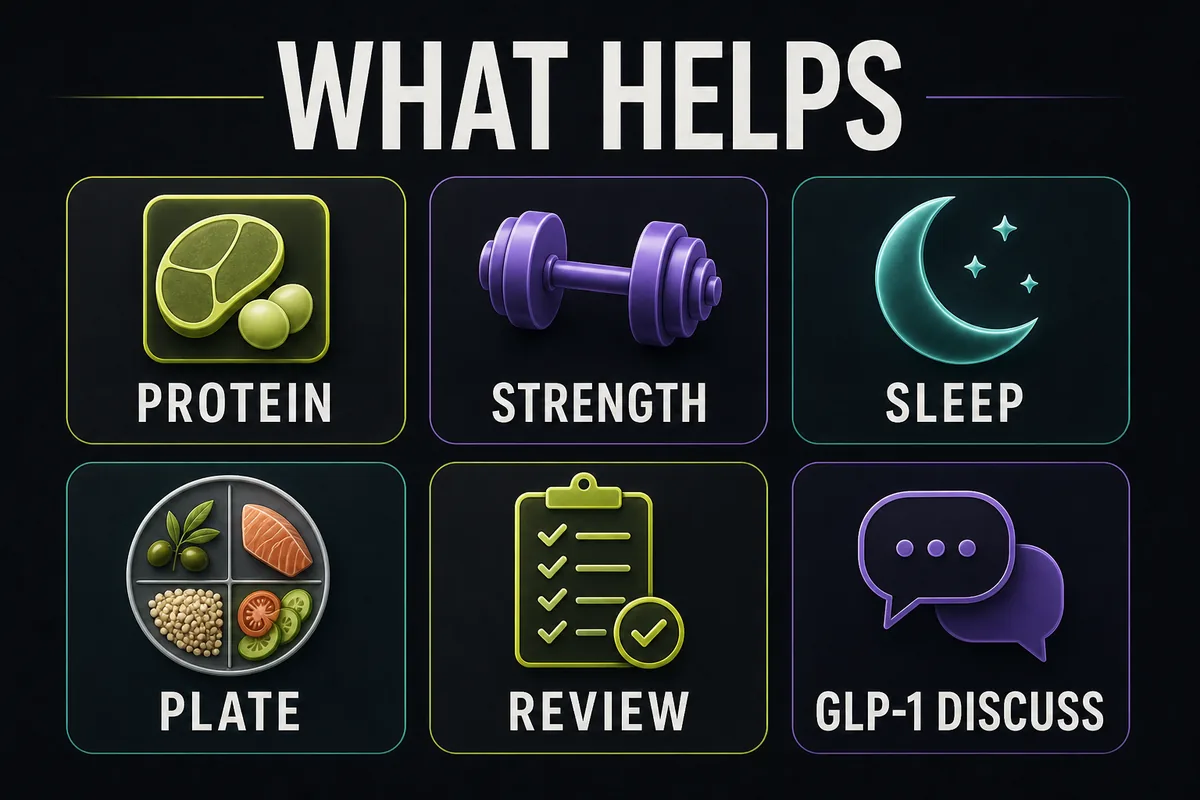
But HRT and weight loss are not unrelated either. Evidence suggests estrogen therapy can limit fat accumulation around the middle, and by improving sleep, energy, mood, and possibly insulin sensitivity, HRT can remove some of the barriers that make weight management harder in midlife [1][3][4]. That is a supporting role, not a starring one. For most women looking into HRT for weight loss, the realistic framing is: HRT can help you feel well enough to do the things that actually move weight.
What HRT can realistically do
Used for its real purpose, symptom relief, hormone therapy may redistribute fat away from the abdomen and support better sleep and steadier energy, which indirectly help weight management [1][3]. Does HRT help weight loss on its own? Marginally at most, and mainly by making the lifestyle levers easier to pull.
What HRT cannot do
HRT will not produce clinically meaningful weight loss, and it is not a substitute for nutrition, strength training, or, where appropriate, a dedicated weight medication. Any brand or clinic promising that HRT alone melts fat is overselling. Will HRT help with weight loss enough to skip the basics? No.
How Long Does It Take to Lose Weight on HRT?
There is no set timeline, because HRT is not a weight-loss drug, but a few things follow a rough sequence. Early bloating and fluid retention usually settle over about three months as your body adjusts [2]. Sleep, mood, and energy often improve within a few weeks to a few months, which is when many women feel able to be more active [3]. Actual changes in body composition only come from training and diet, sustained over months, not from the hormones themselves. If you want to know how the medication itself ramps up, see how long HRT takes to work.
HRT weight loss before and after: what to realistically expect
Searches for HRT weight loss before and after turn up dramatic transformation photos, but those are not what the evidence describes, and we will not invent testimonials to match them. What studies and clinicians actually report, on average, is modest: a smaller waistline from fat redistribution rather than a big drop on the scale, plus the indirect benefit of feeling well enough to move more and sleep better [1][3][4]. Has anyone lost weight on HRT? Some women do, but the weight loss tracks their diet and exercise, with HRT playing a supporting part. Expect steadiness, not a headline.
Will I Lose Weight If I Stop HRT?
Probably not. Stopping HRT does not reverse midlife weight gain, because that gain is driven by aging and menopause rather than the medication [1][2]. In fact, quitting can bring symptoms back, poorer sleep, hot flushes, and low energy, which tend to make weight harder to manage, not easier. If your goal in stopping is weight loss, the evidence does not support it. For the tapering and symptom questions around this decision, see what happens when you stop HRT.
How to Lose Weight While on HRT
If weight is your goal, the levers that work are the same on HRT as off it, and hormone therapy simply makes them easier to sustain by keeping you rested and symptom-free.
Protein and strength training first
Muscle is the metabolic lever, so protecting and building it is the highest-value move. Most guidelines point to about 150 minutes of moderate activity per week plus two strength sessions, paired with enough protein to support muscle [3][5]. This does more for midlife body composition than any amount of cardio alone.
Mediterranean-style eating pattern
A Mediterranean-style pattern, built on vegetables, legumes, whole grains, fish, nuts, and olive oil, is the eating approach most consistently linked to better weight and metabolic health at menopause [5]. It is flexible and sustainable, which matters more than any short-term diet.
Sleep and cortisol
Poor sleep raises the hunger hormones that push appetite up and willpower down, and menopause is hard on sleep. Improving sleep, and managing stress so cortisol stays in check, quietly supports every other effort you make [5].
GLP-1 medications alongside HRT
If weight loss is your main goal, GLP-1 medications are the evidence-backed route, and HRT is not a replacement for them. These medications are generally considered for people who meet BMI criteria, typically a BMI of 30, or 27 with a weight-related condition [3]. They can be used alongside hormone therapy, but combining them is a decision to make with your prescriber rather than something to start on your own. If you want to understand the options, read our guides to microdosing semaglutide and tirzepatide's off-label uses including menopause, and see our overview of peptides for menopause. Some clinicians are also studying whether hormone therapy influences how women respond to GLP-1 medications, but that remains an open question to raise with your provider.
When to Talk to Your Clinician
Book a review if you keep gaining weight after about three months on HRT, if bloating is not settling, or if the gain is rapid and unexplained. Your clinician may adjust your dose or switch your progestogen type, and may check for other causes such as an underactive thyroid before making changes [2][7]. This is a discussion to have with your prescriber, not a change to make yourself. If you are still deciding whether hormone therapy is right for you, our overviews of HRT for women: benefits and risks and HRT for menopause are good starting points.
Frequently Asked Questions
References
- Norman RJ, Flight IH, Rees MC. Oestrogen and progestogen hormone replacement therapy for peri-menopausal and post-menopausal women: weight and body fat distribution. Cochrane Database of Systematic Reviews, 2000, CD001018. https://pubmed.ncbi.nlm.nih.gov/10796730/
- NHS. Side effects of hormone replacement therapy (HRT). Accessed 2026. https://www.nhs.uk/medicines/hormone-replacement-therapy-hrt/side-effects-of-hormone-replacement-therapy-hrt/
- UChicago Medicine (Monica Christmas, MD). Why am I gaining weight so fast during menopause? And will hormone therapy help? https://www.uchicagomedicine.org/forefront/womens-health-articles/menopause-weight-gain-hormone-therapy
- Davis SR, Castelo-Branco C, Chedraui P, et al. Understanding weight gain at menopause. Climacteric, 2012;15(5):419-429. https://pubmed.ncbi.nlm.nih.gov/22978257/
- Mayo Clinic. Menopause weight gain: Stop the middle age spread. Accessed 2026. https://www.mayoclinic.org/healthy-lifestyle/womens-health/in-depth/menopause-weight-gain/art-20046058
- Espeland MA, Stefanick ML, Kritz-Silverstein D, et al. Effect of postmenopausal hormone therapy on body weight and waist and hip girths (PEPI trial). Journal of Clinical Endocrinology and Metabolism, 1997;82(5):1549-1556. https://pubmed.ncbi.nlm.nih.gov/9253293/
- The Menopause Society (NAMS). The 2022 Hormone Therapy Position Statement. https://menopause.org/professional-resources/position-statements
- Greendale GA, Sternfeld B, Huang M, et al. Changes in body composition and weight during the menopause transition (SWAN). JCI Insight, 2019;4(5):e124865. https://pubmed.ncbi.nlm.nih.gov/30843880/
Disclosure: this article contains affiliate links to Gala Health. If you start care through them, we may earn a commission at no extra cost to you.