BPC-157 has numbers now. For most of a decade the peptide lived on anecdote: a podcast mention here, a forum thread there, and a stack of small studies almost nobody outside Zagreb had read. In 2026 that changed. An FDA advisory committee voted on it, a Phase 2 trial started recruiting, a Congressional bill was numbered for it, and enough people searched for it that the data trail is now measurable. This page collects the BPC-157 statistics that actually exist, each one linked to where it came from.
🔑 Key Takeaways
- The regulatory clock restarted in 2026. Four federal events in five months, and none of them made BPC-157 legal to compound. The timeline below shows why the April change was misread.
- The human evidence fits in one paragraph. FDA found five studies. The only controlled one is a 2005 conference abstract, and the largest published one enrolled 17 people.
- Attention peaked before the evidence did. Wikipedia readership rose 50% in 2025, then flattened in 2026 even as the FDA vote landed.
- People ask how much, not whether. Nearly a third of the questions put to PeptideDeck's AI coach are about dose; under 1% mention side effects.
- Prices span 3.9x per milligram across the vendors tracked here, and the clinic and influencer prices below are a different order of magnitude again.
BPC-157 Regulatory Statistics: FDA, WADA, DoD and Congress
Six dates matter.
Everything else people argue about online is a misreading of one of them. BPC-157 has never been approved by the FDA for any use, and the question in front of regulators in 2026 was narrower: whether licensed compounding pharmacies should be allowed to make it to order.
The FDA compounding timeline
- September 29, 2023: FDA added BPC-157 and 18 other substances to Category 2 of its interim 503A bulk-substances policy, the tier for nominated substances with "significant safety concerns", which barred compounding pharmacies from using them. (FDA 503A category update, 2023)
- Immunogenicity and peptide-related impurities are the two concerns FDA's Category 2 page still lists for BPC-157. (FDA, 2026)
- February 27, 2026: HHS Secretary Robert F. Kennedy Jr. said on the Joe Rogan Experience that most of the 19 Category 2 peptides would be considered for reclassification. (Banned Substances Control Group, 2026)
- April 2026: FDA republished its interim 503A list announcing its intent to remove 12 peptides from Category 2, BPC-157 first among them, after both of its nominators (Wells Pharmacy Network and LDT Health Solutions) withdrew; FDA chose to evaluate the substance on its own initiative. (Frier Levitt, 2026; FDA briefing document, 2026)
- April 16, 2026: a Federal Register notice under docket FDA-2025-N-6895 scheduled the two-day Pharmacy Compounding Advisory Committee meeting on BPC-157 and six other peptides for July 23 and 24. (Federal Register, 2026)
- 4 uses were nominated for BPC-157 (ulcerative colitis, Crohn's disease, celiac disease and tendonitis), FDA evaluated only ulcerative colitis, and the nominated products were 250 µg, 500 µg and 1 mg capsules plus a 2,000 µg/mL injection. (FDA briefing document, 2026)
- FDA staff proposed that BPC-157 not be added to the list, citing inadequate characterization of the substance, insufficient evidence of effectiveness for the one evaluated use, and unresolved safety questions. (FDA briefing document, 2026; PeptideDeck breakdown)
- July 23, 2026: the committee voted 8 in favor, 6 against, with 1 abstention to recommend BPC-157 anyway; KPV and TB-500 passed by the same 8–6–1 margin and MOTS-c by 7–5 with two abstentions. (Pharmaceutical Executive, 2026; Time, 2026)
- July 24, 2026: semax and epitalon were recommended and emideltide was rejected 6–7, ending the meeting with 6 of 7 peptides recommended against FDA staff advice on all seven. (ArentFox Schiff, 2026)
- 8 members of the panel had been appointed in 2026, six of them running clinics that sell peptides, and at least seven panelists had financial ties to the peptide industry; the meeting drew more than 1,900 public comments. (Pharmaceutical Executive, 2026; Fortune / AP, 2026)
- 0 of the six recommended peptides can lawfully be compounded as of September 2026, because the vote is advisory; trade analysts expect 8 to 12 months of rulemaking before pharmacies have clear authority. (Pharmaceutical Executive, 2026)
- 5 more peptides go before a second advisory panel by February 2027. (BioPharma Dive, 2026)
Sport, military, states and Congress
- 2022 is the year BPC-157 was first added to the WADA Prohibited List, in the S0 class of non-approved substances; the 2026 list, in force since January 1, 2026, still names it there. (USADA, 2022; WADA 2026 Prohibited List)
- August 8, 2022: the NFL's prohibited-substances list added BPC-157 as its own line item. (NFLPA, 2022)
- BPC-157 sits on the DoD Prohibited Dietary Supplement Ingredients List under DoDI 6130.06, which binds active-duty, Guard and Reserve members but not separated veterans. (Operation Supplement Safety, DoD)
- H.R. 10212, the PEPTIDES for Veterans Act, was introduced by Rep. Nancy Mace on September 1, 2026 and referred to the House Committee on Veterans' Affairs with no cosponsors; it would order a VA report within 180 days and an 18-month study before any pilot. (GovInfo, 2026; PeptideDeck)
- May 22, 2026: Louisiana's governor signed SB 253, which stops licensing boards from disciplining prescribers and pharmacists who supply peptides from compliant 503A or 503B sources, effective August 1, 2026. (BillTrack50, 2026)
- May 26, 2026: Alabama's Board of Medical Examiners warned physicians, PAs and nurse practitioners to stop prescribing or supplying unapproved peptides. (Céline Gounder, 2026)
- August 12, 2026: the American Legislative Exchange Council finalized a model "American Peptide Access Act" for state legislatures. (ALEC, 2026)
- About 5,000 peptide shipments in more than 300 cartons from China were seized by Customs and Border Protection in Cincinnati between December 2025 and March 25, 2026. (Clark Esposito Law, summarizing CBP, 2026)
- 10 FDA warning letters went to online peptide sellers in 2026, five of them on August 24 alone. (FDA warning letters, 2026)
BPC-157 Clinical Trial and Evidence Statistics
The evidence base is small and getting bigger fast.
Both halves of that sentence are true, and the numbers below show why the second half is what changed in 2026. Registered trials, the published literature, and the handful of human reports FDA actually reviewed are listed separately, because they are routinely conflated.
Registered human trials
- 4 registered studies mention BPC-157 on ClinicalTrials.gov as of September 2026, against 775 for semaglutide and 294 for tirzepatide. (ClinicalTrials.gov, September 2026)
- 120 participants are planned for NCT07437547, a Phase 2, randomized, quadruple-masked trial of daily BPC-157 injections for 14 days in MRI-confirmed hamstring strain, run at Peking University Shenzhen Hospital for sponsor Hudson Biotech; it began recruiting on February 2, 2026. (ClinicalTrials.gov, 2026)
- February 14, 2027 is that trial's estimated primary completion date, with full completion listed for February 17, 2028. (ClinicalTrials.gov, 2026)
- 30 participants are planned for NCT07803250, a University of Arkansas Phase 1 study of 90 days of daily BPC-157 or saline after rotator cuff repair, first posted September 3, 2026 with a January 2027 start. (ClinicalTrials.gov, 2026)
- 40 people took part in a completed industry study of gummies containing 500 µg of BPC-157 per serving (NCT07752381, September to November 2025); no results have been posted. (ClinicalTrials.gov, 2025)
- 42 volunteers were planned for the 2015 Phase 1 oral trial of the formulation PCO-02, taking up to 3 mg every 8 hours for two weeks; it never posted results and its status is still listed as unknown. (ClinicalTrials.gov, 2015)
The human evidence FDA reviewed
- 5 clinical studies using BPC-157 in humans are all that FDA's search of PubMed and Embase found. (FDA briefing document, 2026)
- 53 people were randomized in the only controlled study, a 2005 conference abstract of an 80 mg daily enema versus placebo for two weeks in ulcerative colitis, and 46 completed it. (FDA briefing document, 2026)
- 1.6 points was the difference in disease-activity score between BPC-157 and placebo in that study, with a confidence interval that crossed zero. (FDA briefing document, 2026)
- 24 healthy subjects received the largest documented exposure, up to 2 mg/kg by enema for 8 days, and 2 received the intravenous doses of 10 mg and 20 mg; no study lasted longer than two weeks and none reported a serious adverse event. (FDA briefing document, 2026)
- 0 human pharmacokinetic data exist for the oral, subcutaneous, nasal or transdermal routes people actually use, and in the two enema studies that measured blood levels, BPC-157 was not detected in plasma. (FDA briefing document, 2026)
- 5.3 to 15.2 minutes is the intravenous half-life across two animal species in the pharmacokinetic work FDA cited, and intramuscular bioavailability in dogs was 45% to 51%. (FDA briefing document, 2026; Frontiers in Pharmacology, 2022)
- 25 nonclinical articles were submitted by the nominators to support BPC-157, against zero adequate human studies for the nominated products. (FDA briefing document, 2026)
Published literature
- 232 papers matching BPC-157 are indexed on PubMed as of September 9, 2026. (PubMed, September 2026)
- 26 papers carry a 2026 publication date so far, already 63% more than the 16 published in all of 2025 and nearly four times the 7 published in 2024. (PubMed, September 2026)
- 175 of 230 records returned by a narrower BPC-157 query list Predrag Sikiric of Zagreb as an author, 76% of the literature from one laboratory. (PubMed, September 2026)
- 54 papers, or 23% of the total, carry the Humans subject heading, and 0 are tagged as a clinical trial or randomized controlled trial. (PubMed, September 2026)
- 1992 is the year of the earliest PubMed entry for BPC-157, and the three human studies by one US physician ranged from 2 to 16 participants. (Undark / STAT, 2026)
- 36 studies made it into the 2025 systematic review of BPC-157 in orthopaedic sports medicine, out of 544 screened, and only one was a human study; the review found no clinical safety data at all. (HSS Journal, 2025)
- 30 people is the entire published human evidence base: 16 knee-pain patients reached in a 2021 chart review, 12 women in a 2024 interstitial cystitis pilot, and 2 volunteers in a 2025 infusion pilot. (Current Reviews in Musculoskeletal Medicine, 2025; Psychology Today, 2026)
- 11 of 12 patients (91.6%) given BPC-157 alone reported significant improvement in the knee-pain chart review, and 14 of 16 overall (87.5%) reported relief, in an uncontrolled retrospective series. (Alternative Therapies in Health and Medicine, 2021)
- 10 of 12 women aged 39 to 76 reported complete resolution of interstitial cystitis symptoms after a 10 mg bladder injection, and the other 2 reported 80% improvement, in a pilot with no control group. (Alternative Therapies in Health and Medicine, 2024)
- 20 mg was the largest intravenous dose given in the 2025 infusion pilot, to 2 healthy adults on consecutive days, with no adverse effects reported. (Alternative Therapies in Health and Medicine, 2025)
- 1419.55 daltons is the molecular weight of the 15-amino-acid peptide, its elimination half-life is under 30 minutes, and its one earlier Phase 1 trial of 42 volunteers aged 18 to 35 was cancelled. (Pharmaceuticals, 2025)
- 0 human clinical trials establish efficacy for any diagnosis, in USADA's words, and the peptide's 2015 registration as "Bepecin" produced no approved use. (USADA; Operation Supplement Safety, 2025)
BPC-157 Safety Statistics
Safety data on BPC-157 is mostly absence of data.
That cuts both ways. Toxicity studies have never found a lethal dose, and adverse-event databases contain a handful of reports, but FDA's own reviewers said the exposed population is unknown, so no rate can be calculated. What can be counted is listed here; the wider picture for peptides bought online is in the peptide safety statistics review.
- 3 adverse-event reports for BPC-157 existed in FDA's FAERS database through December 4, 2025, all involving injections. (FDA briefing document, 2026)
- 9 days of injection-site redness in a 55-year-old woman using a pharmacy-compounded product, shortness of breath with an emergency visit in a 28-year-old man, and skin darkening that returned on re-exposure in a 40-year-old woman are those three reports. (FDA briefing document, 2026)
- 0 published case reports of harm from BPC-157 were found in the medical literature beyond those FAERS entries. (FDA briefing document, 2026)
- 3 versus 2 withdrawals for adverse events, BPC-157 versus placebo, in the 2005 ulcerative colitis study. (FDA briefing document, 2026)
- 97.8% and 98.34% purity were reported on the two certificates of analysis submitted for BPC-157 acetate, against a 95% limit, and no certificate at all was submitted for the free base. (FDA briefing document, 2026)
- 0 adverse effects were reported across the three published human pilot studies, and the Zagreb developers report that limit testing found no toxic effect. (Current Reviews in Musculoskeletal Medicine, 2025; Current Medicinal Chemistry, 2012)
- "Short duration, small sample sizes, exploratory doses" is how FDA characterized the five human studies it reviewed. (Associated Press, 2026)
- 3 in 10 grey-market peptide products fail basic quality checks for labelling, purity or dose, according to a telehealth company's 2026 survey report. (Hone Health, 2026)
- 14 peptide types seized from online sellers, BPC-157 among them, were named in Health Canada's April 2026 warning that such products can contain too much, too little, or none of the active ingredient. (Health Canada, 2026)
- Immune reactions, cardiac events and death are the risks USADA says FDA has reported for the peptide class that includes BPC-157 and TB-500. (USADA, 2025)
BPC-157 Usage and Search Interest Statistics
Nobody counts BPC-157 users.
There is no prescription database, because it is not prescribed, and no sales register, because it is sold outside pharmacy channels. What can be measured is attention: encyclopedia readership, search behaviour, surveys of the peptide-curious, and what people ask when they think nobody is watching.
Surveys and social attention
- 18% reported BPC-157 use in a May 2026 survey of 2,491 peptide-aware US adults, 83% supported compounding-pharmacy access, and half of grey-market peptide users believed the compounds were FDA-approved; the survey was run by a telehealth vendor. (Hone Health, 2026; Hone Health survey report, 2026)
- 31 podcast episodes: the number of Joe Rogan Experience episodes in which the host has mentioned BPC-157, including one with Robert F. Kennedy Jr. (Psychology Today, 2026)
- About 165,000 searches a month for "BPC-157", and online ads for the peptides FDA restricted have increased nearly eightfold since 2022. (Psychology Today, 2026)
- 230 million views of TikTok content tagged "peptides" by April 2026. (Alcohol and Drug Foundation, 2026)
- 400 videos with 14 million combined views promoting peptide injections were found in a one-month sweep, the most-viewed at 541,000 views from a vendor account. (Céline Gounder, 2026)
- 281%, 459% and 412%: year-over-year growth in interest for "peptide therapy" on Google, TikTok and Instagram as of April 2026. (Glossy, 2026)
- More than 9,000 signatures on a "Save Peptides" petition to lawmakers by February 2026, and an active Reddit peptide community since at least 2018. (STAT News, 2026)
Wikipedia readership
- 328,019 views of the English Wikipedia BPC-157 article were recorded in 2025, up 50% from 218,163 in 2024. (Wikimedia pageviews, 2026)
- 43,132 views in December 2024 remain the article's busiest month, more than double the 19,208 of October 2024. (Wikimedia pageviews, 2026)
- 228,986 views arrived between January and August 2026, 4% below the same months of 2025 but 126% above January to August 2024. (Wikimedia pageviews, 2026)
- 15,038 views in August 2026 was the lowest month since mid-2024, even though the FDA advisory vote took place in late July. (Wikimedia pageviews, 2026)
- 4.5 semaglutide readers for every BPC-157 reader is the 2025 ratio on Wikipedia (1,485,974 to 328,019), down from 12.4 to 1 in 2024 as GLP-1 attention cooled and BPC-157 attention grew. (Wikimedia pageviews, 2026)
What PeptideDeck readers do
PeptideDeck records anonymous page views and aggregate question topics from its AI coach. No individual data is published; the figures below are totals and shares.
- 57,517 page views, or 6.7% of all 858,254 views PeptideDeck recorded between March 6 and September 8, 2026, landed on BPC-157 pages. (PeptideDeck analytics, September 2026)
- 14,214 BPC-157 page views in July 2026 were 50% above June's 9,453, the month of the FDA advisory committee vote. (PeptideDeck analytics, September 2026)
- 2 to 1: the BPC-157 dosage guide draws roughly twice the views of the BPC-157 profile page, and is the third most-viewed page on the whole site. (PeptideDeck analytics, September 2026)
- 2.2 times more views go to retatrutide pages (14.4% of the site) than to BPC-157 pages, making BPC-157 the second most-read peptide on PeptideDeck. (PeptideDeck analytics, September 2026)
- 6.0% of 2,338 questions put to the PeptideDeck AI coach between February 20 and September 7, 2026 mention BPC-157, level with CJC-1295 and ipamorelin (5.9%) and TB-500 (5.5%). (PeptideDeck AI coach logs, aggregate, September 2026)
- 29.8% of coach questions ask about dose, and 12.0% about reconstitution or mixing, while only 0.7% mention side effects and 0.5% mention safety. (PeptideDeck AI coach logs, aggregate, September 2026)
- 8.2% of coach questions ask about stacking or combining peptides, and 2.2% mention an injury, tendon or healing. (PeptideDeck AI coach logs, aggregate, September 2026)
- 59% of PeptideDeck visits in a 24,000-view sample arrived from DuckDuckGo (35.9%) or Bing (23.2%), with Google at 5.7% and AI assistants such as ChatGPT, Claude and Copilot at 0.3% combined. (PeptideDeck analytics sample, September 2026)
- 79.8% of readers are in the United States, followed by Canada (3.9%), the UK (3.5%) and Australia (3.3%); 56.6% read on a phone. (PeptideDeck analytics sample, September 2026)
BPC-157 Price Statistics 2026

The price depends on who is allowed to sell it.
Grey-market vials, clinics and influencer brands, and, if FDA finalizes the July recommendation, compounding pharmacies are three different markets with three different price levels. The vendor figures come from PeptideDeck's own price index; the clinic and brand figures come from published reporting.
Vendor prices tracked by PeptideDeck
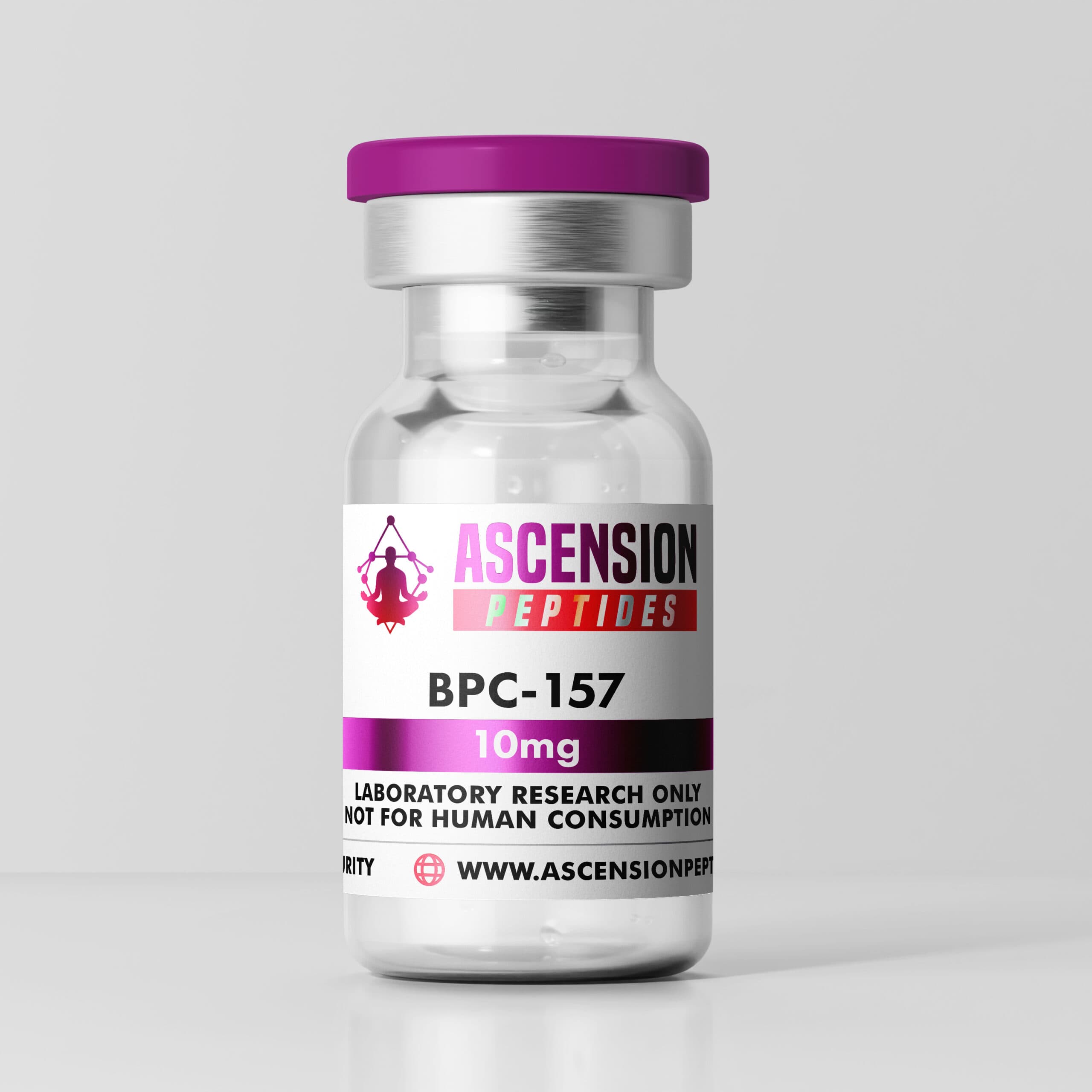
- $49 is the list price of a 10 mg BPC-157 vial at Ascension Peptides, or $4.90 per mg, against a $74.99 regular price. (PeptideDeck vendor index, September 2026)
- $22.05 is the same vial after the 55% PEPTIDEDECK checkout code, or $2.21 per mg. (PeptideDeck vendor index, September 2026)
- $84.99 is the SynthLab price for 10 mg, or $8.50 per mg, 73% above Ascension's list price. (PeptideDeck vendor index, September 2026)
- $90 to $96.88 buys a 20 mg BPC-157 plus TB-500 blend (10 mg of each), which works out to $4.50 to $4.84 per mg. (PeptideDeck vendor index, September 2026)
Clinic, brand and telehealth prices
- Just under $500 a month is what one Los Angeles patient pays a longevity center for the BPC-157 and TB-500 "wolverine stack". (Glossy, 2026)
- $375 and $575 a month: the prices of a BPC-157 nasal spray blend and a BPC-157 patch blend sold by influencer Gary Brecka. (STAT News, 2026)
- $0 is the compounding-pharmacy price, because no pharmacy can lawfully compound BPC-157 until FDA acts on the July recommendation. (PeptideDeck, 2026)
- 6 peptides including BPC-157 are planned by Hims & Hers, which reported $753 million of quarterly revenue and nearly 3 million subscribers. (Glossy, 2026)
- $2.2 billion a year is the telehealth market analysts at Leerink Partners estimate for the peptides under FDA review, with Hims & Hers able to capture about 20%; Hims shares jumped more than 10% intraday after the BPC-157 vote and closed up about 3% at $32.74. (Yahoo Finance, 2026)
BPC-157 in Sport: Anti-Doping Statistics
The advisory vote changed nothing for athletes.
- WADA's S0 category covers substances without current approval by any governmental health authority for human use, which is where BPC-157 has sat since 2022, and the July 2026 advisory recommendation does not create such approval. (WADA 2026 Prohibited List; PeptideDeck, 2026)
- 4 months: the sanction UFC fighter Cortney Casey accepted after self-reporting BPC-157 use to the UFC on June 21, 2023. (USADA, 2023)
- 1 year: the sanction imposed on 19-year-old speedskater Kamryn Lute from April 10, 2024 for a supplement containing BPC-157, reduced from the two-year default for a specified substance. (USADA, 2024)
- 4 years: the ban triathlete Anthony McCauley accepted from September 9, 2025 for using BPC-157, TB-500, CJC-1295, ipamorelin and tesamorelin and promoting them online. (USADA, 2025)
- 30 months: the suspension of UFC heavyweight Mohammed Usman, from October 9, 2025 to April 9, 2028, for testosterone and BPC-157, six months longer than standard for giving investigators a false explanation. (ESPN, 2026)
- 4 years was also handed to a Canadian university athlete on non-analytical evidence of BPC-157 and TB-500 use. (Banned Substances Control Group, 2026)
Peptide Market Statistics Around BPC-157
BPC-157 is a rounding error in the peptide drug market.
The market figures below describe approved peptide therapeutics, a category dominated by GLP-1 drugs. They are included because they are what most "BPC-157 market size" claims are quietly borrowing from.
- $49.68 billion is the 2026 size of the peptide therapeutics market by one estimate, reaching $70.20 billion by 2031 at a 7.16% compound growth rate, with North America holding 38.34% of 2025 revenue. (Mordor Intelligence, 2026)
- $52.59 billion in 2025 to $87.21 billion by 2035 is another estimate, with North America at 45.96%. (Precedence Research, 2026)
- $2.2 billion to $3.3 billion is the range analysts put on the market for the unapproved peptides under FDA review, and one expects the Hims & Hers peptide line alone to pass $1 billion in revenue within five to ten years. (Reuters via Yahoo Finance, 2026)
- 5,607 PubMed papers mention semaglutide, roughly 24 for every BPC-157 paper, which is about the ratio of evidence to attention the two molecules have in 2026. (PubMed, September 2026)
Methodology and Update Log
- Primary sources first. Registry, literature and pageview counts were queried directly from ClinicalTrials.gov, PubMed and the Wikimedia pageviews API. Regulatory facts come from FDA's July 2026 briefing document, the Federal Register, GovInfo, WADA and USADA. Where only a news report or trade source exists, it is named as such.
- PeptideDeck data is aggregate site analytics (March 6 to September 8, 2026) and aggregate topic counts from AI coach questions (February 20 to September 7, 2026). No user-level data is published. Referral, device and country shares are from a 24,000-view sample spread evenly across the period.
- Prices are list prices from the PeptideDeck vendor index on the update date and will move.
- Update log: September 2026, first edition. Counts are refreshed monthly; the month in the title tells you when.
Frequently Asked Questions
Sources
- FDA Evaluation of BPC-157-Related Bulk Drug Substances: Briefing Document for the Pharmacy Compounding Advisory Committee. US Food and Drug Administration, July 2026.
- Pharmacy Compounding Advisory Committee Meeting Briefing Document, July 23-24, 2026. US Food and Drug Administration, 2026.
- Pharmacy Compounding Advisory Committee; Notice of Meeting (Docket FDA-2025-N-6895). Federal Register, April 16, 2026.
- 503A Bulk Drug Substances Category Update, September 29, 2023. US Food and Drug Administration, hosted by the Alliance for Pharmacy Compounding.
- Certain Bulk Drug Substances for Use in Compounding That May Present Significant Safety Risks. US Food and Drug Administration, updated April 2026.
- Warning Letters: search "peptide". US Food and Drug Administration, 2026.
- BPC 157 for Acute Hamstring Muscle Strain Repair (NCT07437547). ClinicalTrials.gov, 2026.
- Impact of BPC-157 on Recovery Following Rotator Cuff Repair (NCT07803250). ClinicalTrials.gov, 2026.
- A Clinical Trial to Evaluate the Effects of Peptide Gummies (NCT07752381). ClinicalTrials.gov, 2025.
- PCO-02 Safety and Pharmacokinetics Trial (NCT02637284). ClinicalTrials.gov, 2015.
- PubMed search: BPC-157 OR BPC157. National Library of Medicine, queried September 2026.
- Emerging Use of BPC-157 in Orthopaedic Sports Medicine: A Systematic Review. HSS Journal, 2025.
- Regeneration or Risk? A Narrative Review of BPC-157 for Musculoskeletal Healing. Current Reviews in Musculoskeletal Medicine, 2025.
- BPC 157 as a Treatment for Knee Pain: A Retrospective Chart Review. Alternative Therapies in Health and Medicine, 2021.
- Effect of BPC-157 on Symptoms in Patients with Interstitial Cystitis: A Pilot Study. Alternative Therapies in Health and Medicine, 2024.
- Safety of Intravenous Infusion of BPC157 in Humans: A Pilot Study. Alternative Therapies in Health and Medicine, 2025.
- Multifunctionality and Possible Medical Application of the BPC 157 Peptide: Literature and Patent Review. Pharmaceuticals, 2025.
- Stable Gastric Pentadecapeptide BPC 157: Novel Therapy in Gastrointestinal Tract. Current Medicinal Chemistry, 2012.
- Pharmacokinetics, Distribution, Metabolism and Excretion of Body Protective Compound 157. Frontiers in Pharmacology, 2022.
- FDA Votes to Loosen Restrictions on Four Peptides. Pharmaceutical Executive, July 2026.
- FDA Committee Votes on Peptides. Time, July 23, 2026.
- The Peptides' Turn: FDA Panel Recommends Six of Seven for Compounding. ArentFox Schiff, 2026.
- FDA Peptide Panel Conflicts and Contamination Concerns. Fortune / Associated Press, July 2026.
- FDA Moves to Loosen Peptide Restrictions. BioPharma Dive, 2026.
- FDA Peptides "Do Not Compound" List Update 2026. Frier Levitt, 2026.
- What's Changing With Peptide Regulation in 2026. Banned Substances Control Group, 2026.
- The 2026 Prohibited List. World Anti-Doping Agency, 2026.
- Key Changes to the 2022 Prohibited List. US Anti-Doping Agency, 2022.
- BPC-157: Experimental Peptide Creates Risk for Athletes. US Anti-Doping Agency.
- Cortney Casey Accepts Doping Sanction. US Anti-Doping Agency, 2023.
- Independent Arbitrator Imposes Sanction on Kamryn Lute. US Anti-Doping Agency, 2024.
- Anthony McCauley Accepts Doping Sanction. US Anti-Doping Agency, 2025.
- UFC's Mohammed Usman Gets 30-Month Ban for Positive Drug Test. ESPN, January 2026.
- NFL List of Prohibited Substances (updated August 8, 2022). NFL Players Association, 2022.
- BPC-157: A Prohibited Peptide and an Unapproved Drug Found in Health and Wellness Products. Operation Supplement Safety, Department of Defense.
- H.R. 10212 Bill Status, 119th Congress. GovInfo, September 2026.
- Rep. Nancy Mace Introduces Bill To Expand Access To Cutting-Edge Peptide Therapies. Office of Rep. Nancy Mace, September 1, 2026.
- Louisiana SB 253 (2026). BillTrack50, 2026.
- The American Peptide Access Act (Model Policy). American Legislative Exchange Council, August 2026.
- Peptides, TikTok, Affiliates and Misinformation. Céline Gounder, 2026.
- CBP Seizes 5,000 Peptide Shipments. Clark Esposito Law, 2026.
- Think Twice Before Injecting Peptides Bought Online. Health Canada, April 2026.
- Peptide Survey Report. Hone Health, 2026.
- Peptides and FDA Reclassification: Survey of 2,491 Adults. Hone Health, May 2026.
- BPC-157: Miracle Drug or Joe Rogan Experiment?. Psychology Today, August 2026.
- BPC-157: The Science, Safety and Regulatory Questions. STAT News, February 2026.
- The Peptide the FDA Cannot Ignore. Undark, February 2026.
- FDA Panel Narrowly Backs Peptide Drug Touted by Joe Rogan. Associated Press via WLFI, July 2026.
- Injectable Peptide Therapy Went Mainstream in 2025. Glossy, 2026.
- Hims & Hers Plots Rapid Expansion into Peptide Therapies Like BPC-157. Glossy, 2026.
- Peptide Therapy Trends Online. Glossy, April 2026.
- FDA Panel Narrowly Backs Four Peptides. Yahoo Finance, July 2026.
- Hims Prepares Peptides Launch. Reuters via Yahoo Finance, 2026.
- Peptides: Insights. Alcohol and Drug Foundation, 2026.
- Peptide Therapeutics Market Size and Share Analysis. Mordor Intelligence, 2026.
- Peptide Therapeutics Market Size to Hit USD 87.21 Billion by 2035. Precedence Research, 2026.
- Wikimedia pageviews: BPC-157. Wikimedia Foundation, queried September 2026.
The information on this page is for educational purposes only and is not medical advice. BPC-157 is not approved by the FDA for the treatment of any condition, and no statistic here should be read as evidence that it treats any condition. Statistics are reported as published by their sources and may be revised by those sources. Talk to a qualified healthcare professional before using any peptide.