Bacteriostatic water looks like a commodity. Every vial is clear. Every label says sterile. Every seller says pharmaceutical grade. So you buy the cheapest one, because at $8 against $15 there is nothing visible to justify the gap. That instinct is reasonable everywhere except here, where the water is the one ingredient you cannot inspect and it is going into a vial that cost you thirty times more.
🔑 Key Takeaways
- It is a prescription drug, and that explains everything. Hospira's vial is stamped Rx only. That single line is why CVS will not hand you one, why Amazon delisted most sellers, and why the buying process feels stranger than it should.
- Two different strengths ship under the same name. The USP monograph permits 0.9% benzyl alcohol and 1.1%. They are not interchangeable for your purposes, and the difference is almost never printed on a resold vial.
- The 30mL vial is usually the wrong buy. It is the cheapest per mL and the most searched size, and most home users still throw away more than half of it. The reason is a date, not a volume.
- You are probably storing it wrong. The label says controlled room temperature. The fridge advice you have read applies to something else entirely, and mixing the two up is common.
- One honest limitation of our pick: PureBac costs more per mL than a bulk pharmacy tray and does not sell a 30mL vial. We still think it is the better buy, and the reason is in the pricing table below.
This page is about buying, not chemistry. What the vial should cost, which size fits an actual peptide cycle, why the pharmacy route mostly fails, and how to tell a properly documented vial from a repackaged one. If you already have your water and just need mixing numbers, our bacteriostatic water mixing and storage guide covers that side in full.
What bacteriostatic water is, in sixty seconds
It is water with one thing added. Sterile, non-pyrogenic Water for Injection, USP, with benzyl alcohol mixed in as a preservative. The benzyl alcohol is what makes it bacteriostatic, meaning it suppresses bacterial growth rather than killing what is already there.
That distinction matters more than it sounds. Bacteriostatic is not sterilising. The preservative holds a population in check so that a vial can survive being punctured more than once. It does not rescue water that has already been contaminated, and it does not sterilise the peptide you dissolve into it.
The practical consequence is the whole reason the product exists: you can enter the vial repeatedly. Plain Sterile Water for Injection has no preservative, so it is single-use. Once a needle goes in, the rest is meant to be discarded. Bacteriostatic water buys you a multi-dose vial, and a multi-dose vial is what home reconstitution actually needs.
Per Hospira's label, the solution runs at a pH of 5.7, within an allowed range of 4.5 to 7.0. It arrives clear. If a vial you receive is cloudy, tinted, or has anything floating in it, the label instruction is unambiguous: do not use it unless the solution is clear and the seal is intact.
Why you cannot just buy bacteriostatic water at CVS
Because it is a prescription drug. Not a supplement, not a medical device, not a general pharmacy item. Hospira's 30mL vial carries Rx only on the principal display panel, the same designation as any prescription medication.
Once you know that, the frustrating parts of shopping for it stop being mysterious.
What the Rx status actually causes
- Chain pharmacies keep it behind the counter. CVS, Walgreens, and Walmart pharmacies can dispense it, but as a prescription item. Walking in and asking for a vial off the shelf does not work, because it was never on a shelf.
- Amazon removed most listings. Marketplace policy prohibits prescription drug sales from third-party sellers. Listings appear, get reported, and disappear. The ones that survive are frequently not the product they claim to be.
- Hospira sells it in trays of 25. The NDC codes are packaged as 25-vial trays for institutional buyers. Nobody in that supply chain is set up to sell you one vial, which is why single vials reach consumers through repackagers.
- Repackaging is where documentation dies. A tray gets split, vials get resold individually, and the batch paperwork stays with whoever broke the tray. You inherit the vial without the lot record behind it.
That last point is the one worth sitting with. Most of the price difference between a $6 vial and a $15 vial is not the water. It is whether anyone can still tell you what is in it.
What bacteriostatic water costs
Price the water per mL, not per vial. A 30mL vial at $22 sounds worse than a 10mL at $15 until you divide, and it sounds better than it is once you factor in how much of it you will actually use before the clock runs out.
Here is what the realistic routes cost, using currently listed prices.
| Source | Size | Price | Per mL | Practical catch |
|---|---|---|---|---|
| PureBac 10mL | 10mL | $14.99 | $1.50 | Online only. Drops to $13.49/vial at ten units |
| PureBac 3mL | 3mL | $7.99 | $2.66 | Highest per-mL cost, but nothing gets discarded |
| Pharmacy 30mL (Hospira) | 30mL | $20 to $35 | $0.67 to $1.17 | Prescription gated. Cheapest per mL you will not finish |
| Generic online sellers | 10 to 30mL | $5 to $50 | $0.30 to $5.00 | Widest quality spread. Frequently no lot documentation |
| Amazon marketplace | Varies | $8 to $25 | Varies | Listings unstable, sellers rotate, authenticity unverifiable |
Notice what the table does not say. The cheapest per-mL option is the pharmacy 30mL vial, and we are not recommending it. The next section explains why that number is misleading.
The 30mL vial trap
Thirty millilitres is the most searched size. It is also, for most people reading this, the most wasteful purchase on the list. The problem is not the volume. It is the date attached to it.
USP standards assign a multi-dose container a beyond-use date of 28 days after the first puncture, unless the manufacturer specifies otherwise. That window starts when the needle goes in. It does not care whether you used 2mL or 25mL. On day 29, whatever is left is meant to be discarded.
So run the arithmetic on a real cycle. A typical reconstitution uses 2mL of water per peptide vial. Over 28 days, someone running a single peptide will usually mix two to three vials. That is 4mL to 6mL of water.
What a 30mL vial actually delivers
Buy 30mL at $25. Use 6mL in 28 days. Discard 24mL.
Your advertised cost was $0.83/mL. Your real cost was $4.17/mL — nearly three times the price of the 10mL vial you decided was too expensive.
The 30mL vial is genuinely the cheapest option, but only for someone reconstituting ten or more vials a month. If that is not you, the per-mL figure on the label is describing water you will pour down a sink.
This is the single most common buying mistake with bacteriostatic water, and it is entirely invisible at the point of purchase, because the sticker price rewards exactly the wrong decision.
Which vial size you should actually buy
Match the vial to your 28-day usage. Not to the price per mL, and not to the biggest number your budget allows.
| Your situation | Water used in 28 days | Right size | Why |
|---|---|---|---|
| First vial, testing one peptide | 2 to 3mL | 3mL | Costs more per mL and still cheaper overall. Nothing is discarded |
| One peptide, ongoing | 4 to 6mL | 10mL | Covers the month with margin for a mis-draw or a dropped vial |
| Two or three peptides, stacked | 8 to 14mL | 10mL, or two | A second vial stays sealed and unstarted until the first expires |
| High volume or multiple people | 20mL+ | 30mL | The only case where the per-mL advantage is real |
The unintuitive move is buying two 10mL vials instead of one 30mL. It costs slightly more and wastes far less, because the second vial's 28-day clock does not start until you puncture it. Two sealed vials give you two separate windows. One large vial gives you one.
Bacteriostatic water vs sterile water vs saline
Three clear liquids, three different jobs. They are not substitutes for one another, and the difference is entirely about what has been added.
| Bacteriostatic water | Sterile water | Bacteriostatic saline | |
|---|---|---|---|
| Added | Benzyl alcohol 0.9% or 1.1% | Nothing | 0.9% NaCl + benzyl alcohol |
| Multi-dose | Yes, 28 days | No, single use | Yes, 28 days |
| Tonicity | Hypotonic until a solute is added | Hypotonic | Isotonic |
| Typical use | Reconstituting multi-dose vials | One-time dilution, neonates | Dilution where isotonicity matters |
| Main drawback | Benzyl alcohol is not for everyone | Discard after one entry | Salt can affect some compounds |
One label warning is worth quoting directly, because it is a real safety boundary rather than boilerplate. Hospira's label states that intravenous administration of bacteriostatic water without a solute may cause hemolysis, and that the solution must be made approximately isotonic before use. It is a diluent. It is not something to inject on its own.
The label also carries an absolute contraindication: not for use in neonates. Benzyl alcohol has been associated with toxicity in newborns, and preservative-free Sterile Water for Injection is the required choice there. If you are also pregnant or nursing, the label's position is that preserved solutions should be used only if clearly needed — a conversation for your doctor, not a forum.
0.9% or 1.1% benzyl alcohol: the spec nobody checks
Here is something almost no seller mentions. Bacteriostatic Water for Injection, USP does not have one preservative strength. The monograph allows two, and Hospira ships both.
| Presentation | Benzyl alcohol | Container | NDC |
|---|---|---|---|
| 30mL multiple-dose | 0.9% (9 mg/mL) | Plastic Fliptop vial | 0409-3977-03 |
| 20mL fill in 30mL | 1.1% (11 mg/mL) | Glass Fliptop vial | 0409-1093-04 |
Both are legitimate USP product. Both say "Bacteriostatic Water for Injection, USP" on the front. And a reseller splitting a tray has no obligation to tell you which one you are getting — the two look nearly identical once the outer packaging is gone.
This is where a Certificate of Analysis stops being a marketing word. A COA that lists a verified benzyl alcohol concentration answers the question. A product page that says "0.9% benzyl alcohol" with nothing behind it is repeating a number, not confirming one.
If you have ever wondered what you are paying for when one vial costs twice another, this is a large part of it: not better water, but a documented answer to what is in it.
Where to buy bacteriostatic water
The realistic options come down to three, and two of them have problems you now understand.
Your pharmacy works if you have a prescription. Ask your prescriber to write for Bacteriostatic Water for Injection, USP. This is the cheapest legitimate route per mL and the only one where you can be confident of the manufacturer. It is also the slowest, and most people reading this do not have a prescription for it.
Marketplace sellers are the fastest and the least verifiable. Amazon listings come and go under policy enforcement. eBay is worse. You may receive genuine Hospira product. You may receive a vial someone filled themselves. There is no way to distinguish these after the fact, which is the entire problem.
Specialty suppliers are where most home users end up, and the quality range within this category is wider than between the other two. This is where documentation is the only useful filter.
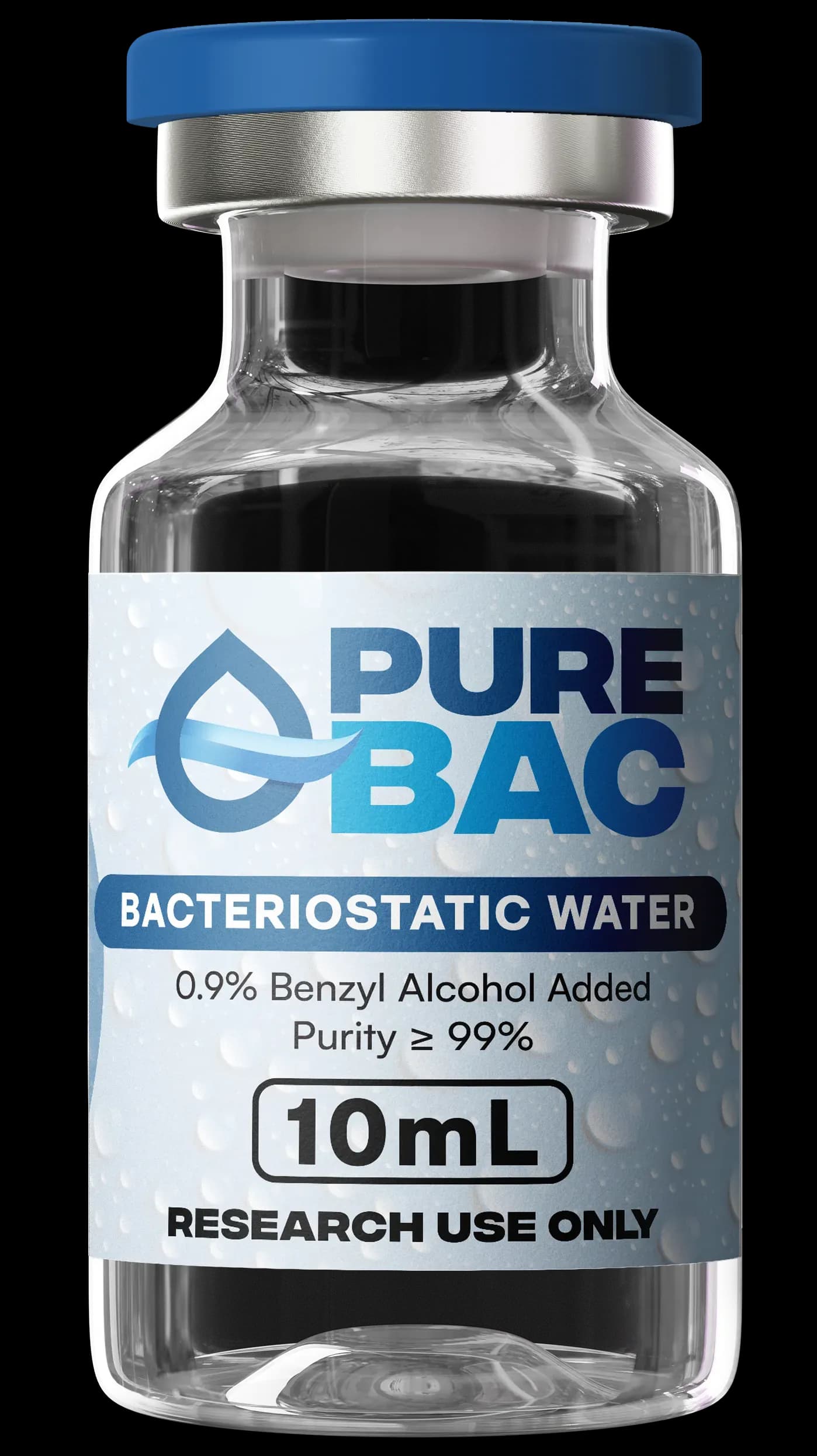
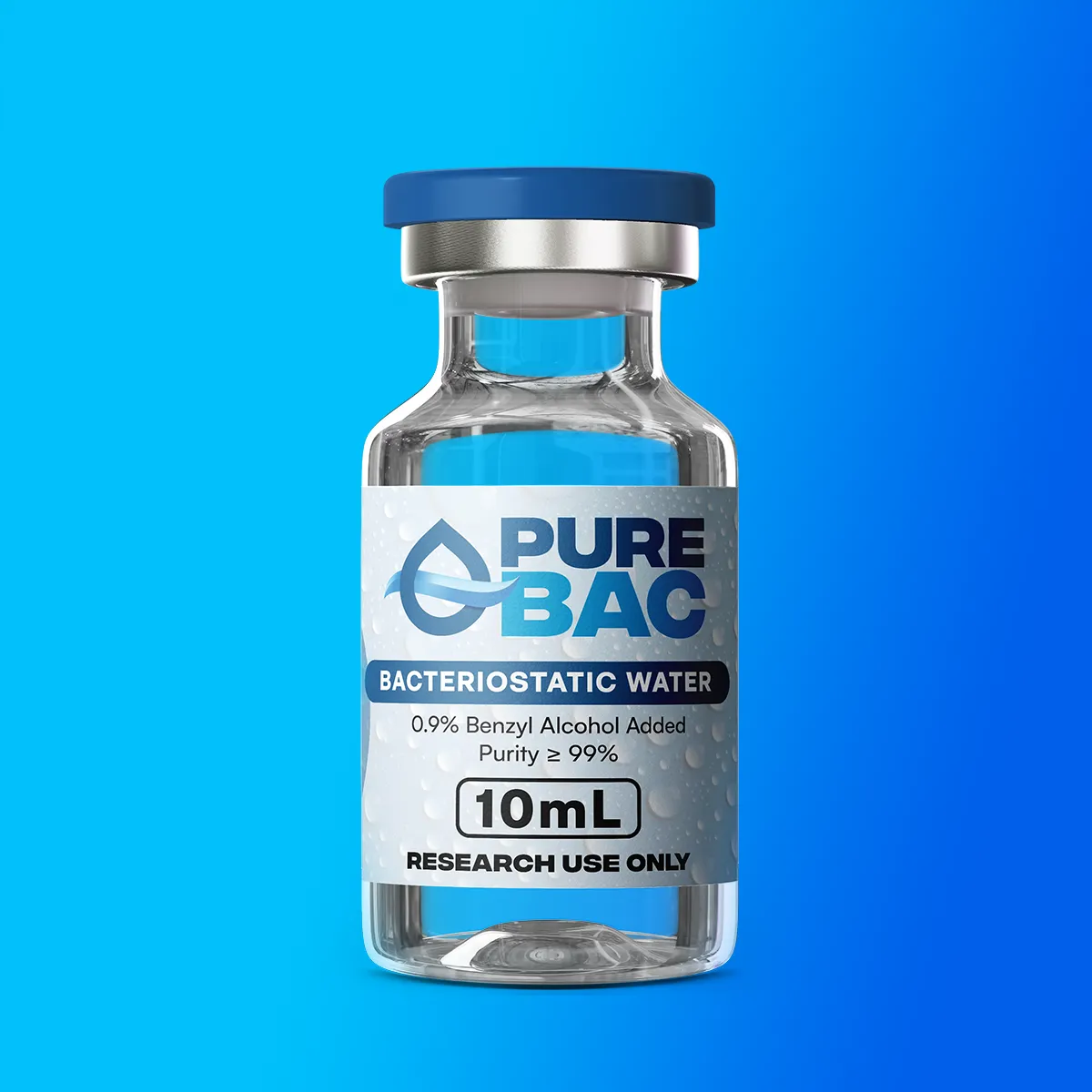
Our pick is PureBac, and the reason is narrow and checkable: every lot is tested across seven markers, and the Certificate of Analysis is public. Each vial carries a QR code that opens the COA for that specific lot. No account, no request form, no emailing support and waiting.
What PureBac's 7-point batch test covers
- Purity — water meets USP pharmaceutical-grade standards
- Identity — benzyl alcohol confirmed at exactly 0.9%, which settles the 0.9-versus-1.1 question above
- Net content — volume verified at exactly 3mL or 10mL
- Heavy metals — screened for lead, arsenic, mercury, cadmium
- Endotoxins — confirmed non-pyrogenic
- Sterility — absence of microbial contamination
- Variance — batch-to-batch consistency verified
Current pricing is $14.99 for the 10mL and $7.99 for the 3mL, with volume discounts that take the 10mL to $14.54 each at three units, $14.24 at five, and $13.49 at ten. Shipping is free over $150. Both sizes are in stock.
The honest limitation of PureBac
It is not the cheapest water per mL, and it never will be.
A pharmacy 30mL vial at $25 works out to $0.83/mL against PureBac's $1.50/mL. If your only criterion is cost per millilitre, and you have a prescription, and you genuinely use more than 20mL a month, the pharmacy wins outright. We are not going to pretend otherwise.
There are two smaller drawbacks worth stating. PureBac is online only, so there is no same-day option if you are mixing tonight. And they do not offer a 30mL size, which makes them a poor fit for genuinely high-volume users.
What changes the verdict for most people is the 28-day clock. The pharmacy's per-mL advantage only exists if you finish the vial, and the majority of home users do not come close. Against the 10mL vial you will actually use, the price gap narrows to a few dollars a month — and those few dollars buy a lot number you can look up and a preservative concentration someone has verified rather than printed.
Red flags when buying bacteriostatic water
Some of these are obvious in hindsight. All of them are common.
Walk away if you see
- No lot number. Every legitimate vial has one. No lot number means no traceability and no possibility of a real COA.
- A COA you cannot see before buying. "COA available on request" is a different product from "COA published per lot." One is a promise, the other is a document.
- A generic COA for all batches. A certificate that is not tied to your specific lot certifies nothing about the vial in your hand.
- Plastic squeeze bottles or dropper tops. Real product ships in a sealed multi-dose vial with a crimped metal ring and a rubber stopper. Anything you can pour is not it.
- Under $5 with no documentation. Below a certain price the testing has to be the thing that was removed, because the water itself is not what costs money.
- No stated benzyl alcohol concentration. After the section above, you know why this matters.
- An expiry under 12 months. Fresh stock should be dated well out. A short date suggests old inventory moving through a reseller.
- Vague origin language. "Pharmaceutical grade" and "lab tested" are unregulated phrases. A manufacturer name and a lot number are not.
How to store bacteriostatic water
Room temperature, not the fridge. This trips up more people than any other part, because it contradicts advice that is correct about something else.
Hospira's label specifies storage at 20 to 25°C (68 to 77°F), USP Controlled Room Temperature. That is the unopened vial and it stays true after opening. A cupboard away from direct sunlight is exactly right.
The refrigeration advice you have read is about reconstituted peptide. Once the water goes into the powder, the resulting solution goes in the fridge. Two different things, two different rules, and conflating them is the usual source of the confusion.
The two clocks
- Sealed bacteriostatic water: room temperature until the printed expiry, often two years or more out.
- Opened bacteriostatic water: room temperature, 28 days from first puncture, then discard whatever is left.
- Reconstituted peptide: refrigerated at 2 to 8°C, with the usable window set by the peptide, not by the water.
Swab the stopper with alcohol before every entry and let it dry. The preservative suppresses growth; it does not compensate for carrying bacteria in on a needle. Write the puncture date on the vial with a marker the first time you use it, because nobody remembers accurately four weeks later.
For the mixing side of this — how much water per vial, how to add it without foaming the powder, and how to work out your dose afterwards — see our step-by-step reconstitution guide and the unit conversion calculator.
Related comparison: bacteriostatic water vs sterile water vs saline.
Frequently Asked Questions
The bottom line
Buy for the 28-day window, not the sticker price. That one shift fixes the most expensive mistake in this category, because the large vial that looks cheapest per millilitre is usually the one you throw two thirds of away.
For most people that means a 10mL vial with a lot number you can look up and a benzyl alcohol concentration someone has measured rather than printed. PureBac's 10mL at $14.99 is where we land, with the 3mL at $7.99 if you are mixing a single vial and want nothing left over.
If you want the full mixing and storage walkthrough rather than the buying side, our BAC water sourcing guide and bacteriostatic water guide go deeper on technique.
References
- Hospira, Inc. Bacteriostatic Water for Injection, USP — prescribing information. DailyMed, U.S. National Library of Medicine. Revised August 2019.
- United States Pharmacopeia. General Chapter <797> Pharmaceutical Compounding — Sterile Preparations. Beyond-use dating for multiple-dose containers.
- U.S. Food and Drug Administration. Water for Injection and drug product classification.
- Centers for Disease Control and Prevention. Injection Safety — safe practices for multi-dose vials.
- PureBac. Batch testing protocol and per-lot Certificates of Analysis. Pricing verified September 2026.
Medical disclaimer. This article is for informational purposes only and is not medical advice. Bacteriostatic Water for Injection, USP is a prescription product in the United States. It must not be used in neonates, must not be used for fluid replacement, and must not be given intravenously without a solute. Talk to a licensed healthcare provider before using any injectable product, and follow the instructions of the manufacturer of whatever you are dissolving or diluting. Prices and product details were verified in September 2026 and change without notice.
Affiliate disclosure: PeptideDeck earns a commission on purchases made through some links on this page, at no additional cost to you. This does not influence our assessments — our reasoning and the trade-offs against cheaper options are laid out above so you can judge them yourself.