There is an entire category of peptides that most Western researchers have never encountered. These compounds don't simply stimulate a receptor or flood the body with a growth signal — they operate at the genetic level, communicating directly with cellular DNA to restore the expression patterns of youth. They are called bioregulator peptides, and they represent one of the most compelling frontiers in longevity and regenerative medicine research.
For over four decades, Soviet and Russian scientists — led by pioneering gerontologist Professor Vladimir Khavinson — developed, tested, and published extensively on these short-chain peptides. The studies were not small or brief. Many spanned six to twelve years with hundreds of participants, documenting measurable reductions in mortality, telomere lengthening, and organ-specific functional restoration that persisted long after the treatment windows closed.
This guide covers everything a serious researcher needs to understand: what bioregulator peptides are, how they fundamentally differ from conventional peptides, which bioregulators target which organs, how protocols are structured in clinical research settings, and what limitations exist that every researcher must weigh before working with these compounds.
- Short-chain peptides of 2–4 amino acids derived from organ tissues
- Work epigenetically — directly influencing gene expression rather than surface receptors
- Organ-specific: each bioregulator targets the tissue from which it was originally isolated
- Developed over 40+ years by Russian researchers, led by Professor Vladimir Khavinson
- Research suggests life-span increases of 20–40% in animal models (PubMed literature)
How Bioregulator Peptides Differ From Traditional Peptides
To understand why bioregulators are in a class of their own, it helps to understand what conventional peptides do by comparison. Traditional peptides like BPC-157 or TB-500 work through relatively direct mechanisms: they bind to surface receptors, modulate growth factors, promote angiogenesis, or activate repair pathways. They are powerful tools, but they are essentially signaling molecules working at the tissue level.
Bioregulator peptides work differently — and more fundamentally. These ultra-short peptides (dipeptides and tripeptides, mostly) are lipophilic enough to enter the cell nucleus itself. Once inside, they bind directly to DNA promoter regions and act as epigenetic switches, restoring the transcription of genes that become silenced with age. The cellular machinery doesn't simply get a signal — it gets its instructions rewritten back toward a younger functional state.
This distinction is critical. A conventional peptide's effect ends when the molecule clears the system. Bioregulators, by resetting gene expression patterns, can produce effects that outlast the treatment period by months or even years. This is what makes the long-term Russian clinical data so striking — researchers were documenting sustained improvements in organ function well beyond the active dosing windows.
The key mechanism, as Khavinson's team identified, is interaction with histones — the proteins around which DNA is coiled. By modulating histone-DNA binding, bioregulators can decompress gene regions that aging has effectively shut down, restoring the protein synthesis patterns that define healthy, youthful cellular function.
The Organ-Specific Architecture of Bioregulator Peptides
One of the most distinctive features of bioregulator peptides is their organ specificity. Khavinson and his colleagues isolated bioregulators from specific animal tissues — pineal gland, thymus, liver, brain, cardiovascular tissue, cartilage, and more — and found that each preparation exhibited a strong affinity for the corresponding human tissue. This is not coincidence; it reflects the conserved nature of these short peptide sequences across species.
Below are the most well-researched bioregulators by organ system:
Pineal Gland — Epithalon (Epitalon)
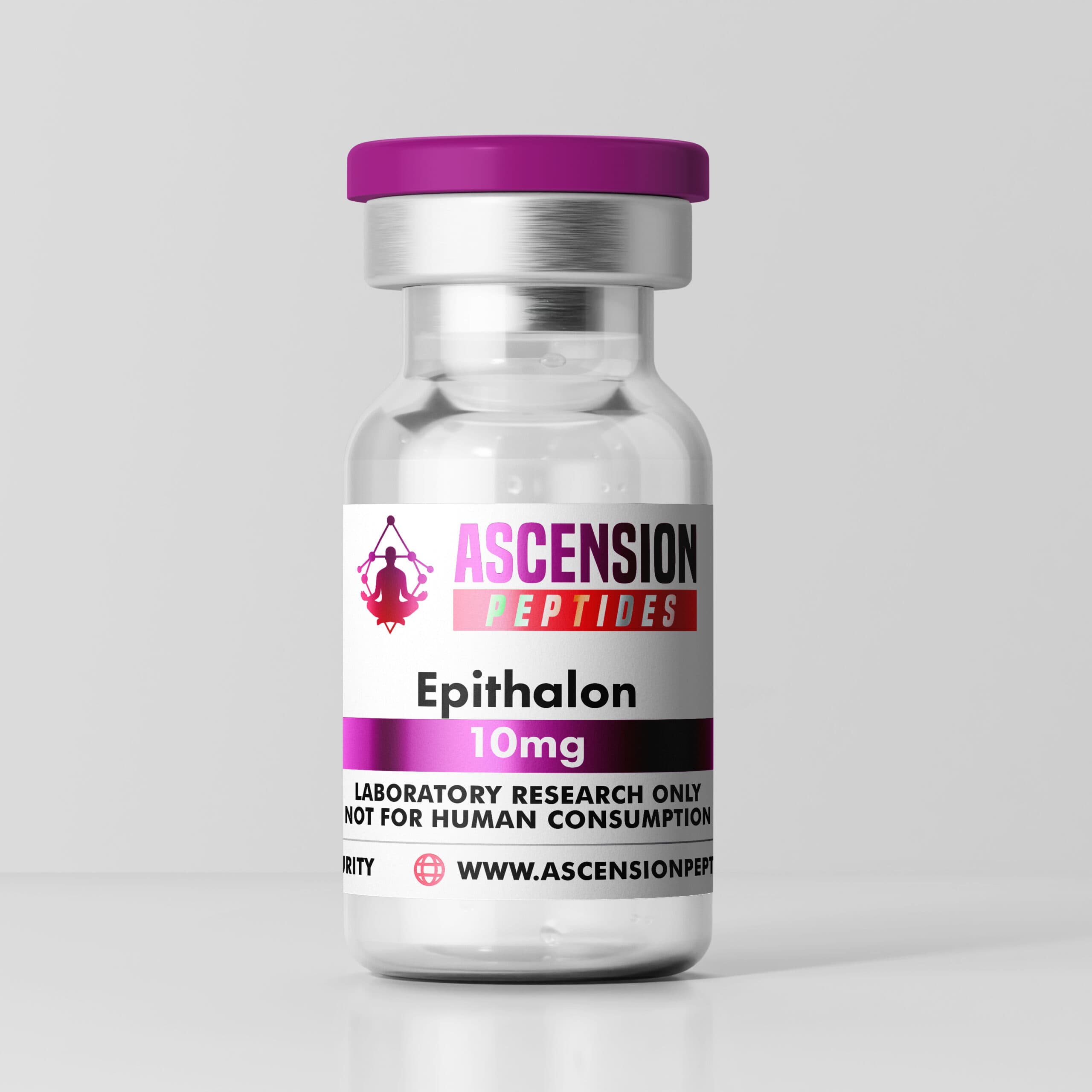
Perhaps the most studied bioregulator in the Western research community, Epithalon (tetrapeptide: Ala-Glu-Asp-Gly) was derived from the pineal gland extract Epithalamin. It is the flagship bioregulator for longevity research, with documented abilities to activate telomerase, lengthen telomeres, normalize melatonin secretion, and restore circadian rhythm function. Multiple long-term clinical studies demonstrated significant reductions in mortality among elderly subjects taking Epithalon cyclically over years.
Thymus — Thymalin and Thymogen
The thymus is the master organ of immune development, and it undergoes rapid involution — shrinkage and functional decline — beginning in early adulthood. Thymalin (a polypeptide thymic extract) and Thymogen (the synthetic dipeptide Glu-Trp) both target immune restoration. Research has documented improved T-lymphocyte populations, enhanced cytokine regulation, and measurable reductions in autoimmune markers in elderly populations. Thymic bioregulators are commonly used in protocols designed to address immunosenescence — the age-related collapse of immune competence.
Brain and Nervous System — Pinealon, Cortexin, Cerebrolysin
Pinealon (a tripeptide: Glu-Asp-Arg) targets neural tissue with particular affinity for neuroprotection. Research shows it supports healthy neurotransmitter metabolism, protects against oxidative stress in neuronal tissue, and may support cognitive function in aging subjects. Cortexin, a polypeptide derived from cerebral cortex tissue, has a substantial clinical record in Russia for stroke recovery, epilepsy management, and age-related cognitive decline.
Cardiovascular System — Cardiogen
Cardiogen (Ala-Glu-Asp-Lys) is the cardiac bioregulator, isolated from heart tissue. Research protocols involving Cardiogen have shown improvements in myocardial contractility, reduction in arrhythmia incidence, and cardioprotective effects in populations with documented cardiovascular risk. Given that cardiovascular disease is the leading cause of mortality in aging populations, this bioregulator has attracted growing research interest.
Musculoskeletal — Cartalax and Bonomarlot
Cartalax (Ala-Glu-Asp) targets cartilage and connective tissue. Research suggests it supports chondrocyte function and may slow the degenerative changes associated with osteoarthritis. Bonomarlot targets bone marrow and has been studied in the context of hematopoiesis — the production of blood cells — with potential applications for age-related declines in bone marrow output.
Liver and Gastrointestinal — Hepatagen and Vilon
Hepatagen supports hepatocyte function and liver regeneration capacity. Vilon (dipeptide: Lys-Glu) has broader bioregulatory effects across multiple tissue types, with documented immunomodulatory properties and a favorable safety record across decades of Russian clinical use.
- Epithalon — Pineal gland | Telomere extension, longevity, circadian regulation
- Thymalin / Thymogen — Thymus | Immune restoration, T-cell function
- Pinealon — Brain | Neuroprotection, cognitive support
- Cardiogen — Heart | Myocardial function, arrhythmia reduction
- Cartalax — Cartilage | Chondrocyte support, joint health
- Hepatagen — Liver | Hepatocyte regeneration
- Bonomarlot — Bone marrow | Hematopoietic support
- Vilon — Multi-tissue | Broad immunomodulation
How Bioregulator Peptides Are Used in Research Protocols
Bioregulator peptides are distinctive not only in their mechanism but in how they are administered in research settings. Unlike conventional peptides that are often dosed daily or multiple times per day for weeks at a time, bioregulators are typically used in short, cyclical courses with extended gaps between cycles — mirroring the protocols validated in Khavinson's long-term studies.
The most commonly referenced research protocols follow a structure such as:
- Course duration: 10–20 days of active administration
- Rest period: 3–6 months before the next course
- Frequency: 2–4 courses per year, typically
- Administration: Subcutaneous injection for synthetic forms; some oral preparations exist for peptide bioregulator complexes (though oral bioavailability of short peptides remains a subject of active research)
For Epithalon, research literature most commonly references dosages in the range of 5–10 mg per course administered subcutaneously, cycled as described above. Thymic peptides like Thymogen are often studied at lower doses given their potent immunomodulatory activity.
Combination protocols — using multiple organ-targeted bioregulators simultaneously or sequentially — have also been explored in Khavinson's research. The rationale is that aging is a systemic process affecting multiple organ systems concurrently, and a multi-target approach may produce synergistic functional restoration. However, multi-compound protocols significantly increase the complexity of research design and require careful documentation of individual compound contributions to observed outcomes.
The State of Bioregulator Research: What the Evidence Shows
The published evidence base for bioregulator peptides is larger and older than most Western researchers realize. Khavinson and colleagues published extensively in Russian-language journals from the 1970s onward, and a meaningful body of work has since appeared in English-language peer-reviewed literature, including PubMed-indexed journals.
Key findings from the research record include:
- Longevity extension: Long-term treatment with peptide bioregulators increased mean lifespan by 20–40% in animal models (referenced in PubMed-indexed literature on peptide bioregulation of aging)
- Mortality reduction: In elderly human cohorts, cyclical bioregulator treatment was associated with significantly reduced all-cause mortality over 6–12 year follow-up periods
- Telomere biology: Epithalon has been shown to activate telomerase in somatic cells, with measurable telomere lengthening observed in treated subjects — a finding with substantial implications for cellular aging research
- Organ function restoration: Multiple bioregulators demonstrated measurable improvements in the target organ's functional biomarkers, from improved cardiac output markers to enhanced immune cell populations
That said, researchers approaching this literature should do so critically. Much of the foundational work was conducted within Soviet and Russian research institutions with methodologies that differ from current Western RCT standards. Sample sizes, blinding procedures, and control conditions vary across studies. Independent replication in Western research settings has been limited, though growing interest in longevity science is beginning to change this picture.
Bioregulators are not a replacement for rigorous research methodology — they are an area of genuine scientific interest that merits the same careful, skeptical evaluation applied to any emerging compound class. Researchers should review primary literature directly and weigh findings against the methodological context in which they were produced.
Bioregulator Peptides FAQ
Sourcing Bioregulator Peptides for Research
Bioregulator peptides are a specialized category, and not every peptide vendor carries them. Researchers sourcing bioregulators should apply particularly rigorous quality standards given the niche nature of the market. The key criteria are consistent regardless of which bioregulator you are researching:
- Third-party COA required: HPLC and mass spectrometry results from an independent laboratory, not just in-house testing
- Purity ≥98%: The short-chain nature of bioregulators makes synthesis relatively straightforward, but synthesis quality still varies significantly between vendors
- Proper storage and handling documentation: Most bioregulators are lyophilized powders requiring cold-chain shipping and reconstitution per standard protocols
- Transparent sourcing: US-based vendors with verifiable laboratory affiliations are preferable to overseas sources with limited quality visibility
Ascension Peptides is one vendor that carries several bioregulator compounds with published third-party COA documentation, making it a reasonable starting point for researchers entering this compound category.