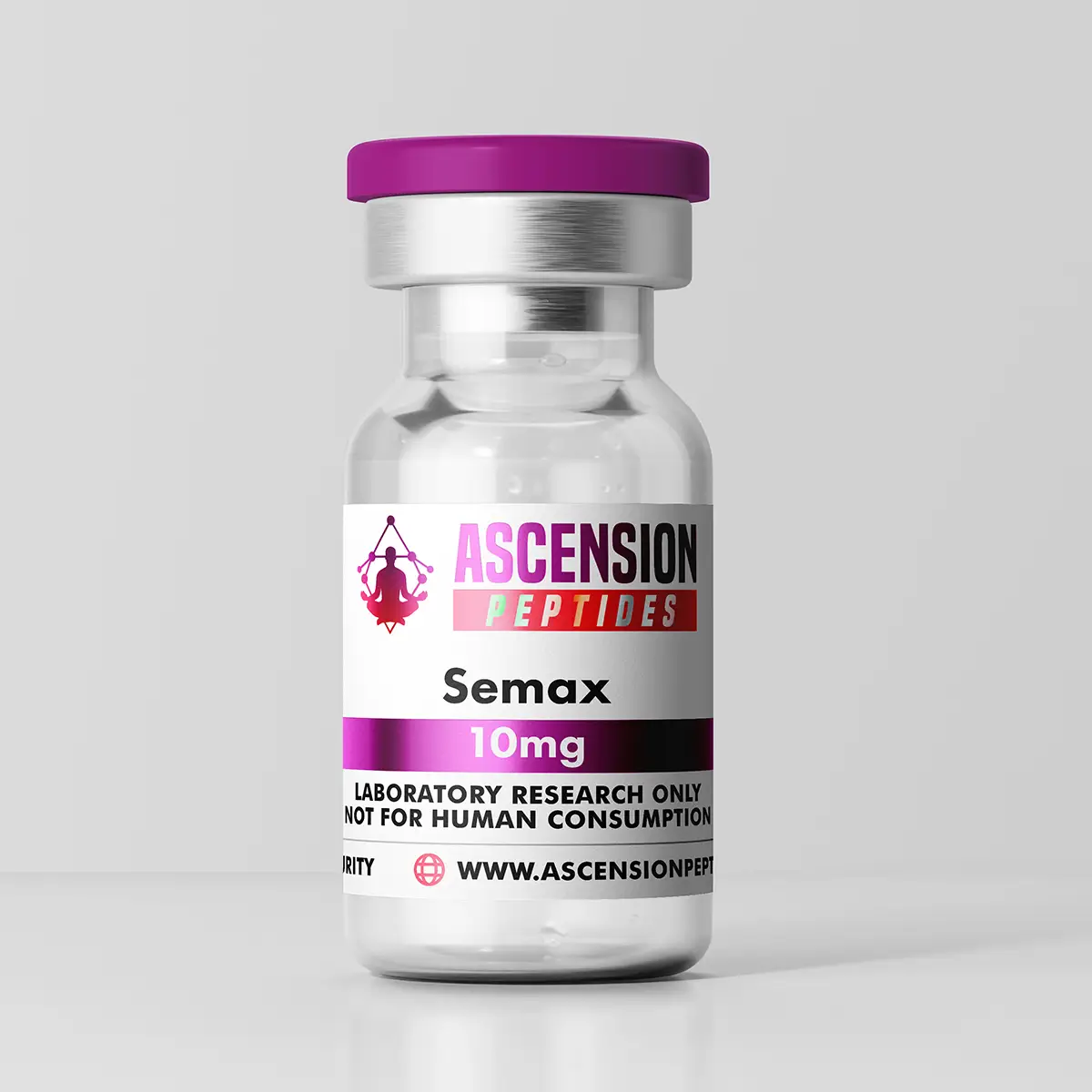
Searching "where to buy Semax" returns dozens of vendors selling nasal sprays, lyophilized vials, and questionable "research blends" in equal measure. The compound itself is finicky, the price spread is wide, and the gap between a quality vial and a degraded one is bigger than most buyers realize.
🔑 Where to Buy Semax at a Glance
- Best source: Ascension Peptides carries Semax 10mg lyophilized, third-party tested, US-based shipping, fair pricing.
- Two formats: Lyophilized vials (you reconstitute) or pre-mixed nasal sprays. Lyophilized is more stable.
- Typical price: $30 for a 10mg vial at the best current price, $45 to $90 across most vendors; $50 to $90 for a pre-mixed 10-15mg nasal spray.
- Form to look for: Standard Semax (heptapeptide) vs N-acetyl Semax Amidate (NA Semax), different compounds, different pricing.
- Red flags: No COA, suspiciously cheap pricing, vague compound naming, no storage guidance.
- Legal status: Research compound in the US; not FDA-approved for human use. Sold for research only.
This guide is for the buyer who already knows roughly what Semax does and now wants the practical buying side: who actually sells it, what to demand from a vendor, and what to skip. For mechanism, dosing protocols, and effects, see the Semax overview and Semax benefits guide first.
Where to Buy Semax: Best Source in 2026
Short answer: Ascension Peptides is the cleanest option for Semax in 2026. They carry Semax 10mg lyophilized vials with documented third-party purity testing, transparent shipping practices, and a long enough operating history that you're not buying from a vendor that may disappear before your next order.
Why source matters this much with Semax:
- Semax is a short heptapeptide derived from ACTH, degradation is faster than larger peptides if synthesis or storage is sloppy.
- The vendor pool is smaller than for BPC-157 or TB-500, so the proportion of low-quality sources is higher.
- Dosing is in the microgram range. A 20% purity miss means you're either underdosing or overdosing without knowing which.
- Two distinct compounds get sold under the "Semax" label, standard Semax and NA Semax, and inexperienced vendors mix them up.
What to Look for in a Semax Vendor
Most peptide vendors look the same on the surface. Semax specifically weeds out the careless ones fast. Here's what separates a legitimate source from a risk:
Third-Party Certificate of Analysis (COA)
Non-negotiable. The COA should come from an independent lab, not the manufacturer's own testing, and confirm peptide purity (≥98%), correct molecular weight, and absence of common contaminants. If a vendor can't produce one, walk away.
Clear Compound Naming
Two compounds get sold as "Semax": standard Semax (Met-Glu-His-Phe-Pro-Gly-Pro) and N-acetyl Semax Amidate (NA Semax). They have different half-lives and different price points. The product page should specify which one you're buying. Vague labels like "Semax peptide complex" are a warning sign.
Lyophilized (Freeze-Dried) Format
Semax in solution degrades quickly without proper cold storage. Quality vendors sell it lyophilized, you reconstitute yourself. Pre-mixed nasal sprays can work, but they need careful refrigeration and have a shorter usable life once mixed.
Transparent Shipping and Storage Guidance
Good vendors specify how the peptide is packed, whether ice packs are included in summer months, and how long the vial can safely sit at room temperature in transit. Silence on storage is not reassuring.
Reasonable Pricing
Semax synthesis isn't cheap. If you're seeing 10mg vials under $25, something is off, purity is compromised, mg count is inflated, or it isn't actually Semax.
Semax Red Flags to Avoid
Patterns that show up repeatedly with bad Semax sources:
- No COA or only manufacturer self-testing, independent verification is the whole point.
- "Pharmaceutical grade Semax", Semax is not pharmaceutically approved in the US; this is marketing noise.
- Prices that seem too good, 10mg of quality Semax under $25 usually means corners were cut somewhere.
- No mention of NA Semax vs standard Semax, if a vendor doesn't distinguish them, they probably don't fully understand what they're selling.
- Pre-mixed nasal spray with no batch date, once Semax is in solution, the clock starts ticking.
- No business presence beyond a checkout page, fly-by-night peptide shops appear and disappear regularly; you want a vendor with history.
Semax Pricing Guide (2026)
Per milligram is the number that decides this. The 10mg vial at $30 works out to $3.00/mg, which undercuts both the 5mg vial and, in practice, the 30mg bulk option once you account for a reconstituted vial's shelf life. At the standard intranasal doses described above, a single 10mg vial covers a typical research cycle, so buying bulk to chase a per-mg discount usually means peptide degrading in the fridge before it gets used.
Budget for a complete first order: lyophilized vial + bacteriostatic water + a nasal spray bottle if going that route. Total typically lands at $60 to $110 from a quality vendor.
💡 Value Tip
A 10mg vial of standard Semax goes a long way. At 600mcg per dose taken once daily, 10mg covers about 16 days of research. Per-dose cost is reasonable compared to most nootropic peptides.
Semax Nasal Spray vs Subcutaneous Injection: Which to Buy
Both routes work in preclinical research. The practical differences matter enough to think about before ordering.
Nasal Spray
Semax was originally developed and studied in Russia as an intranasal compound. The nasal route bypasses first-pass metabolism and gets Semax into systemic circulation reasonably efficiently. Onset is fast.
Practical upside: no needles, easy to use, fast subjective onset. Downside: you need to reconstitute correctly, get the concentration right for your nasal spray bottle, and refrigerate it once mixed. Degradation is faster than a frozen lyophilized vial.
Subcutaneous Injection
Subcutaneous Semax gives more predictable bioavailability than intranasal. If precision matters, running a structured protocol at specific doses, injections are more controllable. Onset is slightly slower than intranasal but absorption is more consistent.
Tradeoff is obvious: needles, sterile technique, and a steeper friction floor.
For most buyers starting out: nasal spray is the practical choice and matches the original research route. If you're running a longer or more precise protocol, subcutaneous gives you more control. Either way, start with a lyophilized vial, it's more stable until you're ready to mix it.
Reconstituting and Storing Semax
When your Semax arrives, it will be a white lyophilized powder in a sealed glass vial. Stable at room temperature for short periods, but freezer storage is ideal if you're holding it for months.
Gather supplies
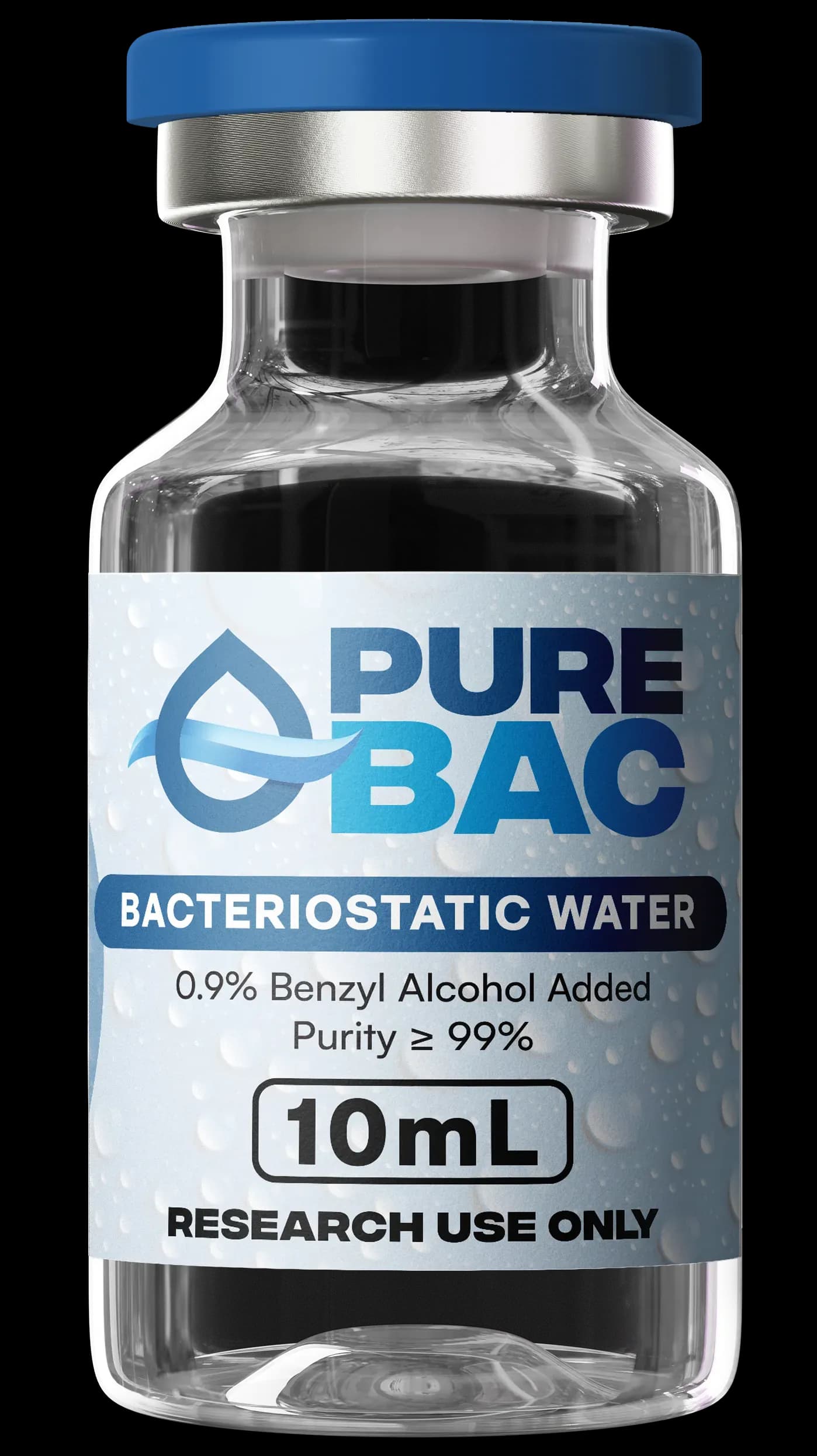
Bacteriostatic water, an insulin syringe for measuring, alcohol swabs, and either a nasal spray bottle or additional syringes depending on your route.
Calculate concentration
For a 10mg vial: adding 1mL of bac water gives 10mg/mL (10,000mcg/mL). For intranasal use, a lower concentration is easier to measure, try 2mL bac water for 5,000mcg/mL. Use the reconstitution calculator for non-standard volumes.
Reconstitute carefully
Inject bac water down the inner wall of the vial, never directly onto the powder. Swirl gently, never shake. The powder should dissolve fully into a clear solution.
Store refrigerated
Once reconstituted, store at 2-8°C. Use within 4 weeks. Label the vial with the reconstitution date so you don't lose track.
Standard Semax vs NA Semax: Which to Buy
Two compounds share the Semax name, and the difference matters at checkout.
Standard Semax is the original heptapeptide, derived from a fragment of ACTH. Half-life is short, which is why dosing is typically once or twice daily. Cheaper to synthesize, so it's the more common option.
N-acetyl Semax Amidate (NA Semax) is a modified version with N-acetylation on one end and an amide group on the other. Half-life is longer, dosing is less frequent, and price per vial runs about double. Some research compares it to standard Semax for extended-duration work.
For most buyers: standard Semax is the right starting point. NA Semax is a step up if you've already used standard Semax and want a longer-acting version.