Focus fades before the workday ends.
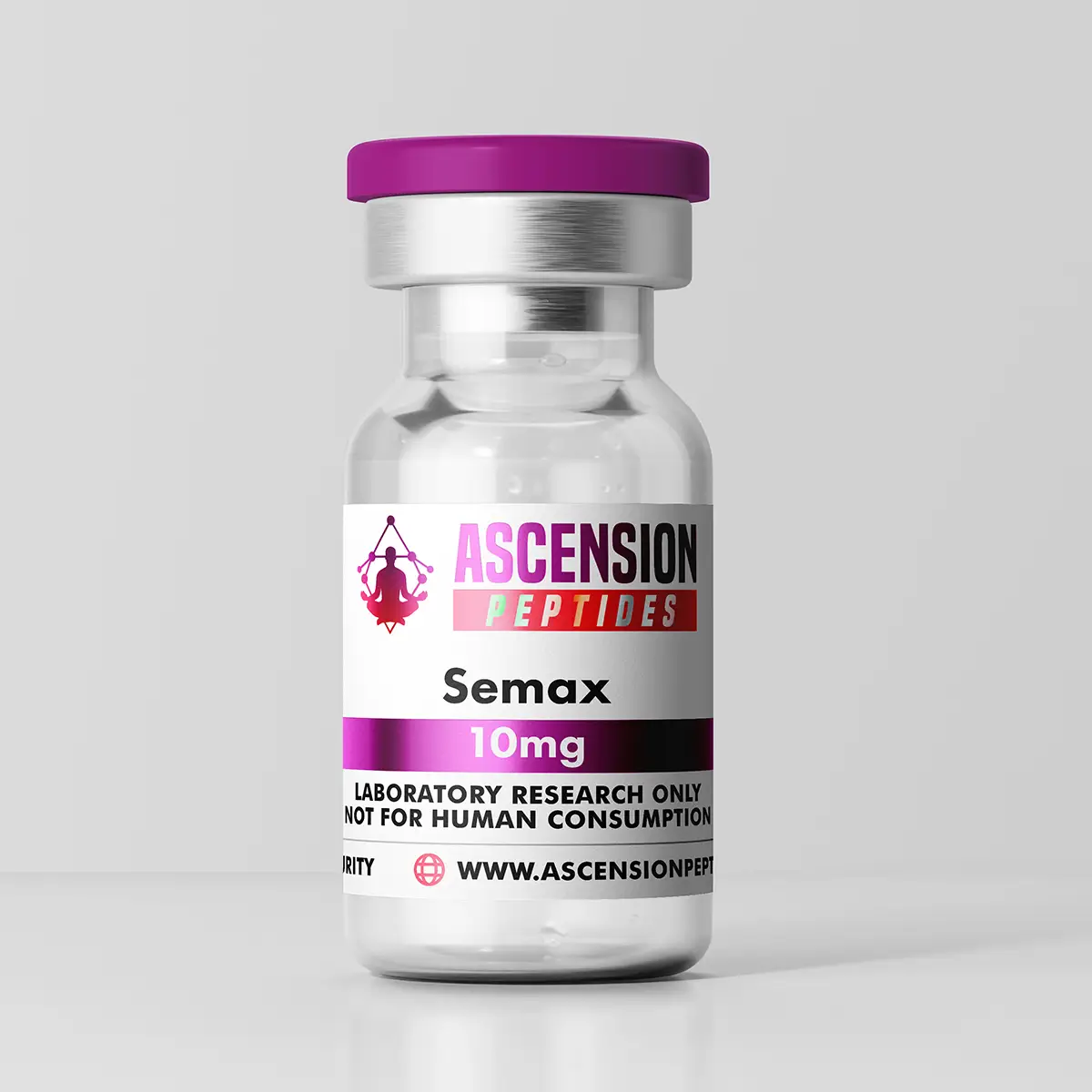
You know the feeling: sharp in the morning, then by early afternoon the mental edge is gone. Tasks take longer. Recall slows. The quality of your thinking drops without any obvious reason. Semax is a synthetic nootropic peptide developed in Russia specifically for this kind of cognitive deficit, and it works through mechanisms most stimulants don't touch. This guide covers what it actually does, how fast it works, and what realistic results look like across each benefit area.
🔑 Key Takeaways
- Focus and mental clarity are the most immediate benefits, typically felt within 15-30 minutes of intranasal administration
- BDNF elevation is the key mechanism behind Semax's memory and learning benefits, with documented increases of up to 3x in BDNF mRNA expression
- Neuroprotection is where Semax has actual human clinical data, approved in Russia for stroke recovery and ischemic brain injury
- Mood and anxiety effects are real but secondary, most noticeable in people dealing with stress-related cognitive fatigue
- Semax does not suppress cortisol the way ACTH does, which is a significant advantage for daily use over weeks
- Cycling is important: 10-14 days on, then a break. Tolerance builds quickly and the break restores sensitivity
Semax was originally developed by the Institute of Molecular Genetics in Moscow as a synthetic analogue of ACTH (adrenocorticotropic hormone). It takes the 4-10 fragment of ACTH and adds a proline-glycine-proline sequence that makes it more stable and extends its action. It's been approved for medical use in Russia since 1995 and has been used by cosmonauts, Russian Olympic athletes, and in clinical stroke recovery settings. That's a different origin story than most nootropics.
How Semax Works in the Brain
Most nootropics work by flooding neurotransmitter systems with more of what's already there. Semax works differently. It modulates the systems rather than simply amplifying them.
- BDNF upregulation: Brain-derived neurotrophic factor is the primary growth and survival signal for neurons. Semax increases BDNF protein by approximately 1.4x and BDNF mRNA by approximately 3x, promoting the conditions for neuroplasticity, memory consolidation, and new synapse formation.
- Dopamine and serotonin modulation: Semax enhances activity in dopaminergic and serotonergic pathways without the overstimulation or receptor downregulation that comes with direct dopamine agonists or stimulants. The effect is smoother and doesn't produce the same crash.
- Cerebral blood flow: Semax improves microcirculation in the brain, increasing oxygen and glucose delivery to neurons. This is part of why cognitive clarity improves quickly after administration.
- Anti-inflammatory action: Semax suppresses pro-inflammatory cytokines in the brain, including IL-1a, IL-1b, and IL-6. Neuroinflammation is one of the most underappreciated drivers of brain fog and cognitive fatigue, and this mechanism addresses it directly.
- Immune gene modulation: Semax influences gene expression in immune-related CNS pathways, which is part of why it has documented effects on cognitive recovery after injury, not just healthy cognitive enhancement.
Why Semax doesn't suppress cortisol
ACTH, the hormone Semax is derived from, normally triggers cortisol release from the adrenal glands. Semax is designed to preserve the cognitive and neuroprotective effects of the ACTH fragment while eliminating the cortisol response. This matters for daily use because chronically elevated cortisol degrades the very cognitive functions you're trying to improve. You get the brain benefits without the adrenal hit.
Semax Benefits for Focus and Mental Clarity
This is what most people come to Semax for, and it's also the fastest-acting benefit. Intranasal administration delivers the peptide through the olfactory pathway, bypassing the blood-brain barrier and producing effects within 15-30 minutes for most people.
The subjective experience is described consistently: sharper attention, reduced mental noise, and easier access to focused states without the jitteriness or forced alertness of stimulants. The prefrontal cortex dopamine pathways are the primary driver here. When dopamine signaling in the PFC is optimal, executive function, sustained attention, and task-switching all improve. Semax nudges these pathways without overwhelming them.
What distinguishes Semax from caffeine or racetams for focus:
- No significant cardiovascular stimulation
- No cortisol spike
- Works through neurotrophic pathways, not just neurotransmitter flooding
- Effects are cleaner at lower doses and don't degrade with repeated use the way stimulants often do, at least within a cycle
Most users report that focus improvements are most pronounced in the first week of a cycle and remain strong through day 14. This is why cycling matters: the sensitivity stays fresh.
Semax Benefits for Memory and Learning
BDNF is the mechanism here. Brain-derived neurotrophic factor is essentially the signal that tells neurons to grow new connections, consolidate recently learned information, and strengthen existing synaptic pathways. More BDNF means the brain is in a more receptive state for learning and memory encoding.
The 3x increase in BDNF mRNA that Semax produces is not trivial. Exercise is consistently cited as the most reliable way to raise BDNF, and it typically produces 20-30% increases with sustained effort. A peptide that triples the mRNA expression of BDNF through a different mechanism represents a meaningful addition to that baseline.
Practically, this shows up as:
- Faster acquisition of new information during the active learning phase
- Better retention of material learned while on a Semax cycle
- Improved recall speed for existing memories, particularly under cognitive load or fatigue
- Enhanced working memory capacity, which affects how much information you can hold and manipulate at once
The memory benefits develop over the course of a cycle rather than appearing immediately. Where focus is noticeable within the first hour, the memory and learning improvements become clearest after 5-7 days of consistent use. This timeline reflects how BDNF-driven changes in synaptic structure take time to manifest functionally.
Semax Benefits for Neuroprotection
This is the one area where Semax has actual human clinical data, not just subjective reports or animal models. It has been approved and used in Russia for stroke recovery and ischemic brain injury since 1995, and the clinical evidence base is more established here than for its nootropic applications.
The neuroprotective mechanisms work through several converging pathways:
- Reduced neuroinflammation: After any brain injury or ischemic event, the inflammatory response contributes significantly to secondary damage. Semax's suppression of IL-1, IL-6, and other pro-inflammatory cytokines reduces this secondary damage window.
- Improved cerebral blood flow: Critical for recovery after stroke or ischemia, where restoring oxygen delivery to affected areas is the central therapeutic goal
- BDNF-driven neuroregeneration: BDNF supports the survival of existing neurons and promotes the formation of new connections around damaged areas, the brain's natural response to injury that Semax amplifies
- Antioxidant effects: Reduces oxidative stress in neural tissue, which is elevated after any acute brain injury
For people using Semax without a history of neurological injury, the neuroprotective effects matter in a different way: they represent a buffer against the kind of low-grade neuroinflammation that accumulates from chronic stress, poor sleep, and metabolic dysfunction. The same mechanisms that help stroke recovery also defend against the slower, less visible damage of long-term cognitive overload.
Semax Benefits for Mood and Anxiety
Mood effects are real but more variable than the cognitive benefits. The mechanism is serotonin and dopamine modulation, and the experience depends heavily on where your baseline neurotransmitter activity sits.
People dealing with stress-related cognitive fatigue, where anxiety is interfering with focus and mood is flat, tend to notice the most pronounced mood improvement. The calming-without-sedating quality that gets reported frequently likely comes from the dopaminergic PFC effects, bringing executive control online without triggering the adrenergic response that makes stimulants anxiogenic for some people.
For people with normal baseline mood who are using Semax purely for cognitive enhancement, the mood effects tend to be subtle: a background sense of engagement, slightly better emotional resilience under pressure, and less of the irritability that comes with sustained cognitive effort. Not dramatic, but noticeable.
Semax vs Selank for mood
Semax and Selank are often compared because they're both Russian-developed cognitive peptides with mood effects. The distinction: Semax is primarily stimulating and nootropic, with mood as a secondary effect. Selank is primarily anxiolytic, working through GABA modulation, with cognitive enhancement as secondary. For pure anxiety relief, Selank is more targeted. For focus + mood together, Semax is the cleaner choice. Many people stack them for a balanced cognitive-anxiolytic effect. See the full Semax vs Selank comparison for protocol details.
Semax Benefits for Energy and Fatigue Resistance
Semax was used by Russian cosmonauts and Olympic athletes in extreme-environment settings where sustained cognitive function under physical stress was required. That application reveals something important about one of its less-discussed benefits: resistance to mental fatigue under load.
The mechanism here overlaps with the cerebral blood flow and anti-inflammatory effects. When the brain has better circulation and less neuroinflammatory burden, cognitive performance holds up longer under extended effort. The effect isn't energy in the stimulant sense. There's no adrenaline, no elevated heart rate. It's more that the cognitive decline that normally happens after 4-6 hours of demanding work comes later and is less steep.
For students, professionals in high-cognitive-demand roles, and anyone running on insufficient sleep or high stress, this fatigue-resistance quality is often what they notice most clearly. The late-afternoon drop becomes less severe. Work quality stays higher later in the day.
How Long Until Results: Semax Timeline
One important pattern: effects are strongest at the start of a fresh cycle after a break. Tolerance to Semax builds relatively quickly, which is why cycling matters. A week off resets sensitivity enough that the next cycle feels similar to the first.
Semax Dosage Overview

Intranasal is the standard and preferred route because it bypasses the blood-brain barrier and produces effects within 15-30 minutes. Injectable Semax exists but offers no meaningful advantage over intranasal for cognitive applications.
- Beginner dose: 100-200mcg per dose, 1-2x daily
- Standard dose: 300-600mcg daily, split into morning and early afternoon doses
- Advanced dose: Up to 900mcg daily (3x300mcg), though most people don't need this
- Timing: Morning and early afternoon. Avoid dosing within 4-6 hours of bed because Semax is mentally activating and can interfere with sleep onset
- Cycle: 10-14 days on, 7-10 days off. Longer cycles produce diminishing returns
- Storage: Refrigerate reconstituted peptide at 4°C; use within 20-30 days of reconstitution
For the full protocol including reconstitution, cycling schedules for specific goals, and how to adjust dose based on response, see our Semax dosage guide.
Semax Stacks
Semax works well as a standalone but combines effectively with peptides and supplements that address its gaps (primarily sleep quality and baseline anxiety).
Semax Side Effects
Semax has a well-established tolerability profile from decades of clinical use in Russia. At standard doses, side effects are generally mild:
- Nasal irritation or discomfort: Common with intranasal peptides. Usually adapts within a few days. Rotating nostrils between doses helps.
- Nasal cavity discoloration: Reported in approximately 10% of users with extended use. Temporary and resolves after cycling off.
- Elevated energy / difficulty sleeping: If dosed too late in the day, Semax's mental activation can interfere with sleep onset. Avoid afternoon doses after 3-4pm.
- Mild headache: Occasionally reported in the first 1-2 days, typically resolves quickly
- Elevated blood glucose: Documented in diabetic patients. People with diabetes or insulin sensitivity issues should monitor blood sugar when starting Semax.
Who should avoid Semax
- Pregnancy and breastfeeding: No safety data. Avoid.
- Diabetes: Proceed with caution and glucose monitoring due to documented blood glucose effects
- Active psychiatric conditions: Semax modulates dopamine and serotonin. Consult a doctor before using alongside psychiatric medications
- Children: Not appropriate outside of supervised medical settings
For the full side effect breakdown including what to watch for with extended cycling, see our Semax side effects guide.