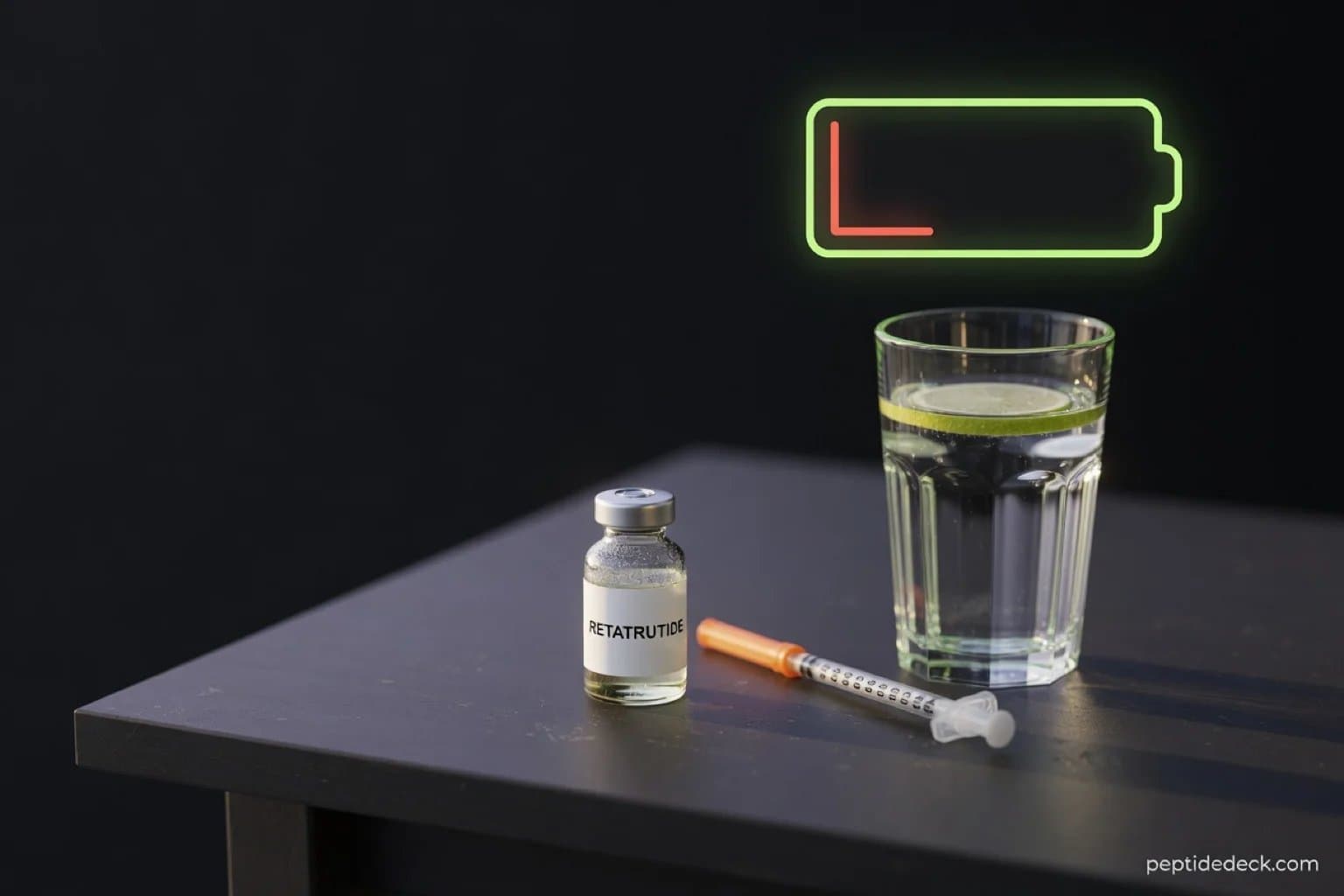
Tired on reta? You're not imagining it.
Does retatrutide make you tired? For some people, yes, and the trial data puts a number on it. You're eating far less than you used to, the scale is moving fast, and some afternoons feel like wading through wet sand. That's a common story. The useful part is that the tiredness usually has a cause you can find, and most of those causes are fixable without giving up the drug.
🔑 Key Takeaways
- Fatigue showed up in a minority of trial participants, roughly double the placebo rate at the top dose, and it did not climb neatly with every dose step.
- The drug itself is rarely the whole story. One cause on the list below explains most cases, and it isn't the one people guess.
- Some people say reta gives them more energy. There is a real mechanism behind that claim, and a catch most posts leave out.
- Dose-escalation weeks are when tiredness clusters. What you do in those weeks decides whether it passes.
- A few symptoms mean stop guessing and call a doctor the same day.
Below, we'll go through what the trials actually recorded, how reta compares with Zepbound and Wegovy, the six usual causes and what to do about each, a week-by-week timeline, and the warning signs that aren't ordinary tiredness.
Does Retatrutide Make You Tired? What the Trials Recorded
Here is the actual count.
The phase 2 obesity trial, published in the New England Journal of Medicine in 2023, gave 338 adults retatrutide or placebo once a week for 48 weeks. The paper's main text focuses on stomach side effects, but the full adverse event table is posted on ClinicalTrials.gov (NCT04881760). Fatigue was reported by 3 of 70 people on placebo (4.3%) and by 19 of 267 people across all retatrutide arms (7.1%).
A companion phase 2 trial in 281 adults with type 2 diabetes, published in The Lancet the same year, found a similar picture: no fatigue reports at all on placebo, and 11 of 190 people on retatrutide (5.8%). Both trials were funded by Eli Lilly.
Split by dose, the numbers look like this.
Three things stand out. First, more than nine in ten people on retatrutide never reported fatigue at all. Second, the rate doesn't rise neatly with dose: the 8 mg arm that started at 2 mg had less fatigue than placebo, while the 4 mg arm that started at 2 mg had the most. Third, in both trials the arms that jumped straight to 4 mg tended to report more tiredness at 8 mg than the arms that started at 2 mg. That fits the wider finding that a gentler start reduced side effects.
One honest limitation: these arms held 23 to 70 people each, so a single extra report moves a percentage by three or four points. Read the table as "a minority, roughly double placebo," not as a precise dose curve.
Phase 3 tells the same story with less detail. In TRIUMPH-1, presented at the American Diabetes Association meeting in June 2026, fatigue and dizziness were reported more often in the higher-dose groups, and low blood pressure was more common on retatrutide, especially in people already taking blood pressure medication. Per-dose fatigue numbers had not been published in a form we could verify when we wrote this. Our retatrutide side effects guide tracks the full list as new tables come out.
Retatrutide Fatigue vs Zepbound and Wegovy
Tiredness is a class effect.
The approved drugs list it too. In the Zepbound (tirzepatide) label, fatigue, which there includes weakness, lethargy and malaise, was reported by 5%, 6% and 7% of people on 5, 10 and 15 mg, against 3% on placebo. The Wegovy (semaglutide 2.4 mg) label lists fatigue in 11% of people, against 5% on placebo.
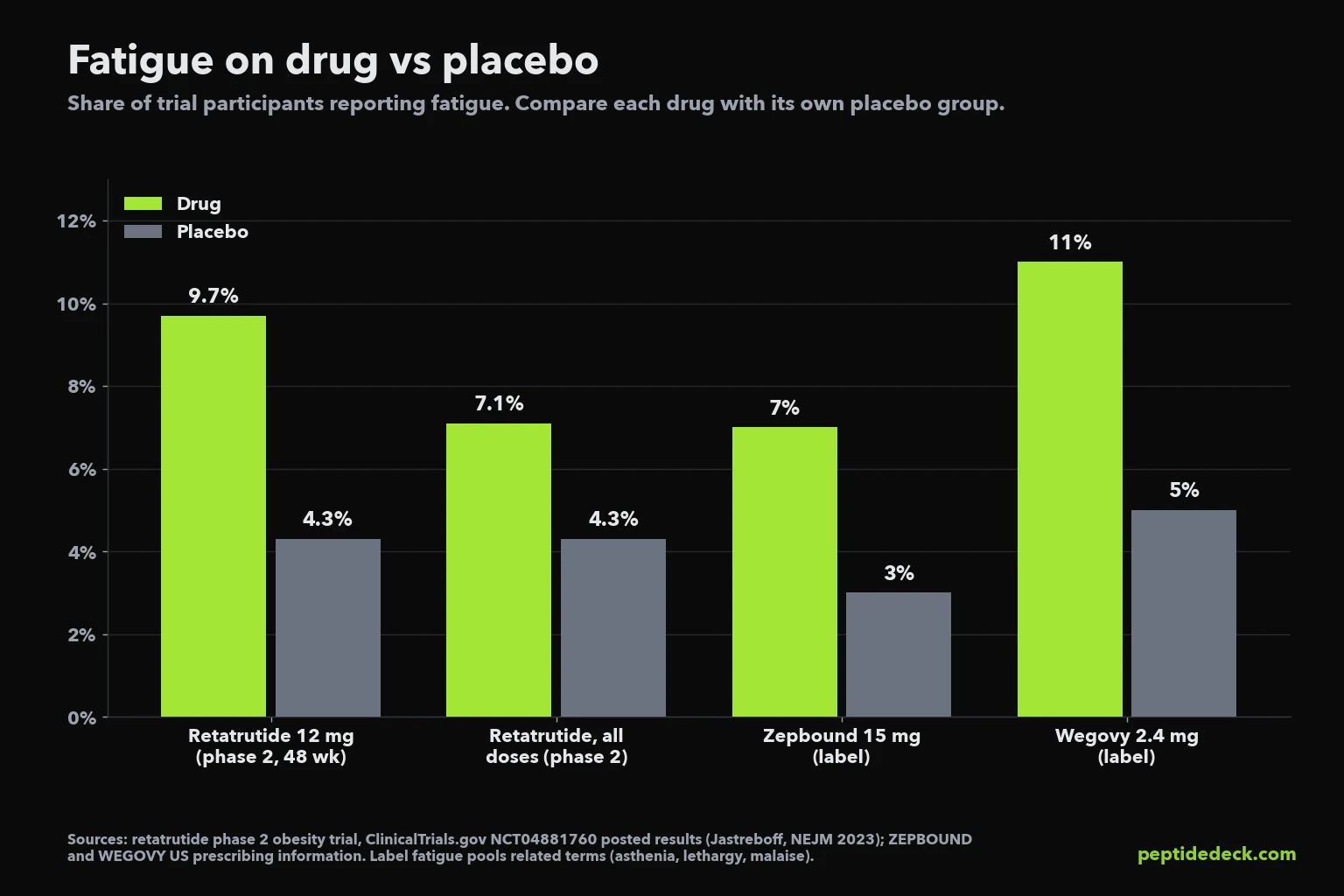
So retatrutide sits in the same band as drugs millions of people already take, each roughly doubling the background rate. The label figures pool more terms and far more people, so it's a rough comparison, but nothing suggests reta is unusually draining.
Why Retatrutide Makes You Tired: 6 Common Causes
The shot isn't a sedative.
Retatrutide acts on three hormone receptors, GLP-1, GIP and glucagon, which turn down appetite, slow the stomach and shift how your body handles fuel. The tiredness comes mostly from what those changes do to your eating, drinking and sleep. The usual suspects, most common first:
1. A deficit bigger than you planned. This is the one that explains most cases. Appetite can drop so far that you eat 800 or 1,000 calories without noticing. Your body runs on what you give it, and a steep deficit feels like low battery, brain fog and heavy legs, especially in the afternoon.
2. Too little protein and too few carbs. When you only manage a few bites, they tend to be whatever is easy. Low protein leaves you weaker over weeks. Very low carbs, often by accident, can make workouts feel impossible.
3. Fluid and salt loss from stomach side effects. Nausea, vomiting and diarrhea were the most common side effects in every retatrutide trial. Each episode costs water and electrolytes, and these drugs dull thirst too. Mild dehydration feels exactly like fatigue: headache, lightheadedness when you stand, dark urine.
4. Dose-escalation weeks. The phase 2 trials stepped up every four weeks, and stomach side effects clustered in those escalation periods. With a half-life of about six days, a new dose keeps building for several weeks, so the first week or two after a step-up is when energy dips most.
5. Worse sleep. Reflux at night, a sour stomach, or simply going to bed hungry all cut sleep quality. A week of broken sleep explains a lot of "drug fatigue."
6. Low blood sugar if you're on diabetes medication. Retatrutide lowers glucose. If you also take insulin or a sulfonylurea, the risk of a low rises sharply. In the Zepbound label, low blood sugar hit 10.3% of people with diabetes who also took a sulfonylurea, against 2.1% of those who didn't. Shaky, sweaty, sudden exhaustion needs a glucose check, not a nap.
Two more are worth ruling out if none of the six fit: low blood pressure, which was more common on retatrutide in TRIUMPH-1 and shows up as tiredness plus lightheadedness, and an unrelated cause such as low iron, low thyroid or low B12, which a basic blood panel can catch.
Cause and Fix: What to Do About Retatrutide Fatigue
Match the clue to the fix.
A practical routine for most people:
- Eat by the clock. Three small meals and one snack at set times, because hunger cues are no longer a reliable signal.
- Protein before anything else on the plate. Eggs, Greek yogurt, fish, chicken, a protein shake if solid food is hard.
- Front-load fluids. Most of your water before mid-afternoon, plus a rehydration drink on any day with vomiting or diarrhea.
- Don't climb on a bad week. If you're wiped out, holding a dose for another four weeks is normal. Our retatrutide dosing schedule shows the standard steps, and many people stop at 4 to 8 mg anyway.
- Trim training for two weeks after a step-up. Keep walking and lifting, drop the volume, then build back.
- Get blood work if it lasts. Fatigue that persists on a stable dose for more than a few weeks deserves a basic panel: iron, B12, thyroid, glucose.
When Does Retatrutide Fatigue Happen? A Typical Timeline
It comes in waves, not a straight line.
The trials didn't record when fatigue began, so this follows the dose schedule and the stomach side effects they did track. It's a typical pattern, not a measured one.
- Weeks 1 to 2 on 2 mg. Appetite drops quickly. If you suddenly eat half your usual food, the first energy dip often lands here.
- The week or two after each step-up (to 4, 8, then 12 mg). The common window for nausea, loose stools and the tiredness that follows them.
- Months 2 to 4. The fastest weight loss. If fatigue builds steadily here rather than in waves, the deficit or low protein is the usual cause.
- A stable dose for a month or more. Most people level out. Tiredness that is still there, or getting worse, isn't the normal adjustment and needs a closer look.
Curious where you should be on the scale by now? Our guide on how long retatrutide takes to work lays out the weight loss timeline. And if the scale is dropping faster than you expected and you feel drained, read retatrutide losing too much weight before your next dose.
Does Retatrutide Give You Energy?
Some people swear it does.
Forum posts often say reta gives more energy than tirzepatide did. There is real biology behind that: the glucagon receptor, the part that sets retatrutide apart.
Glucagon raises energy expenditure, meaning the calories your body burns at rest. In a small 2013 study published in Diabetes, 10 overweight or obese volunteers received infusions of glucagon, GLP-1, both, or placebo. Resting energy expenditure, measured by indirect calorimetry, rose with glucagon and with the glucagon plus GLP-1 combination, but not with GLP-1 alone. That is the working theory for why retatrutide's weight loss runs ahead of drugs that lack the glucagon signal.
Here's the catch. Burning more calories is not the same as feeling more energetic. If anything, a body that burns more while you eat less is running a bigger deficit, which is cause number one on the list above. We could not find any published human study measuring energy expenditure on retatrutide itself, so even the size of the effect on the drug is unknown.
The people who feel better are more likely feeling the results. Carrying less weight makes stairs and walking easier. Steadier blood sugar helps people with diabetes. In TRIUMPH-1's sleep apnea group, Lilly reported that retatrutide cut breathing interruptions during sleep by up to 60.6%, and better sleep alone can change how you feel by mid-morning. Those benefits are real, but they arrive over months, not days, and they don't make the early tired stretch any less real.
Can a Bad Vial Make the Tiredness Worse?
Indirectly, yes.
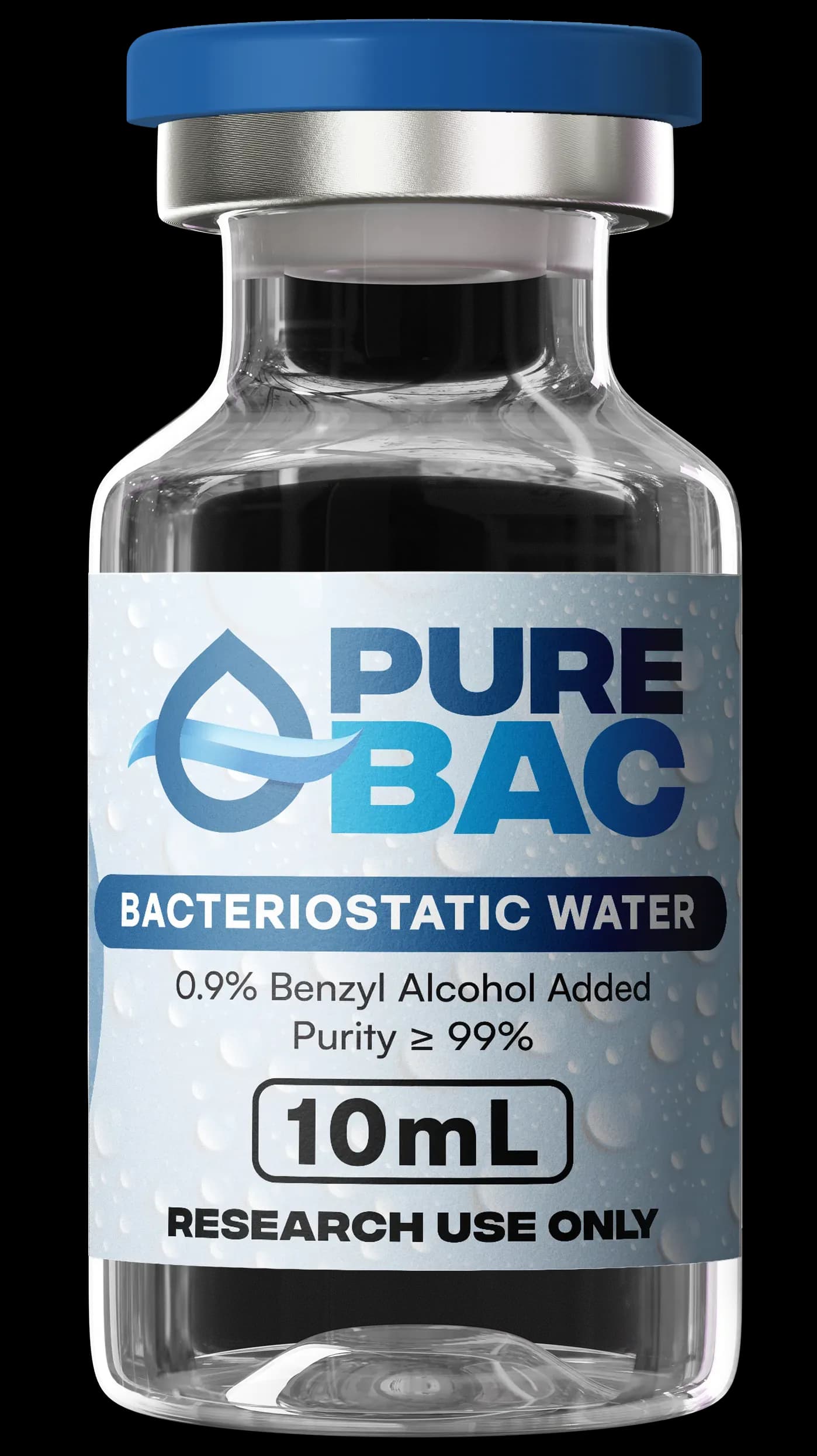
Fatigue and stomach side effects follow dose steps, so your dose has to be what you think it is. A vial that holds more than its label says turns your planned 2 mg into something closer to 3 mg, and you've effectively skipped a step. A vial that holds less leaves you wondering why nothing is working and tempted to climb too fast. Either way, the gentle start that reduced side effects in the trials is gone.
Retatrutide has no FDA approval, and the FDA has said it cannot be lawfully sold to consumers or compounded, so anyone sourcing a vial carries the quality risk themselves. If you're comparing options, our retatrutide where to buy guide explains what a batch-matched lab report should show: purity by HPLC, an identity test, and the measured milligrams in the vial. Our partner Ascension Peptides lists its 30 mg vial at $250, or $125 with code PEPTIDEDECK, and the 10 mg vial at $100, or $50 with the code. You can see current stock and batch reports on our buy retatrutide page (PeptideDeck earns a commission if you order through it, at no extra cost to you).
Dose check: if you felt fine on one vial and suddenly feel wiped out on a new one at the "same" dose, the vial is a suspect. Compare the batch report, and consider dropping back a step until you know.
Red Flags: When Tiredness Needs a Doctor
Ordinary tired passes. These don't.
Call a doctor the same day, or get urgent care, if fatigue comes with any of the following:
- Dizziness or fainting, especially when you stand up. Low blood pressure was more common on retatrutide in TRIUMPH-1 and more likely in people on blood pressure drugs. In the phase 2 obesity trial, 8.1% of people on 12 mg reported dizziness, against 2.9% on placebo.
- Very dark urine, or very little of it, after days of vomiting or diarrhea. The approved drugs in this class carry a warning for kidney injury from fluid loss.
- Signs of low blood sugar: shaking, sweating, confusion, a pounding heart, blurred vision. Treat with fast sugar first, then call.
- A racing heart at rest that doesn't settle. Heart rate rose with the dose in phase 2, peaked around week 24 and then eased. Our retatrutide heart rate guide covers what's normal.
- Vomiting you can't keep fluids down through, or severe stomach pain that spreads to your back, which can signal pancreatitis.
- Chest pain, shortness of breath, or low mood that won't lift.
If you're weighing the bigger picture, our page on whether retatrutide is safe goes through the full safety record from phase 2 to phase 3.
Frequently Asked Questions
Sources
- Jastreboff AM, et al. Triple-Hormone-Receptor Agonist Retatrutide for Obesity: A Phase 2 Trial. N Engl J Med. 2023;389:514-526. PMID 37366315. pubmed.ncbi.nlm.nih.gov/37366315
- ClinicalTrials.gov NCT04881760, posted results and adverse event tables for the phase 2 obesity trial. clinicaltrials.gov/study/NCT04881760
- Rosenstock J, et al. Retatrutide, a GIP, GLP-1 and glucagon receptor agonist, for people with type 2 diabetes: a phase 2 trial. Lancet. 2023. PMID 37385280. pubmed.ncbi.nlm.nih.gov/37385280
- ClinicalTrials.gov NCT04867785, posted results and adverse event tables for the phase 2 type 2 diabetes trial. clinicaltrials.gov/study/NCT04867785
- Eli Lilly. TRIUMPH-1 presentation, American Diabetes Association 86th Scientific Sessions, June 2026. lilly.com; summary via Doximity: opmed.doximity.com
- ZEPBOUND (tirzepatide) US Prescribing Information, Eli Lilly, revised 2026. pi.lilly.com/us/zepbound-uspi.pdf
- WEGOVY (semaglutide) US Prescribing Information, Novo Nordisk, revised 06/2026. novo-pi.com/wegovy.pdf
- Tan TM, et al. Coadministration of glucagon-like peptide-1 during glucagon infusion in humans results in increased energy expenditure and amelioration of hyperglycemia. Diabetes. 2013;62(4):1131-1138. PMID 23248172. pubmed.ncbi.nlm.nih.gov/23248172
- Eli Lilly press release, June 6, 2026: TRIUMPH-1 and TRANSCEND-T2D-1 results, including the obstructive sleep apnea substudy (AHI down up to 60.6%), via BioSpace. biospace.com
Medical Disclaimer: This content is for informational purposes only and does not constitute medical advice. Retatrutide has no FDA approval. Always consult a qualified healthcare provider before starting any new medication or treatment, and do not stop or change prescribed diabetes or blood pressure medication without talking to your prescriber. PeptideDeck may earn a commission from affiliate links at no additional cost to you.