💡 Quick Answer
Retatrutide is a triple receptor agonist (GLP-1 + GIP + glucagon) developed by Eli Lilly — currently the most potent weight loss compound in clinical trials, showing up to 24.2% body weight reduction at 48 weeks. It's not FDA-approved yet, but research-grade retatrutide peptide is available. If you're already using semaglutide or tirzepatide and plateauing, this is likely the next logical step.
Most articles will tell you what is retatrutide in one sentence: "a triple GLP-1/GIP/glucagon receptor agonist." That's technically correct and completely useless if you're trying to decide whether it belongs in your protocol. So here is what you need to know about retatrutide, written for the reader who actually has to make a call on it.
Here's what that label actually means for your weight loss, how retatrutide is different from what you might already be using, and — honestly — whether switching makes sense for you or not. This isn't a glossary entry. It's the guide I'd want to read if I were standing at a crossroads between semaglutide, tirzepatide, and whatever comes next.
Spoiler: retatrutide is the "whatever comes next." And the numbers are hard to ignore. Treat this as the practical retatrutide guide you should have been handed before your first injection.
People land on this page asking what is retatrutide for a bunch of different reasons. Some are curious. Some are actively comparing options. Some have maxed out semaglutide and want to know what's left. Wherever you're coming from, this is what you need to know about retatrutide before you commit to a vial, a protocol, or a 6-month plan.
🔑 Key Takeaways
- Retatrutide is a triple agonist peptide — targets GLP-1, GIP, and glucagon receptors simultaneously, making it more metabolically aggressive than semaglutide or tirzepatide
- Phase 2 clinical data shows up to 24.2% average body weight loss at 48 weeks on 12mg/week — and Phase 3 (TRIUMPH-4) reached 28.7% at 68 weeks
- Retatrutide vs semaglutide: ~10 percentage points more weight loss on average; worth switching if you've plateaued
- Retatrutide vs tirzepatide: closer call — tirzepatide is also dual-agonist, but retatrutide pulls ahead on weight loss by roughly 3–5%
- Side effects are similar to other GLP-1s: mostly GI, mostly dose-dependent, mostly manageable if you escalate slowly
- Not FDA-approved for prescription use yet — Phase 3 trials have reported and Lilly plans to file with the FDA in Q1 2027; research-grade peptide is available for purchase
The Short Answer (and Why It Matters)
Retatrutide is a triple agonist targeting GLP-1, GIP, and glucagon receptors — and the early trial data is striking. For the complete dosing breakdown, see our retatrutide dosage chart.
So what is retatrutide, stripped of the clinical jargon? It's a synthetic peptide that activates three hormone receptors your body uses to manage hunger, blood sugar, and energy storage — simultaneously. No other approved or near-approved compound does all three at once.
If you've heard of Ozempic, you know what a GLP-1 agonist does. It mimics a gut hormone that tells your brain you're full, slows gastric emptying, and nudges your pancreas to handle blood sugar better. Works well. Millions of people use it.
Tirzepatide (Mounjaro, Zepbound) added a second receptor — GIP — which turbocharges the fat-burning and insulin-sensitizing effects. That's why tirzepatide outperforms semaglutide.
Retatrutide adds a third: the glucagon receptor.
Glucagon is the hormone that mobilizes stored energy. Normally it's the one telling your liver to release glucose when blood sugar drops. But when you target glucagon receptors in a controlled, metabolic context alongside GLP-1 and GIP signaling — you get dramatically increased energy expenditure. Your body doesn't just eat less. It also burns more. At rest.
That's the actual answer to what is retatrutide. It's the first major weight loss compound to hit all three major metabolic levers at once.
What Retatrutide Actually Does in Your Body
The triple mechanism is what makes retatrutide unique in the weight loss peptide space. The side effect profile reflects this broader receptor engagement — both benefits and drawbacks come from hitting three targets instead of one or two.
Understanding what is retatrutide mechanistically matters if you want to predict how it'll perform for you specifically — not just in the average trial participant.
Three receptors. Three jobs. Let's break them down without the textbook overhead.
GLP-1 Receptor Activation
This is the same mechanism as semaglutide. GLP-1 hits receptors in your gut and brain, slowing how fast food leaves your stomach and suppressing appetite signals. You eat less without fighting yourself over it — that's the part people notice most. Also improves insulin response, which matters if you're metabolically compromised.
GIP Receptor Activation
GIP is the "incretin" hormone that amplifies insulin secretion after a meal. On its own, it's not dramatic. But combined with GLP-1, it appears to make the appetite and metabolic effects significantly stronger — the reason tirzepatide outperforms pure GLP-1 drugs. It may also influence fat tissue directly, improving adipose metabolism rather than just reducing intake.
Glucagon Receptor Activation
This is what separates retatrutide from everything else. Glucagon typically raises blood sugar by stimulating the liver to dump glucose. That sounds counterproductive for a metabolic drug — and it would be, if you were just hitting glucagon alone. But combined with the other two receptors, the net effect shifts. The appetite suppression from GLP-1/GIP keeps glucagon's blood sugar effects in check, while the glucagon receptor activation increases energy expenditure. Basically: your body's idle speed goes up. More calories burned at rest.
Put it together: eat less, metabolize better, burn more at rest. It's not one big effect — it's three smaller ones compounding.
The Numbers: How Much Weight Can You Actually Lose?
The TRIUMPH trial results provide the most comprehensive data available. Real-world results are starting to emerge too — check our retatrutide before and after compilation for documented transformations.
One of the most searched questions about what is retatrutide is simply: does it actually work better, or is the hype just marketing? The trial data is unambiguous.
The headline figure everyone quotes is 24.2%. That's the average body weight reduction seen in the Phase 2 trial (Jastreboff et al., New England Journal of Medicine, 2023) in participants taking the highest dose — 12mg/week — over 48 weeks.
But that number is a peak. The full picture is a dose-response curve, and it's worth knowing where you'd likely land based on dose:
For context: the average American man weighing 200 lbs would lose approximately 34–46 lbs at the 4–8mg range over a year. That's not "a few pounds." That's a meaningful body recomposition, especially if you're also training.
Retatrutide vs Semaglutide — Is It Worth Switching?
The most practical question after understanding what is retatrutide is how it stacks up against what most people are already using.
Short answer: if you're actively using semaglutide and have plateaued, yes, probably.
Longer answer: it depends what you're plateauing on.
Semaglutide (Ozempic/Wegovy) produces roughly 15% body weight loss at its maximum dose over 68 weeks — that's the STEP trial data. It works. A lot of people see excellent results and stop there. If that's you, there's no urgent reason to switch.
But here's when retatrutide makes sense:
- You've been on semaglutide for 6+ months and weight loss has stalled at or below what you wanted
- You're close to goal but the last 10–15 lbs aren't moving
- You have significant metabolic dysfunction (insulin resistance, fatty liver, high triglycerides) where the glucagon component may provide additional benefit
- You're doing a short research cycle and want the highest-efficacy compound available
The difference in mechanism matters here. Semaglutide is purely appetite + insulin. Retatrutide adds energy expenditure via glucagon. If you're someone who eats reasonably but just can't shift metabolic rate — retatrutide addresses a problem semaglutide can't.
Retatrutide vs Tirzepatide — The Closer Call
Once you understand what is retatrutide as a triple agonist, the natural follow-up is: how much better than tirzepatide is it, really?
This is the comparison that actually matters if you're a serious researcher. Both are next-generation. Both outperform semaglutide significantly. Both hit multiple receptors.
Tirzepatide (GLP-1 + GIP) achieves roughly 20–22% body weight reduction at maximum doses over 72 weeks — SURMOUNT trial data. That's excellent. Best-in-class for FDA-approved drugs.
Retatrutide hits 24.2% at 48 weeks — with more time to compound.
The extra ~3–5 percentage points come almost entirely from the glucagon receptor activation increasing energy expenditure. If that sounds marginal, scale it: on a 250 lb person, 3% is 7–8 lbs. Not marginal.
The trade-off: tirzepatide has a more established safety record, more clinical data, and a prescribable form (Mounjaro/Zepbound). Retatrutide is still in Phase 3. If you're working within a supervised clinical weight loss program, tirzepatide is almost certainly what you're getting. If you're running a research protocol and want the highest-efficacy compound currently available, retatrutide is the answer.
For a deeper breakdown, see our full retatrutide vs tirzepatide comparison.
Who Should Consider Retatrutide?
Knowing what is retatrutide is one thing. Knowing whether it's right for you is a different question — and one most articles skip entirely.
Not everyone. That's the honest answer.
Retatrutide peptide makes the most sense for:
- People who've plateaued on semaglutide — especially if you've been at max dose for 3+ months with limited progress
- People with significant metabolic dysfunction — insulin resistance, elevated triglycerides, fatty liver. The glucagon component adds benefits beyond pure weight loss
- Serious fat loss researchers running time-limited protocols and wanting peak efficacy
- People targeting 20%+ body fat reduction — lower targets are achievable with semaglutide or tirzepatide; if you're shooting for a dramatic body composition change, retatrutide's ceiling is higher
- People already comfortable with subcutaneous injections — not the place to start if you've never used a GLP-class compound before
Retatrutide probably isn't right for you if you're new to GLP-1 compounds, want to start conservative, or have an established tirzepatide protocol that's working fine. Don't fix what isn't broken.
What Retatrutide Won't Do
Answering what is retatrutide honestly means covering the limitations too. Most articles stop at the mechanism and the weight loss numbers. Here's what they leave out.
It won't do the work for you. The clinical trials were conducted with diet and exercise support. You can't eat in a large calorie surplus and expect retatrutide to override it. Appetite suppression helps — a lot — but it's an assist, not a replacement.
It won't preserve muscle without effort. GLP-1 class drugs are associated with lean mass loss alongside fat loss, especially at aggressive doses and caloric deficits. If you're not resistance training and eating adequate protein during a retatrutide cycle, some of what you lose will be muscle. That matters.
It won't permanently reset your metabolism. When people stop GLP-1/triple agonist compounds, appetite typically returns and weight regain is common. This is observed across all compounds in this class. It's not unique to retatrutide — but anyone framing it as a permanent fix is either misinformed or not being straight with you.
It won't work identically for everyone. The 24% headline comes from a clinical population with a specific profile. Outliers exist in both directions. Some people are non-responders to GLP-1 mechanisms. The only way to know is to try it.

The Dosing Reality: What to Expect Week by Week
What is retatrutide in practical terms? A once-weekly subcutaneous injection that you titrate up from a tiny starting dose over several months. The escalation protocol is non-optional — it's what separates a manageable experience from a miserable one.
The clinical protocol escalates slowly. Very slowly. That's not caution theater — it's how you manage the GI side effects that would otherwise make the first few weeks miserable.
For a full breakdown, see our complete retatrutide dosing guide. Here's the condensed version:
Don't rush the escalation. The most common complaint from people who do is persistent nausea that tanks quality of life. There's no prize for hitting 12mg faster. The weight loss compounds over time — slower escalation usually produces the same endpoint with a better experience.
Injections are subcutaneous — lower abdomen, outer thigh, or back of arm. Once weekly. Rotating sites reduces tissue irritation.
For side effects management specifics, see our retatrutide side effects guide.
Getting Retatrutide: What Your Options Are
For detailed sourcing information, our where to buy retatrutide in 2026 guide covers all current options. Some researchers are also exploring the retatrutide + MOTS-c stack for enhanced metabolic effects.
Now that you know what is retatrutide and how it works, the practical question: how do you actually access it?
Right now, in 2026, you have two realistic paths to retatrutide peptide.
Option 1: Wait for FDA Approval
Eli Lilly's main Phase 3 trials have reported, and Lilly plans to submit retatrutide to the FDA in Q1 2027, so approval is unlikely before late 2027. Until then, Lilly's free early access program, which a physician has to request for patients with severe obesity and complications, is the only legal route outside a trial. If approved, it'll likely be prescription-only, similar to Zepbound, and potentially expensive without strong insurance coverage. This is the future mainstream path — but it's not available today.
Option 2: Research-Grade Peptide Suppliers
Research-grade retatrutide is available now through reputable peptide vendors. This is how most people currently accessing this compound are doing it. The key word is "reputable" — purity and accurate dosing matter enormously with a compound like this. Third-party testing (COA certificates, HPLC analysis) is non-negotiable.
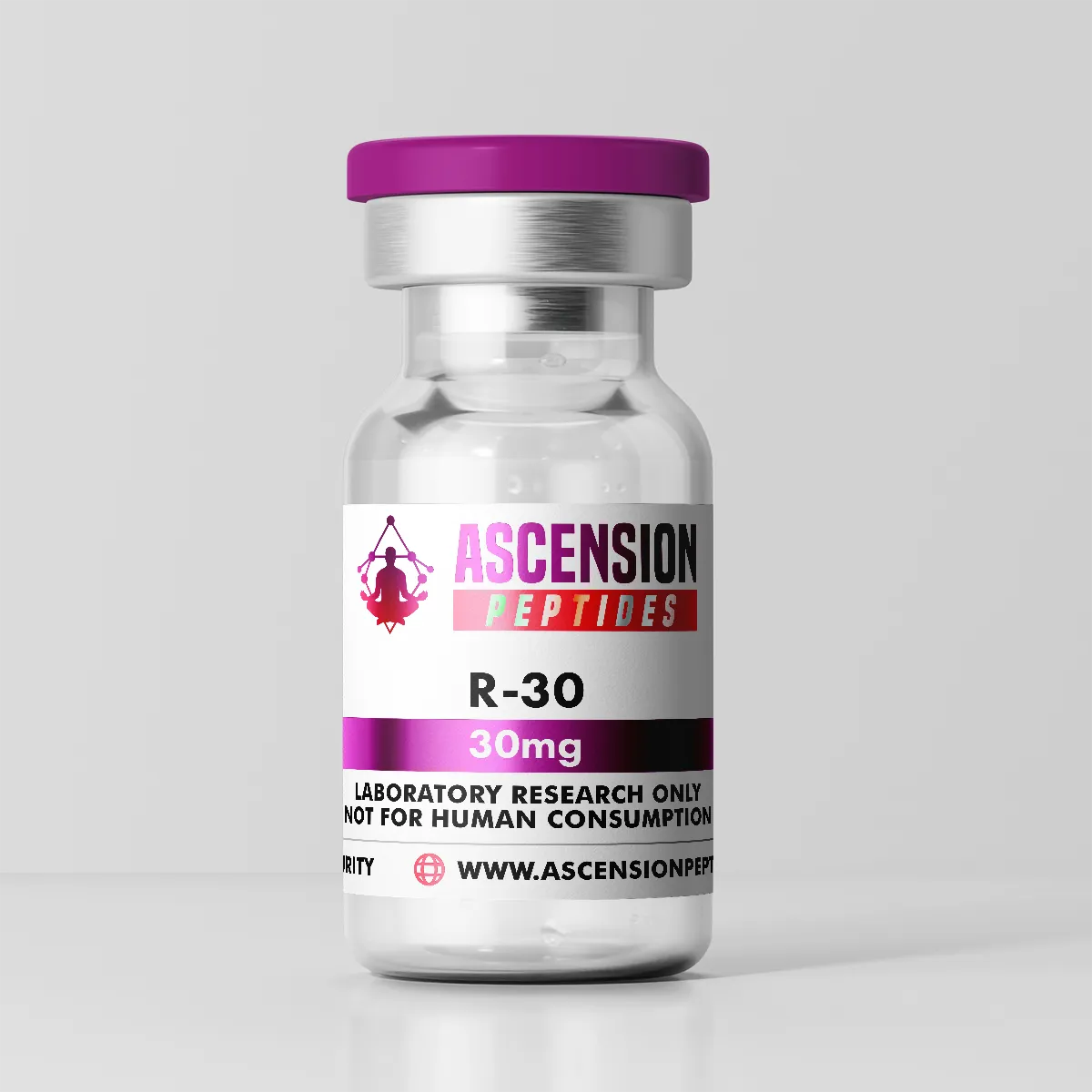
Ascension Peptides carries retatrutide under the designation R-30 (30mg vial) — research-grade, 99%+ purity, with COA documentation. For a full sourcing breakdown, read our where to buy retatrutide guide.
💡 Sourcing Note
The R-30 (30mg vial) from Ascension is the most cost-efficient option for longer protocols. A 30mg vial at $250 list ($125 with code PEPTIDEDECK) covers a significant escalation period if you're running conservative doses. At 4mg/week, that's roughly 7–8 weeks of supply from a single vial. View Retatrutide R-30 on Ascension →
Retatrutide's Triple Mechanism: A Deeper Look
The GLP-1 Component
Like semaglutide and tirzepatide, retatrutide activates GLP-1 receptors. This provides the well-established appetite suppression, slowed gastric emptying, and insulin sensitization that defines the GLP-1 drug class. The GLP-1 component alone would make retatrutide a viable weight loss compound — but it's the additional receptor targets that push results beyond what semaglutide can achieve.
The GIP Component
Glucose-dependent insulinotropic polypeptide (GIP) receptor agonism adds to the metabolic picture. GIP receptors in adipose tissue appear to enhance fat metabolism, and the dual GLP-1/GIP agonism in tirzepatide already showed superior weight loss compared to GLP-1 alone. Retatrutide includes this same dual agonism as its foundation.
The Glucagon Component: What Makes Retatrutide Unique
The glucagon receptor agonism is what distinguishes retatrutide from everything else on the market. Glucagon increases energy expenditure, enhances hepatic fat oxidation (burning liver fat), and promotes thermogenesis. In simple terms: while GLP-1 reduces how much energy you take in (appetite suppression), glucagon increases how much energy you burn (metabolic rate). This bidirectional approach — eat less AND burn more — explains why retatrutide produces more weight loss than compounds targeting intake alone.
Synergy Between All Three Receptors
The therapeutic value of retatrutide isn't just additive — the three mechanisms appear synergistic. GLP-1 suppresses appetite and food intake. GIP enhances insulin secretion and adipose tissue metabolism. Glucagon drives hepatic fat oxidation and energy expenditure. Together, they address both sides of the energy balance equation simultaneously while improving metabolic health markers across the board. This comprehensive approach explains the 24%+ weight loss observed in Phase 2 trials — territory that was previously exclusive to bariatric surgery.
TRIUMPH Trial Deep Dive
Phase 2 Trial Design
The Phase 2 trial (which preceded the TRIUMPH program) enrolled 338 adults with BMI ≥30 (or ≥27 with comorbidities) without diabetes. Participants were randomized to retatrutide at 1mg, 4mg, 8mg, or 12mg weekly, or placebo, for 48 weeks. The multi-dose design was particularly informative — it allowed researchers to characterize the dose-response relationship clearly.
Results at Each Dose Level
At the 12mg dose, nearly a quarter of total body weight was lost in under a year. Nearly two-thirds (64%) lost 20% or more. These numbers exceed both semaglutide (STEP trials: ~15%) and tirzepatide (SURMOUNT-1: ~21%) at maximum doses. The weight loss curve had not fully plateaued at 48 weeks, suggesting even greater losses with continued treatment.
What Phase 3 (TRIUMPH) Has Shown
Phase 3 has now reported. Weight loss kept going past 48 weeks: TRIUMPH-4 (obesity with knee osteoarthritis) reported 28.7% at 68 weeks on 12mg, and TRIUMPH-1 (NEJM, September 2026) reported 28.3% at 80 weeks (efficacy estimand; 25.0% counting everyone randomized). In type 2 diabetes, TRIUMPH-2 (The Lancet, September 2026) found 20.8% at 80 weeks with A1C down 1.4 to 1.6 points. Long-term safety and what happens to lean mass still need more data; the main new safety finding is dysesthesia (abnormal skin sensation), seen in up to 7.3% of people on 12mg in TRIUMPH-2. The muscle loss concern that plagues all GLP-1 drugs needs to be characterized for retatrutide specifically.
Retatrutide Side Effects: What to Expect
GI Side Effects (Most Common)
Nausea, diarrhea, vomiting, and constipation were the most reported adverse events in the Phase 2 trial — consistent with GLP-1 class effects. These were dose-dependent and peaked during titration. At the 12mg dose, approximately 45% of participants experienced nausea at some point during the trial, though most found it manageable and it diminished over time.
Appetite and Hunger Changes
Appetite suppression with retatrutide is described as more profound than with semaglutide. Some participants in the higher dose groups reported difficulty eating enough — a common complaint with aggressive GLP-1 agonism. This reinforces the importance of prioritizing protein and calorie-dense nutrition to prevent excessive lean mass loss.
Heart Rate Increase
A dose-dependent increase in resting heart rate was seen, peaking around week 24 and then easing; on 24-hour monitoring the 12mg group averaged about 9 bpm above baseline at week 24 and about 7 bpm at week 36. This is likely glucagon-mediated (glucagon has chronotropic effects) and mirrors what's been seen with other GLP-1 drugs. The clinical significance of this small change is unclear but warrants monitoring in patients with pre-existing cardiac conditions.
Liver Function
Interestingly, retatrutide showed improvements in hepatic fat content — likely driven by the glucagon component's effect on hepatic fat oxidation. ALT and AST levels (liver enzymes) improved in some participants. This could make retatrutide particularly valuable for patients with non-alcoholic fatty liver disease (NAFLD), though this needs further study.
Retatrutide vs the Competition: Full Comparison
Who Is Retatrutide Best For?
Maximum Weight Loss Goal
If your primary objective is the greatest possible weight reduction and you're willing to accept a newer compound with less long-term safety data, retatrutide offers the highest efficacy currently available. The 24% weight loss at 12mg substantially exceeds what any approved drug achieves.
Patients with NAFLD/NASH
The glucagon-mediated hepatic fat oxidation makes retatrutide particularly interesting for patients with fatty liver disease. While formal NASH trials haven't completed, the Phase 2 liver enzyme improvements suggest meaningful hepatoprotective effects.
Patients Who Plateaued on Semaglutide or Tirzepatide
Some individuals reach a weight loss plateau on single or dual agonists. The additional glucagon component in retatrutide addresses a different metabolic pathway — energy expenditure rather than just appetite suppression — which may overcome the plateau in some cases.
For a step-by-step breakdown of each option, see our guide on how to get retatrutide in 2026.
That is the honest version of what is retatrutide, what it is doing inside the body, and what you need to know before you decide it belongs on your shelf. Use this retatrutide guide as a checklist, not a permission slip — the data is impressive, but the decision is still yours.
Frequently Asked Questions
📚 References
- Jastreboff AM et al. "Triple-Hormone-Receptor Agonist Retatrutide for Obesity — A Phase 2 Trial." N Engl J Med. 2023;389(6):514-526. PubMed
- Rosenstock J et al. "Retatrutide, a GIP, GLP-1 and glucagon receptor agonist, for people with type 2 diabetes." Lancet. 2023;402(10401):529-544. PubMed
- Coskun T et al. "LY3437943, a novel triple glucagon, GIP, and GLP-1 receptor agonist for glycemic control and weight loss." Cell Metab. 2022;34(8):1234-1247. PubMed
- Wilding JPH et al. "Once-Weekly Semaglutide in Adults with Overweight or Obesity (STEP 1)." N Engl J Med. 2021;384(11):989-1002. PubMed
- Jastreboff AM et al. "Tirzepatide Once Weekly for the Treatment of Obesity (SURMOUNT-1)." N Engl J Med. 2022;387(3):205-216. PubMed
- Day JW et al. "A new glucagon and GLP-1 co-agonist eliminates obesity in rodents." Nat Chem Biol. 2009;5(10):749-757. PubMed
Recommended Supplier
In StockShips from USARetatrutide - R-30
R-30 from Ascension Peptides, third-party tested and shipped from the US.
Exclusive 50% off — use code PEPTIDEDECK