Aging is not a single event. It is the compounding result of at least twelve distinct biological processes — the so-called hallmarks of aging — each degrading tissue function, repair capacity, and disease resistance over time. Understanding which peptides target which hallmarks is far more useful than a simple ranked list, because no single compound addresses everything.
This guide organizes the most-researched anti-aging peptides by mechanism of action: senolytic clearance, telomere modulation, mitochondrial protection, hormonal axis restoration, autophagy induction, and inflammation control. For each class, we evaluate the biological rationale, available evidence, and realistic limitations as of 2026.
Mapping Anti-Aging Peptides to the Hallmarks of Aging
Lopez-Otin et al. first described the hallmarks of aging in 2013 and expanded the list to twelve in the 2023 update. The framework is descriptive — identifying what goes wrong — not prescriptive. Targeting a single hallmark in isolation does not guarantee lifespan extension, but it does give researchers a structured way to evaluate compounds.
The table below maps the best-characterized peptides to their primary hallmark target:
Senolytic Peptides: Clearing Zombie Cells
Senescent cells — cells that have permanently stopped dividing but resist apoptosis — accumulate with age and secrete a pro-inflammatory cocktail called the senescence-associated secretory phenotype (SASP). SASP drives local and systemic inflammation, degrades surrounding tissue, and recruits more cells into senescence. Selectively eliminating these cells is the goal of senolytics.
FOXO4-DRI
FOXO4-DRI is a D-amino acid retro-inverso peptide that disrupts the interaction between FOXO4 and p53 inside senescent cells. In healthy cells, this interaction is minimal. In senescent cells, FOXO4 actively sequesters p53 in the nucleus, blocking apoptosis. The peptide breaks that interaction, liberating p53 to trigger programmed cell death — but only in the senescent population.
The landmark 2017 study by Baar et al. (Nature Medicine) showed that FOXO4-DRI administration in fast-aging mice restored fitness, fur density, and renal function. Importantly, it did not harm healthy proliferating cells. This selectivity is the compound's most exciting feature.
Telomere-Targeting Peptides: Epithalon
Telomere attrition is one of the most iconic hallmarks of aging. With each cell division, the protective caps on chromosomes (telomeres) shorten. When they reach a critical length, the cell either senesces or dies. Telomerase — the enzyme that rebuilds telomeres — is largely silenced in somatic adult cells.
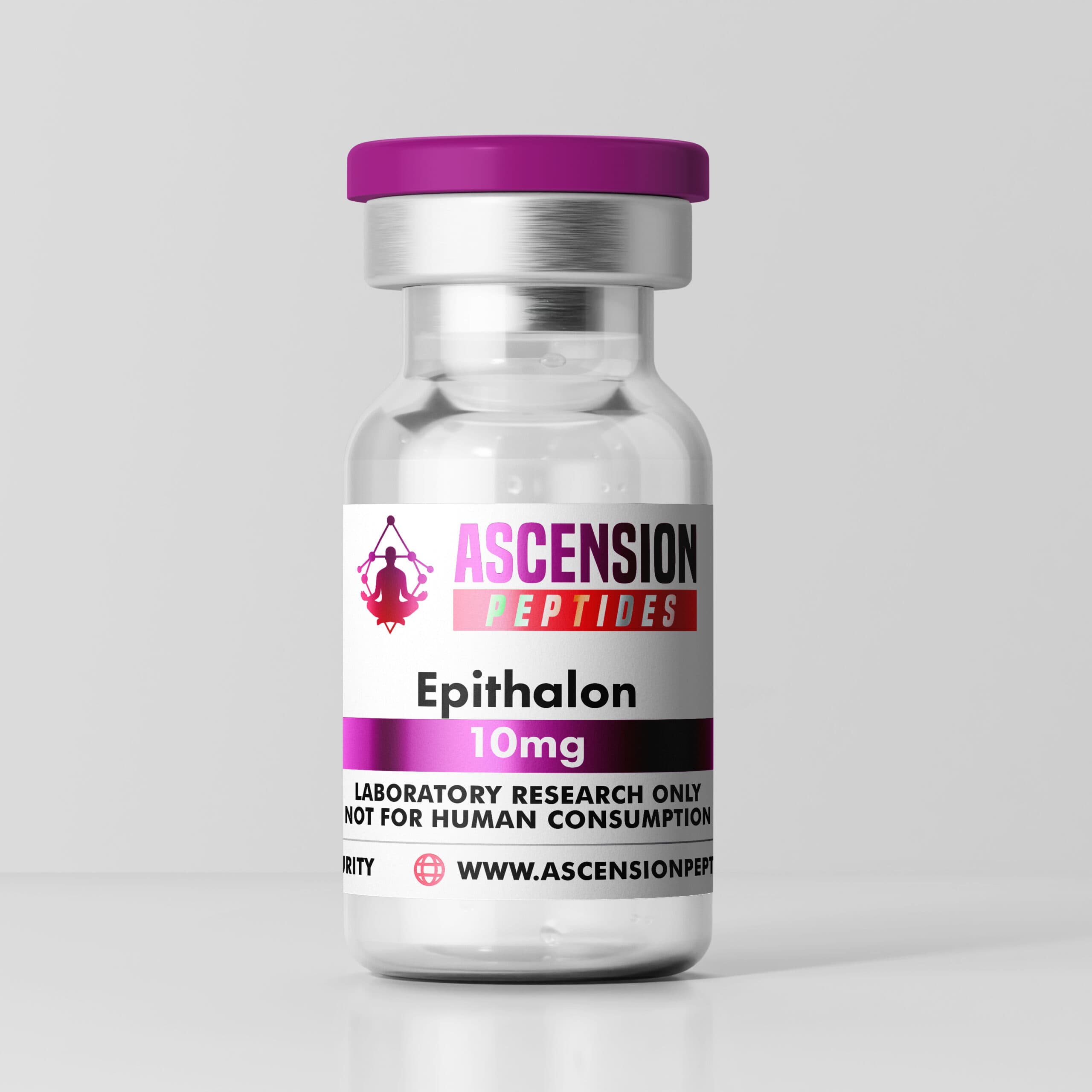
Epithalon (Epitalon)
Epithalon is a synthetic tetrapeptide (Ala-Glu-Asp-Gly) derived from Epithalamin, a natural polypeptide extract from the pineal gland. Developed by Russian researcher Vladimir Khavinson, it has been studied since the 1970s in the context of both aging and neuroendocrine regulation.
The proposed mechanism involves upregulation of telomerase activity, leading to telomere elongation in aged cells. Khavinson's group published studies showing increased telomerase activity in human somatic cells treated with Epithalon in vitro, and rodent lifespan extension in several published trials. A small number of Russian clinical studies reported benefits in elderly patients including improved melatonin rhythms, immune restoration, and reduced incidence of age-related pathology.
The evidence base is real but carries important caveats: most studies originated from a single research group, were not independently replicated in Western trials, and lacked rigorous double-blind controls. The mechanistic rationale (telomerase activation via pineal-derived peptide) is biologically plausible but not confirmed in large independent cohorts.
Mitochondrial Peptides: SS-31, MOTS-c, and Humanin
Mitochondrial dysfunction is among the most well-validated hallmarks of aging. As mitochondria age, electron transport chain efficiency declines, reactive oxygen species (ROS) production increases, and ATP output drops. This bioenergetic failure cascades into muscle atrophy, cognitive decline, and cardiovascular aging.
SS-31 (Elamipretide)
SS-31 is a tetrapeptide (D-Arg-Dmt-Lys-Phe-NH2) that selectively accumulates in the inner mitochondrial membrane and binds cardiolipin — a phospholipid critical for electron transport chain architecture. By stabilizing cardiolipin, SS-31 reduces electron leak, lowers ROS production, and restores ATP synthesis efficiency.
SS-31 has the strongest clinical evidence base of any anti-aging peptide. Phase II trials in heart failure with preserved ejection fraction (HFpEF) demonstrated improved exercise capacity, and multiple studies in humans have shown reductions in mitochondrial oxidative stress biomarkers. It is the closest peptide to validated anti-aging mitochondrial therapy in a clinical sense.
MOTS-c and Humanin
MOTS-c and Humanin are mitochondrial-derived peptides (MDPs) — peptides encoded directly within the mitochondrial genome. This discovery, made in the early 2010s, fundamentally changed how researchers think about mitochondrial signaling.
MOTS-c activates AMPK, improves insulin sensitivity, and has been shown in preclinical studies to extend lifespan in mice and improve metabolic function. Circulating MOTS-c levels decline with age in humans, and higher levels have been observed in centenarians — a correlation, not causation, but a compelling one. Humanin, the first MDP discovered, exerts neuroprotective and cytoprotective effects, and circulating levels also correlate inversely with biological age markers.

Growth Hormone Axis Peptides: Restoring the Somatotropic Axis
Growth hormone (GH) secretion declines approximately 14% per decade after age 30 — a process called somatopause. This decline drives losses in lean muscle mass, bone density, skin collagen, sleep quality, and metabolic rate. GH-releasing peptides and growth hormone secretagogues attempt to restore physiological GH pulsatility rather than replacing GH directly.
Sermorelin is a 29-amino acid analog of growth hormone-releasing hormone (GHRH) that stimulates the pituitary to release GH in a natural pulsatile pattern. Clinical studies support its use in GH-deficient adults, with improvements in body composition, sleep architecture, and energy. Because it works through the pituitary (not exogenously), it preserves negative feedback and carries a lower risk profile than direct GH administration.
Ipamorelin and CJC-1295 are often combined. Ipamorelin is a selective GH secretagogue that stimulates GH release with minimal cortisol or prolactin elevation. CJC-1295 is a long-acting GHRH analog that sustains elevated GH and IGF-1 levels. Together they produce synergistic GH pulses. This stack is widely used in age-management medicine contexts.
MK-677 (Ibutamoren) is a non-peptide GH secretagogue included here for completeness. It is orally bioavailable and produces sustained GH and IGF-1 elevation, but its long-acting nature has raised questions about GH excess risk with long-term use.
Tissue Repair and Anti-Inflammatory Peptides: GHK-Cu and BPC-157
Inflammaging — the chronic low-grade inflammation that accumulates with age — accelerates nearly every other hallmark. Peptides that modulate inflammatory signaling and restore tissue repair capacity are therefore relevant to multiple aging pathways simultaneously.
GHK-Cu (Copper Tripeptide)
GHK-Cu is a naturally occurring tripeptide-copper complex abundant in human plasma at age 20 (200 ng/mL) but declining to near-undetectable levels by age 60. It modulates gene expression across hundreds of genes, including upregulating antioxidant defenses, downregulating inflammatory cytokines, stimulating collagen synthesis, and activating stem cell migration. Microarray studies suggest GHK-Cu may partially reverse age-related gene expression patterns in human fibroblasts — a remarkable preclinical finding. Topical and systemic application has been studied in skin aging, wound healing, and COPD with promising results.
BPC-157
BPC-157 (Body Protection Compound) is a 15-amino acid peptide derived from a gastric protein. Its research profile spans tendon healing, gut repair, and neuroprotection via nitric oxide pathway modulation and angiogenesis promotion. While not a classical anti-aging peptide, its systemic tissue maintenance effects are relevant to healthspan — particularly for connective tissue and gut integrity, both of which degrade with age. Preclinical evidence is extensive; human clinical trials remain limited.
Cognitive and Neuroprotective Peptides: Semax and Selank
Cognitive aging — memory decline, reduced processing speed, neuroinflammation — is among the most feared aspects of getting older. Two peptides developed in Russia target different aspects of neurological aging.
Semax is an ACTH-derived heptapeptide that upregulates BDNF (brain-derived neurotrophic factor) and NGF (nerve growth factor). BDNF is critical for synaptic plasticity and neurogenesis, both of which decline with age. Semax has clinical use in Russia for stroke recovery and cognitive impairment, giving it a stronger human evidence base than many nootropic peptides. Its anti-aging relevance is primarily in maintaining cognitive architecture and reducing neuroinflammation.
Selank is a tuftsin-derived peptide with anxiolytic and immunomodulatory effects. Chronic stress and elevated cortisol accelerate biological aging through multiple pathways; Selank's ability to normalize stress response and reduce inflammatory cytokines (particularly IL-6 and TNF-α) gives it an indirect anti-aging role via inflammaging suppression.
Which Mechanism Class Has the Best Evidence?
1. Mitochondrial — SS-31 in clinical trials; MOTS-c/Humanin in compelling preclinical + epidemiological data
2. GH Axis Restoration — Sermorelin/Ipamorelin/CJC-1295 with substantial clinical off-label evidence
3. Tissue Repair / Inflammaging — GHK-Cu with strong mechanistic data; BPC-157 with extensive preclinical
4. Telomere Modulation — Epithalon has published human data but from limited independent sources
5. Senolytic — FOXO4-DRI is scientifically compelling but rests on a single mouse study
6. Cognitive / Neuroprotective — Semax has Russian clinical use; broader replication needed
The most important takeaway from this framework is that aging is multifactorial — no single peptide addresses all hallmarks. Research protocols targeting multiple complementary mechanisms (e.g., mitochondrial support + GH axis restoration + inflammaging control) reflect a more sophisticated and biologically grounded approach than chasing any single compound.