
The best NAD+ supplement depends on delivery. Oral NR and NMN are convenient, liposomal forms may absorb better, and injectable NAD+ bypasses the gut entirely. That is why the most effective NAD+ supplement is not always the most famous brand.
🔑 Key Takeaways
- Delivery method matters as much as the ingredient, most oral NAD+ precursors lose a significant portion to gut and liver metabolism before reaching cells
- NMN has a unique cellular transporter (Slc12a8) that gives it an edge over NR for most users, but neither oral form matches injectable bioavailability
- Injectable subcutaneous NAD+ delivers the coenzyme directly into circulation, bypassing gut absorption entirely
- Oral NAD+ levels typically plateau around 8 weeks without a methyl donor (TMG) to sustain the conversion process
- For people who want clinical-grade results without IV therapy, subcutaneous NAD+ is the gap most supplement guides don't cover
The supplement industry frames this as a brand comparison. Fortune picks a winner. Rolling Stone ranks 10. What none of them compare is the question that actually determines results: how much NAD+ reaches your cells, and how much gets destroyed before it gets there.
That question leads to a different answer than most "best of" lists give you.
Why Most NAD+ Supplements Fall Short
Your body does not use NAD+ directly from a capsule.
Whether you take NMN, NR, or straight NAD+, it has to survive the gut, get absorbed into the bloodstream, travel to target tissues, and get converted into usable intracellular NAD+. Each step leaks efficiency. Oral bioavailability for NAD+ precursors is real but limited, and the research backing most dosage recommendations was done with standard uncoated capsules, not the novel delivery formats companies are now marketing.
The result: two people taking the same 500mg NMN capsule may get very different results depending on gut health, age, methylation capacity, and metabolic rate.
That is not a reason to skip supplements entirely. It is a reason to understand what you are actually buying.
NAD+ Delivery Methods, Ranked by Effectiveness
Here is how the main delivery formats stack up, from least to most effective at raising intracellular NAD+ levels.
The gap between oral and injectable is not marginal. Injectable NAD+ skips the gastrointestinal tract entirely. There is no first-pass liver metabolism, no degradation from stomach acid, no reliance on the Slc12a8 transporter that NMN depends on to enter cells. It goes in subcutaneously and reaches systemic circulation within minutes.
That is why IV NAD+ therapy became popular in wellness clinics, and why at-home subcutaneous NAD+ is now the more practical version of the same principle.
[Image #1]
The Best Oral NAD+ Supplements
Oral supplements are still a legitimate starting point, especially if you are new to NAD+ support, cost-conscious, or not yet ready to inject.
Here is what actually separates a good oral NAD+ product from a mediocre one.
NMN vs NR: Which Oral Precursor Works Better
Both NMN and NR are derivatives of vitamin B3. Both raise NAD+ levels in human studies. The difference is how they do it.
NMN is metabolically closer to NAD+, requiring only one conversion step. It also has the Slc12a8 transporter, discovered in a 2023 "NAD World 3.0" study, which gives it a direct route into cells that NR does not have. Human trials show NMN raises NAD+ levels roughly 40-60% at doses between 300-600mg/day.
NR, on the other hand, must convert to NMN before becoming NAD+. It is the better-studied compound for brain health and neurodegenerative biomarkers. If cognitive support is your primary goal, NR has a stronger evidence base for that specific application.
For most people focused on energy, metabolism, and anti-aging, NMN is the stronger oral choice. For brain health or neurodegenerative concerns, NR has the edge.
The 8-Week Plateau Problem
Multiple studies show NAD+ levels rise for roughly 8 weeks on oral precursors, then begin to decline even with continued supplementation. The likely cause: depletion of methyl donors needed to sustain the conversion process. Adding TMG (trimethylglycine) at 500-1,000mg/day is the most well-supported way to prevent this. Without a methyl donor, even a high-quality NMN supplement will underperform over time.
What to Look for in an Oral NAD+ Supplement
- Third-party tested: COA from an independent lab confirming purity and potency. Non-negotiable.
- Dose: Minimum 300mg NMN or 250mg NR per serving to hit the threshold used in human clinical trials
- TMG included: 500mg+ of trimethylglycine to prevent the methyl donor depletion that causes the 8-week plateau
- No proprietary blends: You need to know exactly how much of each ingredient is in the formula
- Stable formulation: NMN and NR degrade quickly when exposed to heat, light, or moisture. Look for enteric-coated or nitrogen-flushed packaging.
Supporting Ingredients That Amplify Results
NAD+ precursors raise the substrate. But the most potent longevity benefits come from what happens downstream: sirtuin activation.
Sirtuins are a family of proteins that regulate cellular aging, DNA repair, and metabolic efficiency. NAD+ is required to activate them, but the activation is amplified significantly by:
- Resveratrol or pterostilbene (50-250mg) - direct sirtuin activators; pterostilbene is more bioavailable
- Apigenin (100-200mg) - inhibits CD38, an enzyme that consumes NAD+. Blocking CD38 keeps more NAD+ available even without increasing precursor intake
- Spermidine (1-5mg) - supports autophagy, synergistic with NAD+ for cellular cleanup
A product that combines NMN or NR with these co-factors will outperform a standalone precursor at the same dose in most longevity applications.
Why Injectable NAD+ Is the Most Effective Form
If you have been dealing with persistent fatigue, noticeable cognitive fog, or physical recovery that has gotten slower over the last few years, those are not signs that you need a better capsule. They are signs that your cells are running on less NAD+ than they used to, and oral supplementation may not be closing that gap fast enough.
Injectable NAD+ changes the equation.
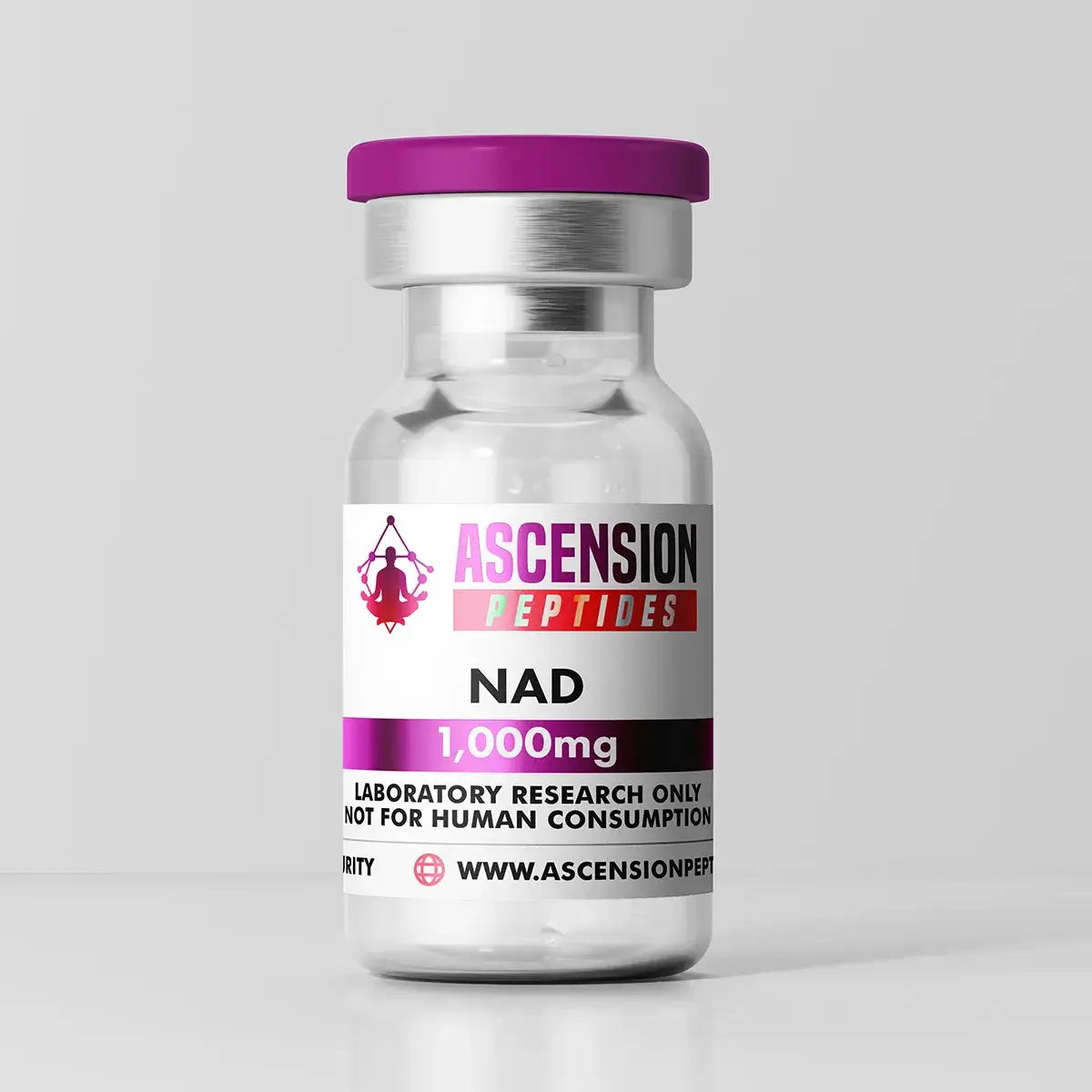
A subcutaneous injection of 1,000mg NAD+ deposits the compound directly under the skin, where it absorbs into systemic circulation without any gastrointestinal processing. There is no liver bypass issue. There is no reliance on intestinal transporters. The dose that goes in is the dose that reaches your bloodstream.
The result for most people is faster onset, more noticeable effects in the first few days, and sustained elevation of intracellular NAD+ that is harder to achieve consistently with oral forms.
The NAD+ dosage guide covers how to structure an injectable protocol based on your goals, but most people start at 1-2 injections per week and adjust based on response.
Injectable vs IV: What's the Difference
IV NAD+ drips at a clinic deliver NAD+ directly into the bloodstream, which means complete and immediate bioavailability. The downside is cost ($150-400 per session) and the requirement to go to a clinic. Subcutaneous NAD+ injection is one step removed, it absorbs through subcutaneous tissue into circulation rather than directly into a vein, but the bioavailability is still dramatically higher than any oral form, and it is something you can do at home on your own schedule. For most people, subcutaneous injection is the practical version of IV therapy.
Most Effective NAD+ Supplement Quick Answer
Short answer
For convenience, choose NR or NMN. For stronger delivery, choose liposomal or sublingual. For maximum delivery, injectable NAD+ or IV NAD+ wins because it avoids gut breakdown. For most readers, the realistic ladder is oral precursor first, injectable only if the goal is clinic-style effect without an IV visit.
Injectable NAD+ vs Oral: A Direct Comparison
NAD+ Prescription Therapy: When to Consider It
Some people want the benefits of injectable NAD+ with medical oversight, consistent supply, and a structured protocol. That is where prescription NAD+ therapy through a telehealth provider becomes the right call.
Options like NAD+ Therapy by Enhance.MD give you prescription-grade NAD+ from $169/month with clinical support built in. For people dealing with serious fatigue, cognitive decline, or metabolic issues, starting under medical supervision removes the guesswork around dosing and frequency.
The difference between prescription therapy and self-administering an injectable supplement is mostly about support and oversight, not efficacy. The compound is the same. If you are comfortable managing your own protocol and sourcing from a verified supplier, the injectable route at home costs less. If you want medical guidance, the prescription route is worth the premium.
How to Choose the Most Effective NAD+ Supplement for You
Picking the right NAD+ product is less about brand hype and more about matching delivery to your goal, your baseline, and what you can realistically stick with. Use this five-step framework before you buy anything.
1. Identify your primary goal. Daily energy, recovery, cognition, and longevity all share NAD+ as a substrate, but they respond at different speeds. Oral NR or NMN is fine for slow, low-stakes longevity support. Injectable or IV NAD+ moves the needle faster for fatigue, jet lag, addiction recovery, and post-illness reset.
2. Pick your delivery method second, not first. Most buyers reverse this. They pick the brand on a "best of" list, then realize the oral pill cannot deliver what they actually wanted. Decide oral vs sublingual vs liposomal vs injectable first, then choose a vetted brand inside that lane.
3. Verify third-party testing. NMN and NR raw materials vary widely in purity. Look for brands that publish certificates of analysis (COAs) showing identity, potency, and absence of heavy metals or solvents. If a vendor cannot produce a current COA, walk.
4. Check the precursor dose, not just the bottle size. A 60-capsule bottle is meaningless until you read mg per serving. Effective oral doses cluster around 250 to 500 mg NMN or 300 to 600 mg NR per day for general anti-aging support. Lower doses may technically work but rarely move biomarkers in human trials.
5. Match price to expected results window. Oral protocols need 8 to 12 weeks of consistent use to register changes. Injectable NAD+ often shows effects in days to two weeks. Budget for the full window, not a single bottle, because intermittent dosing wastes money.
Most Effective NAD+ Supplement Brands: Where the Top Picks Actually Fit
Most "best NAD+ supplement" lists rank brands without telling you which one suits which goal. Here is how the most-recommended brands map to delivery and use case so you can stop guessing.
- Tru Niagen (NR). The most-studied oral NR brand, useful for steady longevity support and cardiovascular markers. Slow build, low side-effect rate, mid to high price per gram.
- Wonderfeel Youngr NMN. Stacked formulation with resveratrol and ergothioneine. Best for buyers who want a single longevity capsule instead of building a stack themselves.
- Thorne NiaCel and Pure Encapsulations NR. Clinician-favored NR options for patients who want a clean label and a brand their doctor recognizes.
- Elysium Basis. NR plus pterostilbene, marketed for cellular aging. Reasonable choice if you want the NR plus polyphenol stack in one product.
- Renue by Science Lipo NAD+ or Liposomal NMN. The leading liposomal option for buyers who want better absorption than standard capsules without going to injections.
- Injectable NAD+ from a licensed compounding pharmacy. Not a retail brand, but the only category that bypasses the gut. Best for fatigue, recovery, and addiction support when oral has plateaued.
None of these are inherently "best." The most effective NAD+ supplement is the one that matches your delivery need, dose target, and how long you will actually use it. If oral has not done what you hoped after 8 to 12 weeks of a properly dosed protocol, injectable is usually the next step rather than another brand swap. For a deeper dose-by-form breakdown see our NAD+ dosage guide, and for the NR vs NMN argument specifically see our NAD+ vs NMN comparison.
How Long Before You Notice Results
Timeline depends heavily on your baseline NAD+ levels, which decline significantly with age.
- Under 35: Slower baseline decline means changes are subtle. Energy and mental clarity are the most common early signals, often noticed within 2-3 weeks of oral supplementation or faster with injectable
- 35-50: This is where most people feel the clearest difference. Recovery speed, sustained energy, and sleep quality tend to improve within 4-6 weeks on oral, 1-2 weeks with injectable
- 50+: NAD+ decline is most pronounced. Injectable NAD+ tends to produce more immediate results at this stage because the depletion is deeper and oral supplements may not close the gap as effectively
The NAD+ injections guide covers what to expect week by week on an injectable protocol.
For users ready to move beyond oral supplements, the most effective NAD+ approach is a mitochondria-derived NAD+ peptide. See the ranked breakdown in our NAD+ peptide guide.