
Reproductive Research
Kisspeptin
with codePEPTIDEDECKat checkout· list $74.99
- Purity
- 99+% (HPLC verified)
- Vial
- 10mg
- Form
- Lyophilized powder, sealed vial
- Half-life
- Short (native peptide; rapid enzymatic clearance in vivo)
Kisspeptin for sale at PeptideDeck — a KISS1-derived decapeptide that modulates GnRH pulse regulation via GPR54 signaling on hypothalamic neurons, supplied as 99+% pure lyophilized powder in a sealed 10mg research vial. If you are looking for where to buy Kisspeptin online with verified purity, a batch COA, and same-day US fulfillment, this is the listing we recommend.
About Kisspeptin
Researchers searching for Kisspeptin for sale will find this listing provides the primary GPR54 / KISS1R agonist research peptide in a sealed 10mg vial at 99+% purity. Buy Kisspeptin here with confidence: every order ships same-day from a US warehouse through a vetted research supplier with HPLC-verified identity and an independent certificate of analysis. The Kisspeptin price on this page reflects current discounted pricing with transparent checkout and no hidden fees.
Kisspeptin is a neuropeptide derived from the KISS1 gene product that activates the G-protein coupled receptor GPR54 (also designated KISS1R) on hypothalamic gonadotropin-releasing hormone (GnRH) neurons. This activation drives GnRH pulsatile secretion and downstream activation of the hypothalamic-pituitary-gonadal (HPG) axis, positioning Kisspeptin as the master upstream regulator of reproductive neuroendocrinology in mammalian research models. The biologically active C-terminal decapeptide fragment Kisspeptin-10 is widely used in research as the minimal active sequence sufficient for GPR54 activation. The KISS1 gene encodes a 145-amino acid precursor (metastin) from which Kisspeptin-10, -13, -14, and -54 fragments are all derived by proteolytic processing; Kisspeptin-10 (the decapeptide) represents the core pharmacophore used most broadly in GnRH pulse research. This Kisspeptin 10mg vial provides a standard research quantity for in-vitro and animal model neuroendocrinology programs. Purchase Kisspeptin here for access to HPLC-documented purity and reliable US supply.
Where to Buy Kisspeptin
Researchers looking for where to buy Kisspeptin online should prioritize suppliers with HPLC-verified purity, C-terminal amidation confirmation by mass spectrometry, and domestic US fulfillment. The C-terminal amide on Kisspeptin-10 is pharmacologically essential: material without correct C-terminal modification will not activate GPR54 at the expected potency, introducing systematic error into GnRH pulse and HPG axis research. Batch-level QC documentation is therefore a minimum requirement for legitimate research use.
PeptideDeck lists Kisspeptin for sale from a vetted US research supplier meeting these documentation standards. The Kisspeptin price on this page reflects 99+% HPLC-verified purity, third-party QC testing, and same-day shipping from a US warehouse. This listing provides the standard 10mg vial format appropriate for in-vitro and preclinical reproductive neuroendocrinology programs.
Click through to our partner to confirm live Kisspeptin stock availability and complete checkout with encrypted secure payment.
Quality Assurance & COA
Each Kisspeptin 10mg vial supplied through this listing is produced under cGMP-aligned synthesis conditions. HPLC analysis confirms purity at 99+% and identifies any detectable impurities above the reporting threshold. Mass spectrometry confirms molecular identity against the expected mass of Kisspeptin-10, including verification of C-terminal amidation.
Independent third-party laboratory verification adds an additional quality layer beyond internal vendor testing. The batch-specific COA is available on request from our partner vendor; researchers should request the COA for their specific lot number at time of purchase. All lots must pass purity and identity thresholds before release for sale.
Mechanism of Action
Kisspeptin exerts its primary pharmacological effect through agonist binding to GPR54, a Gq/11-coupled G-protein coupled receptor expressed at high density on GnRH neurons of the hypothalamic arcuate nucleus and anteroventral periventricular nucleus. GPR54 activation by Kisspeptin stimulates phospholipase C via the Gq/11 pathway, generating inositol trisphosphate and diacylglycerol. This signaling cascade raises intracellular calcium and activates protein kinase C in GnRH neurons, resulting in membrane depolarization and action potential firing. The downstream consequence is a burst of GnRH secretion into the hypothalamo-pituitary portal circulation.
GnRH pulses generated by Kisspeptin-driven GnRH neuron activation travel to the anterior pituitary, where GnRH receptor binding triggers synthesis and pulsatile release of luteinizing hormone (LH) and follicle-stimulating hormone (FSH). LH and FSH in turn regulate gonadal steroidogenesis and gametogenesis, making the Kisspeptin-GnRH-LH/FSH cascade the central signaling axis of reproductive function.
The pulsatile nature of GnRH secretion is critical to its biological effect: continuous GnRH receptor stimulation produces receptor downregulation and gonadotropin suppression, whereas pulsatile stimulation (as driven by Kisspeptin-regulated GnRH neuron activity) maintains pituitary responsiveness. Research using Kisspeptin as a GPR54 agonist has illuminated the frequency and amplitude coding of GnRH pulses and how these parameters translate to differential LH versus FSH output in animal models.
Kisspeptin neurons also serve as an integration node for peripheral metabolic and reproductive hormonal feedback signals. Gonadal steroids such as estradiol and testosterone regulate GPR54-expressing Kisspeptin neuron populations through estrogen receptor and androgen receptor pathways, forming the feedback loops that govern the HPG axis. Metabolic signals including leptin and ghrelin also influence Kisspeptin neuron activity, linking nutritional status to reproductive axis function in preclinical research models. This multi-input integration makes GPR54-expressing Kisspeptin neurons a research focal point for understanding how the reproductive axis responds to hormonal and metabolic context.
Chemical Profile
Kisspeptin-10 is a C-terminally amidated decapeptide with the sequence Tyr-Asn-Trp-Asn-Ser-Phe-Gly-Leu-Arg-Phe-NH2. This 10-amino acid sequence represents the minimum active pharmacophore of the KISS1 gene product family and is the most commonly used Kisspeptin fragment in research. The molecular weight of Kisspeptin-10 is approximately 1302.5 g/mol. The C-terminal amidation is essential for GPR54 binding affinity and is present in all biologically active Kisspeptin fragments; loss of the C-terminal amide results in substantially reduced receptor activation.
The peptide is supplied as a lyophilized white to off-white powder in a sealed glass vial. Lyophilization preserves molecular integrity and extends shelf life without requiring cold-chain shipping. The vial contains 10mg of Kisspeptin at 99+% purity as verified by HPLC. The compound requires reconstitution with bacteriostatic water or sterile saline for use in research assays. In aqueous solution, Kisspeptin-10 has relatively favorable solubility compared to highly hydrophobic peptides, and standard reconstitution conditions apply.
Research Applications
Kisspeptin is studied for its effects on GnRH pulse regulation in animal models and is the primary research tool for interrogating the upstream neural control of the HPG axis. The compound has a well-established role across multiple domains of reproductive neuroendocrinology research.
In HPG axis pharmacology research, Kisspeptin and GPR54 agonists are used in rodent and ovine models to characterize the relationship between GnRH pulse frequency and downstream LH/FSH output. Electrophysiology studies in ex-vivo hypothalamic slice preparations use Kisspeptin to directly activate GnRH neurons and measure firing patterns. In-vivo studies administer Kisspeptin peripherally or centrally and monitor hormone secretion dynamics by blood sampling. These models have established the role of arcuate nucleus Kisspeptin-Neurokinin B-Dynorphin (KNDy) neurons as the pacemaker of GnRH pulsatility.
In puberty onset research, Kisspeptin signaling is investigated as a critical developmental switch. The timing of pubertal activation of the HPG axis in rodent models is correlated with changes in hypothalamic Kisspeptin expression, and GPR54 null rodents display a hypogonadotropic hypogonadal phenotype consistent with absent puberty onset. Research using exogenous Kisspeptin in prepubertal animal models has characterized the developmental sensitivity of GPR54-expressing GnRH neurons.
In reproductive seasonality research, particularly in photoperiodic species such as sheep and hamsters, Kisspeptin neuron populations in the tuberoinfundibular nucleus are regulated by melatonin signaling and thyroid-stimulating hormone, providing a mechanism for photoperiodic control of seasonal reproductive cycles. Kisspeptin is used as a pharmacological tool to study these seasonal neuroendocrine transitions.
In metabolic-reproductive axis research, the relationship between body composition signals and Kisspeptin neuron activity is studied using leptin-deficient rodent models, caloric restriction paradigms, and high-fat diet models where reproductive suppression is observed alongside metabolic perturbation.
All research applications described here refer to published preclinical literature contexts. Kisspeptin is not FDA-approved for any indication and is not intended for human or veterinary use, diagnosis, or treatment.
Reconstitution & Dosing Reference
The following reconstitution guidance is provided as a research reference for in-vitro laboratory use only. Institutional SOPs and published preclinical literature should guide protocol-specific reconstitution decisions.
To reconstitute Kisspeptin, inject bacteriostatic water along the vial wall using a 1 mL insulin syringe or reconstitution needle. Avoid direct injection onto the lyophilized cake to prevent foaming. Do not shake; gently invert or roll the vial until the powder is fully dissolved. The reconstituted solution should be clear with no visible particulates. Kisspeptin-10 has good aqueous solubility and typically dissolves readily at standard reconstitution conditions.
For the 10mg vial, adding 1 mL of bacteriostatic water yields a 10 mg/mL stock. Adding 2 mL yields 5 mg/mL. For cell-based or superfusion assay work, researchers typically prepare serial dilutions in phosphate-buffered saline or Krebs buffer to reach nanomolar concentrations appropriate for GPR54 activation. Published in-vivo rodent studies have used nanomole-range central or peripheral doses; this information is cited strictly as published research literature context.
Store reconstituted Kisspeptin at 2-8 degrees Celsius. Use within 30 days of reconstitution. Do not freeze reconstituted solution.
Storage & Handling
Lyophilized Kisspeptin powder should be stored at -20 degrees Celsius upon receipt. Short ambient-temperature transit during shipping does not meaningfully degrade the lyophilized peptide. Transfer to freezer storage immediately upon receipt for long-term preservation.
Protect the vial from direct light. UV exposure can degrade peptide bonds over time, particularly at tryptophan and tyrosine residues that are present in the Kisspeptin-10 sequence.
After reconstitution with bacteriostatic water, store the solution at 2-8 degrees Celsius and use within 30 days. Avoid multiple freeze-thaw cycles of the reconstituted solution. For research programs requiring extended use beyond 30 days, aliquot into single-use volumes before freezing at -20 degrees Celsius.
Research Benefits
99+% purity lyophilized Kisspeptin-10 verified by HPLC
10mg per vial, C-terminally amidated, research-grade
GPR54 / KISS1R agonist for hypothalamic GnRH neuron research
Studied for effects on GnRH pulse regulation in animal models
Investigated in HPG axis pharmacology and puberty onset research
Used in seasonal reproductive cycle and metabolic-reproductive axis studies
Per-lot certificate of analysis with independent verification
Ships same-day from a US warehouse with tracked delivery
Product Specifications
| Molecular Weight | ~1302.5 g/mol (Kisspeptin-10 decapeptide) |
| Sequence | Tyr-Asn-Trp-Asn-Ser-Phe-Gly-Leu-Arg-Phe-NH2 (C-terminal amide) |
| Half-Life | Short (native peptide; rapid enzymatic clearance in vivo) |
| Purity | 99+% (HPLC verified) |
| Form | Lyophilized powder, sealed vial |
| Storage | Lyophilized at -20°C; reconstituted at 2-8°C, use within 30 days |
Frequently Asked Questions
You May Also Like
View all →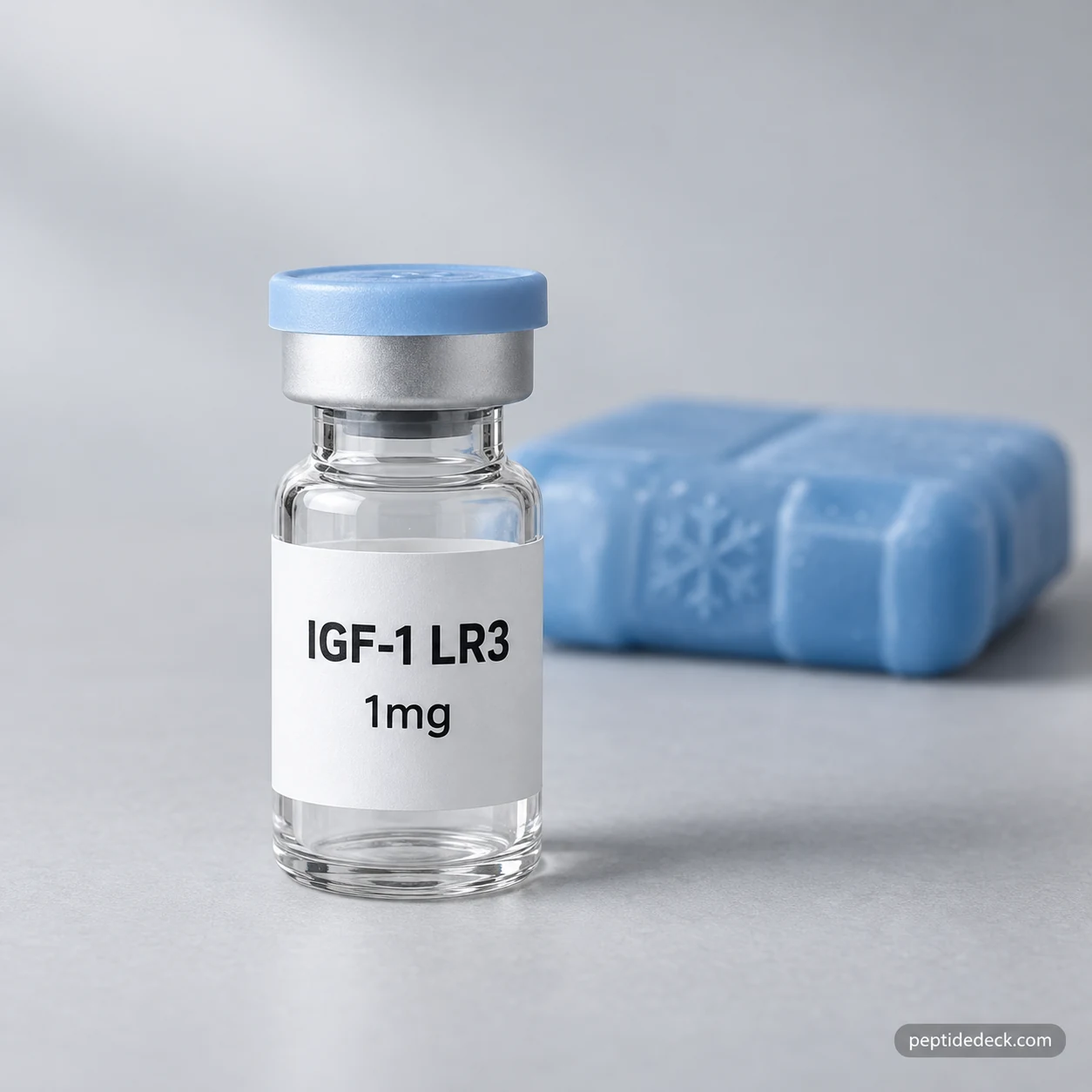
Growth Factor Peptides
IGF-1 LR3
Long R3 Insulin-like Growth Factor-1, 1mg vial
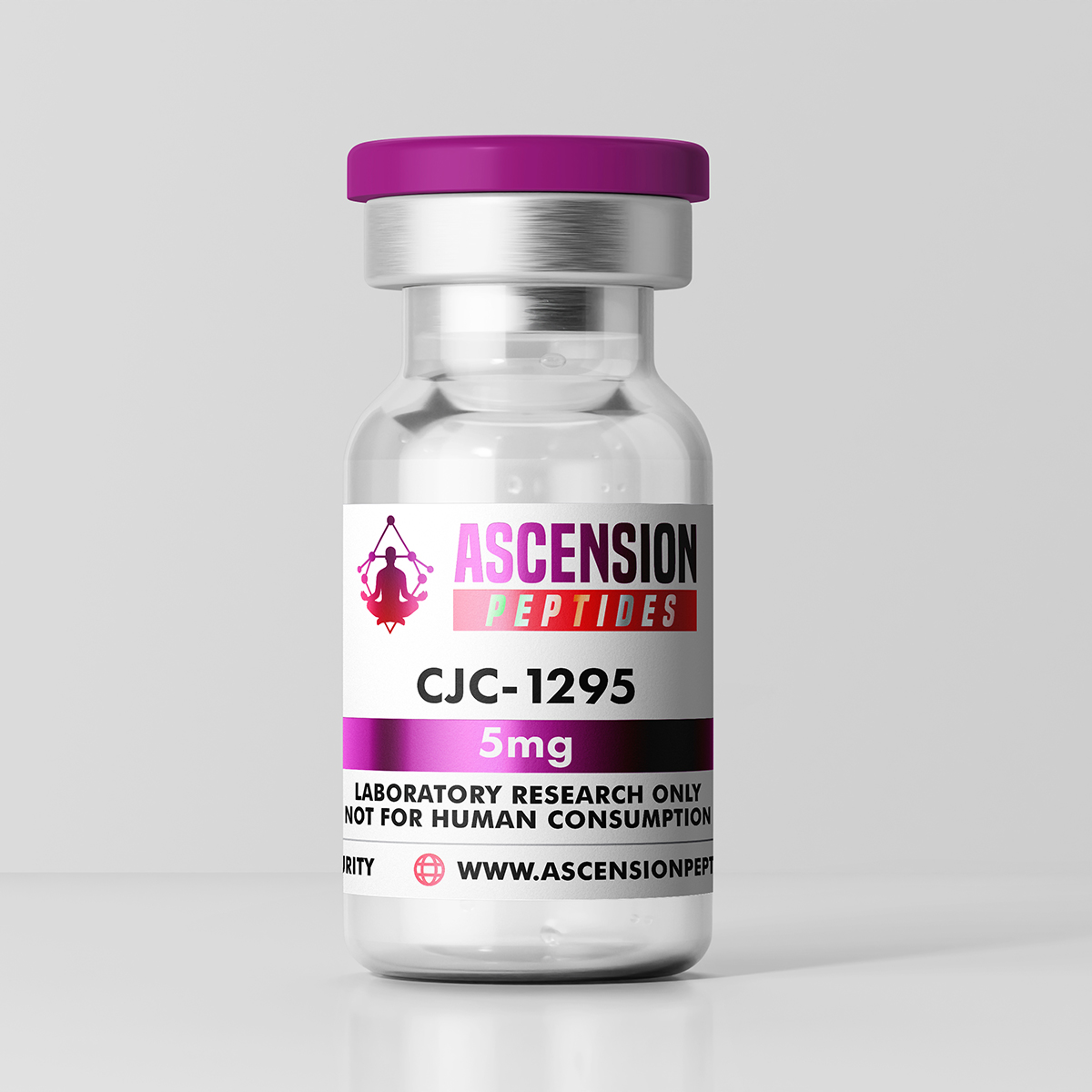
Growth Hormone Releasing Hormone (GHRH) Analogues
CJC-1295 (No DAC)
Modified GRF (1-29) GHRH Analogue, 5mg Lyophilized Vial
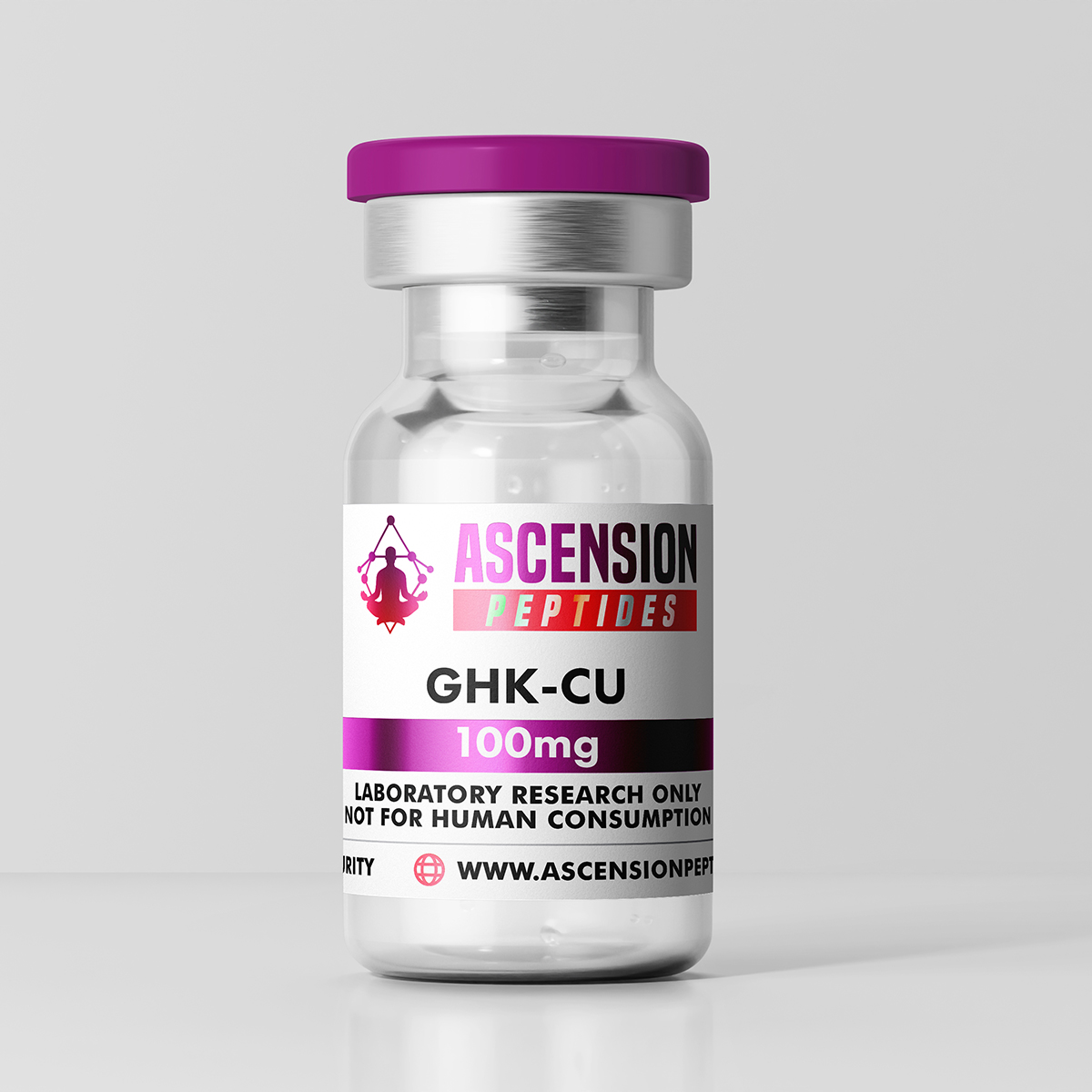
Copper Peptides
GHK-Cu
GHK-Cu For Sale: 50mg 99%+ Purity Copper Tripeptide

Healing & Recovery Peptides
BPC-157
Body Protection Compound 5mg: 99%+ Purity Research Vial
Research Use Only. All products sold by PeptideDeck are strictly for in-vitro laboratory research and are not intended for human or veterinary use, diagnosis, or treatment. Not for resale.