Weight loss injections in 2026 include Wegovy, Zepbound, Saxenda, diabetes GLP-1 brands, and late-stage pipeline drugs. Five years ago there was one weight loss shot; now the differences between options are bigger than most people realize.

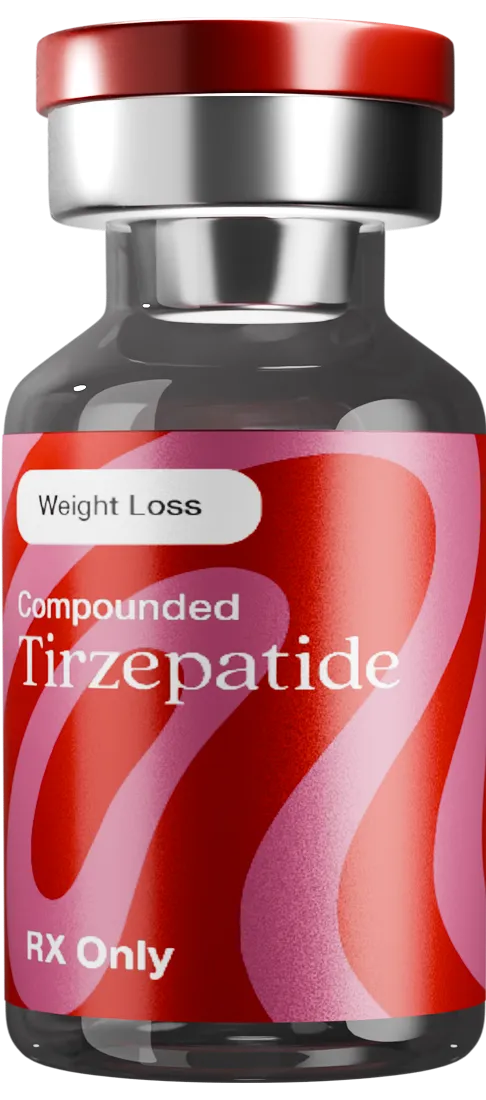
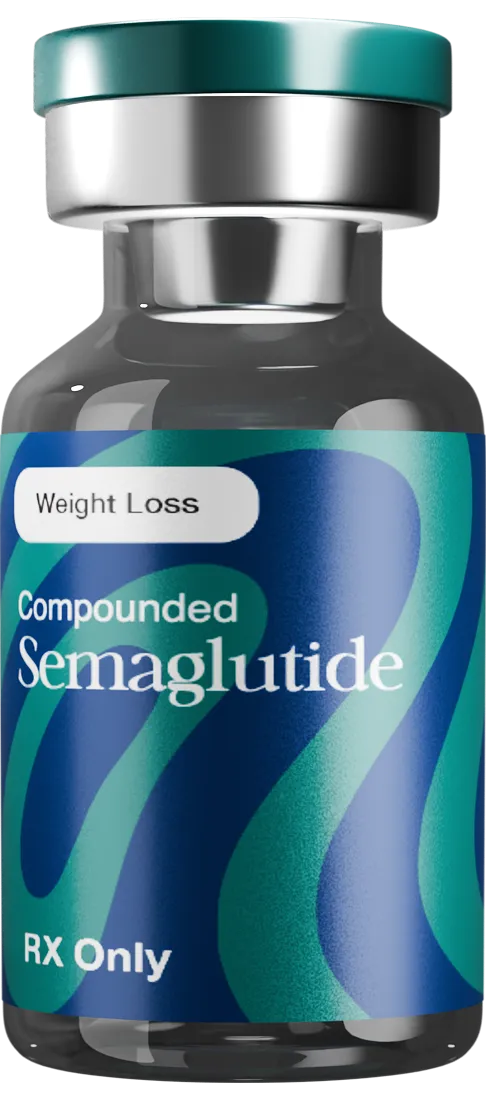
If you do not have insurance coverage, compounded GLP-1s through a telehealth provider are the cheapest legal route. Embody is the provider we rate highest: US-licensed clinicians, no membership fee, and free 1 to 2 day shipping.
6-month plan pricing; month-to-month is $146 and $258. Compounded medications are not FDA-approved. We may earn a commission, at no cost to you.
Written by PeptideDeck Editorial. Pricing and source review updated August 4, 2026 from NovoCare, Wegovy, Lilly/Zepbound, DailyMed labels, and published clinical trial records. We separate FDA-approved weight-loss labels from diabetes brands and pipeline medicines because insurance coverage depends on that distinction.
🔑 Key Takeaways
- Tirzepatide (Zepbound) is the strongest FDA-approved weight loss injection, averaging 20.2% body weight loss in direct head-to-head trials. Semaglutide (Wegovy) averages 13.7%. Retatrutide, still in Phase 3, reaches 24.2%
- You qualify if your BMI is 30 or higher, or 27 or higher with one obesity-related condition like type 2 diabetes, high blood pressure, high cholesterol, or sleep apnea
- Starting July 1, 2026, Medicare covers Wegovy, Zepbound KwikPen, and Foundayo through the GLP-1 Bridge at roughly $50/month for eligible beneficiaries
- NovoCare lists Wegovy self-pay routes from $149/month for tablets and $199/month introductory pen fills, then $349-$399 depending on dose. Lilly lists Zepbound direct self-pay offer pricing from $299 to $449, with regular KwikPen prices up to $699 depending on dose
- Side effects are mostly gastrointestinal and fade within 4 to 8 weeks at a stable dose. Slow titration fixes more problems than any dietary tweak
- Do not use if you or a first-degree relative has medullary thyroid cancer, MEN2, pancreatitis history, severe gastroparesis, or if you are pregnant, breastfeeding, or trying to conceive
- Stop the injection at least 2 months before trying to conceive. The drug takes about 5 weeks to fully clear
- Roughly two-thirds of lost weight returns within a year of stopping, per the STEP 4 trial. Most physicians now treat obesity as a chronic condition needing ongoing medication
Where to get them: the two top-rated telehealth providers for prescription and compounded weight loss injections in 2026.

This page covers every weight loss injection available in 2026: the names, how each one is dosed, who qualifies, what it costs, the side effects, the contraindications, and how to pick the one that fits your situation.
Who Qualifies for Weight Loss Injections
There is a clear threshold.
FDA-approved weight loss injections have specific eligibility rules. Meeting them is the foundation for getting a prescription and getting insurance to pay for it.
Standard Eligibility for Weight Loss Injections
- BMI of 30 or higher (clinically obese), or
- BMI of 27 or higher with at least one weight-related condition: type 2 diabetes, high blood pressure, high cholesterol, obstructive sleep apnea, or cardiovascular disease
- Adults 18 and older (Wegovy and Saxenda are approved from age 12 for adolescents with BMI in the 95th percentile or higher)
- Documented attempt at lifestyle changes (diet, exercise) without adequate result
If you fall below these thresholds but still want access, some people pursue compounded semaglutide or tirzepatide through a telehealth platform. Compounded versions do not require the same BMI cutoff but still need a consultation with a licensed provider. Quality of the source pharmacy matters far more than any marketing language. See our GLP-1 without insurance breakdown for the lower-cost path.
Every Weight Loss Injection Available Right Now
If you've been searching for weight loss injections names, the list splits into three groups: FDA-approved obesity medications, diabetes brands that come up in GLP-1 conversations, and pipeline injections that are not available as prescriptions yet. The distinction matters because a drug's label controls how clinicians prescribe it and how insurers cover it.
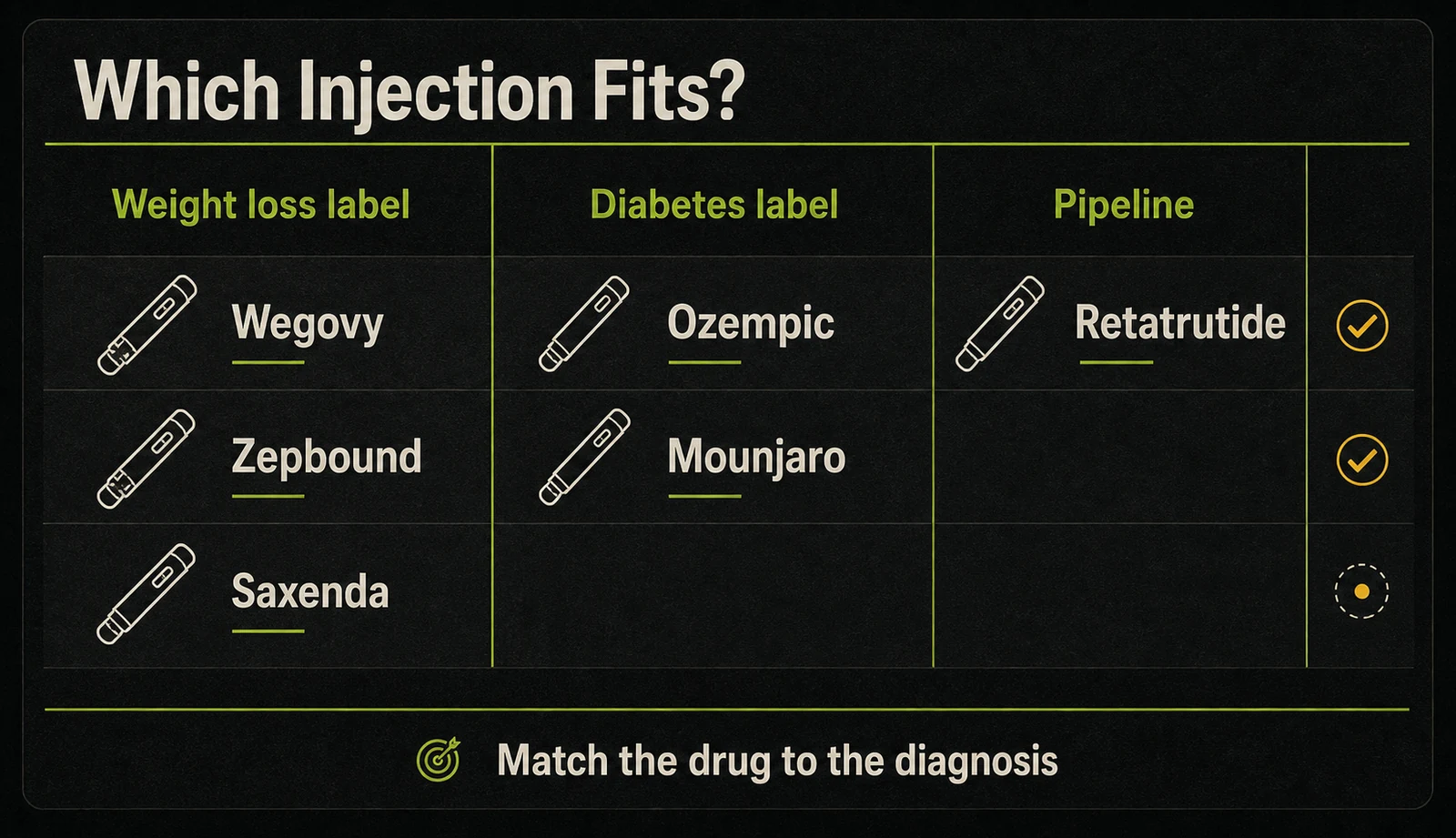
| Medicine | Brand examples | Signal | Primary 2026 status | Best source to verify |
|---|---|---|---|---|
| Semaglutide | Wegovy, Ozempic | GLP-1 | Wegovy has a chronic weight-management label; Ozempic is primarily a diabetes brand. | DailyMed Wegovy label |
| Tirzepatide | Zepbound, Mounjaro | GLP-1 + GIP | Zepbound has obesity and OSA indications; Mounjaro is primarily a diabetes brand. | DailyMed Zepbound label |
| Liraglutide | Saxenda, Victoza | GLP-1 | Saxenda remains the older daily injection option for chronic weight management. | DailyMed Saxenda label |
| Retatrutide | Retatrutide | GLP-1 + GIP + glucagon | Late-stage pipeline; discussed because trial results are unusually strong, but it is not a retail prescription. | PeptideDeck retatrutide guide |
| CagriSema | Semaglutide + cagrilintide | GLP-1 + amylin pathway | Pipeline combination therapy; watch FDA submission timing and final label language. | Cagrilintide overview |
| MariTide | Maridebart cafraglutide | GIPR + GLP-1 | Monthly-injection pipeline candidate; not a current prescription choice. | MariTide guide |
Weight Loss Injections Comparison Chart
The short version: choose by what you are optimizing for. These are real table rows so search engines and readers can extract the comparison instead of trying to interpret a styled grid.
| Priority | Best fit | Why it usually wins | Important caveat |
|---|---|---|---|
| Maximum approved weight loss | Zepbound (tirzepatide) | Head-to-head and pivotal trial data put tirzepatide ahead of semaglutide for average weight reduction. | Coverage, side effects, and dose availability still decide whether it is practical. |
| Strongest heart-outcomes data | Wegovy (semaglutide) | Semaglutide has the most mature cardiovascular outcomes story in obesity care. | The best clinical fit may differ for diabetes, sleep apnea, or prior tolerability issues. |
| Lowest brand self-pay entry price | Wegovy tablets or introductory Wegovy pen fills | NovoCare lists self-pay options starting at $149 for tablets and $199 for eligible introductory pen fills. | Prices vary by dose and terms; check the official pharmacy page before paying. |
| Lowest Zepbound self-pay route | Zepbound KwikPen or vial through LillyDirect | Lilly lists self-pay offer pricing from $299 for the 2.5 mg starting dose and $399-$449 for higher offer tiers. | Regular KwikPen prices can be higher at some strengths; the single-dose pen has separate savings terms. |
| Older daily injection | Saxenda (liraglutide) | More history and daily dose control, but lower average weight loss than newer weekly options. | Daily injections and supply/cost issues make it less attractive for many patients. |
| Future maximum-results watchlist | Retatrutide | Triple-agonist data are the reason it dominates pipeline discussion. | It remains a pipeline drug, so it should not be treated like a current pharmacy option. |
Zepbound usually wins on average weight loss. Wegovy has the longer semaglutide track record and the stronger cardiovascular-outcomes label.
Read the full Zepbound vs Wegovy breakdown →Both are tirzepatide, so this is a coverage question rather than a clinical one. Zepbound carries the obesity and sleep-apnea indications; Mounjaro is the diabetes brand.
Read the full Mounjaro vs Zepbound breakdown →Both are semaglutide. Wegovy is the cleaner weight-management label; Ozempic coverage is usually tied to a type 2 diabetes diagnosis.
Read the full Ozempic vs Wegovy breakdown →The mechanism comparison behind every brand pairing above. Which one suits you depends on your target, tolerability and what your insurer will cover.
Read the full Tirzepatide vs semaglutide breakdown →How Weight Loss Injections Work
They change your brain, not just your appetite.
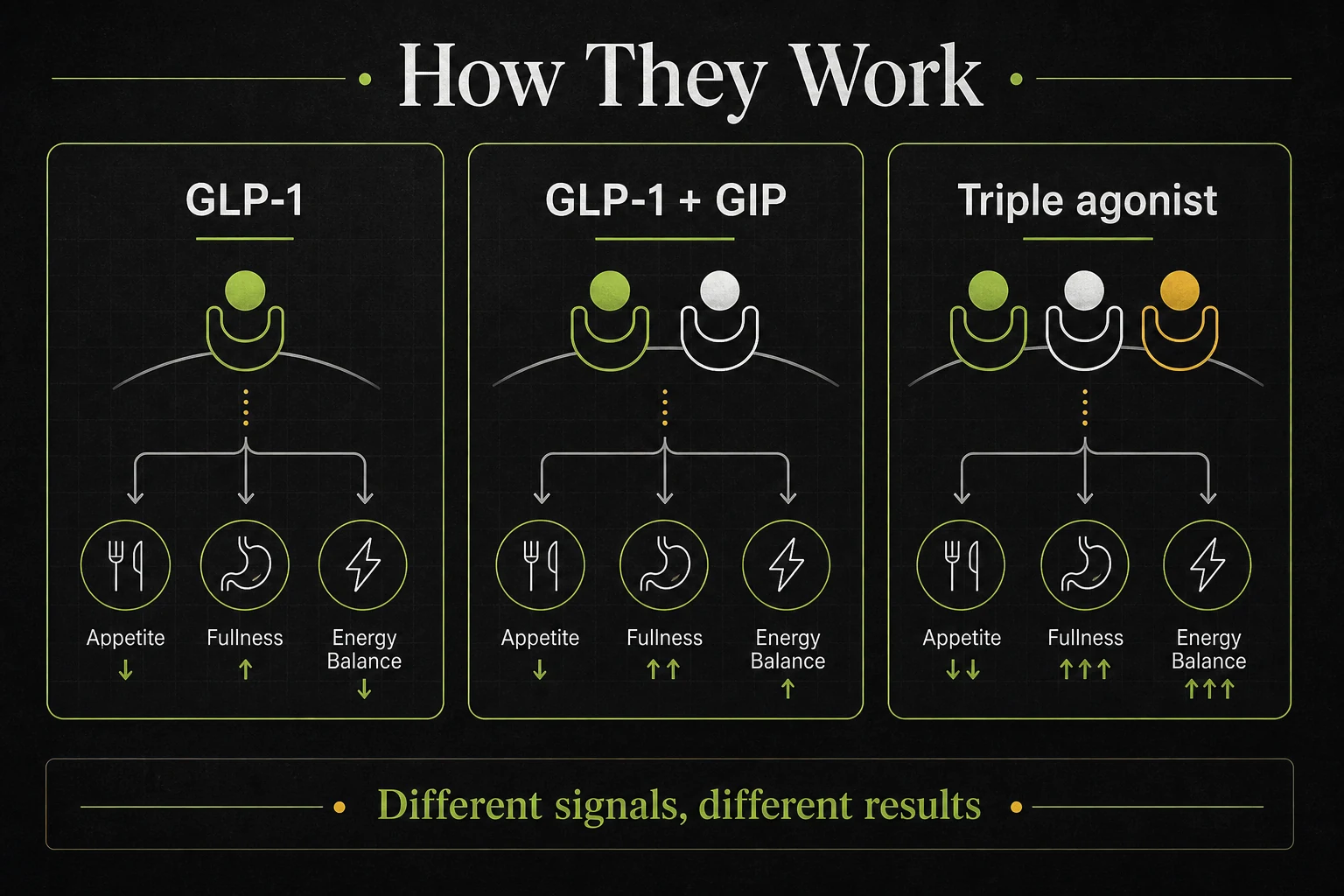
Every current weight loss injection medication works through GLP-1 (glucagon-like peptide-1) receptor activation. GLP-1 is a hormone your gut naturally releases after eating. When a drug activates these receptors at sustained therapeutic levels, three things happen:
- Appetite suppression: GLP-1 receptors in the hypothalamus reduce hunger signals. Most people describe it as "food noise" disappearing, the constant mental chatter about what to eat next simply goes quiet.
- Slowed gastric emptying: Food moves through your stomach more slowly, extending the feeling of fullness after meals. This is also why nausea is the most common side effect.
- Insulin and blood sugar regulation: GLP-1 stimulates glucose-dependent insulin secretion and suppresses glucagon, improving blood sugar control independent of weight loss.
Newer weight loss shots add additional receptors. Tirzepatide adds GIP, which directly enhances fat tissue metabolism and appears to preserve muscle during weight loss. Retatrutide adds both GIP and glucagon, where the glucagon component increases basal metabolic rate and fat oxidation, meaning you burn more stored fat even at rest. MariTide takes the opposite approach and antagonizes GIP while activating GLP-1, producing similar results through a different receptor logic.
Weight Loss Injections Side Effects
Mostly GI, mostly temporary.
The side effects of weight loss injections are remarkably consistent across the class because they all stem from the same GLP-1 mechanism. Slowed gastric emptying causes nausea. Changed gut motility causes diarrhea or constipation. These effects are worst during dose escalation and fade for most people within 4 to 8 weeks at a stable dose.
Serious Side Effects to Know About
- Pancreatitis: Severe, persistent abdominal pain radiating to the back. Stop the drug and seek medical attention immediately. Rare (less than 1% per year) but serious.
- Gallbladder disease: Rapid weight loss increases gallstone risk across the class. Right-upper-quadrant pain, especially after fatty meals, warrants imaging.
- Thyroid C-cell tumors: An early safety signal that has never been confirmed in humans despite millions of patient-years of use. Still listed as a boxed warning for all GLP-1 agonists. Any unexplained neck lump, persistent hoarseness, or trouble swallowing needs evaluation.
- Kidney injury: Severe vomiting and dehydration can precipitate acute kidney injury. Aggressive hydration during the first weeks is essential.
- Suicidal ideation: Post-marketing reports exist. The FDA reviewed the data in 2024 and did not find a causal link, but monitoring for mood changes is still recommended.
- Diabetic retinopathy worsening: In patients with pre-existing retinopathy, rapid A1c reduction has been associated with temporary worsening. Baseline eye exam matters.
The single most effective strategy for managing weight loss injections side effects is slow dose escalation. There is no medical rule requiring you to increase on the standard 4-week schedule. Holding at a lower dose for an extra 4 weeks when GI symptoms are significant makes a bigger difference than any dietary change.
Who Should Not Use Weight Loss Injections
The contraindication list is short but firm.
Do NOT Use Weight Loss Injections If You Have:
- Personal or family history of medullary thyroid carcinoma (MTC) or Multiple Endocrine Neoplasia type 2 (MEN2)
- History of pancreatitis
- Severe gastroparesis or other serious GI motility disorder
- Pregnancy, active breastfeeding, or plans to conceive in the next 2 months
- History of severe hypersensitivity reaction to any GLP-1 receptor agonist
- Known or suspected diabetic ketoacidosis
- Type 1 diabetes (use only with physician supervision, not for weight loss as a primary indication)
- Active eating disorder involving restriction or purging (relative contraindication, requires specialist input)
For people with a history of gallbladder disease, use is possible but requires monitoring. Rapid weight loss increases gallstone formation, and GLP-1s may independently raise gallbladder disease risk. Most physicians will proceed carefully rather than refuse outright.
Drug Interactions with GLP-1 Injections
There are a few that matter.
Most weight loss injections have a relatively clean interaction profile, but a handful of combinations need attention:
- Insulin and sulfonylureas: Both lower blood sugar. Stacking them with a GLP-1 raises hypoglycemia risk substantially. Insulin or sulfonylurea doses usually need to be reduced when starting the injection. This is a required physician conversation, not a DIY adjustment.
- Oral contraceptives: GLP-1s slow gastric emptying, which can delay and reduce absorption of oral birth control pills, particularly during the first 4 weeks at each new dose. Backup contraception (condoms, IUD, ring) is recommended during titration.
- Oral medications in general: Any medication that depends on timed absorption (some thyroid medications, certain antibiotics, anti-seizure drugs) may need dose or timing adjustments. Tell your prescriber every oral medication you take before starting.
- Warfarin: Not a direct interaction, but weight loss itself and changes in diet can shift INR. More frequent INR monitoring during the first 3 months is standard.
- Alcohol: Not a direct drug interaction, but most people on GLP-1s report tolerating alcohol much less well. Some also report reduced alcohol cravings, which is under active research as a possible treatment application for alcohol use disorder.
Weight Loss Shots for Women
Same drugs, a few differences worth knowing.
Weight loss shots for women use the same medications at the same doses. The mechanism is identical. But there are specific considerations:
- Nausea may be more pronounced: Women report higher rates of GI side effects across GLP-1 trials, likely related to hormonal interactions with gut motility. Slower titration helps.
- Pregnancy: Stop any GLP-1 weight loss injection at least 2 months before attempting to conceive. Semaglutide and tirzepatide are not approved for use during pregnancy. The drugs take about 5 weeks to fully clear after the last dose.
- Oral contraceptives: GLP-1 drugs slow gastric emptying, which can reduce absorption of oral birth control pills. Use backup contraception during the first 4 weeks at each new dose level.
- Menstrual changes: Some women report irregular periods during rapid weight loss on GLP-1 medications. This is related to the weight loss itself (fat tissue produces estrogen), not a direct drug effect.
- PCOS: Weight loss injections are particularly effective for women with polycystic ovary syndrome. Even modest weight loss (5 to 10%) can improve insulin resistance, restore ovulation, and reduce androgen levels.
- Menopause: Weight gain during perimenopause and menopause is one of the fastest-growing use cases. The drugs work equally well in this population, though slower titration is often better tolerated.
For a broader look at peptides for weight loss beyond GLP-1 injections, including non-injectable options, that page covers the full market.
Do Weight Loss Injections Cause Cancer?
The short answer is no, with one specific exception.
There is no credible evidence that weight loss injections cause cancer in humans. The concern traces to an early high-dose safety signal for thyroid C-cell tumors that has never been replicated in humans despite hundreds of thousands of patients and years of post-marketing surveillance.
Because the original signal exists, every GLP-1 injection carries a boxed warning against use in anyone with a personal or family history of medullary thyroid carcinoma (MTC) or Multiple Endocrine Neoplasia type 2 (MEN2). That is a precaution, not a demonstrated risk.
On the other side of the equation, obesity itself is a known risk factor for at least 13 cancers, including endometrial, esophageal, kidney, liver, and postmenopausal breast cancer. Large population studies of semaglutide and liraglutide users show lower rates of several obesity-associated cancers compared to untreated peers, consistent with the broader benefits of sustained weight loss.
The honest framing: avoid GLP-1s if you or a first-degree relative has MTC or MEN2. Otherwise, the cancer question is a non-issue relative to the cancer risk of untreated obesity.
What Happens When You Stop Weight Loss Injections
Most of the weight comes back.
This is the hardest truth about the class. The STEP 4 extension trial followed people who stopped semaglutide after 68 weeks on the drug. Within one year off the drug, participants regained about two-thirds of the weight they had lost. Cardiometabolic improvements (blood pressure, cholesterol, A1c) also reverted.
The reason is mechanical: GLP-1 drugs work by directly activating a receptor system that regulates hunger and metabolic setpoint. When the drug leaves your body, the receptor activation stops. Hunger returns. Food noise returns. The biological pull back to your pre-drug weight is real and durable.
This has reshaped how the medical community frames obesity treatment. Most physicians now treat it as a chronic condition, similar to how blood pressure or cholesterol is managed: ongoing medication for as long as the benefit outweighs the cost and side effects. Stopping is an option, but it should be a considered decision with a plan for weight maintenance, not a reflex "I've hit my goal, I'm done."
For people who want to stop, a slow taper (reducing dose over 2 to 3 months) combined with aggressive protein intake, strength training, and CGM-based eating patterns gives the best chance of partial maintenance. Most people still regain some weight. Some people transition to a lower maintenance dose (e.g., semaglutide 1 mg weekly) rather than stopping completely, which preserves much of the effect at lower cost.
Cost: What Weight Loss Injections Actually Cost in 2026
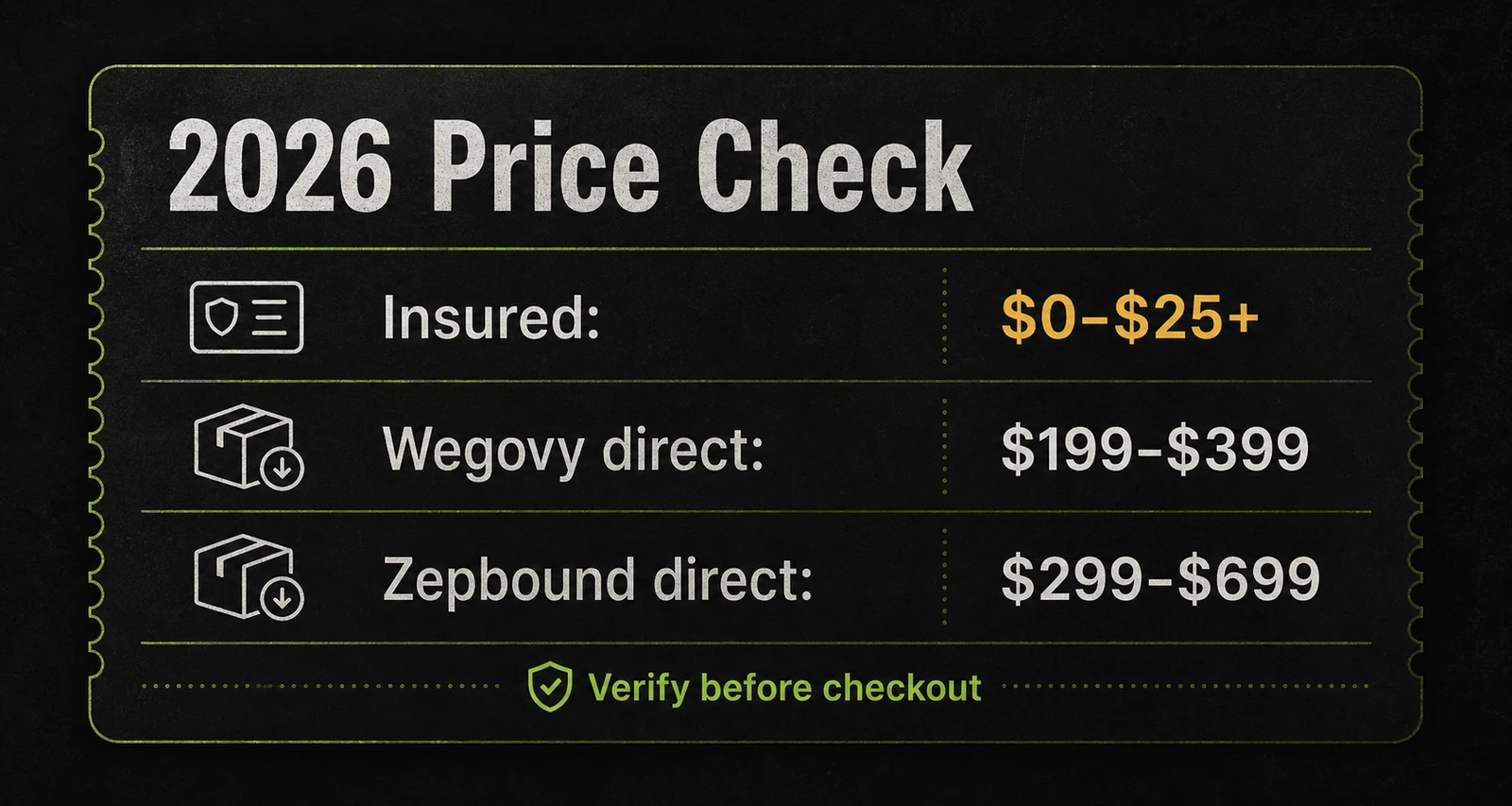
The price gap is enormous, and it changes faster than trial data. Pricing below was checked August 4, 2026 against NovoCare/Wegovy and Lilly/Zepbound official savings pages. Manufacturer terms can change, so verify the exact dose, device, and eligibility before checkout.
| Route | Current price signal | Who it fits | What to verify |
|---|---|---|---|
| Commercial insurance savings | Wegovy and Zepbound savings pages both advertise as little as $25/month for eligible commercially insured patients. | People whose plan covers the prescribed drug and diagnosis. | Deductible stage, maximum savings, covered device, PA approval, and government-insurance exclusions. |
| Wegovy tablets via NovoCare | $149/month for 1.5 mg and 4 mg tablet pricing terms, with dose-specific changes after promotional windows. | Cash-pay patients using the official Wegovy tablet route. | Tablet dose, offer end dates, and whether tablet therapy matches the treatment plan. |
| Wegovy pen via NovoCare | $199/month for the first two eligible low-dose fills, then $349/month for standard pen doses or $399/month for Wegovy HD. | People paying cash for Wegovy pens through the official pharmacy route. | Introductory-fill limits, dose changes, and whether insurance processing is being bypassed. |
| Zepbound KwikPen or vial via LillyDirect | Offer pricing lists $299 for 2.5 mg, $399 for 5 mg, and $449 for 7.5 mg to 15 mg under self-pay terms. | Cash-pay patients prescribed Zepbound KwikPen or vial through LillyDirect. | Device, dose, refill timing, offer eligibility, taxes, and fees. |
| Zepbound regular KwikPen self-pay | Regular listed KwikPen prices run $299, $399, $499, or $699 depending on dose. | People comparing the offer price against the non-offer cash price. | Whether the $449 purchase offer applies to the higher doses and refill timing rules. |
| Medicare GLP-1 Bridge | Wegovy and Zepbound official pages describe a $50/month bridge route for eligible Medicare Part D patients starting July 1, 2026. | Eligible Medicare Part D beneficiaries with a covered indication and approved prior authorization. | Eligibility, covered indication, PA status, and program end date. |
| Retail cash/list price | Often close to $1,000+ per month before discounts for branded GLP-1 injections. | Last-resort comparison when insurance and official self-pay routes do not fit. | Local pharmacy quote, coupon terms, stock, and whether a cheaper official route exists. |
For deeper cost paths, compare Zepbound coupon options, Wegovy savings, Ozempic coupon terms, Medicare GLP-1 coverage, and Zepbound prior authorization.
Where to Get Weight Loss Injections Safely
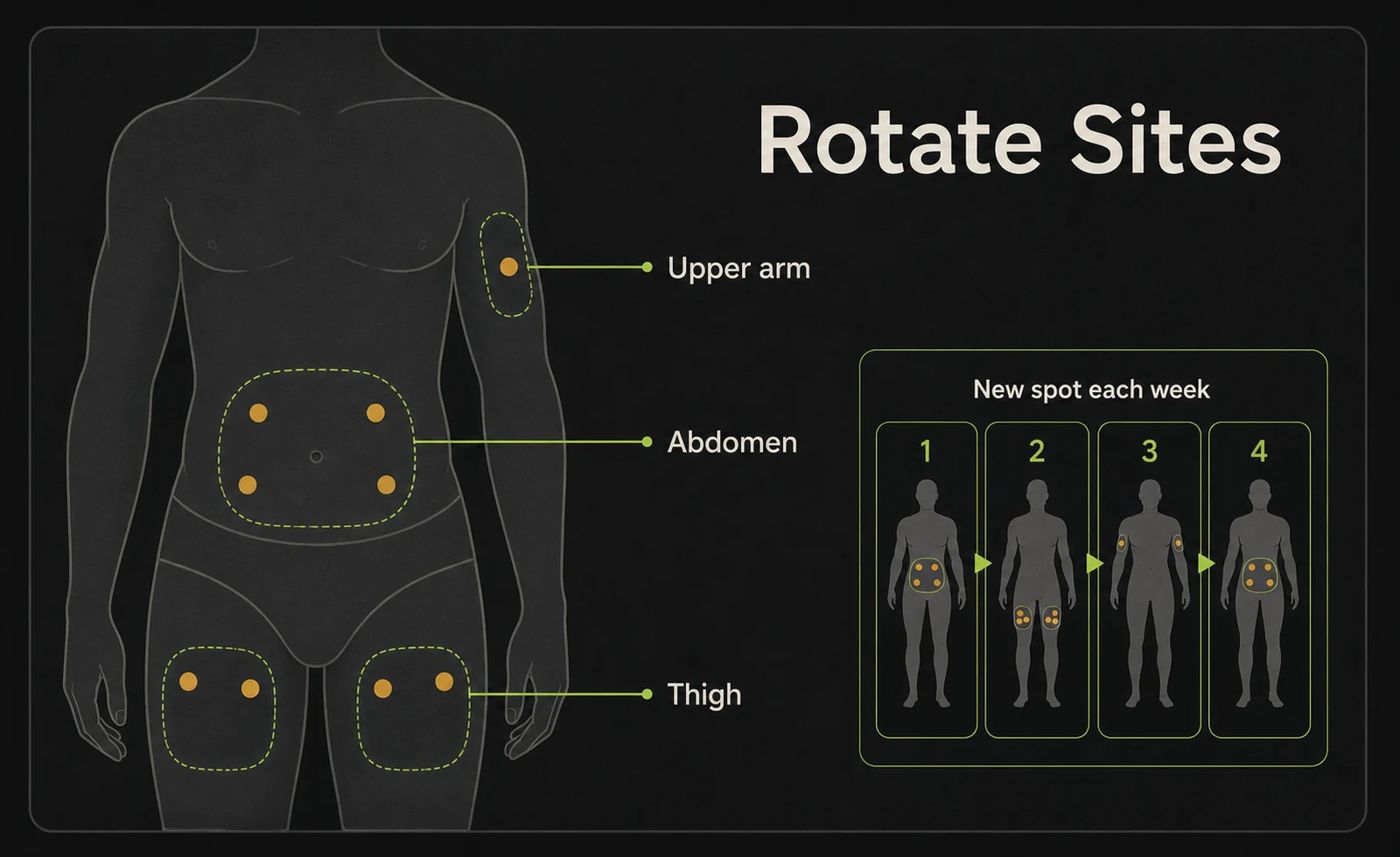
Safe access has the same basic path whether the visit starts online or in a clinic: medical screening, a prescription when appropriate, and dispensing through a licensed pharmacy. Avoid any seller that skips the prescription step or refuses to name the dispensing pharmacy.
| Access route | Best for | Trust check |
|---|---|---|
| Primary care or obesity-medicine clinician | People who need labs, comorbidity documentation, and insurance PA support. | Clinician license, BMI/comorbidity documentation, refill follow-up. |
| Telehealth GLP-1 clinic | People who need faster screening or ongoing remote follow-up. | Named clinician, state availability, lab policy, side-effect support. |
| Manufacturer pharmacy route | Cash-pay patients comparing official self-pay programs. | Official NovoCare, Wegovy, LillyDirect, or Zepbound pages; exact dose and device. |
| Insurance mail-order pharmacy | People with a covered brand and stable maintenance dose. | Cold shipping, plan-preferred pharmacy status, and refill timing. |
How to Get Insurance to Cover Weight Loss Injections
Most commercial plans require prior authorization.
Prior authorization (PA) is the process where your insurer decides whether to cover the drug before you can fill it. The approval rate for GLP-1 weight loss injections has improved significantly since 2023, but it is still common to get denied on the first attempt.
Prior Authorization Documentation Checklist
- Current BMI (measured in clinic, not self-reported)
- Documented weight-related conditions (type 2 diabetes, hypertension, hyperlipidemia, sleep apnea, cardiovascular disease)
- Record of lifestyle intervention attempts (usually at least 6 months of diet and exercise documented)
- Physician notes confirming obesity treatment plan
- For some plans: failed attempt on a different weight loss medication (step therapy)
If your first PA is denied, the appeal process is often successful. Your physician can submit a letter of medical necessity with trial data, clinical guidelines (AACE/ACE, Endocrine Society), and your specific clinical picture. Persistence wins a meaningful share of these cases.
Medicare changed the picture in 2026. The Medicare GLP-1 Bridge Program, starting July 1, 2026, covers all formulations of Foundayo, all formulations of Wegovy, and the Zepbound KwikPen for eligible beneficiaries at roughly $50/month. Medicaid coverage remains state-dependent, with some states covering GLP-1s for obesity and others restricting coverage to type 2 diabetes only.
Weight Loss Injections in the UK, Australia, and Canada
Availability and pricing differ by country.
United Kingdom (NHS): Wegovy and Mounjaro are available through the NHS for people meeting strict eligibility (typically BMI 35+ with comorbidity). Access through specialist weight management services is the standard pathway. Private prescription through telehealth (Boots, Numan, Voy) is the faster route, running £150 to £300 per month.
Australia: Saxenda is available. Wegovy and Mounjaro are approved but not yet on the Pharmaceutical Benefits Scheme (PBS), so they are paid out-of-pocket at roughly AU$400 to AU$500 per month. Compounded semaglutide and tirzepatide have been widely available through Australian compounding pharmacies, though TGA regulations tightened in 2024.
Canada: Wegovy, Ozempic, Mounjaro, and Saxenda are all approved. Coverage varies by province. Private insurance frequently covers these with PA. Cash prices are comparable to US prices through retail pharmacies. Compounding was restricted by Health Canada in 2024, narrowing compounded options significantly.
Newest Weight Loss Injections in 2026
The pipeline keeps getting stronger.
Retatrutide: Eli Lilly's triple agonist (GLP-1 + GIP + Glucagon) is in Phase 3 TRIUMPH trials. Phase 2 showed 24.2% average weight loss. TRIUMPH-4 reported 28.7% at 68 weeks, the highest weight loss ever seen from an injection. Potential FDA approval around 2027-2028. See the full retatrutide guide.
CagriSema: Novo Nordisk's combination of semaglutide plus cagrilintide (amylin analog). REDEFINE-1 showed 22.7% weight loss at 68 weeks. FDA submission expected late 2026.
Survodutide: Boehringer Ingelheim's GLP-1/glucagon dual agonist. Phase 3 SYNCHRONIZE trials underway. Being developed with a parallel MASH liver disease indication.
MariTide: Amgen's once-monthly injection. Phase 2 showed about 20% weight loss at 52 weeks with monthly dosing. If approved, it would be the first monthly weight loss injection.
Foundayo (orforglipron): Approved December 2025 as the first oral GLP-1 receptor agonist that does not require fasting before dosing. It is a tablet, not an injection, but it is the most notable non-injectable 2026 entry and often comes up in the same conversation. Will be covered under the Medicare GLP-1 Bridge starting July 2026.
Oral Wegovy 25 mg tablet: Approved late 2025. A high-dose oral semaglutide tablet for weight management, offering a non-injection path for people who want the semaglutide molecule without the needle.
How to Choose the Right Weight Loss Injection
Start with what you're trying to solve.
If you need 10 to 15% weight loss and cost matters most, start with compounded semaglutide or Wegovy via NovoCare. If you need maximum weight loss and can afford the brand, tirzepatide (Zepbound) is the strongest approved option. If you have type 2 diabetes, tirzepatide offers the best A1c reduction alongside weight loss. If you have cardiovascular disease, semaglutide has the strongest heart outcome data. If you have obstructive sleep apnea, Zepbound is the only injection with a specific FDA approval for that.
For most people, the decision is practical rather than clinical: which one can you access, afford, and sustain long enough to reach your goal weight? A $99/month injection you take every week beats a $1,350/month injection you can't afford past month three.
2026 FDA Status of Weight Loss Injections
Five injections carry an FDA approval for chronic weight management in 2026. The list narrowed in 2024 and 2025 as some older drugs left the market and tirzepatide picked up an additional sleep apnea indication. Knowing which is approved for which condition is the fastest way to figure out what your insurance will and will not cover.
Notable absences: retatrutide is in late-stage trials (TRIUMPH program) but not yet FDA-approved as of May 2026, with the earliest expected approval in late 2026. CagriSema (Novo Nordisk's cagrilintide plus semaglutide combo) finished phase 3 trials in 2025 but has not been submitted for FDA approval yet. See our retatrutide vs tirzepatide comparison for the trial data on what is coming next.
Real Weight Loss Results by Injection: Average Outcomes
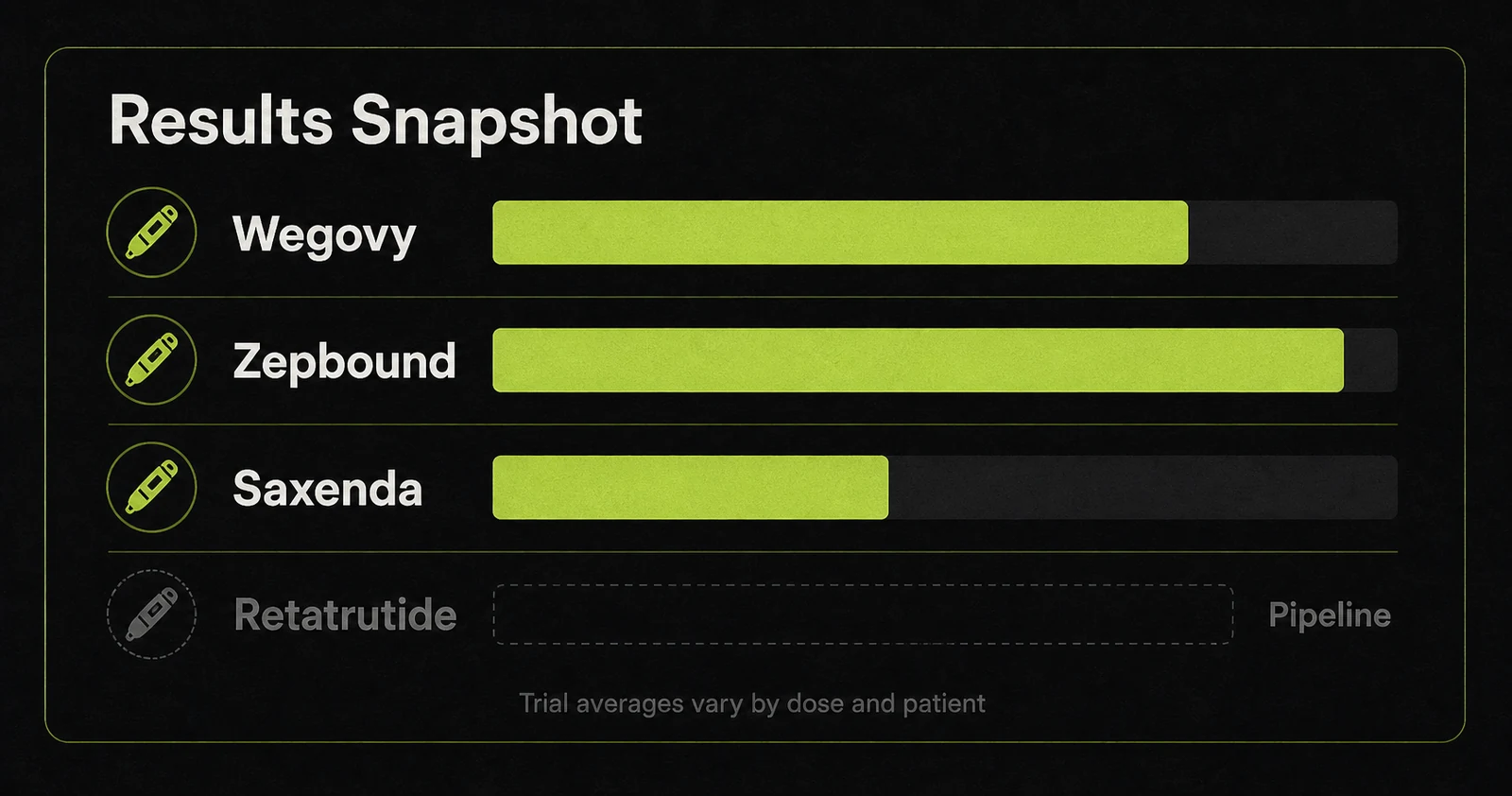
The percentages below come from the largest published phase 3 trials for each drug at maximum tolerated dose, in adults with obesity but without diabetes. People with type 2 diabetes typically lose 30% to 40% less weight than nondiabetics on the same dose, so adjust expectations accordingly.
Three takeaways. First, tirzepatide outperforms semaglutide head to head: SURMOUNT-5 directly compared the two and showed 20.2% versus 13.7% weight loss at 72 weeks. Second, the trajectory matters as much as the endpoint: most patients hit their personal plateau between months 12 and 18, and weight returns within 6 to 12 months if the drug is stopped (the STEP-4 withdrawal arm showed two-thirds of weight regained within a year). Third, retatrutide looks like it will leapfrog tirzepatide once approved, but it is not yet a real option in 2026. For the full breakdown of which injection fits which goal, see best GLP-1 for weight loss, semaglutide for weight loss, and tirzepatide for weight loss.
Frequently Asked Questions
Sources and Verification Notes
Pricing verified August 4, 2026. Manufacturer pricing and savings terms can change without notice, so use these as a current snapshot and confirm directly before paying.
- NovoCare Pharmacy: Wegovy self-pay and insured pricing
- Wegovy cost and savings information
- Zepbound savings and LillyDirect pricing
- DailyMed: Wegovy prescribing information
- DailyMed: Zepbound prescribing information
- DailyMed: Saxenda prescribing information
- DailyMed: Ozempic prescribing information
- DailyMed: Mounjaro prescribing information
- STEP 1 semaglutide obesity trial
- SURMOUNT-1 tirzepatide obesity trial
- SCALE liraglutide obesity trial
- FDA BeSafeRx online pharmacy safety