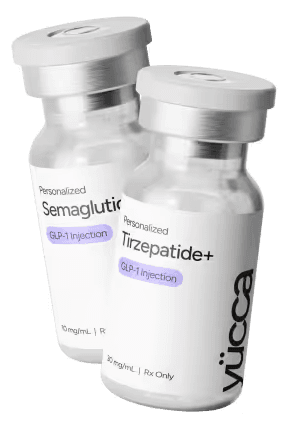
Microdose GLP-1 is the practice of taking sub-therapeutic doses of semaglutide, tirzepatide, or retatrutide, typically 0.1-0.6 mg semaglutide weekly (vs the standard 0.25-2.4 mg titration), to keep the appetite-suppression and metabolic benefits while cutting nausea by up to 70% and reducing the hair loss and muscle loss seen at higher doses. Real-world reports show 5-8% body weight reduction over 20-32 weeks of microdosing, slower than standard protocols but with a far gentler side-effect curve. Here is the full 2026 guide: schedules per drug, benefits, side-effect comparison, cost, and whether microdosing is the maintenance strategy you have been looking for.
🔑 Key Takeaways
- What it is: Microdose GLP-1 means taking weekly doses BELOW the standard titration schedule, typically 25-50% of the maintenance dose. It is not a separate drug, it is the same semaglutide, tirzepatide, or retatrutide at a lower mg amount.
- Why people do it: Dramatically lower nausea, vomiting, and fatigue. Reduced hair loss risk. Better lean-mass preservation. Lower monthly cost (compounded microdose programs run $99-199/mo vs $1,000+ for branded retail without insurance).
- Realistic results: 5-8% body weight reduction over 20-32 weeks, slower than the 15-22% you see on standard maintenance doses but with far less side-effect burden.
- Who benefits most: Side-effect-sensitive patients, women over 40-50 worried about hair and muscle loss, plateaued patients, and people transitioning to long-term maintenance after hitting goal weight.
- The "forever" answer: Microdosing is the most common honest answer to "do I have to stay on GLP-1 forever?" Drop to maintenance microdose instead of stopping cold turkey to dodge the 67% weight regain seen in STEP-4 discontinuation data.
- Not FDA-approved as a protocol: Microdosing falls within a clinician's judgment but no FDA-approved labeling specifies sub-therapeutic dosing for weight loss. Always work with a licensed provider.
What Is Microdose GLP-1?
Microdose GLP-1 refers to taking weekly doses of GLP-1 receptor agonist medications well below the standard titration schedule. The most common framing: stay at the lowest effective dose that produces appetite suppression and metabolic benefit, instead of escalating to the maximum tolerated dose used in clinical trials.
The standard FDA-approved semaglutide titration for weight loss (Wegovy) climbs from 0.25 mg week 1-4, then 0.5 mg, 1.0 mg, 1.7 mg, to a 2.4 mg maintenance dose. Microdosing protocols stay between 0.1 mg and 0.6 mg weekly, often indefinitely. Same molecule, dramatically lower dose.
It is not a separate medication. The semaglutide vial used for microdosing is the same active pharmaceutical ingredient as Wegovy and Ozempic, just drawn in smaller volumes. Microdosing is typically done with compounded GLP-1 medications because the dose flexibility is much harder with pre-filled branded pens that come in fixed increments.
How Microdose GLP-1 Works: The Pharmacology
GLP-1 receptors in the brain (hypothalamus, brainstem) and gut respond non-linearly to receptor agonism. Even small amounts of semaglutide or tirzepatide produce meaningful appetite suppression because GLP-1 receptor activation has a low ceiling for the "satiety signal" effect. What scales linearly with dose is the GI side-effect profile: at higher doses you get faster weight loss but also proportionally more nausea, vomiting, and gastric slowing.
The microdose hypothesis: capture 60-80% of the appetite-suppression benefit at 10-25% of the maintenance dose, while cutting side effects by 60-80% in parallel. Real-world data from compounding pharmacies and Noom's Microdose GLP-1 Rx Program supports this for many patients.
The bioavailability math: Standard maintenance semaglutide doses (2.4 mg/week) produce steady-state plasma concentrations 4-10x what is needed for sustained appetite suppression. The "extra" 75-90% of the dose drives faster weight loss but disproportionately drives nausea, fatigue, and lean mass loss. Microdosing trims to the metabolically active window.
Microdose GLP-1 Schedules by Drug
Each GLP-1 has different potency and different microdose ranges. Detailed per-drug schedules with reconstitution math live on our individual guides. The numbers below are the practical maintenance microdose ranges.
| Drug | Standard maintenance dose | Typical microdose range | Frequency |
|---|---|---|---|
| Semaglutide (Wegovy, Ozempic) | 2.4 mg/week | 0.1-0.6 mg/week | Weekly subQ |
| Tirzepatide (Zepbound, Mounjaro) | 10-15 mg/week | 1-3.75 mg/week | Weekly subQ |
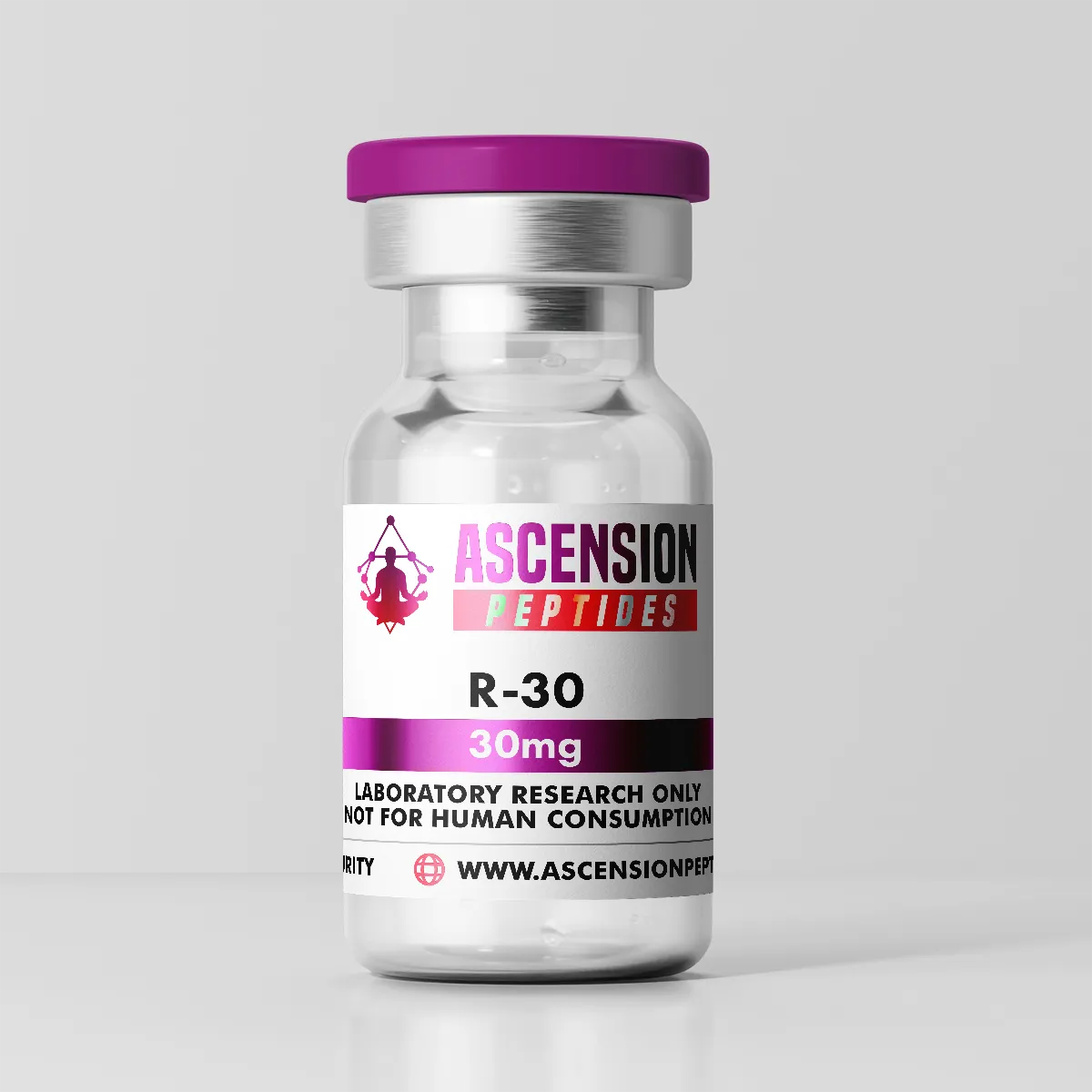
| Retatrutide (R-10, R-30) | 8-12 mg/week | 1-3 mg/week | Weekly subQ; split-dose protocols common |
For the full week-by-week microdose schedule with reconstitution math:
- 📋 Microdosing Semaglutide (Ozempic / Wegovy) Schedule — split-dose protocols, vial math, what to expect by week
- 📋 Microdosing Tirzepatide (Mounjaro / Zepbound) Schedule — sub-therapeutic dosing, units conversion, who fits
- 📋 Microdosing Retatrutide Protocol — split-dose ratios, dosing chart, calculator
Benefits of Microdose GLP-1
Six benefits that show up consistently across patient reports and provider data:
1. Dramatically reduced GI side effects
Nausea, vomiting, diarrhea, and constipation are the most common reasons patients abandon GLP-1 treatment. At microdoses, the rate of moderate-to-severe nausea drops by roughly 70% compared to the standard 0.25 mg semaglutide starting dose. Some patients tolerate microdose semaglutide for months with no GI symptoms at all.
2. Less hair loss risk
Hair loss on GLP-1 medications is not a direct drug effect, it is telogen effluvium triggered by rapid weight loss. Slower, gentler weight loss on microdose protocols substantially reduces the hair-shedding risk. See our Ozempic hair loss guide for the full mechanism.
3. Better lean mass preservation
Aggressive weight loss on standard doses can lead to 25-40% of weight lost coming from lean mass. Microdosing's slower trajectory pairs naturally with resistance training and high protein intake, shifting more of the loss to fat. For the full lean-mass-protection protocol see our GLP-1 long-term risks guide.
4. Lower cost
Compounded microdose GLP-1 programs (Noom, Yucca, MEDVi, smaller compounding pharmacies) typically run $99-199/month, compared to $1,000-1,400/month for branded Wegovy or Zepbound at retail without insurance. See our GLP-1 cost without insurance guide for the full pricing landscape.
5. Easier to stay on long-term
The biggest predictor of sustained weight loss with any GLP-1 is treatment compliance. Patients on microdose protocols report significantly higher long-term adherence because the day-to-day experience is closer to "I feel normal" than "I feel sick."
6. Smoother off-ramp / no aggressive plateau
Because the body adapts gradually to low GLP-1 receptor activation, microdosing avoids the steep plateau and rebound seen when patients on maximum doses hit their tolerance ceiling.
Who Benefits Most From Microdose GLP-1
Microdosing is not for everyone. The patient profiles where it makes the most sense:
👤 Best-fit candidates for microdosing
- Side-effect-sensitive patients who failed standard titration. If you discontinued GLP-1 at 0.25 or 0.5 mg semaglutide because of relentless nausea, microdosing at 0.1-0.25 mg may be the only viable path.
- Women over 40-50 concerned about hair loss, muscle mass, and skin elasticity. The slower-loss trajectory protects all three.
- People with 15-30 lbs to lose, not 80-150 lbs. Microdose results scale well for moderate weight loss goals. For large weight loss, the slower timeline becomes prohibitive.
- Patients who plateaued on a standard dose and want to maintain their loss without escalating. See our why-am-I-not-losing-weight-on-GLP-1 guide.
- Maintenance-phase patients who have hit their goal weight and want a long-term dose-down strategy instead of stopping cold turkey.
- Patients without insurance coverage for branded Wegovy or Zepbound, where compounded microdose makes GLP-1 affordable.
Microdose GLP-1 vs Standard Dosing: Side-Effect Comparison
Real-world data from compounding pharmacies and the Noom Microdose program shows the side-effect differential clearly. The numbers below are approximate from patient-reported data, not a controlled trial:
| Side effect | Standard semaglutide (0.25-2.4 mg) | Microdose semaglutide (0.1-0.6 mg) | Reduction |
|---|---|---|---|
| Nausea (any) | ~44% at 2.4 mg | ~13% | ~70% less |
| Vomiting | ~24% at 2.4 mg | ~6% | ~75% less |
| Diarrhea | ~30% | ~10% | ~67% less |
| Hair loss (telogen effluvium) | 3-7% (weight-loss driven) | 1-2% | ~70% less |
| Muscle mass loss (% of weight lost) | 25-40% | ~15-20% | ~50% less |
| Fatigue / "feeling off" | Common in first 4-8 wks | Rare | ~80% less |
| Weekly weight loss | 1-2 lbs/week early | 0.3-0.7 lbs/week | SLOWER |
| Total weight loss at 12 months | 15-20% | 5-10% | HALF |
The trade-off is clean: half the speed of weight loss for ~70% less side-effect burden. For someone who only has 20-30 lbs to lose, that exchange is often net positive.
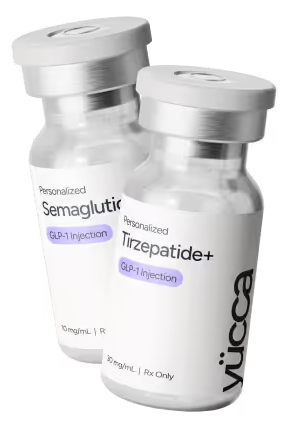
Microdose GLP-1 as a Maintenance Strategy: The "Forever" Answer
One of the most common questions in GLP-1 treatment is "do I have to take this forever?" The honest answer from the data is more nuanced than yes or no.
The STEP-4 trial (semaglutide) showed that patients who stopped GLP-1 cold turkey regained roughly 67% of their lost weight within 12 months. The biological reason: appetite-regulating hormones return to baseline, food noise comes back, and gastric emptying speeds up. Stopping does not preserve the metabolic adaptation that drove the weight loss.
Microdosing is the most realistic middle path between "stay on the full dose forever" and "stop and accept regain." The maintenance microdose options:
Three common maintenance microdose strategies:
- Step-down maintenance: After reaching goal weight on a standard dose, drop to 25-50% of your peak dose and stay there indefinitely. Most users hold their weight at this level.
- Pulse dosing: Take a maintenance microdose for 4-6 weeks, then 2-3 weeks off, then repeat. Some clinicians use this to "wake up" GLP-1 sensitivity without continuous exposure.
- Sub-clinical microdose for life: Stay at the lowest effective dose (0.1-0.25 mg semaglutide weekly) permanently. The most data-supported long-term path.
For the full discussion of stopping vs maintaining vs microdosing post-weight-loss, see what happens when you stop semaglutide and retatrutide weight regain research.
Cost: Microdose vs Standard GLP-1 Programs
| Path | Monthly cost | Per-mg cost | Notes |
|---|---|---|---|
| Branded Wegovy / Zepbound retail | $1,000-1,400 | ~$420 per mg sema | Standard dosing only; fixed pen increments |
| Branded with insurance | $25-550 copay | Varies | If covered for your diagnosis |
| LillyDirect / NovoCare cash-pay | $349-549 | Lower per-mg | Single-dose vial programs; standard dosing |
| Compounded microdose program | $99-199 | ~$20-40 per mg sema | Yucca, MEDVi, Noom Microdose, smaller 503A programs |
| Research peptide vial (DIY) | $30-60 per vial | $3-8 per mg | Research-use only labeling; no clinical oversight |
The compounded microdose route is where microdosing gets its cost advantage. Branded medications come in pre-filled pens at fixed standard doses, so you cannot easily "microdose" Wegovy without wasting most of the pen. Compounded vials let the patient or provider draw any volume.
For the cheapest legitimate microdose-friendly compounded GLP-1 programs in 2026, see our best online GLP-1 program guide.
Risks and Limitations of Microdosing
Microdose GLP-1 is not a perfect strategy. Five things to know honestly:
- Not FDA-approved as a protocol. The FDA-approved labels for semaglutide, tirzepatide, and retatrutide specify higher dosing schedules. Microdosing falls within clinician judgment but is not formally evaluated for efficacy at these doses.
- Underdose risk: Some patients genuinely need higher doses to see meaningful appetite suppression. If you are not losing weight after 12-16 weeks of microdosing, the dose probably needs to go up.
- Slower timeline: Hitting 30-50 lb loss on microdose takes 12-24 months instead of 9-15. Most people do not have the patience.
- Compounded supply variability: Different 503A pharmacies produce different concentrations. Switching pharmacies mid-protocol requires dose recalculation.
- No standardized protocols: "Microdose" means different things to different providers. Get a written dose schedule from your prescriber, not just a vial.
Who Should NOT Microdose GLP-1
- Patients with type 2 diabetes who need GLP-1 for glycemic control, not just appetite suppression — standard dosing usually wins on A1C reduction
- Patients with 80+ lbs to lose where the slower timeline is impractical
- Patients with insurance coverage for branded medication, where microdose-friendly compounded vials may not be reimbursed
- Anyone with the standard GLP-1 contraindications: medullary thyroid carcinoma history, MEN2, active pancreatitis, severe gastroparesis, active pregnancy or breastfeeding
- Athletes in tested competition, where compounded GLP-1 batch variability can run afoul of anti-doping rules
How to Start a Microdose GLP-1 Protocol
Three legitimate paths to start microdosing in 2026:
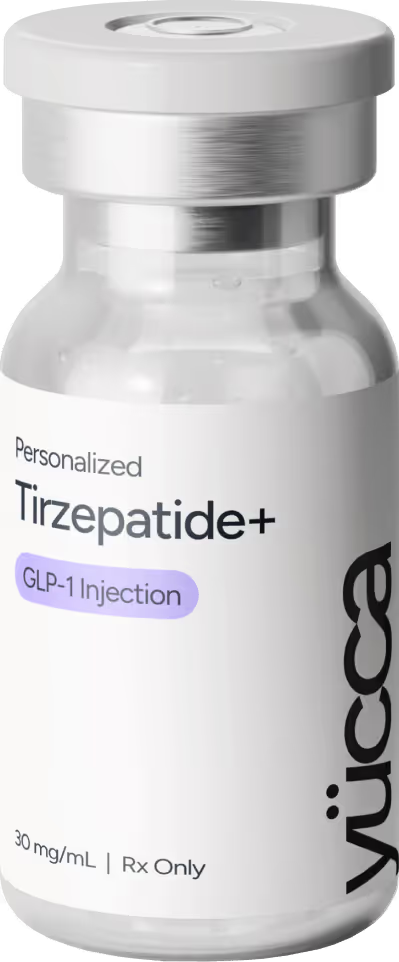
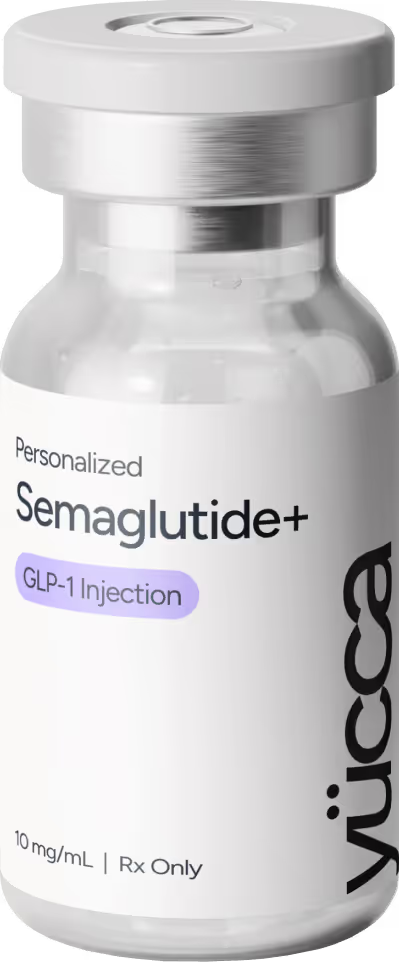
- Telehealth provider that supports microdosing. Some platforms (Noom Microdose, Yucca, MEDVi, smaller compounding programs) will prescribe sub-therapeutic doses if you discuss the goal with the provider. Read our Yucca Health review and MEDVi review for two well-known platforms.
- Standard telehealth + dose hold. Sign up for a normal compounded GLP-1 program and ask the provider to hold you at the 0.25 mg or 0.5 mg starting tier instead of titrating up. Most legitimate providers will do this if you explain the rationale.
- Local prescriber + 503A pharmacy. Bring the microdose protocol to your primary care provider or obesity-medicine specialist. They can write the prescription and direct it to a 503A compounding pharmacy of your choice.
Frequently Asked Questions
Bottom Line
Microdose GLP-1 is the most underrated strategy in modern weight management. For patients who failed standard titration because of side effects, women over 40-50 who want gentler weight loss, anyone with moderate (15-30 lb) loss goals, and especially anyone trying to maintain their results long-term without paying for maximum-dose treatment indefinitely, microdosing is a credible, evidence-supported path.
The trade-off is clean: about half the speed of weight loss, but roughly 70% fewer side effects, dramatically reduced hair and muscle loss risk, and 80-90% lower monthly cost than branded retail. For someone with 25 lbs to lose and an aversion to needles and nausea, that exchange is almost always positive. For someone with 80 lbs to lose and a deadline, standard dosing is probably the better fit.
If you want to start: read our drug-specific protocols (semaglutide, tirzepatide, retatrutide), then pick a telehealth provider that supports sub-therapeutic dosing. Yucca Health and MEDVi are two of the best-known options as of 2026.