Deep inside every neuron in your brain, a molecular decision is constantly being made: grow stronger, forge new connections, or slowly decline. The protein orchestrating that decision is brain-derived neurotrophic factor — BDNF. It is arguably the most important neuroprotective molecule in the human nervous system, and in recent years, synthetic peptide mimetics designed to replicate its activity have become one of the most exciting frontiers in neuroscience research.
This guide covers everything you need to know about BDNF peptides: what BDNF does at the cellular level, why delivering it therapeutically is so difficult, which synthetic peptide mimetics researchers are studying, and what the current science actually supports.
- What it is: Brain-derived neurotrophic factor — a protein that promotes neuronal survival, plasticity, and memory consolidation
- Key receptor: TrkB (tropomyosin receptor kinase B)
- Top mimetics studied: 7,8-DHF, LM22A-4, HIKT, Ampakines, Cyclotraxin-B
- Natural boosters: Exercise, fasting, sleep, Semax
- Research context: Depression, Alzheimer's, neuroplasticity, cognitive decline
- Status: Research compound only — not FDA-approved for therapeutic use
What Is BDNF and Why Does It Matter?
BDNF belongs to the neurotrophin family of growth factors, which also includes nerve growth factor (NGF), neurotrophin-3 (NT-3), and neurotrophin-4 (NT-4). Of these, BDNF is expressed most abundantly in the adult brain — particularly in the hippocampus, cerebral cortex, and basal forebrain, regions critical for learning, memory formation, and executive function.
When BDNF binds to its high-affinity receptor TrkB on the neuron's surface, the biological cascade that follows is rapid and profound:
- Within 2 minutes: TrkB undergoes autophosphorylation, activating intracellular signaling
- Within 30 minutes: The MAPK/ERK and PI3K/Akt pathways activate, promoting cell survival
- Within hours: Gene expression shifts — neuroplasticity genes upregulate, pro-apoptotic genes downregulate
- Long-term: Synaptogenesis increases, dendritic spine density grows, and long-term potentiation (LTP) is enhanced
BDNF also binds to the low-affinity receptor p75NTR. Depending on cellular context, this interaction can promote either survival or apoptosis — a nuance that makes BDNF biology considerably more complex than early research suggested.
Equally important is the BDNF pro-peptide — the N-terminal fragment cleaved from the BDNF precursor (proBDNF) during proteolytic processing. Recent research published in PMC indicates this pro-peptide is itself bioactive, functioning as a novel synaptic modulator that may counterbalance mature BDNF's growth-promoting effects. Understanding the full BDNF system, therefore, requires looking beyond the mature protein to its precursor fragments as well.
What Happens When BDNF Levels Drop?
BDNF deficiency is not an abstract concern. It has been linked — through both animal models and human clinical data — to a striking range of neurological and psychiatric conditions:
- Major Depressive Disorder: Multiple meta-analyses show significantly lower serum BDNF in depressed patients compared to controls, with antidepressant treatment partially restoring levels
- Alzheimer's Disease: Post-mortem brain tissue from Alzheimer's patients consistently shows reduced BDNF mRNA and protein expression in the hippocampus and cortex
- Anxiety disorders: Animal knockout models with impaired BDNF-TrkB signaling display heightened anxiety-like behavior
- Cognitive decline with aging: BDNF expression decreases naturally with age, correlating with declining memory and executive function
- Traumatic Brain Injury (TBI): BDNF signaling is acutely suppressed after TBI, impeding neuronal repair and recovery
- Parkinson's Disease: Reduced BDNF expression in the substantia nigra may contribute to dopaminergic neuron loss
Full-length BDNF protein cannot be administered therapeutically in any practical form. It is too large to cross the blood-brain barrier, unstable in circulation, and has extremely poor bioavailability when given systemically. This is precisely why peptide mimetics — smaller synthetic molecules that activate TrkB with better pharmacokinetics — have become a major research focus.
BDNF Peptide Mimetics: How They Work and What's Being Studied
BDNF peptide mimetics are synthetic compounds — ranging from small molecules to short peptide sequences — designed to activate TrkB or enhance BDNF signaling without requiring delivery of the intact BDNF protein. Researchers have taken several distinct approaches:
1. TrkB Agonists (Direct Receptor Activators)
7,8-Dihydroxyflavone (7,8-DHF) is the most studied TrkB agonist in research settings. It is a naturally occurring flavonoid that crosses the blood-brain barrier and selectively activates TrkB with nanomolar affinity. Preclinical studies have demonstrated antidepressant-like effects, improved spatial memory in aged mice, and neuroprotection in Parkinson's and Alzheimer's models. Importantly, 7,8-DHF does not interact with TrkA or TrkC, making its TrkB selectivity pharmacologically meaningful.
LM22A-4 is a synthetic small-molecule TrkB partial agonist developed by researchers at UCSF. It has demonstrated efficacy in models of Huntington's disease, Rett syndrome, and traumatic brain injury, primarily by activating the PI3K/Akt survival pathway downstream of TrkB. Because it is a partial agonist, it avoids some of the receptor desensitization concerns associated with full agonism.
2. BDNF Loop-Domain Peptides
Researchers have identified specific loop domains on the BDNF protein responsible for TrkB binding. Synthetic peptides derived from these loop regions — including HIKT (His-Ile-Lys-Thr) and related tetrapeptide sequences — have shown the ability to activate TrkB and downstream signaling cascades in vitro. These loop-domain peptides represent a more direct structural mimicry of native BDNF than small-molecule agonists.
3. Ampakines
Ampakines modulate AMPA glutamate receptors, which in turn upregulate endogenous BDNF production rather than directly mimicking the protein. This indirect approach — stimulating the brain's own BDNF synthesis machinery — sidesteps the delivery problem entirely. Compounds like CX614 and CX1837 have been studied in the context of memory enhancement and respiratory function in animal models.
4. Cyclotraxin-B (CTX-B)
While most mimetics aim to activate TrkB, Cyclotraxin-B is notable for the opposite: it is a selective TrkB antagonist derived from the BDNF loop 2 domain. It is used in research to model BDNF deficiency states and probe the behavioral consequences of TrkB blockade — an important tool for understanding what these pathways actually do in vivo.

Nootropic Peptides and Compounds That Support BDNF Naturally
Beyond direct mimetics, several well-characterized research peptides and lifestyle interventions have demonstrated the ability to upregulate endogenous BDNF expression:
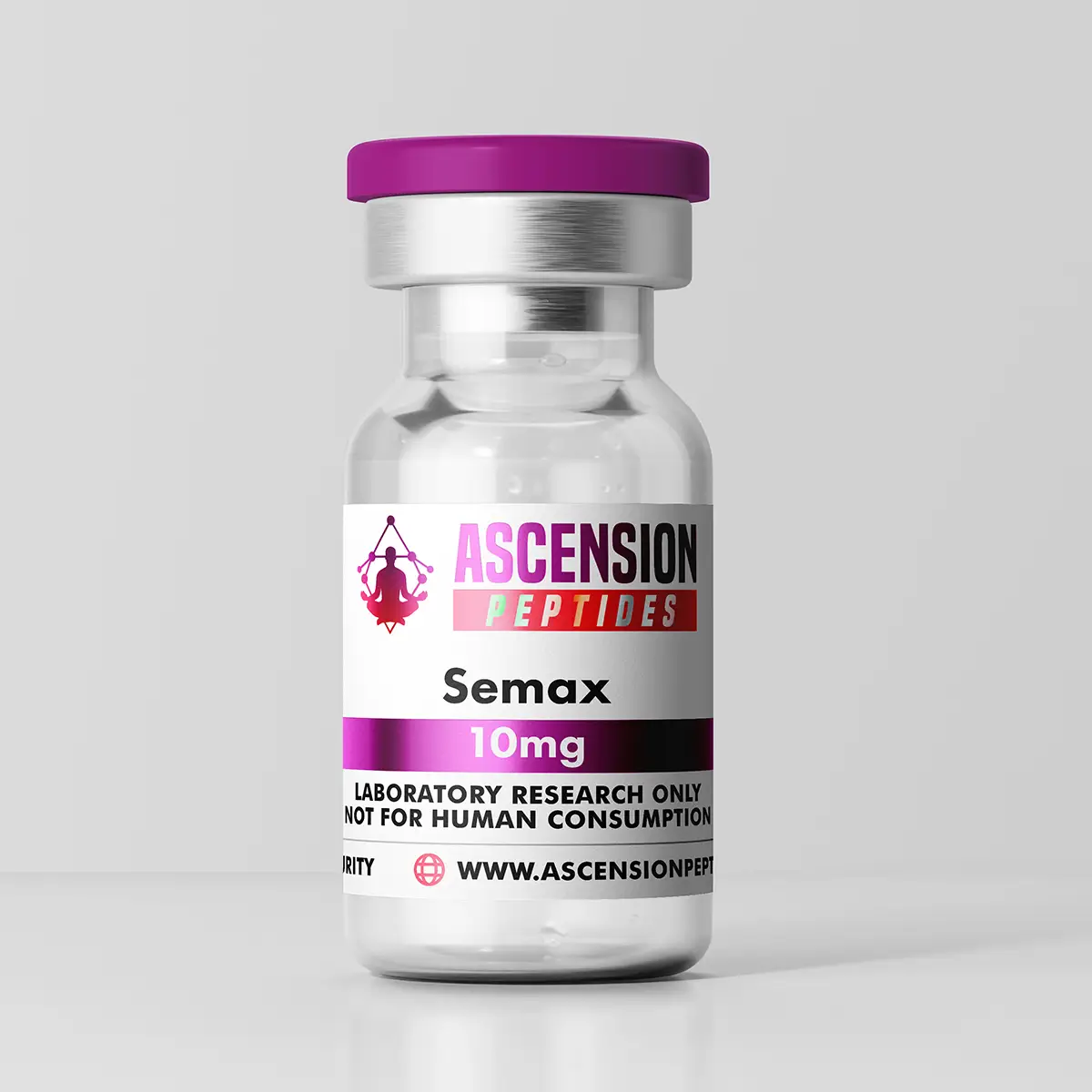
Semax
Semax is a synthetic nootropic peptide derived from the ACTH(4-7) sequence. It is one of the best-characterized BDNF-upregulating peptides in the research literature. Studies in rodents and limited human data show Semax significantly increases BDNF mRNA expression in the hippocampus, with accompanying improvements in learning and neuroprotective outcomes. It is administered intranasally, providing relatively direct CNS access.
Selank
Selank, a heptapeptide anxiolytic developed in Russia, has also been associated with BDNF pathway modulation, particularly in anxiety and stress models. Its mechanism involves both GABA-ergic activity and neurotrophin system interactions.
Epithalon
Epithalon, a tetrapeptide studied primarily in the context of longevity and brain aging, has shown neuroprotective effects in aging rodent models, with some evidence of BDNF pathway involvement in its mechanism of action.
Lifestyle Interventions with Strong BDNF Evidence
- Aerobic exercise: The single most robustly supported BDNF upregulator — high-intensity interval training (HIIT) acutely spikes hippocampal BDNF in both animal and human studies
- Caloric restriction / intermittent fasting: Fasting-induced metabolic stress increases BDNF expression via CREB activation
- Sleep: BDNF synthesis is partially sleep-dependent; chronic sleep deprivation reduces hippocampal BDNF levels measurably
- Omega-3 fatty acids (DHA): DHA supplementation supports BDNF mRNA expression and TrkB signaling efficiency
BDNF Peptide Research Protocols: What the Data Shows
All BDNF peptide mimetics discussed here are research compounds. The dosing ranges below reflect preclinical research protocols only and should not be interpreted as clinical recommendations. Human dosing for these compounds has not been established through controlled trials.
For researchers working with BDNF-related compounds in laboratory settings, here is a summary of the protocols appearing most frequently in the peer-reviewed literature:
- 7,8-DHF: 5–20 mg/kg in rodent models, administered orally or by IP injection. Brain penetration confirmed within 15–30 minutes. Half-life approximately 3–4 hours. Human equivalent dosing not established.
- LM22A-4: Typically 25–75 mg/kg in rodent studies via IP injection or intranasal delivery. Intranasal administration shows superior CNS bioavailability relative to peripheral routes.
- Semax (as BDNF upregulator): 100–300 mcg/day intranasal in rodent studies, with some Russian clinical data suggesting 200–600 mcg intranasal in human research contexts.
- HIKT and loop-domain peptides: Primarily studied in vitro and in acute CNS injection models. Systemic bioavailability and BBB penetration remain active areas of research.
Safety Considerations and Known Limitations
BDNF pathway research carries several important caveats that any serious researcher should understand:
- Context-dependent effects: BDNF promotes both neuronal survival and, in some tumor contexts, cancer cell proliferation. The same TrkB signaling that protects neurons can support certain cancers, making BDNF mimetic research in oncology patients particularly complex.
- p75NTR signaling: Some BDNF mimetics may inadvertently activate the p75NTR pathway, which can promote apoptosis rather than survival depending on cellular context — particularly relevant in immature or stressed neurons.
- Receptor desensitization: Chronic activation of TrkB by full agonists may lead to receptor downregulation over time, potentially reducing efficacy and creating dependency on exogenous stimulation.
- Pain sensitization: BDNF plays a role in spinal cord pain processing. Compounds that broadly increase BDNF activity may affect pain sensitivity and inflammatory pain thresholds.
- Translation gap: Many compounds showing dramatic results in rodent BDNF models have failed to replicate in human trials — the BDNF translation problem remains one of neuroscience's most significant challenges.