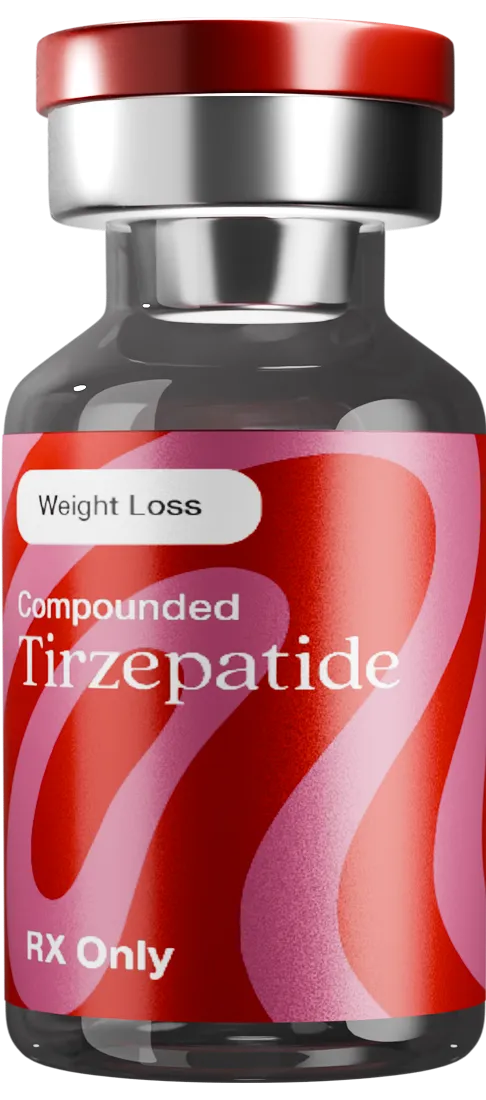
Tirzepatide Cost in 2026
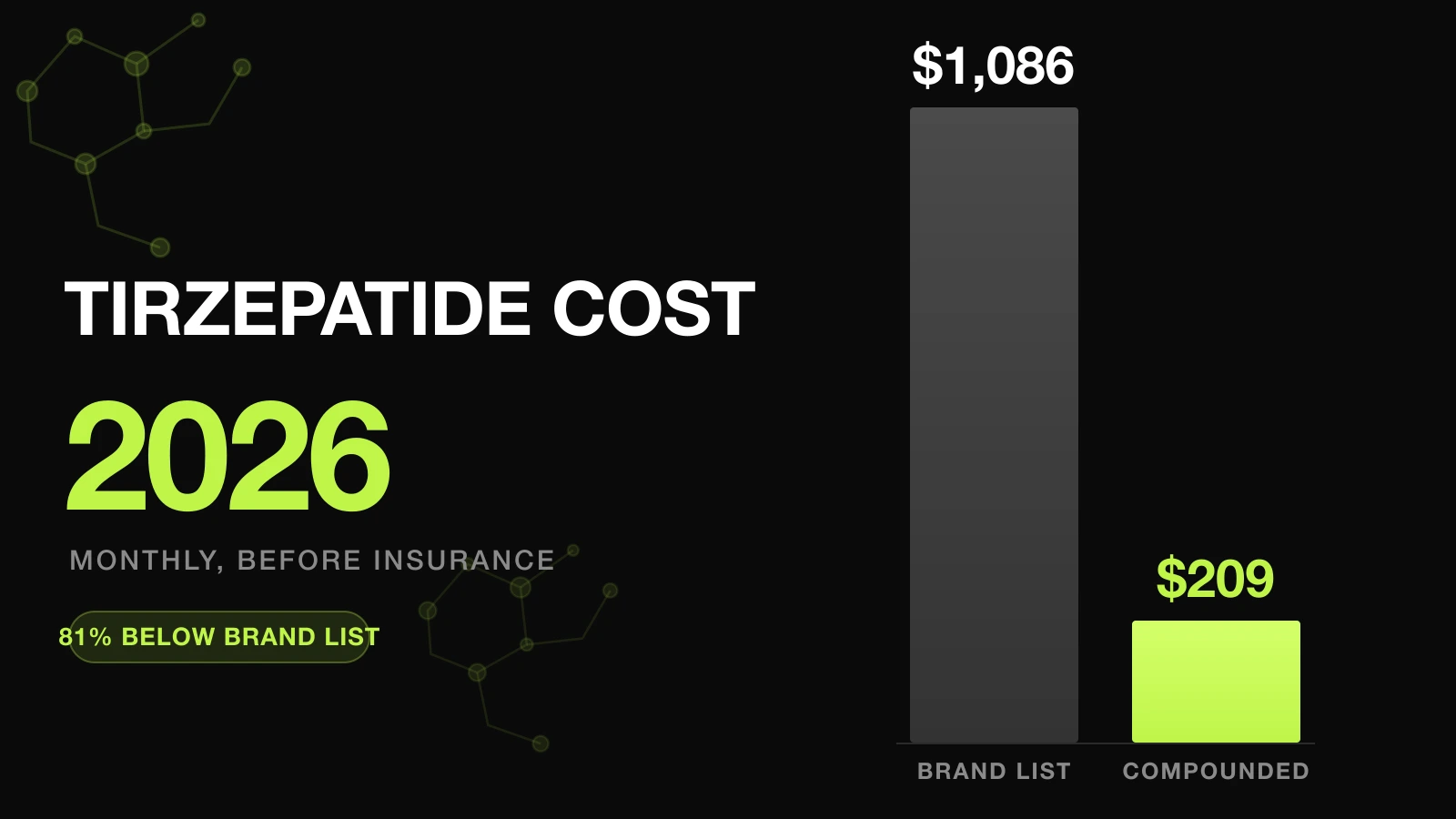
The same molecule sells for $119 a month and for $1,086 a month, depending purely on which door you walk through. Here is every route priced side by side.
Updated July 31, 2026PeptideDeck Research Team11 min read
The short answer
- Brand-name, no insurance: ~$1,086/mo for Zepbound.
- LillyDirect self-pay: $299–$449/mo — the approved product, without insurance.
- Commercial insurance + savings card: around $25/mo, if your plan covers it.
- Compounded via telehealth: from $119/mo — roughly 89% under list, but not FDA-approved.
Contents
- 01Tirzepatide providers compared
- 02What tirzepatide actually costs in 2026
- 03LillyDirect self-pay pricing
- 04Insurance, savings cards and Medicare
- 05The 3 cheapest routes, ranked
- 06Tirzepatide vs semaglutide on cost
- 07Is compounded tirzepatide legitimate?
- 08How to get the lowest price
- 09Is tirzepatide worth the cost?
- 10Key takeaways
- 11Frequently asked questions
Tirzepatide providers compared
Every provider below prescribes compounded tirzepatide, which is not FDA-approved — see the compounding section for what that means before you choose. Prices are the tirzepatide line specifically, not the cheaper semaglutide entry price these programmes usually advertise.
Embody

A cash-pay program offering provider-guided compounded semaglutide and tirzepatide, plus a needle-free GLP-1/GIP gum for people who want to skip injections.
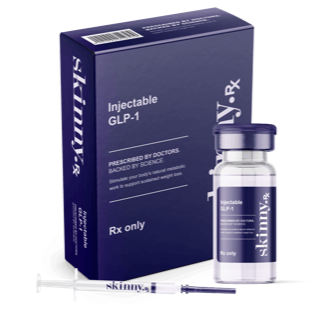
SkinnyRx

A cash-pay platform offering compounded semaglutide and tirzepatide in injection, sublingual, and tablet forms, with brand-name GLP-1s also available and overnight shipping.
SHED (ShedRx)

A 50-state platform known for needle-free GLP-1 formats — sublingual drops, lozenges, and tablets — alongside standard compounded semaglutide and tirzepatide injections.
Bodybuilding Health+

The telehealth arm of the Bodybuilding.com brand — compounded GLP-1 weight management alongside longevity (NAD+, sermorelin) and performance programs, aimed at fitness-minded users.
MEDVi

A telehealth program offering compounded semaglutide and tirzepatide as injections or oral tablets, with unlimited provider messaging and telehealth bundled into the monthly price.
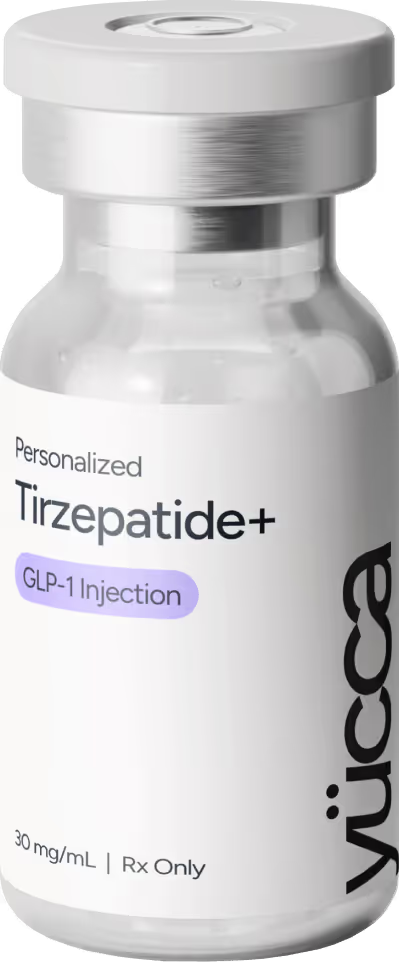
Yucca Health

A clean, no-friction path to personalized semaglutide or tirzepatide — quick online intake, US-licensed prescribers, fast shipping, and no membership fee.
Prices verified against each provider's public pages. Links are affiliate links — they don't change what you pay, and they don't decide the order, which is set by tirzepatide price and what each programme actually includes.
What tirzepatide actually costs in 2026
Tirzepatide is sold under two brand names by the same manufacturer: Mounjaro for type 2 diabetes and Zepbound for weight management. Identical molecule, different label, and — because the two indications are reimbursed differently — different real-world prices.
Almost nobody pays these numbers. They matter because every other price on this page is a discount from them, and because they are what you fall back to if a savings programme lapses or you lose coverage mid-treatment.
LillyDirect self-pay pricing
The manufacturer's own cash-pay channel is the cheapest way to get the FDA-approved product without insurance. Since 23 February 2026 the same prices apply to vials and KwikPens.
The 45-day trap
Maintenance pricing at $449 holds only if you refill within 45 days of your previous delivery. Miss the window and you revert to standard self-pay — which at 15 mg is more than double.
Insurance, savings cards and Medicare
With commercial insurance
If your plan covers tirzepatide, the manufacturer savings card can bring the monthly cost to around $25 — an order of magnitude below anything else here. Coverage for the diabetes indication is reasonably common; coverage for weight management is far patchier, and many commercial plans still exclude it outright. Check your formulary rather than assuming, because the difference is about $1,000 a month.
Medicare in 2026
Medicare historically did not cover weight-loss drugs at all. That changed on 1 July 2026, when a GLP-1 Bridge programme began offering Zepbound and certain other GLP-1s at a $50 monthly copay for eligible Part D enrollees, running through December 2027.[3][4] Eligibility turns mainly on a BMI of 27 or above plus a qualifying condition such as heart disease or prediabetes.
One detail worth planning around: those $50 copays do not count toward your Part D deductible or the $2,100 out-of-pocket cap, so they sit outside the protection that normally limits annual drug spending.
TrumpRx
The direct-to-consumer channel announced alongside the manufacturer agreements lists GLP-1 injections at roughly $350 a month, routing patients to manufacturer programmes and bypassing pharmacy benefit managers. Cheaper than list, more than LillyDirect's starter tier.
The 3 cheapest routes, ranked
Scored on total monthly cost, how much of it is conditional, and whether you get the FDA-approved product.
#1 Commercial insurance + savings card
Nothing else is close. If your formulary includes tirzepatide, the manufacturer savings card reduces a $1,086 medicine to about $25 — and you receive the FDA-approved product through a normal pharmacy. The catch is entirely outside your control: many weight-management plans exclude it, and a formulary change mid-year can move you back to list price with little notice.
How it works
- 1Check your plan formulary for Zepbound or Mounjaro
- 2Confirm which indication is covered
- 3Apply the manufacturer savings card at the pharmacy
Ideal for: Anyone whose plan covers tirzepatide for their indication.
#2 Compounded via telehealth
Telehealth compounding is the lowest cash route, running from $119/mo (Embody) up to about $400 depending on programme and dose. Our pick of the group is Embody at $119/mo, which isn't the very cheapest but scores highest once support and pricing clarity are weighed. It is also the route with the most caveats: compounded medicines are not FDA-reviewed for safety or efficacy, potency varies between pharmacies, and the legal basis narrowed considerably once the shortage ended. Worth it for many people; worth understanding first.
How it works
- 1Complete an online intake with a US-licensed prescriber
- 2Confirm the pharmacy is 503A-licensed and asks for your clinical history
- 3Expect dose-based pricing as you titrate up
Ideal for: Uninsured or excluded, and comfortable with a non-FDA-approved product.
Check offer#3 LillyDirect self-pay
The best of both worlds if you can afford the middle ground: the approved medicine, straight from the manufacturer, at roughly a third of list. The 45-day refill rule is the thing to watch — it is the difference between $449 and $1,049 at the top dose, and it catches people who pause treatment for a fortnight.
How it works
- 1Order directly through the manufacturer channel
- 2Diarise the 45-day refill window at maintenance doses
- 3Budget for the step up from $299 to $449 as you titrate
Ideal for: Uninsured but unwilling to leave the FDA-approved product.
Tirzepatide vs semaglutide on cost
Semaglutide is consistently the cheaper of the two on the compounded market — most of the providers above start their semaglutide plans well below their tirzepatide plans, often by $50–$150 a month. At brand level the gap narrows, since both list in four figures.
Choose tirzepatide if…
- You want the larger average weight reduction the trials show for this class
- Semaglutide has already plateaued for you
- The extra monthly cost is affordable for the length of course you intend
Choose semaglutide if…
- Cost is the binding constraint
- Your insurance covers one and not the other
- You want the longer real-world track record
Full breakdown in our tirzepatide vs semaglutide comparison.
Is compounded tirzepatide legitimate?
This is the question that decides whether the cheapest column on this page is available to you, and the honest answer is: legal in a narrower sense than it was two years ago.
The FDA declared the tirzepatide shortage resolved in December 2024. That ended the legal basis for mass-producing copies, and after a short grace period large-scale compounding of tirzepatide became unlawful. What survives is 503A patient-specific compounding — a pharmacy preparing a medicine for one named patient where the prescriber documents a clinical need the approved product does not meet. Through 2025 the FDA sent warning letters to telehealth-affiliated pharmacies still turning out identical copies and marketing them as generics.[5]
What you gain
- The same active molecule at a fraction of list price
- Access without insurance approval or a formulary fight
- Dose flexibility a fixed-strength pen cannot offer
What you give up
- FDA review for safety, efficacy and manufacturing quality
- Consistent potency — it varies between pharmacies
- Legal certainty, now the shortage has ended
- Manufacturer support programmes and adverse-event infrastructure
Worth saying plainly: compounded tirzepatide is not a generic Zepbound, and any provider describing it that way is misdescribing what they sell. There is no generic tirzepatide — the molecule is still under patent.
How to get the lowest price
- 1
Check your formulary first
Before anything else. If tirzepatide is covered, the savings card beats every cash route by an order of magnitude — and it takes one phone call to find out.
- 2
Check which indication is covered
Plans that exclude Zepbound for weight management sometimes cover Mounjaro for diabetes. If you have a qualifying diagnosis, that distinction is worth roughly $1,000 a month.
- 3
Price LillyDirect before any telehealth route
At $299 for the starter dose it undercuts several compounded programmes while remaining the FDA-approved product. Many people skip straight past it.
- 4
If you go compounded, price the tirzepatide line, not the headline
Almost every programme advertises its semaglutide entry price. The tirzepatide plan is typically $50–$150 higher — the ranking above uses the real number.
- 5
Read what the low price is conditional on
Several of the cheapest figures assume a 12-month prepaid bundle or apply only to month one. That is fine if you intend to stay a year; expensive if you do not.
- 6
Diarise refill windows
On LillyDirect, missing the 45-day maintenance window more than doubles the 15 mg price. On bundled telehealth plans, cancelling early can forfeit the bundle rate.
Is tirzepatide worth the cost?
When the maths works
- You have obesity-related conditions where treatment offsets other medical spending
- You can sustain the cost for a year or more, not a few months
- Diet and exercise alone have repeatedly plateaued
- Your plan covers it, which changes the calculation entirely
When it gets harder to justify
- You are paying list price with no route to a discount
- Your goal is a modest amount of weight where cheaper options are untried
- You can only afford three or four months
That last point deserves weight. Weight regain after stopping GLP-1 treatment is well documented, so a course you cannot sustain tends to buy a temporary result at permanent expense. If the honest budget is four months, the more useful question is whether a cheaper medication you can stay on for two years would leave you further ahead.
Key takeaways
- Brand-name tirzepatide lists around $1,086 a month; almost nobody pays it.
- LillyDirect self-pay is $299–$449 by dose — the approved product, no insurance needed.
- Commercial insurance plus the savings card is about $25/mo and beats everything else.
- Compounded tirzepatide starts at $119/mo — roughly 89% under list — but is not FDA-approved.
- Medicare’s GLP-1 Bridge gives eligible Part D enrollees a $50 copay from July 2026 to December 2027.
- Those $50 copays do not count toward the Part D deductible or the $2,100 out-of-pocket cap.
- Missing LillyDirect’s 45-day refill window takes 15 mg from $449 to $1,049.
- Telehealth headline prices are usually the semaglutide plan; tirzepatide costs more.
- There is no generic tirzepatide — the molecule remains under patent.
Frequently asked questions
How much does tirzepatide cost per month in 2026?
It depends entirely on which route you take. The FDA-approved brands list at roughly $1,086 a month for Zepbound and $1,069–$1,112 for Mounjaro. LillyDirect self-pay cuts that to $299–$449 depending on dose. Commercial insurance with the manufacturer savings card can bring it to about $25. Compounded tirzepatide through telehealth runs roughly $209–$400 a month. The gap between the cheapest and dearest route is more than sevenfold for the same active molecule.
Why is tirzepatide so expensive?
Tirzepatide is still under patent, so there is no generic competition, and the manufacturer sets the list price. What you actually pay is then decided by rebates negotiated between pharmacy benefit managers and insurers — which is why two people can pay $25 and $1,086 for the same box. The cash-pay and telehealth routes exist precisely because that system leaves uninsured patients facing the undiscounted number.
Is compounded tirzepatide cheaper than Zepbound?
Substantially. Compounded tirzepatide starts around $209 a month against roughly $1,086 for Zepbound at list price — about 81% less. But it is not the same product in regulatory terms: compounded medicines are not FDA-approved, are not reviewed for safety or efficacy, and potency can vary between pharmacies. The saving is real; so is the trade-off.
Is compounded tirzepatide still legal in 2026?
Narrowly. The FDA declared the tirzepatide shortage resolved in December 2024, which ended the basis for mass compounding of copies. What remains legal is patient-specific 503A compounding, where a prescriber documents a clinical need the approved product does not meet. The FDA issued warning letters through 2025 to telehealth-affiliated pharmacies still producing identical copies and marketing them as generics. Any provider claiming to sell a "generic Zepbound" is describing something that does not exist.
What is the cheapest way to get tirzepatide?
If you have commercial insurance that covers it, the manufacturer savings card is cheapest at around $25 a month — nothing else comes close. Without coverage, compounded tirzepatide through a telehealth provider is the lowest cash price, starting near $209. LillyDirect self-pay at $299–$449 sits in between and has the advantage of being the FDA-approved product.
Does insurance cover tirzepatide for weight loss?
Coverage for the weight-management indication remains patchy and many commercial plans still exclude it, though coverage for the diabetes indication is far more common. It is worth checking your formulary directly rather than assuming, because the difference between covered and not is roughly $1,000 a month.
Does Medicare cover tirzepatide in 2026?
Partly, and only recently. A Medicare GLP-1 Bridge programme began on 1 July 2026 offering Zepbound and some other GLP-1s at a $50 monthly copay for eligible Part D enrollees, running through December 2027. Eligibility is based on a BMI of 27 or above plus a qualifying condition. One catch worth knowing: those $50 copays do not count toward your Part D deductible or the $2,100 out-of-pocket cap.
What is TrumpRx and does it make tirzepatide cheaper?
TrumpRx is a direct-to-consumer channel announced alongside agreements with the manufacturers, offering GLP-1 injections at around $350 a month by connecting patients to manufacturer programmes and bypassing pharmacy benefit managers. It undercuts list price considerably but sits above both LillyDirect's starter tier and compounded routes.
Why does my tirzepatide price go up at higher doses?
On LillyDirect it mostly does not — 7.5 mg through 15 mg all sit at $449, provided you refill within 45 days of your previous delivery. Miss that window and the price reverts to the standard self-pay rate, which climbs to $1,049 at 15 mg. Compounded pricing does typically scale with dose, since you are paying for more active ingredient.
Is tirzepatide worth the cost?
That depends on what you are comparing it against. Clinically it produces the largest average weight reduction of any approved medication in this class, and for someone with obesity-related conditions the cost can offset other spending. It is harder to justify at list price for modest weight goals, or if you would have to stop after a few months — weight regain after discontinuation is well documented, so a course you cannot sustain buys a temporary result at permanent expense.
References
Not medical advice. Prices change frequently and vary by dose, pharmacy and location — verify current pricing directly with any provider before ordering. Compounded medications are not FDA-approved. Discuss any GLP-1 treatment with a qualified clinician.