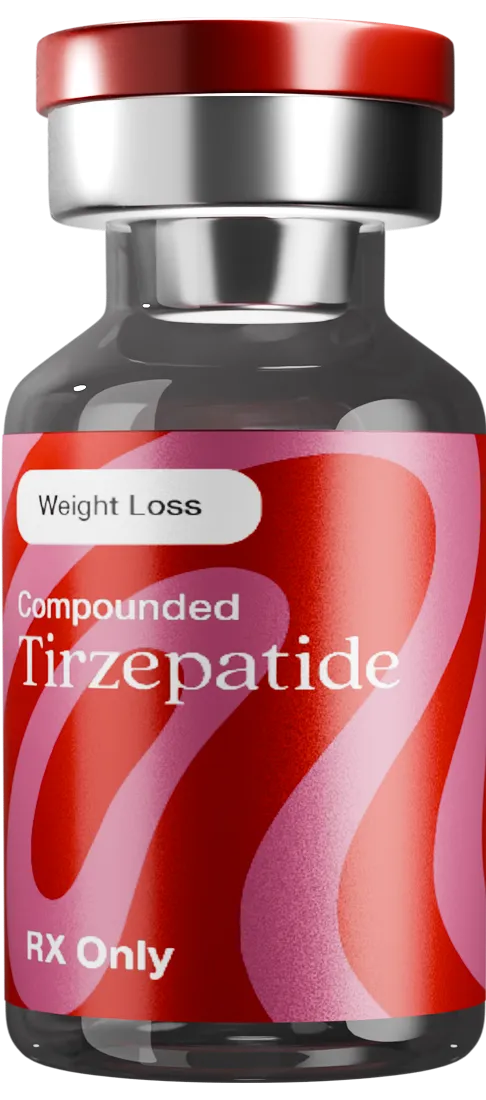
Tirzepatide is the new gold standard.
Sold as Mounjaro for type 2 diabetes and Zepbound for chronic weight management, tirzepatide is a once-weekly injection that activates two gut hormones at the same time. People taking the highest dose lost about 21% of their body weight in the SURMOUNT-1 trial, the strongest result any approved obesity drug has produced.
🔑 Key Takeaways
- Tirzepatide is the active drug in both Mounjaro (type 2 diabetes) and Zepbound (weight loss). Same molecule, two FDA labels.
- It is the first dual GIP and GLP-1 receptor agonist on the market, which is why results outpace semaglutide head to head.
- Standard schedule starts at 2.5 mg weekly and steps up every 4 weeks to a maintenance dose of 5, 10, or 15 mg.
- SURMOUNT-1 showed roughly 21% body weight reduction at the 15 mg dose over 72 weeks, well above any GLP-1 monotherapy.
- Brand pens cost about $1,000 to $1,300 per month without insurance. Compounded tirzepatide vials run $150 to $400 per month at licensed pharmacies.
- Most side effects are gastrointestinal: nausea, diarrhea, constipation, mild reflux. They cluster in the first weeks after each dose increase.
What Tirzepatide Actually Is
One drug, two brand names. Eli Lilly markets tirzepatide as Mounjaro for adults with type 2 diabetes and as Zepbound for chronic weight management in adults with obesity or overweight plus a weight-related condition. The pen, the molecule, and the dose strengths are identical. Only the label and the box change.
Mechanically, tirzepatide is a 39-amino-acid peptide that binds two receptors at once: GIP and GLP-1. Semaglutide (Ozempic, Wegovy) only hits GLP-1. Adding GIP appears to amplify insulin response, slow gastric emptying, and reduce food intake more than GLP-1 alone, which is the simplest explanation for why tirzepatide produces larger weight loss numbers in head-to-head trials.
If you want the broader category context, our guide to GLP-1 drugs covers how this class works at a hormone level. Tirzepatide sits at the top of that family today, with retatrutide coming next as a triple agonist.
Mounjaro vs Zepbound: Same Drug, Different Box
This trips up almost every new patient. Here is the clean breakdown.
Insurance is the real difference. Most commercial plans will cover Mounjaro for a documented type 2 diabetes diagnosis. Zepbound coverage for weight loss is patchy. Many plans still exclude obesity drugs entirely, which pushes patients toward LillyDirect vials or compounded tirzepatide.
Tirzepatide Dosing Schedule
The schedule is simple. Start low, raise every 4 weeks until you reach a dose that controls appetite or blood sugar without intolerable side effects.
If side effects spike at a new dose, stay on the lower dose another 4 weeks before titrating again. Missed dose under 4 days late: take it. More than 4 days late: skip it and resume on your normal day.
What the Trials Actually Showed
Two trial families matter for tirzepatide.
SURMOUNT-1 tested tirzepatide in adults with obesity but without type 2 diabetes. Over 72 weeks, average weight loss was 15.0% at 5 mg, 19.5% at 10 mg, and 20.9% at 15 mg, vs 3.1% on placebo. About 57% of people on 15 mg lost at least 20% of their body weight. No approved obesity drug had ever produced numbers like that in a phase 3 trial.
SURPASS tested tirzepatide in type 2 diabetes. SURPASS-2 compared it head to head with semaglutide 1 mg. Tirzepatide 15 mg beat semaglutide on both A1c reduction (about 2.3% vs 1.9%) and weight loss (about 11.2 kg vs 5.7 kg). That trial is what cemented tirzepatide as first-line for patients who can access it.
SURMOUNT-OSA later showed tirzepatide reduced obstructive sleep apnea events by roughly 50%, which led to an additional FDA indication for OSA in adults with obesity in late 2024.
Tirzepatide vs Semaglutide vs Retatrutide
Today, tirzepatide is the strongest FDA-approved option. Retatrutide hits harder in early data but is not approved yet. If you want a deeper read on what is coming next, see our breakdown of what retatrutide is and how it compares.
Side Effects to Expect
Most tirzepatide side effects are gastrointestinal and dose-dependent. They peak in the first 1 to 2 weeks after starting a new dose and then settle.
- Common (10%+): nausea, diarrhea, decreased appetite, vomiting, constipation, indigestion, abdominal pain, fatigue.
- Less common: burping, hair thinning at high cumulative weight loss, injection-site reactions, dizziness.
- Serious but rare: pancreatitis, gallbladder disease, severe dehydration, hypoglycemia (mainly when combined with insulin or sulfonylureas), allergic reactions.
- Boxed warning: thyroid C-cell tumors in rodents. Do not use tirzepatide if you or a family member has a history of medullary thyroid carcinoma or MEN 2.
For a deeper rundown including what to do when nausea hits, see our tirzepatide side effects guide.
Brand vs Compounded Tirzepatide
The FDA removed tirzepatide from its drug shortage list in late 2024, which formally ended the period when 503A and 503B pharmacies could compound it freely. In practice, many telehealth clinics still offer compounded tirzepatide under personalized prescription rules, and patient demand has not dropped.
The best compounded sources test every batch and disclose the lab. We track this in detail in our guide to the cheapest legitimate tirzepatide sources and our review of compounding pharmacies currently filling tirzepatide prescriptions.
Buying friction to expect
Brand pens require either insurance approval or LillyDirect cash-pay. Compounded tirzepatide requires a real telehealth visit with a US-licensed prescriber. Anything sold without a prescription, shipped from overseas, or marketed as a generic powder is not legal tirzepatide and skips the safety checks. If a price looks too low, the compound is usually under-dosed or impure.
How to Get Tirzepatide
Three legitimate paths in 2026:
- Insurance through your doctor. Easiest if you have type 2 diabetes. Most commercial plans cover Mounjaro with a diabetes diagnosis. Zepbound for weight loss is more variable.
- LillyDirect. Eli Lilly's direct-to-consumer pharmacy. Sells Zepbound vials cash-pay starting at $349 per month. Requires a US prescription.
- Telehealth + compounding pharmacy. A US clinician evaluates you online, then a 503A or 503B pharmacy ships compounded tirzepatide. Cheaper, but quality oversight is on you.
Step-by-step walkthrough lives in our guide to how to get tirzepatide.
Who Tirzepatide Fits Best
- Adults with type 2 diabetes who need stronger A1c control than metformin alone provides.
- Adults with a BMI of 30+ or 27+ with a weight-related condition (hypertension, dyslipidemia, OSA, cardiovascular disease).
- People who tried semaglutide and either plateaued or wanted larger weight loss with the same once-weekly schedule.
- Patients with moderate-to-severe obstructive sleep apnea linked to obesity.
Who Should Skip It
- Personal or family history of medullary thyroid carcinoma or MEN 2.
- History of pancreatitis.
- Pregnancy, planned pregnancy within 2 months, or breastfeeding.
- Severe gastroparesis or active gallbladder disease.
- People expecting a fast crash diet rather than a 12-month commitment. Weight tends to return when tirzepatide is stopped without a maintenance plan.
What Happens When You Stop
SURMOUNT-4 looked at this directly. People who lost weight on tirzepatide and then switched to placebo regained roughly 14% of body weight over the next year. People who stayed on tirzepatide kept losing. The takeaway is straightforward. Tirzepatide is not a 12-week protocol. It is closer to a chronic medication, like a statin or an antihypertensive, and stopping it without behavior change usually means weight returns.
Frequently Asked Questions
Medical Disclaimer: This article is for educational purposes only and does not constitute medical advice. Tirzepatide is a prescription medication. Talk to a licensed clinician before starting, stopping, or changing any treatment.