🔑 Key Takeaways
- Testosterone boosters (ashwagandha, D-AA, zinc) work best as micronutrient insurance — they won't meaningfully raise T if you're already in normal range
- GH peptides like CJC-1295 + Ipamorelin improve deep sleep, body composition, and recovery — indirectly boosting T through the sleep pathway
- Direct T peptides (Kisspeptin, GnRH analogs) stimulate LH production and can raise testosterone at the source
- PT-141 addresses sexual function and libido — often what men actually need when they think they need more T
- You can stack T boosters with peptides — they don't compete, they complement
- TRT is a last resort, not a first step — especially if you're under 45 with intact testicular function
Here's the thing most supplement brands don't want you to know: the majority of guys buying testosterone boosters don't have a testosterone problem. They have a sleep problem, a body fat problem, or a stress problem — all of which tank T secondarily. Fix the upstream issue and the testosterone largely takes care of itself.
That's not a dig at testosterone boosters specifically. Some of them have legitimate ingredients. Ashwagandha is genuinely one of the better-studied adaptogens out there, and zinc deficiency (surprisingly common in men who sweat a lot) will absolutely crater testosterone. But there's a massive gap between "this ingredient can support healthy T levels" and "this will give you noticeably more testosterone."
Peptides work on a different level entirely. They don't just supply a nutrient your body might have been short on — they signal your hormonal system to actually do more. That's either what you need or overkill, depending on where you are right now. This guide breaks it down without the usual sales-speak.
The Real Question: What Are You Actually Trying to Achieve?
Before you spend money on either category, it helps to get specific. When men say they want "more testosterone," they usually mean one of five things:
- More energy — not dragging through afternoons, not needing three coffees to function
- Better body composition — less fat around the midsection, more muscle that actually stays
- Stronger libido — wanting sex again, not just going through the motions
- Better sleep — actually waking up rested instead of feeling like you never slept at all
- Faster recovery — training hard without spending three days walking like you're 80
Here's what's interesting: testosterone is involved in all five of those things, but it's not always the rate-limiting factor. GH decline (which starts in your 30s and accelerates hard after 40) hits energy, body recomp, and sleep just as hard as T decline does. Peptides like sermorelin have shown real promise for both men and women dealing with age-related hormonal shifts. Low dopamine or high prolactin can tank libido even when T looks fine on paper. Cortisol — chronically elevated from stress, poor sleep, or overtraining — suppresses testosterone production directly.
So the question isn't just "how do I get more T?" It's "what's actually driving these symptoms, and what intervenes most directly?"
Both testosterone boosters and peptides claim to address all five of those goals. The mechanisms are completely different — and that difference determines which one actually moves the needle for you.
What Testosterone Boosters Actually Are (And What They're Not)
Walk into any supplement store and the T booster shelves are overwhelming. New brands, new formulas, same basic ingredients rotating through different proprietary blends. Strip away the marketing and you'll find the same shortlist showing up everywhere:
Ashwagandha (KSM-66)
The most legitimate ingredient in most T boosters. Reduces cortisol, and in stressed men, studies show 10–15% T increases. Real effect — but cortisol-mediated, not direct.
D-Aspartic Acid
Stimulates LH release in the short term. Early studies showed promise; follow-up research on men with normal T showed minimal or no effect after 12–28 days.
Zinc + Vitamin D
Cofactors for testosterone synthesis. If you're deficient (and a lot of men are), supplementing genuinely raises T. If you're not deficient, taking more doesn't help.
Tribulus + Fenugreek
Tribulus evidence for T is weak at best. Fenugreek is more interesting — may inhibit aromatase slightly, reducing T-to-estrogen conversion. Modest effect.
The Honest Verdict on T Boosters
If you're deficient in zinc or vitamin D — and blood work will tell you this — supplementing those specifically will raise your testosterone. Full stop, that's real. Ashwagandha is legitimately worth taking if you're chronically stressed, and the cortisol connection is well-documented. A 2019 study published in Medicine showed men taking 600mg of KSM-66 ashwagandha for 8 weeks had significantly higher T (by about 15%) compared to placebo — but the subjects were stressed men, not guys with normal cortisol profiles.
For men who already have adequate micronutrient status and normal cortisol levels? The effect is basically noise. You might see a 5–8% T increase from a solid booster stack — which in absolute terms is maybe 20–30 ng/dL. Barely detectable. Definitely not the "unleash your inner alpha" energy the box implies.
Think of T boosters as nutrient insurance, not hormonal intervention. They're filling in gaps, not building something new.
What Peptides Actually Do for Testosterone
Peptides work through completely different mechanisms. Some directly stimulate testosterone production. Others improve the hormonal environment — sleep quality, GH output, body composition — in ways that let your T production recover on its own. And at least one peptide (PT-141) addresses the actual complaint — sexual dysfunction — without touching testosterone at all.
Direct T-Stimulating Peptides
At the top of the chain is Kisspeptin — a neuropeptide that triggers GnRH (gonadotropin-releasing hormone) release from the hypothalamus. GnRH tells the pituitary to release LH. LH tells the testes to produce testosterone. Kisspeptin hits the system at step one. Clinical research has shown kisspeptin-10 can significantly increase LH and testosterone in men with hypogonadotropic hypogonadism — the kind where the brain isn't signaling properly, not where the testes themselves are failing.
GnRH analogs work similarly — by directly pulsing the pituitary. This is actually how some fertility clinics restore testosterone production in men who've shut down from TRT. The interesting thing is these peptides work with your natural feedback loops, not around them. That's a meaningful distinction from TRT, which we'll get to. If you're curious about how peptides differ from anabolic compounds more broadly, the peptides vs steroids comparison lays out the key differences.
Indirect T Support: GH Peptides and the Sleep Connection
This is where GH peptides like CJC-1295 and Ipamorelin come in — and this is the angle that most T booster reviews completely miss.
The majority of your daily testosterone is produced during deep sleep. Specifically during slow-wave (stage 3) sleep. GH release also peaks during slow-wave sleep, and GH and testosterone are closely coordinated. When slow-wave sleep degrades — which it does progressively after 35, and hard after 40 — both GH and T production decline in parallel.
GH secretagogues like Ipamorelin and CJC-1295 (you can read a full breakdown here) stimulate the pituitary to release more GH during your natural sleep cycles. The result: more time in deep sleep, more GH, and as a downstream effect, meaningfully better testosterone production during the night. It's not a direct T boost — but it addresses the root cause of why T declines as men age.
💡 The Sleep-Testosterone Loop
Studies from the Journal of the American Medical Association found that men who slept 5 hours per night for one week had testosterone levels 10–15% lower than after 8 hours. GH peptides improve sleep architecture — increasing slow-wave sleep where both GH and T are predominantly produced. Fix the sleep; T follows.
Body Recomposition and the T Connection
IGF-1 (insulin-like growth factor 1), which rises downstream of GH stimulation, drives muscle protein synthesis and fat oxidation. As body composition improves — more muscle, less visceral fat — testosterone levels tend to rise naturally. Adipose tissue (fat) contains aromatase, the enzyme that converts testosterone to estrogen. Less fat = less aromatase = more free testosterone staying as testosterone. It's a compounding effect.
PT-141: Addressing What Men Actually Want
A lot of men think they need more testosterone when what they actually need is PT-141. That might sound like a stretch, but follow the logic: if the main complaint is low libido or difficulty with sexual function, and testosterone levels are actually in normal range, then adding T isn't going to fix it. The issue might be central — dopaminergic signaling in the brain rather than hormonal levels in the blood.
PT-141 (bremelanotide) activates melanocortin receptors in the hypothalamus, directly increasing sexual desire and arousal through central nervous system pathways. It doesn't raise testosterone. But if what you care about is sexual function and libido, it addresses the complaint more directly than anything a T booster or even TRT is going to do.
Head-to-Head Comparison
When Testosterone Boosters Make Sense
Look — T boosters aren't useless. They just have a specific use case that's narrower than the marketing suggests. Here's when they're actually the right call:
You Suspect (or Know) You're Deficient in Zinc or Vitamin D
Get blood work first if you can. But realistically, zinc deficiency is common in men who train hard and sweat a lot (zinc is lost in sweat), and vitamin D deficiency is endemic in northern climates and office workers. If either of those is low, supplementing will genuinely move your testosterone. This isn't a guess — the pathway is well-established.
You're Under 35 with Reasonably Healthy T
If your T is already solid and you're young, there's not much room for peptides to add value on the testosterone side. Your GH axis is still functioning well. Your sleep architecture is probably better than it will be in 10 years. A solid T booster plus good lifestyle (sleep, training, low body fat) is probably all you need.
You Want Something With No Injections Required
Peptides are typically injected subcutaneously. It's a small needle and most people get comfortable with it quickly, but it's still a needle. If that's a hard no, T boosters are your non-injectable option — or you look into nasal spray peptides like Sermorelin, but that's a narrower category.
Budget Is Under $50/Month
A quality T booster stack (real KSM-66 ashwagandha, zinc picolinate, vitamin D3) can be done for $30–50 per month if you buy individual ingredients instead of branded formulas. If $150/month for a proper peptide protocol isn't realistic right now, start with the basics and build from there.
When Peptides Make More Sense
The calculus shifts when you're over 40, when symptoms are more pronounced, or when you've already done the T booster thing and nothing moved.
You're Over 40 with Declining Energy, Body Composition, and Sleep Quality
After 40, GH decline is the dominant hormonal shift — steeper, in most men, than testosterone decline. And GH decline is largely responsible for the visceral fat accumulation, the sleep quality degradation, and the slow recovery that men attribute to "getting older." T boosters address none of that. GH secretagogues address all of it. Some men also explore oral options like MK-677, which stimulates GH through the ghrelin receptor without injections — though the side effect profile is different.
CJC-1295 and Ipamorelin — the combination in the FIT Stack from Ascension — is the most commonly used GH peptide combination for men over 40 (see our FIT Stack review for a full breakdown) specifically because it restores the GH pulse amplitude that declines with age, without overstimulating the pituitary.
You Want to Address Body Recomp, Energy, and Libido Simultaneously
This is where peptides genuinely outclass T boosters. GH peptides improve body composition (via IGF-1), energy (via GH and downstream metabolic effects), and sleep (which cascades into testosterone). That's three pathways with one protocol. No T booster stack addresses all three because they're operating on different systems.
You've Been on T Boosters for 3+ Months and Feel Nothing
If ashwagandha and zinc haven't moved the needle at all, it's a signal. Either you weren't deficient to begin with (so there was nothing to fix), or your symptoms are being driven by something T boosters can't address — GH decline, sleep architecture, estrogen imbalance. Time to go up a level.
Your Sleep Is Genuinely Bad
This is underdiagnosed as a testosterone issue. Poor slow-wave sleep means poor T production — it's that direct. If you're waking up multiple times, not feeling rested, or your smart watch is showing minimal deep sleep, GH peptides are probably one of the highest-leverage interventions available to you. The effect on sleep quality is one of the most consistently reported benefits from Ipamorelin/CJC users — better dreams, waking up actually rested, less sleep inertia in the morning.
💡 The 40+ Protocol
For men over 40 with declining energy, body recomposition challenges, and poor sleep: CJC-1295 (100mcg) + Ipamorelin (100–200mcg) injected before bed, 5 days on / 2 days off. Address the GH decline first. Testosterone often improves as a downstream effect of better sleep and reduced body fat.
Can You Stack T Boosters with Peptides?
Yes — and honestly, this is often the best approach. They're not competing interventions. They're operating on different levels of the same system.
T boosters (ashwagandha + zinc + vitamin D) cover your micronutrient bases and reduce cortisol-mediated T suppression. Peptides drive the upstream hormonal signaling — GH, IGF-1, and indirectly testosterone through the sleep pathway. There's no interaction concern between them.
A genuinely solid protocol looks like this:
The T booster stack costs maybe $30–40/month. The peptides add $80–150/month on top. Together, you're covering every addressable lever that affects testosterone short of exogenous T replacement. That's a meaningful difference from picking one or the other.
What About TRT?
TRT (testosterone replacement therapy) is a separate category and deserves a brief honest treatment. It works — nobody disputes that. If you inject or apply testosterone, your blood levels go up. Symptoms improve. Many men feel dramatically better on TRT.
But there are real tradeoffs that don't always get communicated clearly in the TRT clinic era:
- Suppression of natural production: Exogenous T tells your hypothalamus to stop signaling the pituitary to produce LH. LH drops, the testes stop working, your natural production shuts down. This is often permanent or takes months to reverse after stopping TRT.
- It's a commitment: Once your natural axis is suppressed, coming off TRT without a proper PCT (post-cycle therapy) protocol often means months of feeling terrible while your system slowly restarts — if it does at all.
- Hematocrit elevation: T raises red blood cell production. For most men this is fine or even beneficial. But it requires monitoring — elevated hematocrit increases clotting risk.
- Doesn't fix GH: TRT addresses testosterone specifically but leaves GH decline untouched. Many men on TRT still have the energy, sleep, and body composition issues that were being driven by GH decline, not T decline.
Our complete sermorelin guide covers the GH-axis approach in detail if you want to understand how peptides interact with the hormonal system before going down the TRT path. Worth reading before you commit to exogenous hormones.
The Practical Decision Framework
Stop overthinking it. Here's how to actually decide:
Start with T boosters if: You're under 35, budget is tight, you want to avoid injections, or you haven't tried addressing micronutrients first.
Move to peptides if: You're over 40, T boosters did nothing after 3 months, sleep quality is poor, or body recomposition is your primary goal alongside hormonal health.
Consider both: They're non-competing. A complete protocol covers micronutrients (T boosters) and hormonal signaling (peptides) simultaneously.
Consider TRT only if: Blood work shows clinically low T (under 300 ng/dL), peptides haven't helped after 6 months, and a physician agrees based on your full panel.
Where to Get Started with Peptides
If you're ready to move past T boosters, the FIT Stack from Ascension Peptides — CJC-1295 paired with Ipamorelin — is the most practical starting point for men over 35 dealing with declining energy, sleep quality, and body composition. It's the two GH secretagogues that work synergistically (CJC-1295 extends the GH pulse duration; Ipamorelin amplifies the pulse amplitude) without the desensitization that comes from using a single compound long-term.
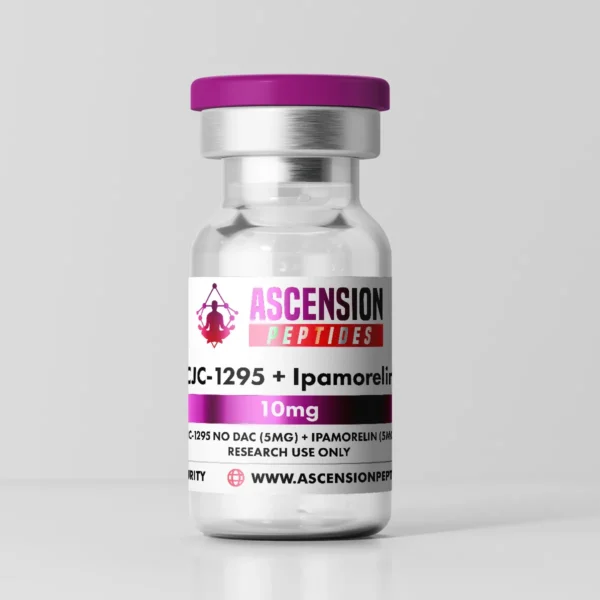
FIT Stack — CJC-1295 + Ipamorelin
The top GH secretagogue stack for men — improves sleep architecture, supports body recomposition, accelerates recovery, and creates the hormonal environment for better natural testosterone production.
Shop FIT Stack on Ascension →Blood Work: The Numbers That Actually Matter

Before you spend a dollar on either category, get a baseline blood panel. Without numbers, you're guessing — and guessing is how men end up on TRT who didn't need it, or spending months on T boosters when the issue was GH all along.
The Essential Panel for Men Over 30
At minimum, you want total testosterone, free testosterone, SHBG, estradiol (sensitive assay), LH, FSH, IGF-1, prolactin, a complete metabolic panel, and a CBC. Most direct-to-consumer lab services (Marek Health, DiscountedLabs) offer comprehensive male hormone panels for $150–$250 without needing a doctor's referral.
Total testosterone alone tells you almost nothing useful. A man with 550 ng/dL total T but high SHBG might have less bioavailable testosterone than a man sitting at 450 ng/dL with normal SHBG. Free testosterone and SHBG together tell the real story.
What IGF-1 Tells You About GH Status
IGF-1 is the downstream marker for growth hormone output. Because GH itself pulses throughout the day (making a single blood draw unreliable), IGF-1 gives you a more stable picture of your GH axis function. For men 35–50, IGF-1 in the 150–250 ng/mL range is typical; below 120 suggests meaningful GH decline and is where GH peptides tend to make the most noticeable difference.
Reading Your Results: When to Choose What
Cycling Protocols: How Long to Run Each
Neither T boosters nor peptides are "take forever" compounds — though the cycling approaches differ significantly.
T Booster Cycling
Most T booster ingredients don't require cycling, but ashwagandha may lose efficacy after 8–12 weeks of continuous use as your cortisol adapts. A practical approach: 8 weeks on, 2–4 weeks off for ashwagandha. Zinc and vitamin D can be taken continuously as long as you're not exceeding upper limits (zinc toxicity is real above 40mg/day long-term).
GH Peptide Cycling
The standard approach for CJC-1295 + Ipamorelin is 5 days on, 2 days off — this prevents pituitary desensitization while maintaining most of the benefits. Longer cycles (12–16 weeks) followed by 4–6 weeks off work well for sustained use. Some clinicians run patients continuously at lower doses; others prefer defined cycles with blood work between them to monitor IGF-1 levels.
When to Reassess
Get follow-up blood work at 90 days regardless of which approach you take. Compare total T, free T, IGF-1, and SHBG to your baseline. If T boosters moved your numbers meaningfully, keep going. If they didn't, it's time to consider peptides. If peptides didn't move IGF-1, check your reconstitution, dosing, and source quality — degraded peptides are the most common reason for non-response.
Common Mistakes Men Make with Both Categories
Starting TRT Without Trying Anything Else
The online TRT clinic industry has made this incredibly easy — and that's not entirely a good thing. Many clinics will prescribe TRT to any man with T below 500 ng/dL, which technically includes most men over 45. The problem is that a significant percentage of those men would respond to peptides, lifestyle changes, or even just fixing their sleep. Once you're on TRT and your natural production shuts down, you've committed to a path that's hard to reverse.
Expecting T Boosters to Feel Like Steroids
The marketing creates unrealistic expectations. A 10–15% T increase from ashwagandha — while clinically meaningful — doesn't feel like anything dramatic day-to-day. You're not going to wake up one morning feeling like a different person. The benefits accumulate slowly: marginally better sleep, slightly easier fat loss, a bit more energy. If you're expecting the transformation the label promises, you'll be disappointed.
Underdosing Peptides
This is common with men who are new to peptides. Running Ipamorelin at 100mcg when 200mcg is the effective dose, or reconstituting with too much bacteriostatic water (diluting the peptide below useful concentration) means you're spending money without getting results. Follow reconstitution guides carefully and dose at clinically validated levels.
Ignoring Sleep and Stress While Supplementing
No supplement or peptide can fully compensate for 5 hours of sleep and chronic stress. T boosters and peptides amplify what your body is already doing — if the foundation is broken, the amplification doesn't help much. Men who get the best results from both categories are the ones who also cleaned up sleep hygiene, managed stress, trained consistently, and kept body fat reasonable.
Cost Analysis: What You're Actually Spending
T Booster Stack (DIY vs Branded)
Branded T boosters ($50–$90/month) typically contain the same ingredients you can source individually for $25–$40/month. The premium buys you convenience, not better ingredients. Key costs: KSM-66 ashwagandha (~$15/month), zinc picolinate (~$5/month), vitamin D3/K2 (~$8/month), magnesium glycinate (~$10/month). Total DIY stack: roughly $35–$40/month.
Peptide Protocol Costs
A CJC-1295 + Ipamorelin protocol from a reputable research supplier typically runs $80–$150/month depending on dosage and vendor. Add bacteriostatic water, syringes, and alcohol swabs (~$15/month for supplies). Total: $95–$165/month. Through a clinical peptide therapy program, expect $200–$400/month with physician oversight and labs included.
Value Per Dollar: Where the Real ROI Is
Here's the honest math: if you're zinc-deficient, a $5/month zinc supplement gives you more testosterone per dollar than anything else on this list. If you're not deficient, that same $5 gives you nothing. Peptides cost more but move more levers simultaneously — GH, sleep, body composition, and downstream T. For men over 40 with multiple symptoms, peptides typically deliver more noticeable, multi-dimensional improvement per dollar spent than T boosters alone.
Frequently Asked Questions
📚 References
- Lopresti AL et al. "A Randomized, Double-Blind, Placebo-Controlled, Crossover Study Examining the Hormonal and Vitality Effects of Ashwagandha in Aging, Overweight Males." Am J Mens Health. 2019. PubMed
- Leproult R, Van Cauter E. "Effect of 1 week of sleep restriction on testosterone levels in young healthy men." JAMA. 2011;305(21):2173-2174. PubMed
- Veldhuis JD et al. "Joint mechanisms of impaired growth-hormone pulse renewal in aging men." J Clin Endocrinol Metab. 2009;94(1):234-245. PubMed
- Dhillo WS et al. "Kisspeptin-54 stimulates the hypothalamic-pituitary gonadal axis in human males." J Clin Endocrinol Metab. 2005;90(12):6609-6615. PubMed
- Prasad AS et al. "Zinc status and serum testosterone levels of healthy adults." Nutrition. 1996;12(5):344-348. PubMed
- Rastrelli G et al. "Testosterone and sexual function in men." Maturitas. 2018;112:46-52. PubMed
- Erickson EN et al. "Growth hormone releasing peptide-2 and growth hormone releasing hormone synergistically stimulate GH secretion." J Clin Endocrinol Metab. 1999. PubMed