Start with the part nobody tells you.
If you have been reading about Lipo-C, you have probably worked out that it is an injection people use for fat loss, that clinics charge somewhere around thirty dollars a shot for it, and that it usually gets mentioned in the same breath as B12. That much is accurate.
Here is what almost every page ranking for lipo c peptide gets wrong, including several that sell it. There is no peptide in Lipo-C. Not a short one, not a modified one, none. The word is attached to the product because peptide vendors started stocking it, and the name stuck.
That is not a technicality. It changes what you should expect from the vial, which claims about it hold up, and which comparison you should actually be making.
🔑 Key Takeaways
- Lipo-C contains no peptide. It is a lipotropic blend of small molecules, and knowing that reframes every claim made about it.
- The standard compounded version runs methionine, choline chloride, carnitine and dexpanthenol at 15 / 50 / 50 / 5 mg per mL. Those numbers are the only honest starting point for a dose conversation.
- "Lipo-C" is a product name, not a formula. Two vials with the same label can hold different ingredients, and one common swap changes the blend entirely.
- Every ingredient in it has a real, well-documented job in fat metabolism. Whether injecting them into someone who is not deficient does anything is a separate question, and it is the one the marketing skips.
- There is a specific situation where Lipo-C is genuinely worth considering, and it has more to do with what else you are taking than with fat loss.
This page gives you the actual composition, what each ingredient does, honest dosing, and where the evidence runs out. If you want the wider category first, we cover it in peptides for weight loss.
Why "lipo c peptide" is a misnomer
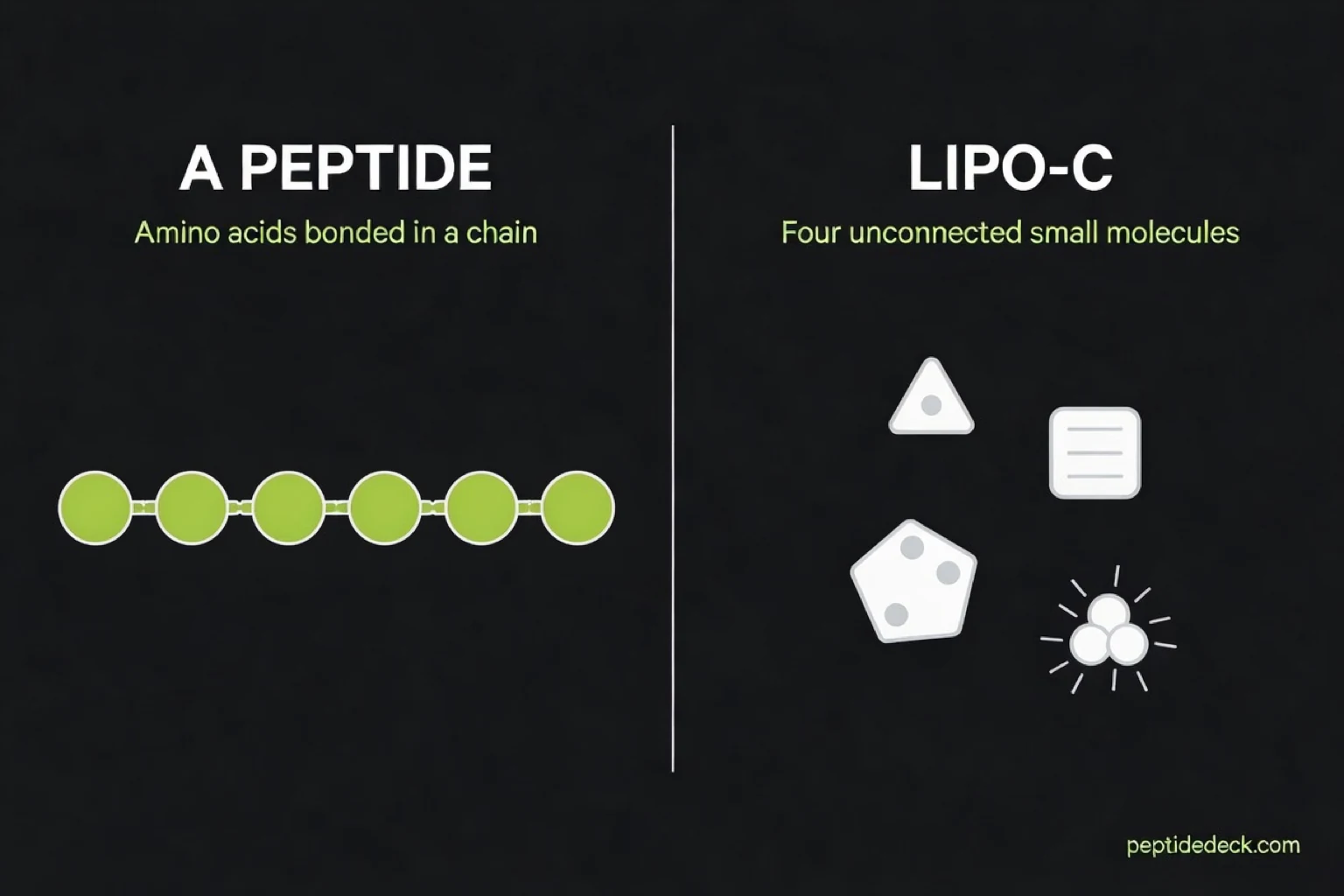
A peptide is a chain.
Specifically, two or more amino acids joined by peptide bonds. That chain structure is what gives peptides their behaviour: they fold, they bind receptors shaped to fit them, and they get broken apart by digestive enzymes, which is why most are injected rather than swallowed.
Now look at what is in Lipo-C. Methionine is a single amino acid, not a chain of them, so it has no peptide bond to speak of. Choline chloride is a small quaternary ammonium salt. L-carnitine is a compound your body builds from lysine and methionine. Dexpanthenol is an alcohol form of vitamin B5. Four small molecules, floating separately, bonded to nothing.
So why does the keyword exist? Because the vendors who sell BPC-157 and semaglutide also started selling lipotropic blends, and their customers searched the way they were used to searching. The category name migrated onto a product that never belonged to it.
The practical consequence: do not read peptide research to decide whether Lipo-C works. Nothing you know about how peptides signal applies here. This is a vitamin and amino acid injection, and it should be judged as one.
What is actually in a Lipo-C vial
The compounded version is specific.
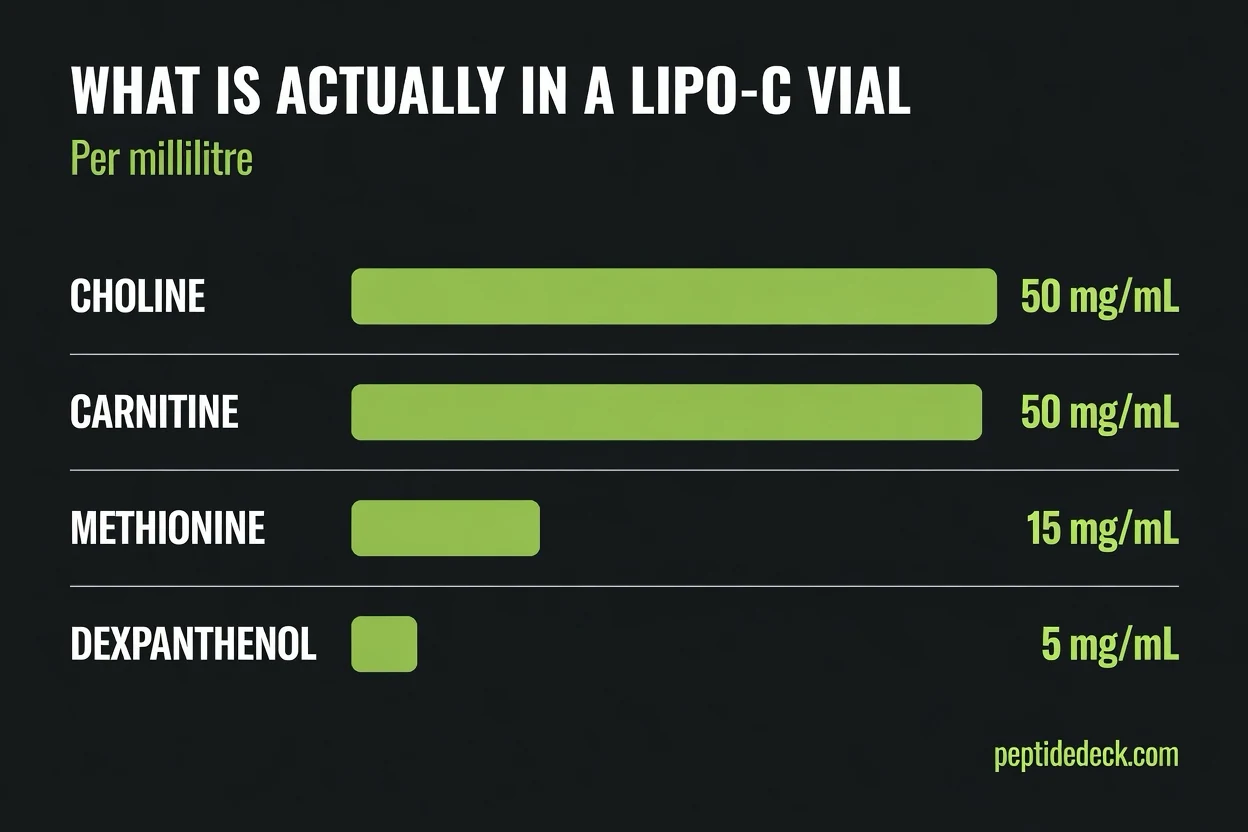
Empower Pharmacy, a licensed 503A compounding pharmacy, publishes its formula openly, which makes it the most reliable reference point available. Their Lipo-C Injection runs methionine, choline chloride, carnitine and dexpanthenol at 15, 50, 50 and 5 mg per mL, sold in 10 mL and 30 mL vials.
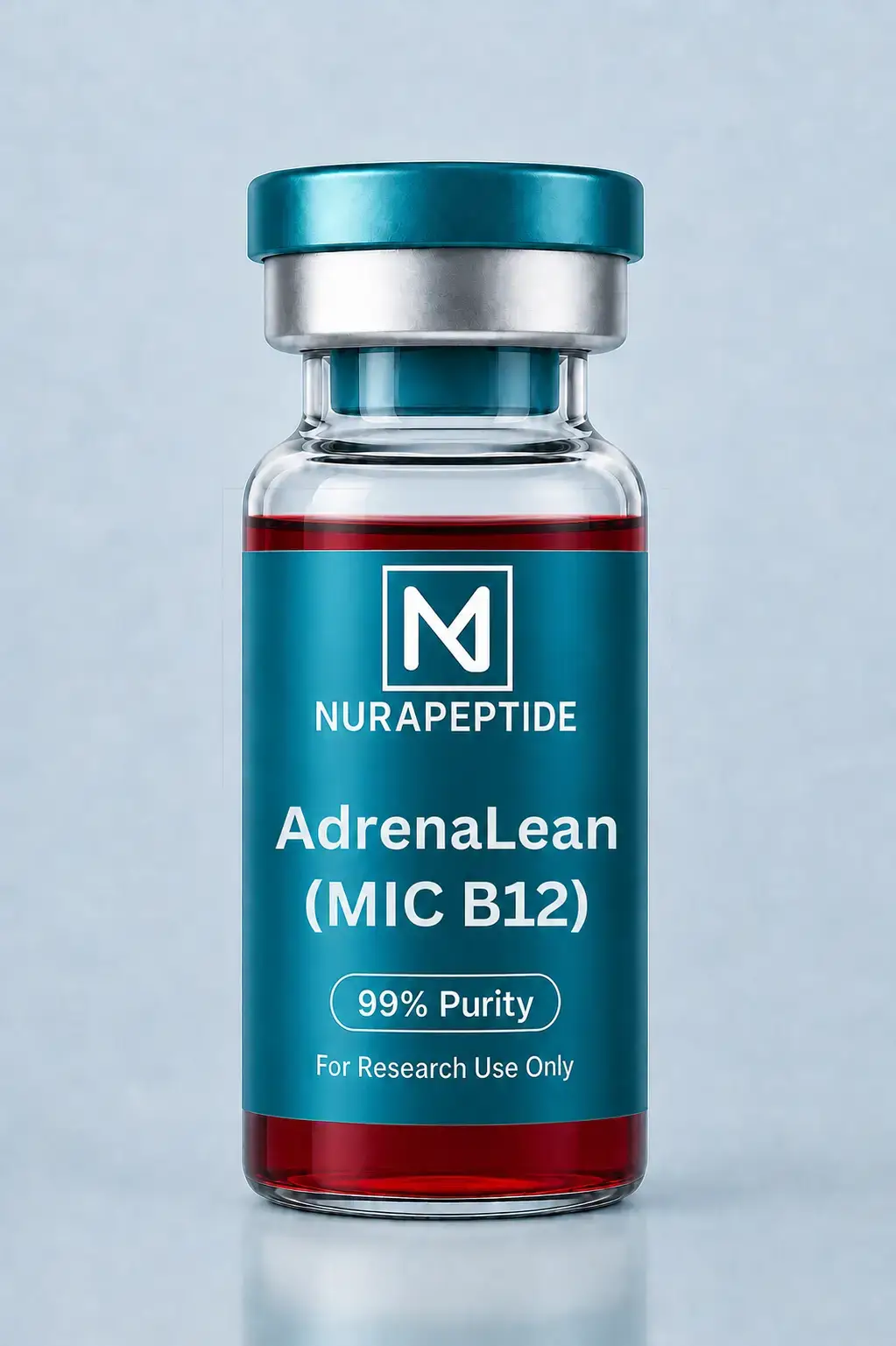
Here is the part that catches people out. A lot of what gets sold as "Lipo-C" is actually MIC, which stands for methionine, inositol and choline, and often ships with B12 added. Inositol and dexpanthenol are not the same compound and do not do the same job. Two vials, same label on the box, different contents.
The one question to ask before buying
Ask for the per-millilitre concentration of each ingredient, in writing. Not the total volume, not the list of names — the mg/mL for each one.
A compounding pharmacy will give you that immediately because they have to. A vendor selling a blend under a brand name often cannot, and a blend you cannot quantify is a blend you cannot dose or compare on price. This single question sorts the market faster than any review.
What each ingredient actually does
All four have real jobs.
That is worth saying plainly, because the honest criticism of Lipo-C is not that the ingredients are inert. It is that having a role in fat metabolism and producing fat loss when injected are two different claims, and the gap between them is where the marketing lives.
- Methionine is an essential amino acid and a methyl donor. It supports the export of fat out of the liver, which is the original meaning of the word "lipotropic" — it moves fat, it does not burn it.
- Choline is required to build phosphatidylcholine, the phospholipid your body uses to package fat into VLDL particles and ship it out of the liver. Genuine deficiency causes fat to accumulate there. Most people are not deficient.
- L-carnitine carries long-chain fatty acids across the mitochondrial membrane so they can be burned. This is the ingredient with the most intuitive fat-loss story, and the one where supplementation trials in people who already have normal levels are the least impressive.
- Dexpanthenol becomes pantothenic acid, which your body uses to make coenzyme A, a cofactor in fatty acid metabolism. Its presence is more about supporting the pathway than driving it.
Notice the shape of that list. Every one of them is a cofactor or a transporter, not a signal. None of them tells your body to lose fat. They keep machinery running that was mostly already running, unless you were short of something.
Lipo-C dosing and how it is actually used
Most protocols are weekly.
Clinics typically give 1 mL intramuscularly once or twice a week, which at the standard concentration works out to the doses below. Nothing here is a prescription, and a clinician setting your dose will account for things this page cannot.
Injection is intramuscular, usually the glute or the thigh, and it stings more than a peptide injection does because the volume is larger and the solution is not isotonic in the same way. A sore spot for a day afterwards is common and not a problem.
What the evidence actually supports
Less than the clinic websites suggest.
This is the section that decides whether Lipo-C is worth your money, so it is worth being blunt. There is no large controlled trial showing that lipotropic injections cause meaningful fat loss in people who are not deficient in the ingredients. What exists is a plausible mechanism for each component, plus clinic reports from patients who were simultaneously in a calorie deficit.
That last point is the confound that runs through the entire category. Nearly everyone getting these shots is also eating less, often on a structured weight-loss programme, sometimes on a GLP-1. Weight comes off. Attributing it to the injection requires a comparison nobody has run.
What is better supported is narrower and more useful:
- Correcting a real deficiency does something. If you are genuinely low on B12 or choline, replacing it has measurable effects on energy and liver fat. That is replacement, not enhancement.
- B12 injections work for B12 deficiency. Uncontroversial, well established, and the reason many people report feeling better on a Lipo-C or MIC shot that includes it.
- Choline deficiency causes liver fat accumulation. Demonstrated in controlled human feeding studies. It says nothing about extra choline in someone replete.
The case where it genuinely makes sense
It is not the one being advertised.
If you are on a GLP-1 and eating substantially less than you used to, your intake of choline, B12 and carnitine has dropped along with everything else, and those three come largely from meat, eggs and dairy — the foods appetite suppression tends to push out first. That is a real nutritional gap opening up during rapid weight loss, and it is a sensible thing to cover.
Framed that way, Lipo-C stops being a fat burner and becomes insurance against the nutrient side of a deficit. That is a smaller claim. It is also one that survives contact with the evidence, and it explains why the shots are so often sold alongside a GLP-1 programme.
If you are not in a deficit and eat normally, the honest expectation is that you will feel very little. Our wider look at what does move the needle is in peptides for fat loss.
Side effects and who should avoid it
Mostly local and mild.
- Injection site soreness, the most common complaint, driven by volume and by the methionine.
- A metallic or sulphur taste shortly after injecting, which comes from the methionine and passes within minutes.
- Flushing, mild nausea or loose stool, usually dose-related and more common at twice-weekly schedules.
- A fishy body odour in some people at higher choline intakes, from trimethylamine production. Harmless, occasionally socially inconvenient.
Skip it, or clear it with a doctor first, if you are pregnant or breastfeeding, if you have kidney disease, or if you have had a cardiovascular event. Carnitine's conversion to TMAO by gut bacteria has been studied in relation to cardiovascular risk, and while the practical significance is still debated, it is a conversation worth having with a clinician rather than a website.
Where to get it
Two routes, and they are not equivalent.
A compounding pharmacy against a prescription is the version with numbers on it. You get stated concentrations, a pharmacy licence behind the vial, and a prescriber involved. If Lipo-C is something you intend to inject regularly, this is the route worth pricing first.
The direct vendors are cheaper and skip the consultation, and the trade-off is exactly the one this page has been circling: most of them publish the ingredient names without the per-millilitre concentrations. The closest match in our own vendor coverage is a six-component MIC blend carrying B12, methionine, inositol, choline, carnitine and arginine, each with its CAS number listed.
The honest limitation of the direct route
That vendor lists what is in the bottle and identifies each compound by CAS number, which is more chemical specificity than most of this category offers. What it does not publish is how much of each one is in there.
For this particular product that gap matters more than usual, because the whole comparison above is built on mg/mL. Without those numbers you cannot convert a dose, you cannot compare it to the compounded formula, and you cannot work out cost per dose. If you want the arithmetic, the pharmacy route is the one that gives it to you. If you want the blend without a prescription, ask for the concentrations before you order and treat a refusal as your answer.
Frequently Asked Questions
Medical disclaimer. This article is informational and does not replace individual medical advice. Lipo-C is a compounded preparation rather than an FDA-approved medicine, which means the finished product has not been reviewed for safety and effectiveness the way an approved drug has, and formulations differ between pharmacies. Injections should be prescribed and supervised by a clinician who knows your history and bloodwork. Anyone pregnant, breastfeeding, living with kidney or cardiovascular disease, or taking prescription medication should speak to a doctor before starting. Persistent fatigue and difficulty losing weight have causes worth investigating properly, including thyroid disease and genuine nutrient deficiencies, and those are worth ruling out before treating the symptom.